
Siman 441
The Life of Our Leader Rabbi Nachman · חיי מוהר"ן
(ה) לאחד צוה רבנו זכרונו לברכה שיהיה לו התבודדות פעם אחת ביום ופעם אחת בלילה. פעם אחת שאל רבנו זכרונו לברכה לאיש אחד מאנשיו אם הוא רגיל להיות גונח ומתאנח שקורין קרעכצין בשעת התבודדות, והשיב לו אין [כן]. ושאל אותו עוד אם הוא גונח ומתאנח מעמק הלב; ענה ואמר לו רבנו זכרונו לברכה, כשאני עושה גניחה ואנחה אזי אם אני אוחז ידי על השלחן אז בשעת האנחה, אזי אי אפשר לי אחר כך להרים ולטל את ידי מעל השלחן, וצריך אני להמתין איזה שעה עד שחוזר בי כחי. פעם אחת אחז רבנו זכרונו לברכה את הרב רבי שמואל אייזיק כנגד לבו ואמר לו, בשביל מעט דם כזה, הינו שבחלל הלב תאבד את העולם הזה והעולם הבא (ובלשון אשכנז: "איבער אביסעלי בליט זאלסטו אן ווערין דיא וועלט אין יענע וועלט, קרעכטץ זי אוס" הוה רגיל להתאנח הרבה עד שתפטר אותו ותכניע הרע שבו, ותזכה לבחינת (תהלים קט): ולבי חלל בקרבי.
To one person, Rabbainu o.b.m. ordered that he should do hisbodidus, one period in the day, and one period in the night. Once Rabbainu o.b.m. asked one of his followers if he was accustomed to groaning and sighing, which is called 'krechtzin', when he does hisbodidus. And he replied (to him), “yes.” And Rabbainu o.b.m. said to him, “When I make a groan or a sigh, if I am holding my hand on the table at the time of the sigh, then is it impossible afterwards for me to lift my hand from the table, and I need to wait some time (hour) until my strength is restored (see Brachos 58b, and Likutay Moharan 22 and 109, and in the additional handwritten torahs published at the end, Rabbainu uses the word NeNaCh - sighing). Once Rabbainu o.b.m. grasped the rav, the tzaddik, Rabbi Shmuel Isaac o.b.m. against his heart, and said to him, “Because of a little blood such as this (i.e. the vascular of the heart) you will abolish this world and the next world.” And in Yiddish, “Ibber a bisselleh blit zulst uhn verin dey velt uhn yenne velt; krechtz dus ois,” accustom yourself to sigh a lot before Hashem Yisburach, until you are relieved of this blood, and put down the evil in it, and you merit to the aspect of (Psalms 109:22), “And my heart is hollow inside of me.”
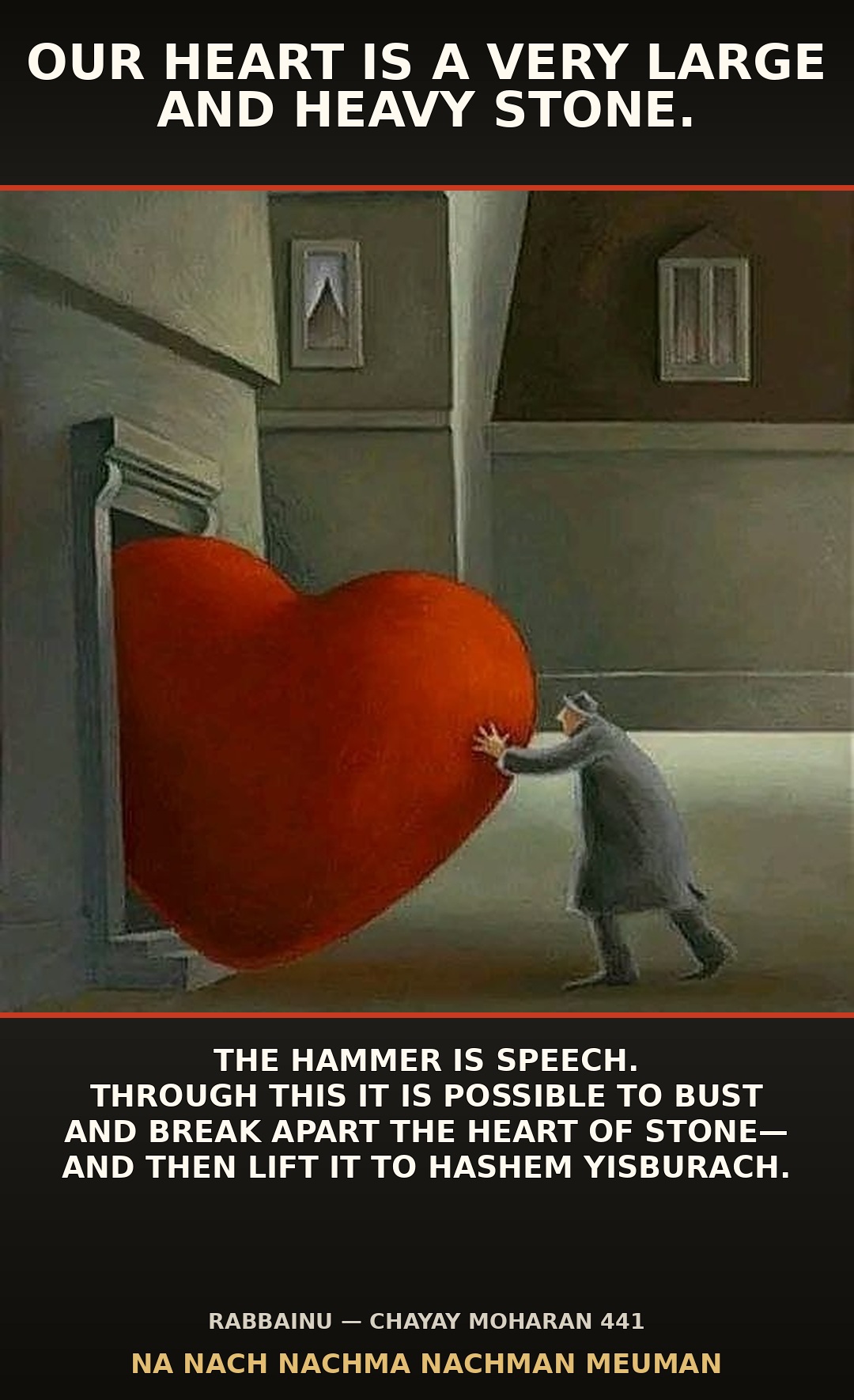
פעם אחת דבר רבנו זכרונו לברכה עם רבי יעקב יוסף מענין עבודת ה' כדרכו תמיד, וספר לו משל למלך ששלח את בנו למרחקים ללמד חכמות. אחר כך בא הבן לבית המלך מלמד בכל החכמות כראוי. פעם אחת צוה המלך על הבן לקח איזה אבן גדול מאד כמו אבן הרחים, ולטל ולשא אותו על עליות ביתו. ומסתמא לא היה יכול הבן הנ"ל לשא ולרום את האבן כי היה אבן גדול וכבד מאד. ונצטער הבן מאד על שאי אפשר לו למלאת רצון אביו המלך, עד שגלה לו המלך דעתו אחר כך ואמר לו היעלה על דעתך שאני אצוה עליך דבר כבד כזה, לקחת את האבן כמו שהוא ולשא ולרום אותו, התוכל לעשות דבר זה על פי חכמתך הגדולה. אך אין כונתי לזה כלל, רק כונתי היה שתקח פטיש חזק ותכה ותפוצץ את האבן לחתיכות קטנות, ובזה תוכל להעלות אותו על העליה. כמו כן השם יתברך צוה עלינו שנשא לבבנו אל כפים אל אל בשמים, ולבבנו הוא לב האבן. והוא אבן גדול וכבד מאד ואי אפשר להרים אותו להשם יתברך בשום אפן, רק על ידי שנקח פטיש ונשבר ונפוצץ את לב האבן ואז נוכל להרים אותו. והפטיש הוא הדבור, עד כאן המשל והבן.
Once, Rabbainu o.b.m. spoke with Rav Yaakov Yosef regarding the service of Hashem, as was his practice always, and he told him a parable of a king who sent his son far away to learn wisdoms. Afterwards the son came to the king's house erudite in all the wisdoms. Once, the king commanded the son to take a certain extremely large stone (like a millstone) and carry it up to the higher floors of the house, and probably the son was unable to carry and lift the stone, because it was a very large and heavy stone. And the son was anguished for not being able to fulfill the desire of his father the king, until the king revealed to him afterwards his purport, and said to him, “Is it conceivable to you that I would command you something so arduous like this to take the stone as it is and carry it and lift it; are you able to do such a thing with your great wisdom?! Rather my entire intention was that you should take a sledgehammer and bash and break apart the stone into small pieces, and in this way you would be able to bring it up to the higher floor.” Similarly, Hashem Yisburach commanded us (Lamentations 3:41) that we lift our hearts up to hands (stretched out) to G-d in heaven, and our hearts are very large and heavy stone (heart), and it is impossible to lift by any means, just, by taking a hammer, which is speech, and through this it is possible to bust and break apart the heart of stone, and then we are able to lift it to Hashem Yisburach, and understand (this).
📷 Picture for this teaching
פעם אחת דבר רבנו זכרונו לברכה שצריכין לעסק הרבה באמירת תהלים ותחנות ובקשות והתבודדות וכו'. ושאל אותו הרב רבי יודל זכרונו לברכה איך לוקחין לב (רצונו לומר איך זוכין שיהיו הדבורים בהתעוררות הלב). השיב לו רבנו זכרונו לברכה, תאמרו לי אצל איזה צדיק קבלתם התעוררות הלב, העקר הוא האמירה בפה. רצונו לומר להרבות בדבורים של תחנות ובקשות בפה, והתעוררות הלב בא ממילא:
Another time Rabbainu o.b.m. spoke about the necessity to engage abundantly in the recital of Psalms, and entreaties, and beseeching, and hisbodidus etc.. And the rav, the tzaddik, Rabbi Yuddel zatza”l asked him, “How does one garner heart (meaning to say, how does one merit that the words will be with arousal of the heart)?” Rabbainu o.b.m. answered him, “Tell me, by which tzaddik did you receive arousal of the heart? The main thing is the speaking with the mouth, words of entreaty and beseeching, and the arousal of the heart will come of itself.
💬 Comments
…Comments are currently read-only.
Loading comments…