
Sections
Hilchos Birchos HaTorah — Halacha 1
ליקוטי הלכות - Likutay Halachos
Matched source edition · Volume 4 · Bracketed references are separate from the traditional items.
הִלְכוֹת בִּרְכוֹת הַתּוֹרָה הֲלָכָה אHilchos Birchos HaTorah Halacha 1
Based on LM I:36
עַל-פִּי הַמַּאֲמָר בְּקָרוֹב עָלַי מְרֵעִים וְכוּ' ( בְּסִימָן לו) עַיֵּן שָׁם:
וְהַכְּלָל שֶׁכָּל אֶחָד מִיִּשְׂרָאֵל צָרִיךְ לְהִתְנַסּוֹת וּלְהִצְטָרֵף בַּגָּלוּת שֶׁל שִׁבְעִים אֻמִּין דְּהַיְנוּ בְּתַאֲווֹתֵיהֶן קֹדֶם שֶׁיֵּשׁ לוֹ הִתְגַּלּוּת בַּתּוֹרָה וְעִקָּר הִיא תַּאֲווֹת נִיאוּף שֶׁהִיא בְּחִינַת רַע הַכּוֹלֵל שֶׁל הַכֹּל הַשִּׁבְעִים אֻמִּין וּצְרִיכִין לְהִתְנַסּוֹת וּלְהִצְטָרֵף מִקֹּדֶם בַּתַּאֲוָה הַזֹּאת וּכְשֶׁזּוֹכֶה לַעֲמֹד בַּנִּסָּיוֹן וּלְשַׁבֵּר תַּאֲוָה זוֹ זוֹכֶה לְהִתְגַּלּוּת הַתּוֹרָה וְאָז נִמְשָׁךְ עַל-יְדֵי זֶה נְשָׁמוֹת חֲדָשׁוֹת וְכוּ' וְכָל אֶחָד מְקַבֵּל אֶת הַתּוֹרָה כְּפִי הַכְּלִי שֶׁלּוֹ כְּפִי תְּפִיסַת הַמֹּחִין שֶׁלּוֹ, שֶׁהוּא כְּפִי מַה שֶּׁזּוֹכֶה לִבְחִינַת שְׁמִירַת הַבְּרִית כִּי מִפִּי עֶלְיוֹן לֹא תֵצֵא כִּי אִם אוֹר פָּשׁוּט רַק כָּל אֶחָד מְצַיֵּר הָאוֹר לְפִי בְּחִינָתוֹ וְזֶה בְּחִינַת ( יוֹמָא עב) וְשַׂמְתֶּם זָכָה נַעֲשֶׂה לוֹ סַם חַיִּים לֹא זָכָה וְכוּ'. וְזֶה בְּחִינַת הִנֵּה בָרֵךְ לָקַחְתִּי וּבֵרֵךְ וְלֹא אֲשִׁיבֶנָּה וְכוּ' עַיֵּן שָׁם הֵיטֵב כָּל זֶה וּכְבָר מוּבָא זֶה הַמַּאֲמָר בְּכֶרֶךְ אַחַר בְּהִלְכוֹת פֶּסַח עַיֵּן שָׁם הֵיטֵב.
The general principle: every Jew must be tested and refined through the exile of the seventy nations — that is, through their desires — before he can have a revelation in Torah. The essential desire is the desire of adultery, which is the ra hakolail [the all-inclusive evil] encompassing all seventy nations. One must first be tested and refined through this desire, and when one merits standing firm in the test and shattering this desire, one merits the revelation of Torah. Then new neshamos [souls] are drawn forth, and each person receives the Torah according to his vessel, according to the comprehension of his mind — which corresponds to his merit in shmeeras habris [guarding the Covenant — personal holiness]. For from the Mouth of the Most High nothing emerges except simple, undifferentiated light — only each person shapes the light according to his level. This is the aspect of (Yoma 72b): "Visamtem — zuchuh, naseh loa sam chaim; loa zuchuh..." — "If he merited, it becomes an elixir of life; if not..." — (it becomes the reverse). This is also the aspect of (Bamidbar 23): "Heenay vuraich lukuchtee, oovairaich viloa asheevenuh" — "Behold, I have received blessing, and He blessed — I cannot reverse it." (See there well. This teaching is also brought in another volume in Hilchos Pesach.)
וְזֶה בְּחִינַת בִּרְכַּת הַתּוֹרָה שֶׁצְּרִיכִין לְבָרֵךְ בְּכָל יוֹם עַל הַתּוֹרָה כְּדֵי לִזְכּוֹת לְהַמְשִׁיךְ אוֹר הַתּוֹרָה בִּבְחִינַת בְּרָכָה בִּבְחִינַת זָכָה נַעֲשֶׂה לוֹ סַם חַיִּים וְכוּ' כִּי בְּהַתּוֹרָה יֵשׁ שְׁנֵי כֹּחוֹת זָכָה נַעֲשֶׂה לוֹ סַם חַיִּים לֹא זָכָה וְכוּ' וְעַל-כֵּן צְרִיכִין דַּיְקָא לְבָרֵךְ עַל הַתּוֹרָה כְּדֵי לְהַמְשִׁיךְ אוֹר הַתּוֹרָה שֶׁהוּא בִּבְחִינַת אוֹר פָּשׁוּט הַנַּ"ל לְצַיְּרוֹ בִּבְחִינַת בְּרָכָה בִּבְחִינַת זָכָה נַעֲשֶׂה לוֹ סַם חַיִּים כַּנַּ"ל.
This is the aspect of Birchas HaTorah [the blessings over the Torah] — that one must bless every day over the Torah in order to merit drawing the light of Torah in the aspect of brachah [blessing], in the aspect of "if he merited, it becomes an elixir of life." For the Torah contains two powers — "if he merited, an elixir of life; if not..." — and therefore one must specifically bless over the Torah, to draw its light — which is simple, undifferentiated light — and shape it in the aspect of brachah, the aspect of "merited — elixir of life."
וְזֶה שֶׁמְּבָרְכִין אֲשֶׁר בָּחַר בָּנוּ מִכָּל הָעַמִּים וְנָתַן לָנוּ אֶת תּוֹרָתוֹ כִּי אָנוּ מַזְכִּירִין בִּבְרָכָה זוֹ אֲשֶׁר בָּחַר בָּנוּ מִכָּל הָעַמִּים. דְּהַיְנוּ שֶׁבָּחַר בָּנוּ מֵהֶם וְהוֹצִיא אוֹתָנוּ מֵהֶם דְּהַיְנוּ מִמִּדּוֹתֵיהֶן וּמִתַּאֲווֹתֵיהֶן הָרָעוֹת וְעַל-יְדֵי זֶה דַּיְקָא שֶׁבָּחַר בָּנוּ מִכָּל הָעַמִּים כִּי עַמֵּךְ יִשְׂרָאֵל כֻּלָּם צַדִּיקִים וְכֻלָּם בִּכְלַל שׁוֹמְרֵי הַבְּרִית כַּמּוּבָא בְּמָקוֹם אַחֵר ( בְּלִקּוּטֵי א סִימָן כג) וְעַל-יְדֵי זֶה אָנוּ מֻבְחָרִים מִכָּל הָעַמִּים, דְּהַיְנוּ מִכָּל הַשִּׁבְעִים אֻמִּין מִתַּאֲווֹתֵיהֶן הָרָעוֹת וְהָעִקָּר מִתַּאֲוָה הַכְּלָלִית שֶׁכּוֹלֶלֶת כָּל הַשִּׁבְעִין אֻמִּין כַּנַּ"ל וְעַל-יְדֵי זֶה דַּיְקָא וְנָתַן לָנוּ אֶת תּוֹרָתוֹ כִּי עִקַּר קַבָּלַת הַתּוֹרָה הוּא עַל-יְדֵי זֶה דַּיְקָא עַל -יְדֵי שֶׁאָנוּ בִּבְחִינַת מֻבְחָרִים מִכָּל הָעַמִּים דְּהַיְנוּ בִּבְחִינַת קְדֻשַּׁת הַבְּרִית וּמַכְנִיעִין וּמְשַׁבְּרִין הַתַּאֲוָה הַכְּלָלִיִּית שֶׁהִיא בְּחִינַת כְּלָלִיּוּת הַשִּׁבְעִים עַמִּים עַל-יְדֵי זֶה דַּיְקָא נָתַן לָנוּ אֶת תּוֹרָתוֹ כִּי עַל-יְדֵי זֶה דַּיְקָא יְכוֹלִים לְקַבֵּל אֶת הַתּוֹרָה בִּבְחִינַת בְּרָכָה בִּבְחִינַת סַם חַיִּים כַּנַּ"ל.
This is what we bless: "Asher bachar banu mikol ha'amim v'nasan lanu es Toraso" — "Who chose us from all the nations and gave us His Torah." We mention in this brachah that He chose us from all the nations — that He selected us from them, extracting us from their character traits and evil desires. Specifically through this — "He chose us from all the nations" — for "Your people Yisrael are all tzadikim" and all are included among those who guard the Bris, as brought elsewhere (LM I:23). Through this we are chosen from all the nations — from the seventy nations and their evil desires, especially from the all-encompassing desire that includes all seventy nations. And specifically through this — "v'nasan lanu es Toraso" — "He gave us His Torah" — for the essential reception of Torah is specifically through this: through being chosen from all the nations — meaning through the kedushah of the Bris, subduing and shattering the all-encompassing desire. Through this specifically one can receive the Torah in the aspect of brachah, the aspect of sam chaim [elixir of life].
וְזֶה בְּחִינַת הַעֲרֶב נָא ה' אֱלֹקֵינוּ אֶת דִּבְרֵי תוֹרָתְךָ בְּפִינוּ וְכוּ' שֶׁאָנוּ מְבַקְּשִׁים שֶׁתִּהְיֶה הַתּוֹרָה מְתוּקָה וַעֲרֵבָה בְּפִינוּ דְּהַיְנוּ שֶׁנִּזְכֶּה לְקַבֵּל אֶת הַתּוֹרָה בִּבְחִינַת אוֹר מָלֵא בִּבְחִינַת בְּרָכָה בִּבְחִינַת סַם חַיִּים שֶׁזֶּה בְּחִינַת מַיִין מְתוּקִין בְּחִינַת שְׁמִירַת הַבְּרִית כִּי לְהֵפֶךְ חַס וְשָׁלוֹם לֹא זָכָה וְכוּ' אָז הוּא בִּבְחִינַת מַיִין מְרוֹרִין בְּחִינַת ( שְׁמוֹת טו) וְלֹא יָכְלוּ לִשְׁתּוֹת מַיִם מִמָּרָה כִּי מָרִים הֵם וְכוּ' וְעַל-כֵּן בְּכָל יוֹם קֹדֶם שֶׁמַּתְחִילִין לִלְמֹד וְלִקְרוֹת בַּתּוֹרָה אָנוּ צְרִיכִין לְבָרֵךְ דַּיְקָא בִּרְכַּת הַתּוֹרָה כְּדֵי לִזְכּוֹת לְהַמְשִׁיךְ אוֹר הַתּוֹרָה בִּבְחִינַת בְּרָכָה בִּבְחִינַת סַם חַיִּים שֶׁזֶּה בְּחִינַת מַיִין מְתוּקִין בְּחִינַת הַעֲרֶב נָא וְכוּ' וְכַנַּ"ל.
This is the aspect of "Harev na Hashem Elokainu es divrai Soarascha bifeenoo" — "Please, Hashem our God, make the words of Your Torah sweet in our mouths" — for we request that the Torah be sweet and pleasant in our mouths, meaning that we merit receiving the Torah in the aspect of a full light, in the aspect of brachah, the aspect of sam chaim — which is the aspect of mayim misookin [sweet waters], the aspect of shmeeras habris. For the reverse, chas vishalom — "if he did not merit..." — it is the aspect of mayim m'rorin [bitter waters], in the aspect of (Shemos 15): "They could not drink the waters of Marah, for they were bitter."
וְעַל-כֵּן נוֹהֲגִין לוֹמַר תֵּכֶף אַחַר בִּרְכַּת הַתּוֹרָה פָּרָשַׁת בִּרְכַּת כֹּהֲנִים כִּי בִּרְכַּת כֹּהֲנִים זֶה בְּחִינַת שֶׁהַכֹּהֲנִים מְצַיְּרִין הָאוֹר שֶׁהוּא קָמִיץ וְסָתִים בְּחִינַת ( וַיִּקְרָא ה') וְקָמַץ הַכֹּהֵן וְכוּ' הֵם מְצַיְּרִין אוֹתוֹ לִבְרָכָה עַל -יְדֵי בִּרְכָתָם כִּי הַכֹּהֲנִים הֵם בִּבְחִינַת שְׁמִירַת הַבְּרִית וְכוּ' כַּמְבֹאָר כָּל זֶה הֵיטֵב בְּהִלְכוֹת פֶּסַח הַנַּ"ל וְעַל-כֵּן סָמַךְ פָּרָשַׁת בִּרְכַּת כֹּהֲנִים אַחַר בִּרְכַּת הַתּוֹרָה.
Therefore every day, before beginning to learn and read the Torah, we must specifically recite Beerchas HaTorah — to merit drawing the light of Torah in the aspect of brachah, the aspect of sam chaim, the aspect of sweet waters, the aspect of "Harev na." Therefore the custom is to say immediately after Birchas HaTorah the passage of Bircas Kohanim — for Bircas Kohanim is the aspect of the Kohanim shaping the light that is kumitz visasim [contracted and sealed], in the aspect of (Vayikra 5): "Vikumatz haKohain" — "The Kohain shall close his fist" — they shape it into brachah through their blessing, for the Kohanim are in the aspect of shmeeras habris (-guarding the bris), as explained in Hilchos Pesach. Therefore Beercas Kohanim is juxtaposed to Beerchas HaTorah — for the essence of Birchas HaTorah is to shape the light into brachah, which is the aspect of Bircas Kohanim.
כִּי עִקַּר בִּרְכַּת הַתּוֹרָה כְּדֵי לְצַיֵּר הָאוֹר לִבְרָכָה שֶׁזֶּה בְּחִינַת בִּרְכַּת כֹּהֲנִים כַּנַּ"ל וְזֶה שֶׁהֶחֱמִירוּ רַבּוֹתֵינוּ זִכְרוֹנָם לִבְרָכָה ( נְדָרִים פֶּרֶק א) מְאֹד בְּבִרְכַּת הַתּוֹרָה כְּמוֹ שֶׁדָּרְשׁוּ עַל פָּסוּק ( יִרְמְיָה ט') עַל מַה אָבְדָה הָאָרֶץ דָּבָר זֶה נִשְׁאַל לַחֲכָמִים וְלַנְּבִיאִים וְכוּ' וְלֹא פֵּרְשׁוּהָ עַד שֶׁפֵּרְשָׁהּ הַקָּדוֹשׁ בָּרוּךְ הוּא בְּעַצְמוֹ שֶׁנֶּאֱמַר עַל עָזְבָם אֶת תּוֹרָתִי וְלֹא שָׁמְעוּ בְּקוֹלִי וְלֹא הָלְכוּ בָהּ הַיְנוּ וְלֹא שָׁמְעוּ בְּקוֹלִי הַיְנוּ וְלֹא הָלְכוּ בָּהּ, אָמַר רַב שֶׁלֹּא בֵּרְכוּ בַּתּוֹרָה תְּחִלָּה כִּי זֶה עִקַּר הַפְּגָם מַה שֶּׁלֹּא בֵּרְכוּ בַּתּוֹרָה תְּחִלָּה כִּי תְּחִלָּה צָרִיךְ לְבָרֵךְ עַל הַתּוֹרָה כְּדֵי לְהַמְשִׁיךְ הָאוֹר מִתְּחִלַּת הַמַּחֲשָׁבָה שֶׁהוּא בְּחִינַת קָמִיץ וְסָתִים בִּבְחִינַת בְּרָכָה וְכוּ' כַּנַּ"ל וּמֵחֲמַת שֶׁפָּגְמוּ בָּזֶה וְלֹא הִמְשִׁיכוּ הָאוֹר בְּחִינַת בְּרָכָה עַל-יְדֵי זֶה אָבְדָה הָאָרֶץ. כִּי זֶה עִקַּר הַפְּגָם כְּשֶׁאֵין זוֹכִין לְהַמְשִׁיךְ אוֹר הַתּוֹרָה בִּבְחִינַת בְּרָכָה בִּבְחִינַת סַם חַיִּים וְכוּ' כַּנַּ"ל וְאָז לֹא יָכְלָה הַתּוֹרָה לְהָגֵן עֲלֵיהֶם מֵאַחַר שֶׁלֹּא בֵּרְכוּ בַּתּוֹרָה תְּחִלָּה וְלֹא הִמְשִׁיכוּ הָאוֹר בִּבְחִינַת בְּרָכָה וְכַנַּ"ל, וְעַל-כֵּן אָבְדָה הָאָרֶץ כִּי אֶרֶץ יִשְׂרָאֵל הִיא בְּחִינַת מַלְכוּת דִּקְדֻשָּׁה כַּיָּדוּעַ שֶׁעוֹמֶדֶת עַל שְׁנֵים עָשָׂר בָּקָר כְּנֶגֶד שְׁנֵים עָשָׂר שִׁבְטֵי יָהּ כַּמְבֹאָר בַּמַאֲמָר הַנַּ"ל.
This is why our Sages were extremely stringent (Nedarim, Ch. 1) regarding Birchas HaTorah, as they expounded on the verse (Yirmiyahu 9): "Al mah uvduh ha'aretz" — "Why was the Land lost?" — this question was posed to the Sages and the Prophets and none could explain it, until HaKadosh Baruch Hu Himself explained: "Al ozvam es Torasi... viloa halchoo buh" — "Because they abandoned My Torah... and did not walk in it." Rav said: "They did not bless over the Torah first." This is the essential blemish — that they did not bless over the Torah first, for one must first bless in order to draw the light from the Beginning of Thought, which is kumitz visasim (-clenched closed and hidden), in the aspect of brachah. Because they blemished this and did not draw the light in the aspect of brachah — the Land was lost. For Eretz Yisrael is the aspect of Malchus diKdushah [Kingship of holiness], standing upon twelve oxen corresponding to the twelve tribes, as explained in the teaching.
כִּי אֶרֶץ יִשְׂרָאֵל נִתְחַלְּקָה לִשְׁנֵים עָשָׂר גְּבוּלִין לִשְׁנֵים עָשָׂר שְׁבָטִים, שֶׁזֶּה בְּחִינַת שְׁמִירַת הַבְּרִית כַּמְבֹאָר שָׁם בַּמַּאֲמָר הַנַּ"ל. וְעַל-יְדֵי שֶׁלֹּא בֵּרְכוּ בַּתּוֹרָה תְּחִלָּה וְלֹא הִמְשִׁיכוּ הָאוֹר בִּבְחִינַת בְּרָכָה שֶׁזֶּה בְּחִינַת פְּגַם הַבְּרִית, כִּי עִקַּר הַמְשָׁכַת הָאוֹר בִּבְחִינַת בְּרָכָה הוּא עַל-יְדֵי תִּקּוּן הַבְּרִית כַּנַּ"ל וְעַל -כֵּן עַל-יְדֵי שֶׁפָּגְמוּ בָּזֶה עַל-יְדֵי זֶה אָבְדָה הָאָרֶץ שֶׁעִקַּר קִיּוּמָהּ דַּיְקָא עַל-יְדֵי בְּחִינַת שְׁמִירַת הַבְּרִית כַּמּוּבָא וְכַנַּ"ל, כְּמוֹ שֶׁכָּתוּב ( תְּהִלִּים לז) צַדִּיקִים יִרְשׁוּ אָרֶץ וְצַדִּיק הוּא מָאן דְּנָטִיר בְּרִית וְהֵם דַּיְקָא יוֹרְשִׁים אֶרֶץ יִשְׂרָאֵל הַקְּדוֹשָׁה שֶׁנִּתְחַלְּקָה לִשְׁנֵים עָשָׂר שִׁבְטֵי י"ק וְכַנַּ"ל וְעַל-כֵּן צְרִיכִים לְבָרֵךְ עַל הַתּוֹרָה בְּכָל יוֹם כִּי בְּכָל יוֹם מְקַבְּלִין אֶת הַתּוֹרָה מֵחָדָשׁ כְּמוֹ שֶׁכָּתוּב ( דְּבָרִים ו) אֲשֶׁר אָנֹכִי מְצַוְּךָ הַיּוֹם בְּכָל יוֹם יִהְיוּ בְּעֵינֶיךָ כַּחֲדָשִׁים ( סִפְרִי שָׁם).
Eretz Yisrael was divided into twelve portions for the twelve tribes — the aspect of shmeeras habris, as explained there. Because they did not bless over the Torah first and did not draw the light in the aspect of brachah — which is the blemish of the Bris — the Land was lost. For the essential drawing of light in the aspect of brachah is through tikun habris, and through blemishing this, the Land was lost — whose essential existence depends on shmeeras habris, as it says (Tehillim 37): "Tzadikim yeershoo uretz" — "The righteous shall inherit the land" — and "tzadik" is one who guards the Bris. They specifically inherit the holy Eretz Yisrael, divided for the twelve tribes.
וְעַל-כֵּן צְרִיכִין לְבָרֵךְ תְּחִלָּה כְּדֵי לְהַמְשִׁיךְ אוֹר הַתּוֹרָה בִּבְחִינַת בְּרָכָה כַּנַּ"ל וְעַל -כֵּן עִקַּר בִּרְכַּת הַתּוֹרָה הוּא אַחַר הַשֵּׁנָה בַּלַּיְלָה כַּמּוּבָא בַּשֻּׁלְחָן עָרוּךְ כִּי תַּאֲוָה הַכְּלָלִיּוּת הַנַּ"ל שֶׁהִיא תַּאֲוַת נִאוּף הִיא בְּחִינַת שֵׁנָה בְּחִינַת חֹשֶׁךְ שֶׁל לַיְלָה כְּמוֹ שֶׁכָּתוּב ( תְּהִלִּים יז) בָּחַנְתָּ לִבִּי פָּקַדְתִּי לַיְלָה וְכוּ' כִּי עִקַּר שָׁרְשָׁהּ מִבְּחִינַת שֵׁנָה וְתַרְדֵּמָה, בְּחִינַת ( בְּרֵאשִׁית ב) וַיַפֵּל ה' אֱלֹקִים תַּרְדֵּמָה עַל הָאָדָם וַיִּישָׁן וַיִּקַּח אַחַת מִצַּלְעוֹתָיו וְכוּ' כִּי הַשֵּׁנָה הִיא שֶׁנִּסְתָּם אוֹר הָעַיְנִין כְּמוֹ שֶׁמְּבָרְכִין הַמַּפִּיל חֶבְלֵי שֵׁנָה עַל עֵינָי, וּמִשָּׁם אֲחִיזַת הַתַּאֲוָה הַנַּ"ל שֶׁהִיא בְּחִינַת פְּגַם הָעַיְנִין בְּחִינַת תַּאֲוָה הַכְּלָלִית שֶׁל שִׁבְעִים אֻמִּין וְכוּ' כַּמְבֹאָר בַּמַּאֲמָר הַנַּ"ל.
Therefore one must bless over the Torah every day — for every day we receive the Torah anew, as it says (Devarim 6): "Ashehr Anoachi mitzavichuh ha’yoam" — "Which I command you today" — "every day they should be in your eyes as new" (Sifri). Therefore one must bless first, to draw the Torah's light in the aspect of brachah. The essential time for Birchas HaTorah is after sleep at night, as brought in the Shulchan Aruch — for the all-encompassing desire of adultery is the aspect of sleep, the aspect of the darkness of night, as it says (Tehillim 17): "Buchantuh leebee, pukadtuh leyeluh" — "You have tested my heart, You have visited at night." Its essential root is from sleep and deep slumber, in the aspect of (Beraishis 2): "Va’yapail Hashem Elokim tardaimah al ha'adam va’yeeshan, va’yeekach achas meetzaloasuv" — "Hashem God cast a deep sleep upon the man, and he slept, and He took one of his ribs." For sleep is when the light of the eyes is sealed — as we bless: "HaMapil chevlai shainah al aineye" — "Who casts the bonds of sleep upon my eyes" — and from there the all-encompassing desire takes hold, the blemish of the eyes.
וְעַל-כֵּן אַחַר הַשֵּׁנָה בַּלַּיְלָה צָרִיךְ לְקַבֵּל בְּכָל יוֹם הַתּוֹרָה מֵחָדָשׁ דְּהַיְנוּ לְהַמְשִׁיךְ אוֹר הַתּוֹרָה בִּבְחִינַת בְּרָכָה לְהַכְנִיע תַּאֲוָה הַכְּלָלִיּוּת שֶׁל הַשִּׁבְעִים אֻמִּין כִּי אָנוּ מַזְכִּירִין אֲשֶׁר בָּחַר בָּנוּ מִכָּל הָעַמִּים, וְעַל-יְדֵי זֶה אָנוּ מַמְשִׁיכִין עָלֵינוּ קְדֻשַּׁת יִשְׂרָאֵל שֶׁהֵם מֻבְחָרִים מִכָּל הָעַמִּים כִּי הֵם קְדוֹשִׁים וּטְהוֹרִים וּמְקַדְּשִׁין עַצְמָן מִתַּאֲוָה זוֹ כַּנַּ"ל וּכְמוֹ שֶׁכָּתוּב וְעַמֵּךְ יִשְׂרָאֵל כֻּלָּם צַדִּיקִים וְעַל-יְדֵי זֶה דַּיְקָא וְנָתַן לָנוּ אֶת תּוֹרָתוֹ וְכוּ' כַּנַּ"ל.
Therefore after sleep at night, one must receive the Torah anew every day — drawing the Torah's light in the aspect of brachah, subduing the all-encompassing desire of the seventy nations. For we mention "Ashehr buchar bunoo meekoal hu'ameem" — drawing upon ourselves the kedushah of Yisrael who are chosen from all the nations, who are holy and pure and sanctify themselves from this desire — and specifically through this: "Vinusan lunoo es Toarasoa."
וְזֶה בְּחִינַת קַבָּלַת הַתּוֹרָה בְּשָׁבוּעוֹת עַל-יְדֵי שֶׁמְּקַדְּשִׁין עַצְמָן מִקֹּדֶם וּמַפְרִישִׁין עַצְמָן מִתַּאֲוָה זֹאת כְּמוֹ שֶׁכָּתוּב ( שְׁמוֹת יט) הֱיוּ נְכוֹנִים לִשְׁלֹשֶׁת יָמִים וְכוּ' וְעַל-יְדֵי זֶה דַּיְקָא זוֹכִין לְקַבֵּל הַתּוֹרָה בְּשָׁבוּעוֹת עַל-יְדֵי מֹשֶׁה רַבֵּנוּ עָלָיו הַשָּׁלוֹם שֶׁהָיָה קָדוֹשׁ וּפָרוּשׁ לְגַמְרֵי כַּמְבֹאָר בַּמַּאֲמָר הַנַּ"ל כִּי כָּל אֶחָד מִיִּשְׂרָאֵל זוֹכֶה לְקַבֵּל הַתּוֹרָה עַל-יְדֵי מֹשֶׁה רַבֵּנוּ, עַל-יְדֵי שֶׁנִּתְקַדְּשׁוּ כֻּלָּם בִּפְרִישׁוּת תַּאֲוָה זוֹ בִּשְׁלֹשֶׁת יָמִים הַנַּ"ל, וַאֲזַי מְקַבְּלִין כֻּלָּם הָאוֹר בִּבְחִינַת בְּרָכָה כַּנַּ"ל.
This is the aspect of the receiving of the Torah at Shavuos: through sanctifying oneself beforehand, separating from this desire — as it says (Shemos 19): "He’yoo nichoanim lishloashes yumim" — "Be prepared for three days" — and specifically through this one merits receiving the Torah at Shavuos, through Moshe Rabbainu who was holy and completely separated. Every Jew merits receiving the Torah through Moshe Rabbainu — through all of them sanctifying themselves from this desire during the three days — and then they all receive the light in the aspect of brachah.
וְזֶה בְּחִינַת ( שָׁם כ) דַּבֵּר אַתָּה עִמָּנוּ וְנִשְׁמְעָה וְאַל יְדַבֵּר עִמָּנוּ אֱלֹקִים פֶּן נָמוּת כִּי יִשְׂרָאֵל הָיוּ חֲפֵצִים יוֹתֵר לִשְׁמֹעַ מִפִּי מֹשֶׁה מִלִּשְׁמֹעַ מִפִּיו יִתְבָּרַךְ בְּעַצְמוֹ כִּי כְּשֶׁשּוֹמְעִין מִפִּי הַשֵּׁם יִתְבָּרַךְ עַצְמוֹ וְהָאוֹר הַיּוֹצֵא מִפִּי עֶלְיוֹן הוּא אוֹר פָּשׁוּט מְאֹד בְּתַכְלִית הַפְּשִׁיטוּת בְּחִינַת קָמִיץ וְסָתִים, וְאָז הָיוּ צְרִיכִים לִּהְיוֹת קְדוֹשִׁים וּטְהוֹרִים מְאֹד כְּדֵי לְצַיֵּר הָאוֹר בִּבְחִינַת בְּרָכָה. וְעַל-כֵּן יִשְׂרָאֵל חָשְׁשׁוּ שֶׁמָּא אֵין לָהֶם עֲדַיִן זֶה הַכֹּחַ לְהַמְשִׁיךְ הָאוֹר הַבָּא מֵהַשֵּׁם יִתְבָּרַךְ בְּעַצְמוֹ בִּבְחִינַת בְּרָכָה. אֲבָל כְּשֶׁיִּהְיֶה נִמְשָׁךְ עַל-יְדֵי מֹשֶׁה שֶׁהָיָה קָדוֹשׁ וּפָרוּשׁ גָּדוֹל מְאֹד, וְעַל-כֵּן בְּוַדַּאי יַמְשִׁיךְ הָאוֹר מִפִּי עֶלְיוֹן בִּבְחִינַת בְּרָכָה וּמֵאַחַר שֶׁכְּבָר נִצְטַיֵּר הָאוֹר קְצָת מֵאַחַר שֶׁכְּבָר נִשְׁתַּלְשֵׁל קְצַת וְנִמְשָׁךְ מִפִּי הַשֵּׁם יִתְבָּרַךְ לְפֶה מֹשֶׁה אֲזַי כְּבָר הֵם יְכוֹלִים יוֹתֵר לְקַבֵּל הָאוֹר בִּבְחִינַת בְּרָכָה אַף-עַל-פִּי שֶׁאֵין קְדֻשָּׁתָם גָּבוֹהַּ כָּל כָּךְ כִּי אַף-עַל-פִּי שֶׁגַּם כְּשֶׁשּׁוֹמְעִין מִפִּי הַצַּדִּיק הָאֱמֶת אִי אֶפְשָׁר גַּם כֵּן לְקַבֵּל דְּבָרָיו בִּבְחִינַת בְּרָכָה בְּחִינַת סַם חַיִּים כִּי אִם עַל-יְדֵי שְׁמִירַת הַבְּרִית כַּמְבֹאָר בַּמַּאֲמָר הַנַּ"ל כִּי גַּם דִּבְרֵי הַצַּדִּיק בְּעֵרֶךְ הֶהָמוֹן עִם הֵם בִּבְחִינַת אוֹר פָּשׁוּט, אַף-עַל-פִּי-כֵן כְּבָר הוּא בְּנָקֵל יוֹתֵר לְקַבֵּל הָאוֹר בִּבְחִינַת בְּרָכָה עַל-יְדֵי קְצָת קְדֻשָּׁה מֵאַחַר שֶׁאַף עַל-פִּי כֵּן כְּבָר נִצְטַיֵּר הָאוֹר קְצָת בְּפִי הַצַּדִּיק הַקָּדוֹשׁ שֶׁקִּבֵּל הָאוֹר מִפִּי עֶלְיוֹן וְצִיְּרוֹ לְטוֹבָה וְלִבְרָכָה עַל-יְדֵי קְדֻשָּׁתוֹ הַגָּבוֹהַּ וְעַל-כֵּן אָמְרוּ יִשְׂרָאֵל דַּבֵּר אַתָּה וְכוּ' וְאַל יְדַבֵּר וְכוּ' פֶּן נָמוּת כִּי אוּלַי לֹא נִזְכֶּה לְקַבֵּל הָאוֹר בִּבְחִינַת בְּרָכָה וַאֲזַי לֹא זָכָה נַעֲשֶׂה לוֹ סַם מָוֶת חַס וְשָׁלוֹם כִּי לֹא הָיוּ מַחֲזִיקִים עַצְמָן בִּקְדוֹשִׁים כָּל כָּךְ שֶׁיּוּכְלוּ לְקַבֵּל מֵהַשֵּׁם יִתְבָּרַךְ בְּעַצְמוֹ הָאוֹר וּלְצַיְּרוֹ לִבְרָכָה אֲבָל עַל-יְדֵי הַצַּדִּיק בְּחִינַת מֹשֶׁה בְּנָקֵל יוֹתֵר לְצַיֵּר הָאוֹר לִבְרָכָה עַל-יְדֵי קְדֻשָּׁה קְצָת מֵחֲמַת שֶׁכְּבָר נִצְטַיֵּר בְּפֶה הַצַּדִּיק כַּנַּ"ל וְעַל-כֵּן צְרִיכִין לִנְסֹעַ לְצַדִּיק הָאֱמֶת וְלִשְׁמֹעַ מִפִּיו דַּיְקָא כִּי אָז יָכוֹל לְקַבֵּל הָאוֹר בִּבְחִינַת בְּרָכָה מֵאַחַר שֶׁכְּבָר נִצְטַיֵּר קְצָת בְּפִי הַצַּדִּיק כַּנַּ"ל וְזֶה בְּחִינַת ( אָבוֹת פֶּרֶק א) עֲשֵׂה לְךָ רַב וְהִסְתַּלֵּק מִן הַסָּפֵק, כִּי כָּל זְמַן שֶׁלֹּא נִצְטַיֵּר הָאוֹר הָעֶלְיוֹן הוּא בִּבְחִינַת סָפֵק, כִּי עֲדַיִן אֵין יוֹדְעִין בּוֹ כְּלָל וְאֵין בּוֹ שׁוּם תְּפִיסָה וְעַל -יְדֵי הָרַב הָאֱמֶת נִצְטַיֵּר הָאוֹר בִּבְחִינַת בְּרָכָה כַּנַּ"ל וְזֶהוּ עֲשֵׂה לְךָ רַב וְהִסְתַּלֵּק מִן הַסָּפֵק כַּנַּ"ל וְזֶהוּ ( שָׁם) וְאַל תַּרְבֶּה לְעַשֵּר אֳמָדוֹת, כִּי מַעֲשֵׂר לַלֵּוִי זֶה בְּחִינַת צִיּוּר הָאוֹר לִבְרָכָה כַּמּוּבָא בְּהִלְכוֹת פֶּסַח הַנַּ"ל, כִּי תְּרוּמָה אֵין לָהּ שִׁעוּר וְנִתֶּנֶת לַכֹּהֵן, זֶה בְּחִינַת אוֹר הָעֶלְיוֹן שֶׁהוּא קָמִיץ וְסָתִים בְּחִינַת וְקָמַץ הַכֹּהֵן.
This is the aspect of (Shemos 20): "Dabehr atuh eemanoo vineeshmu’uh, vi'al yidabair eemanoo Elokim pen numoos" — "Speak with us and we will hear, but let God not speak with us lest we die." Yisrael wished to hear specifically from Moshe rather than from Hashem Himself. For when hearing from Hashem Himself, the light emerging from the Mouth of the Most High is utterly simple, in the ultimate simplicity — the aspect of kumitz visusim. Then one would need to be exceedingly holy and pure to shape the light into brachah. Yisrael worried they did not yet have that power. But when it comes through Moshe, who was holy and greatly separated — he certainly draws the light from the Mouth of the Most High in the aspect of brachah. Since the light is already somewhat shaped through descending from Hashem's mouth to Moshe's mouth — they are more easily able to receive it as brachah, even without extremely lofty kedushah. Even when hearing from the true tzadik, one still cannot receive his words as brachah (as sam chaim) except through shmeeras habris — for even the tzadik's words, relative to the masses, are in the aspect of simple light. Nevertheless, it is much easier to receive the light in the aspect of brachah with some measure of kedushah, since it has already been shaped somewhat through the tzadik's holy mouth.
וְעַל-כֵּן אֵין לָהּ שִׁעוּר כִּי עֲדַיִן אֵין שָׁם בְּחִינַת צִיּוּר שֶׁהוּא בְּחִינַת שִׁעוּר וְצִמְצוּם וּמַעֲשֵׂר לְלֵוִי הוּא בְּחִינַת צֵירֵי וְעַל -כֵּן יֵשׁ לָהּ שִׁעוּר, כִּי שָׁם נִצְטַיֵּר הָאוֹר וְעַל-כֵּן צְרִיכִין לִתֵּן הַמַּעֲשֵׂר בִּמְדִידָה דַּיְקָא וְלֹא מֵאֹמֶד כְּדֵי לְצַיֵּר הָאוֹר לִבְרָכָה עַל-יְדֵי הַמְּדִידָה שֶׁהִיא בְּחִינַת צִיּוּר אֲבָל מֵאֹמֶד הוּא רָחוֹק יוֹתֵר וְעֶלְיוֹן מִבְּחִינַת צִיּוּר עַל-יְדֵי מְדִידָה וְעַל-כֵּן צְרִיכִין לְעַשֵּר בִּמְדִידָה דַּיְקָא כְּדֵי לְצַיֵּר הָאוֹר לִבְרָכָה וְזֶהוּ שֶׁנִּסְמַךְ וְאַל תַּרְבֶּה לְעַשֵּר אֹמְדוֹת לַ"עֲשֵׂה לְךָ רַב וְהִסְתַּלֵּק מִן הַסָּפֵק" כִּי הַכֹּל אֶחָד כַּנַּ"ל.
Therefore one must travel to the true tzadik and hear from his mouth specifically — for then one can receive the light in the aspect of brachah since it has already been shaped somewhat in the tzadik's mouth. This is the aspect of (Avos Ch. 1): "Asay lichuh Rav vihistalek min hasufek" — "Make for yourself a Rav [master/teacher] and remove yourself from doubt" — for as long as the supernal light has not been shaped, it is in the aspect of safek [doubt] — one cannot grasp it at all. Through the true Rav, the light is shaped in the aspect of brachah. And this is: "V'al tarbeh l'asayr omados" — "Do not increase tithes by estimation" — for the tithe to the Levi is the aspect of shaping the light into brachah (as brought in Hilchos Pesach): terumah [the priestly portion] has no fixed measure and is given to the Kohain — the aspect of the supernal light that is kumitz visusim, therefore having no measure, for there is not yet any shaping. The tithe to the Levi is the aspect of tzairai [a Hebrew vowel — "two dots," representing delineation/formation], therefore having a fixed measure, for there the light is shaped. One must give the tithe by exact measurement, not by estimation — to shape the light into brachah through measurement, which is the aspect of shaping.
כִּי עִקַּר בְּחִינַת שָׁבוּעוֹת הוּא עַל-יְדֵי בְּחִינָה הַנַּ"ל עַל-יְדֵי שֶׁיּוֹצְאִין מִגָּלוּת מִצְרַיִם שֶׁהִיא עֶרְוַת הָאָרֶץ תַּאֲוָה הַכְּלָלִית הַנַּ"ל כִּי מְקַדְּשִׁין עַצְמָן בְּמ"ט יְמֵי הַסְּפִירָה, וְעַל-יְדֵי זֶה נִכְלָלִין בְּמ"ט אוֹתִיּוֹת שֶׁיֵּשׁ בִּשְׁמוֹת הַשְּׁבָטִים שֶׁזֶּה בְּחִינַת קְדֻשַּׁת הַבְּרִית כַּמְבֹאָר בַּמַּאֲמָר הַנַּ"ל וְכַמְבֹאָר כָּל זֶה בְּהִלְכוֹת פֶּסַח הַנַּ"ל וְזֶה בְּחִינַת מַה שֶּׁמְּנַדְּדִים שֵׁנָה מֵעֵינַיִם בְּלֵיל שָׁבוּעוֹת כְּדֵי לְשַׁבֵּר וּלְהַכְנִיעַ בְּחִינַת שִׁבְעִים אֻמִּין שֶׁהֵם נֶאֱחָזִים בִּבְחִינַת שֵׁנָה עַל הָעֵינַיִם כַּנַּ"ל וַאֲזַי זוֹכִין לְקַבָּלַת הַתּוֹרָה שֶׁהוּא בְּחִינַת שִׁבְעִים פָּנִים לַתּוֹרָה וְכַנַּ"ל וְזֶה בְּחִינַת מַאַכְלֵי חָלָב בְּשָׁבוּעוֹת בִּבְחִינַת דָּם נֶעְכָּר וְנַעֲשֶׂה חָלָב כַּמּוּבָא שֶׁזֶּה בְּחִינַת קְדֻשַּׁת הַבְּרִית כַּמּוּבָא וְזֶה בְּחִינַת ( שִׁיר הַשִּׁירִים ה) עֵינָיו כְּיוֹנִים עַל אֲפִיקֵי מַיִם רוֹחֲצוֹת בֶּחָלָב וְכוּ' עֵינָיו כַּיּוֹנִים וְכוּ' זֶה בְּחִינַת שִׁבְעִים פָּנִים לַתּוֹרָה וְזֶה עַל אֲפִיקֵי מַיִם הַיְנוּ מֵימֵי הַתּוֹרָה וְזֶה זוֹכִין דַּיְקָא עַל-יְדֵי קְדֻשַּׁת הַבְּרִית שֶׁהוּא בְּחִינַת דָּם נֶעְכָּר וְנַעֲשֶׂה חָלָב כַּנַּ"ל וְזֶהוּ רוֹחֲצוֹת בֶּחָלָב כַּנַּ"ל וְזֶהוּ ( שָׁם) יוֹשֶׁבֶת עַל מִלֵאת, זֶה בְּחִינַת אוֹר מָלֵא, כִּי אָז מְקַבְּלִין אֶת הַתּוֹרָה בִּבְחִינַת אוֹר מָלֵא בִּבְחִינַת בְּרָכָה כַּנַּ"ל. וְזֶהוּ ( שָׁם) לְחָיָיו כַּעֲרוּגַת הַבֹּשֶׂם וְכוּ' וּפֵרֵשׁ רַשִׁ"י פָּנִים מַסְבִּירוֹת לַהֲלָכָה הַיְנוּ בְּחִינַת אַנְפִּין נְהִירִין בְּחִינַת שִׁבְעִים פָּנִים לַתּוֹרָה הַנַּ"ל שֶׁזוֹכִין לְקַבֵּל עַל-יְדֵי קְדֻשַּׁת הַבְּרִית כַּנַּ"ל.
The essential aspect of Shavuos is through the above — through leaving the exile of Mitzrayim [Egypt], which is the "nakedness of the earth," the all-encompassing desire. Through sanctifying oneself during the forty-nine days of the Sefirah [the Counting of the Omer], one becomes included in the forty-nine letters in the names of the tribes — the aspect of kedushas habris. This is the aspect of staying awake on the night of Shavuos — to shatter and subdue the aspect of the seventy nations who take hold through sleep upon the eyes. Then one merits receiving the Torah, which is the aspect of "seventy faces of the Torah." This is the aspect of eating dairy foods on Shavuos — in the aspect of "blood transforms and becomes milk" — the aspect of kedushas habris. This is (Shir HaShirim 5): "Ainuv ki'yoanim al afeekay moyim, roachatzoas bechuluv" — "His eyes are like doves by brooks of water, bathing in milk" — his eyes like doves is the aspect of seventy faces of the Torah; upon brooks of water is the aspect of the waters of Torah; bathing in milk is the aspect of blood transforming to milk, kedushas habris. And this is: "yoashvoas al meelais" — "set upon fullness" — the aspect of full light, receiving the Torah in the aspect of full light, the aspect of brachah. And this is: "Lichoyuv ka'aroogas haboasem" — "His cheeks are like a bed of spices" — and Rashi explains: "faces that illuminate the halachah" — the aspect of anpin niheerin [bright/illuminated faces], the aspect of seventy faces of the Torah, which one merits through kedushas habris.
וְזֶהוּ וְלֹא הָלְכוּ בָּהּ וְדָרְשׁוּ רַבּוֹתֵינוּ זִכְרוֹנָם לִבְרָכָה עַל זֶה שֶׁלֹּא בֵּרְכוּ בַּתּוֹרָה תְּחִלָּה דְּהַיְנוּ שֶׁלֹּא הִמְשִׁיכוּ הָאוֹר בִּבְחִינַת בְּרָכָה עַל-יְדֵי בִּרְכַּת הַתּוֹרָה כַּנַּ"ל וְזֶהוּ מְרֻמָּז בַּפָּסוּק וְלֹא הָלְכוּ בָּהּ הַנַּ"ל כִּי כְּשֶׁזּוֹכִין לְקַבֵּל אוֹר הַתּוֹרָה בִּבְחִינַת בְּרָכָה בְּחִינַת סַם חַיִּים זֶה בְּחִינַת הֲלִיכָה שֶׁהוֹלְכִין עַל-יְדֵי הַתּוֹרָה בְּדַרְכֵי ה' בְּחִינַת צַדִּיקִים יֵלְכוּ בָם, יֵלְכוּ דַּיְקָא שֶׁזֶּהוּ בְּחִינַת סַם חַיִּים כַּנַּ"ל וְעַל-כֵּן וְלֹא הָלְכוּ בָּהּ מְרַמֵּז שֶׁלֹּא בֵּרְכוּ בַּתּוֹרָה תְּחִלָּה וְלֹא הִמְשִׁיכוּ הָאוֹר בִּבְחִינַת בְּרָכָה סַם חַיִּים שֶׁזֶּהוּ בְּחִינַת הֲלִיכָה בְּחִינַת צַדִּיקִים יֵלְכוּ וְכוּ' כַּנַּ"ל.
This is "viloa hulchoo buh" — "and they did not walk in it" — and our Sages expounded that this means they did not bless over the Torah first, did not draw the light in the aspect of brachah, sam chaim (-elixir of life) — which is the aspect of halichah [walking/going forward], for when one merits receiving the Torah's light in the aspect of brachah, sam chaim, this is the aspect of walking — going through the Torah in the ways of Hashem — "Tzadikim yailchoo vum" — "The righteous shall walk in them" — yailchu specifically, which is the aspect of sam chaim.
The remaining halachos of Birchos HaTorah are included within Hilchos Birchos HaShachar.
שְׁאָר הִלְכוֹת בִּרְכוֹת הַתּוֹרָה נִכְלָלוֹת בְּהִלְכוֹת בִּרְכַּת הַשַּׁחַר.
Summary & study aids — Hilchos Birchos HaTorah Halacha 1
Translator’s editorial summary and study aid; not original teaching
Translator's Summary — Birchos HaTorah — Halacha 1
Overview and study aid from the translator; not part of the original text of Likutay Halachos.
Core Message
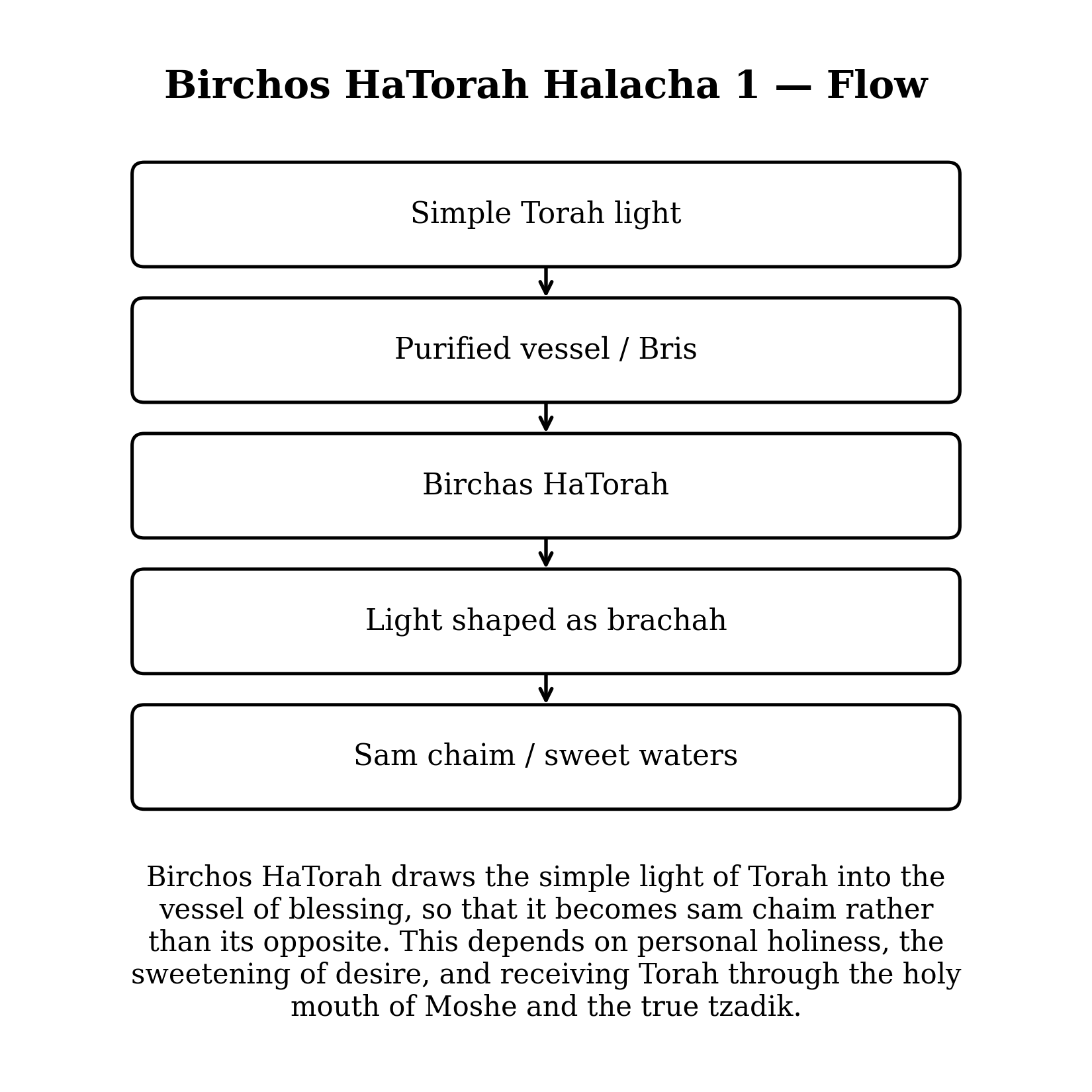
Birchos HaTorah draws the simple light of Torah into the vessel of blessing, so that it becomes sam chaim rather than its opposite. This depends on personal holiness, the sweetening of desire, and receiving Torah through the holy mouth of Moshe and the true tzadik.
Main Pillars
The Torah emerges from Above as simple light; the recipient shapes it according to his vessel.
Shmeeras habris determines whether Torah is received as an elixir of life and sweet waters.
“Who chose us from all the nations” precedes “and gave us His Torah”: separation from the nations’ desires enables reception of Torah.
Bircas Kohanim follows Birchas HaTorah because the Kohanim shape and channel the light into brachah.
Shavuos, the Sefirah, wakefulness at night, and hearing Torah from the tzadik all prepare the vessel for blessed light.
Practical Takeaways
Recite Birchas HaTorah as an act of preparing the vessel, not as a formality.
Approach Torah study with purity and the wish that it become life-giving.
Seek Torah from a true teacher whose holy speech has already shaped the light for the listener.
— Translator's summary. Not part of the original text of Likutay Halachos. —
Expanded Study Aid — Birchos HaTorah — Halacha 1
Key Terms and Concept Notes
Sam chaim — Torah received as an elixir of life.
Simple light — undifferentiated illumination that must be shaped in a vessel.
Shmeeras habris — the holiness that enables Torah to be received as brachah.
Harev na — the request that Torah become sweet waters in the mouth.
Series Continuity Note
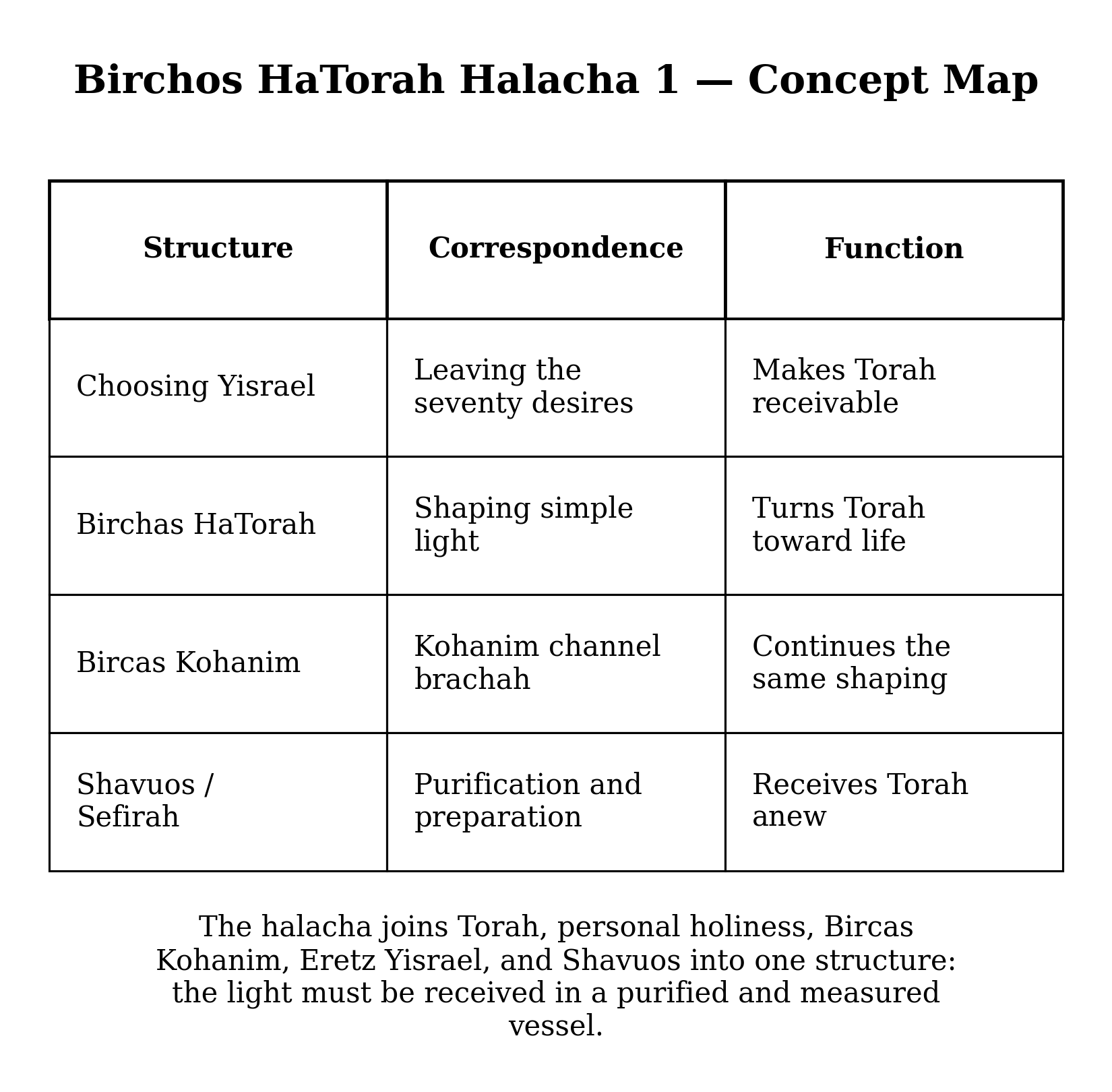
The halacha joins Torah, personal holiness, Bircas Kohanim, Eretz Yisrael, and Shavuos into one structure: the light must be received in a purified and measured vessel.
Diagram 1 — Birchos HaTorah — Halacha 1 Flow
Diagram 2 — Birchos HaTorah — Halacha 1 Concept Map
— End of translator study aid and diagrams. Not part of the original text of Likutay Halachos. —
Earlier annotations and link context
Earlier Reader contexts are retained separately. Their links identify current source references; they do not assert that an earlier English selection has the same meaning in the corrected edition.
💬 Comments
…Comments are currently read-only.
Loading comments…