
Teaching 1 hebrew · ChatGPT Concept A
Teachings
- Teaching 1 · א׳
- Teaching 2 · ב׳
- Teaching 3 · ג׳
- Teaching 4 · ד׳
- Teaching 5 · ה׳
- Teaching 6 · ו׳
- Teaching 7 · ז׳
- Teaching 8 · ח׳
- Teaching 9 · ט׳
- Teaching 10 · י׳
- Teaching 11 · י״א
- Teaching 12 · י״ב
- Teaching 13 · י״ג
- Teaching 14 · י״ד
- Teaching 15 · ט״ו
- Teaching 16 · ט״ז
- Teaching 17 · י״ז
- Teaching 18 · י״ח
- Teaching 19 · י״ט
- Teaching 20 · כ׳
- Teaching 21 · כ״א
- Teaching 22 · כ״ב
- Teaching 23 · כ״ג
- Teaching 24 · כ״ד
- Teaching 25 · כ״ה
- Teaching 26 · כ״ו
- Teaching 27 · כ״ז
- Teaching 28 · כ״ח
- Teaching 29 · כ״ט
- Teaching 30 · ל׳
- Teaching 31 · ל״א
- Teaching 32 · ל״ב
- Teaching 33 · ל״ג
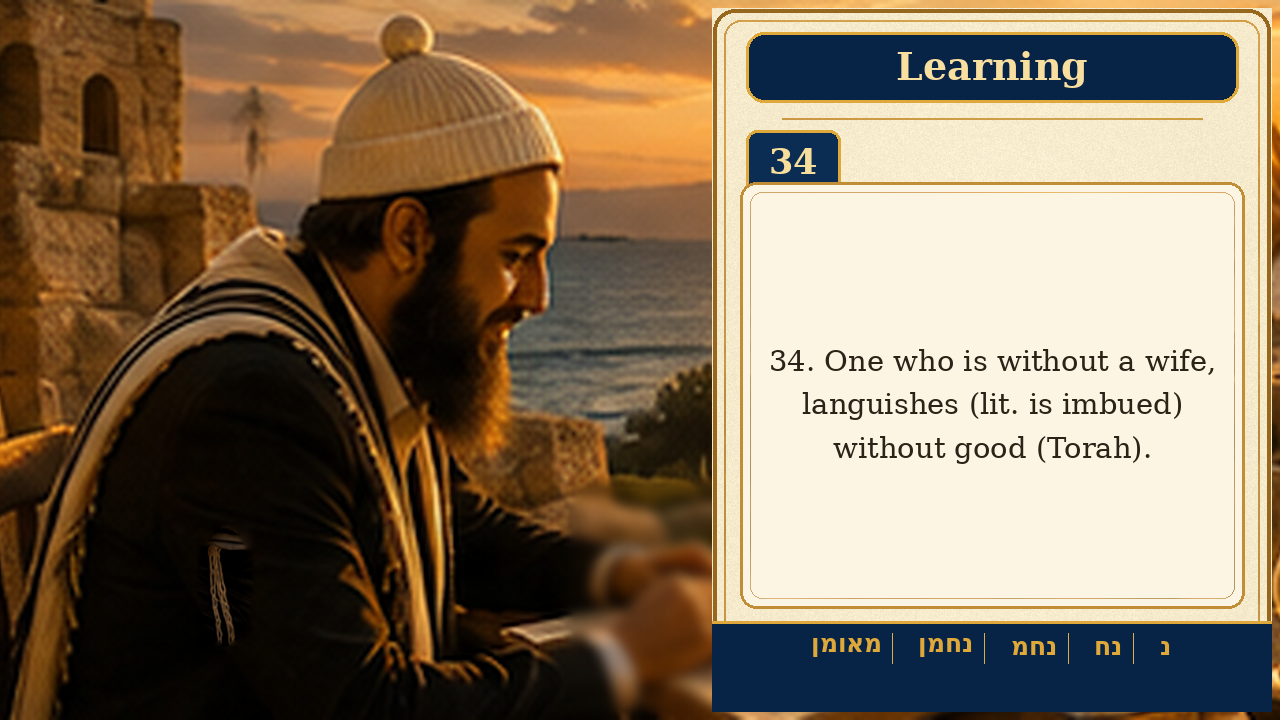
- Teaching 34 · ל״ד
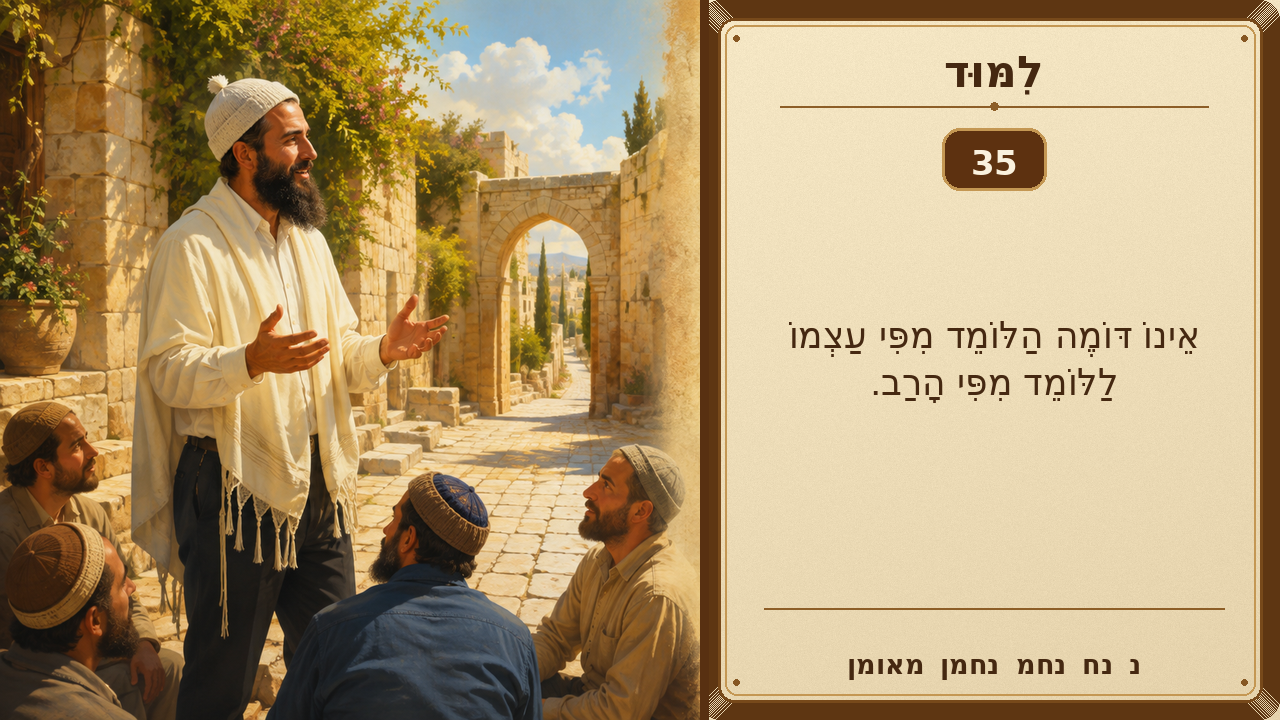
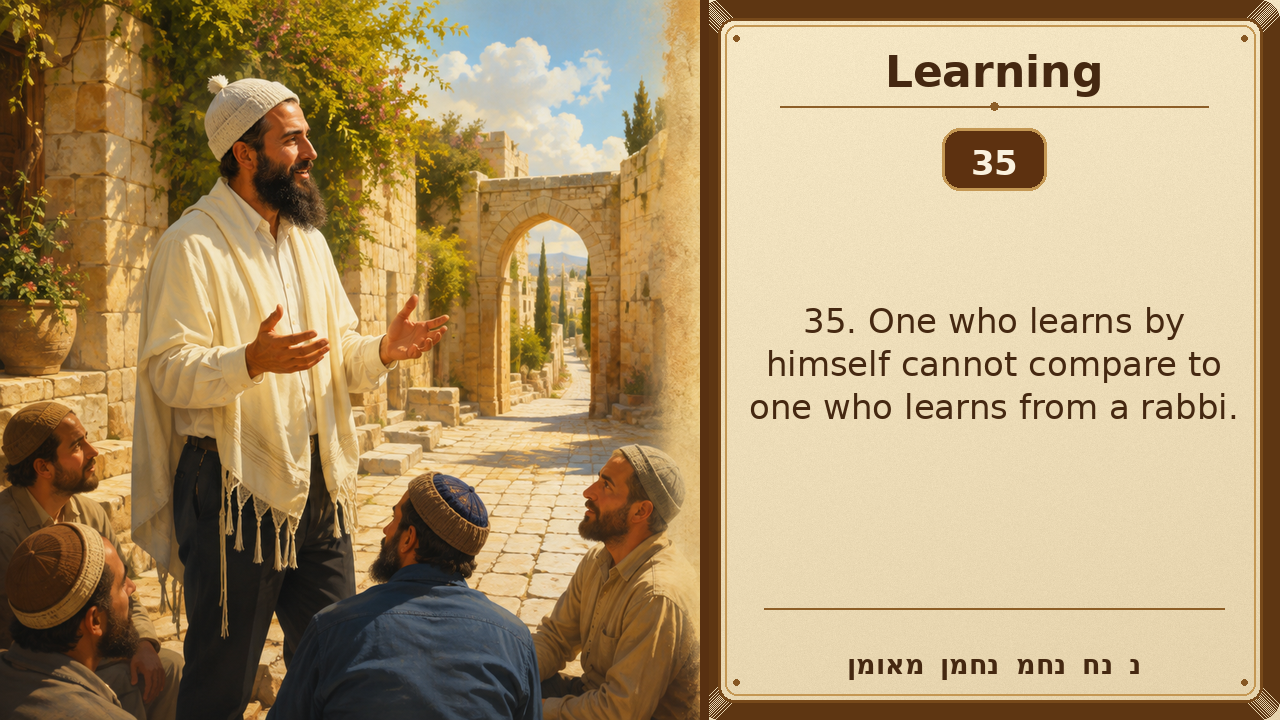
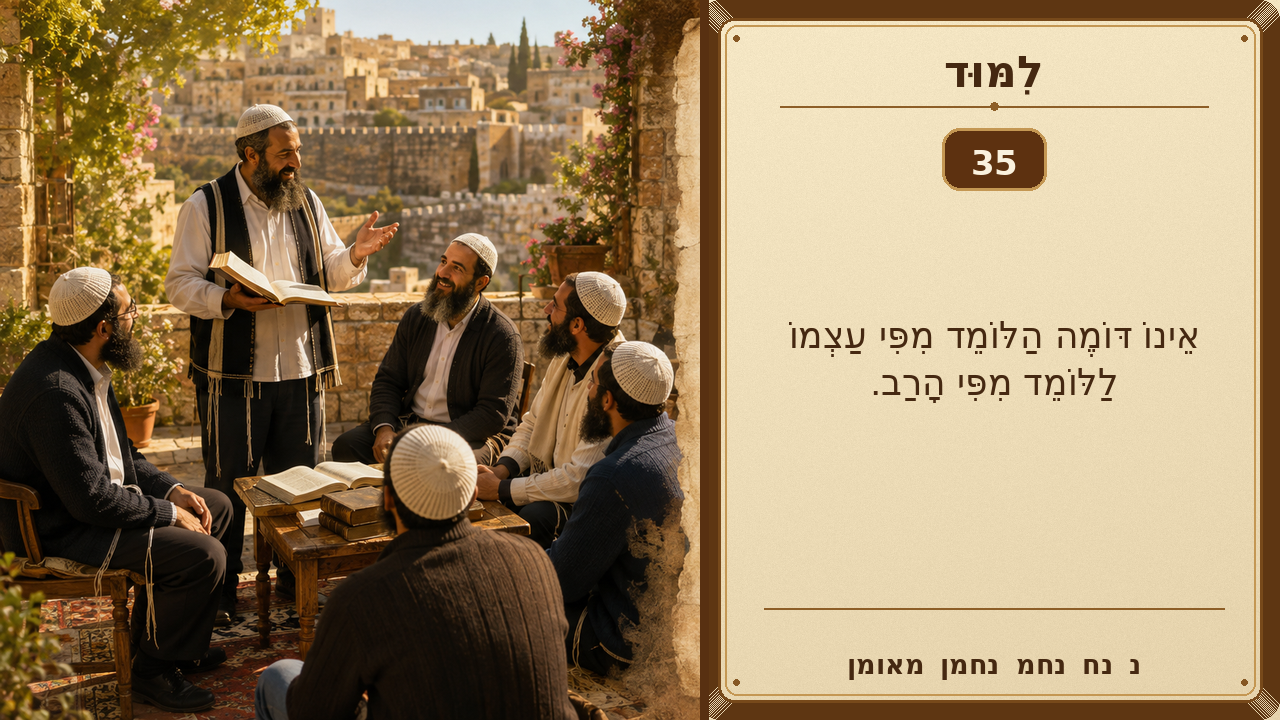
- Teaching 35 · ל״ה
- Teaching 36 · ל״ו
- Teaching 37 · ל״ז
- Teaching 38 · ל״ח
- Teaching 39 · ל״ט
- Teaching 40 · מ׳
- Teaching 41 · מ״א
- Teaching 42 · מ״ב
- Teaching 43 · מ״ג
- Teaching 44 · מ״ד
- Teaching 45 · מ״ה
- Teaching 46 · מ״ו
- Teaching 47 · מ״ז
- Teaching 48 · מ״ח
- Teaching 49 · מ״ט
- Teaching 50 · נ׳
- Teaching 51 · נ״א
- Teaching 52 · נ״ב
- Teaching 53 · נ״ג
- Teaching 54 · נ״ד
- Teaching 55 · נ״ה
- Teaching 56 · נ״ו
- Teaching 57 · נ״ז
- Teaching 58 · נ״ח
- Teaching 59 · נ״ט
- Teaching 60 · ס׳
- Teaching 61 · ס״א
- Teaching 62 · ס״ב
- Teaching 63 · ס״ג
- Teaching 64 · ס״ד
- Teaching 65 · ס״ה
- Teaching 66 · ס״ו
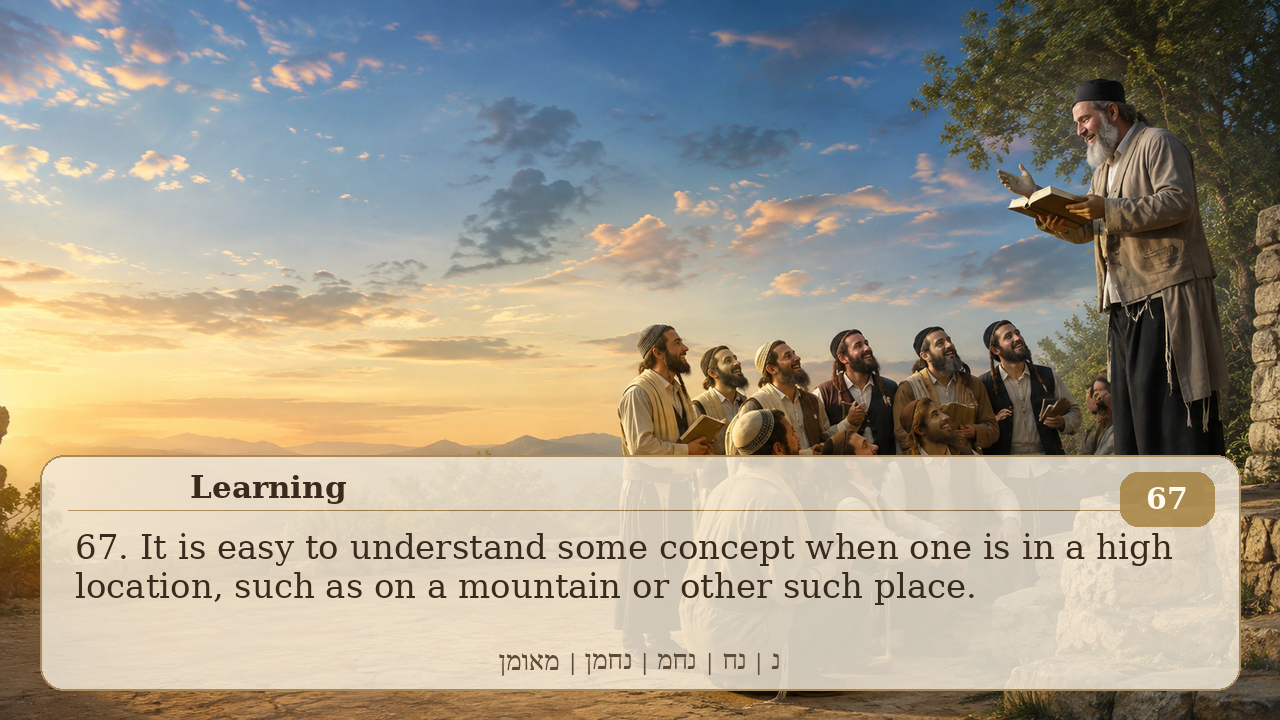
- Teaching 67 · ס״ז
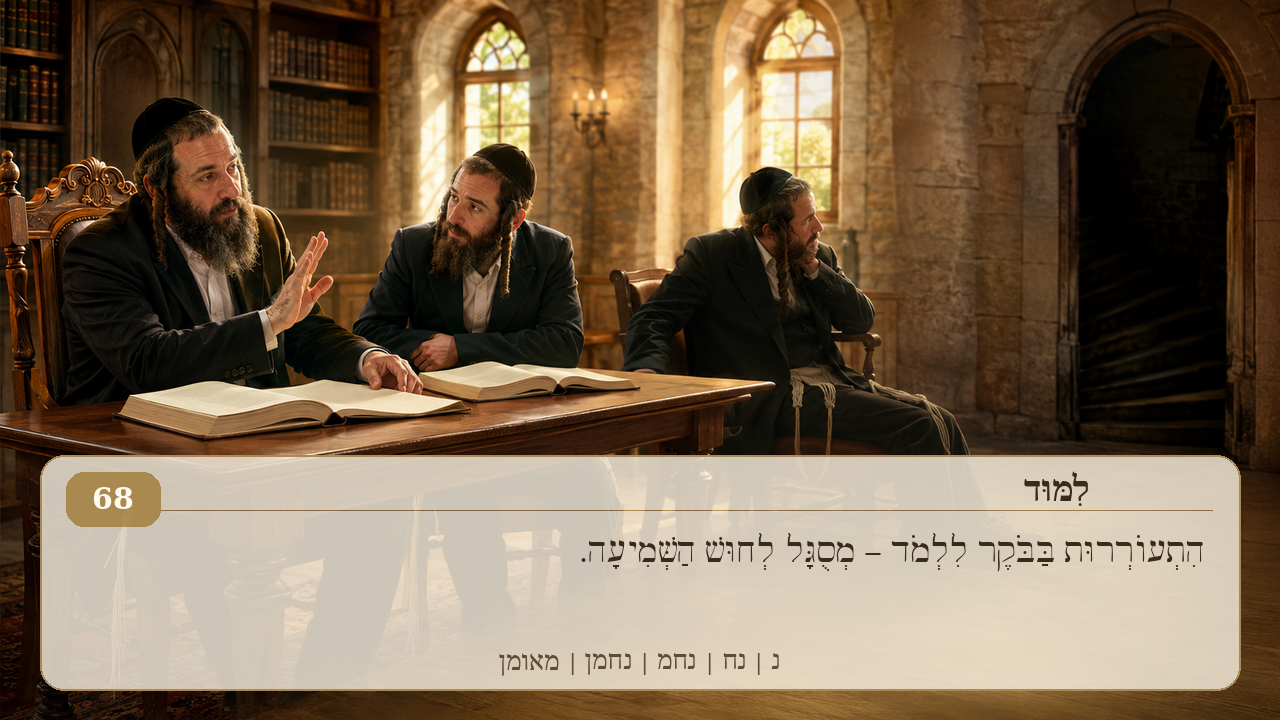
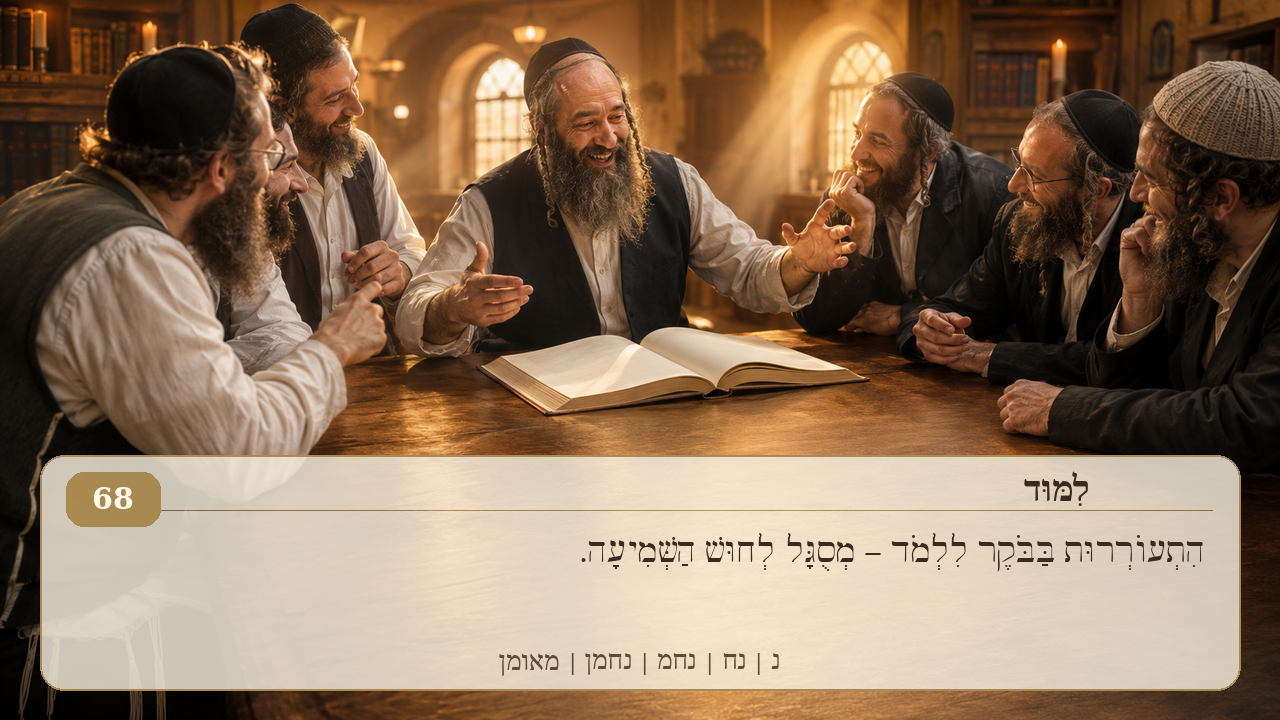
- Teaching 68 · ס״ח
- Teaching 69 · ס״ט
- Teaching 70 · ע׳
- Teaching 71 · ע״א
- Teaching 72 · ע״ב
- Teaching 73 · ע״ג
- Teaching 74 · ע״ד
- Teaching 75 · ע״ה
- Teaching 76 · ע״ו
- Teaching 77 · ע״ז
- Teaching 78 · ע״ח
- Teaching 79 · ע״ט
- Teaching 80 · פ׳
- Teaching 81 · פ״א
- Teaching 82 · פ״ב
- Teaching 83 · פ״ג
- Teaching 84 · פ״ד
- Teaching 85 · פ״ה
- Teaching 86 · פ״ו
- Teaching 87 · פ״ז
- Teaching 88 · פ״ח
- Teaching 89 · פ״ט
- Teaching 90 · צ׳
- Teaching 91 · צ״א
- Teaching 92 · צ״ב
- Teaching II-1 · חלק ב׳ · א׳
- Teaching II-2 · חלק ב׳ · ב׳
- Teaching II-3 · חלק ב׳ · ג׳
- Teaching II-4 · חלק ב׳ · ד׳
- Teaching II-5 · חלק ב׳ · ה׳
- Teaching II-6 · חלק ב׳ · ו׳
- Teaching II-7 · חלק ב׳ · ז׳
- Teaching II-8 · חלק ב׳ · ח׳
- Teaching II-9 · חלק ב׳ · ט׳
- Teaching II-10 · חלק ב׳ · י׳
- Teaching II-11 · חלק ב׳ · י״א
- Teaching II-12 · חלק ב׳ · י״ב
- Teaching II-13 · חלק ב׳ · י״ג
- Teaching II-14 · חלק ב׳ · י״ד
- Teaching II-15 · חלק ב׳ · ט״ו
- Teaching II-16 · חלק ב׳ · ט״ז
- Teaching II-17 · חלק ב׳ · י״ז
לִמּוּד
Learning
Sefer Hamidos - The Book of Traits · 109 individual teachings
See the complete visual collection together, or open pictures teaching by teaching below.
Sefer HaMidos · Learning
All pictures
328 pictures from 82 teachings. Select any picture to view, share, or download it.
א׳
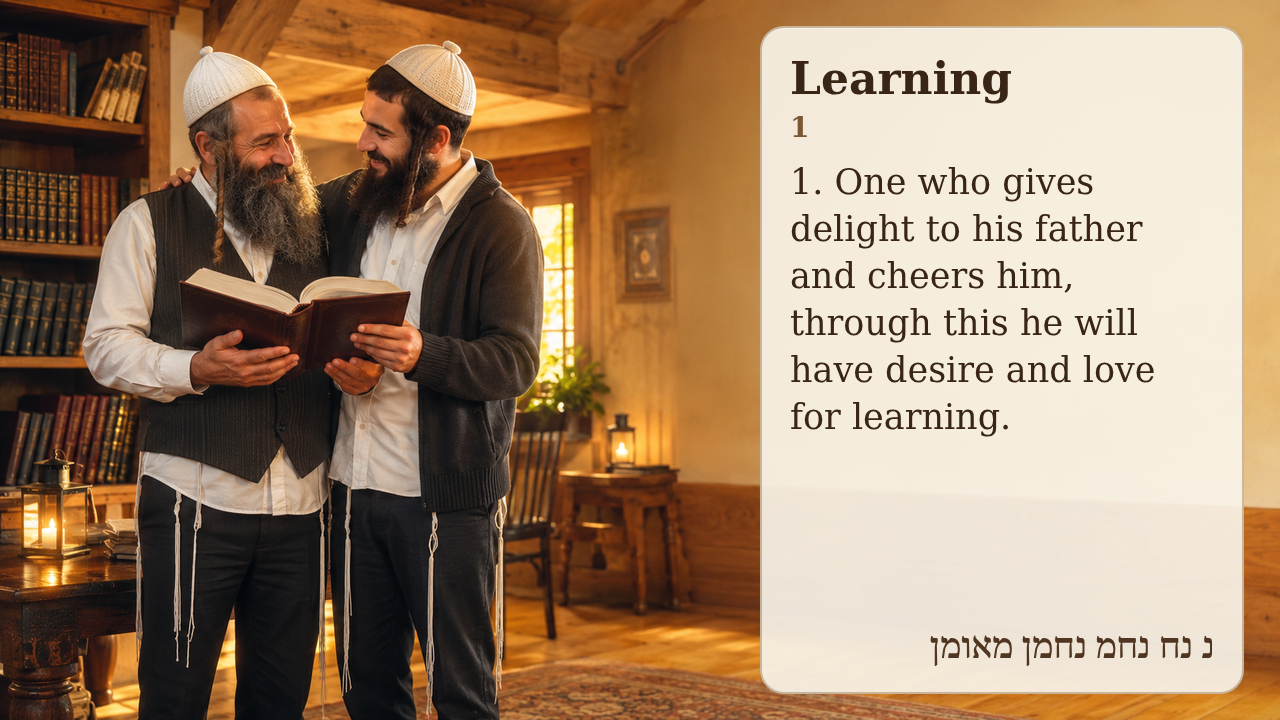
מִי שֶׁעוֹשֶׂה תַּעֲנוּג לָאָב וּמְשַׂמֵּחַ אוֹתוֹ, עַל־יְדֵי זֶה יִהְיֶה לוֹ חֵשֶׁק וְאַהֲבָה לִלְמֹד.
1
1. One who gives delight to his father and cheers him, through this he will have desire and love for learning.
📷 Pictures / videos for this teaching



ב׳
כְּשֶׁאַתָּה רוֹצֶה לְהַחֲיוֹת אֵיזֶה דָּבָר בַּאֲמִירַת תּוֹרָתְךָ, אַל תִּדְרֹשׁ מֵעִנְיָנִים רָעִים, אֶלָּא תִּדְרֹשׁ פְּסוּקִים וְעִנְיָנִים שֶׁל טוֹב.
2
2. When you want to give life to something through reciting words of your Torah, do not expound on negative subjects. Rather, expound on verses and subjects that deal with the good.
📷 Pictures / videos for this teaching




ג׳
כְּשֶׁאָדָם אוֹמֵר חִדּוּשֵׁי אוֹרַיְתָא, עַל־יְדֵי זֶה מְשַׂמֵּחַ אֶת הַשֵּׁם יִתְבָּרַךְ.
3
3. When a man recites novel Torah teachings, through this he gives joy to the Blessed G-d.
ד׳
כְּשֶׁהָרָשָׁע אוֹמֵר תּוֹרָה, תֵּדַע שֶׁהוּא מַכְשִׁיל אוֹתָם הַשּׁוֹמְעִים תּוֹרָתוֹ.
4
4. When a wicked person says Torah, know that he causes to stumble those who listen to his teaching.
ה׳
מִי שֶׁהוּא מְבַטֵּל אֶת חֲבֵרוֹ מֵהַלִמּוּד, בְּיָדוּעַ שֶׁהוּא סָר מִדֶּרֶךְ ה'.
5
5. One who causes his friend to desist from his learning, it is certain that he has deviated from the Way of G-d.
ו׳
לִמּוּד הַתּוֹרָה – אֲפִלּוּ מִתְנַמְנֵם הוּא טוֹב.
6
6. Torah learning, even while half a sleep, is good.
ז׳
עַל־יְדֵי קַבָּלַת הַיִּסּוּרִים בְּאַהֲבָה אֵינוֹ מְשַׁכֵּחַ תַּלְמוּדוֹ.
7
7. Through accepting suffering with love, one does not forget his learning.
ח׳
כָּל מַה שֶּׁלָּמַד אָדָם בָּעוֹלָם הַזֶּה וְהָיָה נִמְנָע אֶצְלוֹ לַעֲמֹד עַל אֲמִתַּת כַּוָּנַת הַלִּמּוּד בִּשְׁלֵמוּת, יִזְכֶּה לְהָבִין עַל אֲמִתָּתָהּ בָּעוֹלָם הַבָּא.
8
8. All the Torah that a person tried to learn in this world, and was prevented from understanding the full true intent of the learning, he will merit to understand it properly (truthfully) in the World to Come.
ט׳
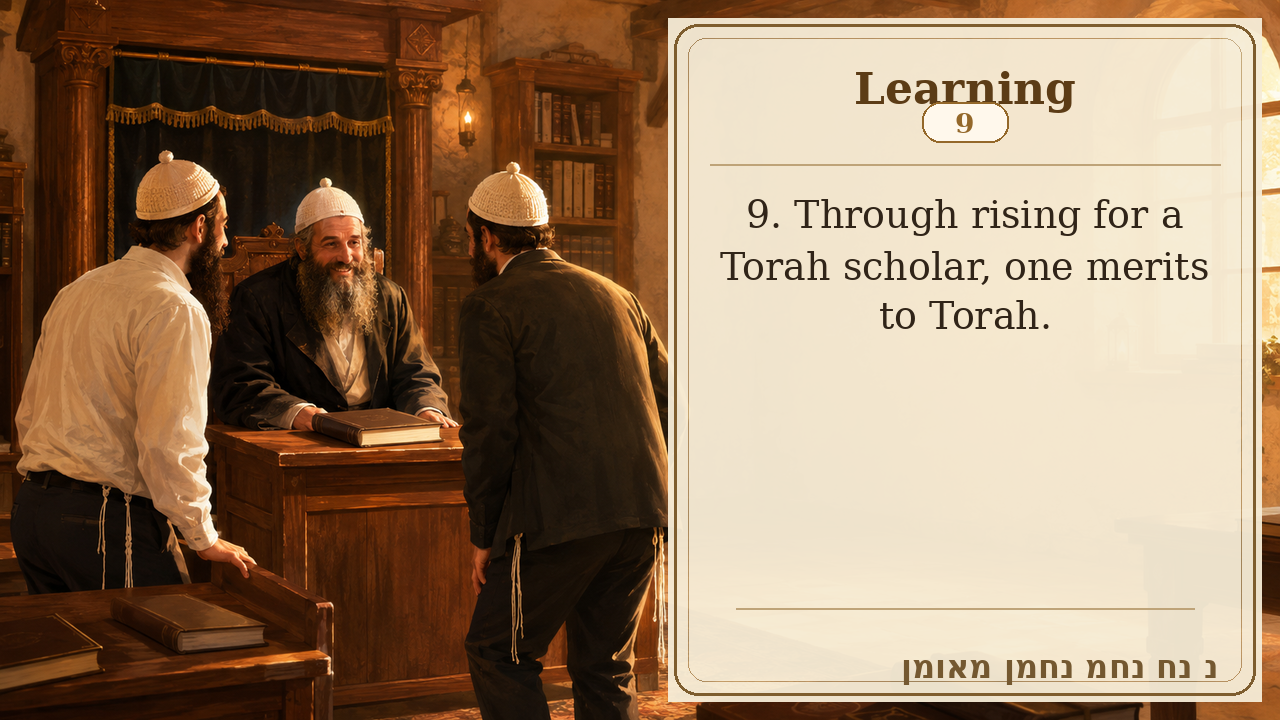
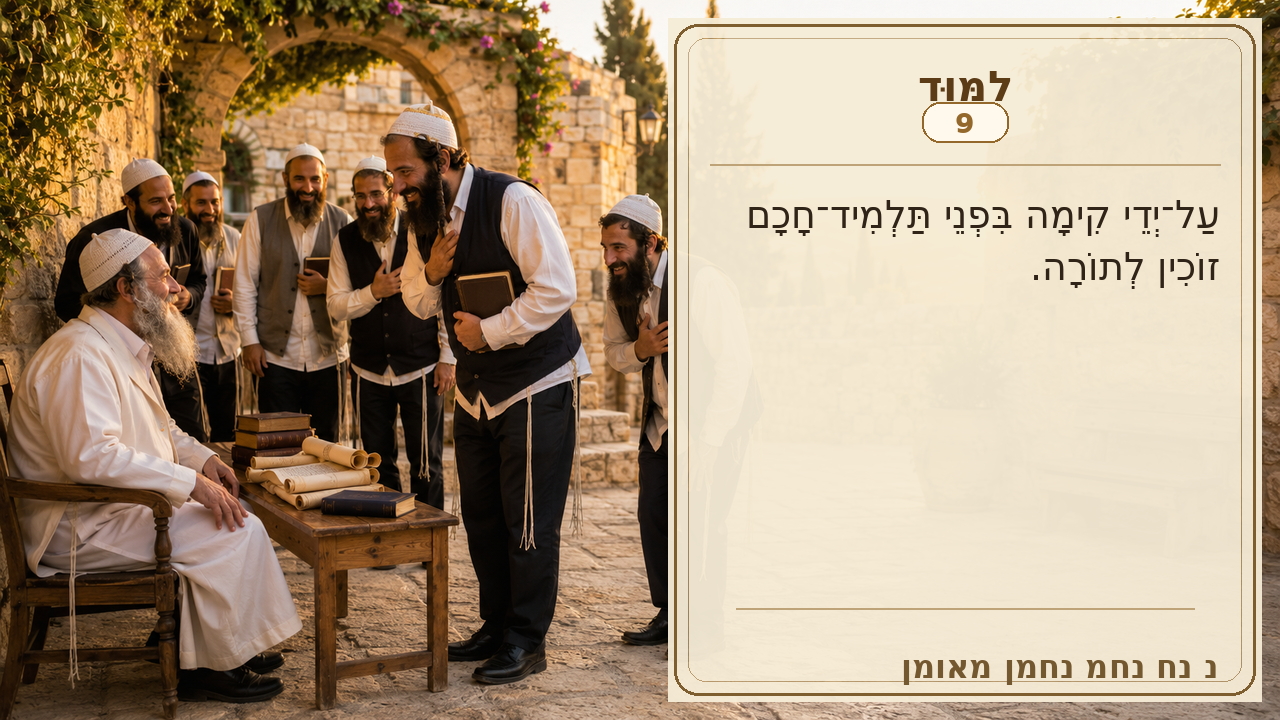
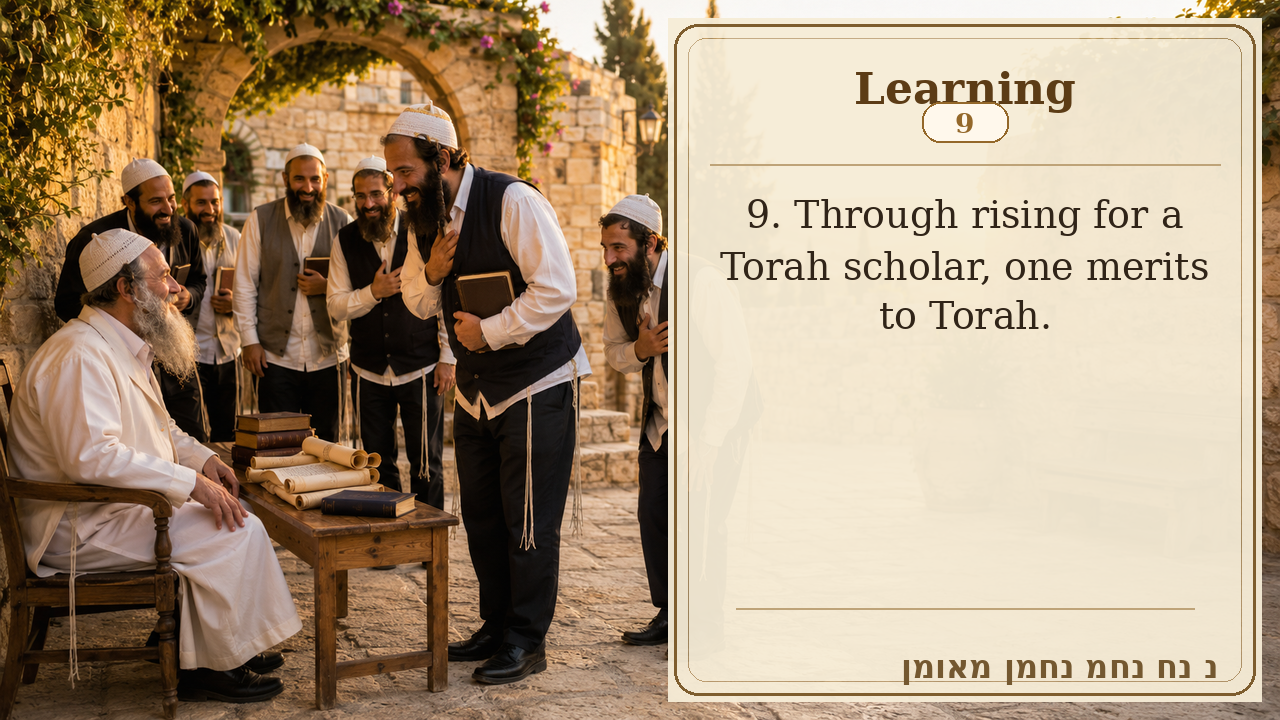
עַל־יְדֵי קִימָה בִּפְנֵי תַּלְמִיד־חָכָם זוֹכִין לְתוֹרָה.
9
9. Through rising for a Torah scholar, one merits to Torah.
📷 Pictures / videos for this teaching

י׳
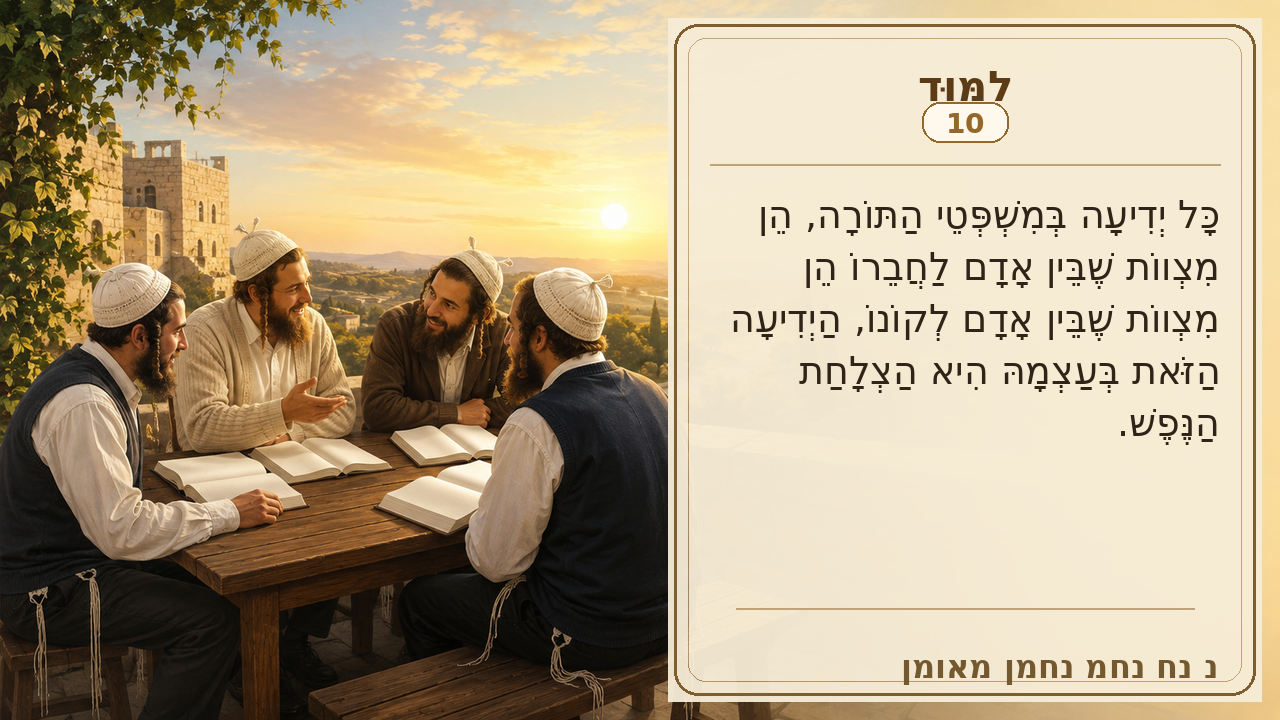
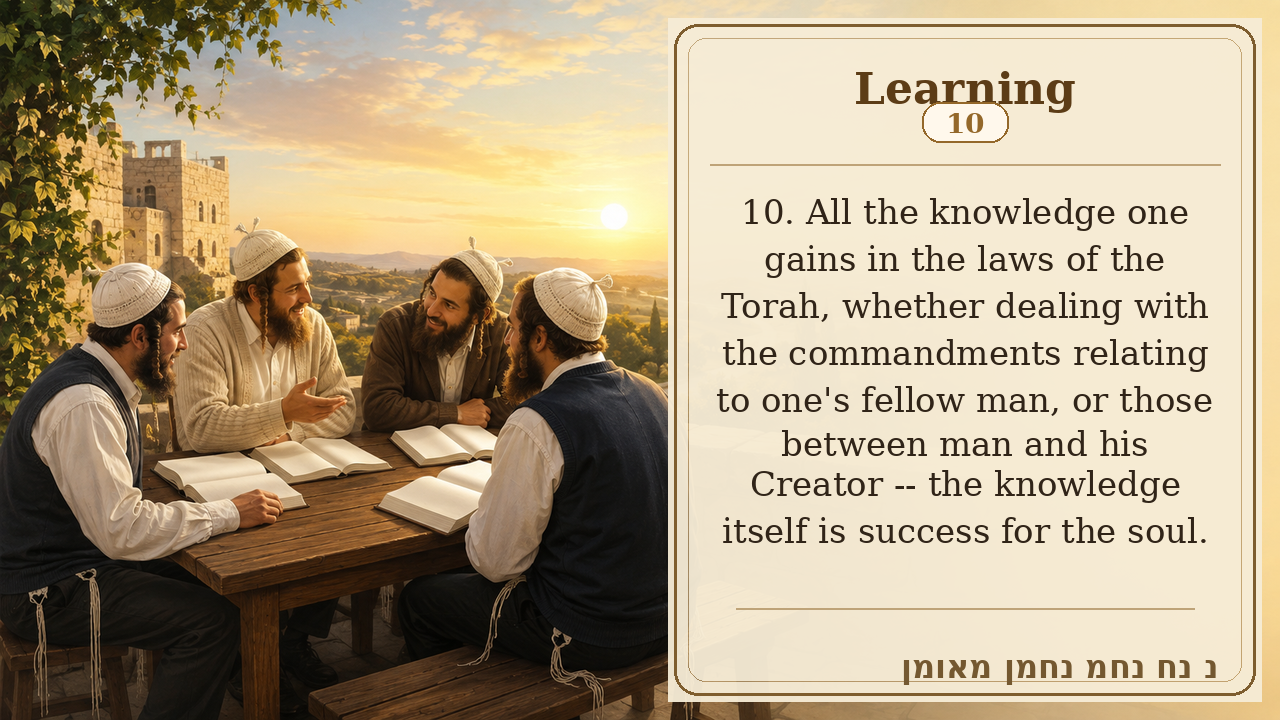
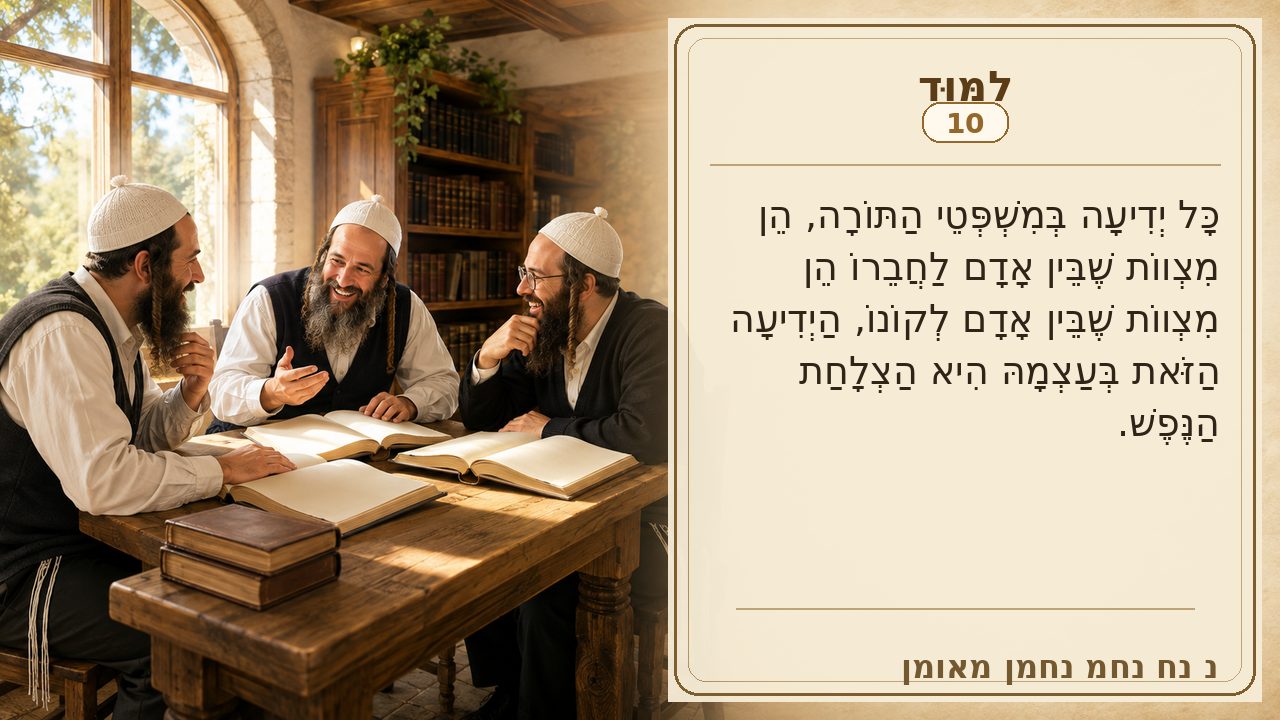
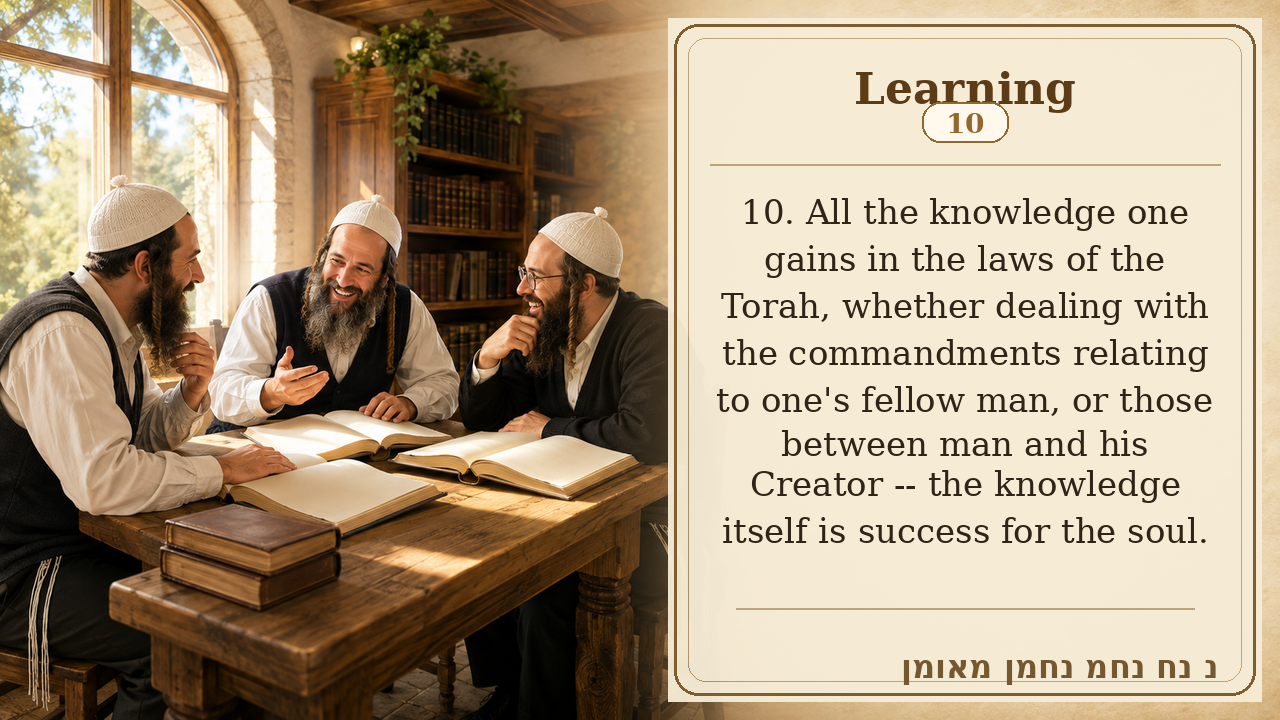
כָּל יְדִיעָה בְּמִשְׁפְּטֵי הַתּוֹרָה, הֵן מִצְווֹת שֶׁבֵּין אָדָם לַחֲבֵרוֹ הֵן מִצְווֹת שֶׁבֵּין אָדָם לְקוֹנוֹ, הַיְדִיעָה הַזֹּאת בְּעַצְמָהּ הִיא הַצְלָחַת הַנֶּפֶשׁ.
10
10. All the knowledge one gains in the laws of the Torah, whether dealing with the commandments relating to one's fellow man, or those between man and his Creator -- the knowledge itself is success for the soul.
📷 Pictures / videos for this teaching
י״א
הַסֵּפֶר שֶׁנִּכְתַּב בִּדְיוֹ שֶׁל שֶׁמֶן־זַיִת הוּא מְסֻגָּל לְלִמּוּד.
11
11. A book written with ink made from olive oil is conducive (segulah) to learning.
י״ב
יִרְאָה מִתַּלְמִיד־חָכָם מְסֻגָּל לְלִמּוּד.
12
12. Awe of a Torah scholar is a segulah (conducive) to learning.
י״ג
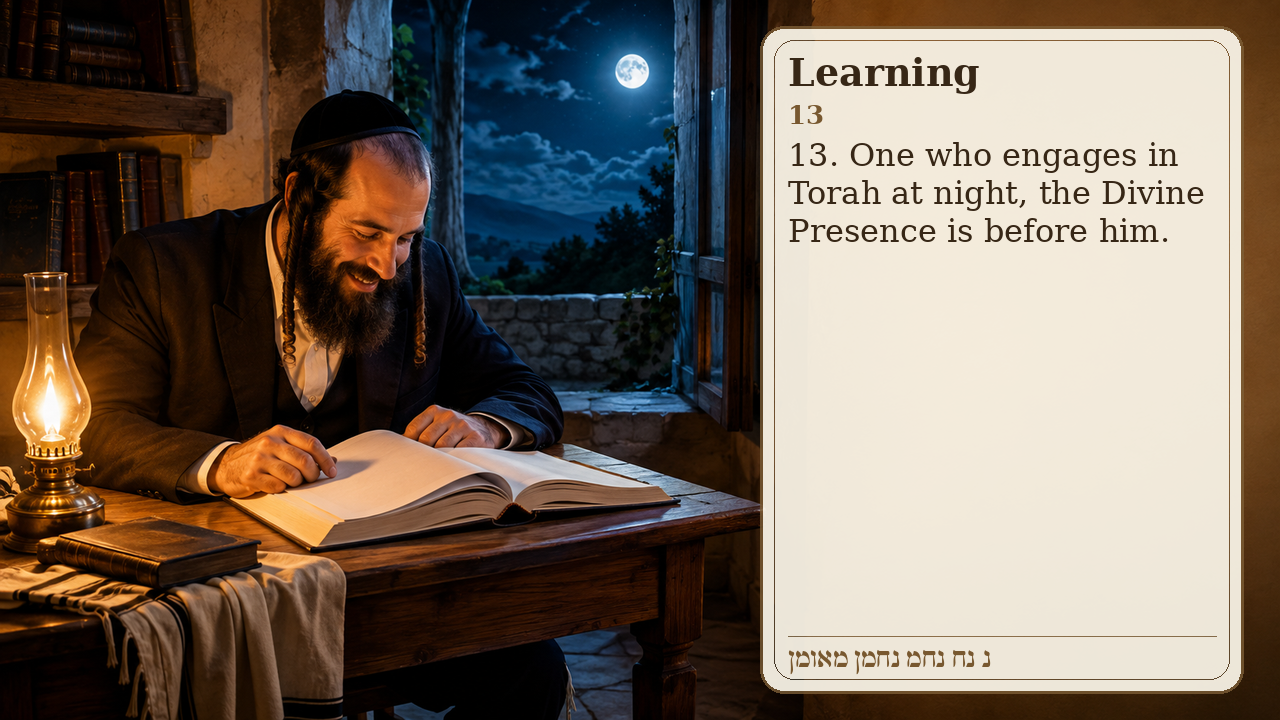
הָעוֹסֵק בַּתּוֹרָה בַּלַּיְלָה – שְׁכִינָה כְּנֶגְדּוֹ.
13
13. One who engages in Torah at night, the Divine Presence is before him.
📷 Pictures / videos for this teaching



י״ד
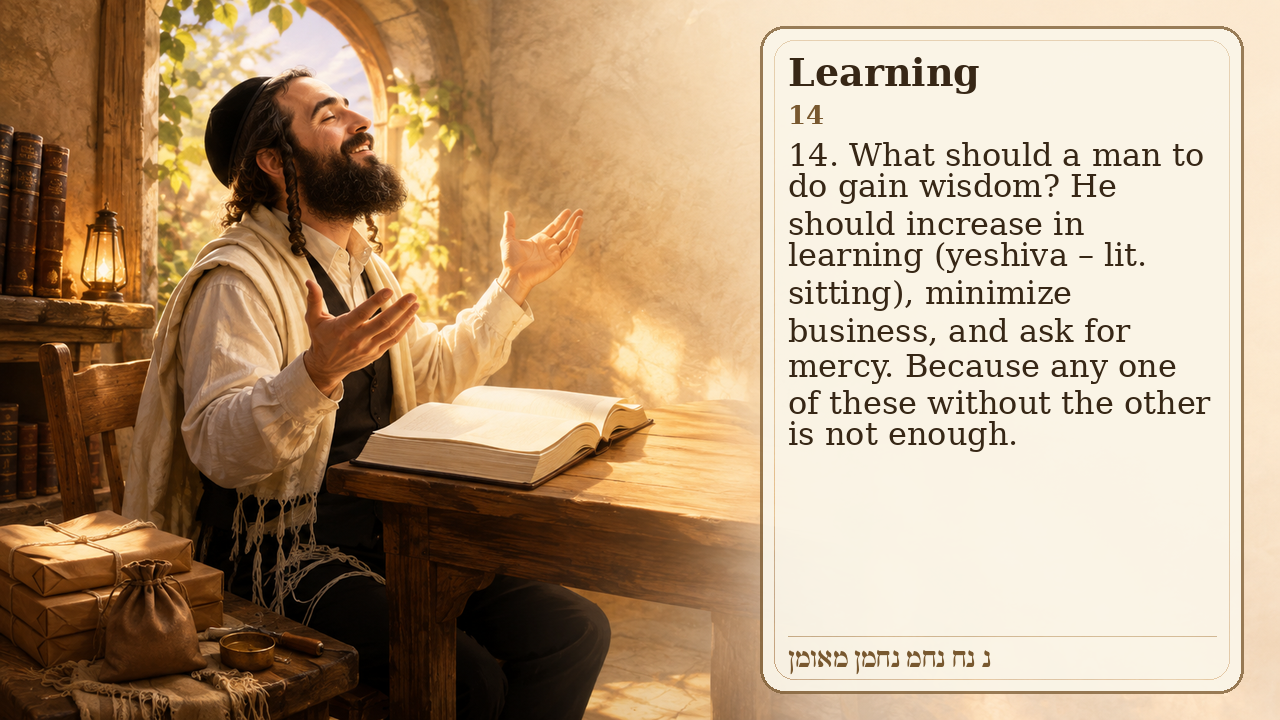
מַה יַּעֲשֶׂה אָדָם וְיֶחְכַּם? יַרְבֶּה בִּישִׁיבָה וִימַעֵט בִּסְחוֹרָה וִיבַקֵּשׁ רַחֲמִים, כִּי הָא בְּלָא הָא לָא סַגִּי.
14
14. What should a man to do gain wisdom? He should increase in learning (yeshiva – lit. sitting), minimize business, and ask for mercy. Because any one of these without the other is not enough.
📷 Pictures / videos for this teaching

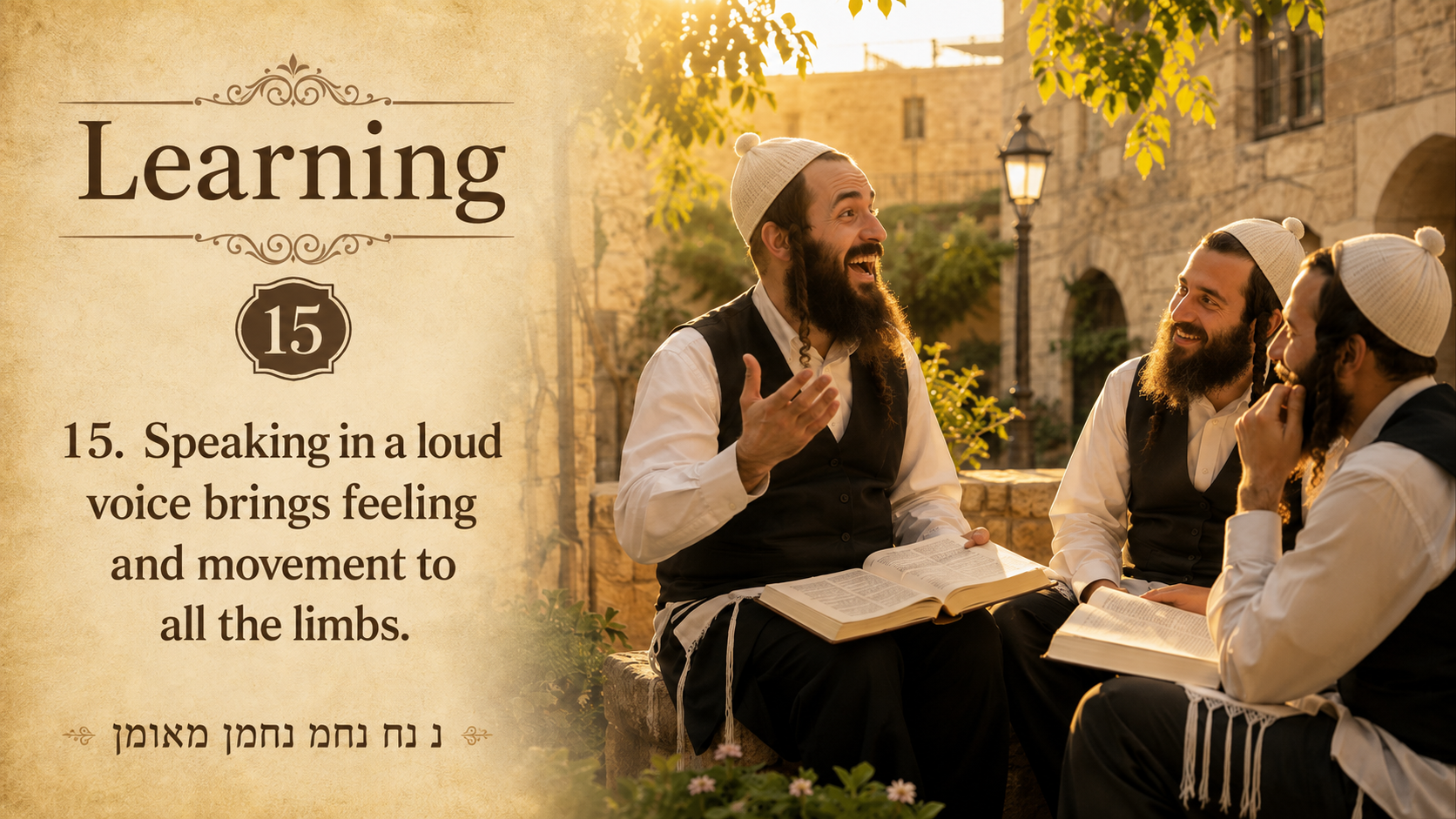
ט״ו
הַדִּבּוּר בְּקוֹל רָם מֵבִיא הֶרְגֵּשׁ וּתְנוּעָה לְכָל הָאֵיבָרִים.
15
15. Speaking in a loud voice brings feeling and movement to all the limbs.
📷 Pictures / videos for this teaching



ט״ז
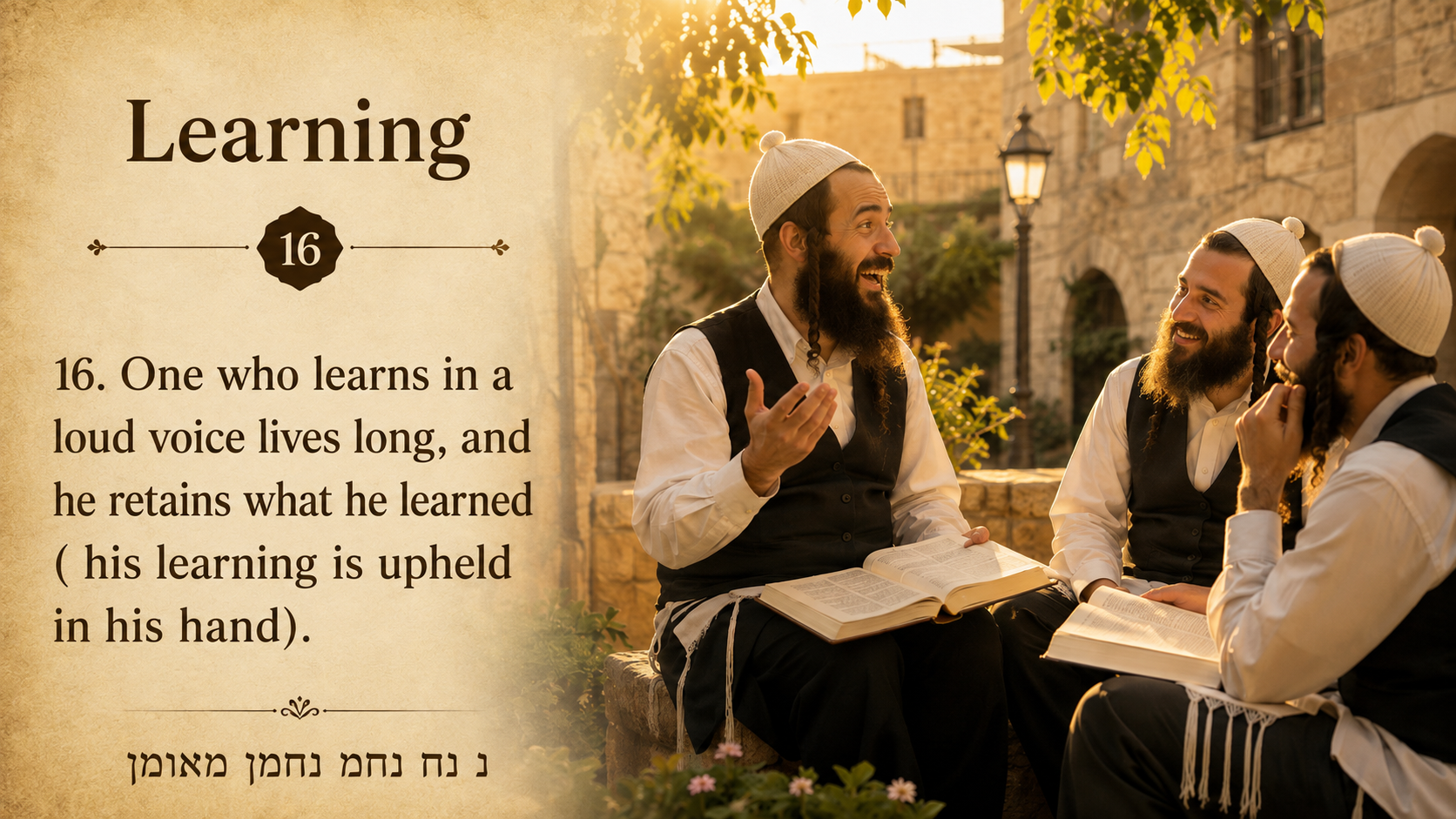
הַלּוֹמֵד בְּקוֹל רָם מַאֲרִיךְ יָמִים, וְתַלְמוּדוֹ מִתְקַיֵּם בְּיָדוֹ.
16
16. One who learns in a loud voice lives long, and he retains what he learned ( his learning is upheld in his hand).
📷 Pictures / videos for this teaching



י״ז
מִי שֶׁאֵין בּוֹ גַּסּוּת, תַּלְמּוּדוֹ מִתְקַיֵּם בְּיָדוֹ.
17
17. One without arrogance, he retains his learning (his learning is upheld in his hand).
📷 Pictures / videos for this teaching




י״ח
גַּם מִי שֶׁמְּלַמֵּד לַאֲחֵרִים.
18
18. Also, one who teaches others.
📷 Pictures / videos for this teaching


י״ט
הַשּׁוֹמֵעַ מִפִּי הָרַב, מִסְתַּיֵּעַ מִלְּתָא טְפֵי.
19
19. Hearing directly from the sage is more beneficial.
כ׳
גָּדוֹל תַּלְמוּד תּוֹרָה מֵהַקְרָבַת תְּמִידִין.
20
20. Learning Torah is greater than offerings of the Tamid (sacrifice brought twice daily in the Temple).
כ״א
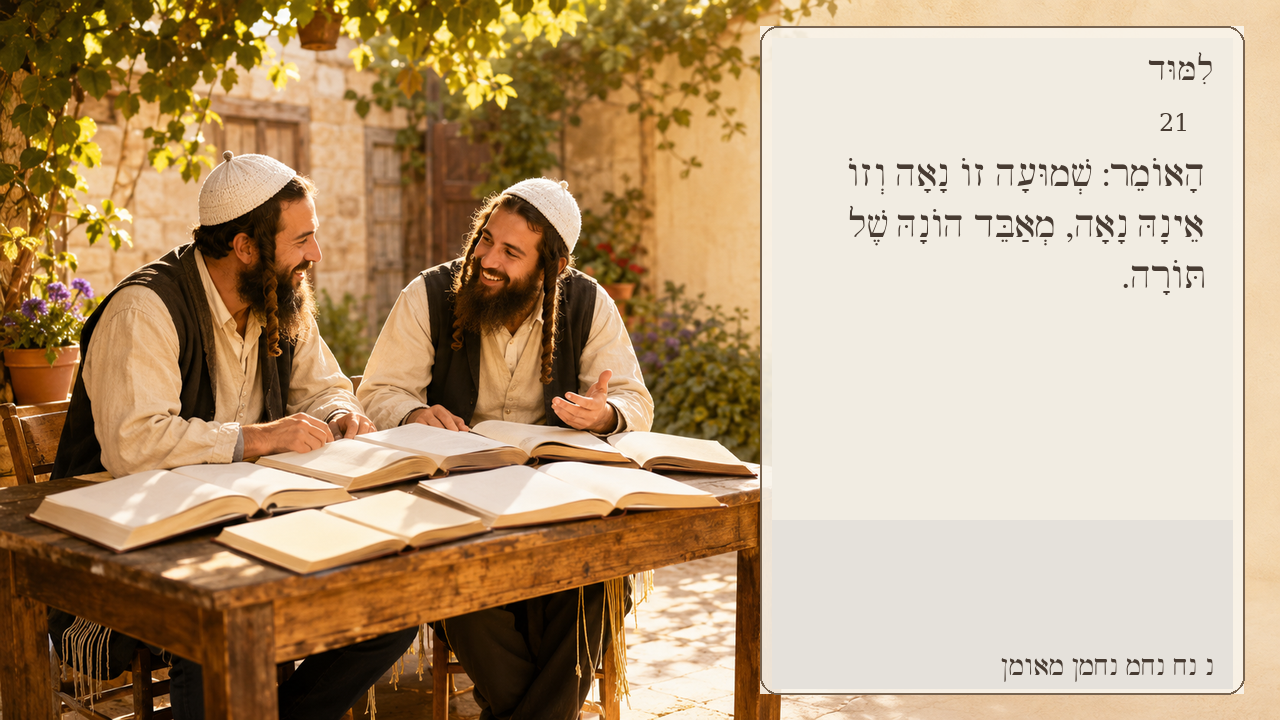
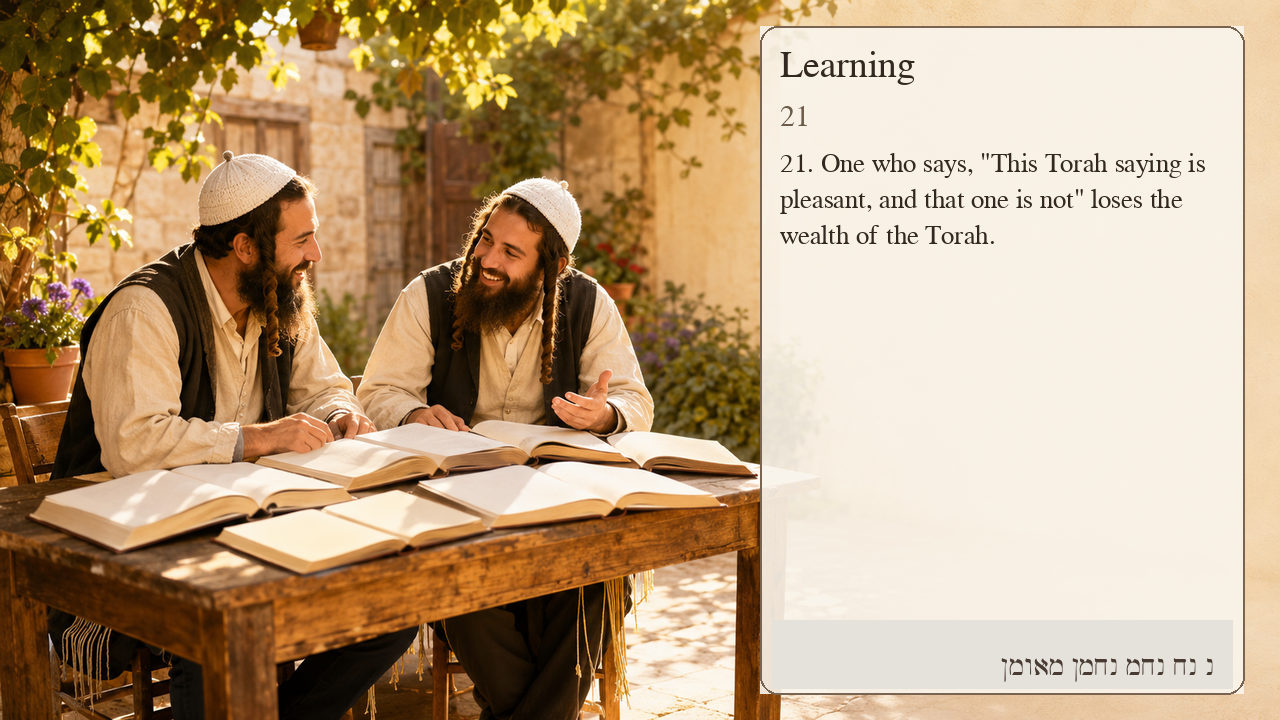
הָאוֹמֵר: שְׁמוּעָה זוֹ נָאָה וְזוֹ אֵינָהּ נָאָה, מְאַבֵּד הוֹנָהּ שֶׁל תּוֹרָה.
21
21. One who says, "This Torah saying is pleasant, and that one is not" loses the wealth of the Torah.
📷 Pictures / videos for this teaching


כ״ב
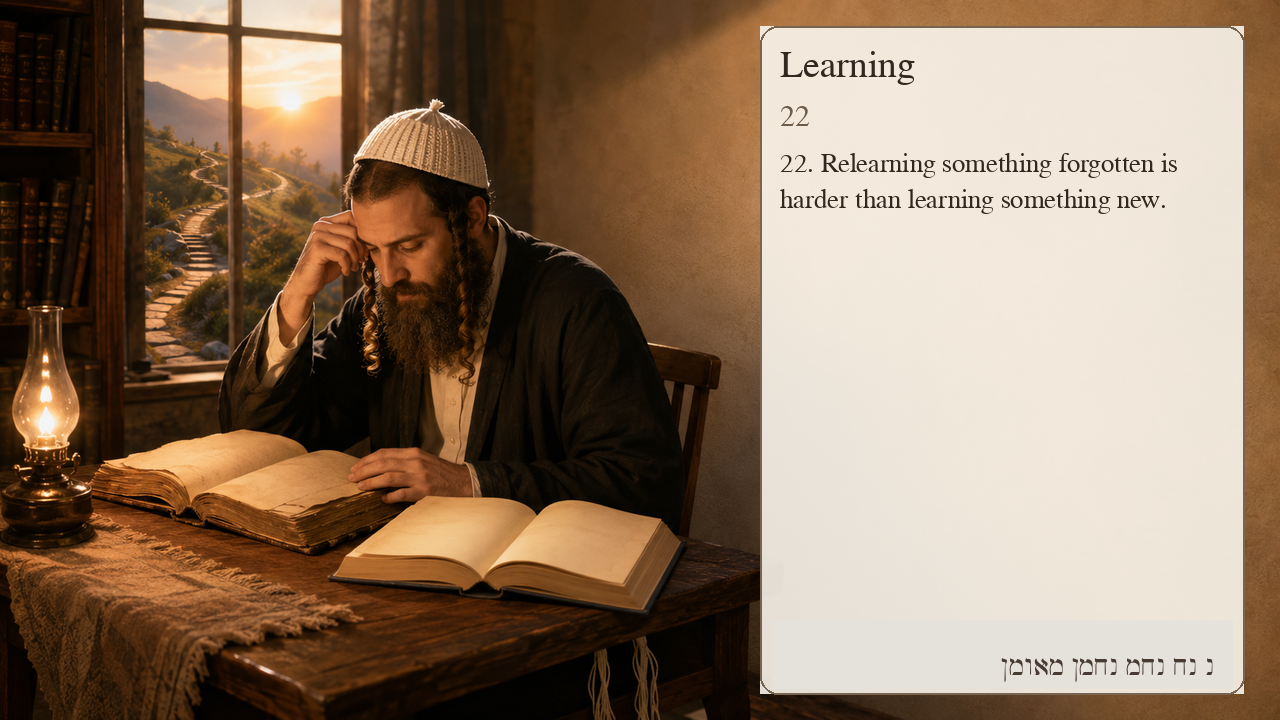
מִיגְמַר בְּעַתִּיקָא קָשֶׁה מֵחַדְתָּא.
22
22. Relearning something forgotten is harder than learning something new.
📷 Pictures / videos for this teaching



כ״ג
הַשּׁוֹכֵחַ דָּבָר אֶחָד מִתַּלְמוּדוֹ, גּוֹרֵם גָּלוּת לְבָנָיו וּמוֹרִידִין אוֹתוֹ מִגְּדֻלָּתוֹ.
23
23. One who forgets one detail from his learning causes the exile of his children, and he is brought down from his greatness.
כ״ד
תַּלְמִיד־חָכָם, שֶׁאֵין תּוֹכוֹ כְּבָרוֹ נִקְרָא תּוֹעֵבָה.
24
24. A Torah scholar whose inner being does not match up to his outward appearance is called an abomination.
כ״ה
תַּלְמִיד־חָכָם – בְּנֵי עִירוֹ מְצֻוִּין לַעֲשׂוֹת מְלַאכְתּוֹ.
25
25. A Torah scholar -- the citizens of his city are obligated to do his work.
כ״ו
בִּשְׁבִיל בִּטּוּל תּוֹרָה נַעֲשָׂה כִּבְיָכוֹל מָךְ.
26
26. Due to annulling Torah study, G-d is made, so to speak, poor (i.e. put in a position where He is unwilling to help).
📷 Pictures / videos for this teaching




כ״ז
גָּדוֹל תַּלְמוּד תּוֹרָה מֵהַצָּלַת נְפָשׁוֹת וּמִבִּנְיַן בֵּית־הַמִּקְדָּשׁ וּמִכִּבּוּד אָב וָאֵם.
27
27. Torah study is greater than saving lives, and building the Temple, and honoring one's parents.
כ״ח
עַל־יְדֵי קְדֻשָּׁה זוֹכֶה לְבִינָה.
28
28. Through holiness one merits to understanding.
כ״ט
שְׁלֹשָׁה – הַקָּדוֹשׁ־בָּרוּךְ־הוּא בּוֹכֶה עֲלֵיהֶן בְּכָל יוֹם, וְאֶחָד מֵהֶם, עַל מִי שֶׁאֶפְשָׁר לוֹ לַעֲסֹק בַּתּוֹרָה וְאֵינוֹ עוֹסֵק.
29
29. There are three over whom the Holy One, Blessed is He, cries every day, and one of them is a person who could engage in Torah and does not.
ל׳
עַל־יְדֵי בִּינָה זוֹכֶה לִתְשׁוּבָה.
30
30. Through understanding, one merits to repentance.
ל״א
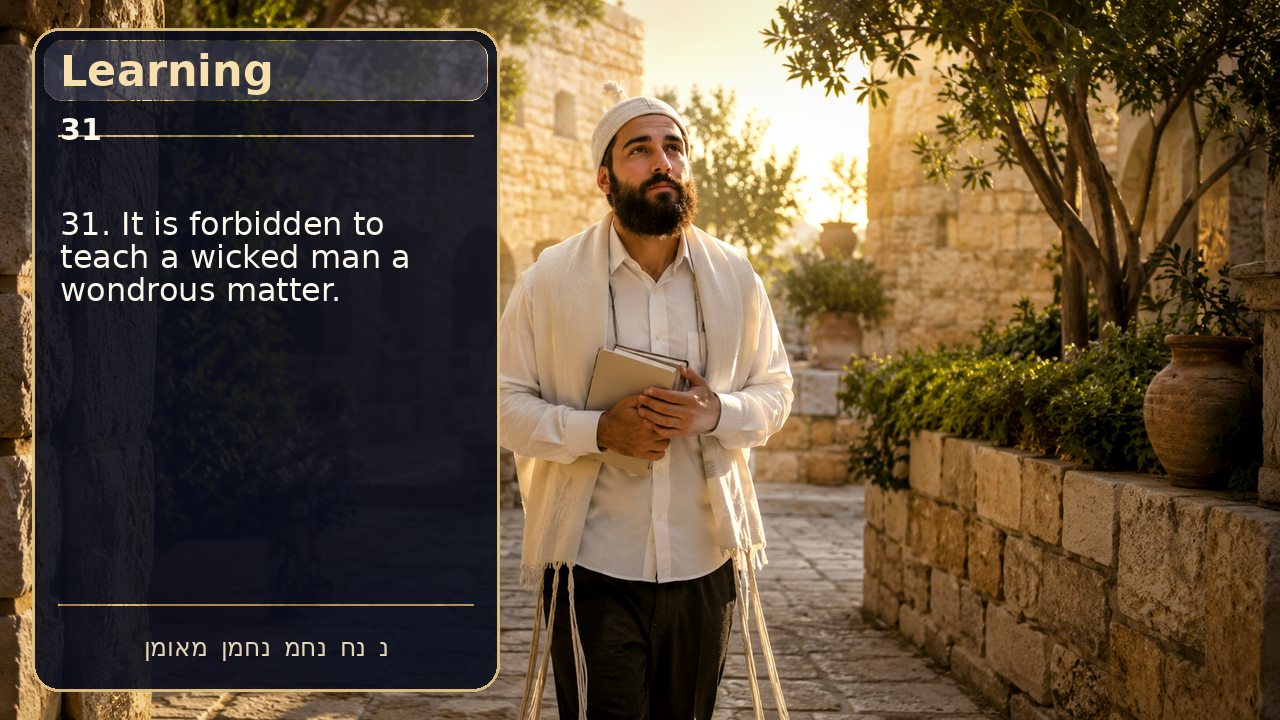
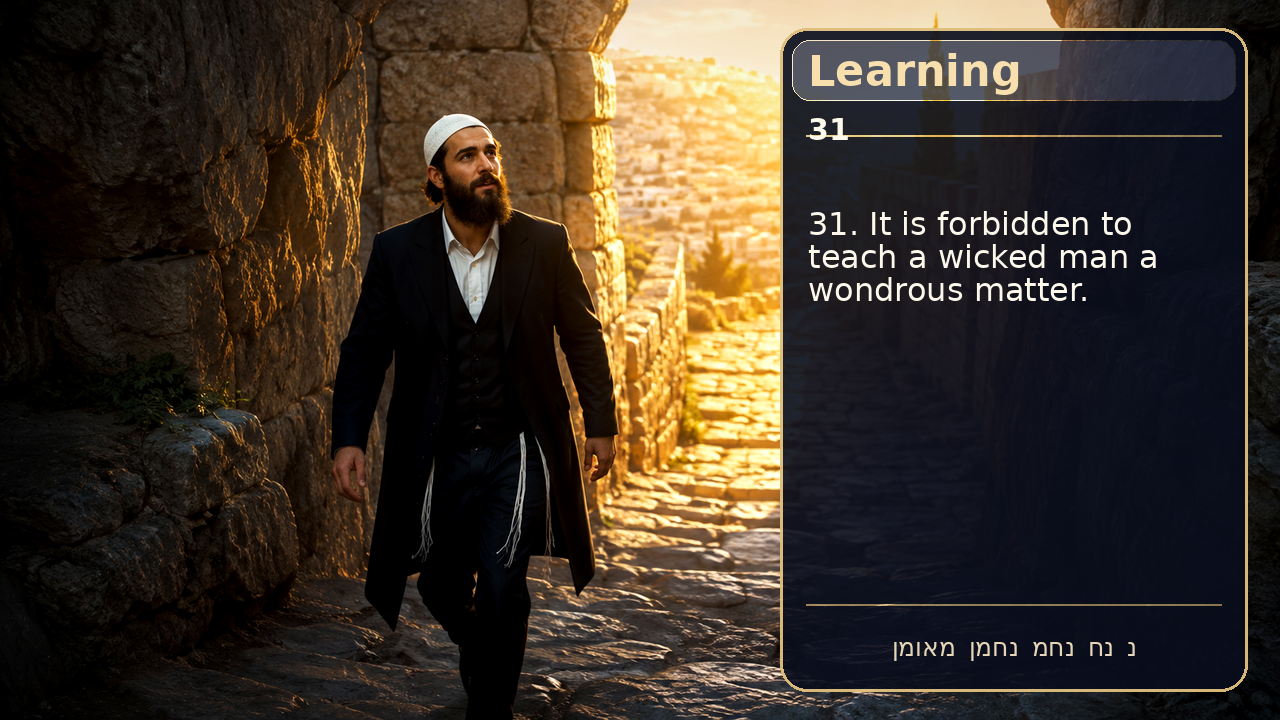
אָסוּר לְלַמֵּד אֶת הָרָשָׁע דְּבַר פֶּלֶא.
31
31. It is forbidden to teach a wicked man a wondrous matter.
📷 Pictures / videos for this teaching


ל״ב
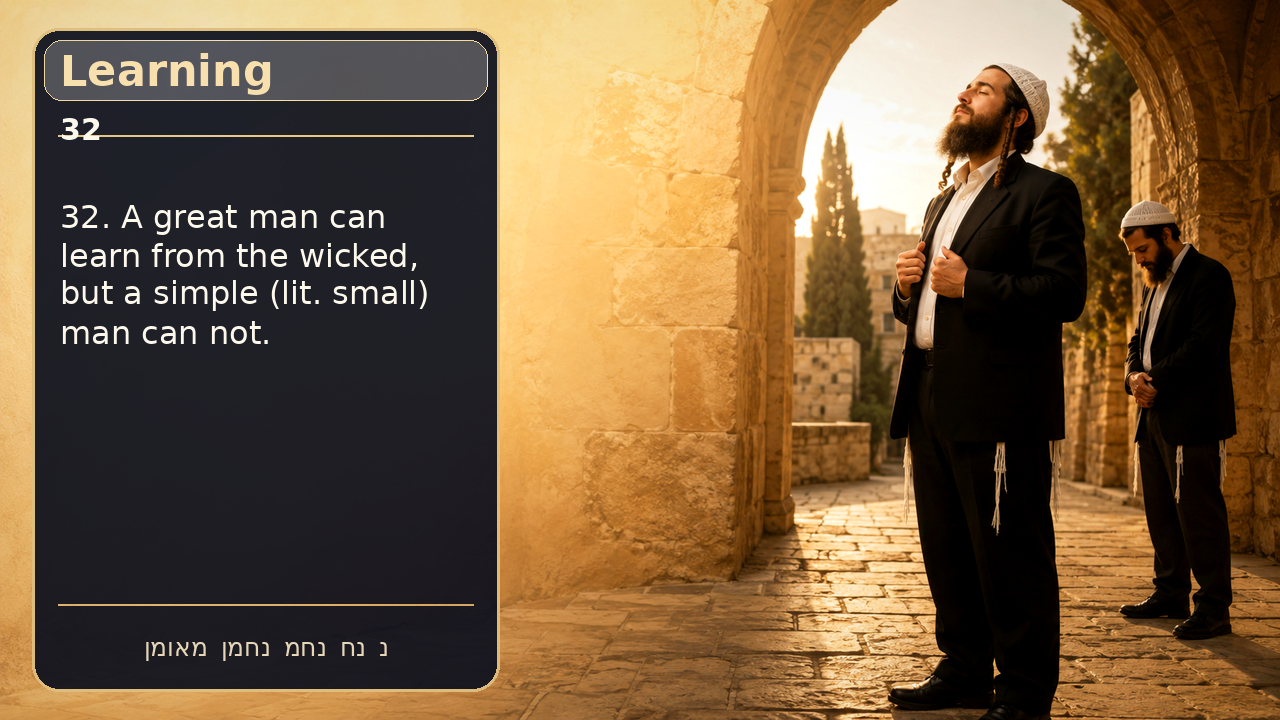
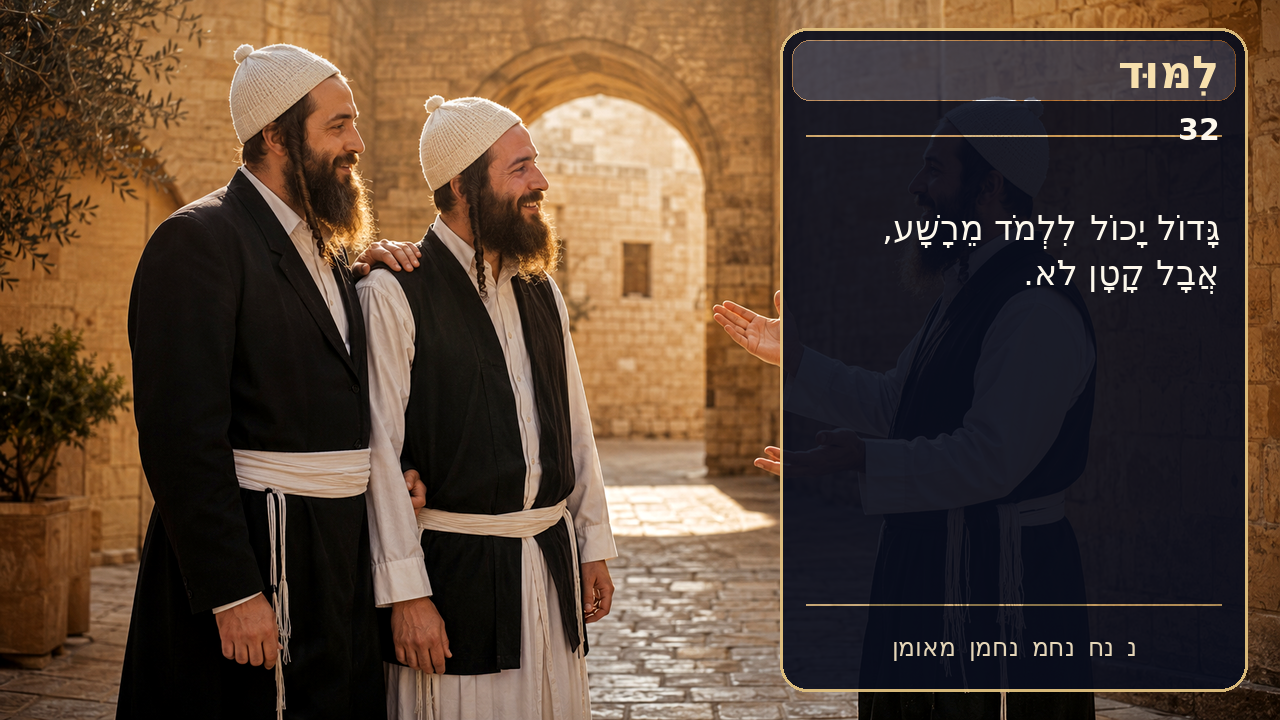
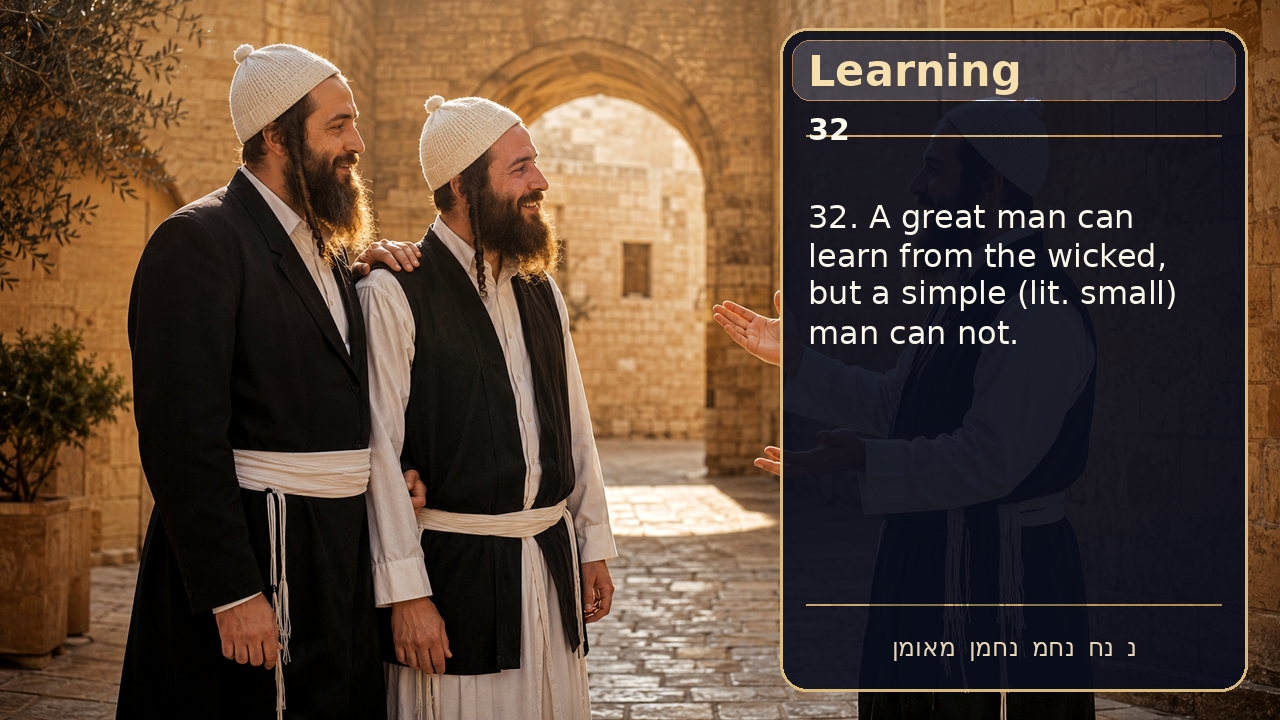
גָּדוֹל יָכוֹל לִלְמֹד מֵרָשָׁע, אֲבָל קָטָן לֹא.
32
32. A great man can learn from the wicked, but a simple (lit. small) man can not.
📷 Pictures / videos for this teaching

ל״ג
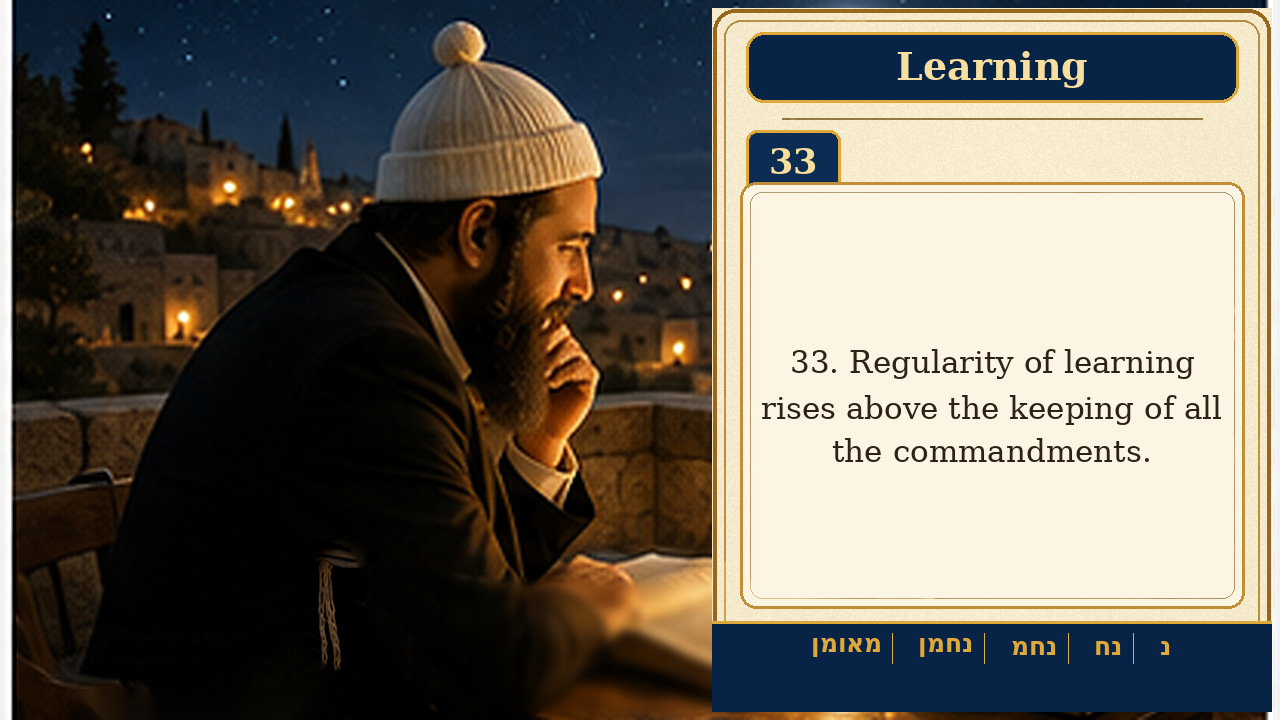
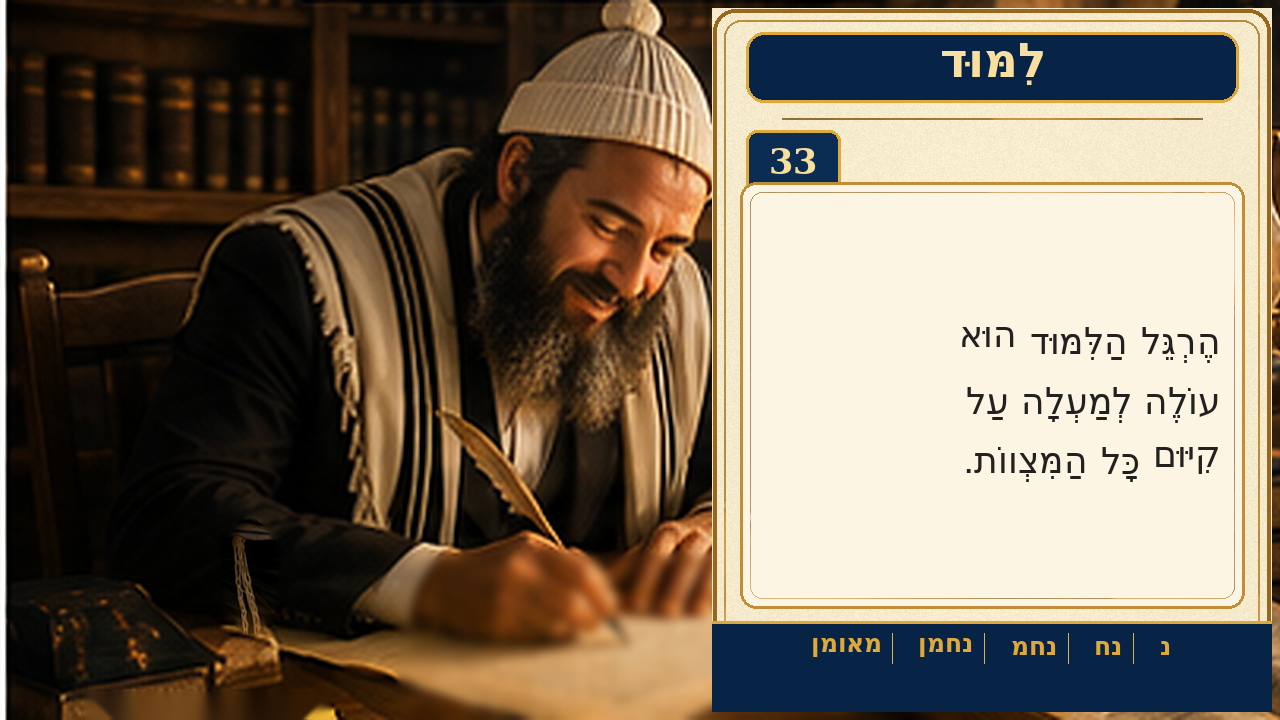
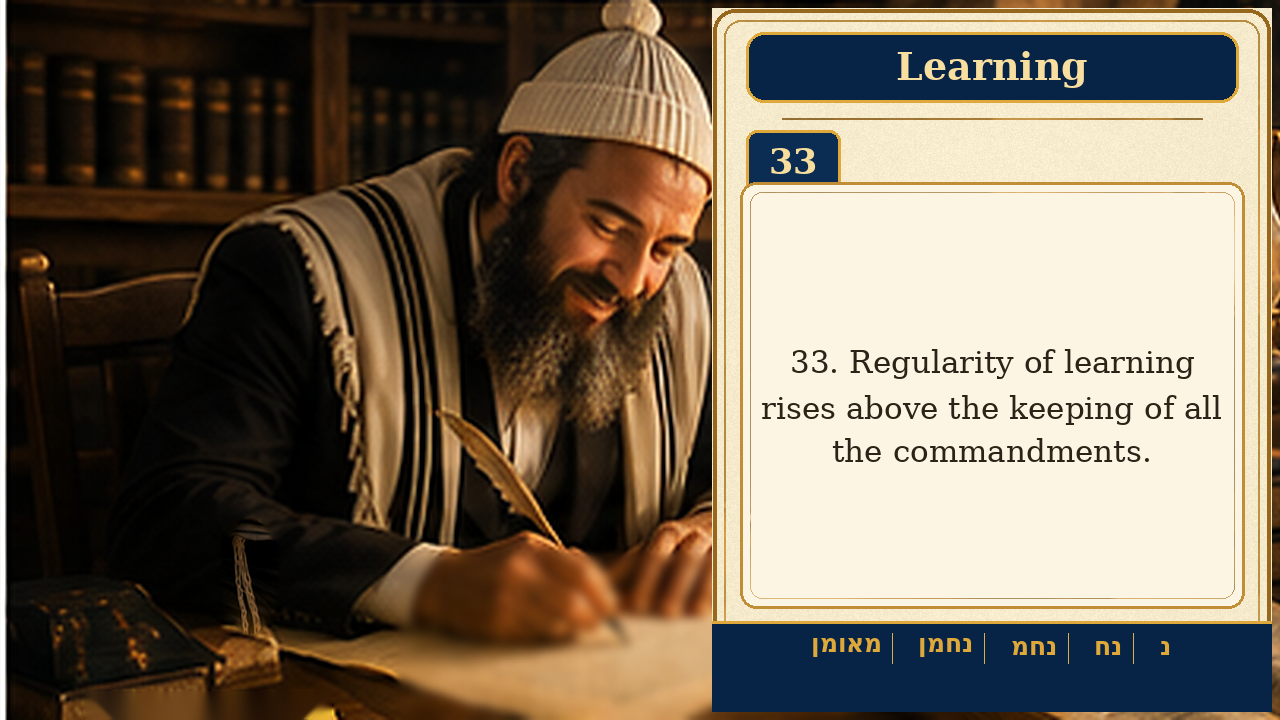
הֶרְגֵּל הַלִּמּוּד הוּא עוֹלֶה לְמַעְלָה עַל קִיּוּם כָּל הַמִּצְווֹת.
33
33. Regularity of learning rises above the keeping of all the commandments.
📷 Pictures / videos for this teaching

ל״ד
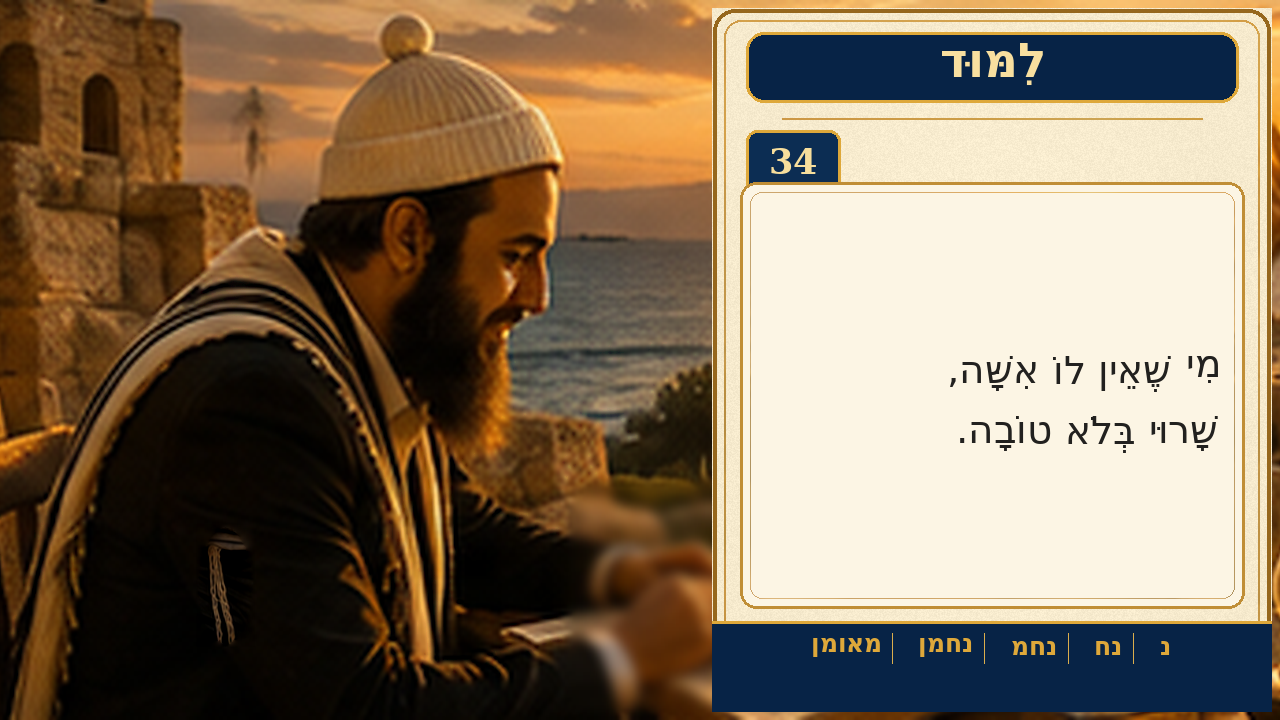
מִי שֶׁאֵין לוֹ אִשָּׁה, שָׁרוּי בְּלֹא טוֹבָה.
34
34. One who is without a wife, languishes (lit. is imbued) without good (Torah).
📷 Pictures / videos for this teaching


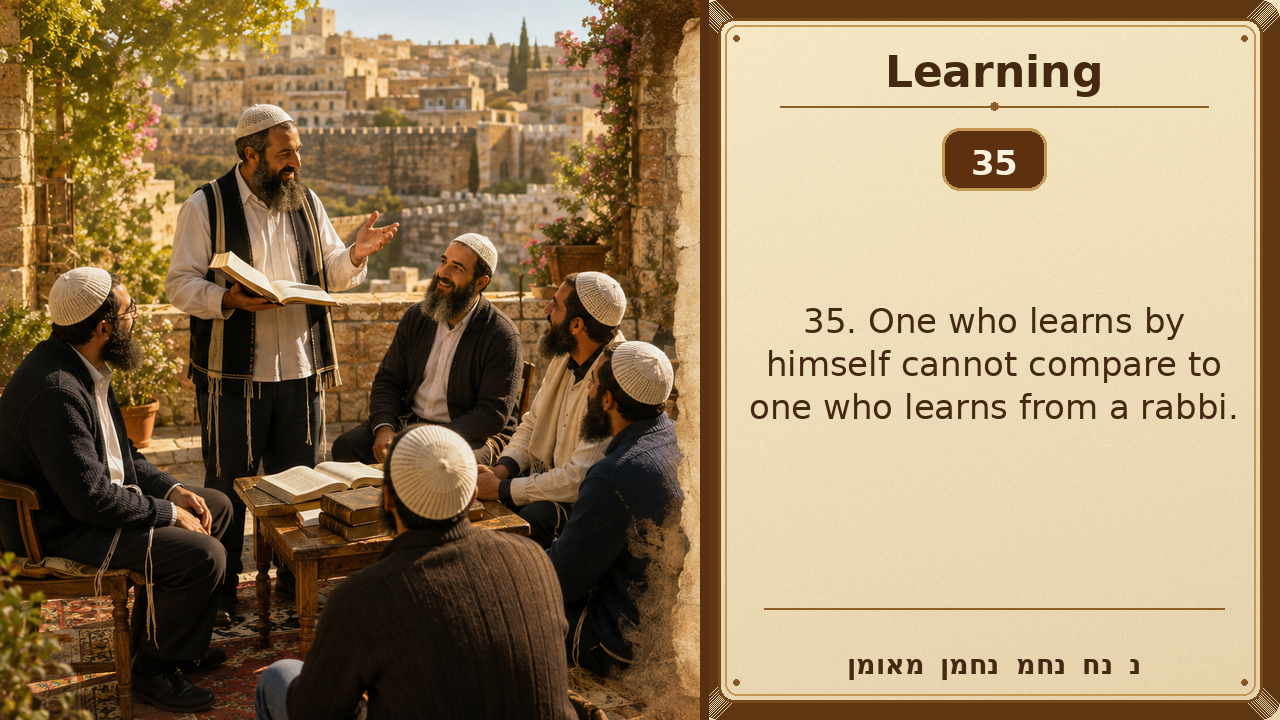
ל״ה
אֵינוֹ דּוֹמֶה הַלּוֹמֵד מִפִּי עַצְמוֹ לַלּוֹמֵד מִפִּי הָרַב.
35
35. One who learns by himself cannot compare to one who learns from a rabbi.
📷 Pictures / videos for this teaching
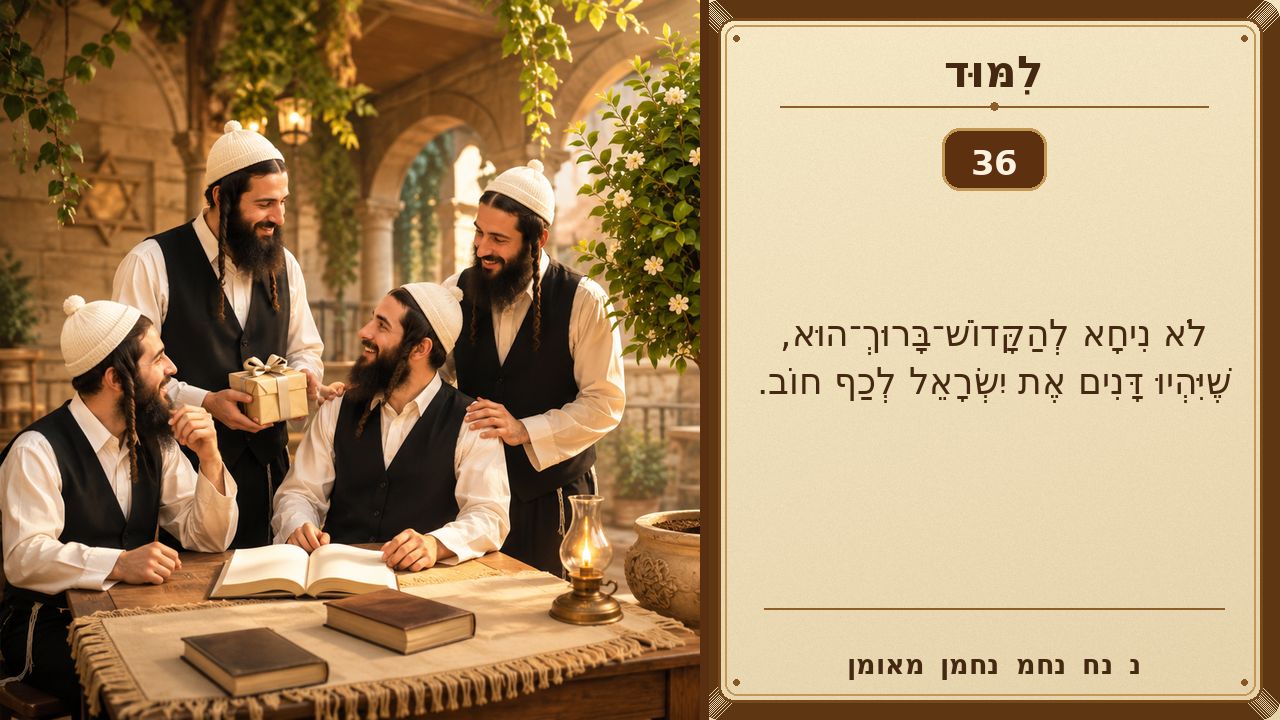
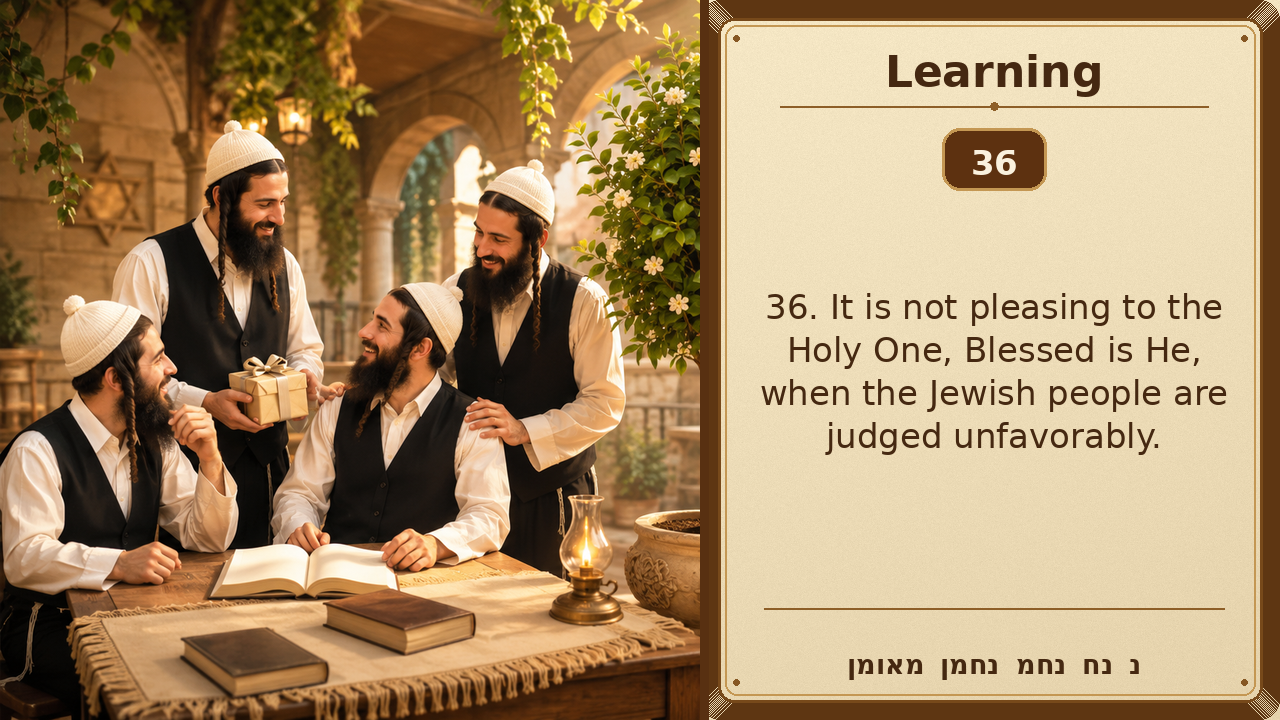
ל״ו
לֹא נִיחָא לְהַקָּדוֹשׁ־בָּרוּךְ־הוּא, שֶׁיִּהְיוּ דָּנִים אֶת יִשְׂרָאֵל לְכַף חוֹב.
36
36. It is not pleasing to the Holy One, Blessed is He, when the Jewish people are judged unfavorably.
📷 Pictures / videos for this teaching


ל״ז
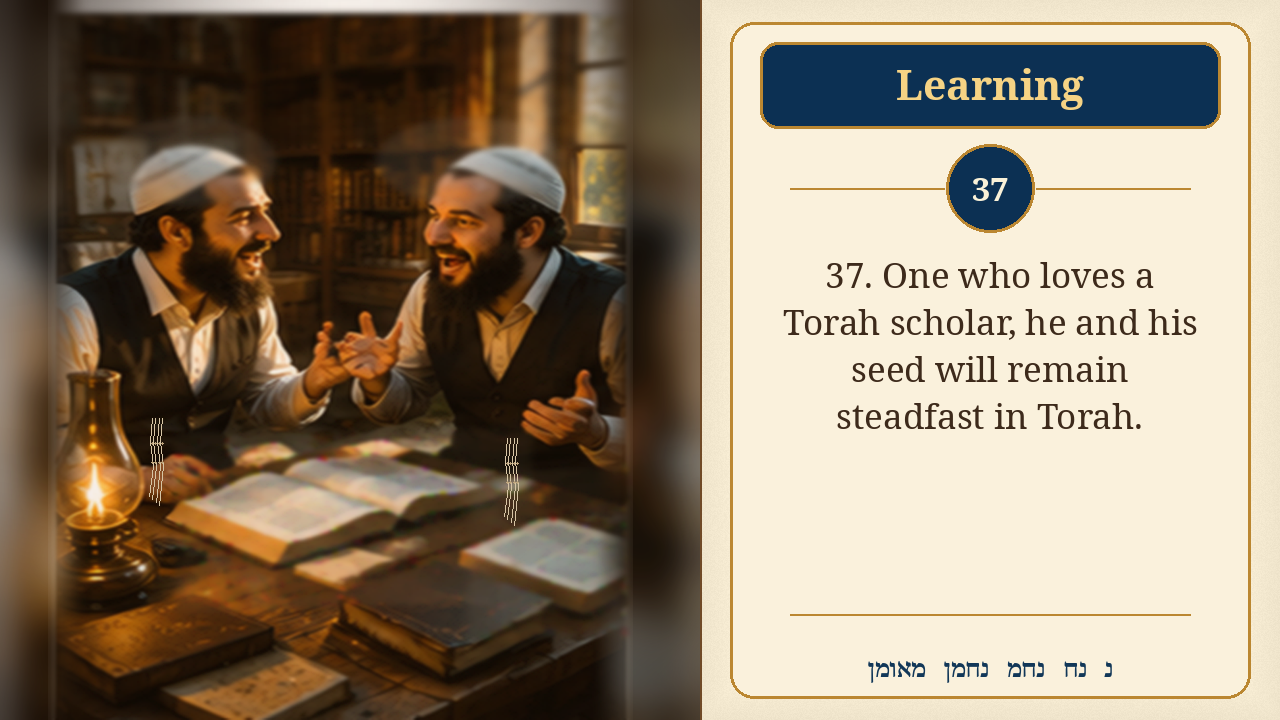
מִי שֶׁאוֹהֵב תַּלְמִיד־חָכָם, הַתּוֹרָה מְחַזֶּרֶת עָלָיו וְעַל זַרְעוֹ.
37
37. One who loves a Torah scholar, he and his seed will remain steadfast in Torah.
📷 Pictures / videos for this teaching


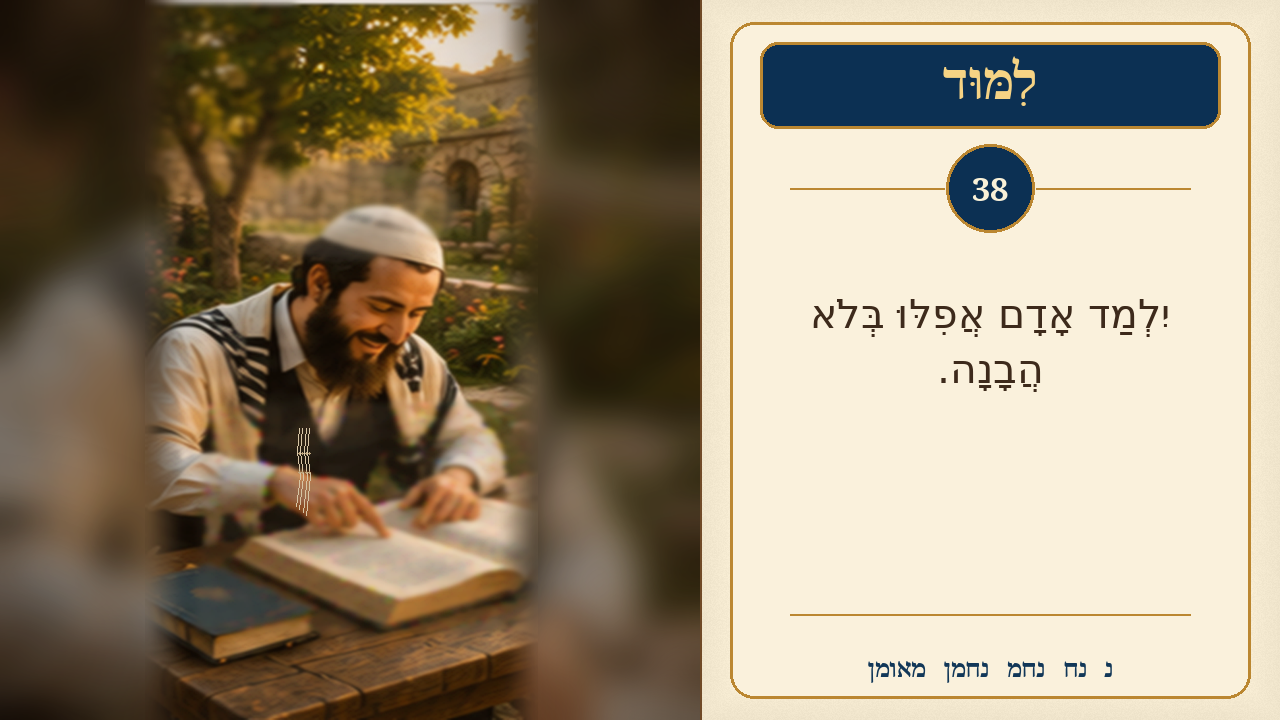
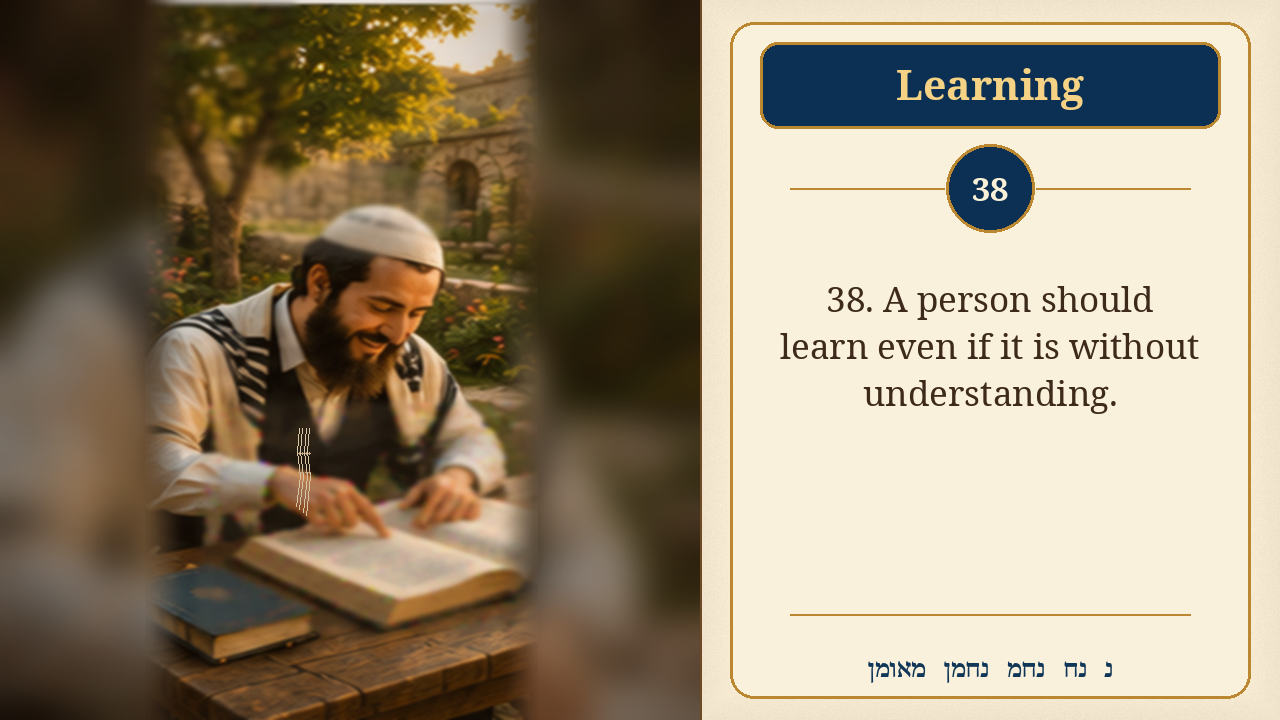
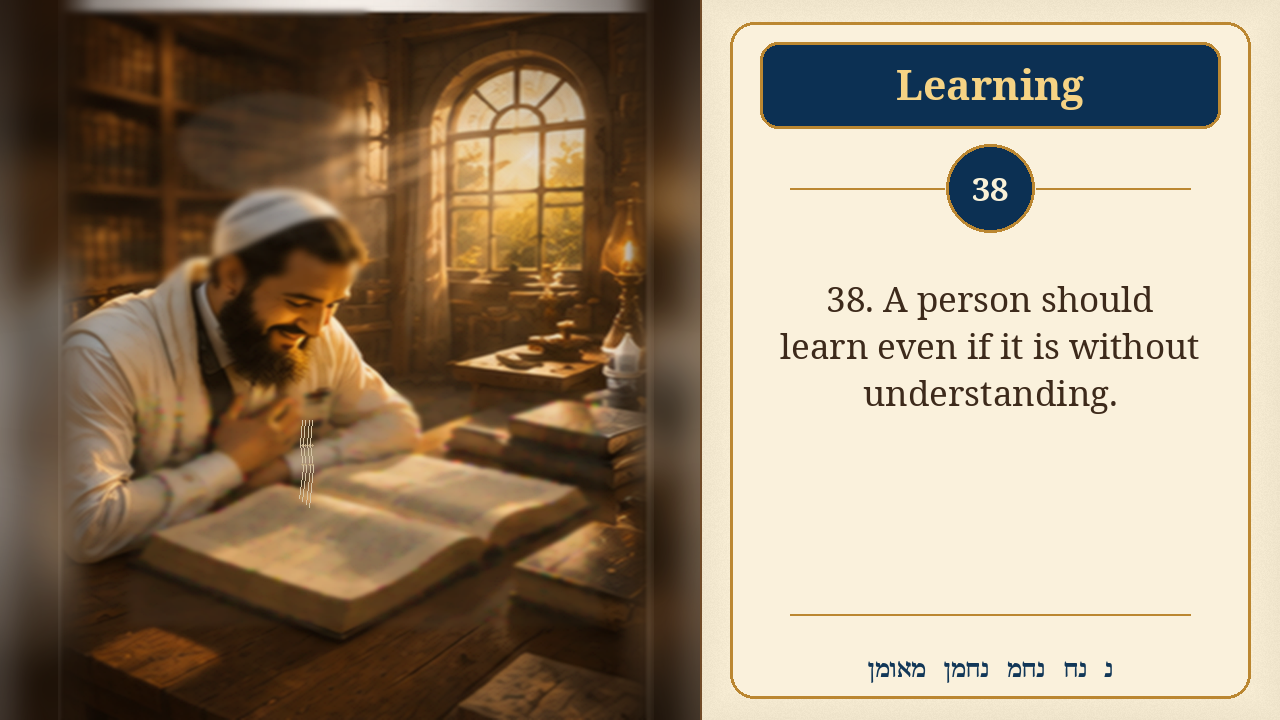
ל״ח
יִלְמַד אָדָם אֲפִלּוּ בְּלֹא הֲבָנָה.
38
38. A person should learn even if it is without understanding.
📷 Pictures / videos for this teaching

ל״ט
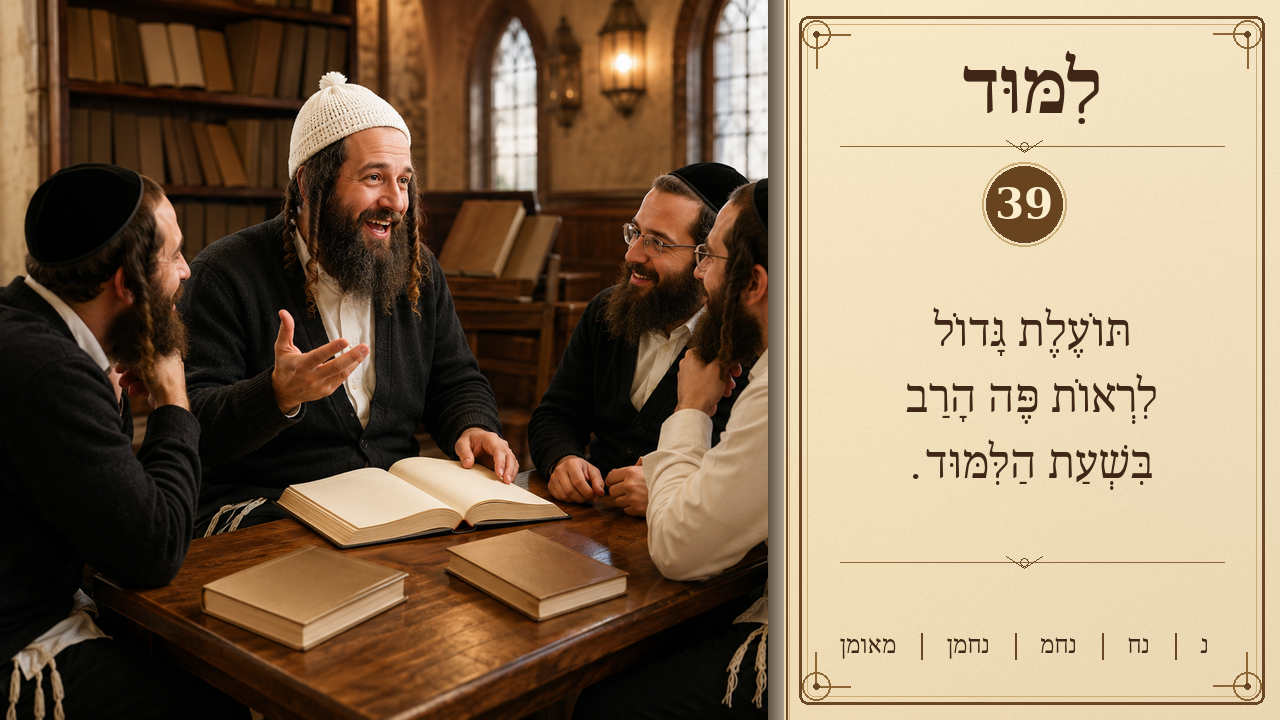
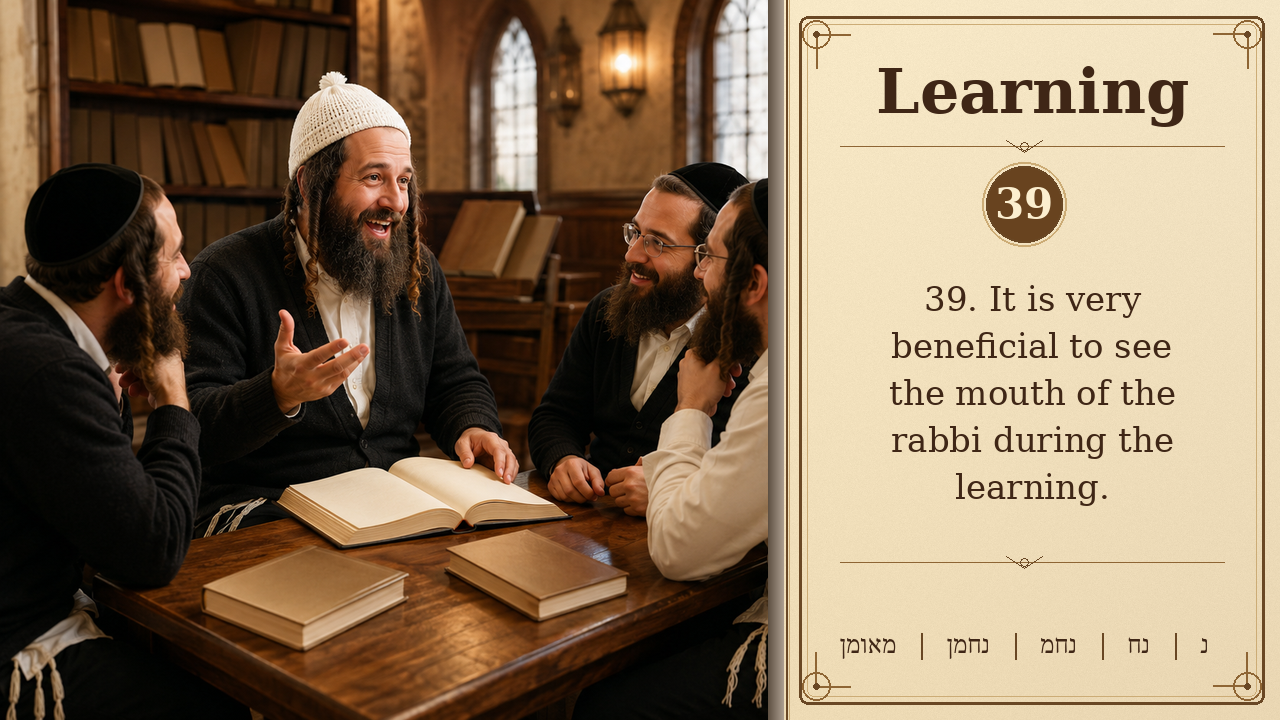
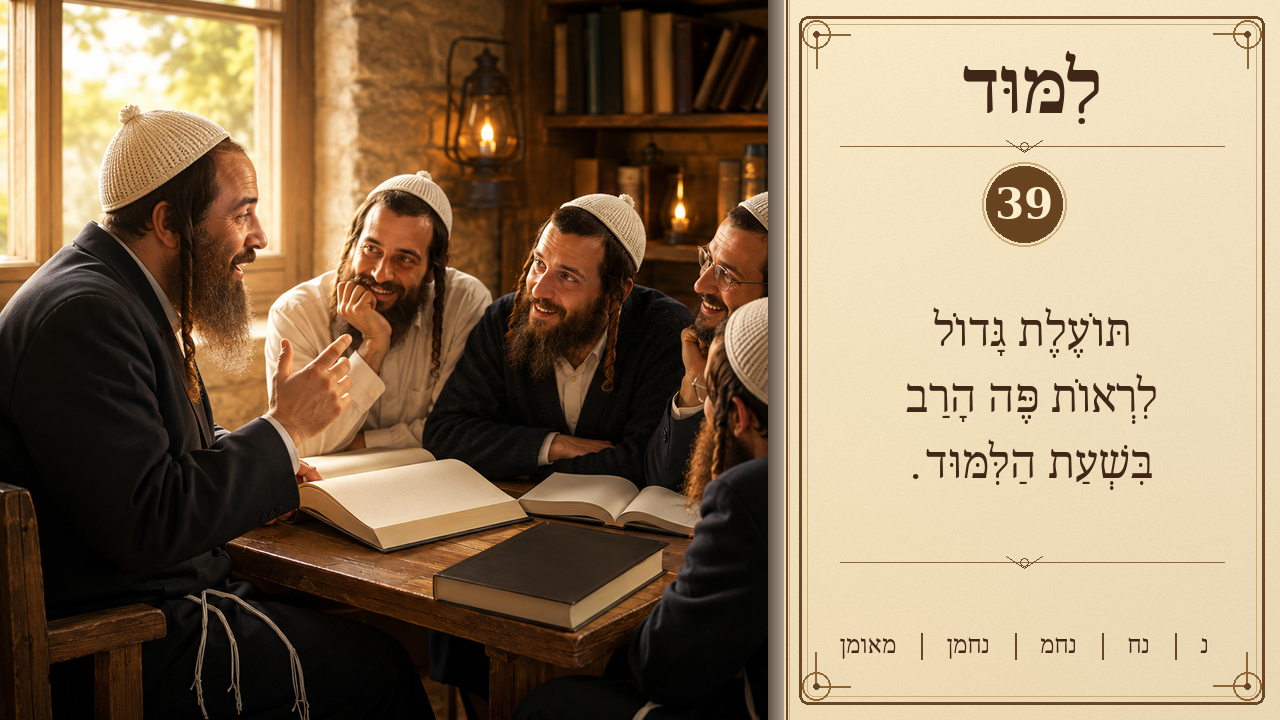
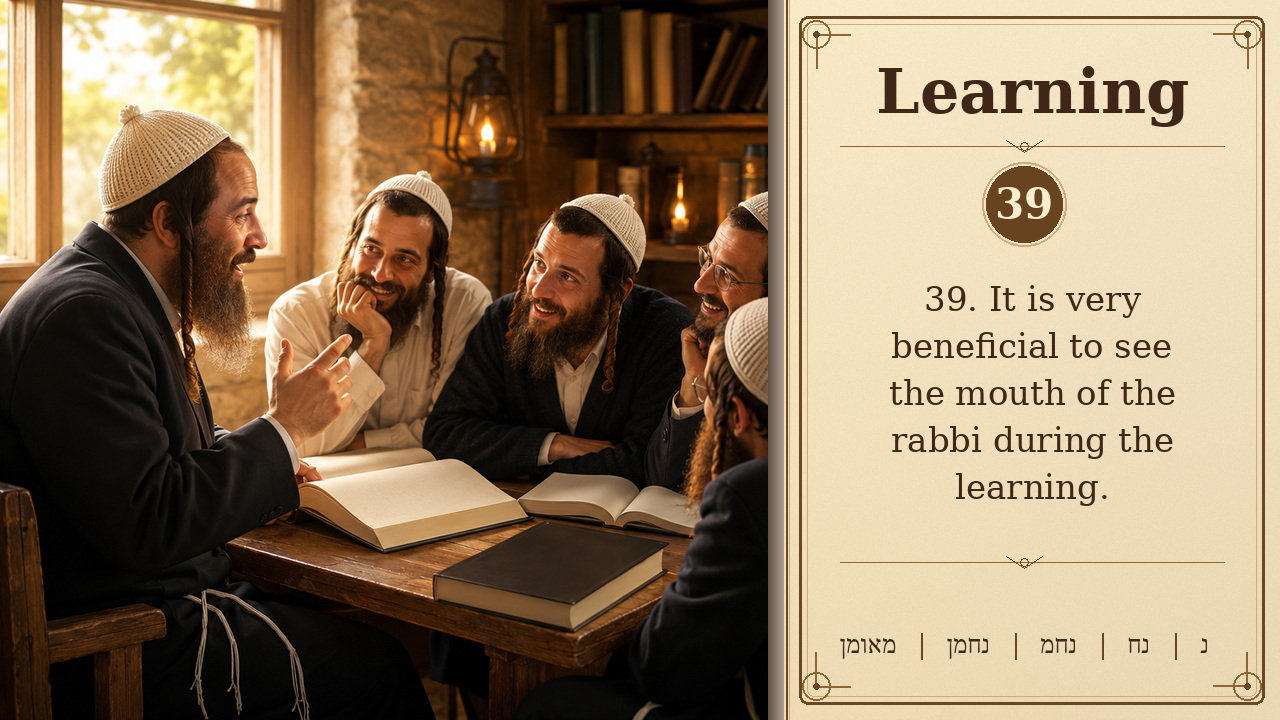
תּוֹעֶלֶת גָּדוֹל לִרְאוֹת פֶּה הָרַב בִּשְׁעַת הַלִּמּוּד.
39
39. It is very beneficial to see the mouth of the rabbi during the learning.
📷 Pictures / videos for this teaching
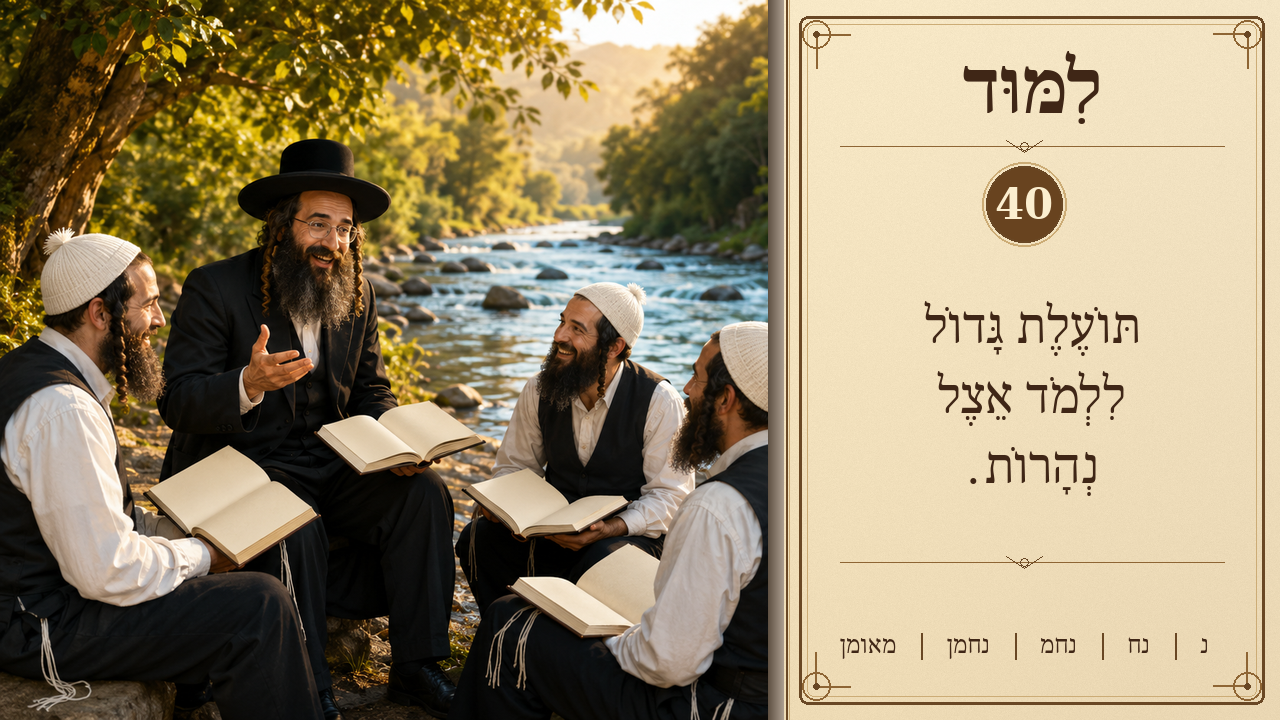
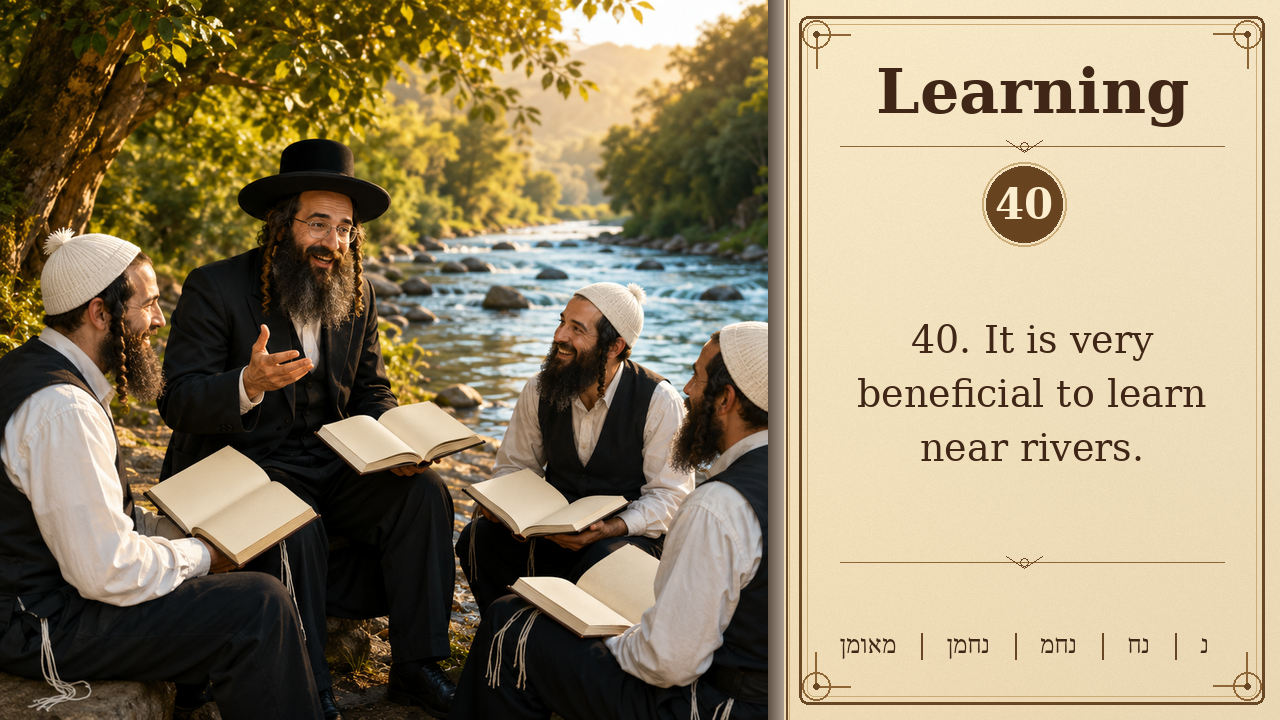
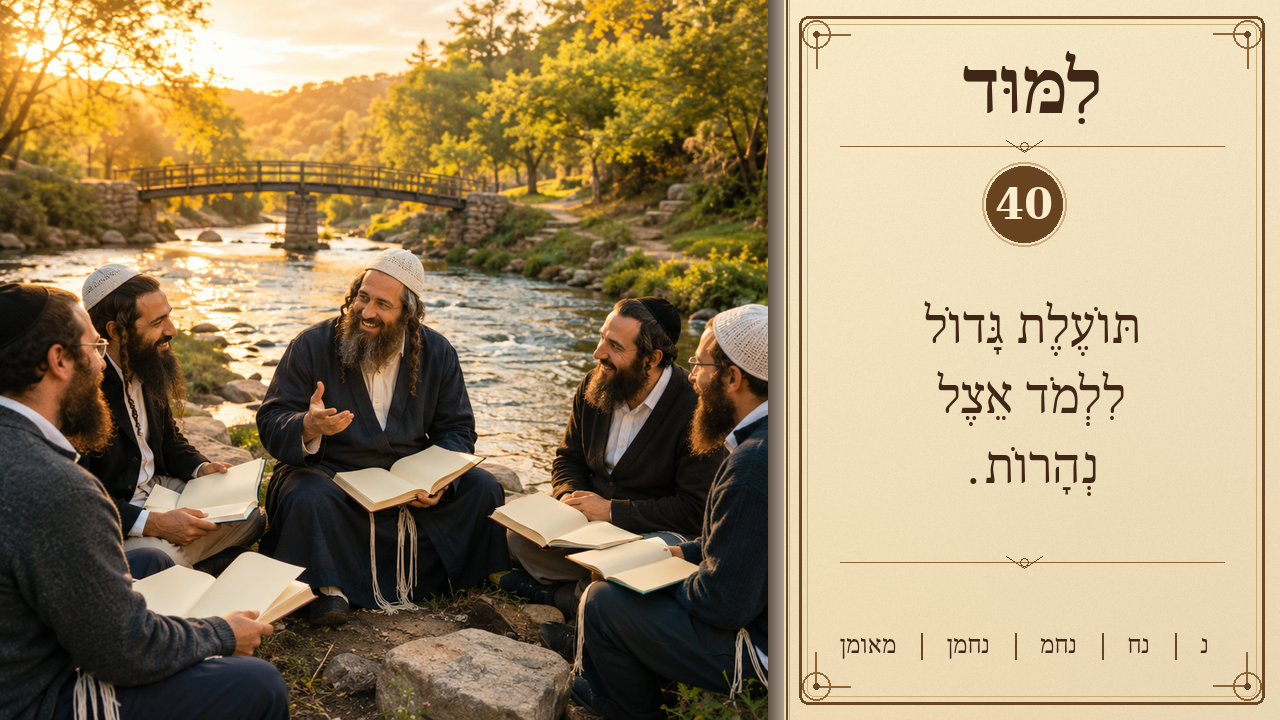
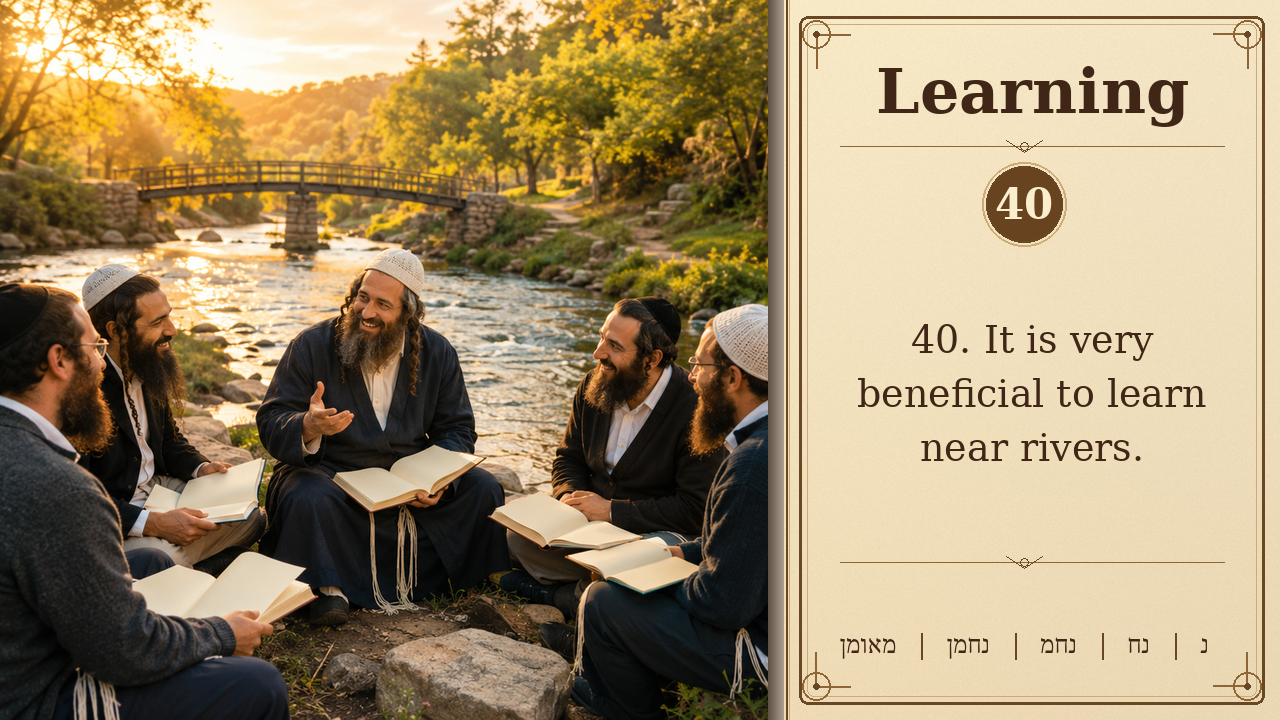
מ׳
תּוֹעֶלֶת גָּדוֹל לִלְמֹד אֵצֶל נְהָרוֹת.
40
40. It is very beneficial to learn near rivers.
📷 Pictures / videos for this teaching
מ״א
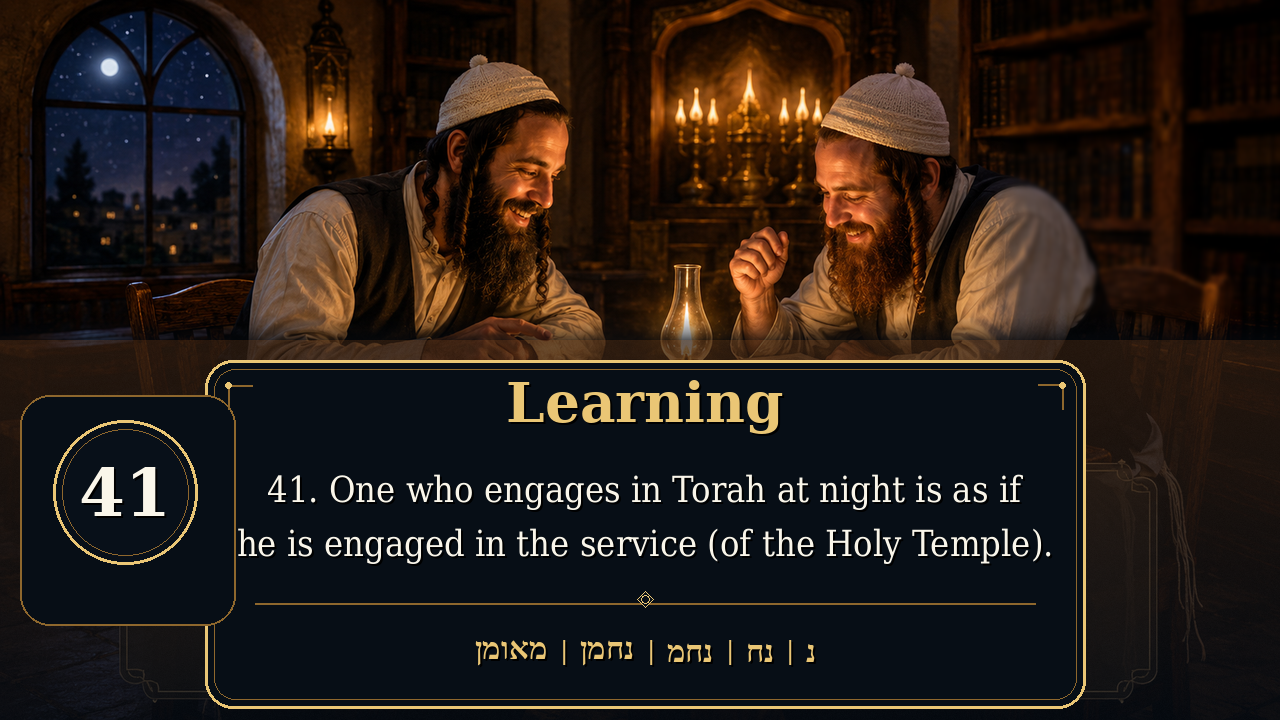
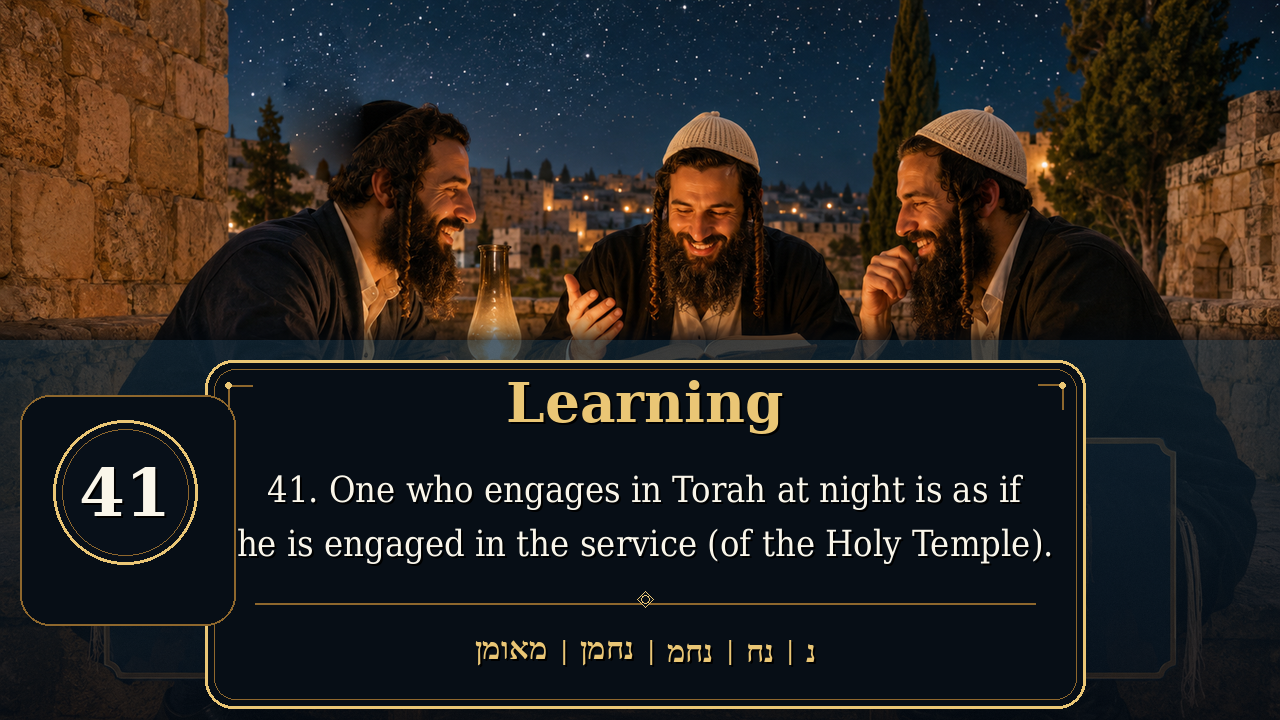
הָעוֹסֵק בַּתּוֹרָה בַּלַּיְלָה, כְּאִלּוּ עוֹסֵק בַּעֲבוֹדָה.
41
41. One who engages in Torah at night is as if he is engaged in the service (of the Holy Temple).
📷 Pictures / videos for this teaching


מ״ב
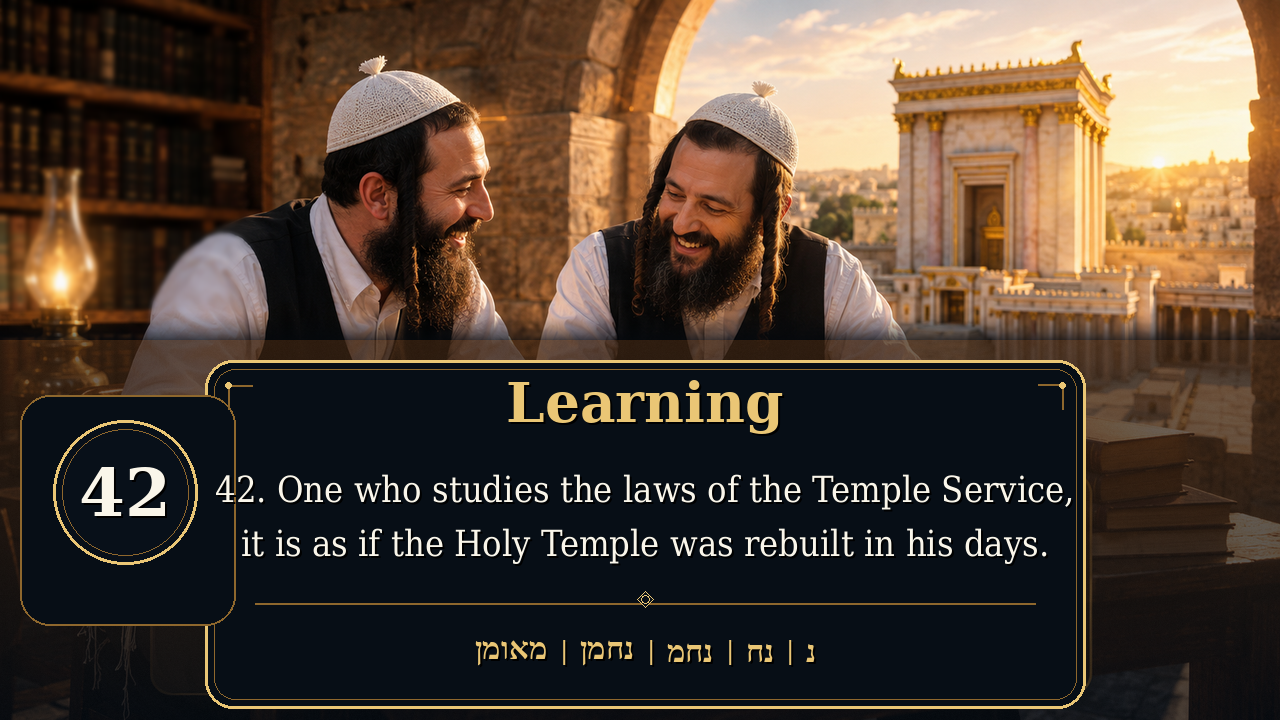
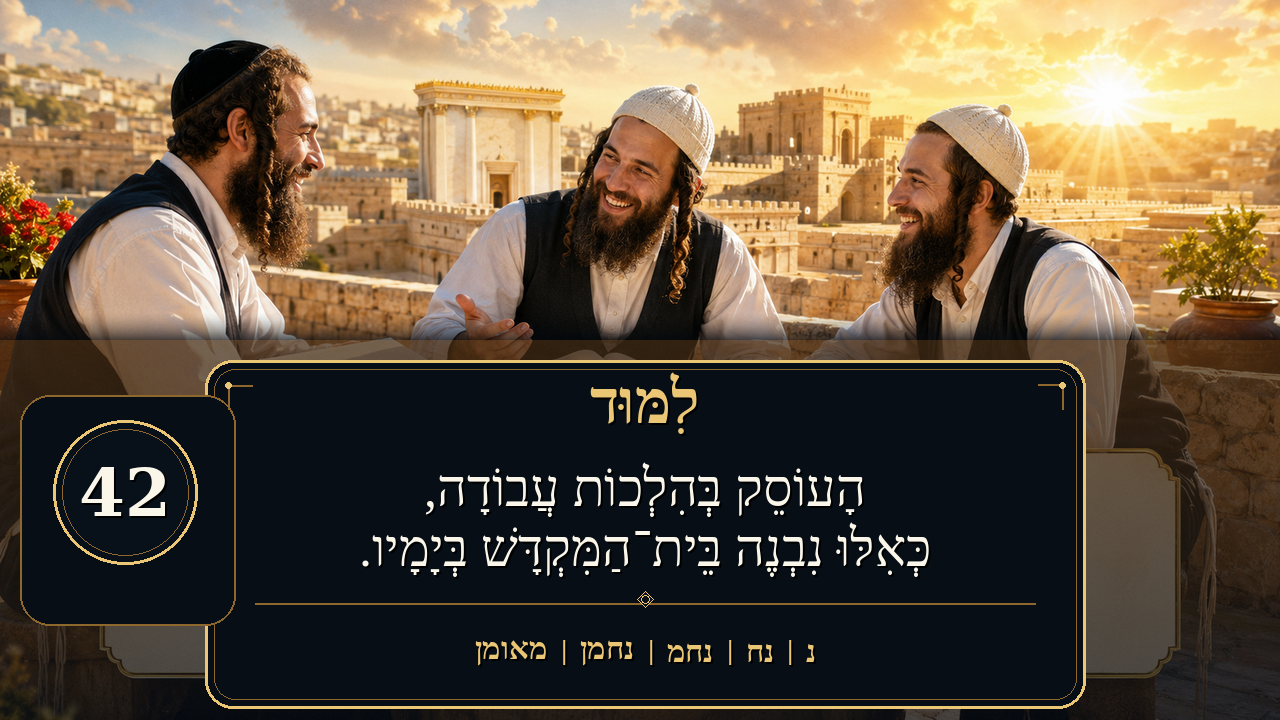
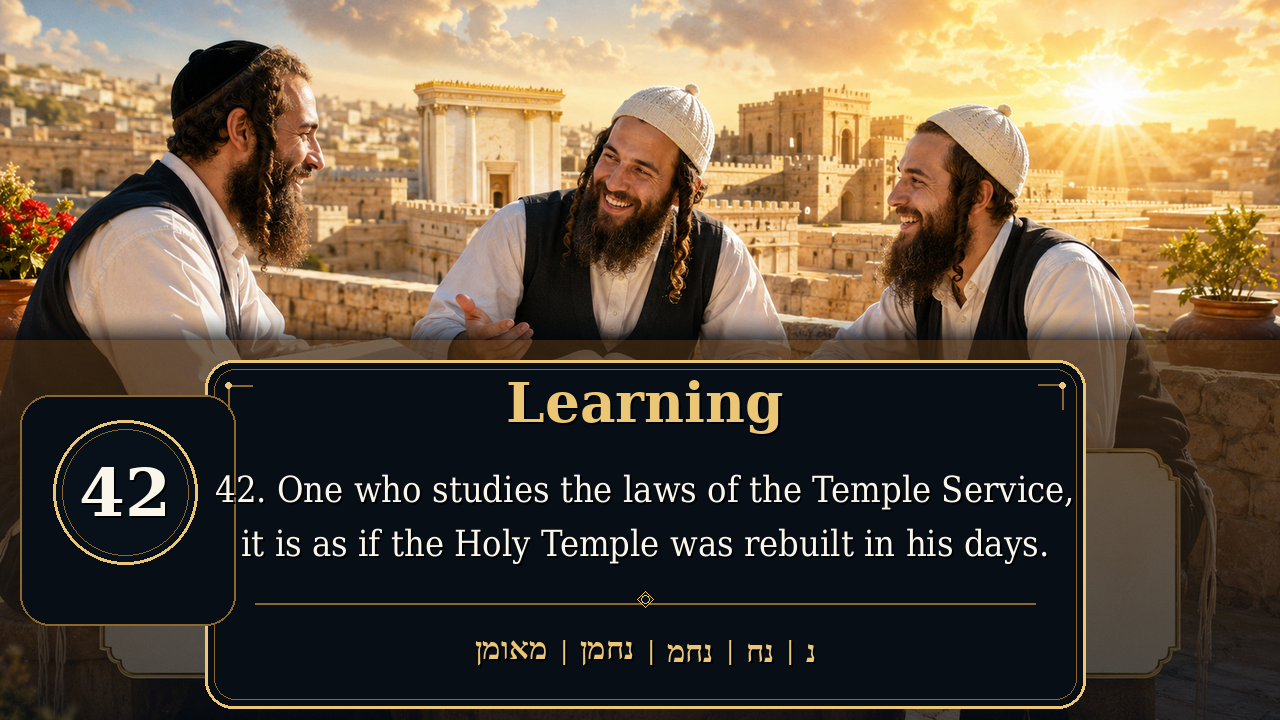
הָעוֹסֵק בְּהִלְכוֹת עֲבוֹדָה, כְּאִלּוּ נִבְנֶה בֵּית־הַמִּקְדָּשׁ בְּיָמָיו.
42
42. One who studies the laws of the Temple Service, it is as if the Holy Temple was rebuilt in his days.
📷 Pictures / videos for this teaching

מ״ג
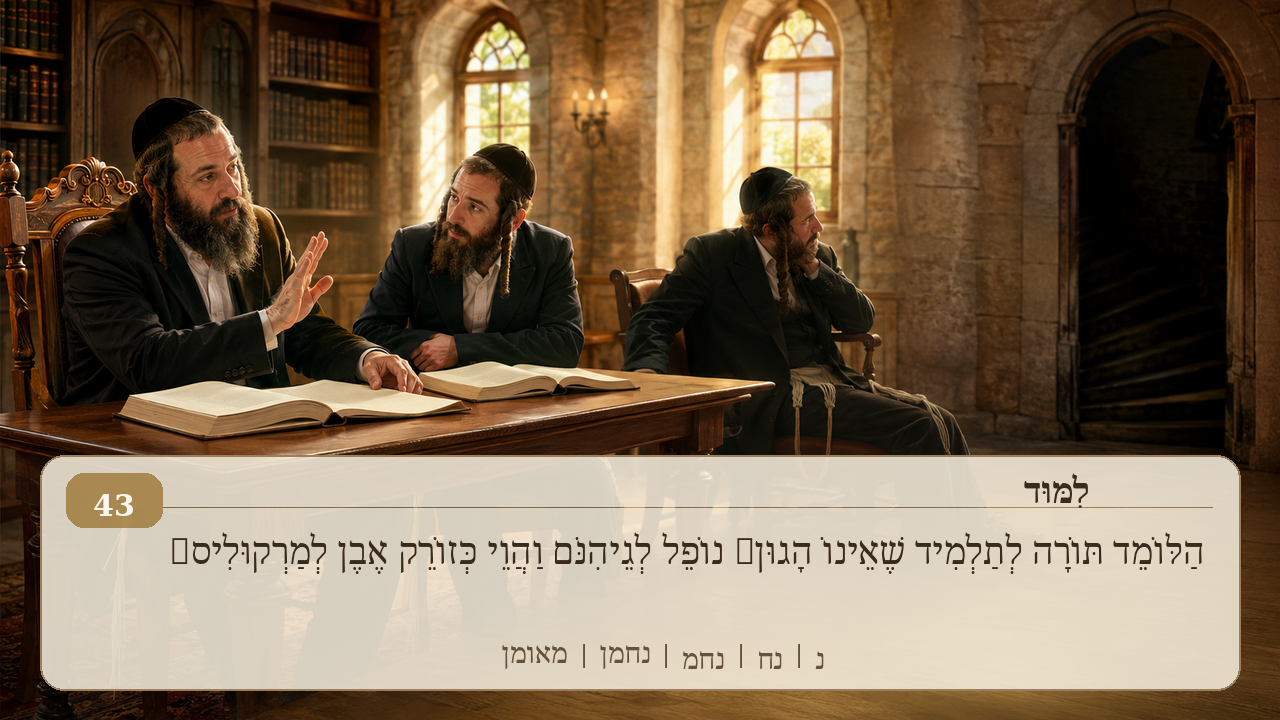
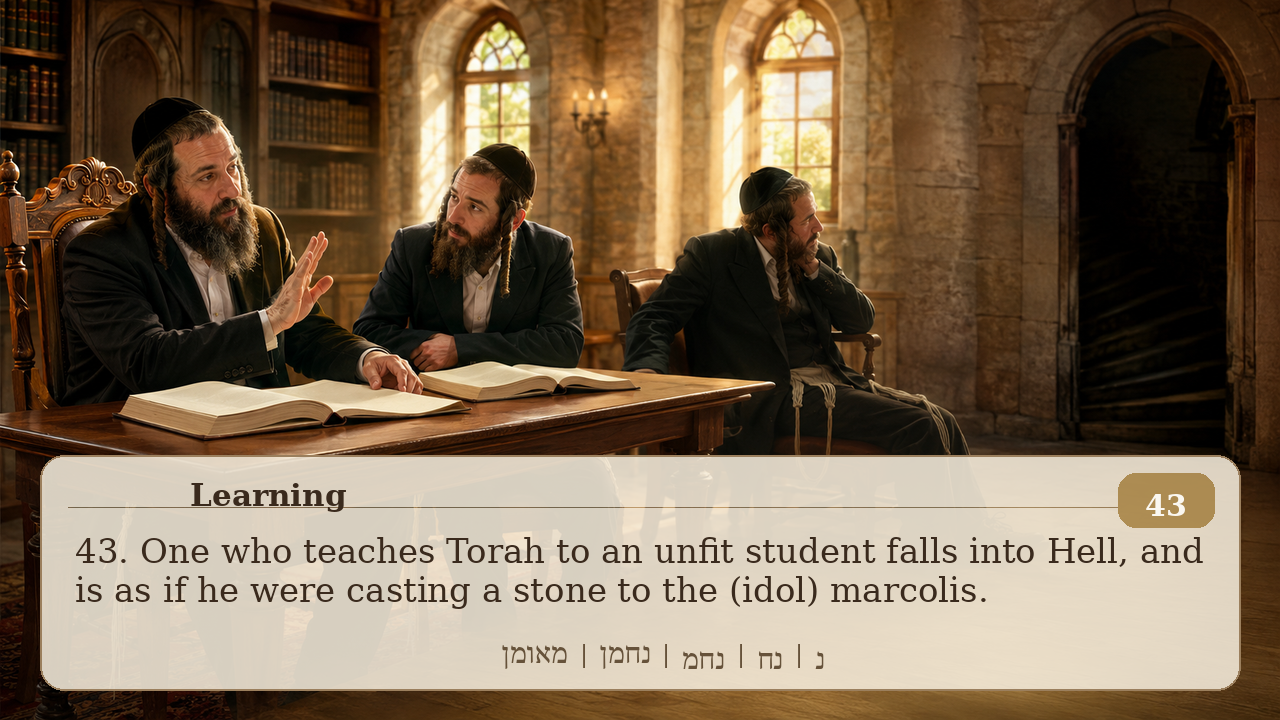
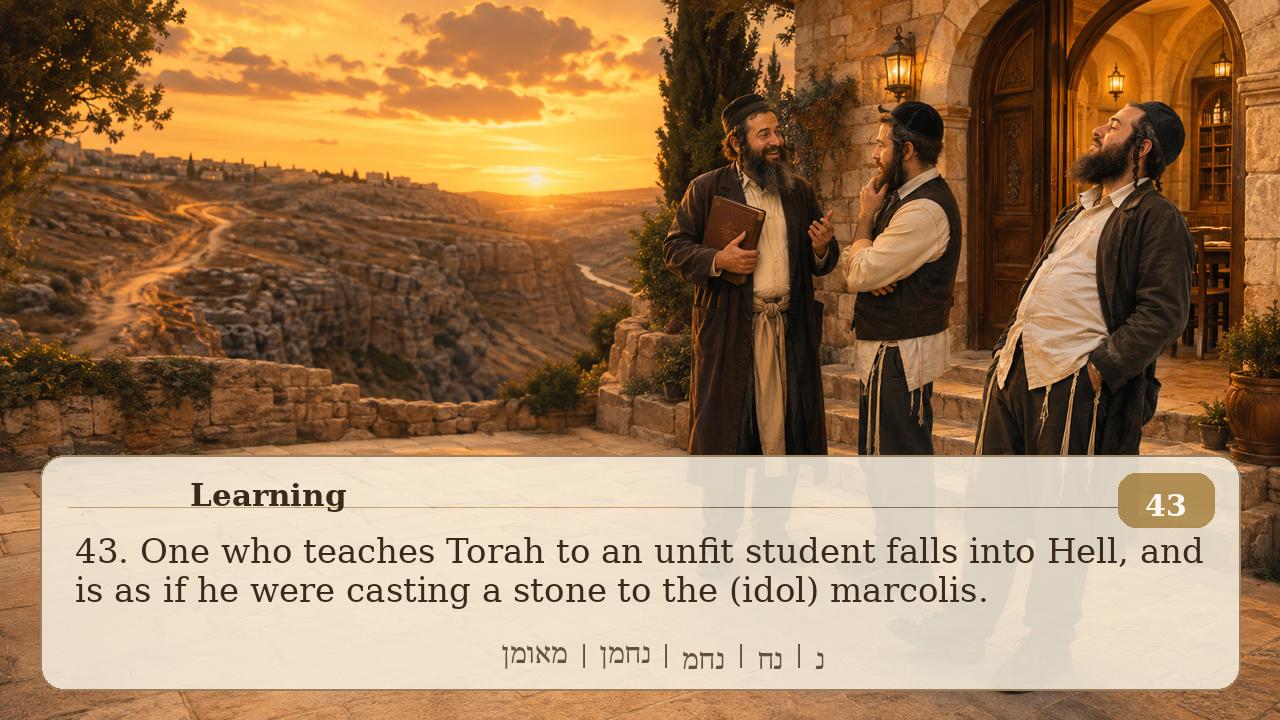
הַלּוֹמֵד תּוֹרָה לְתַלְמִיד שֶׁאֵינוֹ הָגוּן, נוֹפֵל לְגֵיהִנֹּם וַהֲוֵי כְּזוֹרֵק אֶבֶן לְמַרְקוּלִיס.
43
43. One who teaches Torah to an unfit student falls into Hell, and is as if he were casting a stone to the (idol) marcolis.
📷 Pictures / videos for this teaching

מ״ד
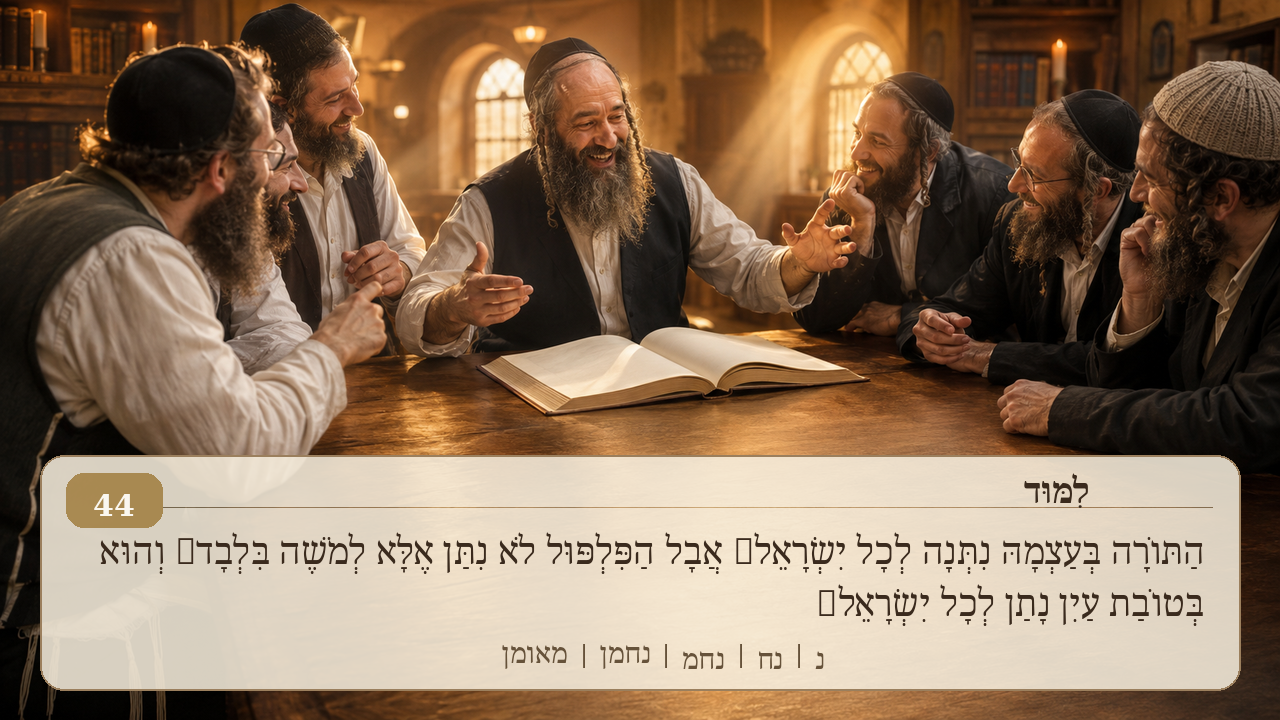
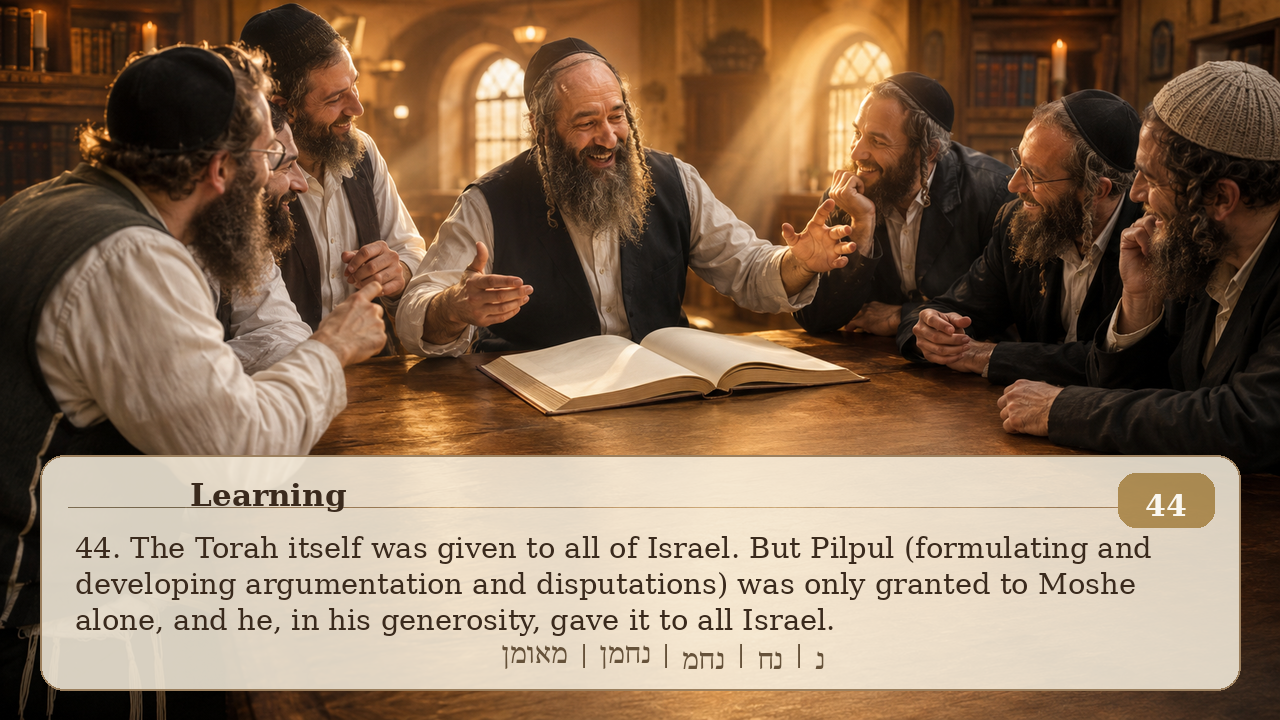
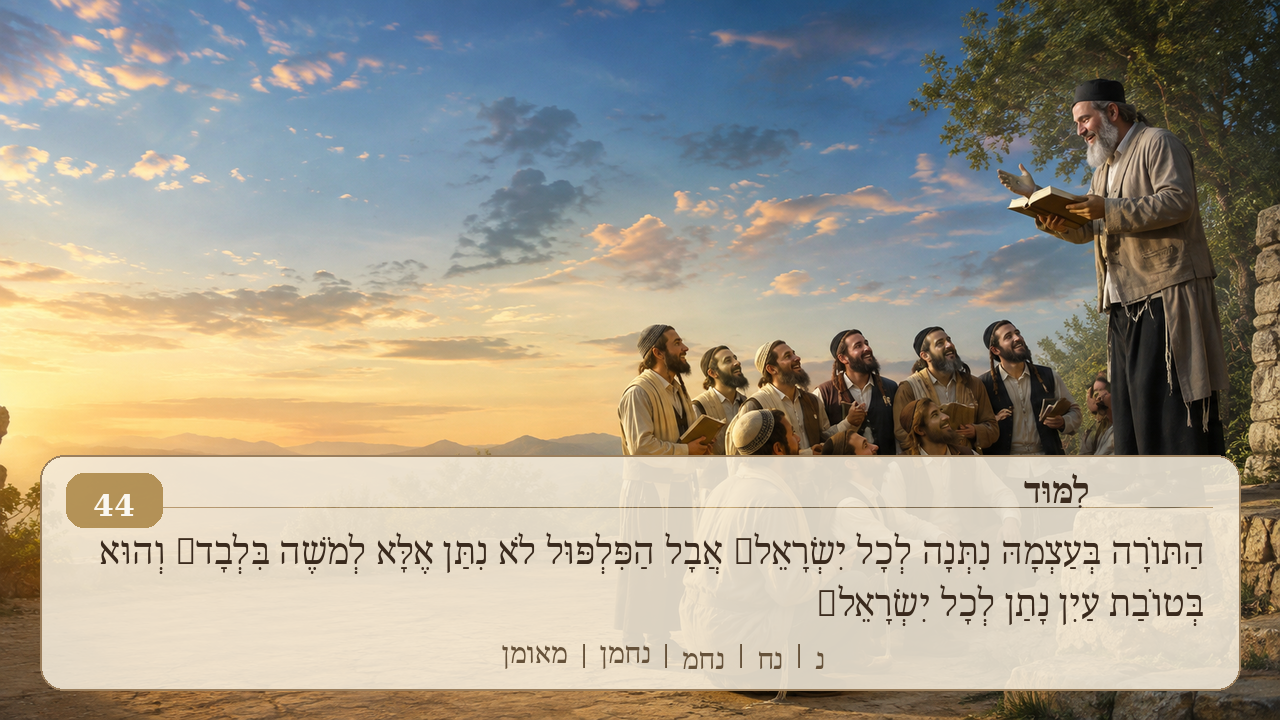
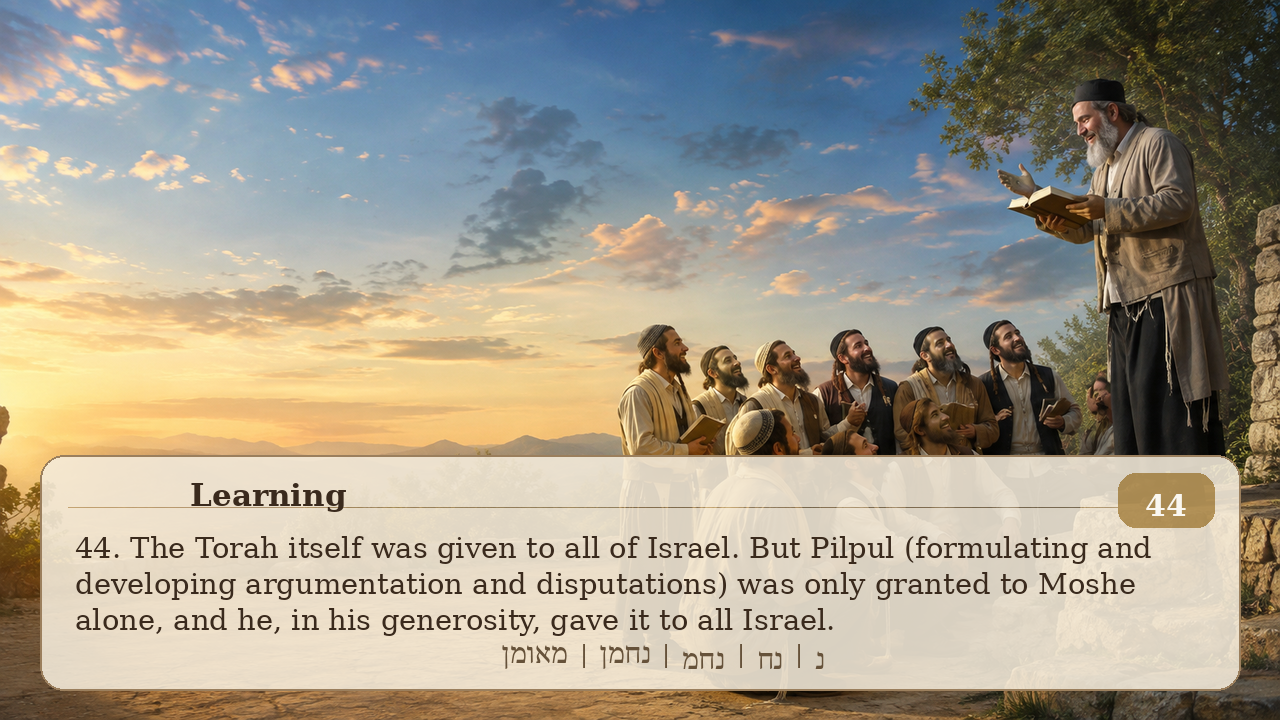
הַתּוֹרָה בְּעַצְמָהּ נִתְּנָה לְכָל יִשְׂרָאֵל, אֲבָל הַפִּלְפּוּל לֹא נִתַּן אֶלָּא לְמֹשֶׁה בִּלְבָד, וְהוּא בְּטוֹבַת עַיִן נָתַן לְכָל יִשְׂרָאֵל.
44
44. The Torah itself was given to all of Israel. But Pilpul (formulating and developing argumentation and disputations) was only granted to Moshe alone, and he, in his generosity, gave it to all Israel.
📷 Pictures / videos for this teaching
מ״ה
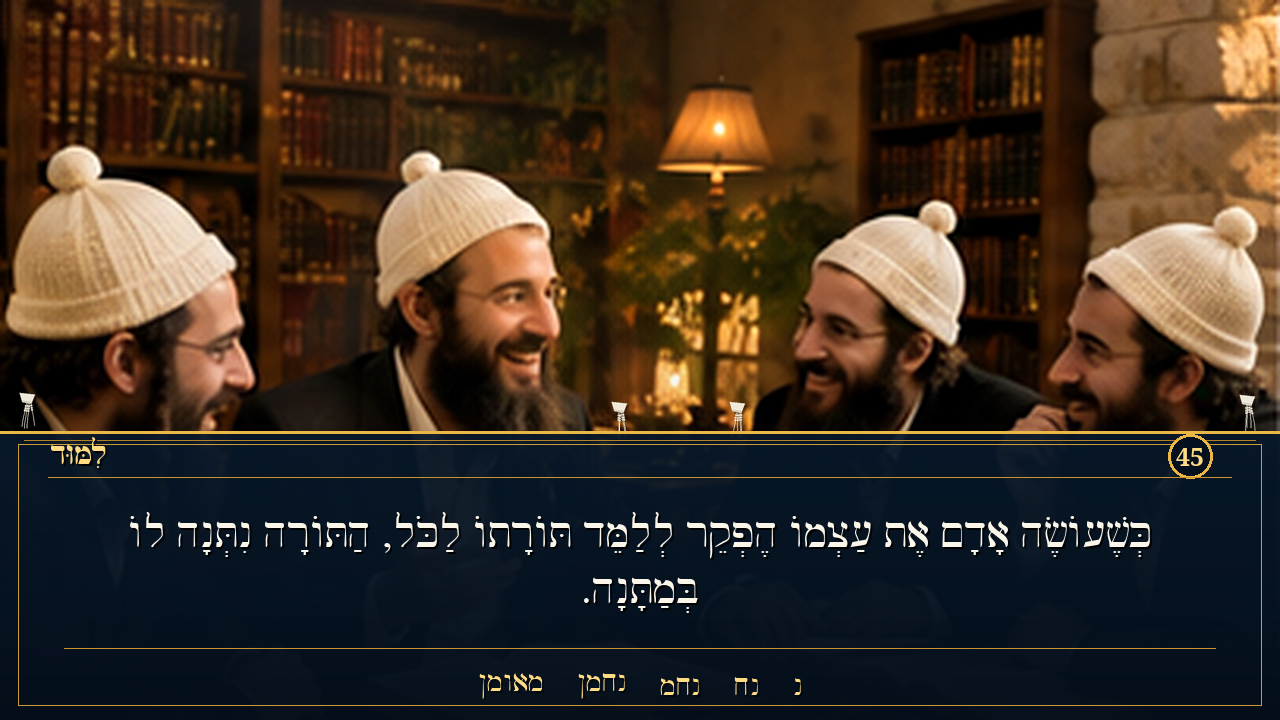
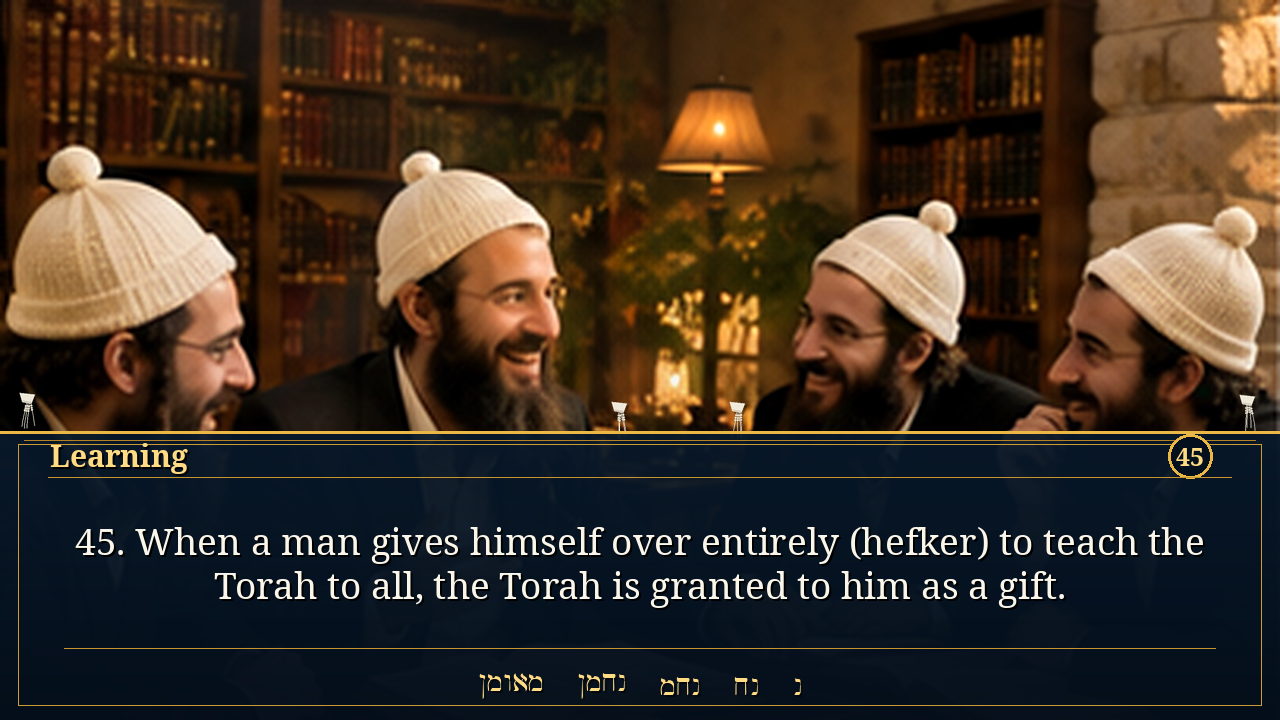
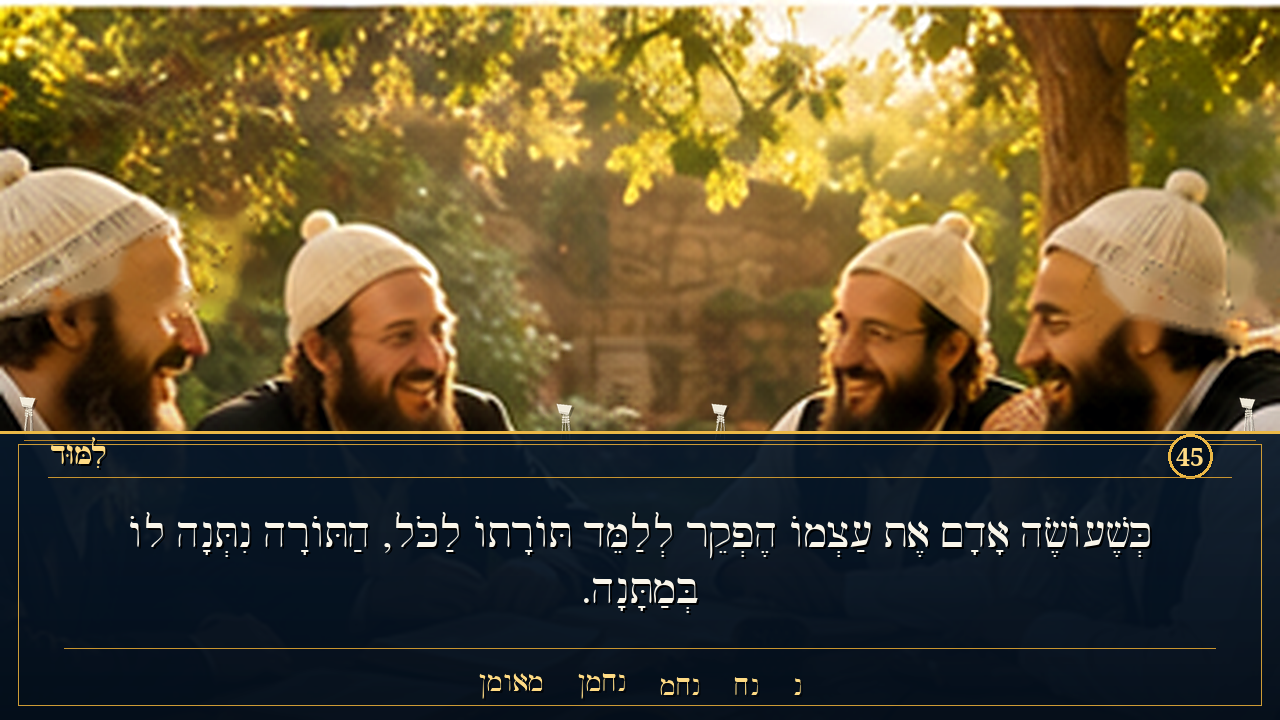
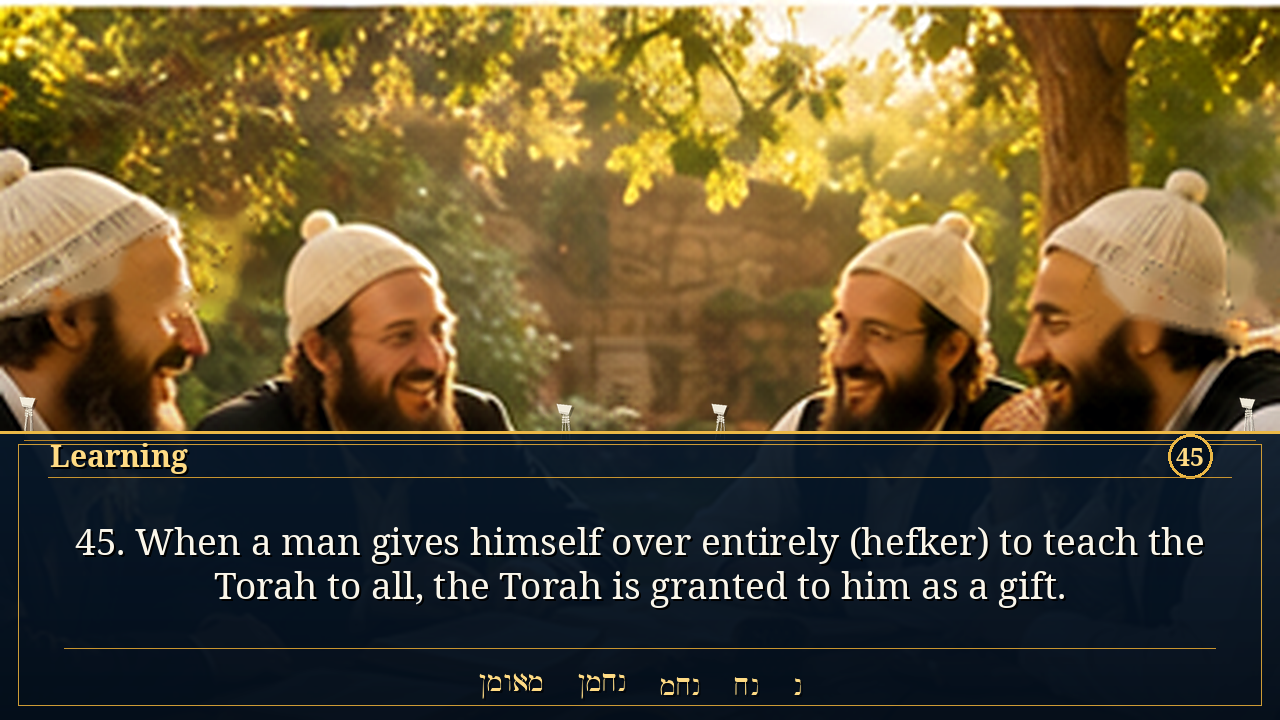
כְּשֶׁעוֹשֶׂה אָדָם אֶת עַצְמוֹ הֶפְקֵר לְלַמֵּד תּוֹרָתוֹ לַכֹּל, הַתּוֹרָה נִתְּנָה לוֹ בְּמַתָּנָה.
45
45. When a man gives himself over entirely (hefker) to teach the Torah to all, the Torah is granted to him as a gift.
📷 Pictures / videos for this teaching
מ״ו
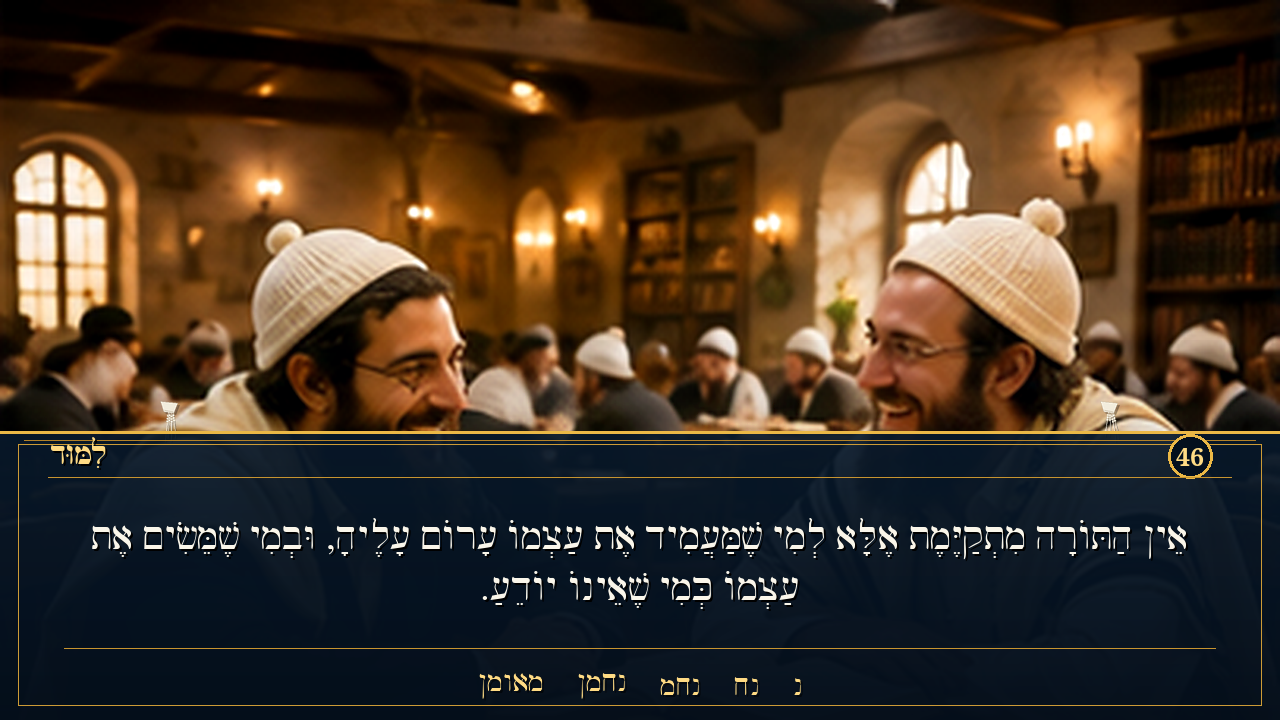
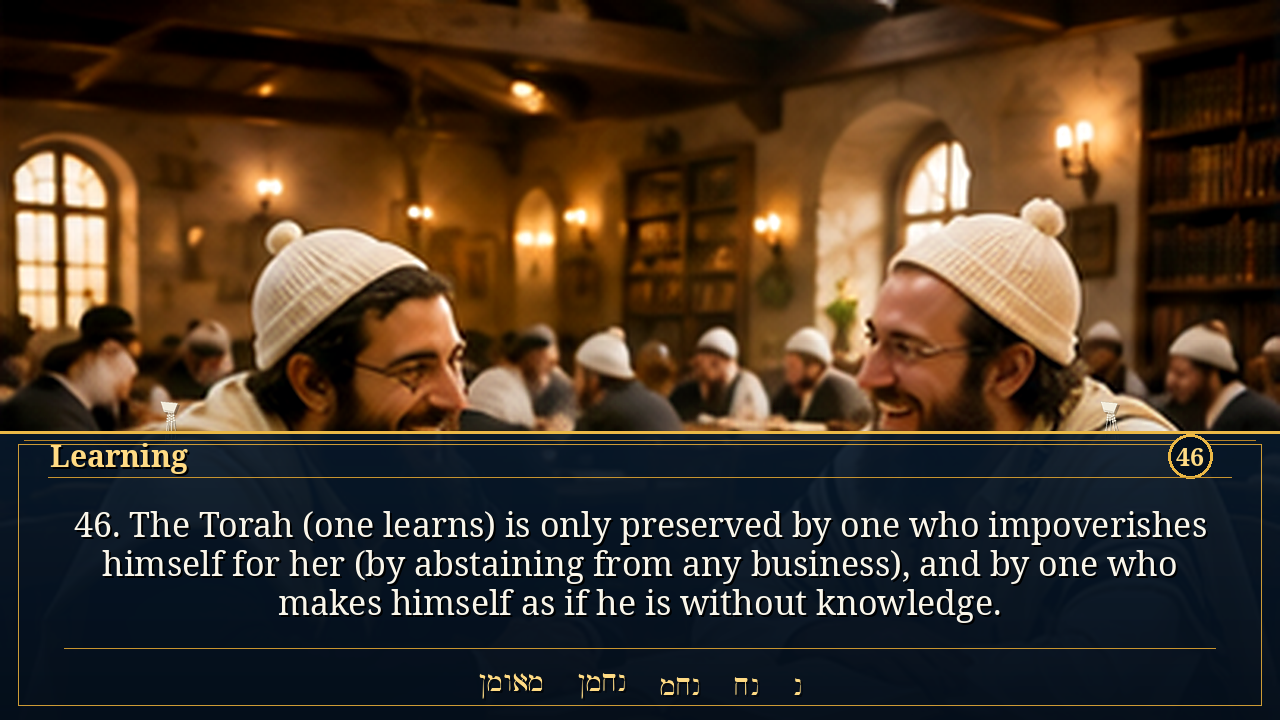
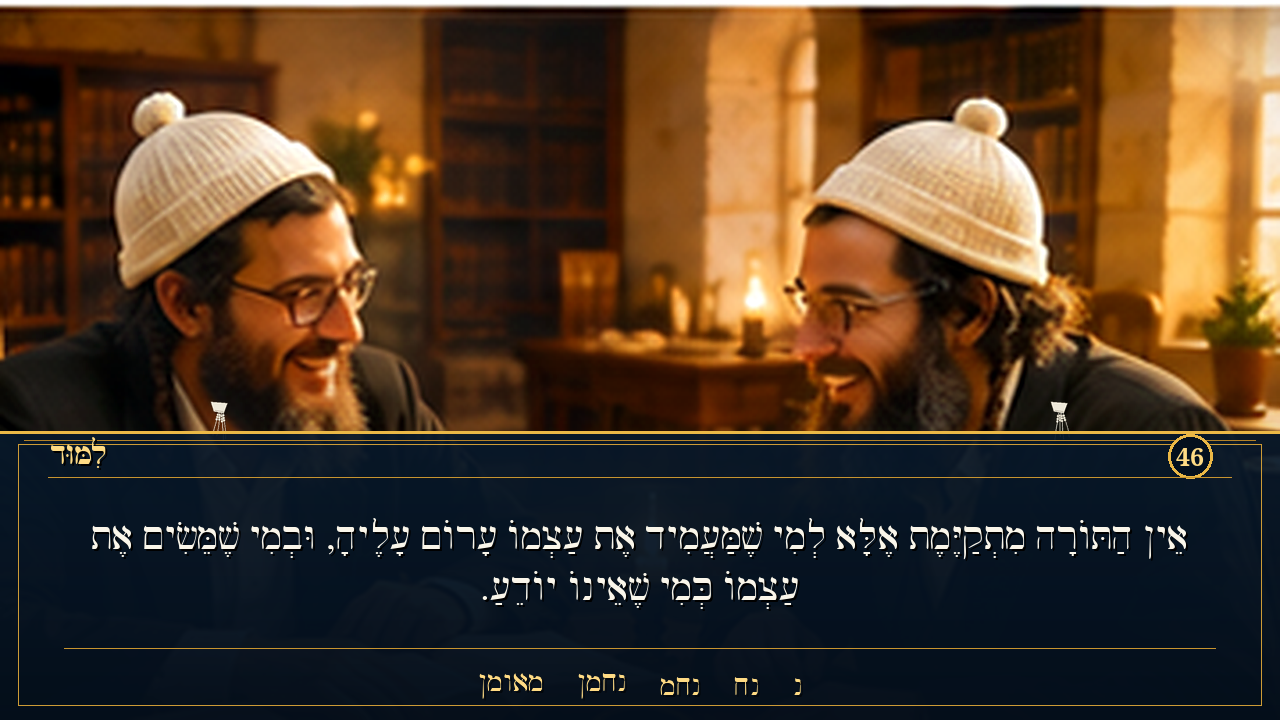
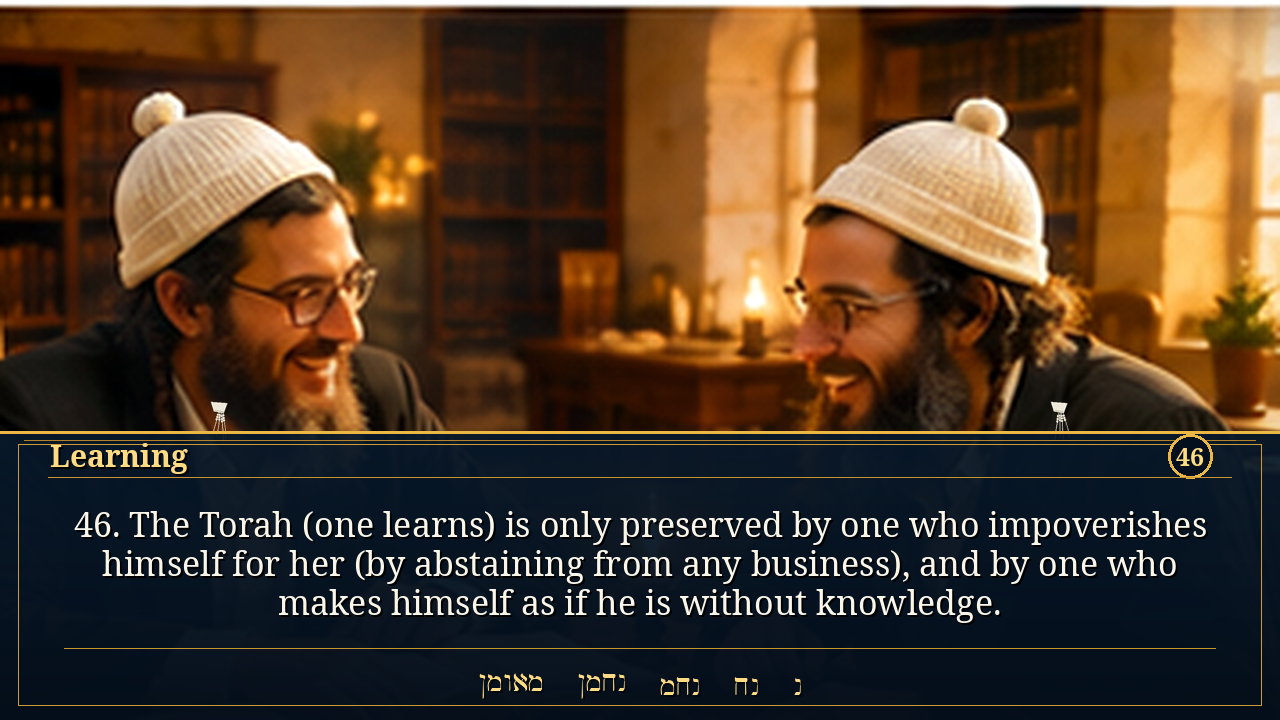
אֵין הַתּוֹרָה מִתְקַיֶּמֶת אֶלָּא לְמִי שֶׁמַּעֲמִיד אֶת עַצְמוֹ עָרוֹם עָלֶיהָ, וּבְמִי שֶׁמֵּשִׂים אֶת עַצְמוֹ כְּמִי שֶׁאֵינוֹ יוֹדֵעַ.
46
46. The Torah (one learns) is only preserved by one who impoverishes himself for her (by abstaining from any business), and by one who makes himself as if he is without knowledge.
📷 Pictures / videos for this teaching
מ״ז
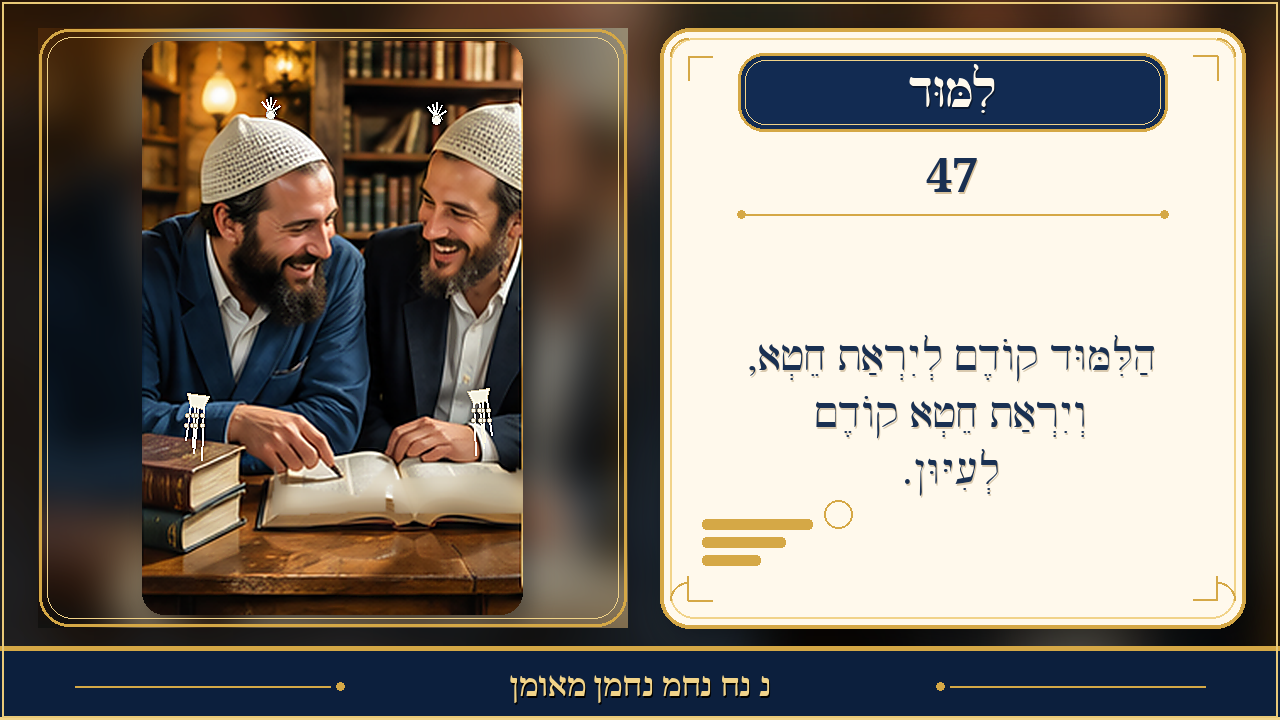
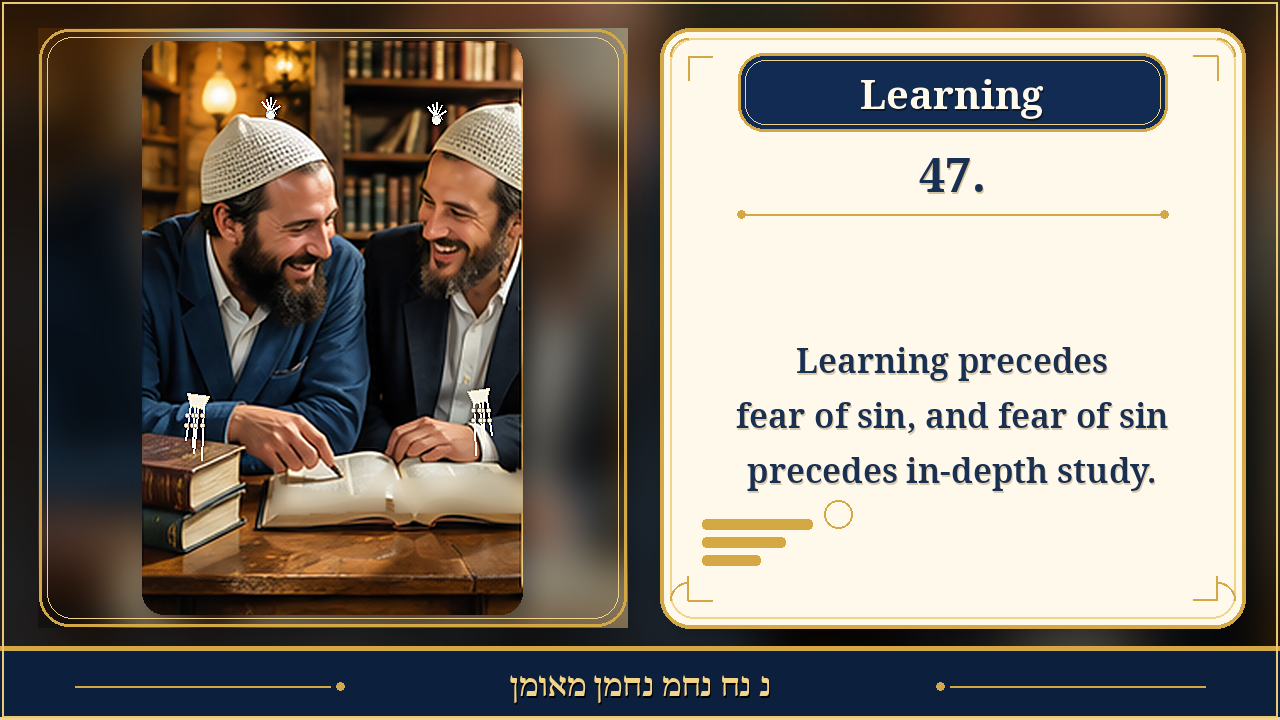
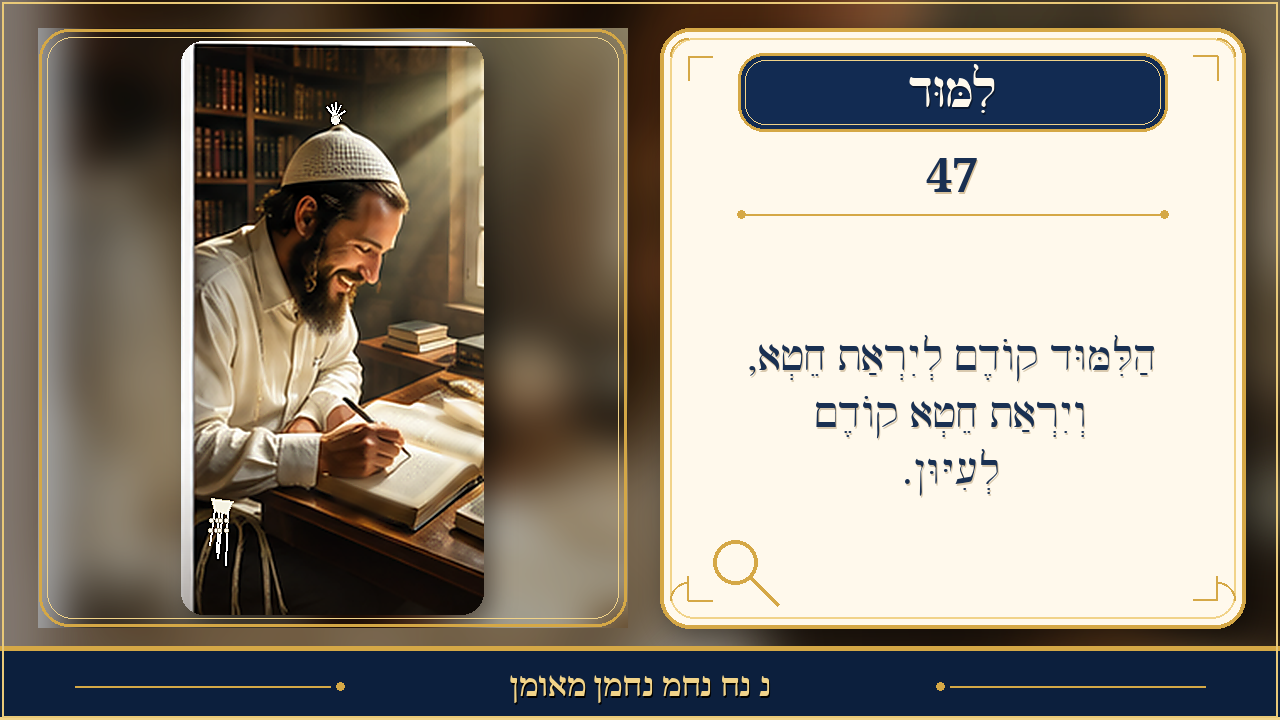
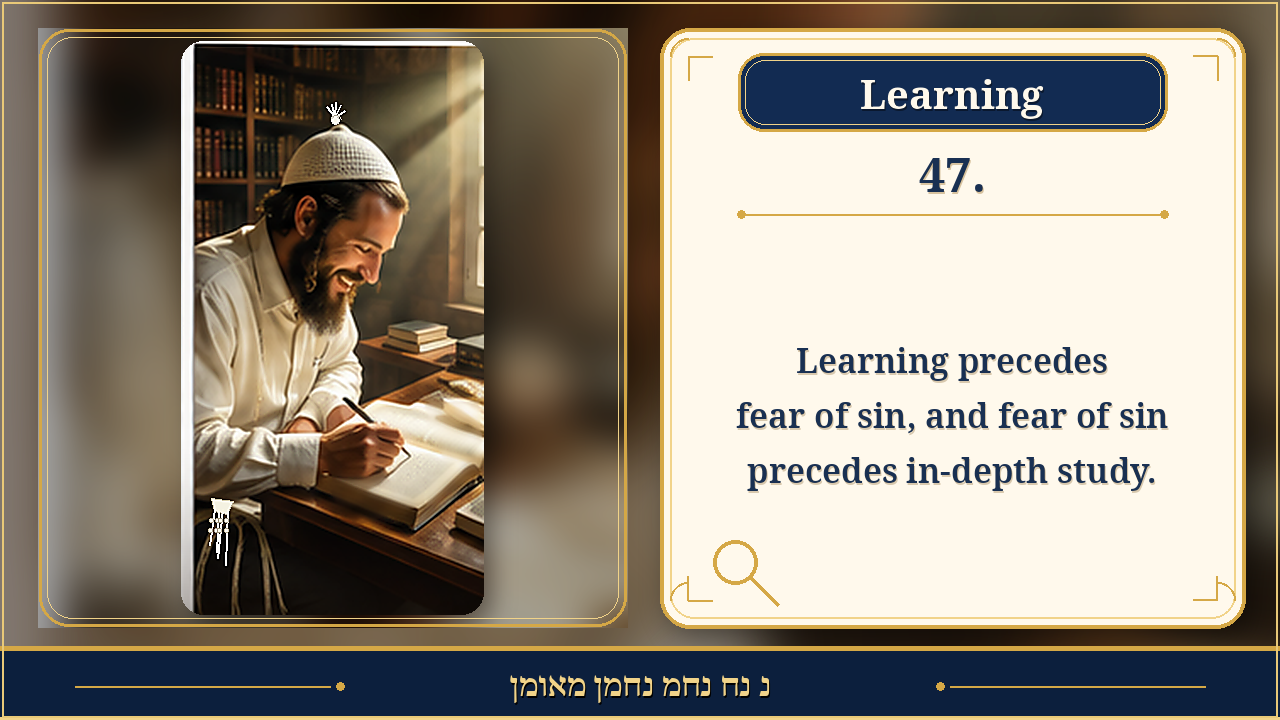
הַלִּמּוּד קוֹדֶם לְיִרְאַת חֵטְא, וְיִרְאַת חֵטְא קוֹדֶם לְעִיּוּן.
47
47. Learning precedes fear of sin, and fear of sin precedes in-depth study.
📷 Pictures / videos for this teaching
מ״ח
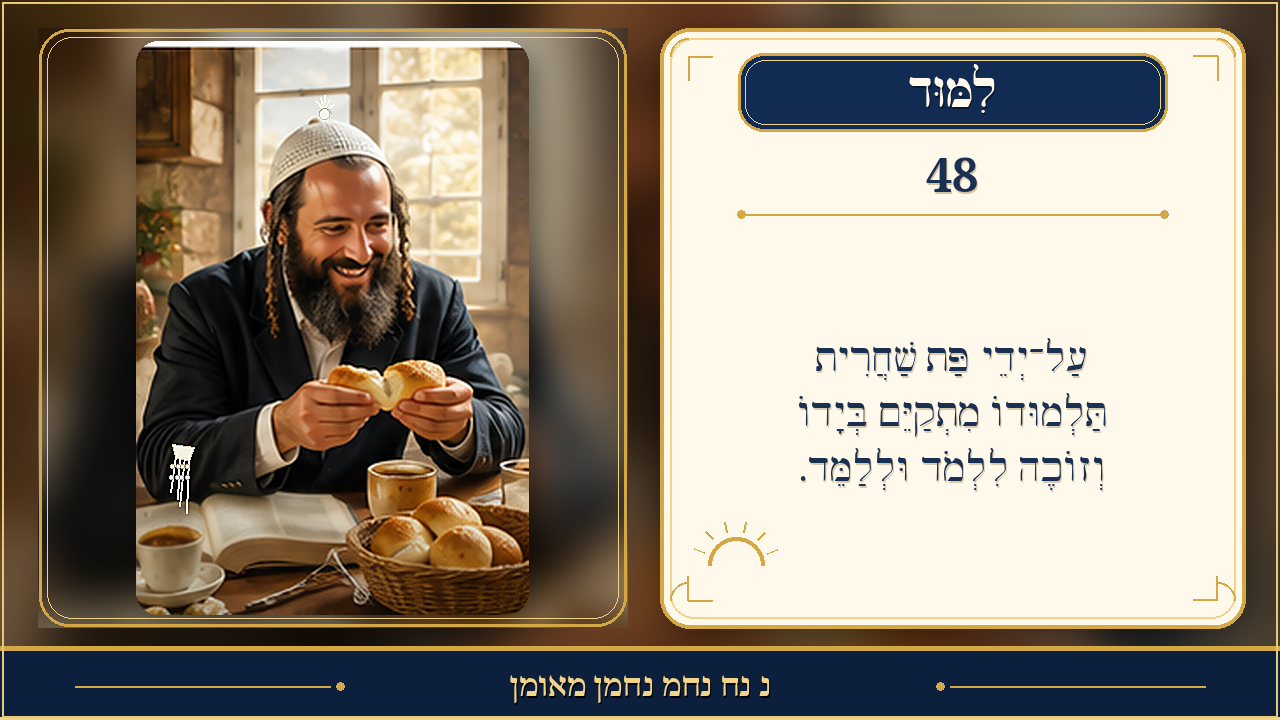
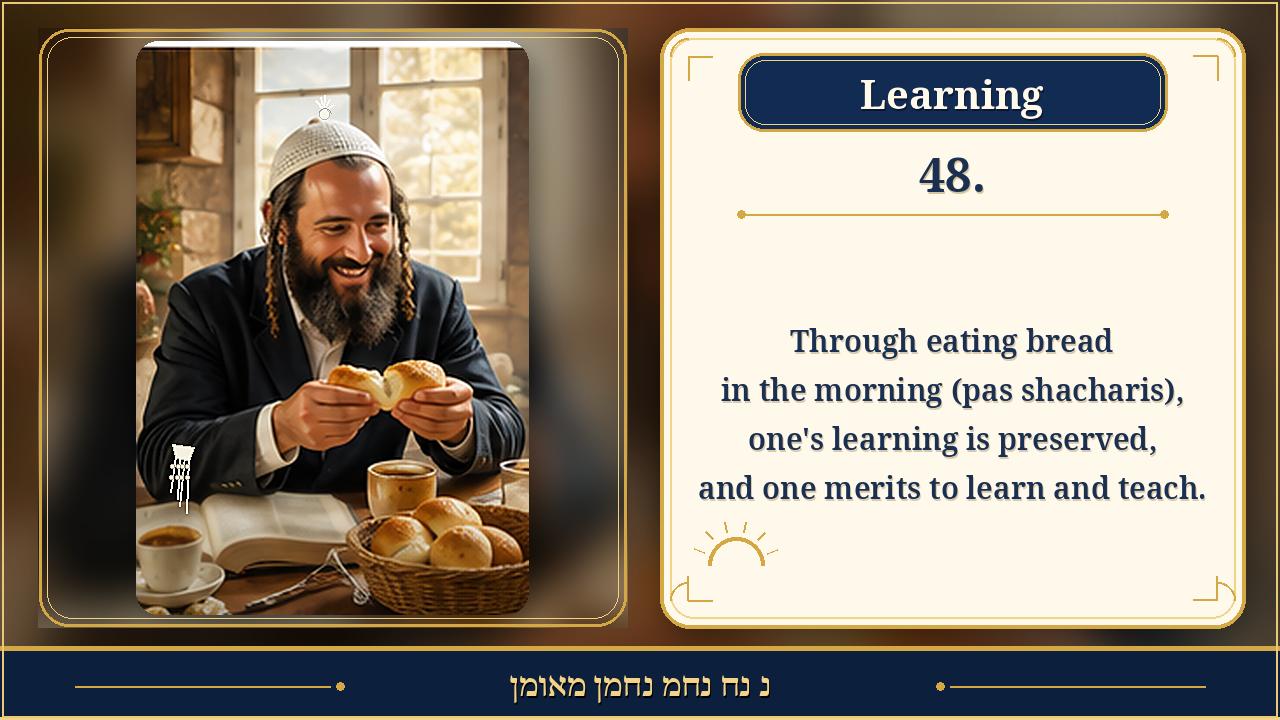
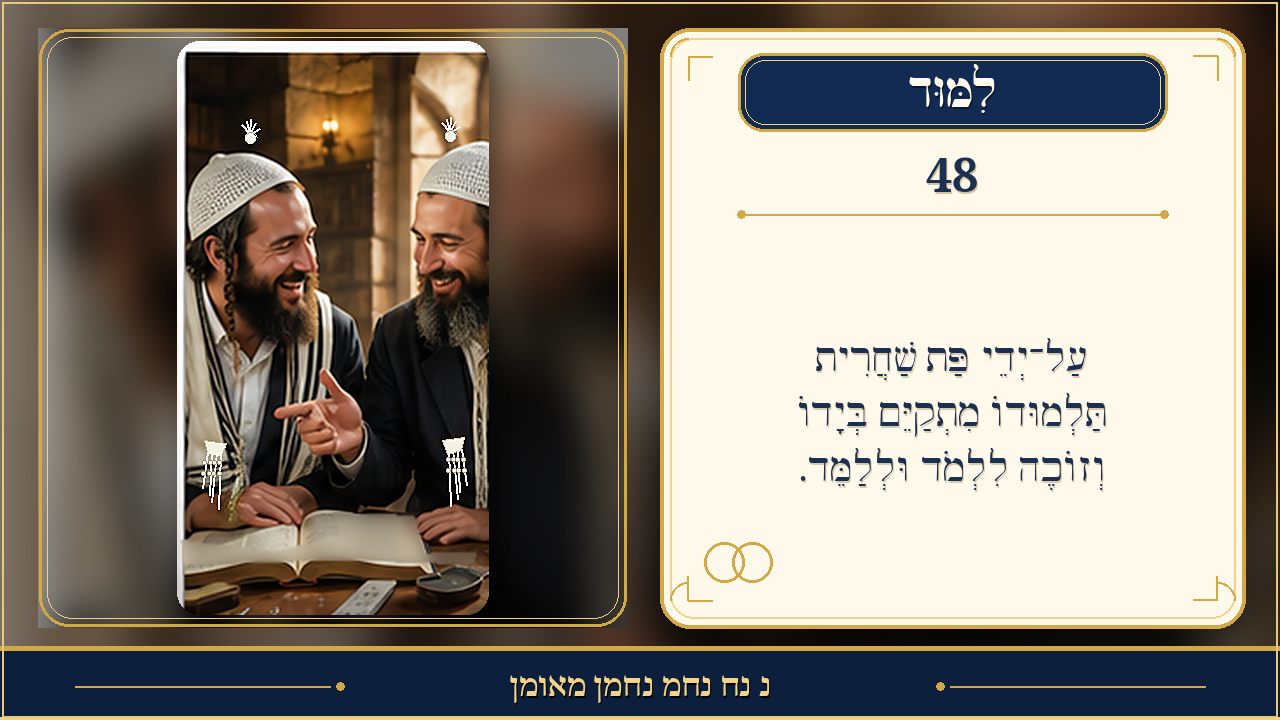
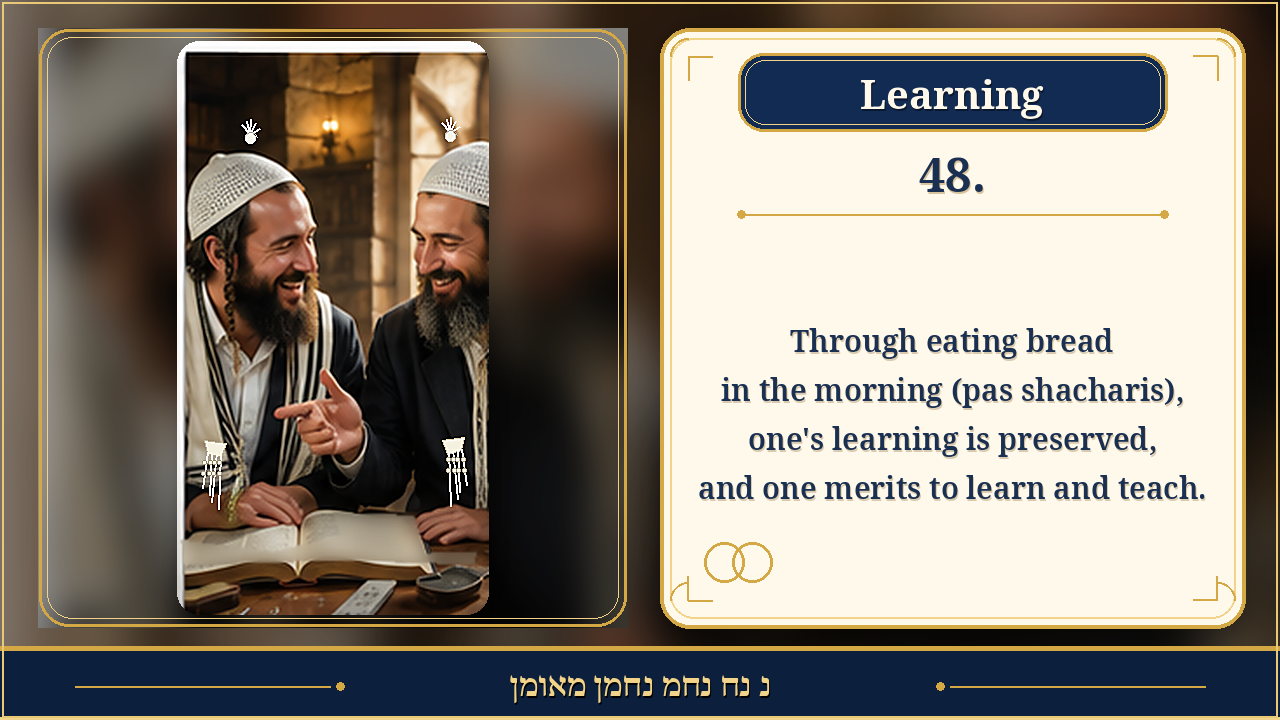
עַל־יְדֵי פַּת שַׁחֲרִית תַּלְמוּדוֹ מִתְקַיֵּם בְּיָדוֹ וְזוֹכֶה לִלְמֹד וּלְלַמֵּד.
48
48. Through eating bread in the morning (pas shacharis), one's learning is preserved, and one merits to learn and teach.
📷 Pictures / videos for this teaching
מ״ט
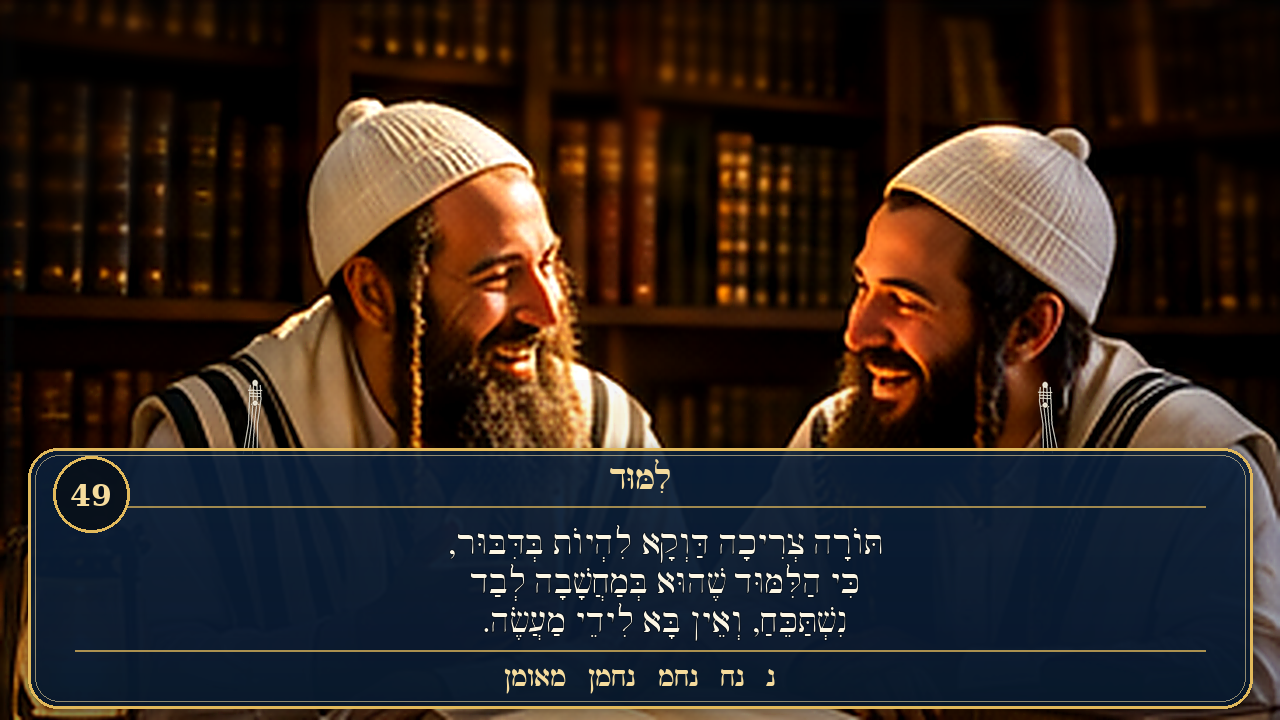
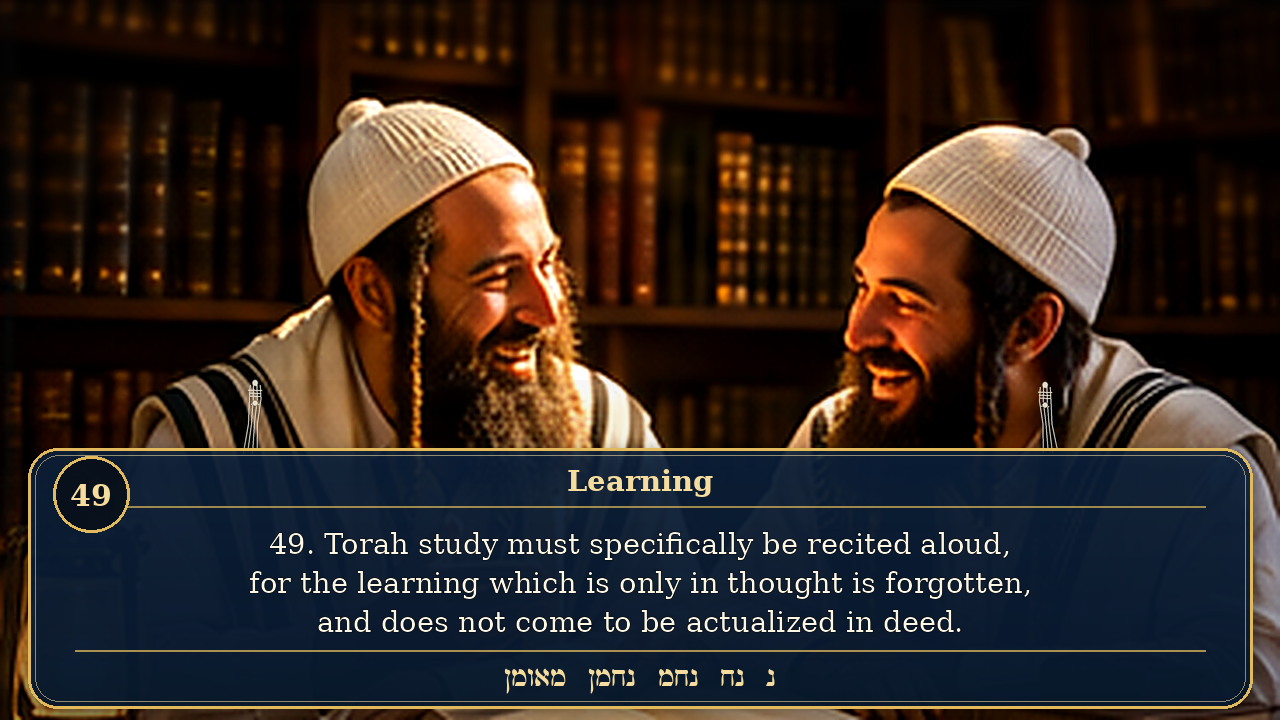
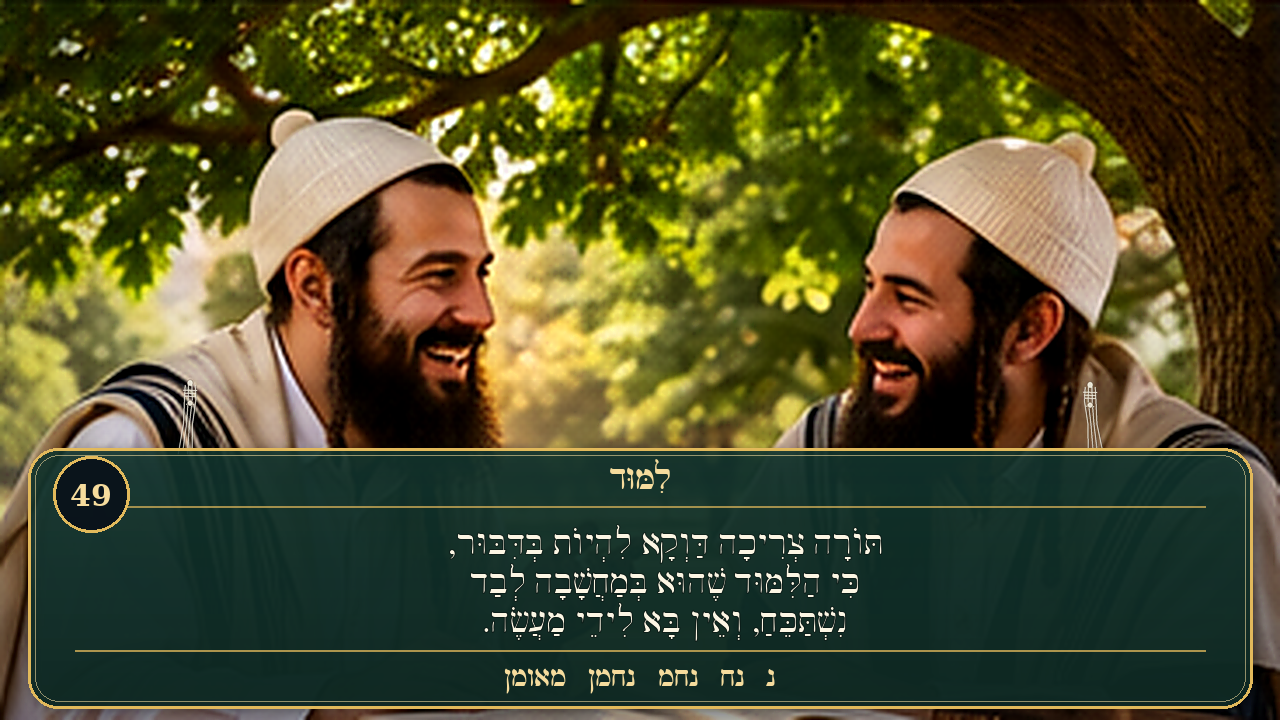
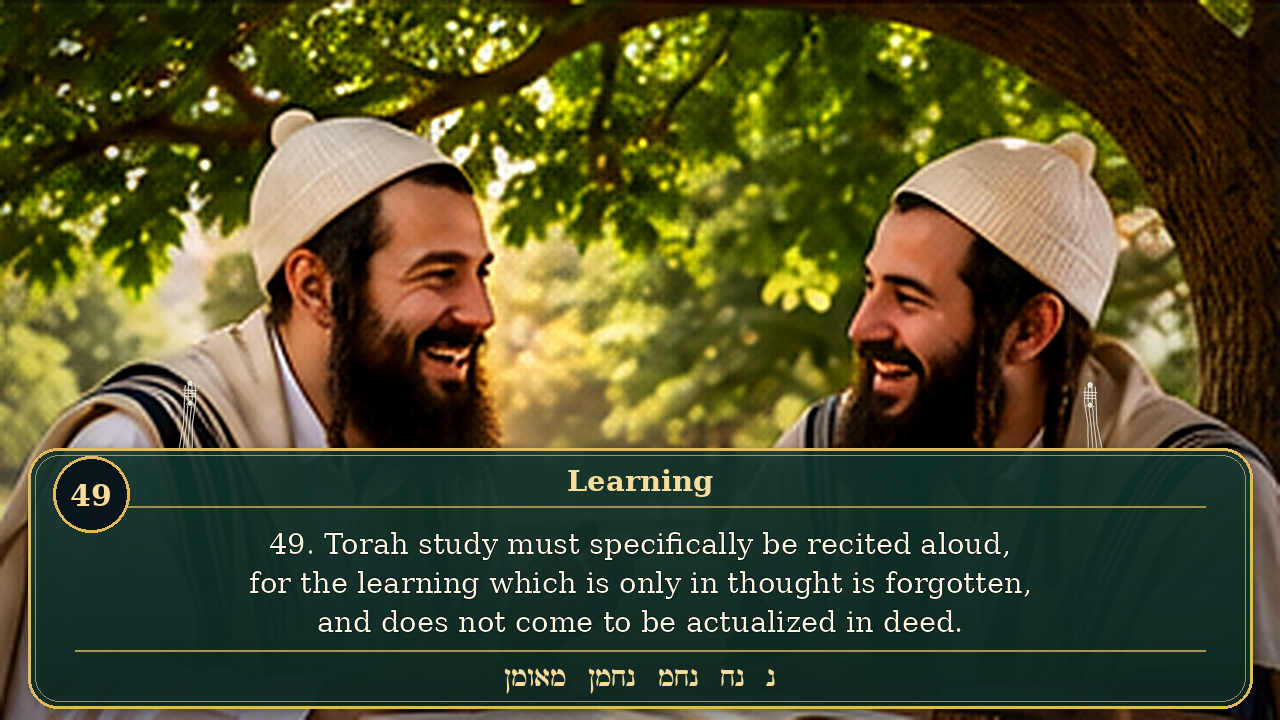
תּוֹרָה צְרִיכָה דַּוְקָא לִהְיוֹת בְּדִּבּוּר, כִּי הַלִּמּוּד שֶׁהוּא בְּמַחֲשָׁבָה לְבַד נִשְׁתַּכֵּחַ, וְאֵין בָּא לִידֵי מַעֲשֶׂה.
49
49. Torah study must specifically be recited aloud, for the learning which is only in thought is forgotten, and does not come to be actualized in deed.
📷 Pictures / videos for this teaching
נ׳
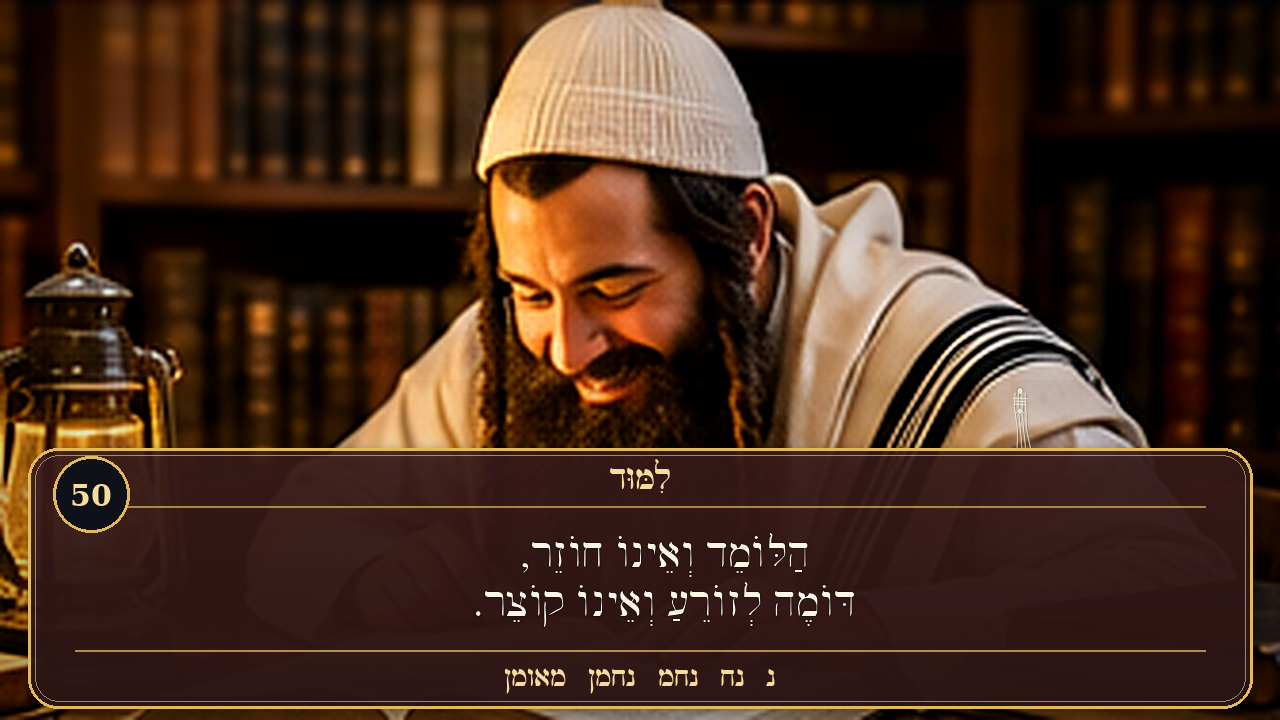
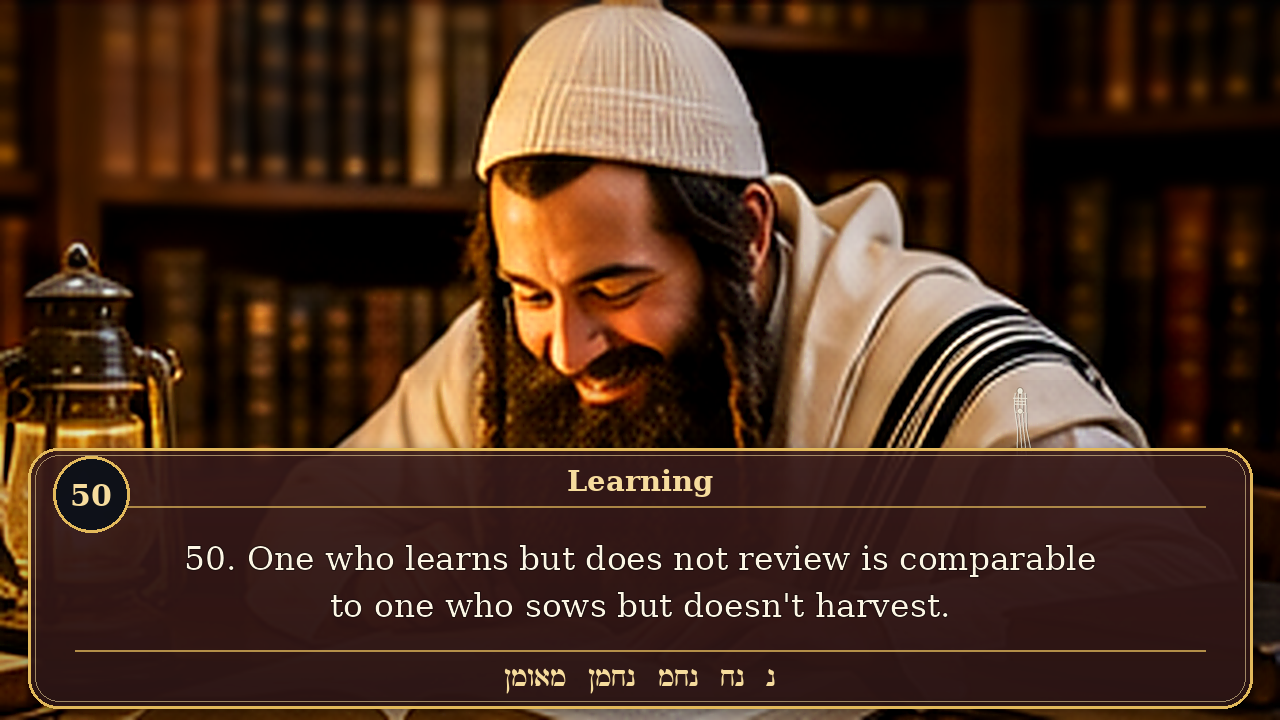
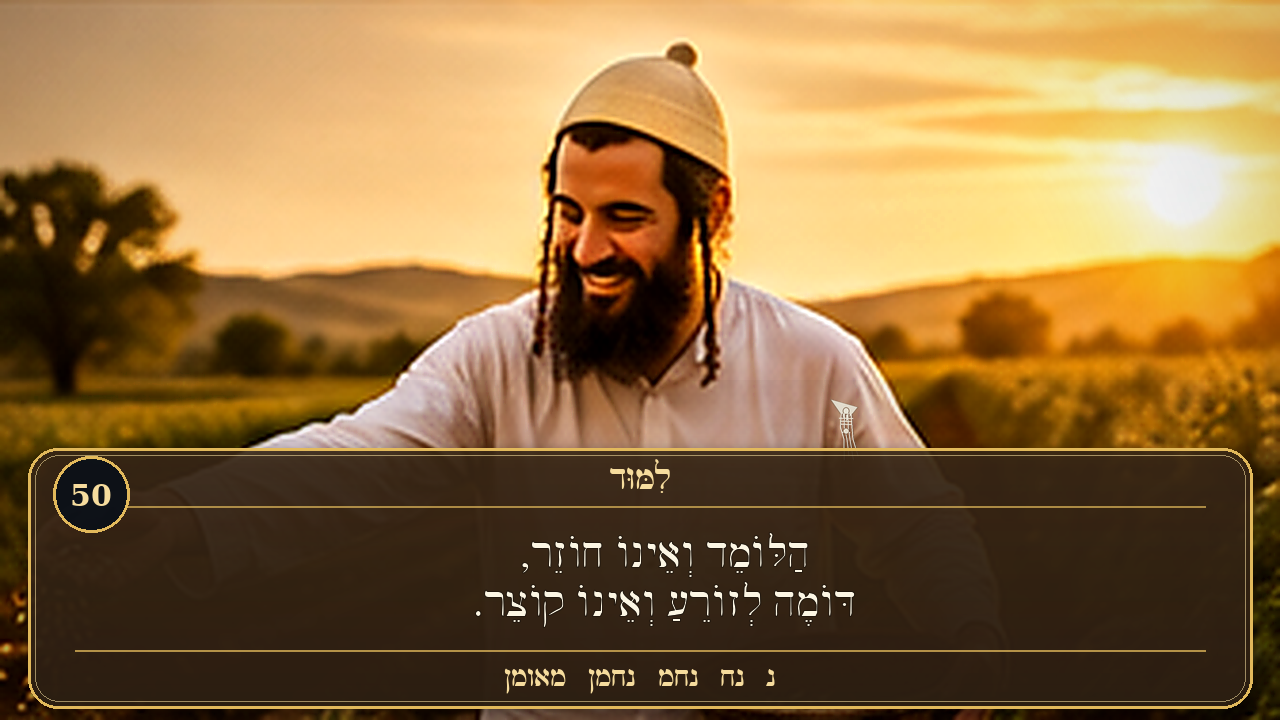
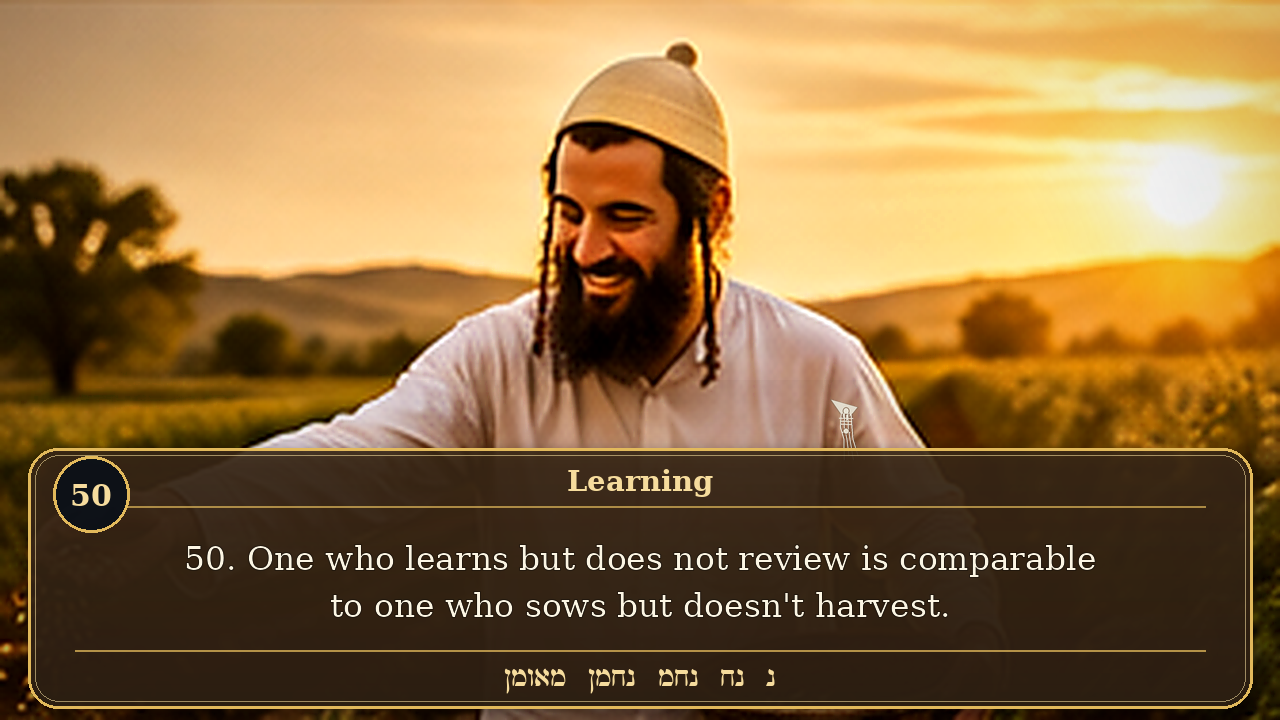
הַלּוֹמֵד וְאֵינוֹ חוֹזֵר, דּוֹמֶה לְזוֹרֵעַ וְאֵינוֹ קוֹצֵר.
50
50. One who learns but does not review is comparable to one who sows but doesn't harvest.
📷 Pictures / videos for this teaching
נ״א
הַחוֹזֵר תַּלְמוּדוֹ – הַתּוֹרָה מְבַקֶּשֶׁת מֵאֵת הַשֵּׁם יִתְבָּרַךְ שֶׁיְּגַלֶּה לוֹ טַעֲמֵי הַתּוֹרָה וּסְתָרֶיהָ.
51
51. One who reviews his learning -- the Torah requests from G-d to reveal to him the taamei Torah (lit. the taste or cantillation or reasoning, with an inference to the esoteric) and its secrets.
📷 Pictures / videos for this teaching




נ״ב
מִי שֶׁאֵין לּוֹ עֵת קָבוּעַ לִלְמֹד, הוּא בָּא לְהִרְהוּרֵי זְנוּת.
52
52. One who does not have established times for learning comes to promiscuous thoughts.
📷 Pictures / videos for this teaching




נ״ג
מִי שֶׁאֵין חוֹזֵר תַּלְמוּדוֹ, קָשֶׁה לּוֹ לְגַדֵּל בָּנִים.
53
53. One who does not review his learning has difficulty raising children.
📷 Pictures / videos for this teaching


נ״ד
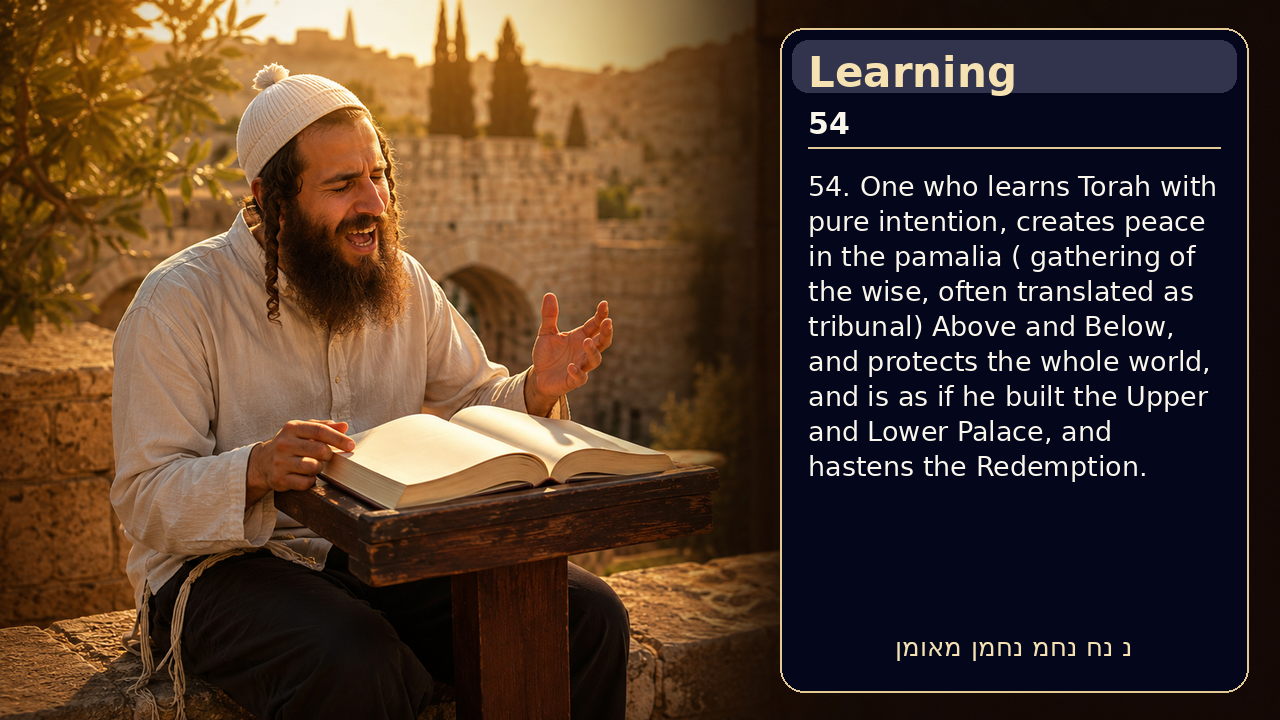
הַלּוֹמֵד תּוֹרָה לִשְׁמָהּ, מֵשִׂים שָׁלוֹם בְּפָמַלְיָא שֶׁל מַעְלָה וְשֶׁל מַטָּה, וּמֵגֵן עַל כָּל הָעוֹלָם כֻּלּוֹ, וּכְאִלּוּ בָּנָה פַּלְטְרִין שֶׁל מַעְלָה וְשֶׁל מַטָּה וּמְקָרֵב אֶת הַגְּאֻלָּה.
54
54. One who learns Torah with pure intention, creates peace in the pamalia ( gathering of the wise, often translated as tribunal) Above and Below, and protects the whole world, and is as if he built the Upper and Lower Palace, and hastens the Redemption.
📷 Pictures / videos for this teaching



נ״ה
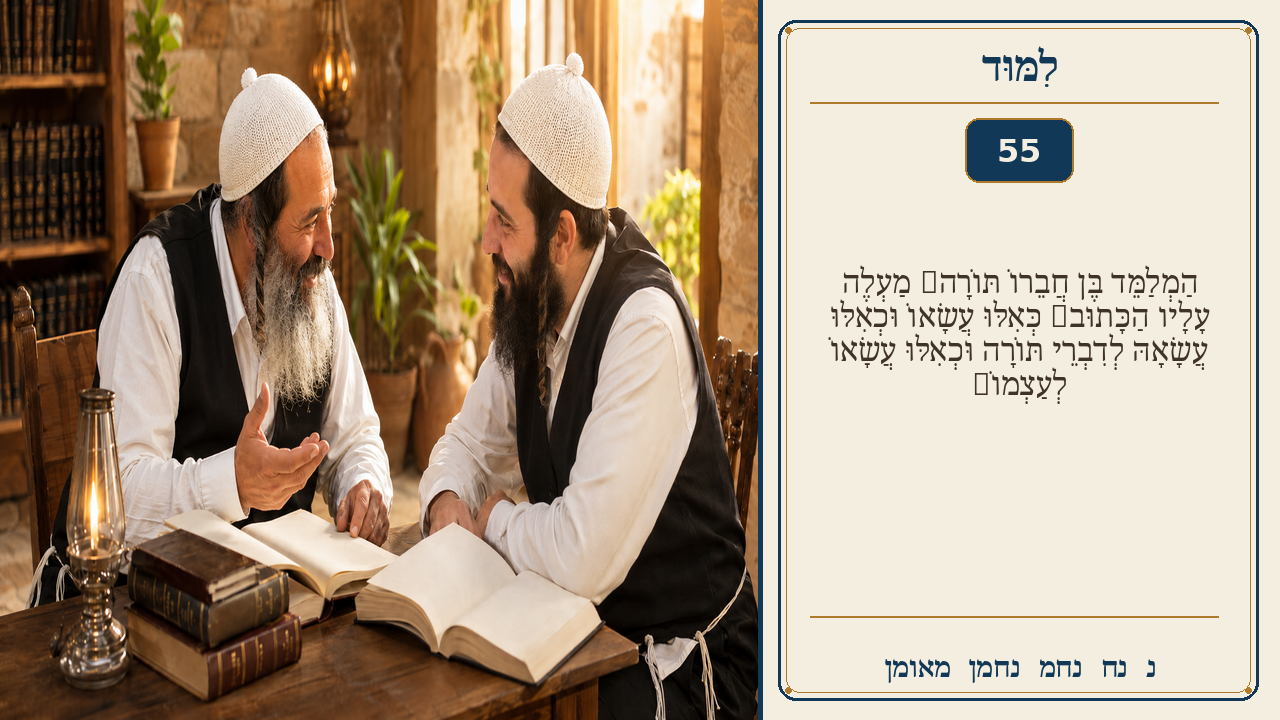
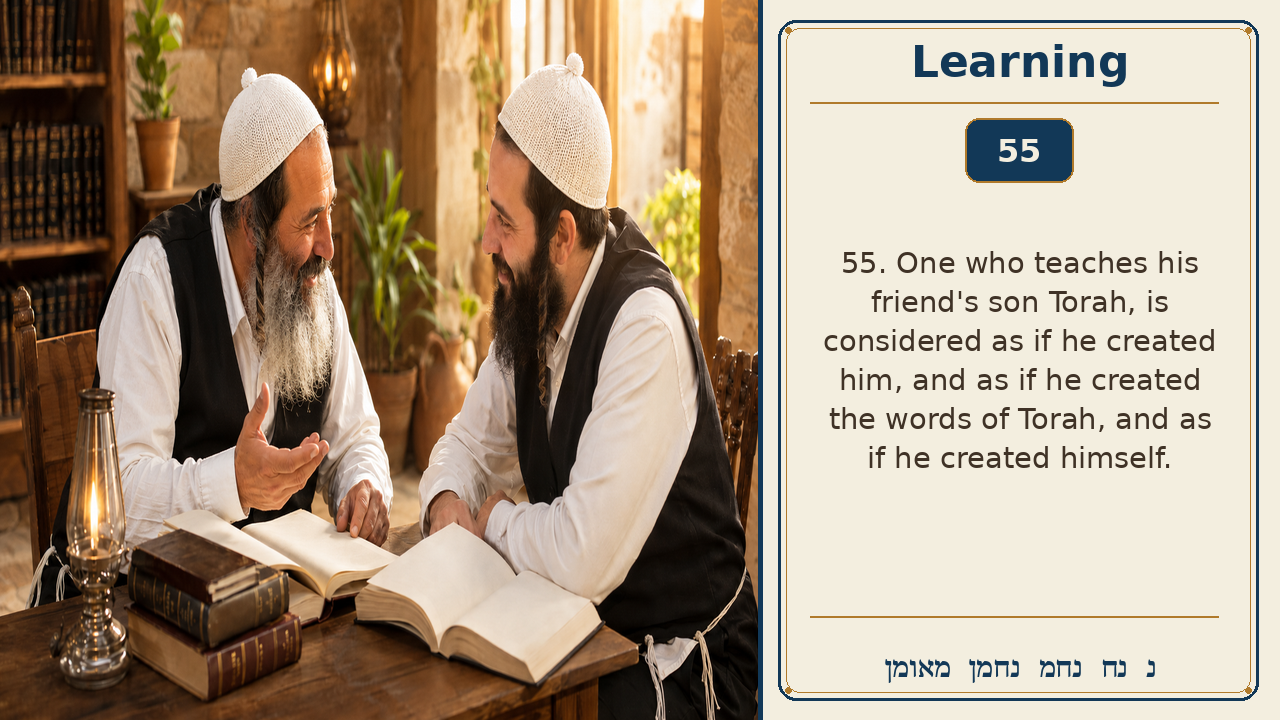
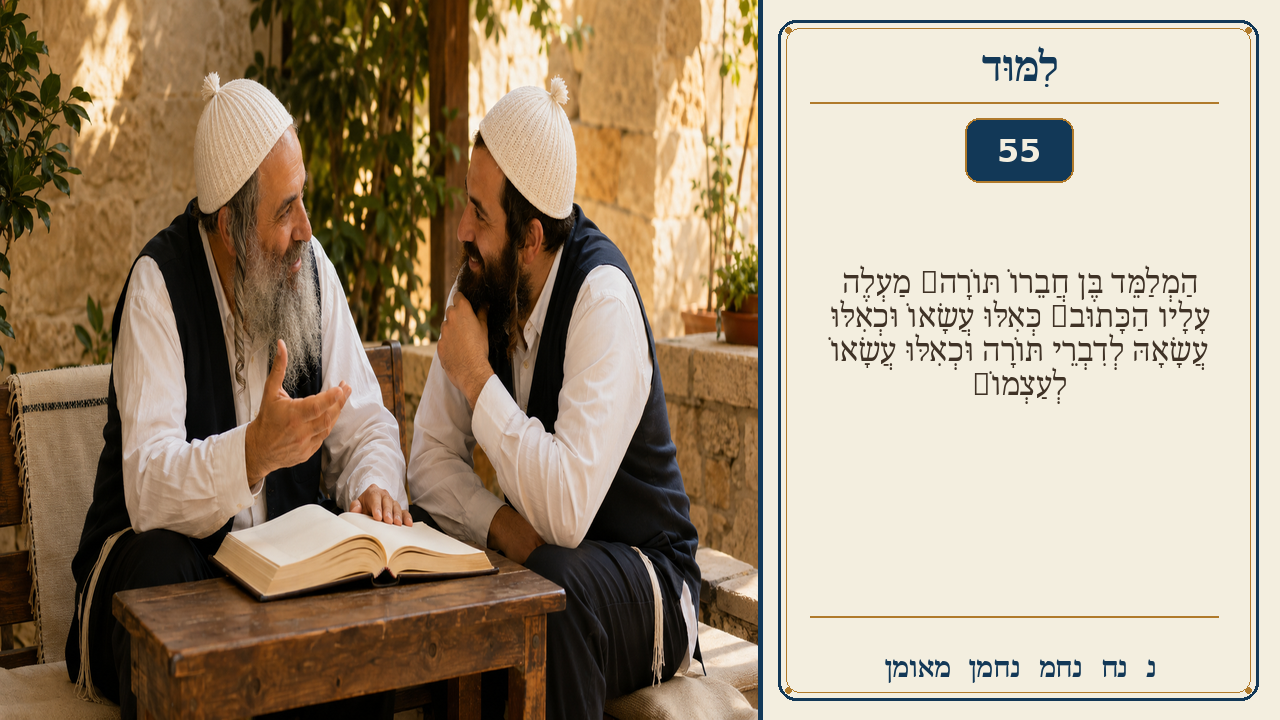
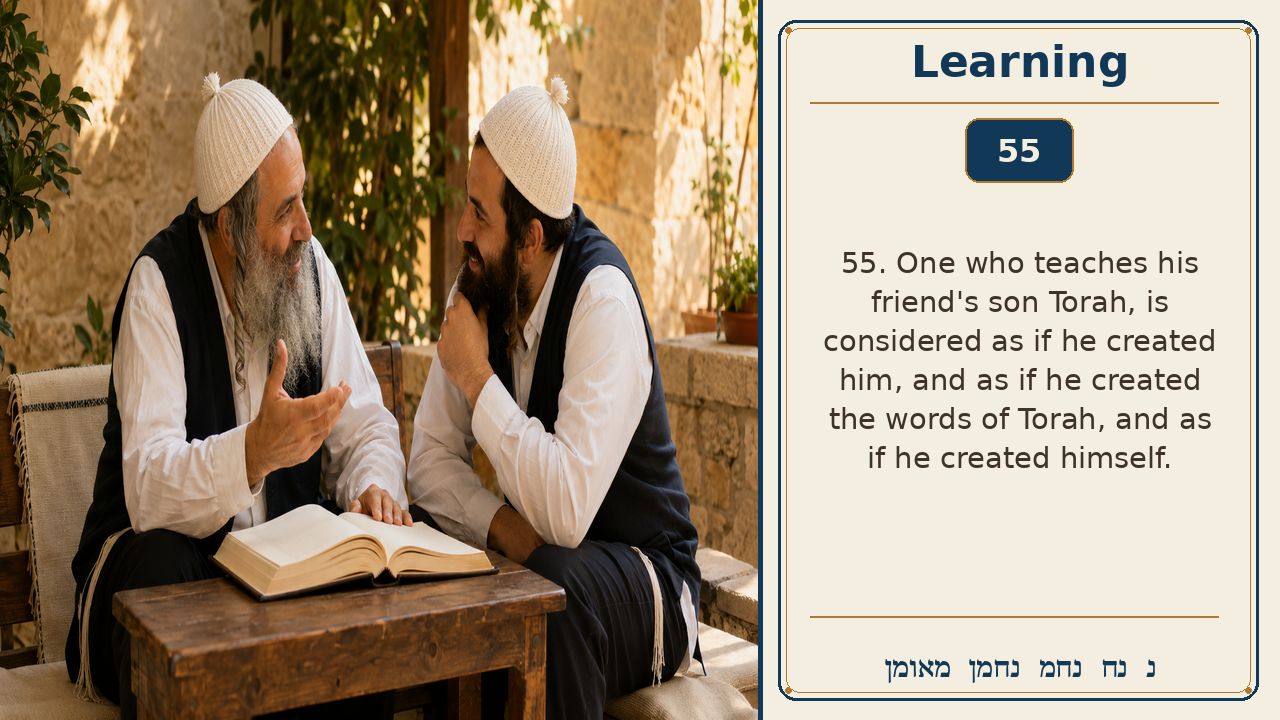
הַמְלַמֵּד בֶּן חֲבֵרוֹ תּוֹרָה, מַעְלֶה עָלָיו הַכָּתוּב, כְּאִלּוּ עֲשָׂאוֹ וּכְאִלּוּ עֲשָׂאָהּ לְדִבְרֵי תּוֹרָה וּכְאִלּוּ עֲשָׂאוֹ לְעַצְמוֹ.
55
55. One who teaches his friend's son Torah, is considered as if he created him, and as if he created the words of Torah, and as if he created himself.
📷 Pictures / videos for this teaching
נ״ו
הַמַּשְׁחִיר פָּנָיו [עַל דִּבְרֵי תוֹרָה] בָּעוֹלָם הַזֶּה, הַקָּדוֹשׁ־בָּרוּךְ־הוּא מַבְהִיק פָּנָיו לָעוֹלָם הַבָּא.
56
56. One who blackens his face for the words of Torah in this world, G-d will make his face radiant in the World to Come.
📷 Pictures / videos for this teaching




נ״ז
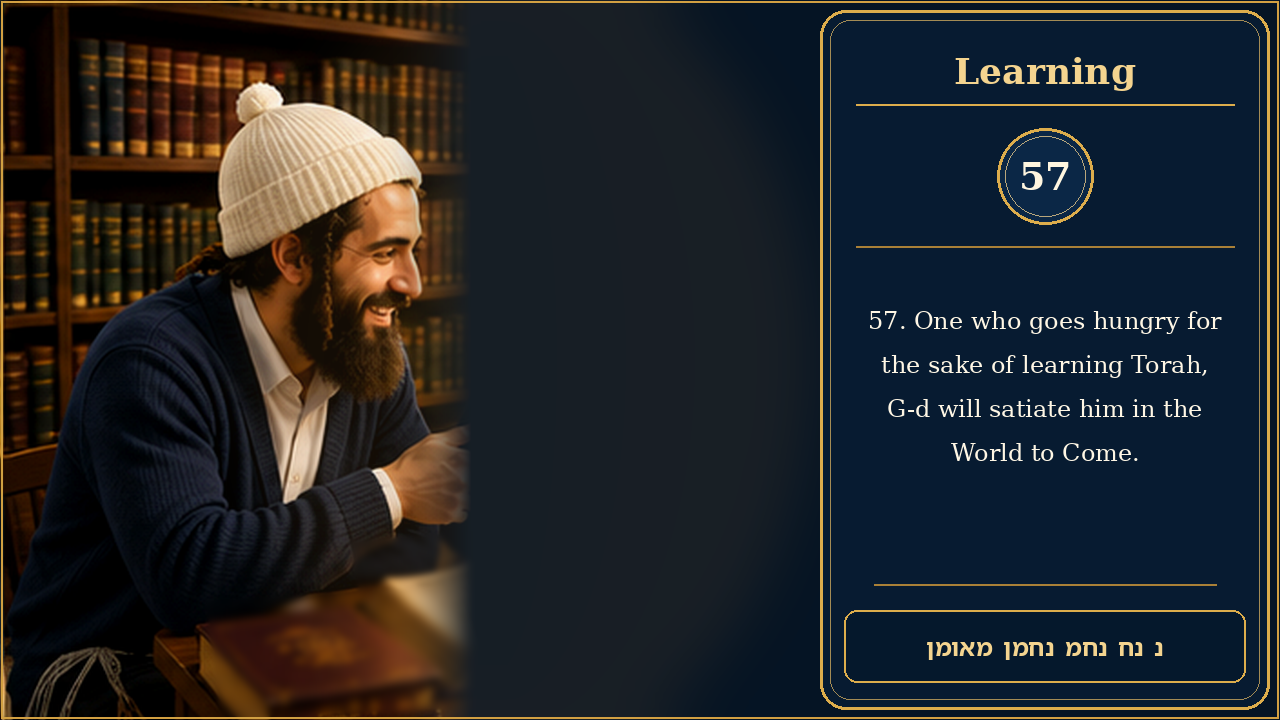
הַמַּרְעִיב עַצְמוֹ עַל דִּבְרֵי תוֹרָה, הַקָּדוֹשׁ־בָּרוּךְ־הוּא מַשְׂבִּיעוֹ לָעוֹלָם הַבָּא.
57
57. One who goes hungry for the sake of learning Torah, G-d will satiate him in the World to Come.
📷 Pictures / videos for this teaching



נ״ח
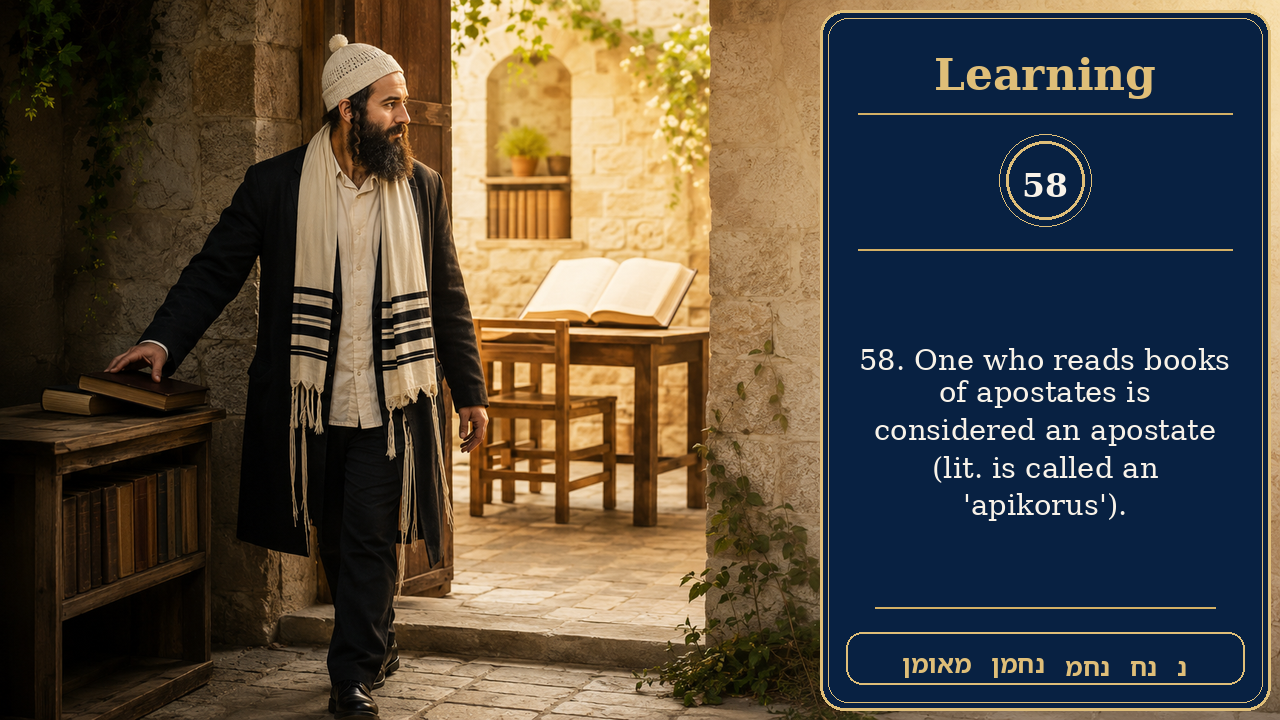
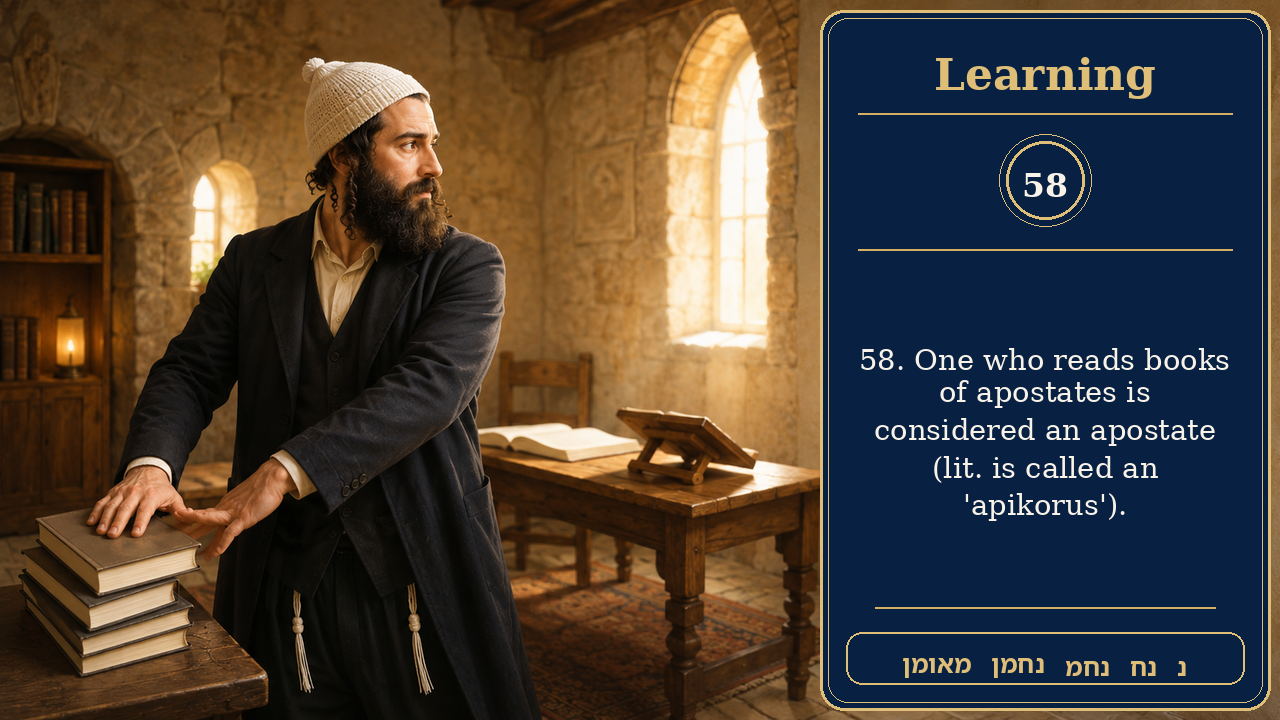
הַקּוֹרֵא בְּסִפְרֵי מִינִין, נִקְרָא אֶפִּיקוֹרוֹס.
58
58. One who reads books of apostates is considered an apostate (lit. is called an 'apikorus').
📷 Pictures / videos for this teaching


נ״ט
הַקּוֹרֵא פָּסוּק בִּזְמַנּוֹ, מֵבִיא טוֹבָה לָעוֹלָם.
59
59. One who reads a scriptural verse in its time brings good to the world.
📷 Pictures / videos for this teaching




ס׳
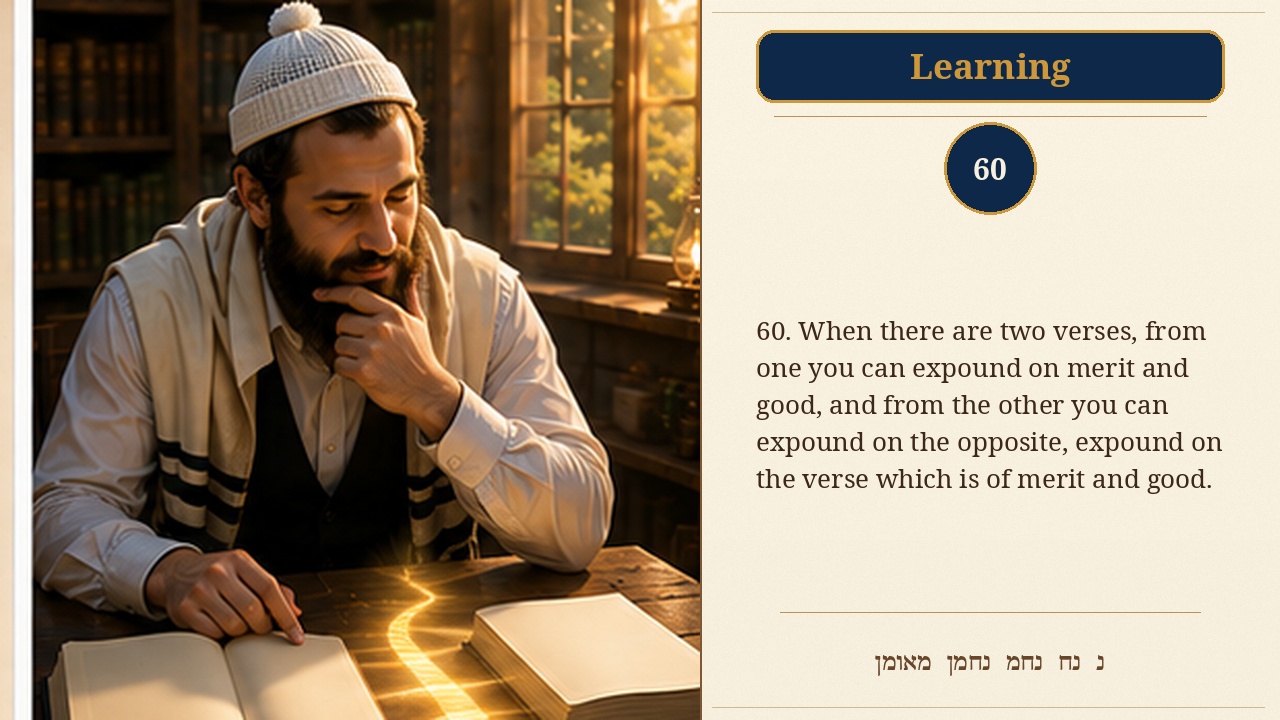
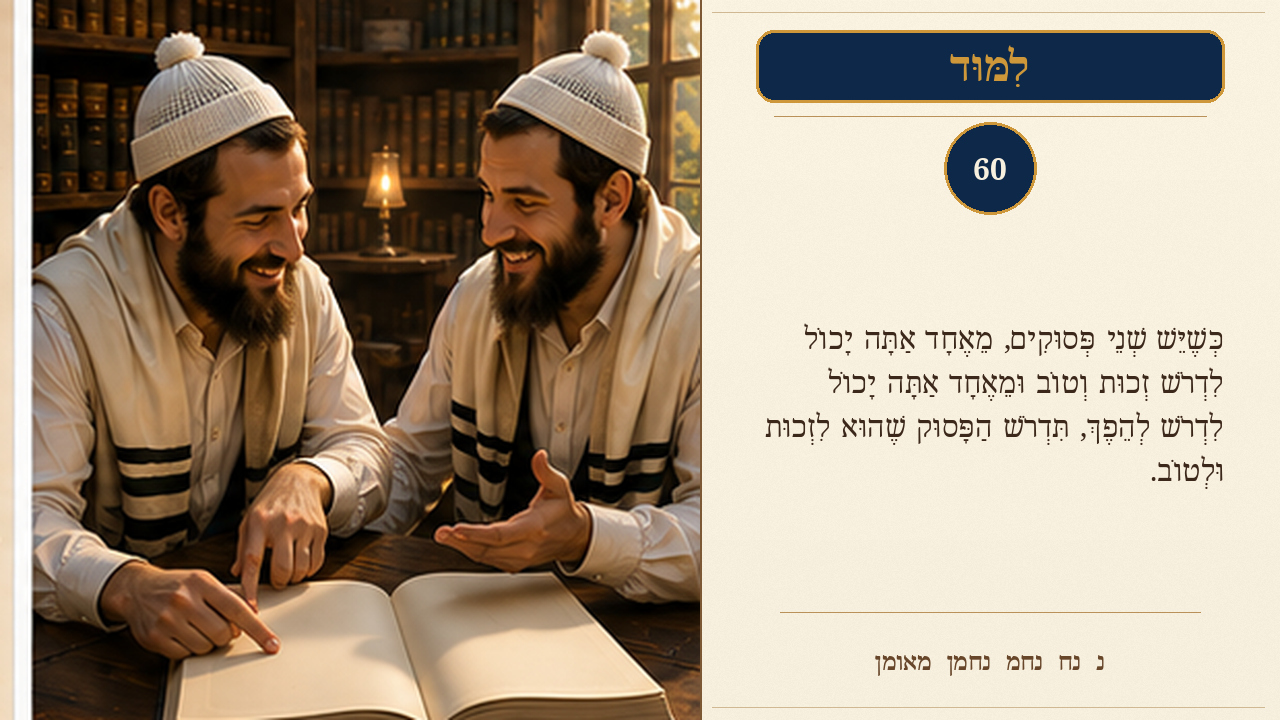
כְּשֶׁיֵּשׁ שְׁנֵי פְּסוּקִים, מֵאֶחָד אַתָּה יָכוֹל לִדְרֹשׁ זְכוּת וְטוֹב וּמֵאֶחָד אַתָּה יָכוֹל לִדְרֹשׁ לְהֵפֶךְ, תִּדְרֹשׁ הַפָּסוּק שֶׁהוּא לִזְכוּת וּלְטוֹב.
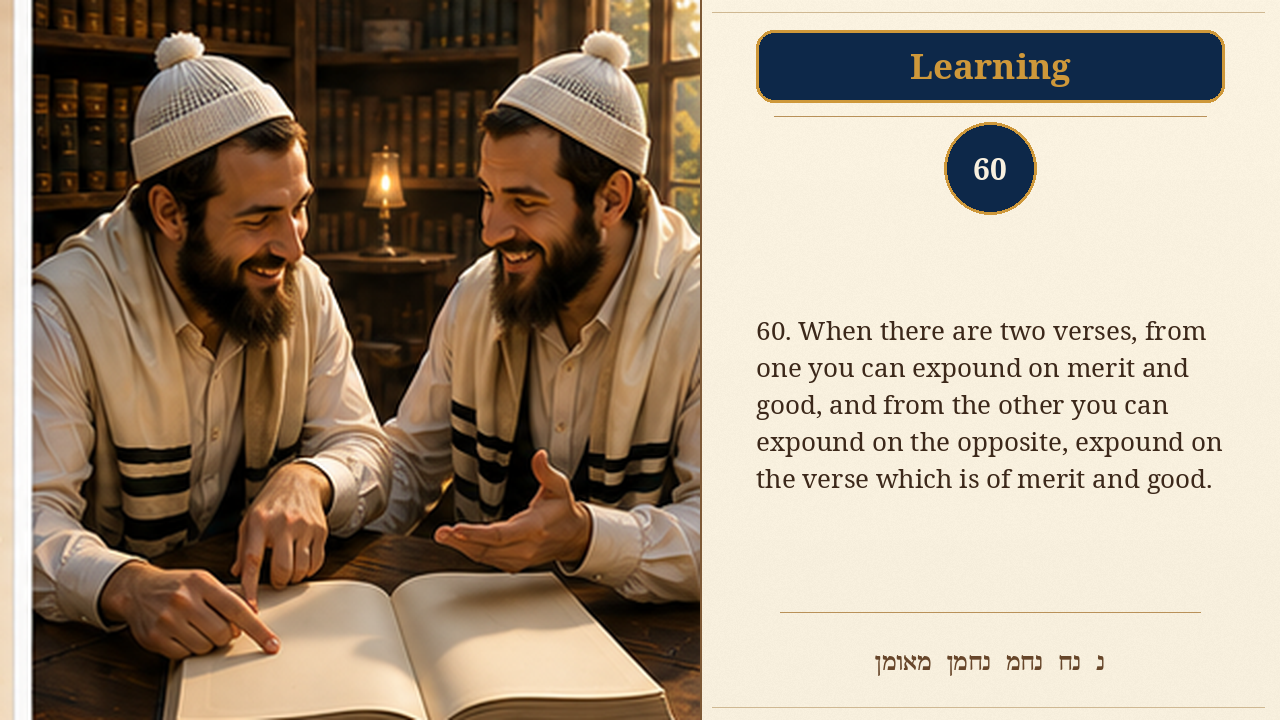
60
60. When there are two verses, from one you can expound on merit and good, and from the other you can expound on the opposite, expound on the verse which is of merit and good.
📷 Pictures / videos for this teaching

ס״א
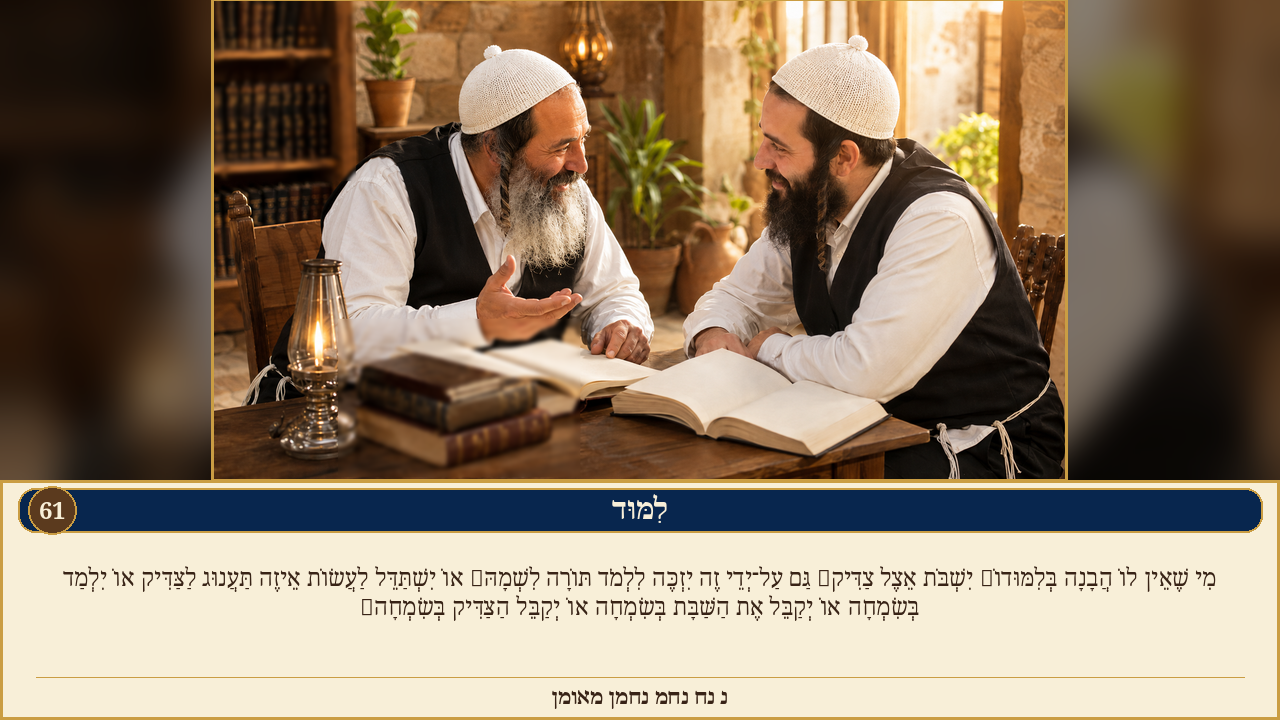
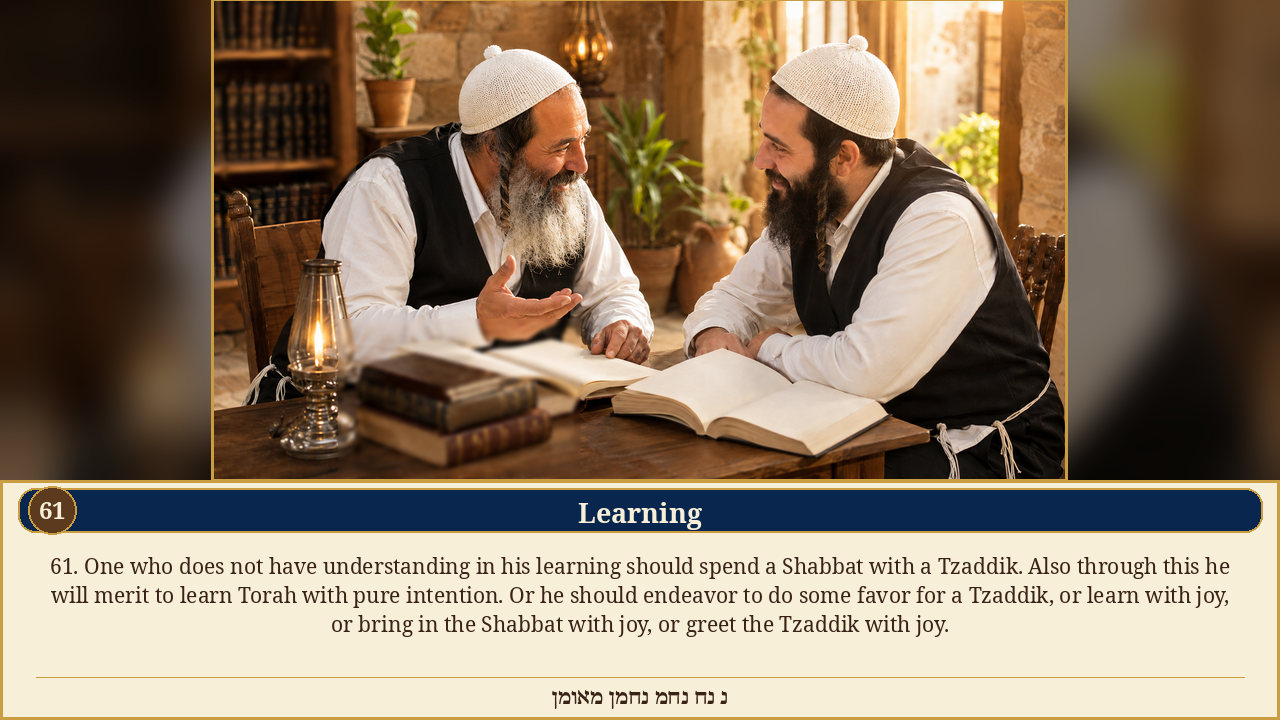
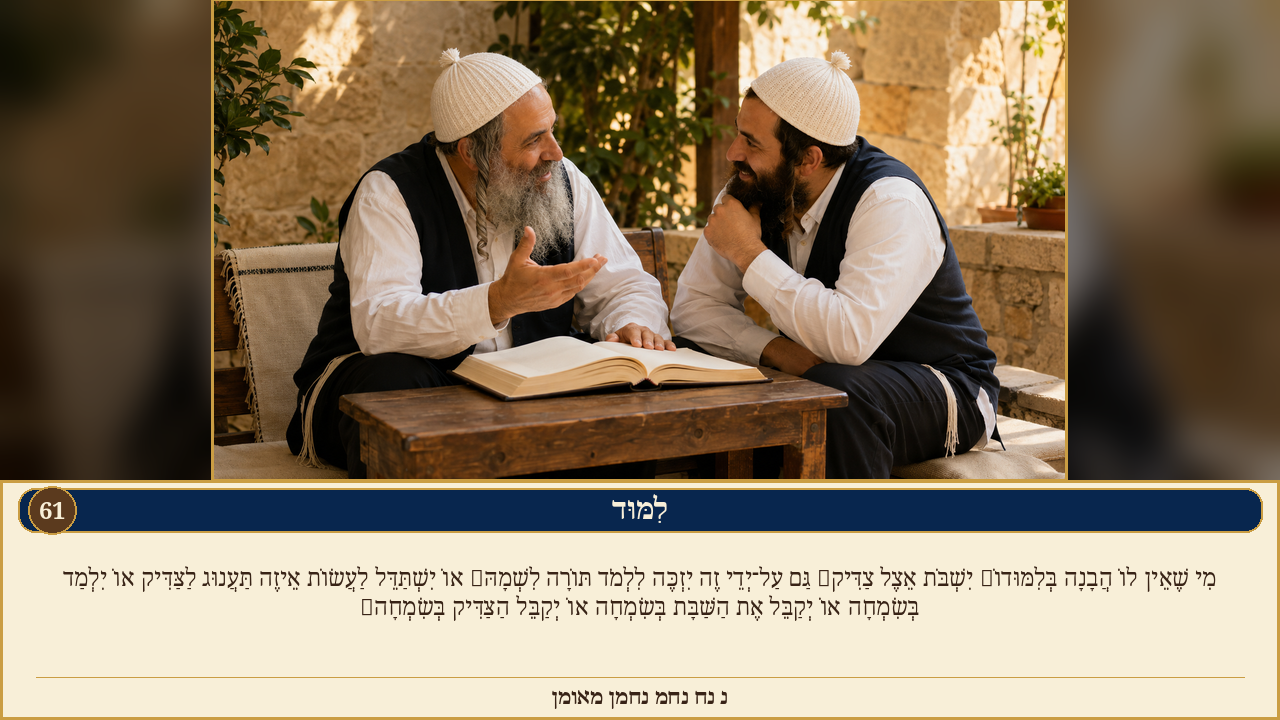
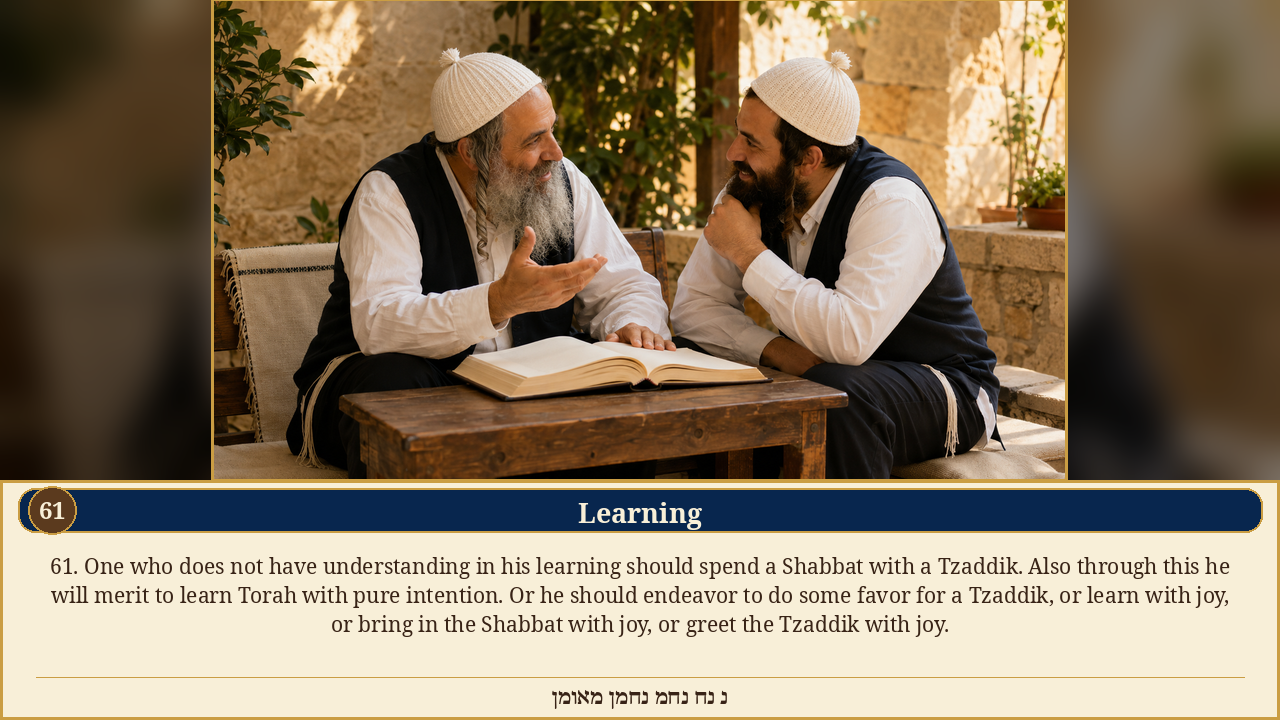
מִי שֶׁאֵין לוֹ הֲבָנָה בְּלִמּוּדוֹ, יִשְׁבֹּת אֵצֶל צַדִּיק, גַּם עַל־יְדֵי זֶה יִזְכֶּה לִלְמֹד תּוֹרָה לִשְׁמָהּ. אוֹ יִשְׁתַּדֵּל לַעֲשׂוֹת אֵיזֶה תַּעֲנוּג לַצַּדִּיק אוֹ יִלְמַד בְּשִׂמְחָה אוֹ יְקַבֵּל אֶת הַשַּׁבָּת בְּשִׂמְחָה אוֹ יְקַבֵּל הַצַּדִּיק בְּשִׂמְחָה.
61
61. One who does not have understanding in his learning should spend a Shabbat with a Tzaddik. Also through this he will merit to learn Torah with pure intention. Or he should endeavor to do some favor for a Tzaddik, or learn with joy, or bring in the Shabbat with joy, or greet the Tzaddik with joy.
📷 Pictures / videos for this teaching
ס״ב
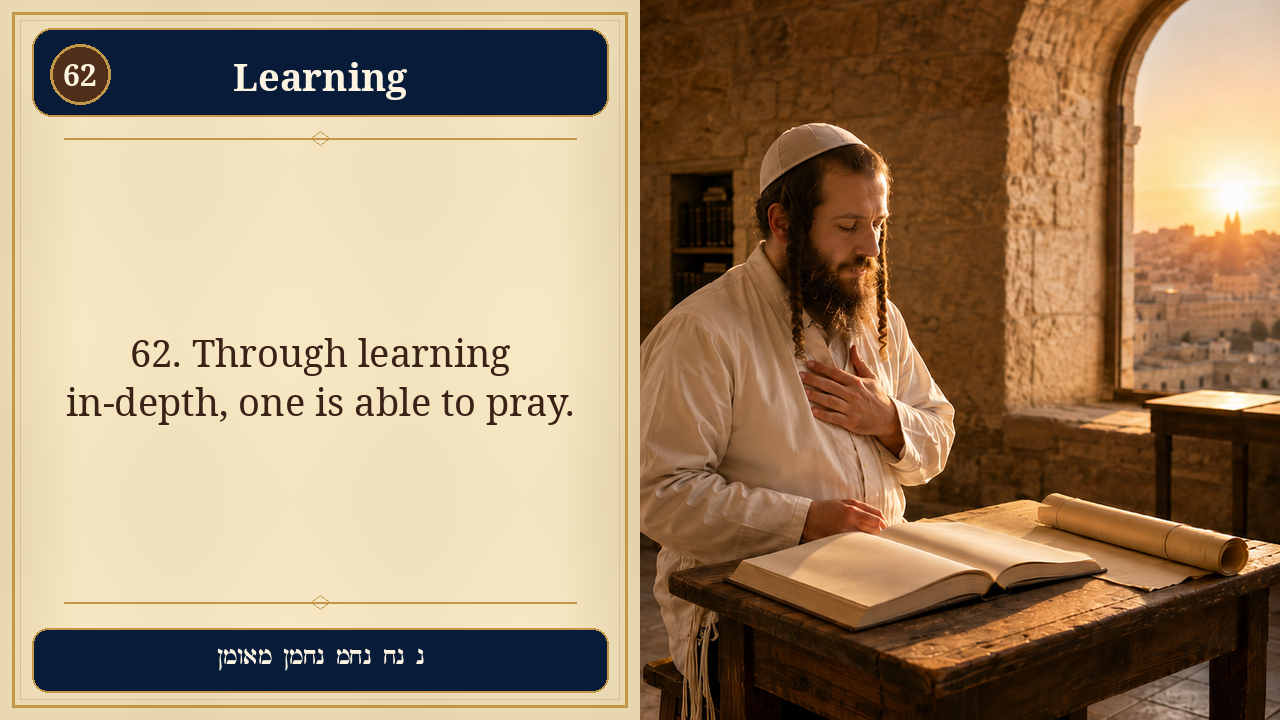
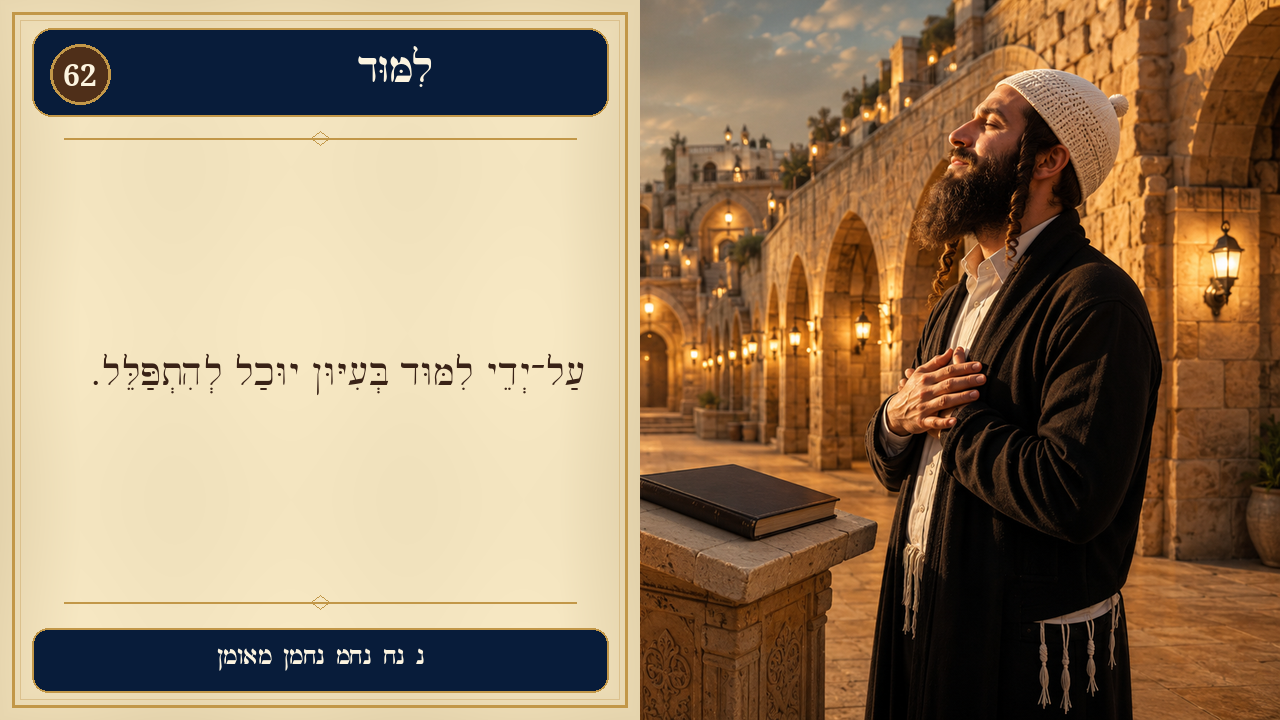
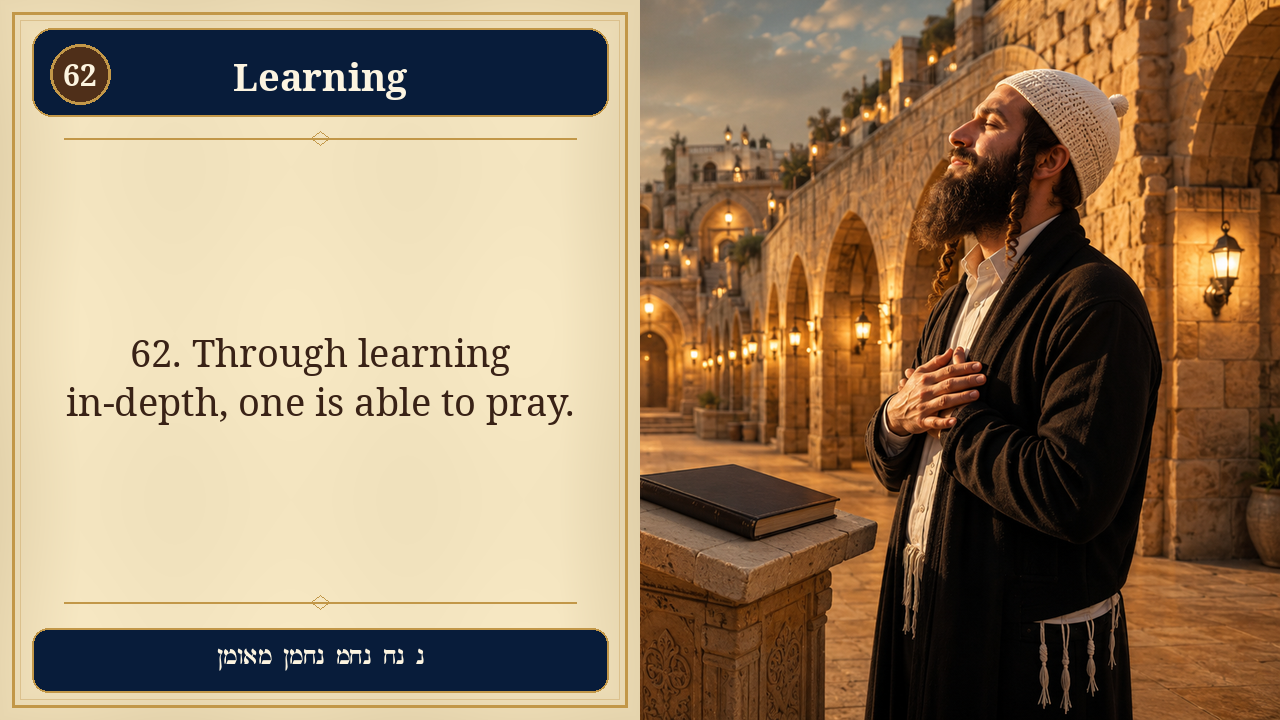
עַל־יְדֵי לִמּוּד בְּעִיּוּן יוּכַל לְהִתְפַּלֵּל.
62
62. Through learning in-depth, one is able to pray.
📷 Pictures / videos for this teaching

ס״ג
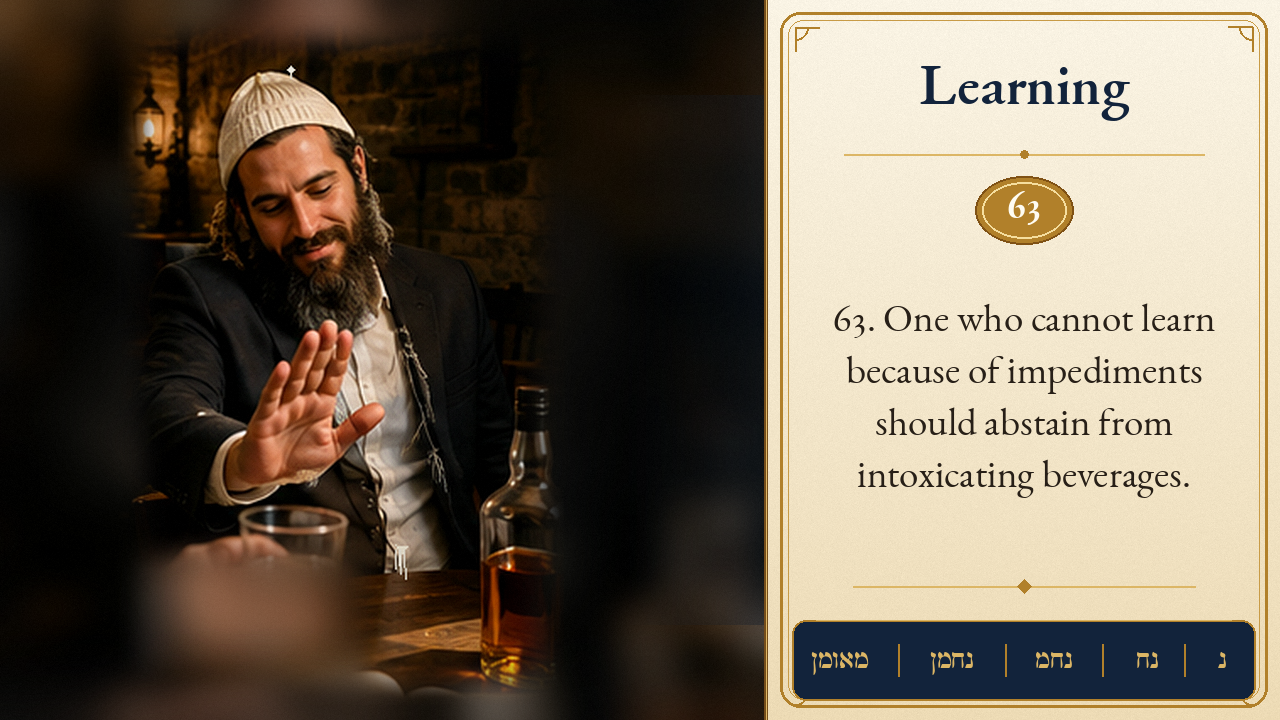
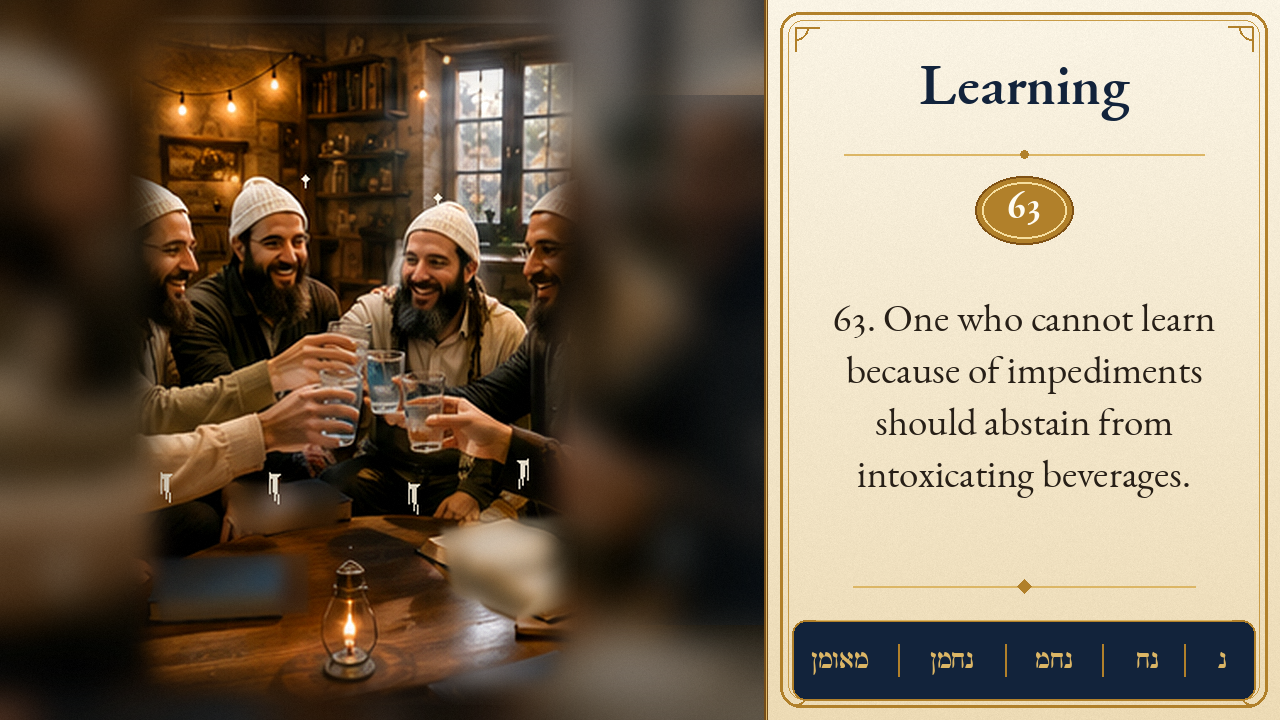
מִי שֶׁאֵינוֹ יָכוֹל לִלְמֹד מֵחֲמַת מְנִיעוֹת, יִפְרֹשׁ מִמַּשְׁקֶה הַמְשַׁכֵּר.
63
63. One who cannot learn because of impediments should abstain from intoxicating beverages.
📷 Pictures / videos for this teaching


ס״ד
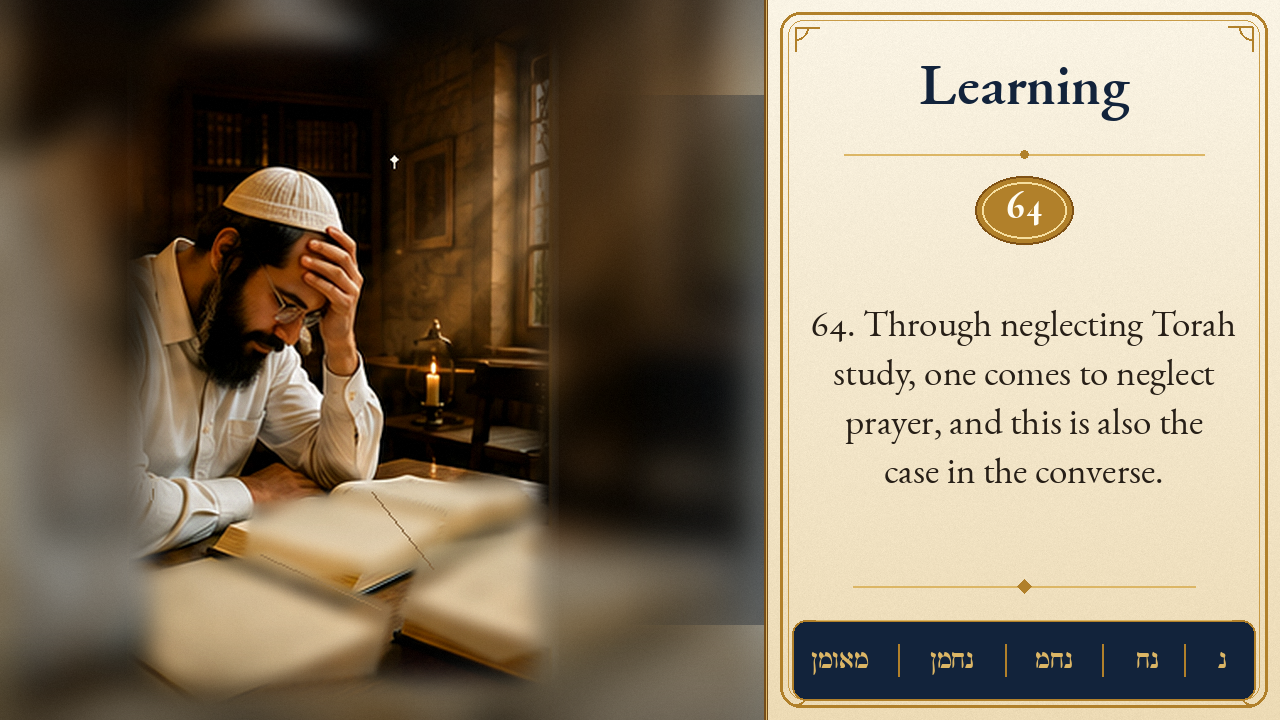
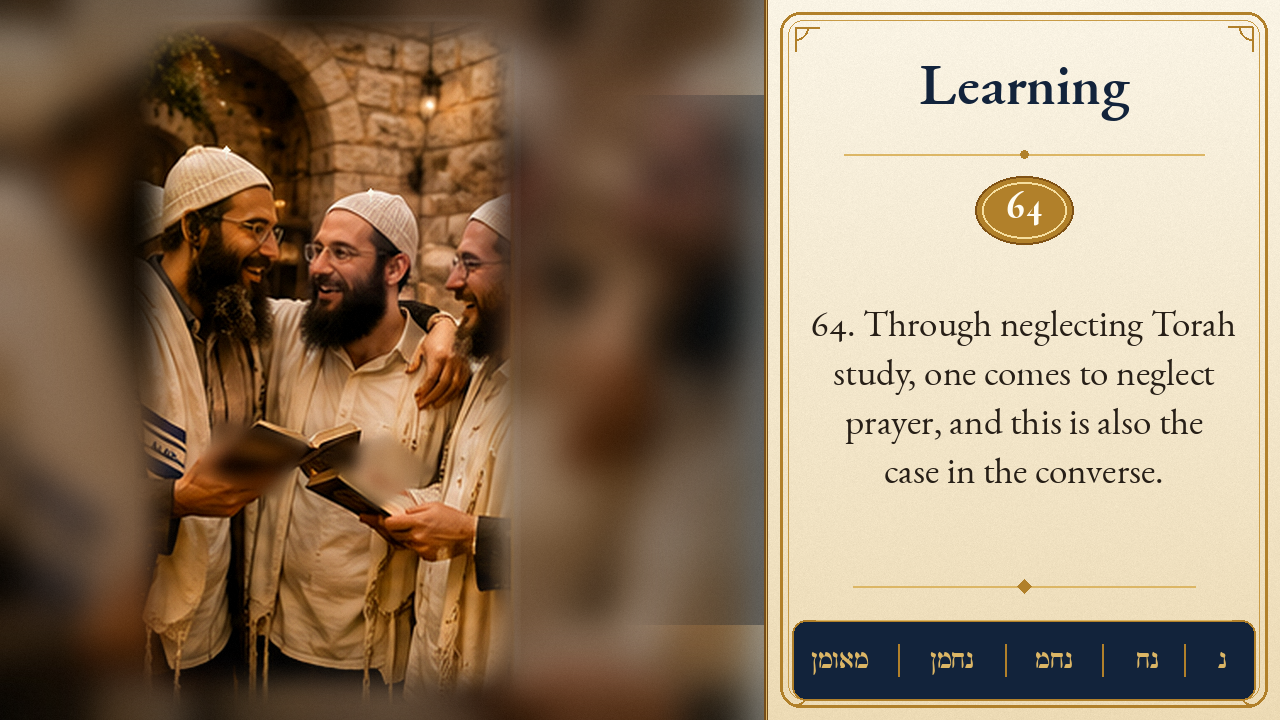
עַל־יְדֵי בִּטּוּל תּוֹרָה יָבוֹא לְבִטּוּל תְּפִלָּה וְהוּא הַדִּין לְהֵפֶךְ.
64
64. Through neglecting Torah study, one comes to neglect prayer, and this is also the case in the converse.
📷 Pictures / videos for this teaching


ס״ה
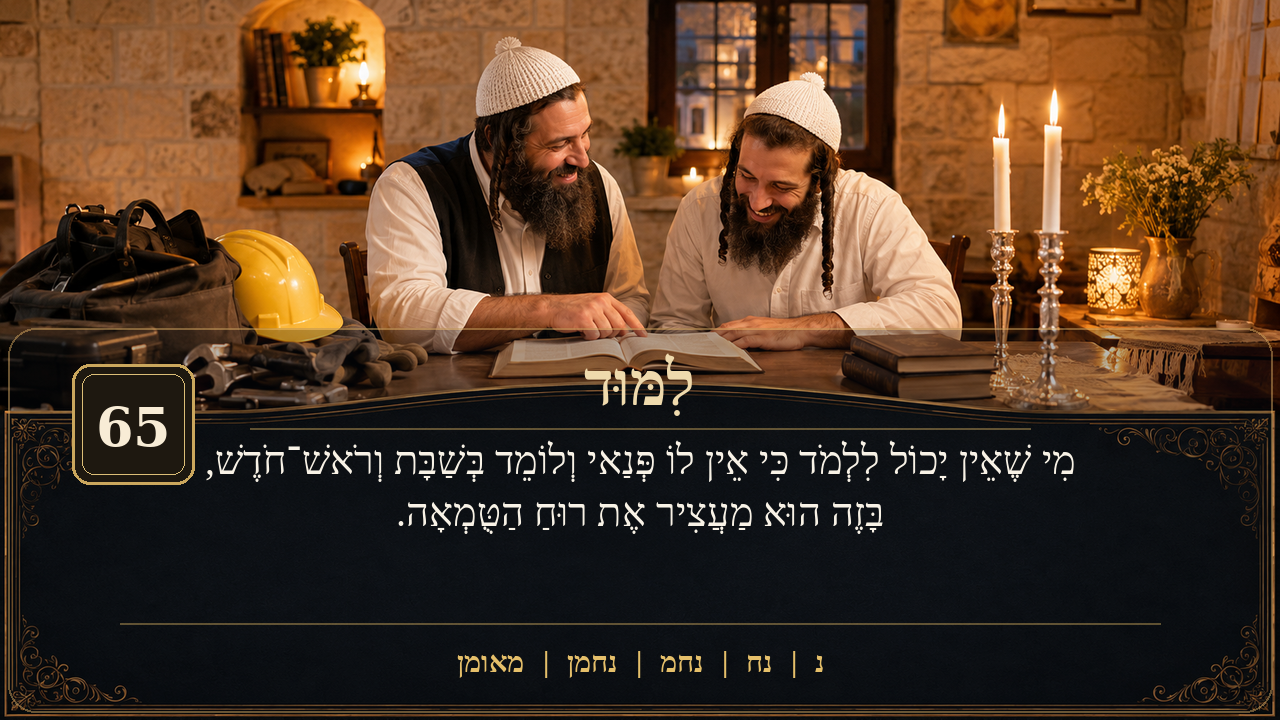
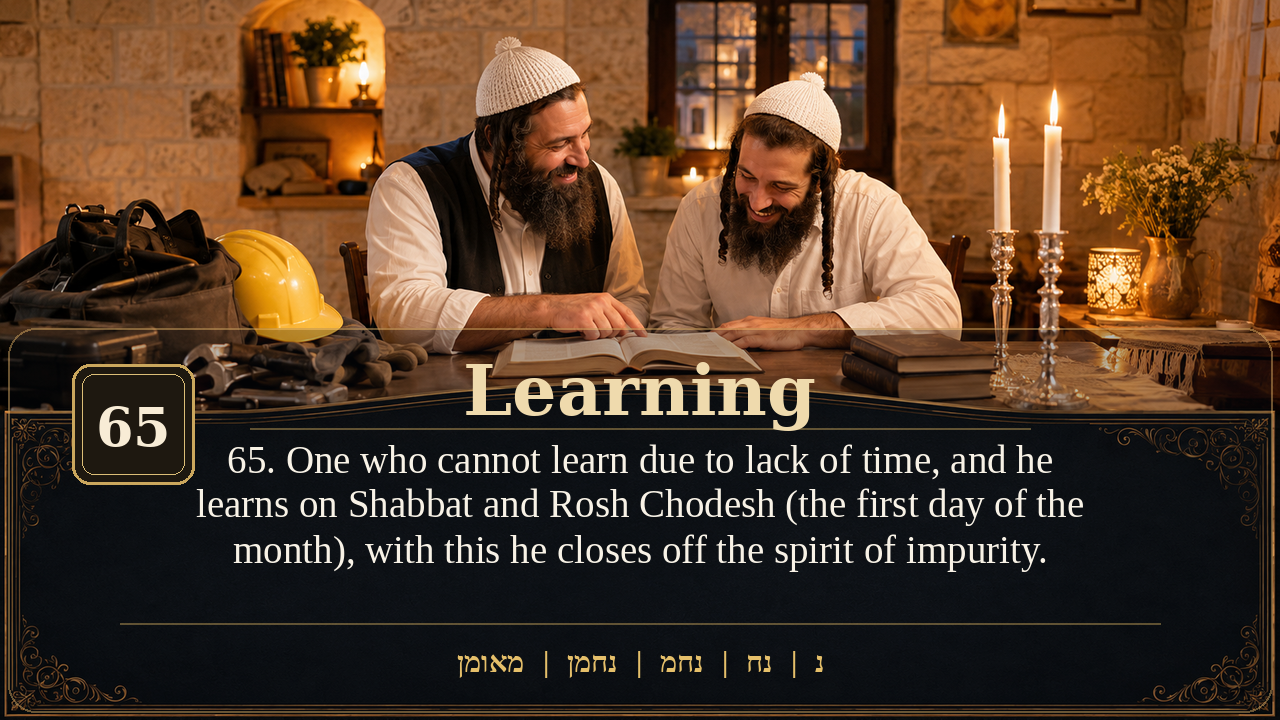
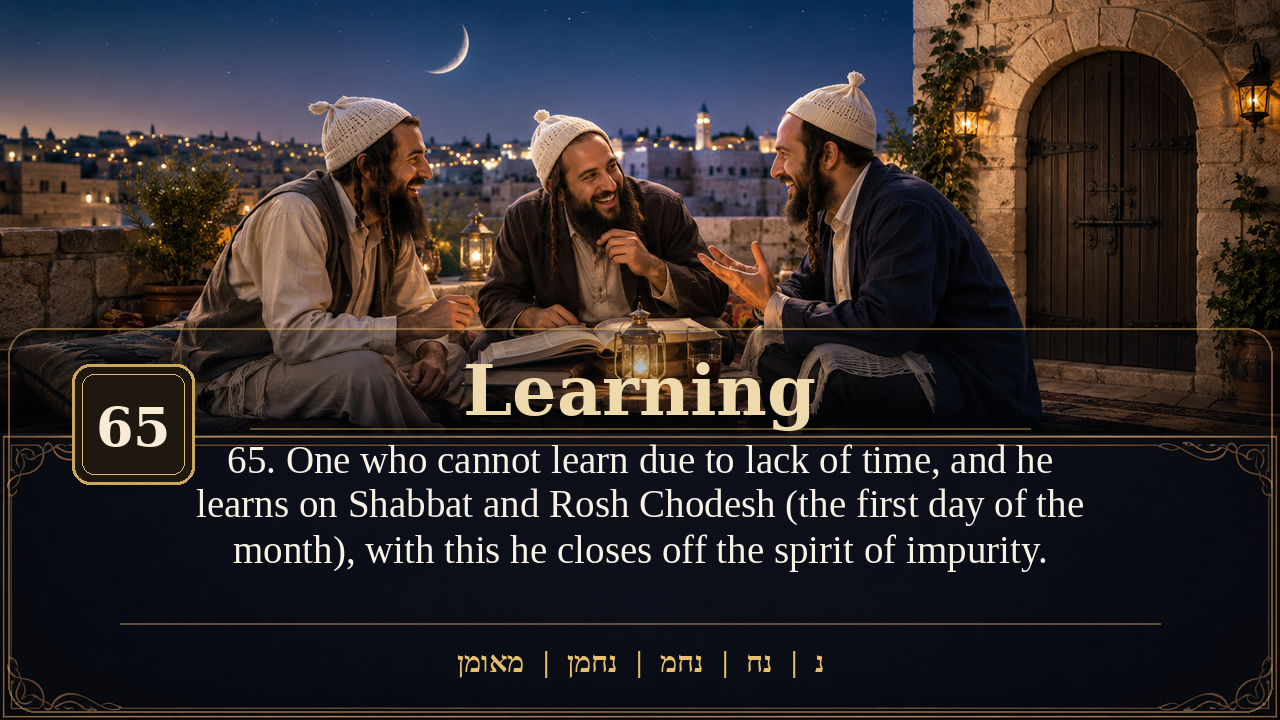
מִי שֶׁאֵין יָכוֹל לִלְמֹד כִּי אֵין לוֹ פְּנַאי וְלוֹמֵד בְּשַׁבָּת וְרֹאשׁ־חֹדֶשׁ, בָּזֶה הוּא מַעֲצִיר אֶת רוּחַ הַטֻּמְאָה.
65
65. One who cannot learn due to lack of time, and he learns on Shabbat and Rosh Chodesh (the first day of the month), with this he closes off the spirit of impurity.
📷 Pictures / videos for this teaching

ס״ו
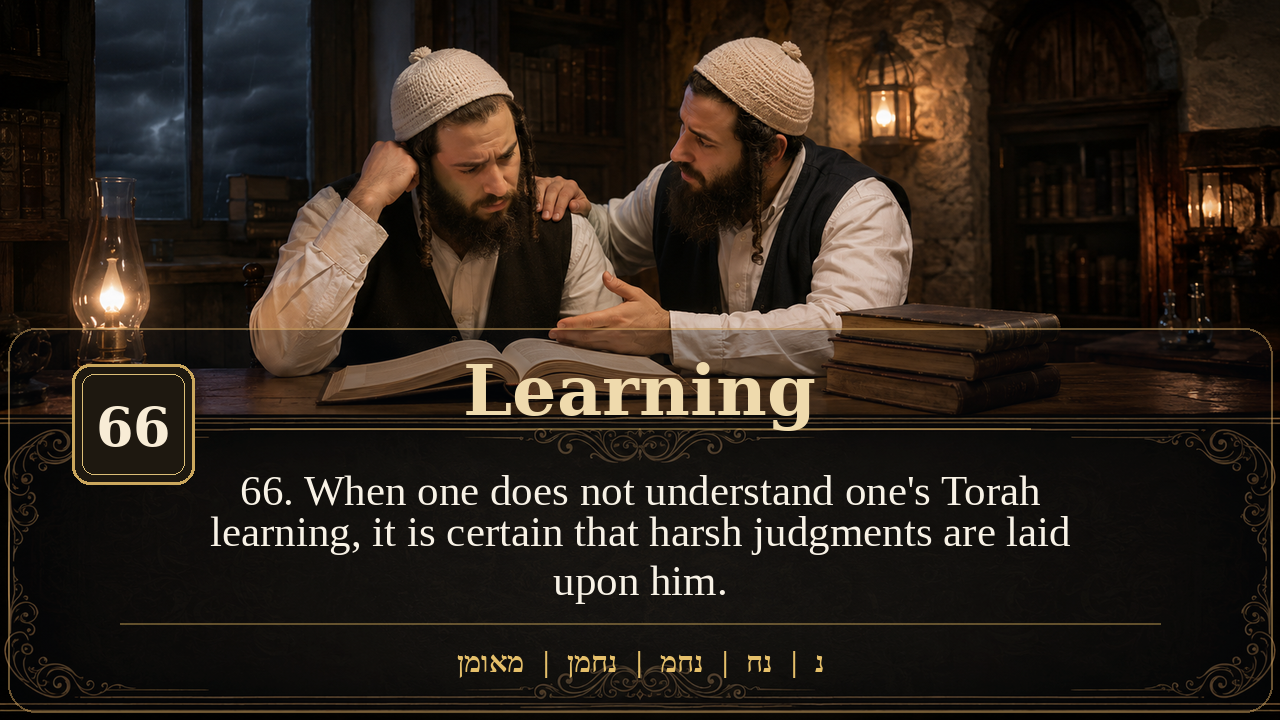
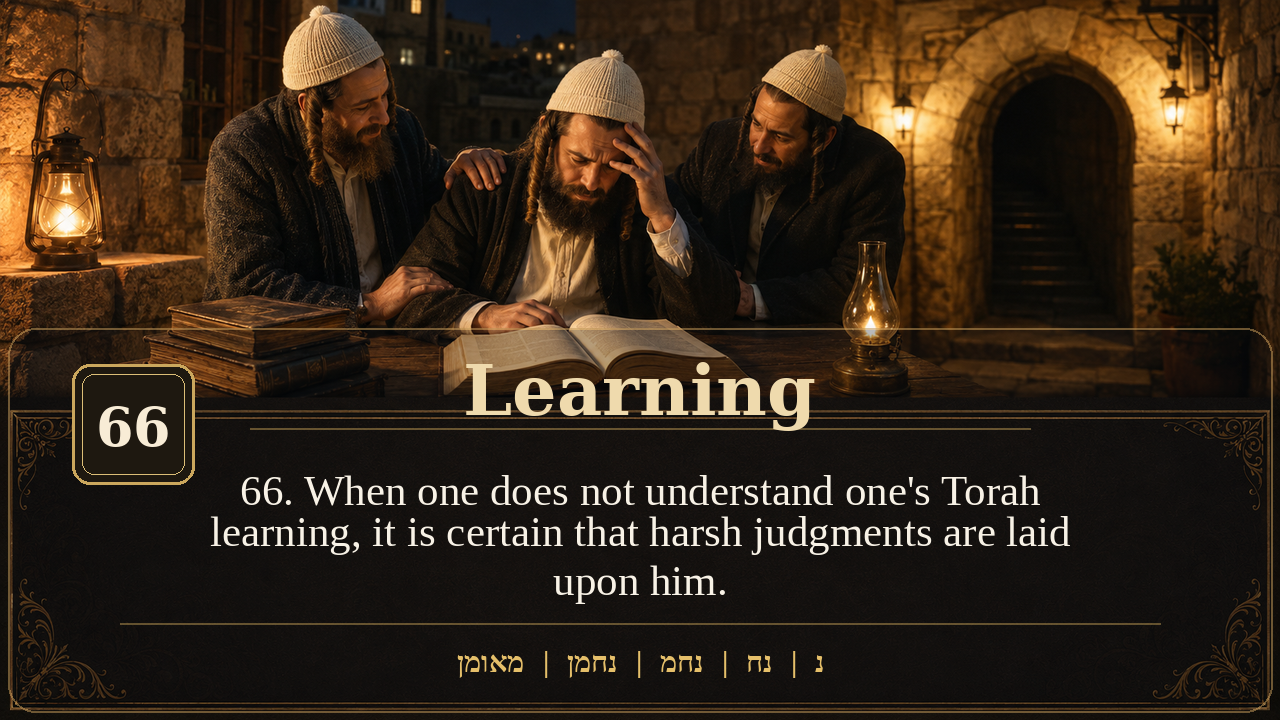
כְּשֶׁאֵין מֵבִין אֶת לִמּוּדוֹ, בְּיָדוּעַ שֶׁדִּינִים שׁוֹרִין עָלָיו.
66
66. When one does not understand one's Torah learning, it is certain that harsh judgments are laid upon him.
📷 Pictures / videos for this teaching


ס״ז
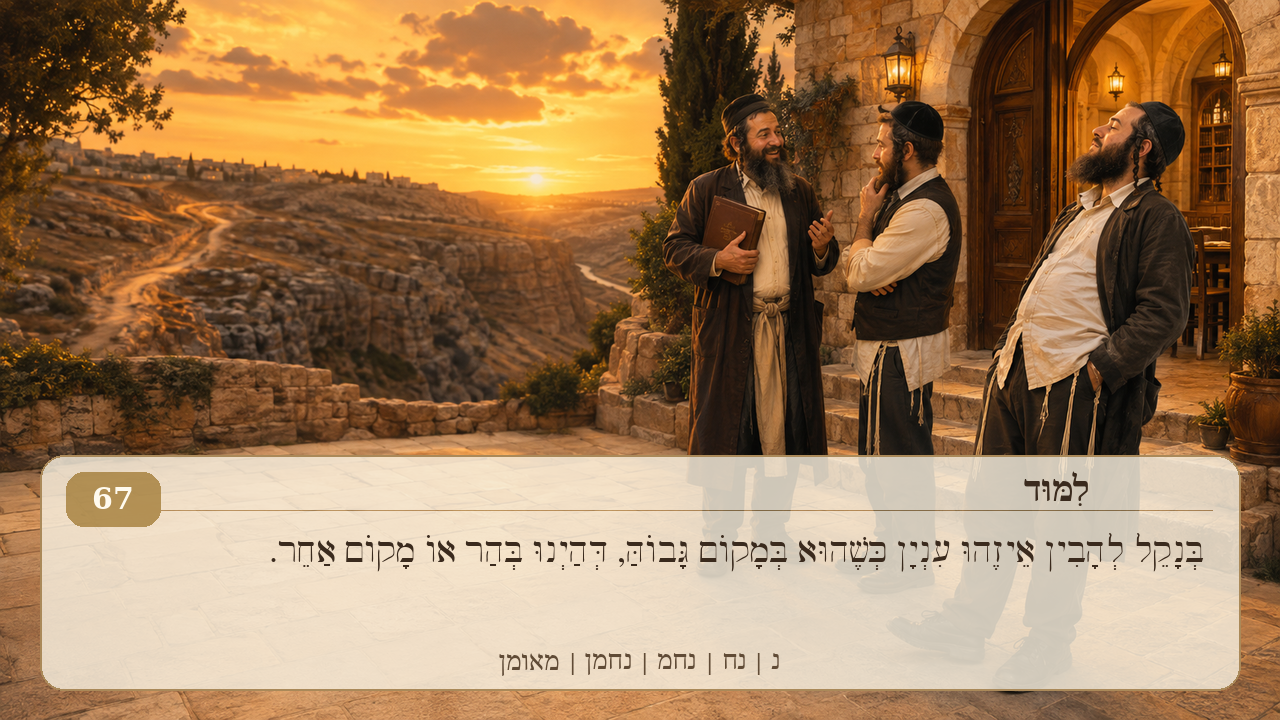
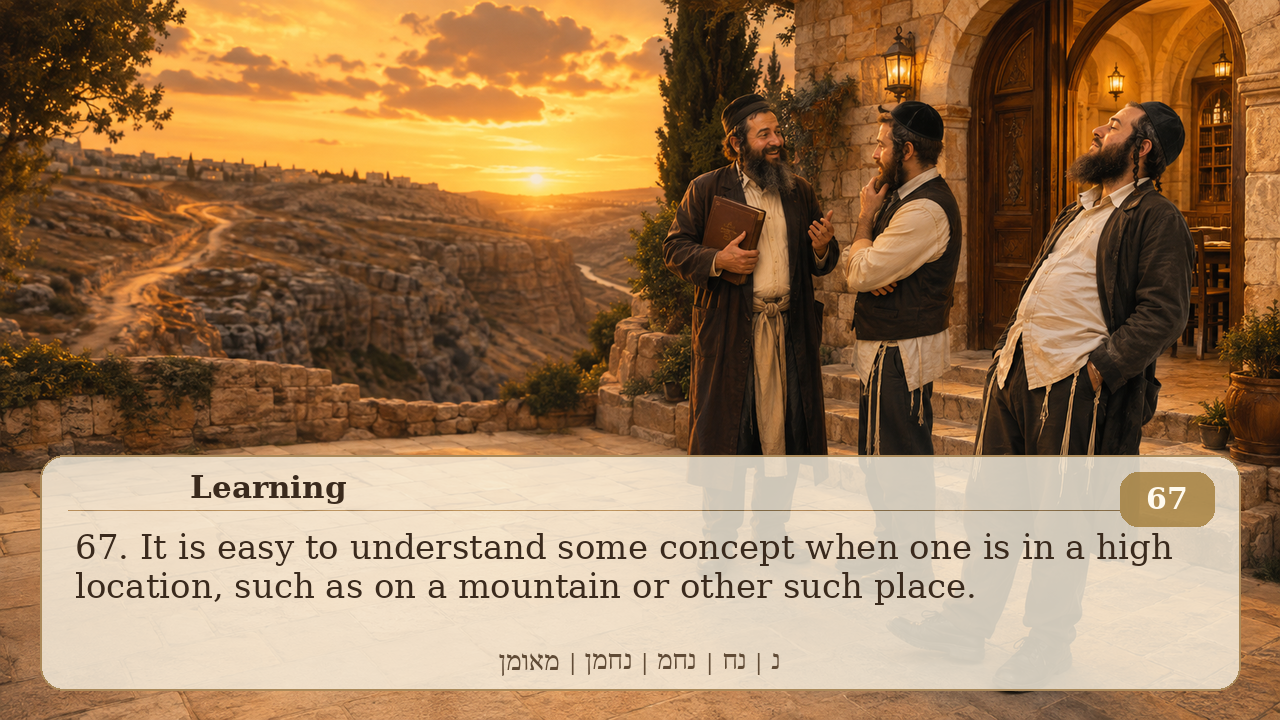
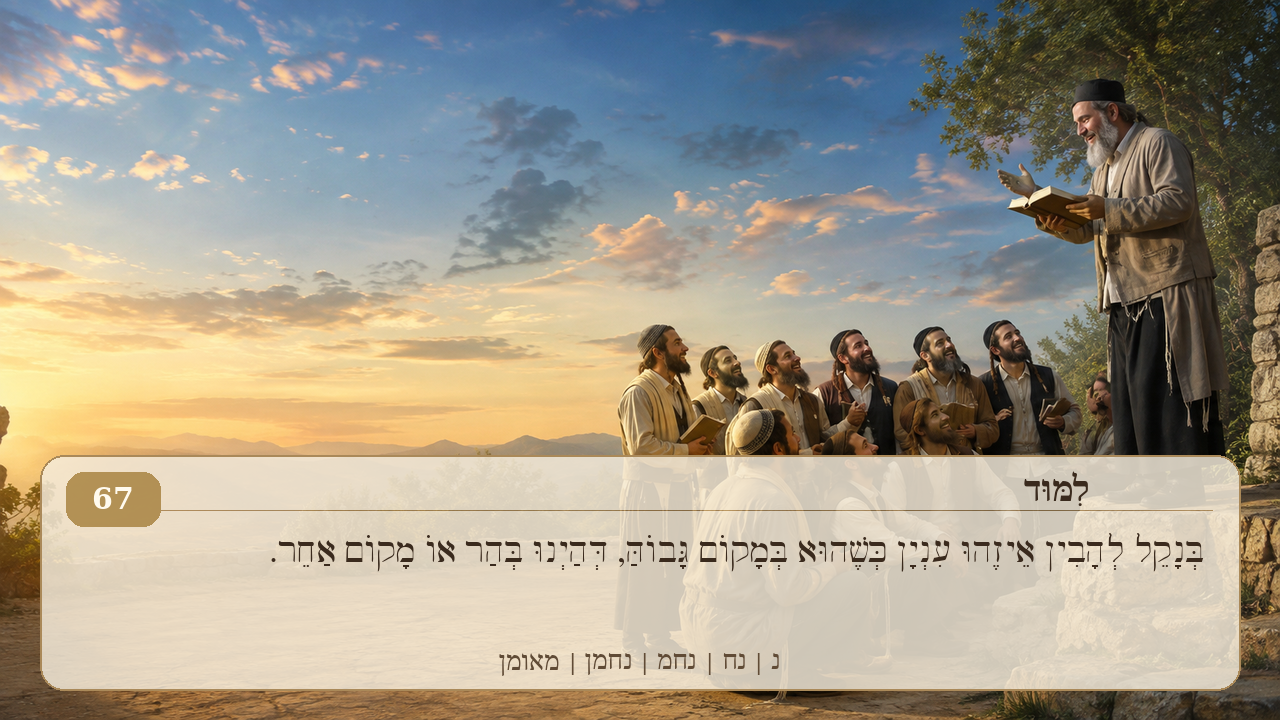
בְּנָקֵל לְהָבִין אֵיזֶהוּ עִנְיָן כְּשֶׁהוּא בְּמָקוֹם גָּבוֹהַּ, דְּהַיְנוּ בְּהַר אוֹ מָקוֹם אַחֵר.
67
67. It is easy to understand some concept when one is in a high location, such as on a mountain or other such place.
📷 Pictures / videos for this teaching
ס״ח
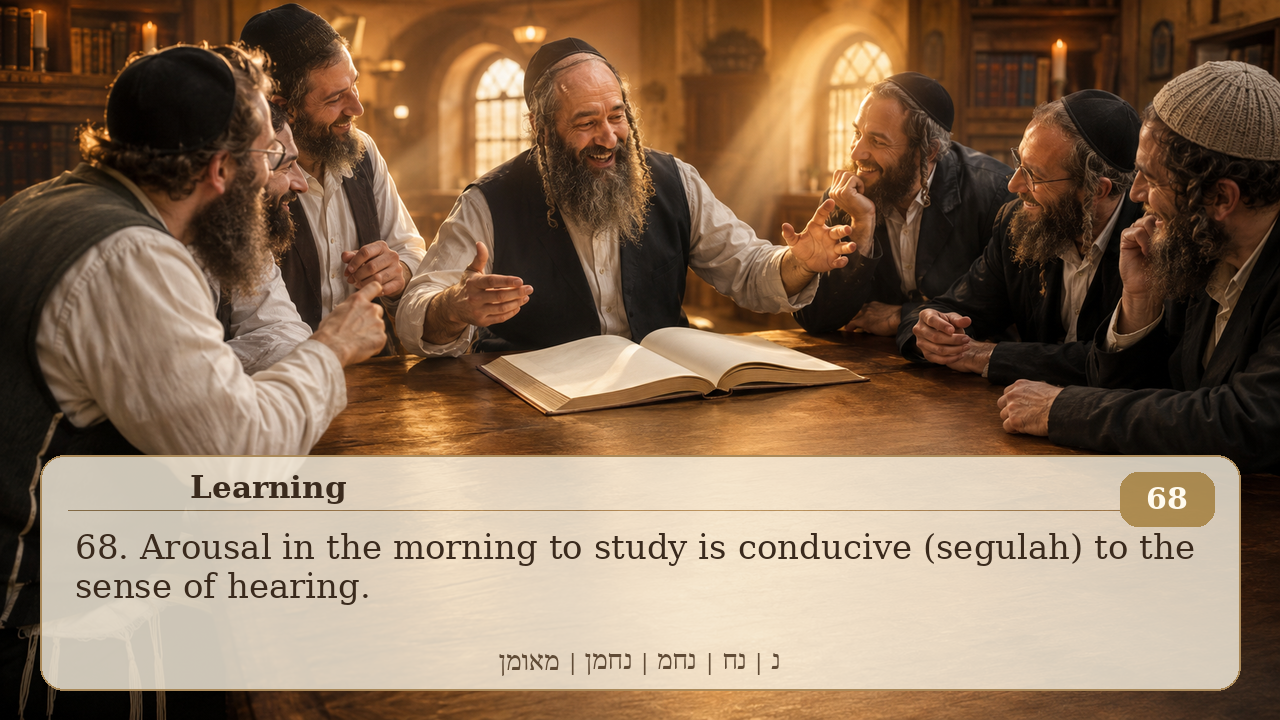
הִתְעוֹרְרוּת בַּבֹּקֶר לִלְמֹד – מְסֻגָּל לְחוּשׁ הַשְּׁמִיעָה.
68
68. Arousal in the morning to study is conducive (segulah) to the sense of hearing.
📷 Pictures / videos for this teaching
ס״ט
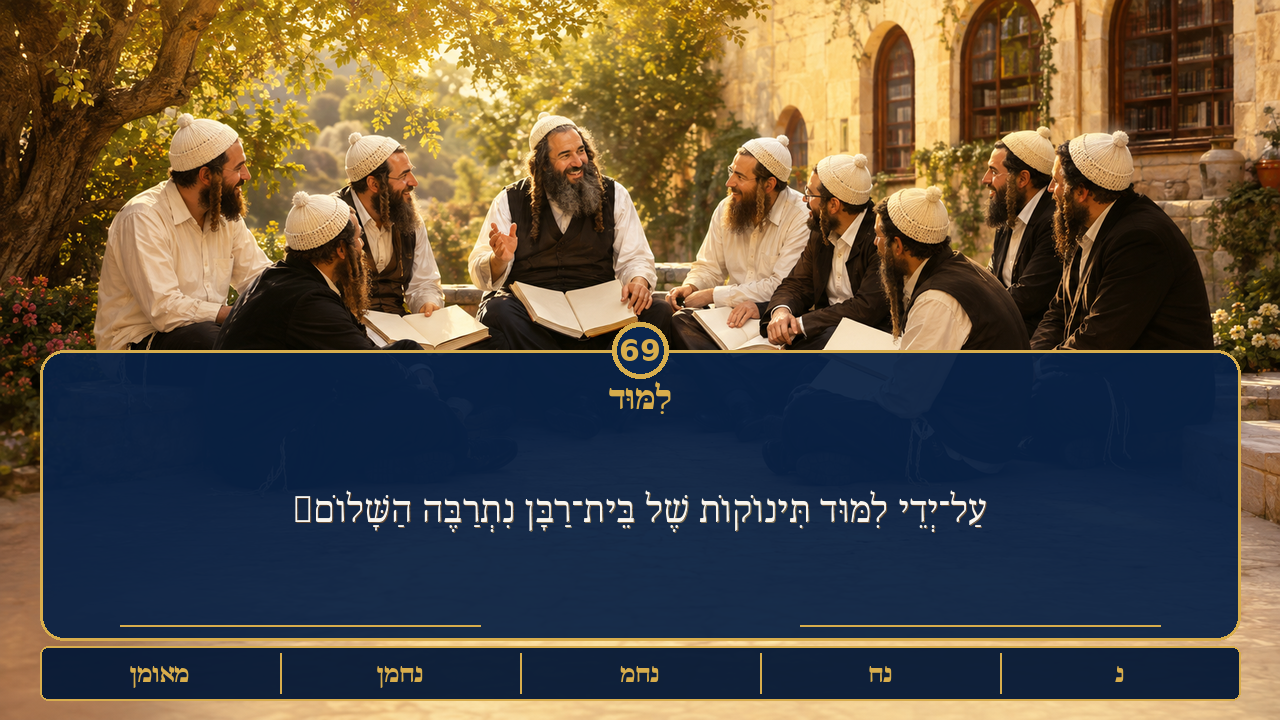
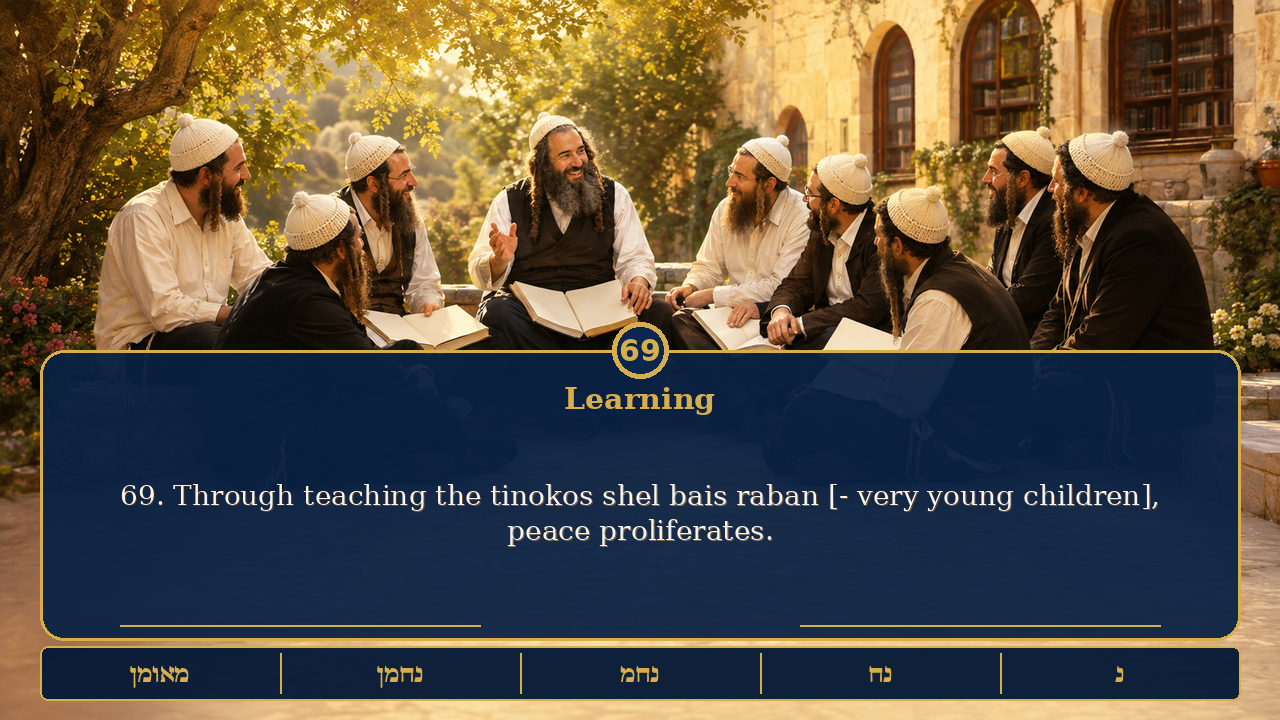
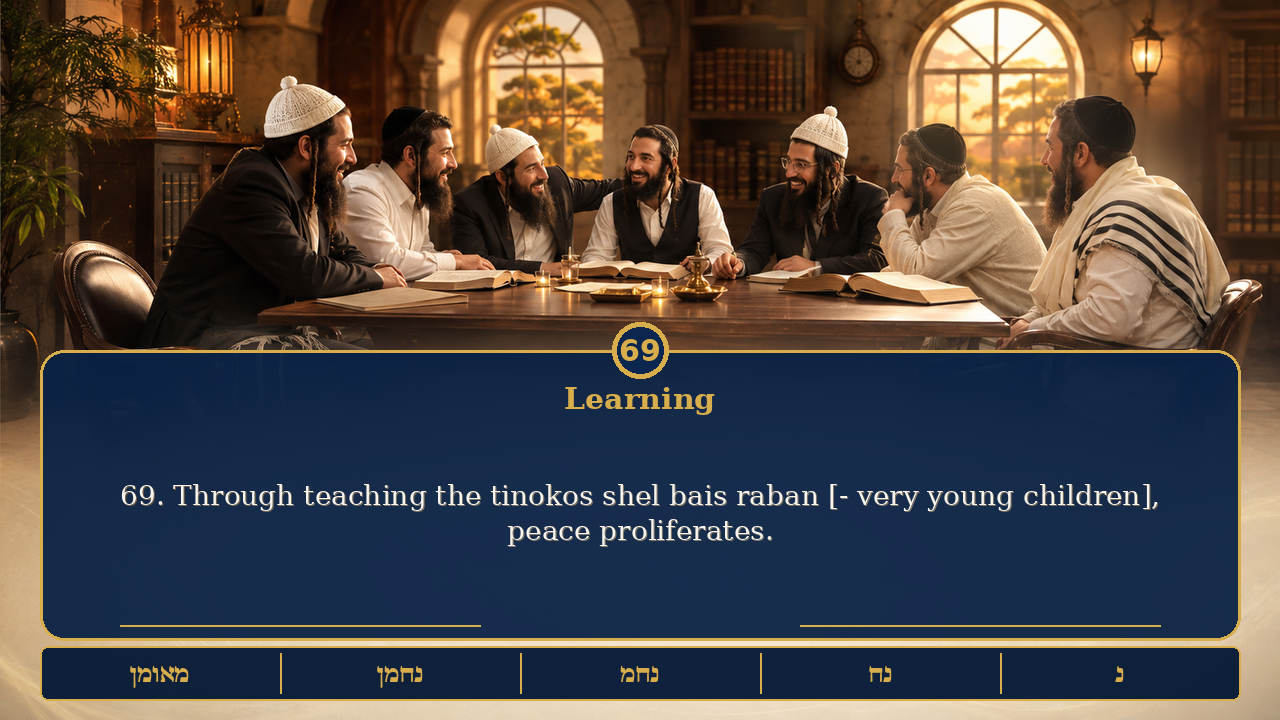
עַל־יְדֵי לִמּוּד תִּינוֹקוֹת שֶׁל בֵּית־רַבָּן נִתְרַבֶּה הַשָּׁלוֹם.
69
69. Through teaching the tinokos shel bais raban [- very young children], peace proliferates.
📷 Pictures / videos for this teaching

ע׳
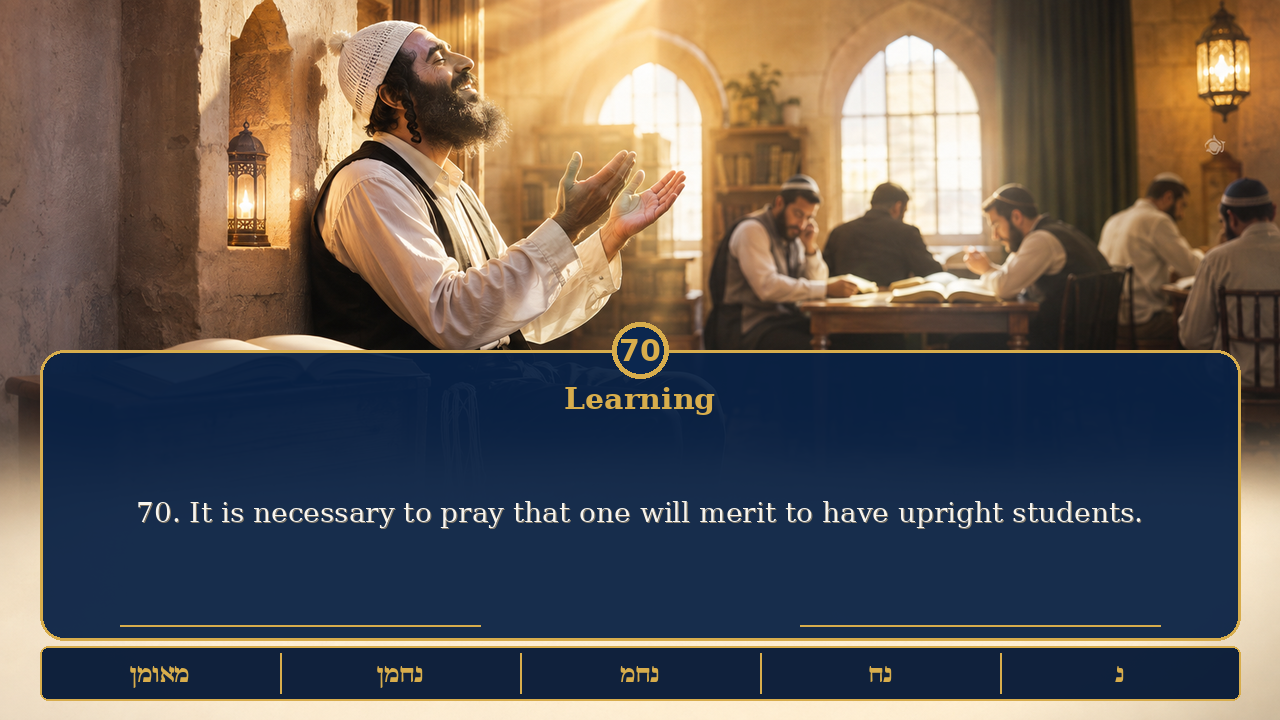
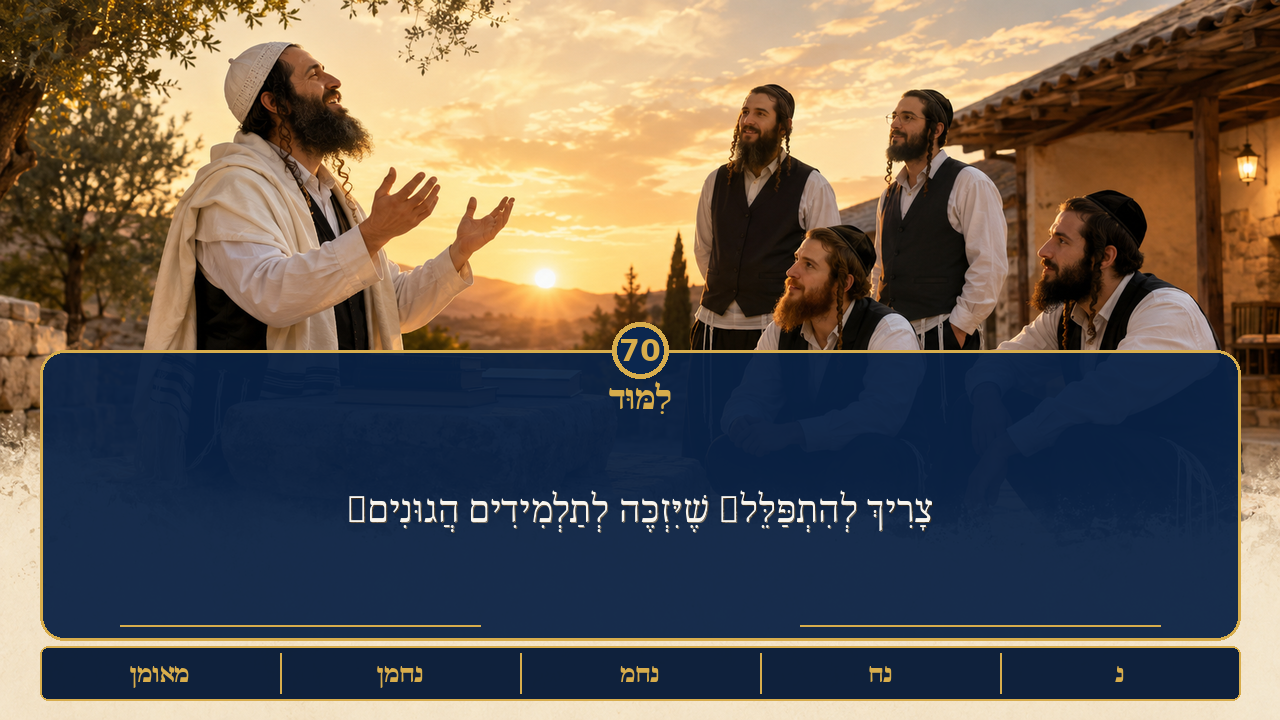
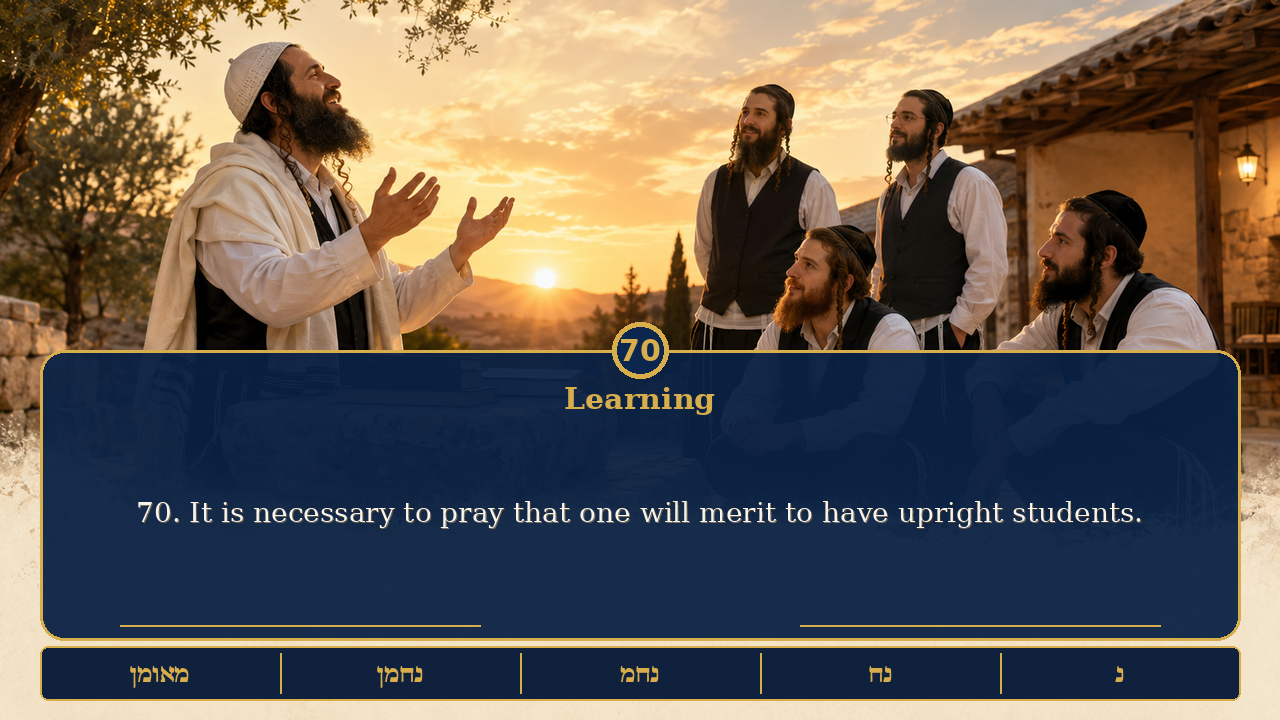
צָרִיךְ לְהִתְפַּלֵּל, שֶׁיִּזְכֶּה לְתַלְמִידִים הֲגוּנִים.
70
70. It is necessary to pray that one will merit to have upright students.
📷 Pictures / videos for this teaching

ע״א
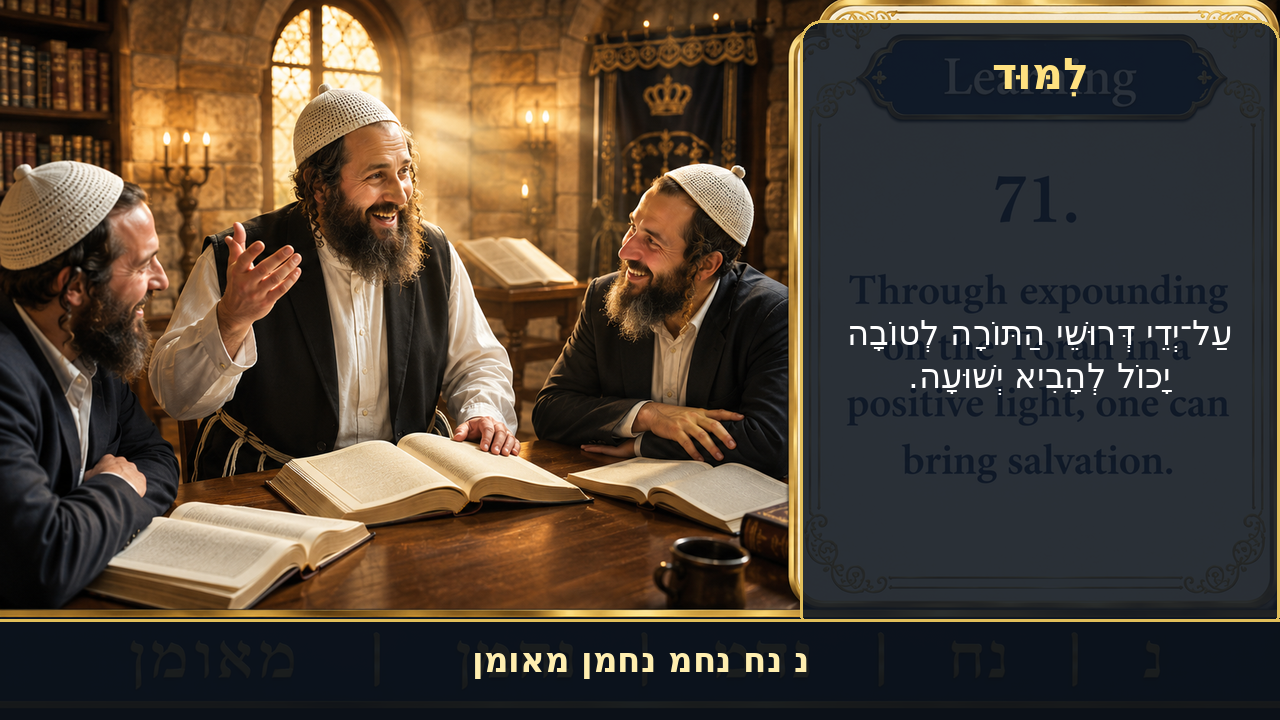
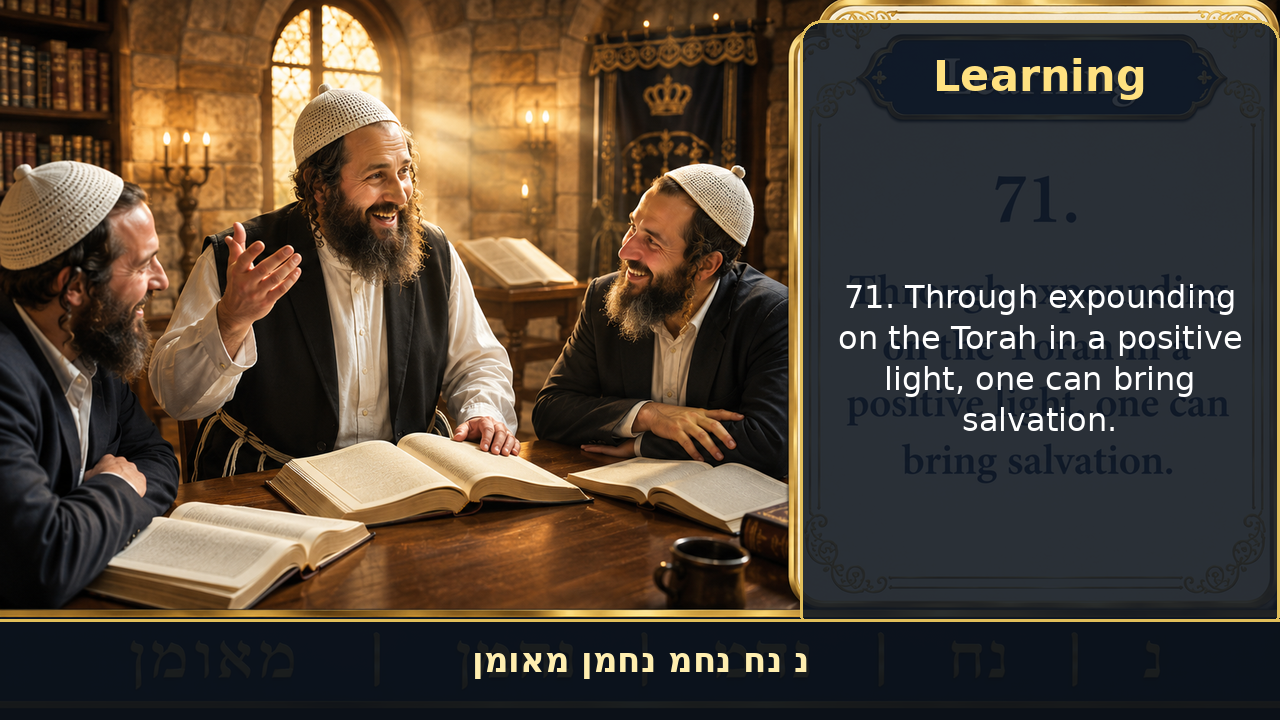
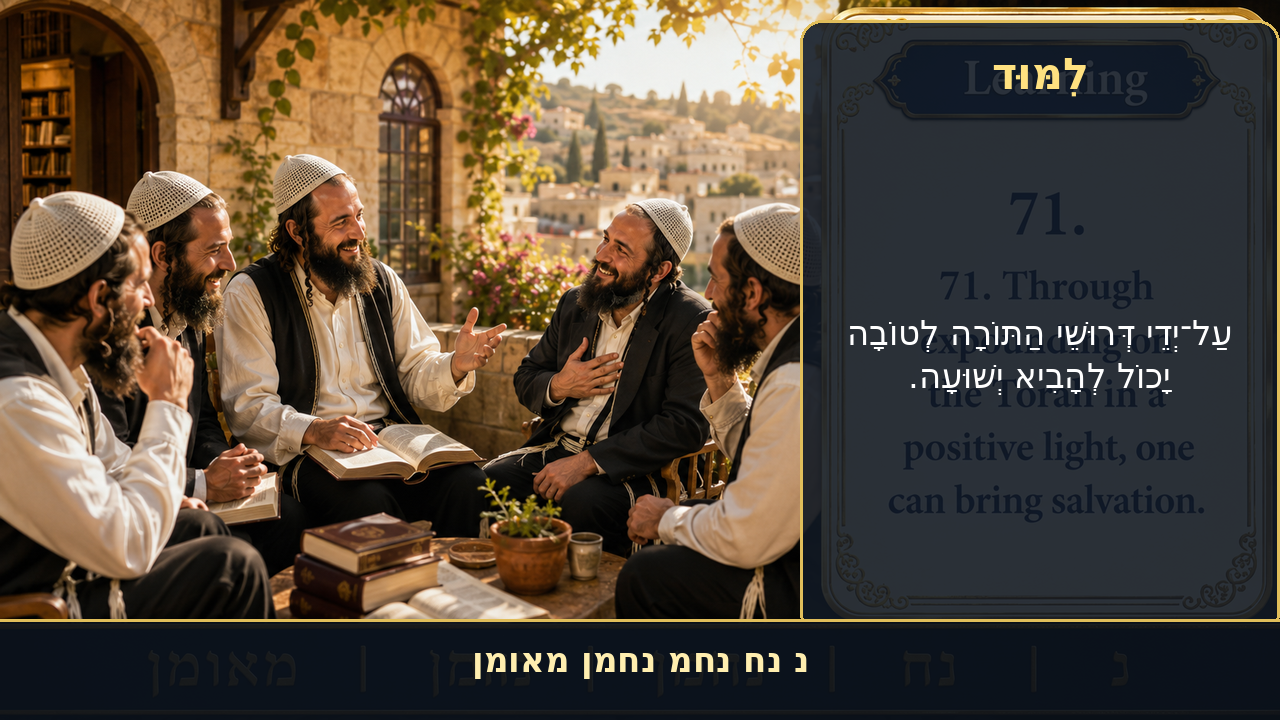
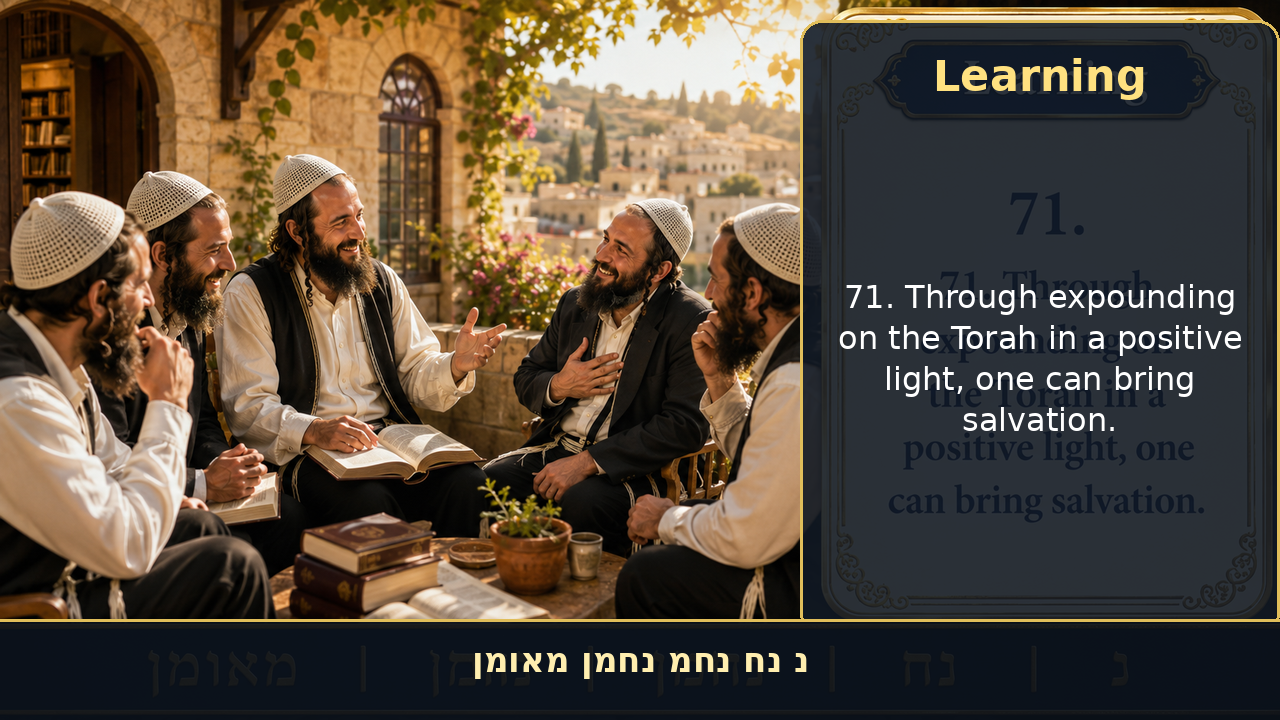
עַל־יְדֵי דְּרוּשֵׁי הַתּוֹרָה לְטוֹבָה יָכוֹל לְהָבִיא יְשׁוּעָה.
71
71. Through expounding on the Torah in a positive light, one can bring salvation.
📷 Pictures / videos for this teaching
ע״ב
עַל־יְדֵי רֹחַב־לֵב יָכוֹל לְהָבִין דָּבָר מִתּוֹךְ דָּבָר.
72
72. Through an expansive heart, one can understand one thing from another.
📷 Pictures / videos for this teaching




ע״ג
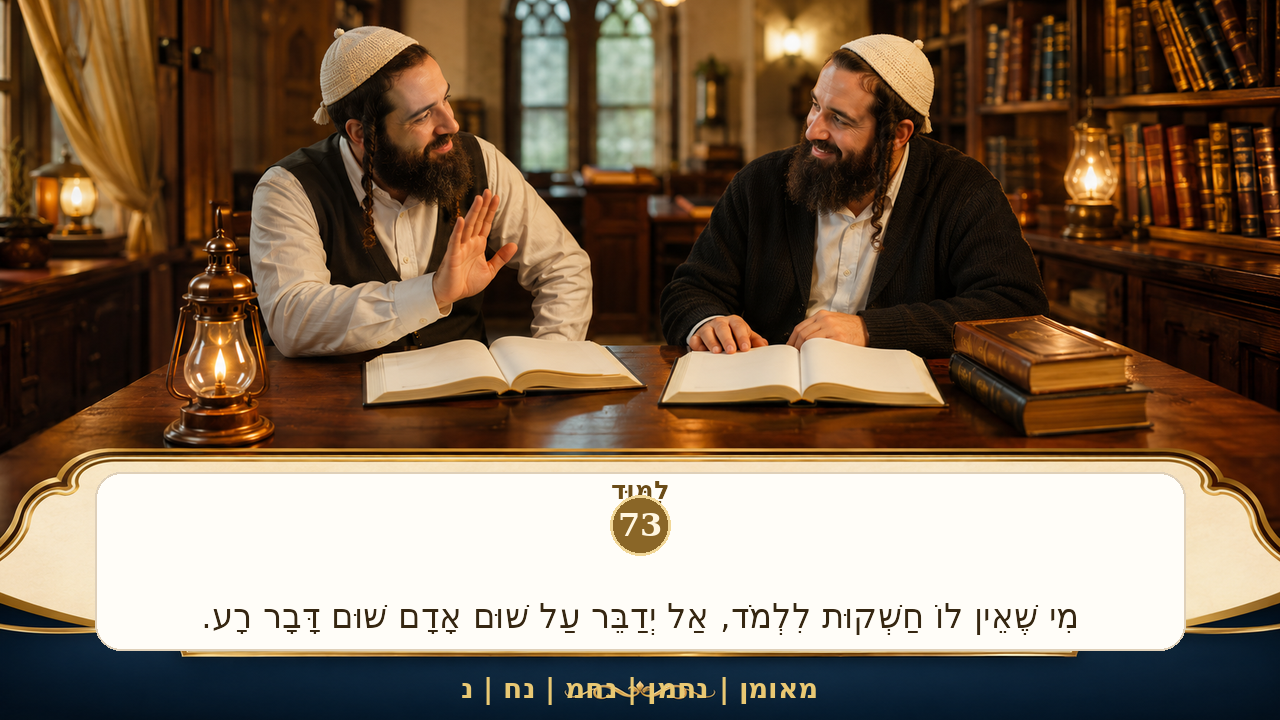
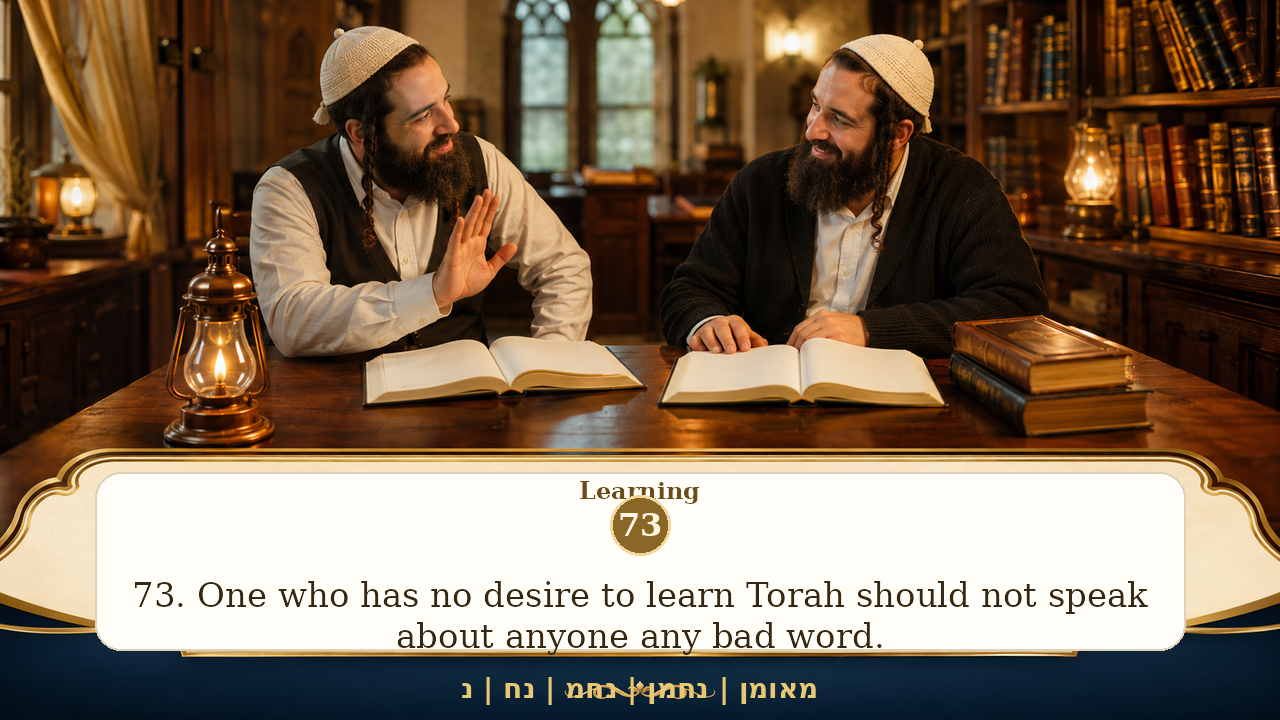
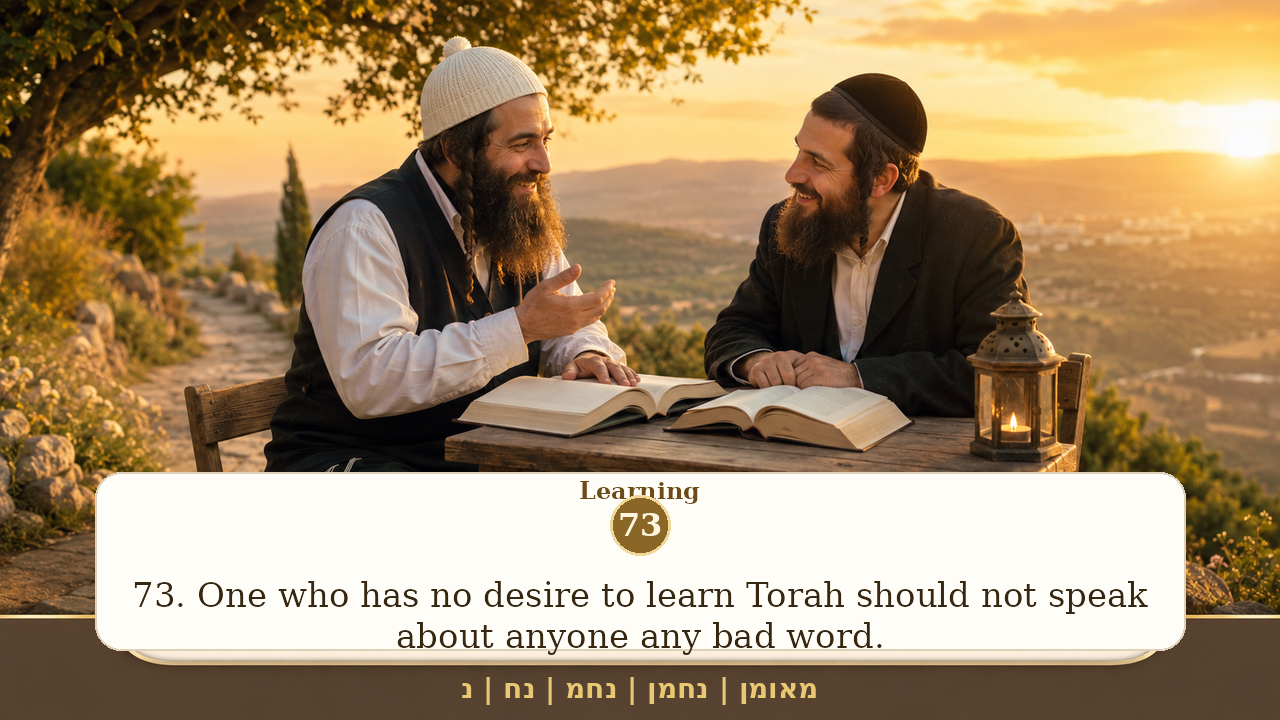
מִי שֶׁאֵין לוֹ חַשְׁקוּת לִלְמֹד, אַל יְדַבֵּר עַל שׁוּם אָדָם שׁוּם דָּבָר רָע.
73
73. One who has no desire to learn Torah should not speak about anyone any bad word.
📷 Pictures / videos for this teaching

ע״ד
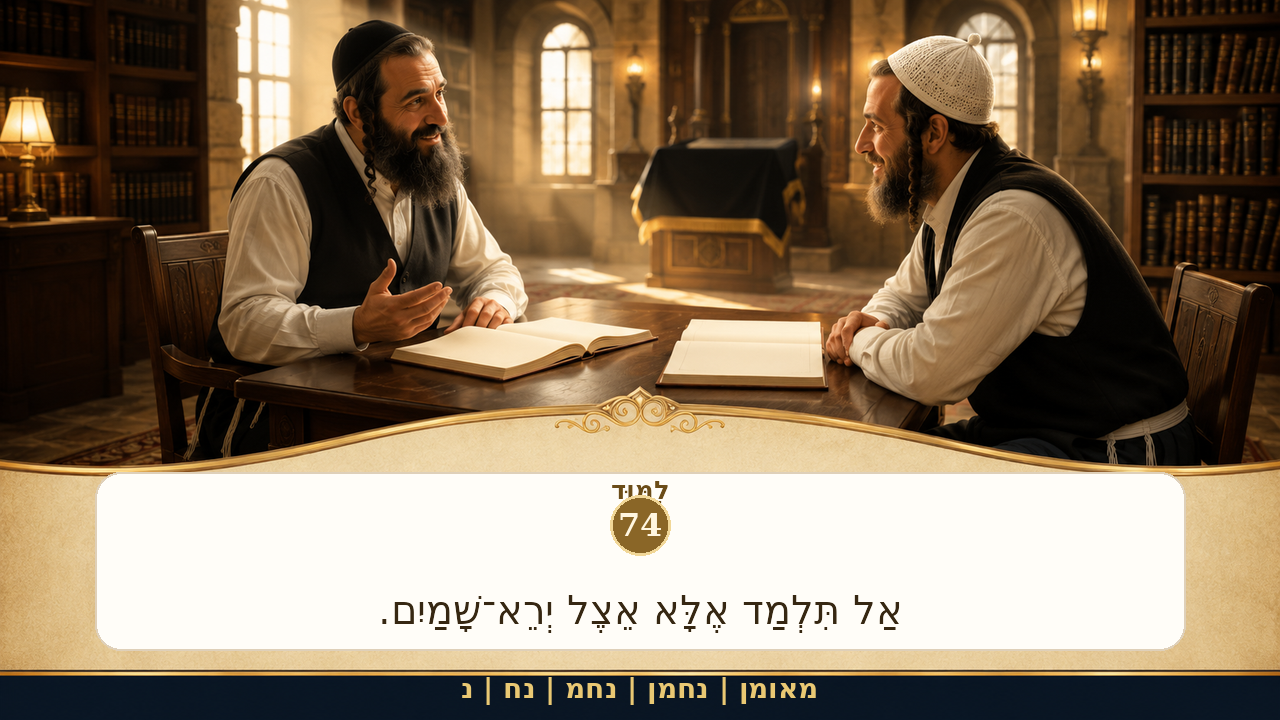
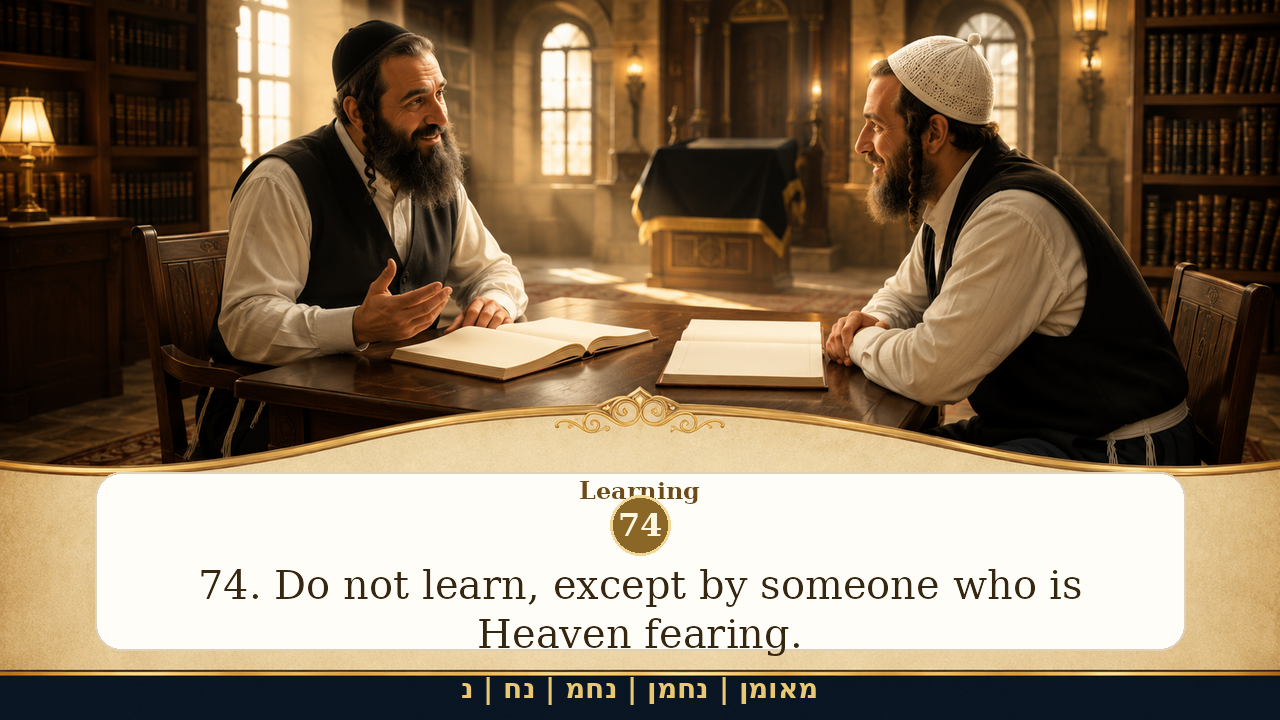
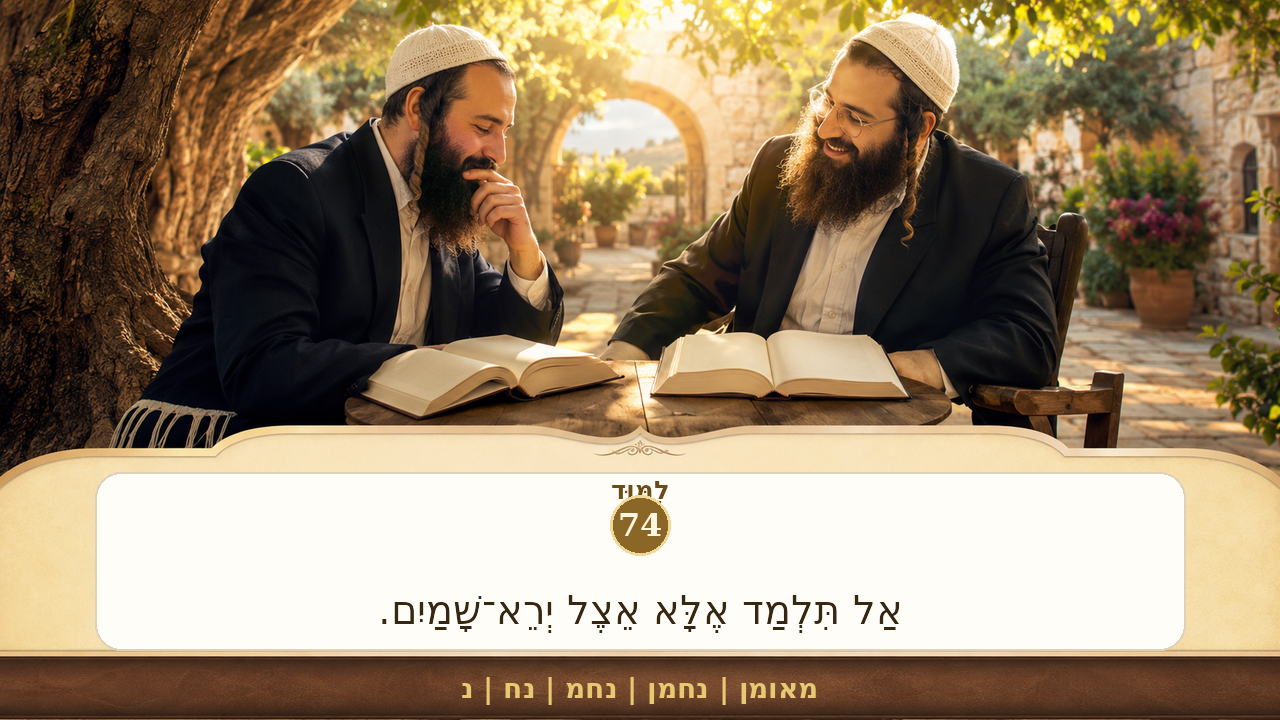
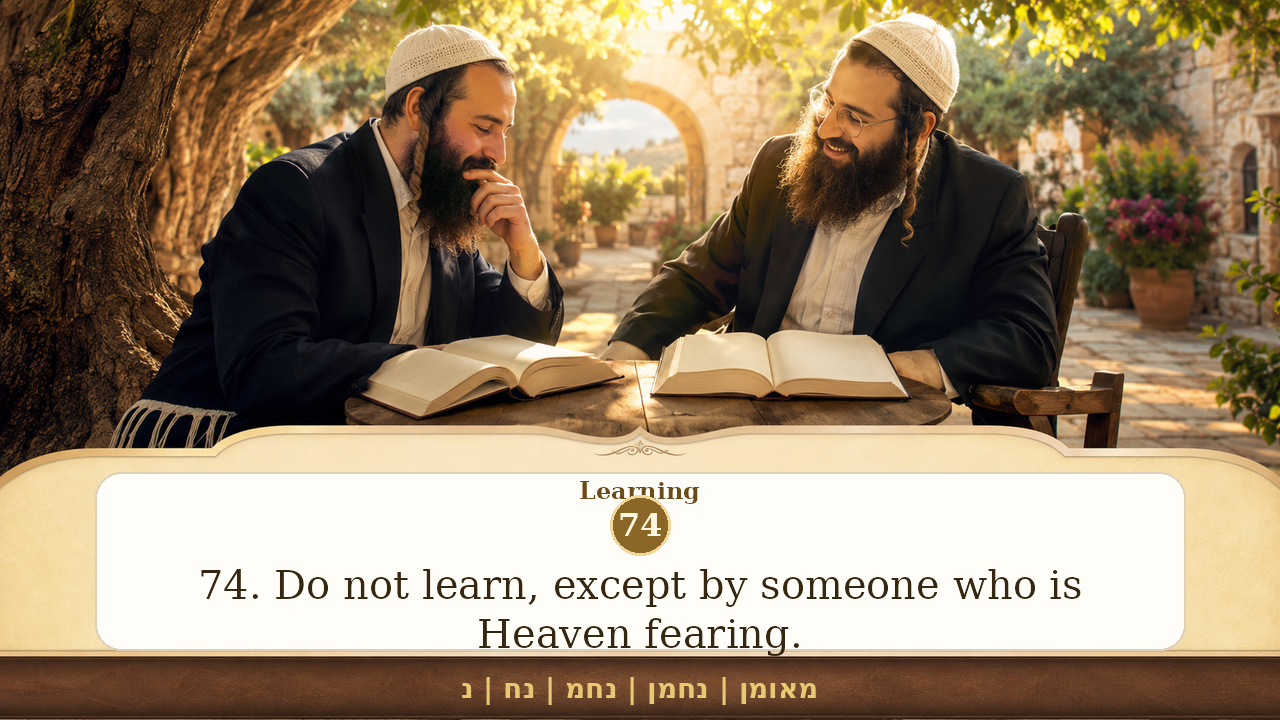
אַל תִּלְמַד אֶלָּא אֵצֶל יְרֵא־שָׁמַיִם.
74
74. Do not learn, except by someone who is Heaven fearing.
📷 Pictures / videos for this teaching
ע״ה
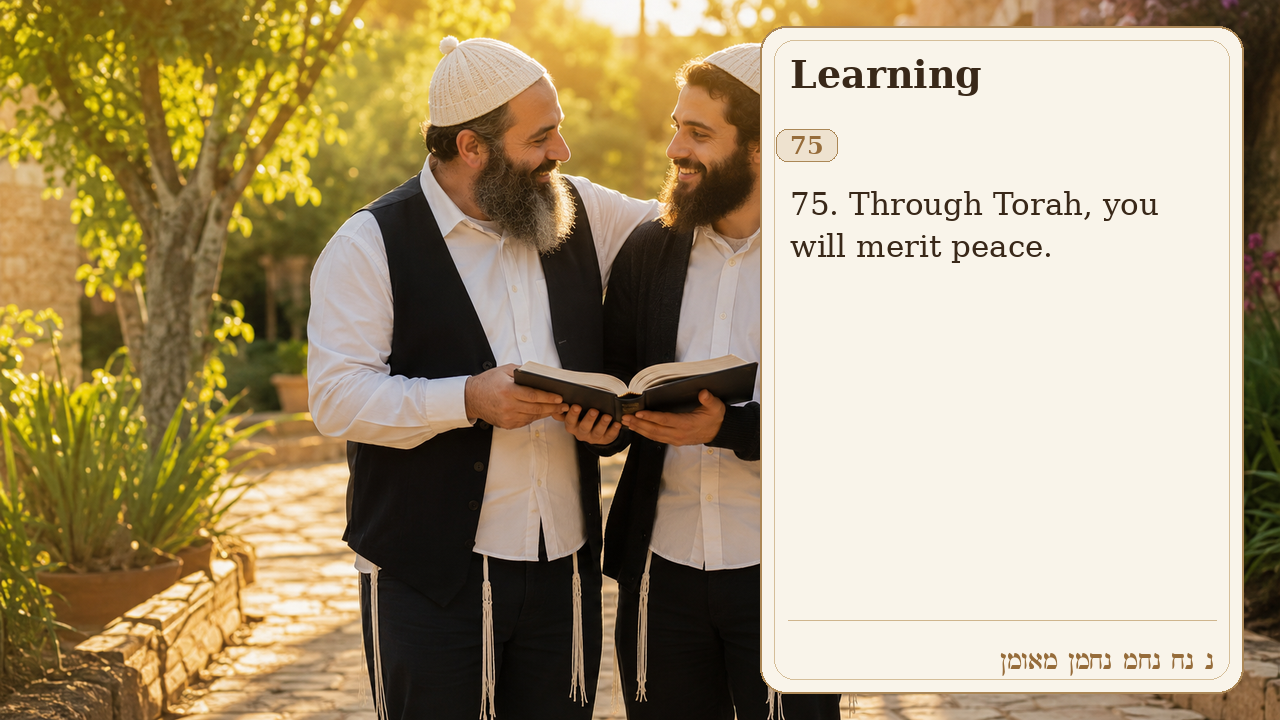
עַל־יְדֵי תּוֹרָה תִּזְכֶּה לְשָׁלוֹם.
75
75. Through Torah, you will merit peace.
📷 Pictures / videos for this teaching



ע״ו
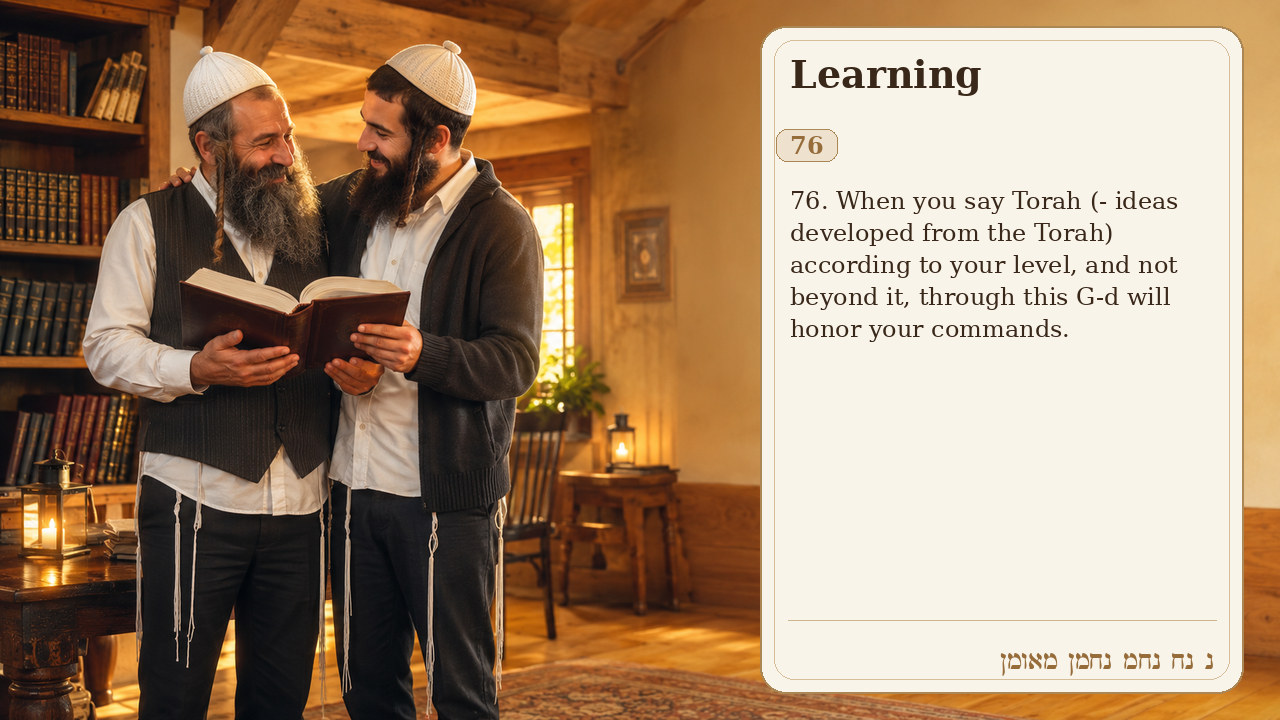
כְּשֶׁתֹּאמַר תּוֹרָה לְפִי מַדְרֵגָתְךָ וְלֹא לְמַעְלָה מִמַּדְרֵגָתְךָ, עַל־יְדֵי זֶה הַקָּדוֹשׁ־בָּרוּךְ־הוּא יְקַיֵּם צִוּוּיֶךָ.
76
76. When you say Torah (- ideas developed from the Torah) according to your level, and not beyond it, through this G-d will honor your commands.
📷 Pictures / videos for this teaching



ע״ז
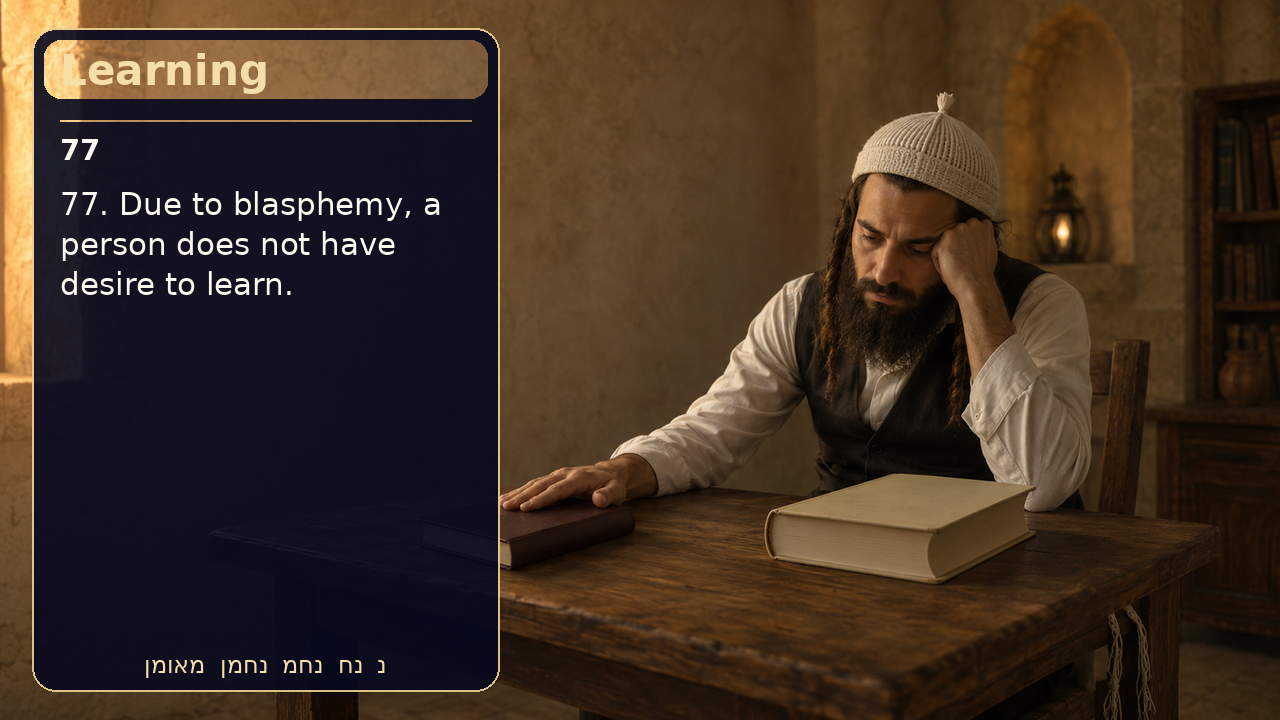
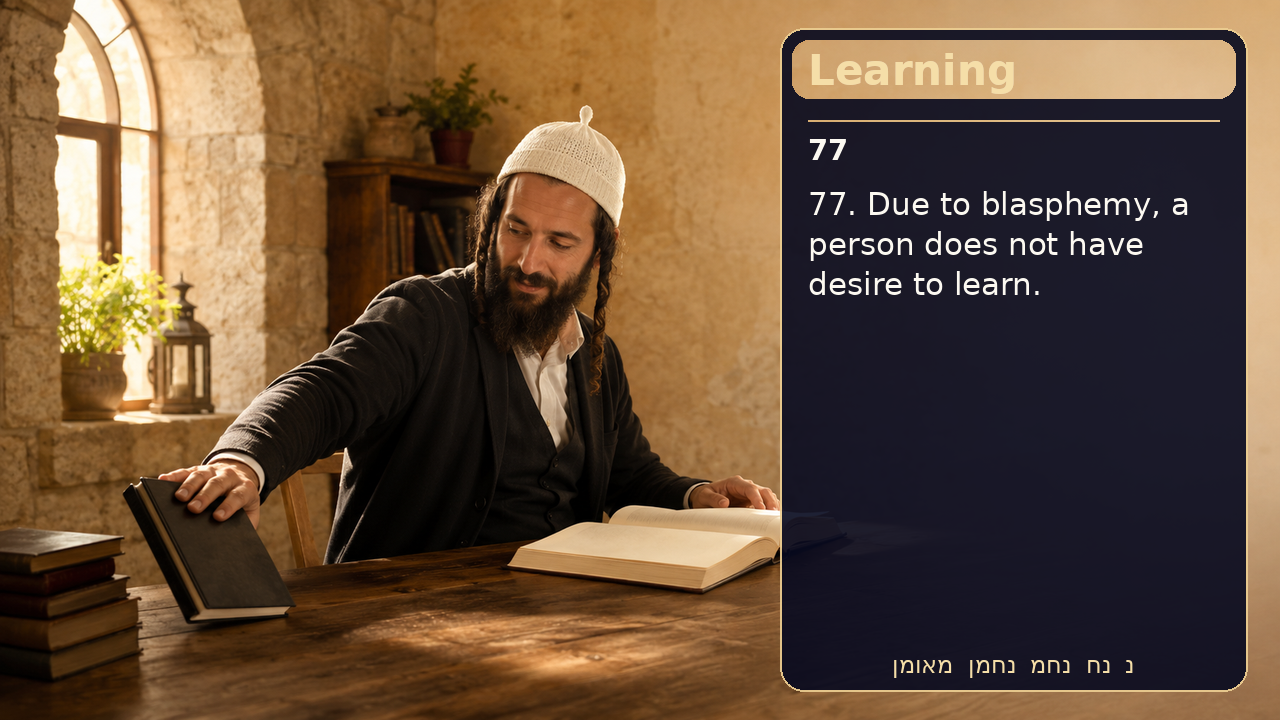
עַל־יְדֵי הַכְּפִירוֹת אֵין לָאָדָם חַשְׁקוּת לִלְמֹד.
77
77. Due to blasphemy, a person does not have desire to learn.
📷 Pictures / videos for this teaching


ע״ח
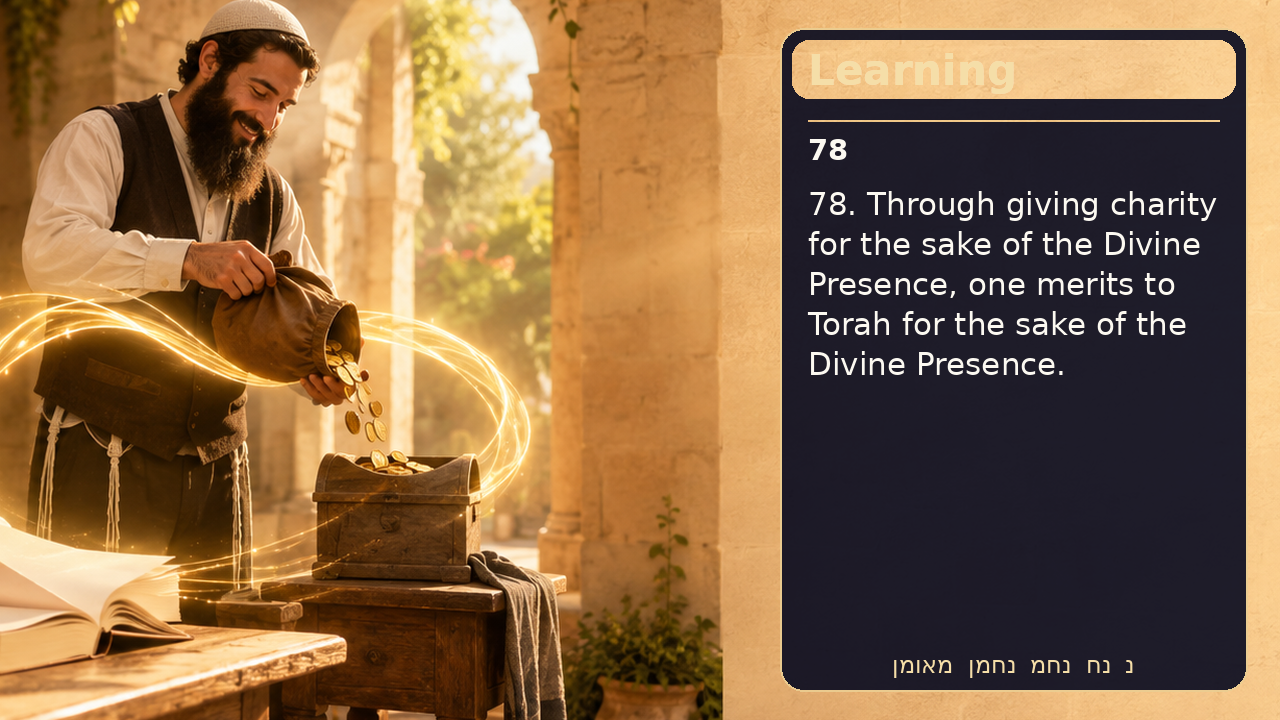
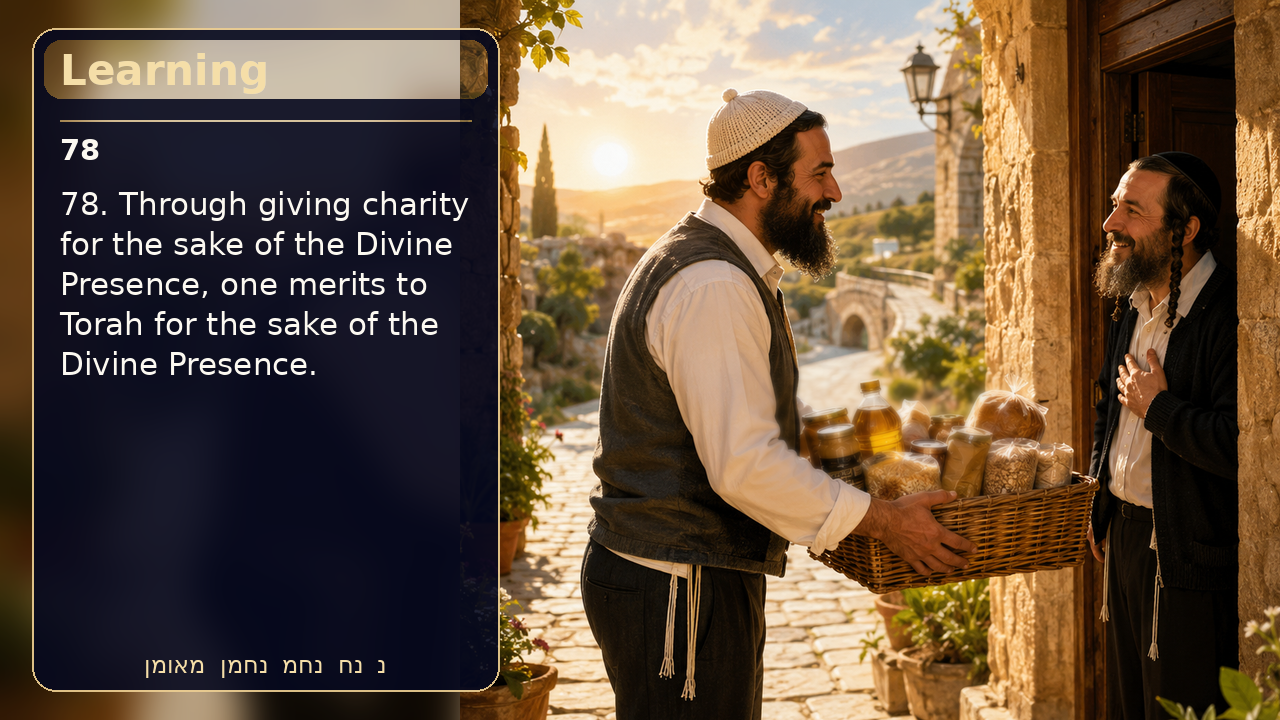
עַל־יְדֵי צְדָקָה לִשְׁמָהּ תִּזְכֶּה לְתוֹרָה לִשְׁמָהּ.
78
78. Through giving charity for the sake of the Divine Presence, one merits to Torah for the sake of the Divine Presence.
📷 Pictures / videos for this teaching


ע״ט
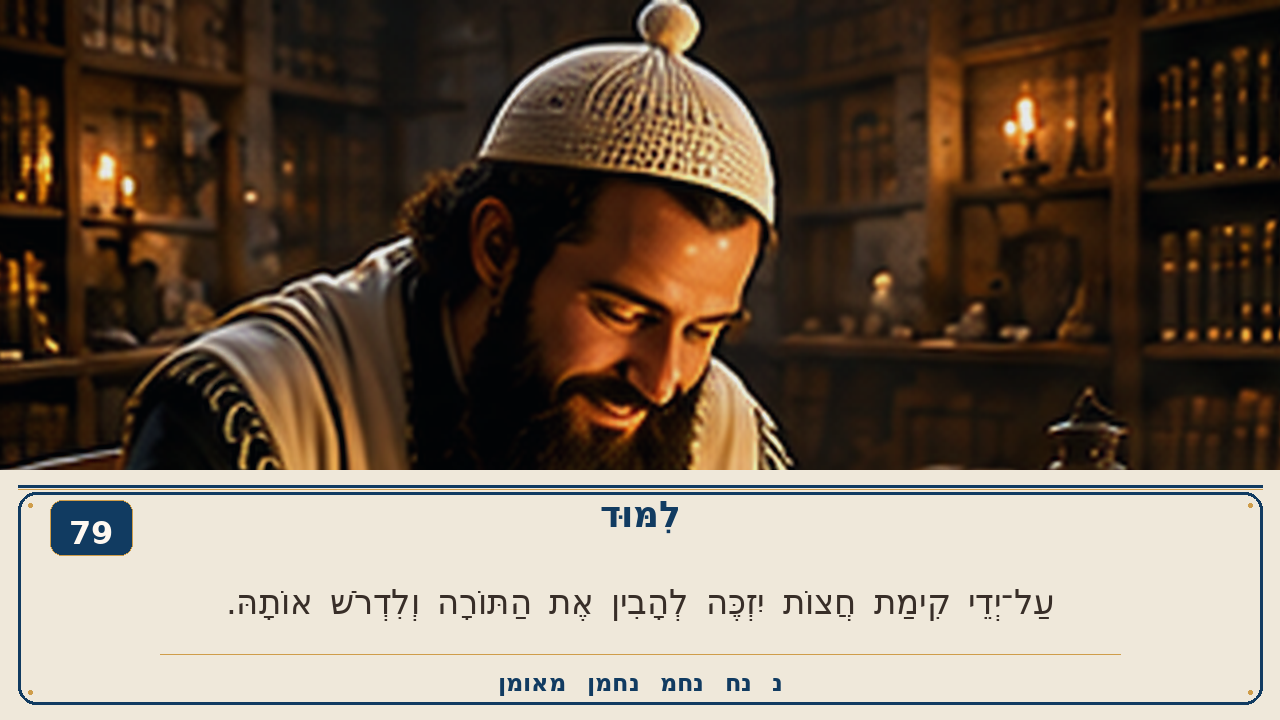
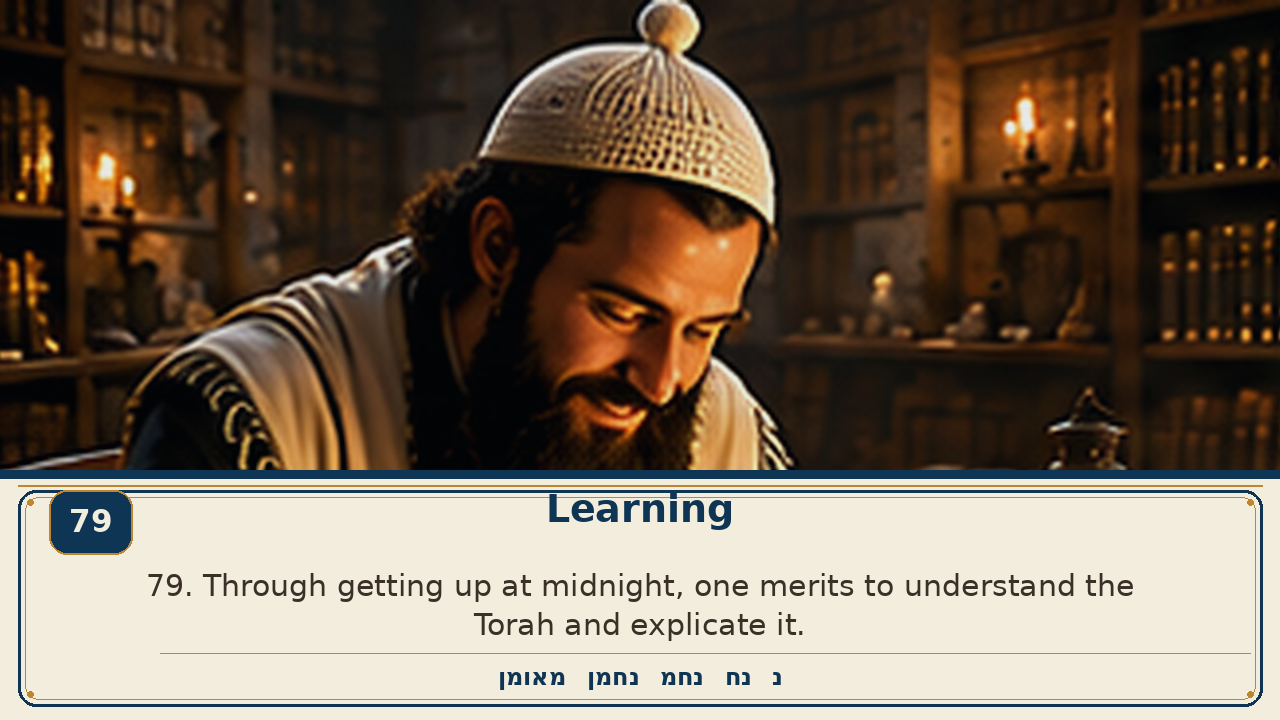
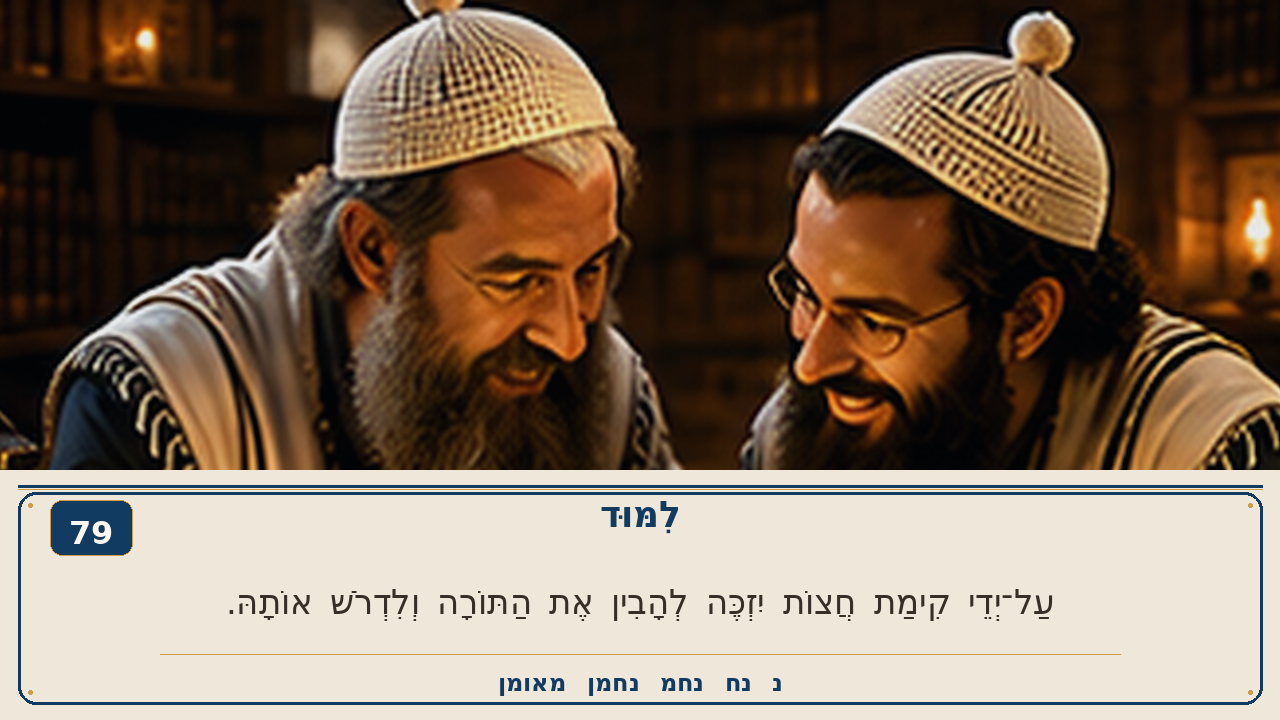
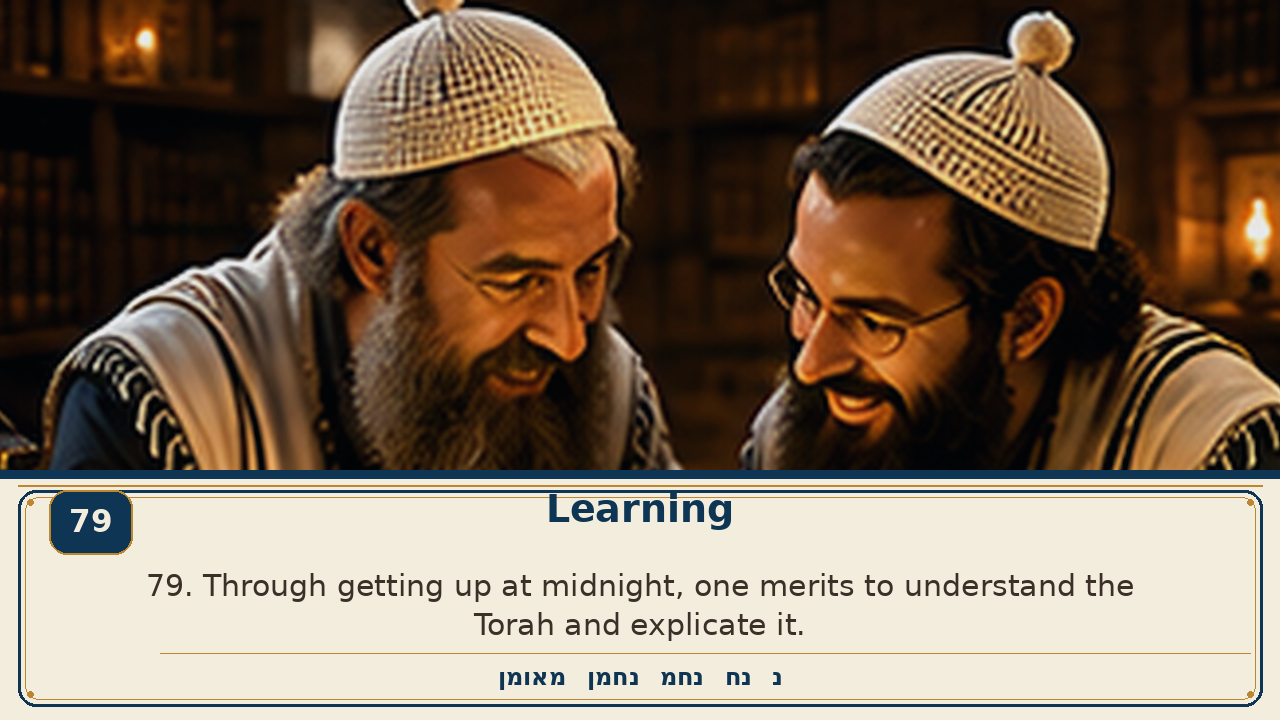
עַל־יְדֵי קִימַת חֲצוֹת יִזְכֶּה לְהָבִין אֶת הַתּוֹרָה וְלִדְרֹשׁ אוֹתָהּ.
79
79. Through getting up at midnight, one merits to understand the Torah and explicate it.
📷 Pictures / videos for this teaching
פ׳
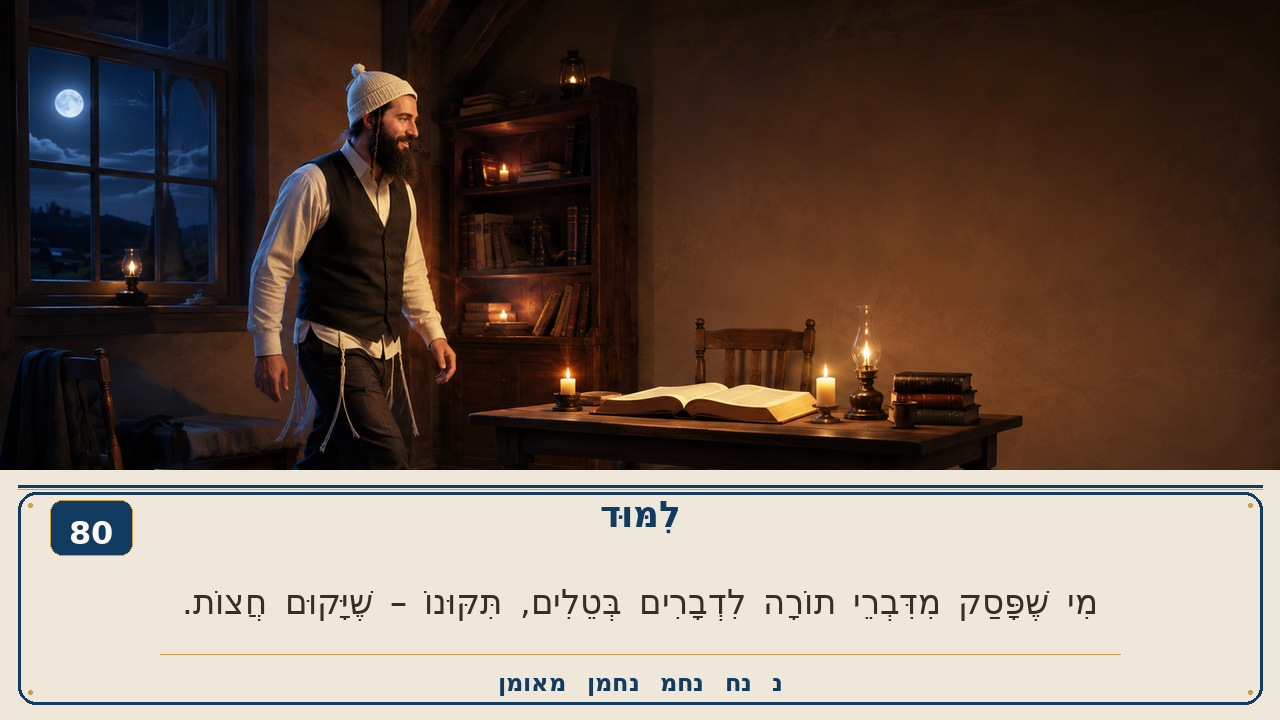
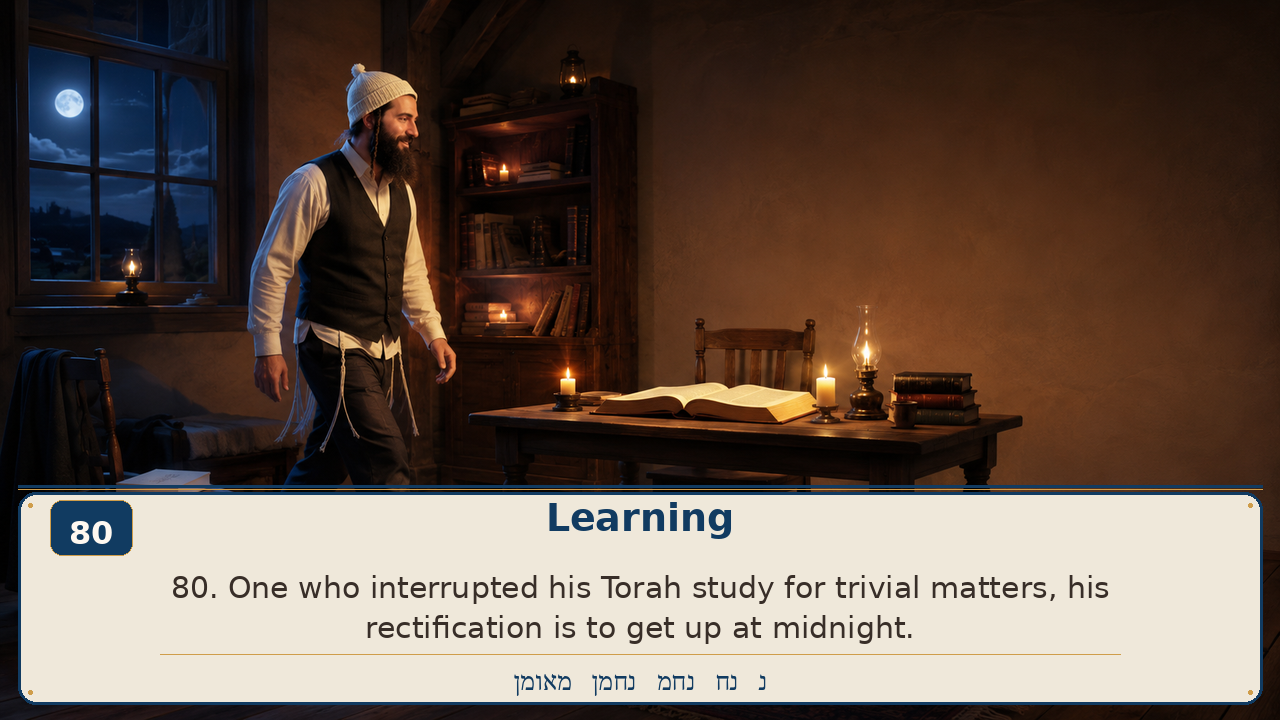
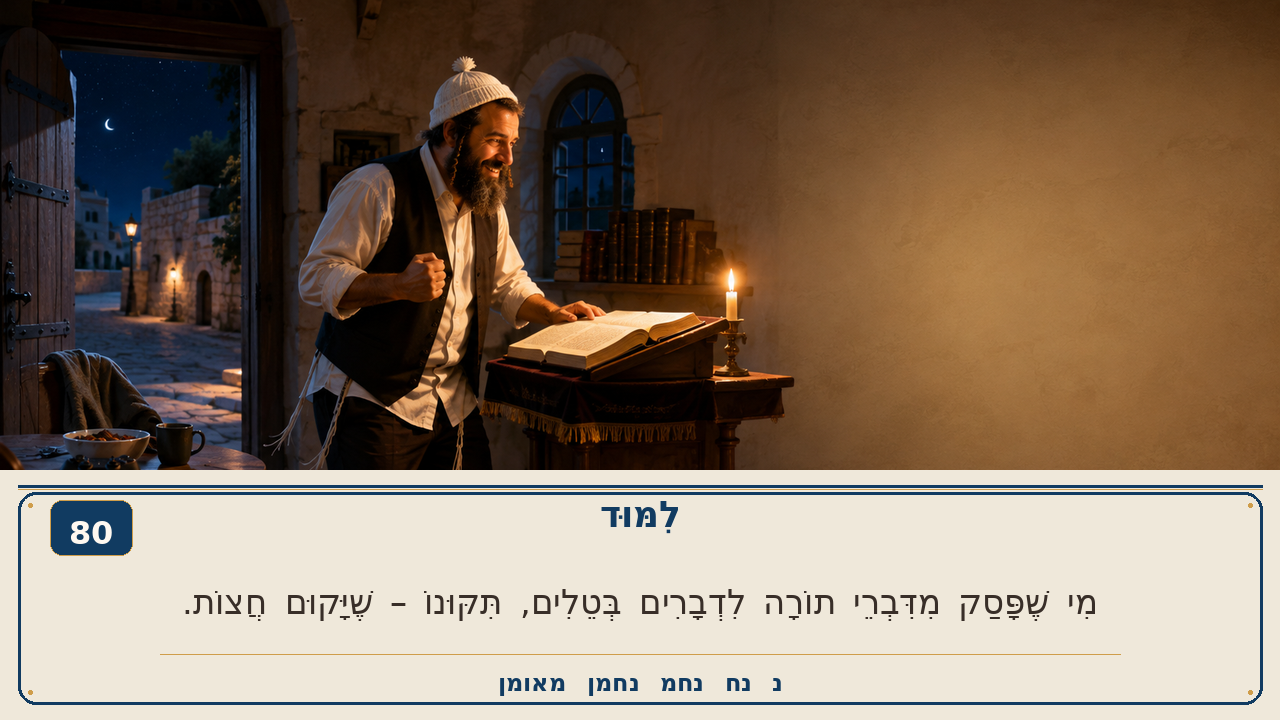
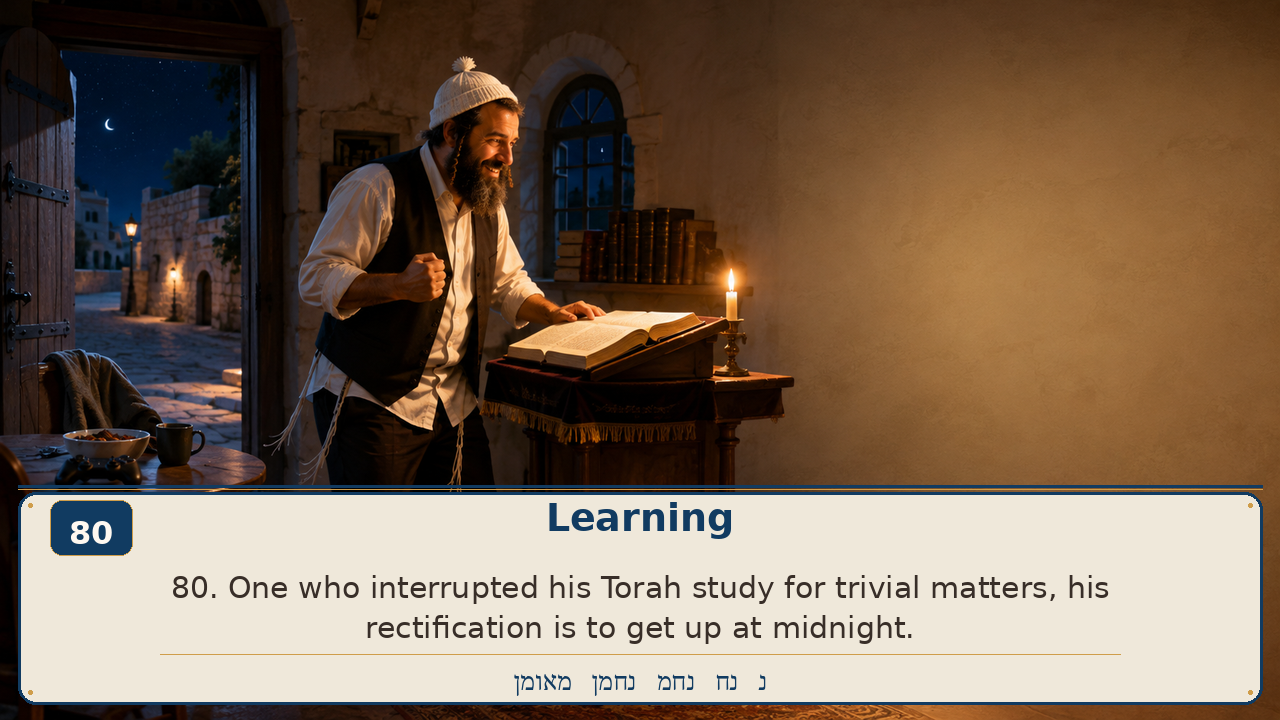
מִי שֶׁפָּסַק מִדִּבְרֵי תוֹרָה לִדְבָרִים בְּטֵלִים, תִּקּוּנוֹ – שֶׁיָּקוּם חֲצוֹת.
80
80. One who interrupted his Torah study for trivial matters, his rectification is to get up at midnight.
📷 Pictures / videos for this teaching
פ״א
מִי שֶׁשּׂוֹנֵא אֶת הַשֶּׁקֶר כְּמוֹ תּוֹעֵבָה, יִהְיֶה לוֹ חֵשֶׁק לִלְמֹד.
81
81. One who hates falsehood as he would an abomination, he will have passion to learn.
📷 Pictures / videos for this teaching




פ״ב
הַסֵּפֶר שֶׁאָדָם רָשָׁע לָמַד מִמֶּנּוּ, אַל תִּלְמַד מִמֶּנּוּ, כִּי הָאוֹתִיּוֹת הֵם יַרְשִׁיעוּ אוֹתְךָ.
82
82. A book that a wicked person learned from, do not learn from it, for the letters of the book will make you wicked.
📷 Pictures / videos for this teaching




פ״ג
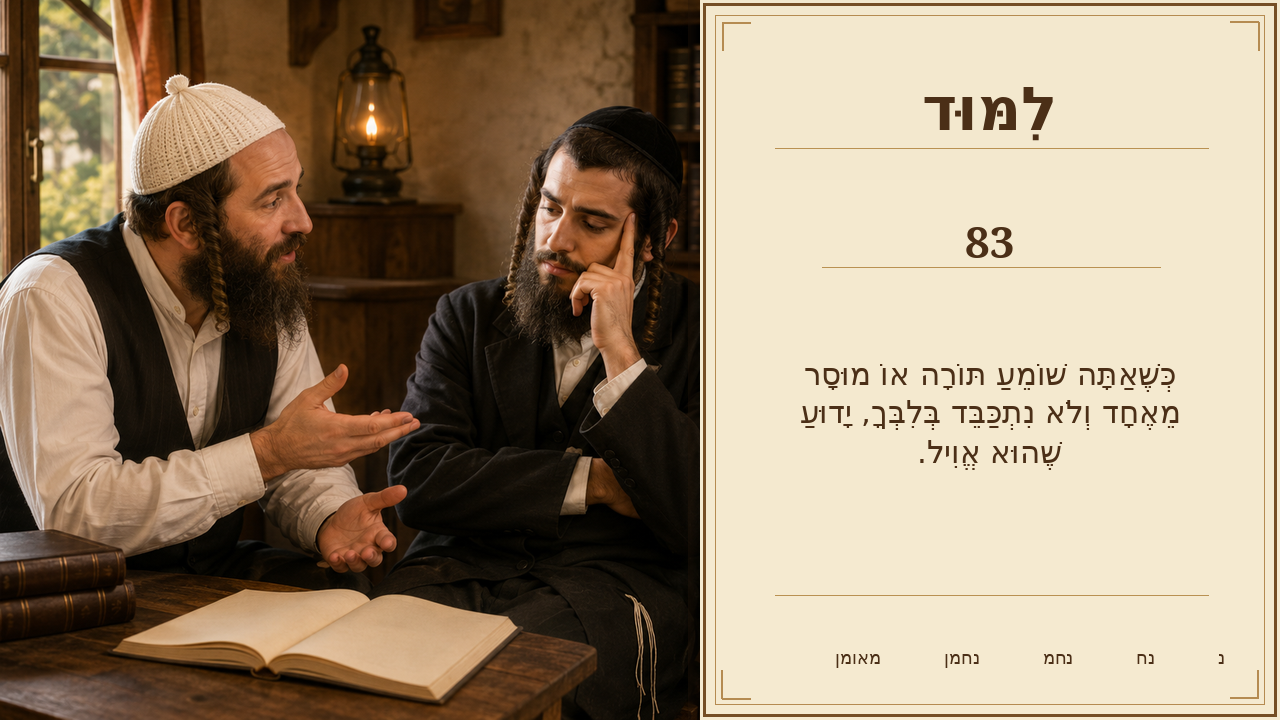
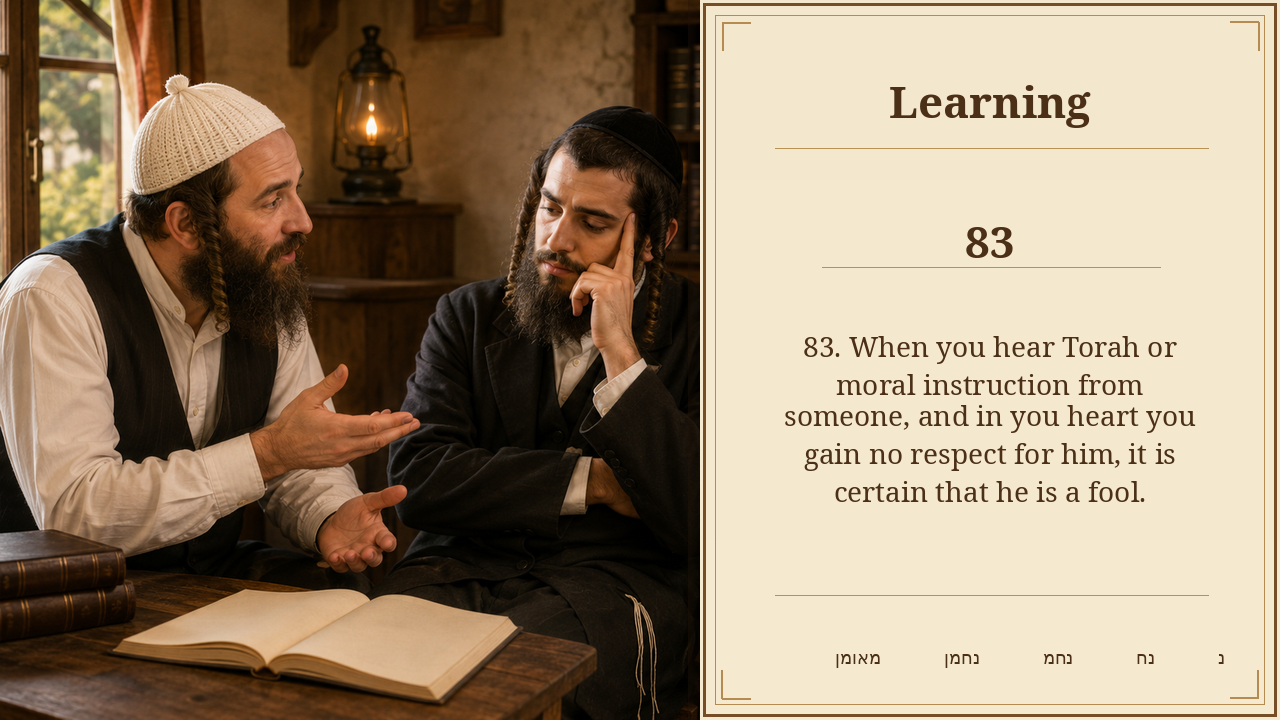
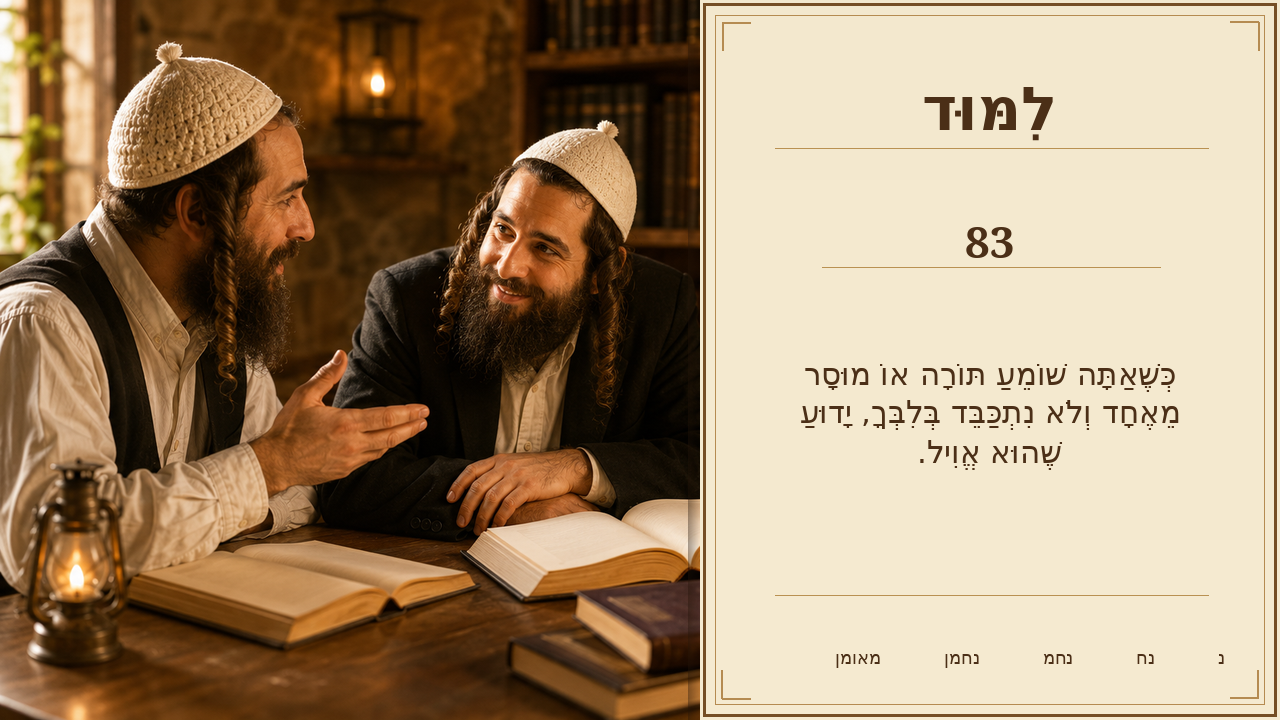
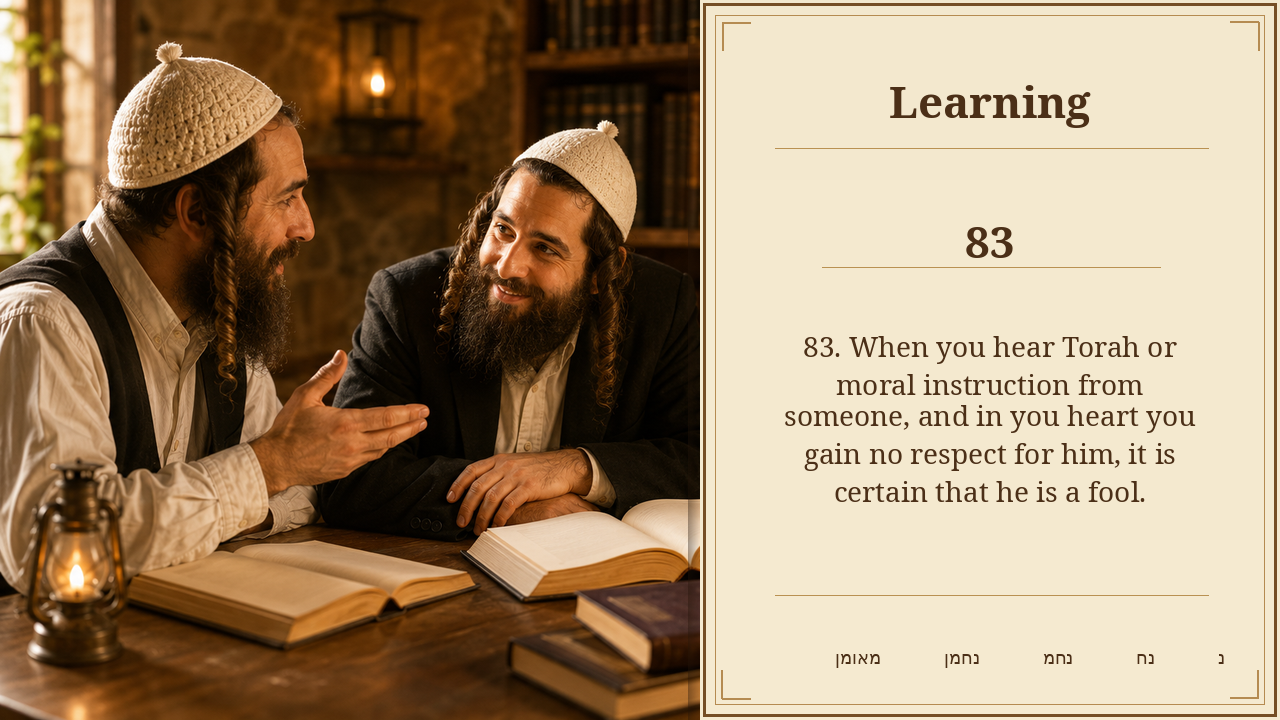
כְּשֶׁאַתָּה שׁוֹמֵעַ תּוֹרָה אוֹ מוּסָר מֵאֶחָד וְלֹא נִתְכַּבֵּד בְּלִבְּךָ, יָדוּעַ שֶׁהוּא אֱוִיל.
83
83. When you hear Torah or moral instruction from someone, and in you heart you gain no respect for him, it is certain that he is a fool.
📷 Pictures / videos for this teaching
פ״ד
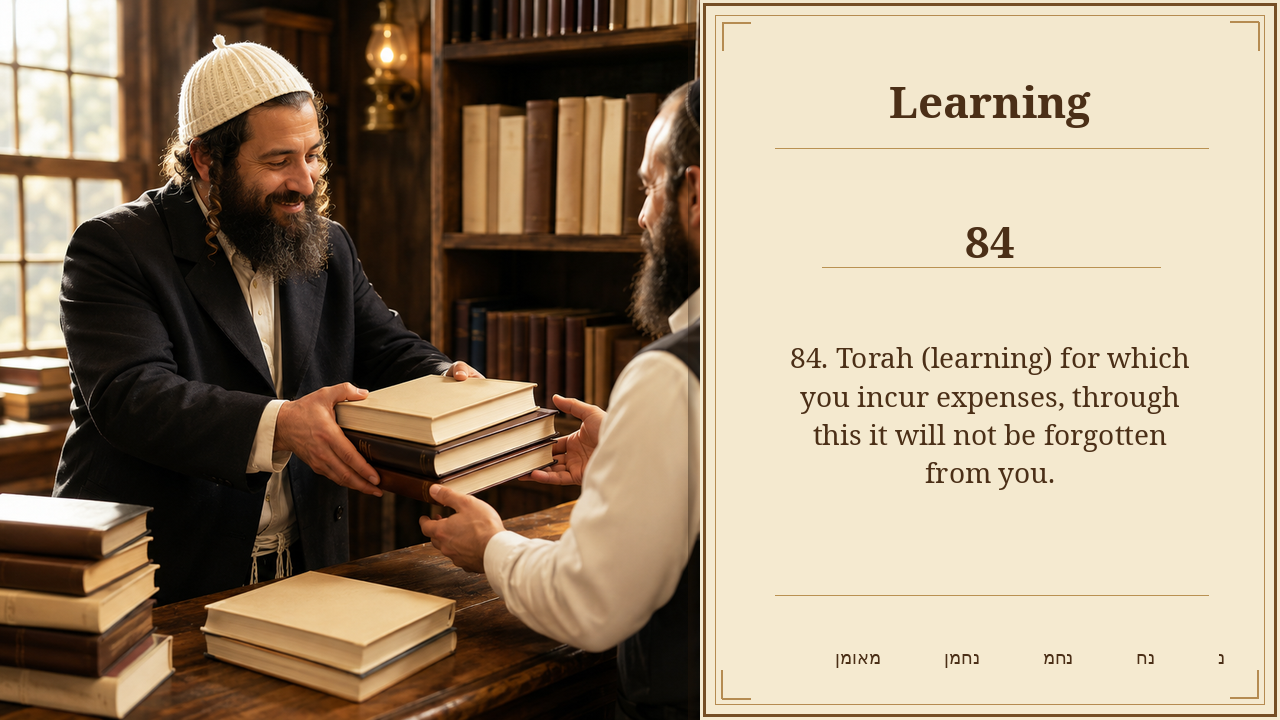
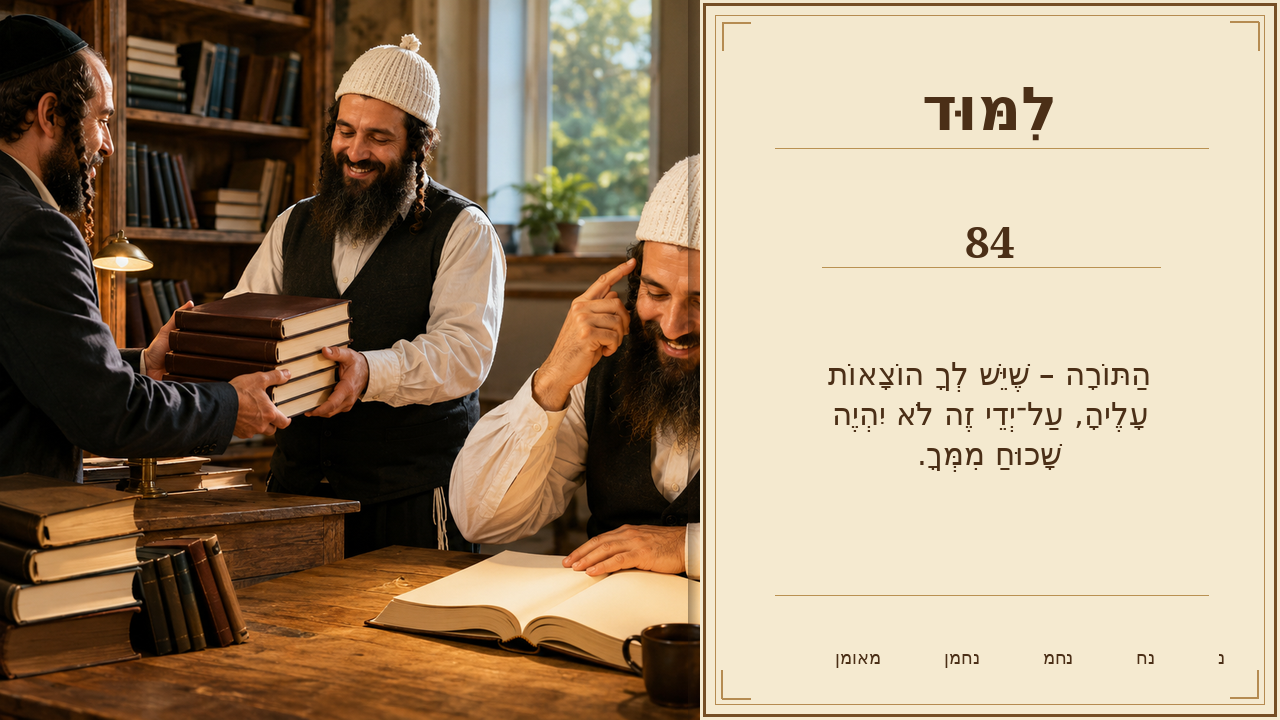
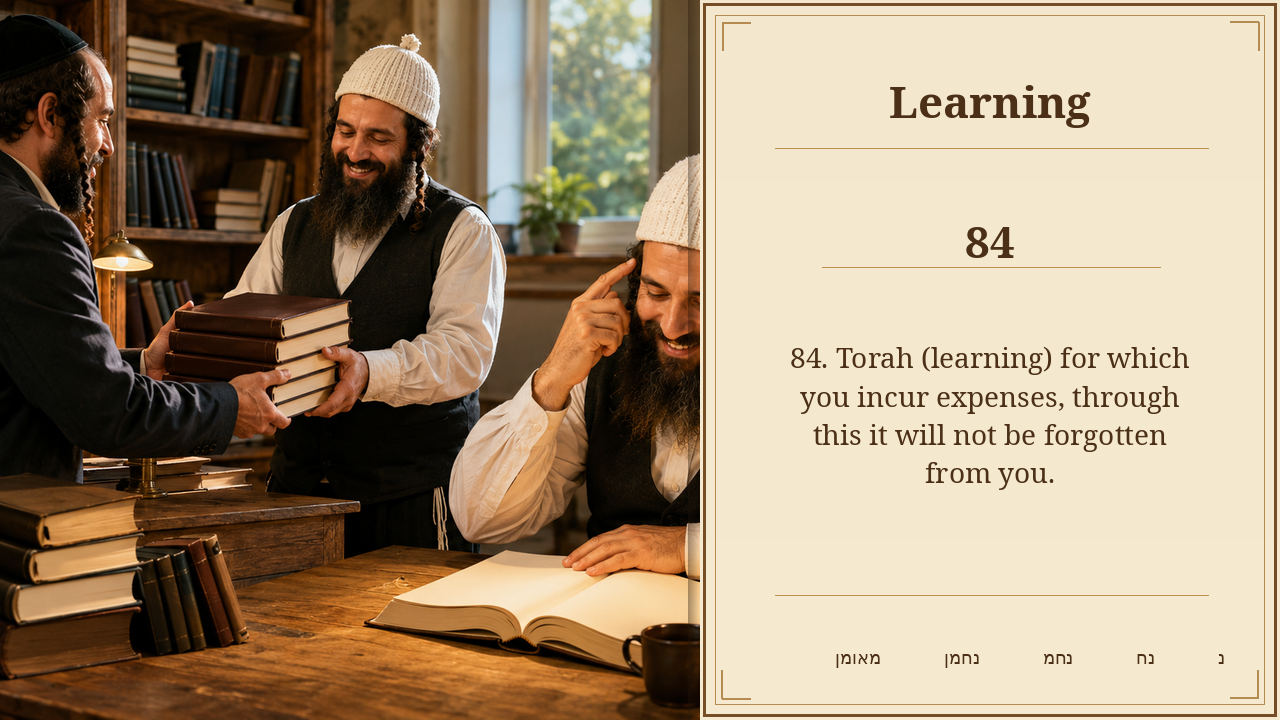
הַתּוֹרָה – שֶׁיֵּשׁ לְךָ הוֹצָאוֹת עָלֶיהָ, עַל־יְדֵי זֶה לֹא יִהְיֶה שָׁכוּחַ מִמְּךָ.
84
84. Torah (learning) for which you incur expenses, through this it will not be forgotten from you.
📷 Pictures / videos for this teaching

פ״ה
מִי שֶׁרוֹדֵף אַחַר תַּאֲווֹת לִבּוֹ, עַל־יְדֵי זֶה תִּמְצָא אוֹתוֹ בְּכָל פָּסוּק מִפְּסוּקֵי הַתּוֹרָה לִגְנַאי.
85
85. One who chases after the desires of his heart, through this you will find him alluded to in all the passages of the Torah – disparagingly.
📷 Pictures / videos for this teaching




פ״ו
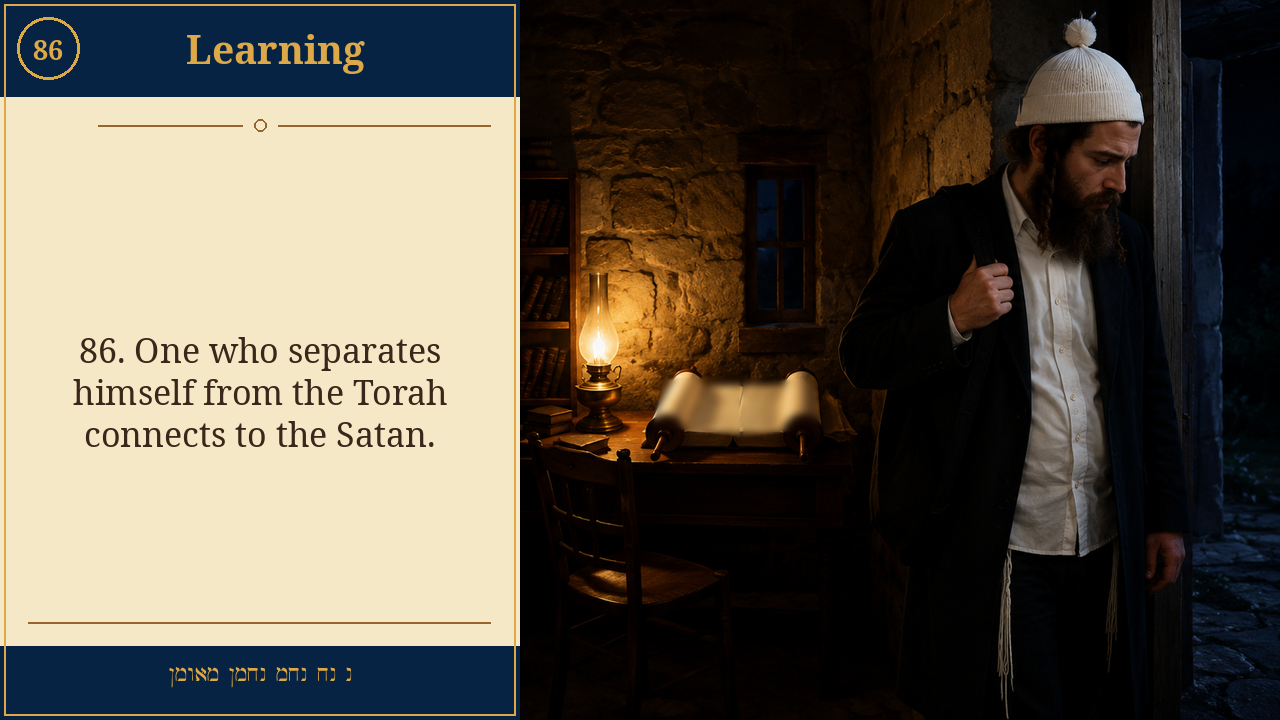
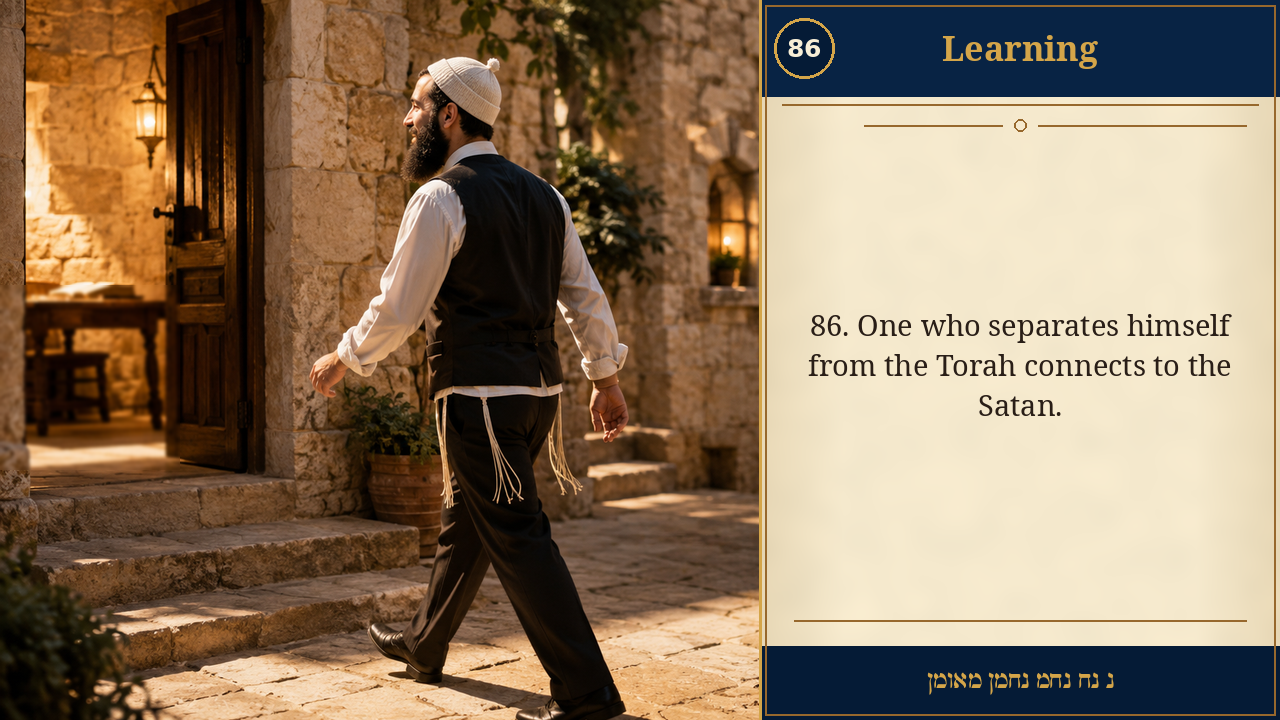
מִי שֶׁפּוֹרֵשׁ אֶת עַצְמוֹ מִן הַתּוֹרָה, נִתְחַבֵּר לַשָּׂטָן.
86
86. One who separates himself from the Torah connects to the Satan.
📷 Pictures / videos for this teaching


פ״ז
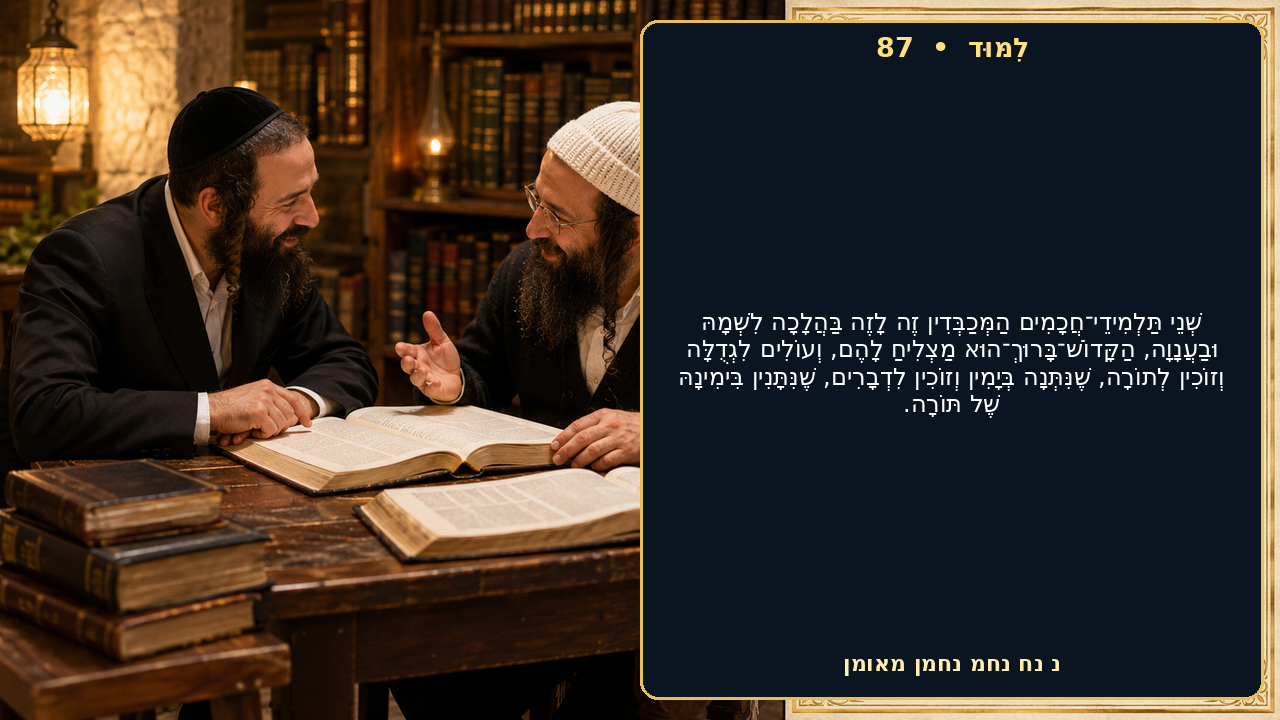
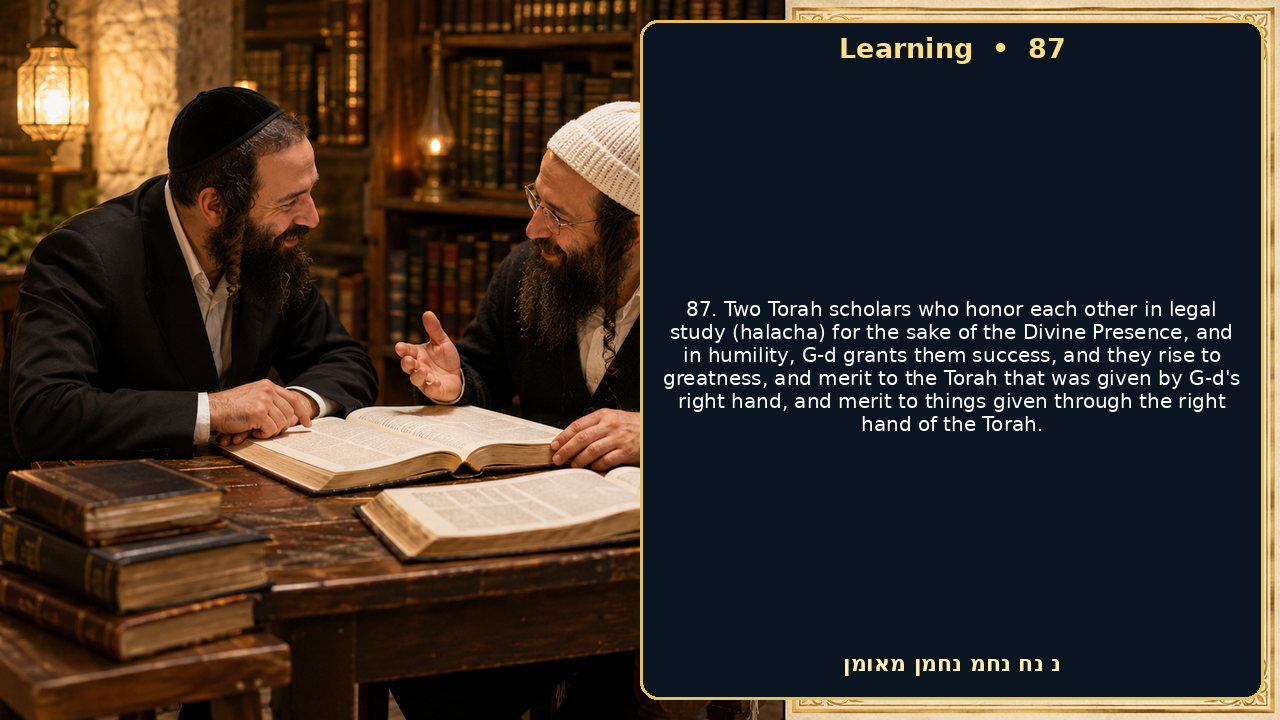
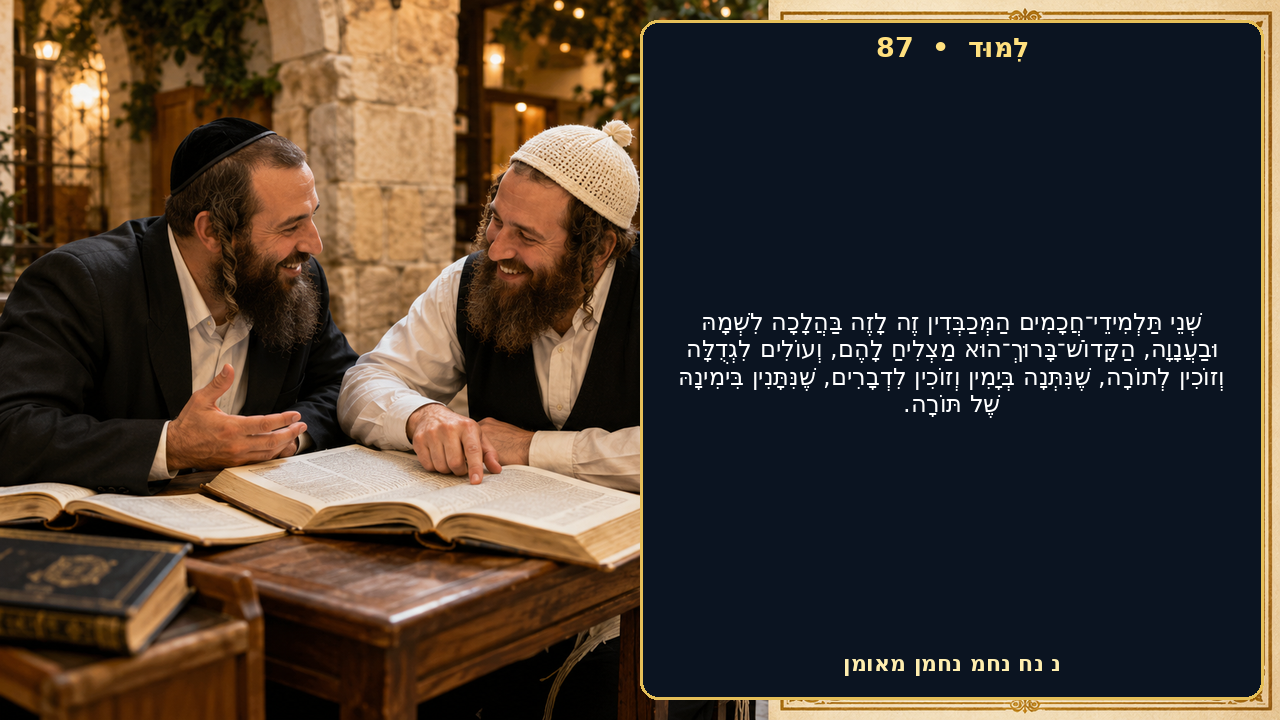
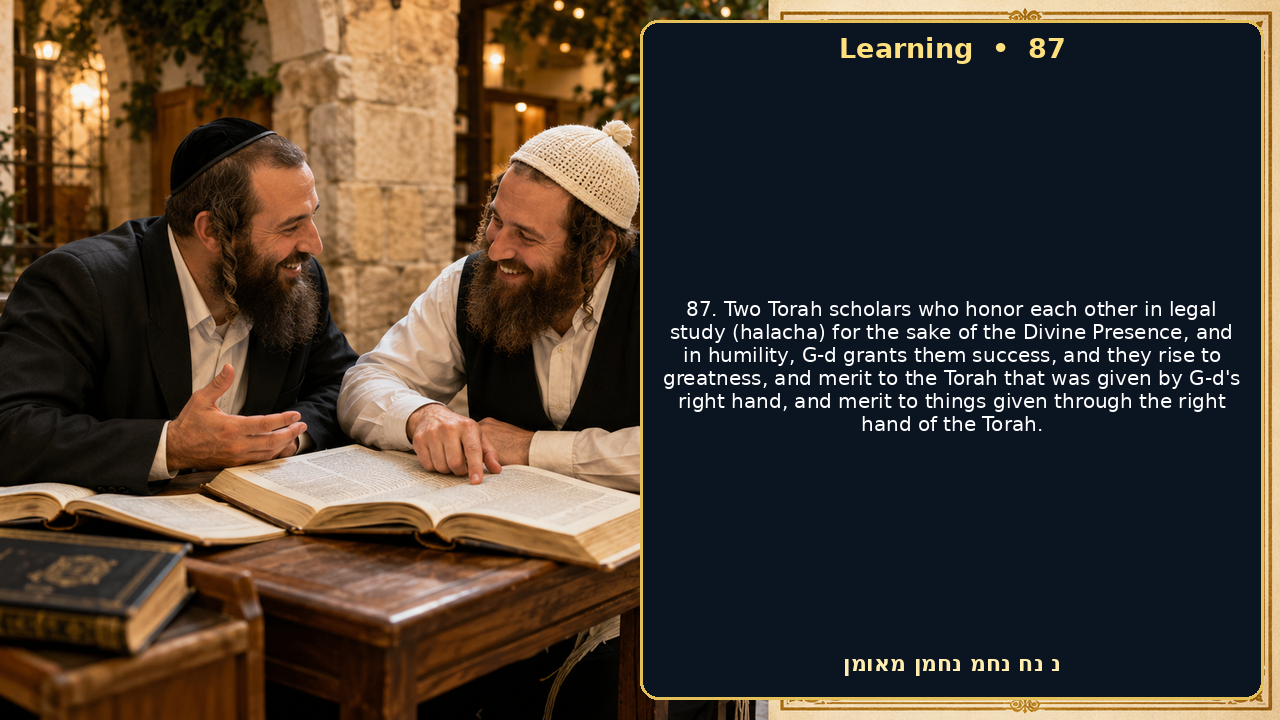
שְׁנֵי תַּלְמִידֵי־חֲכָמִים הַמְּכַבְּדִין זֶה לָזֶה בַּהֲלָכָה לִשְׁמָהּ וּבַעֲנָוָה, הַקָּדוֹשׁ־בָּרוּךְ־הוּא מַצְלִיחַ לָהֶם, וְעוֹלִים לִגְדֻלָּה וְזוֹכִין לְתוֹרָה, שֶׁנִּתְּנָה בְּיָמִין וְזוֹכִין לִדְבָרִים, שֶׁנִּתָּנִין בִּימִינָהּ שֶׁל תּוֹרָה.
87
87. Two Torah scholars who honor each other in legal study (halacha) for the sake of the Divine Presence, and in humility, G-d grants them success, and they rise to greatness, and merit to the Torah that was given by G-d's right hand, and merit to things given through the right hand of the Torah.
📷 Pictures / videos for this teaching
פ״ח
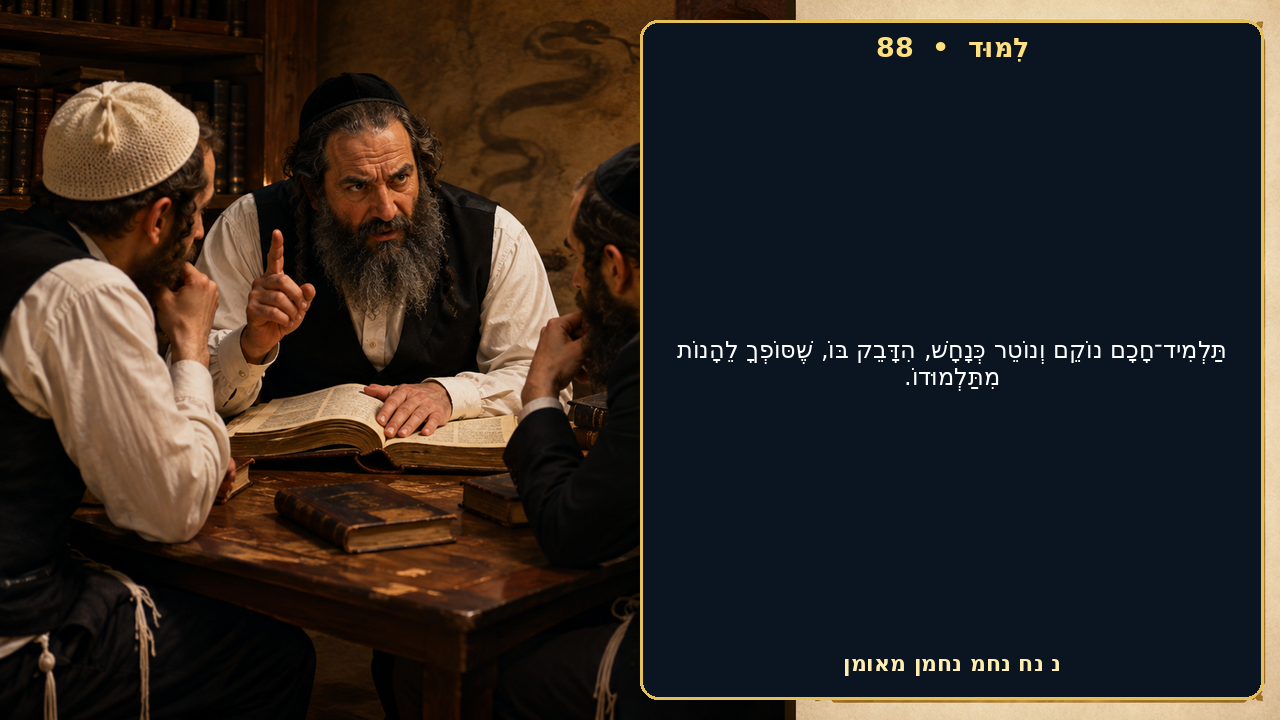
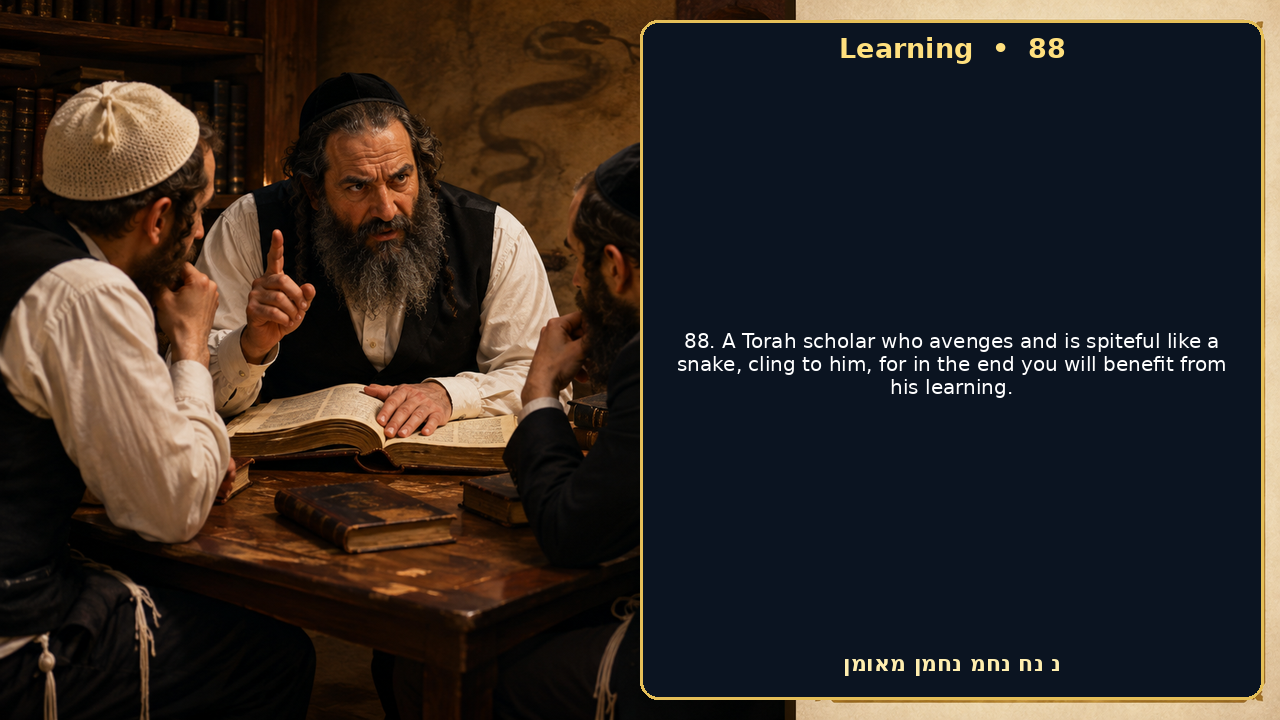
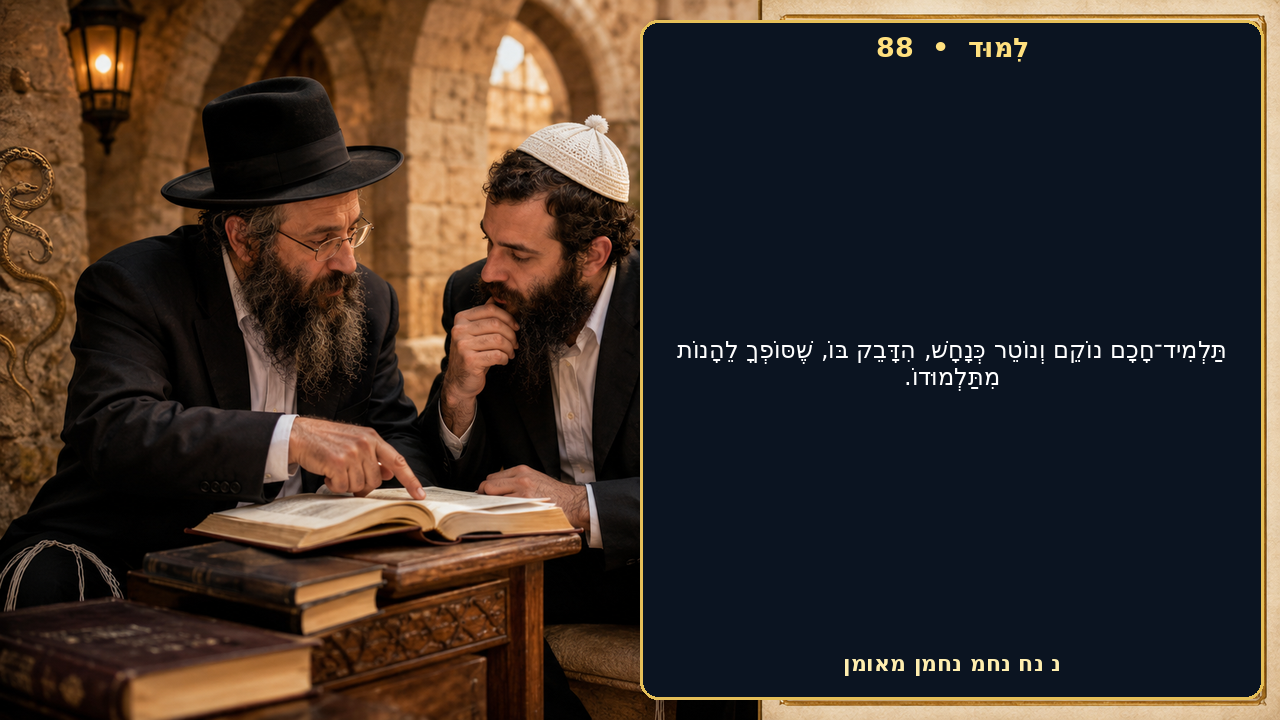
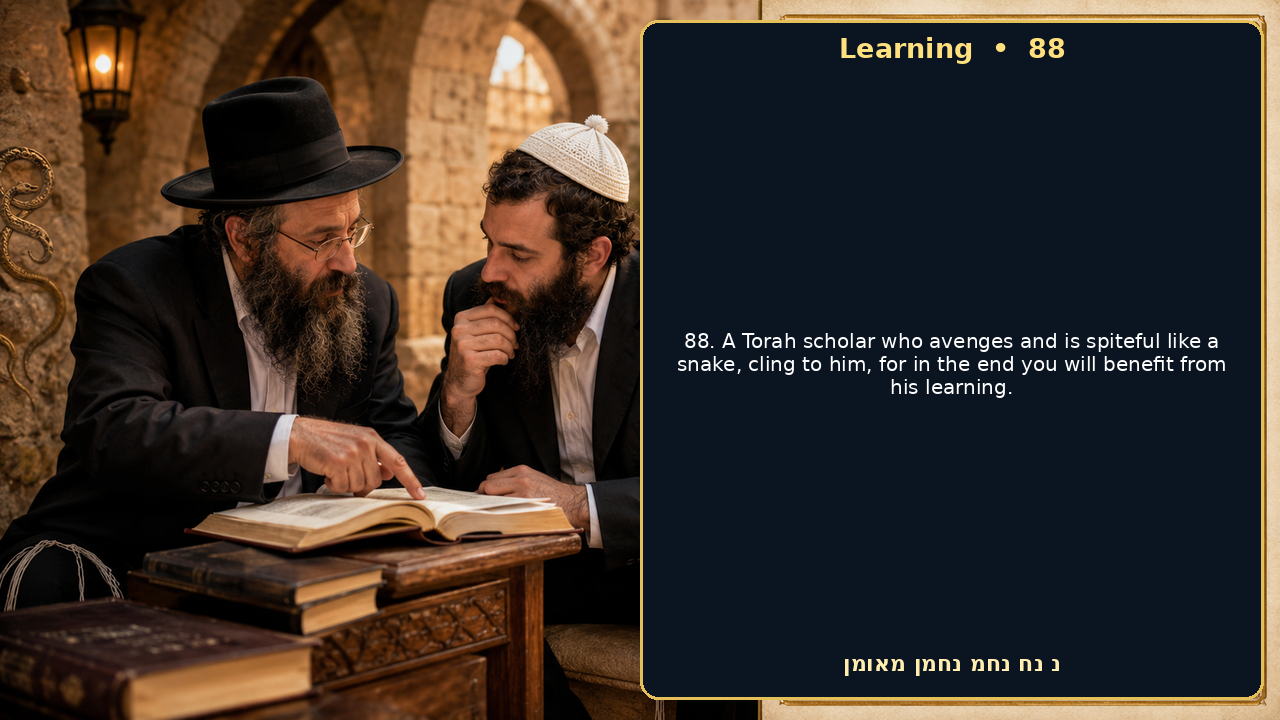
תַּלְמִיד־חָכָם נוֹקֵם וְנוֹטֵר כְּנָחָשׁ, הִדָּבֵק בּוֹ, שֶׁסּוֹפְךָ לֵהָנוֹת מִתַּלְמוּדוֹ.
88
88. A Torah scholar who avenges and is spiteful like a snake, cling to him, for in the end you will benefit from his learning.
📷 Pictures / videos for this teaching
פ״ט
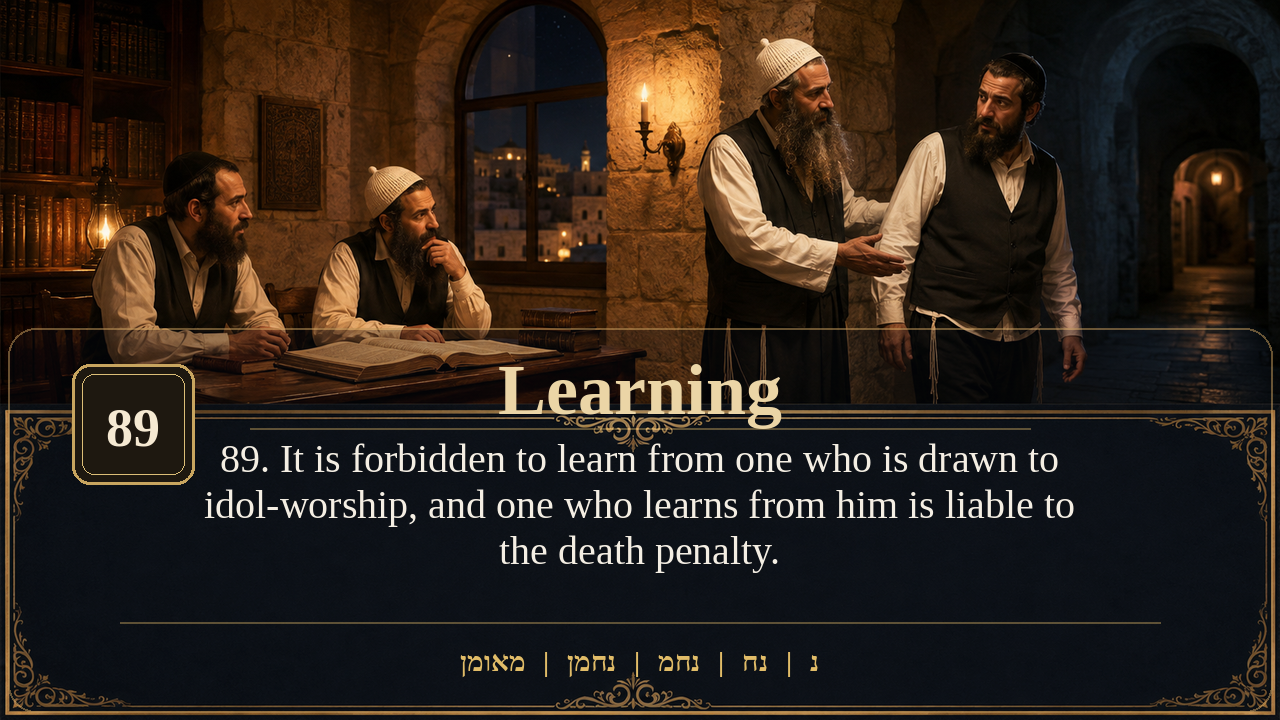
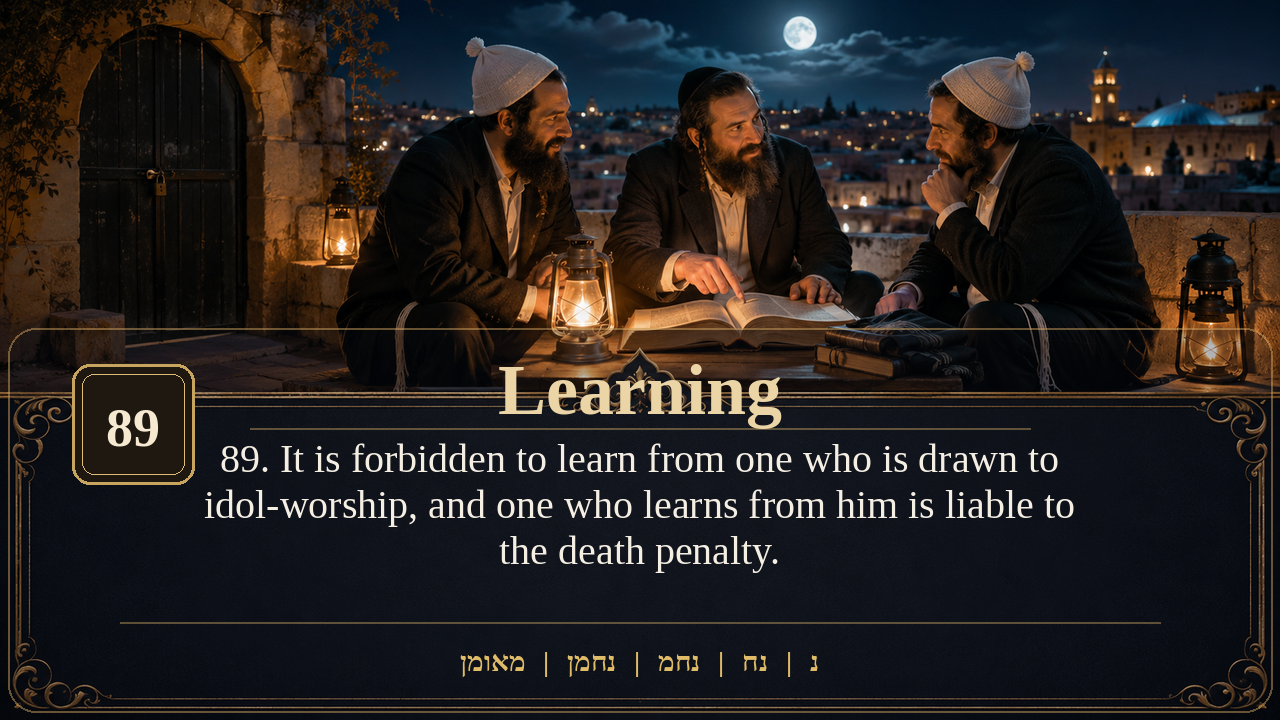
אָסוּר לִלְמֹד מִן הַמַּמְשִׁיךְ לַעֲבוֹדָה זָרָה, וְהַלּוֹמֵד מִמֶּנּוּ חַיָּב מִיתָה.
89
89. It is forbidden to learn from one who is drawn to idol-worship, and one who learns from him is liable to the death penalty.
📷 Pictures / videos for this teaching


צ׳
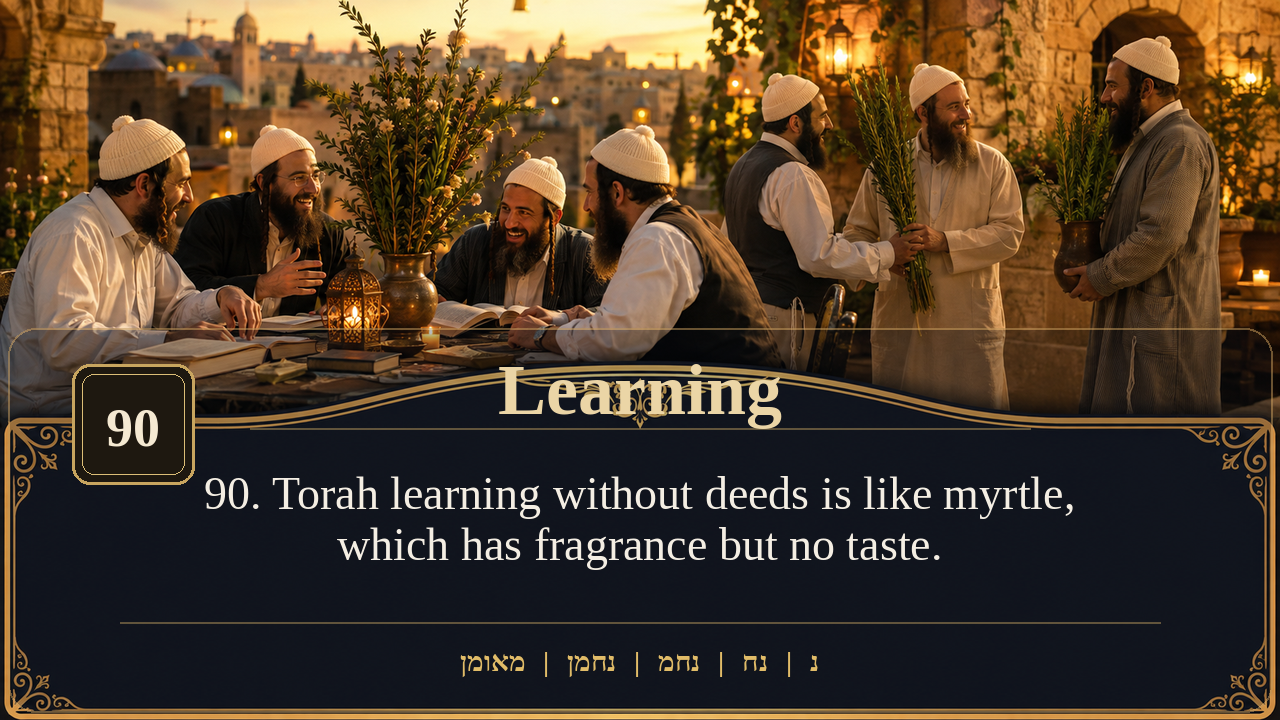
תּוֹרָה בְּלֹא מִצְווֹת הוּא כְּמוֹ הֲדַס, שֶׁיֵּשׁ בּוֹ רֵיחַ וְאֵין בּוֹ טַעַם.
90
90. Torah learning without deeds is like myrtle, which has fragrance but no taste.
📷 Pictures / videos for this teaching



צ״א
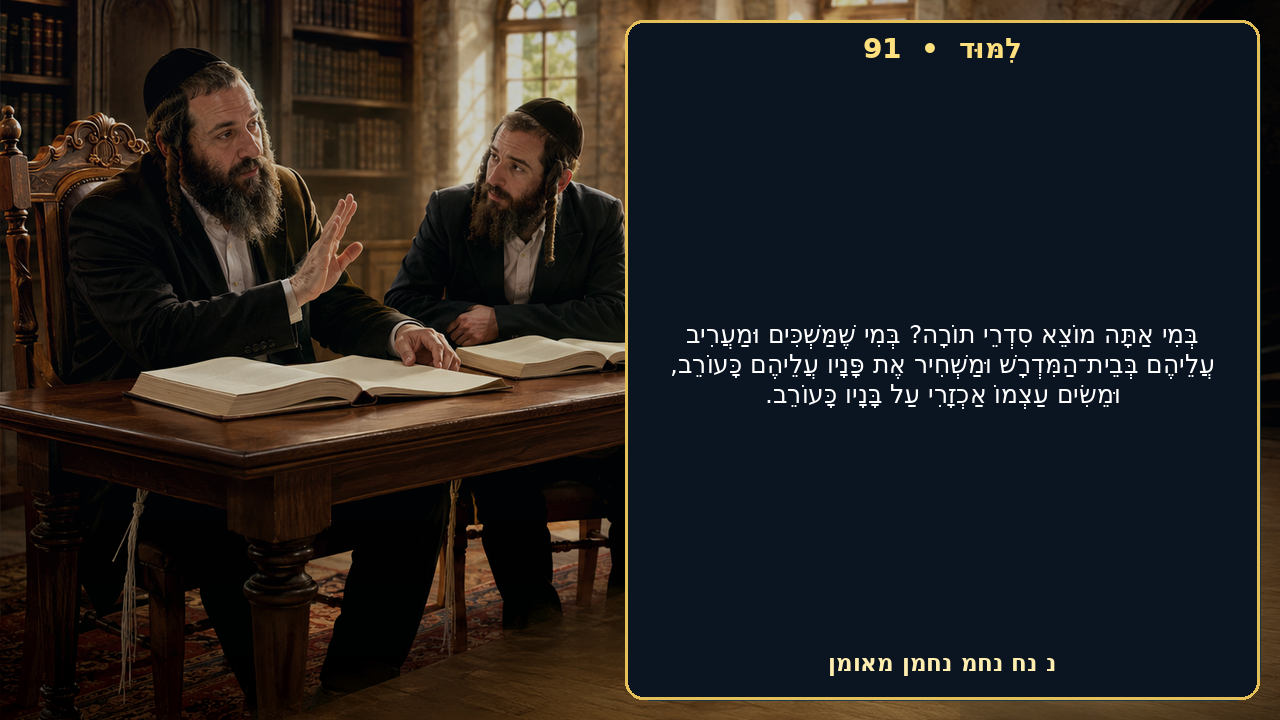
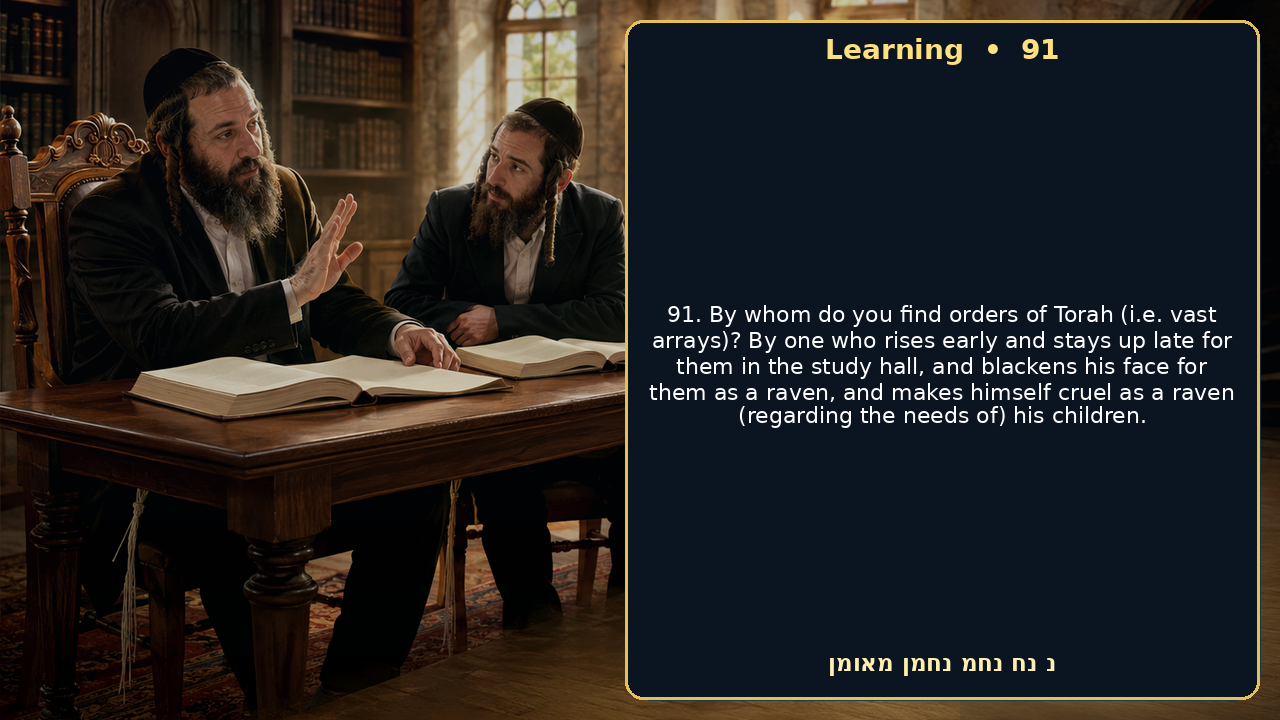
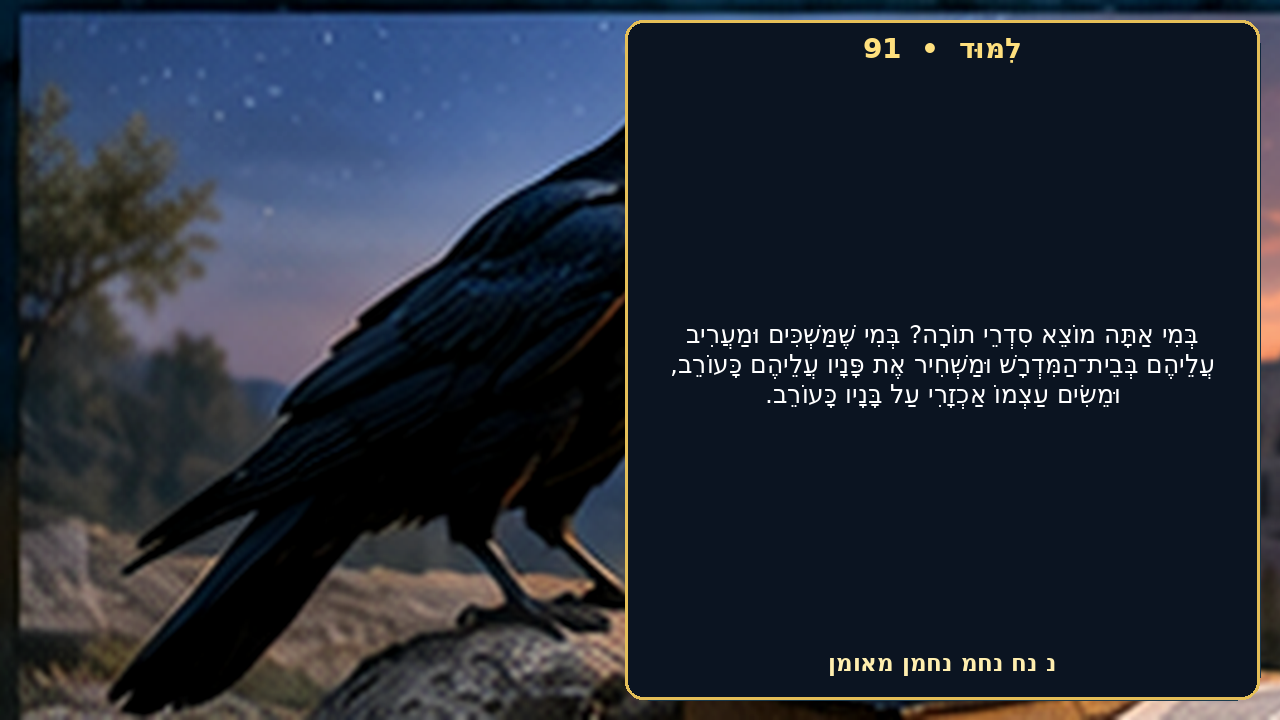
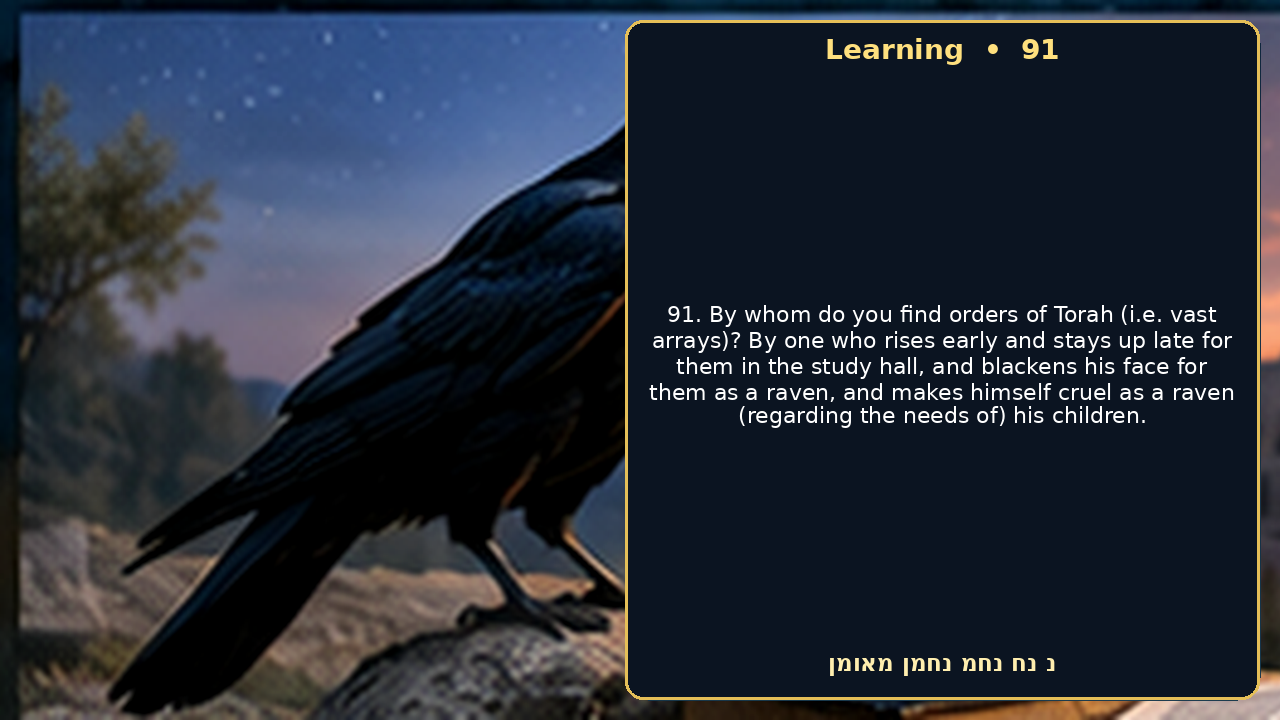
בְּמִי אַתָּה מוֹצֵא סִדְרֵי תוֹרָה? בְּמִי שֶׁמַּשְׁכִּים וּמַעֲרִיב עֲלֵיהֶם בְּבֵית־הַמִּדְרָשׁ וּמַשְׁחִיר אֶת פָּנָיו עֲלֵיהֶם כָּעוֹרֵב, וּמֵשִׂים עַצְמוֹ אַכְזָרִי עַל בָּנָיו כָּעוֹרֵב.
91
91. By whom do you find orders of Torah (i.e. vast arrays)? By one who rises early and stays up late for them in the study hall, and blackens his face for them as a raven, and makes himself cruel as a raven (regarding the needs of) his children.
📷 Pictures / videos for this teaching
צ״ב
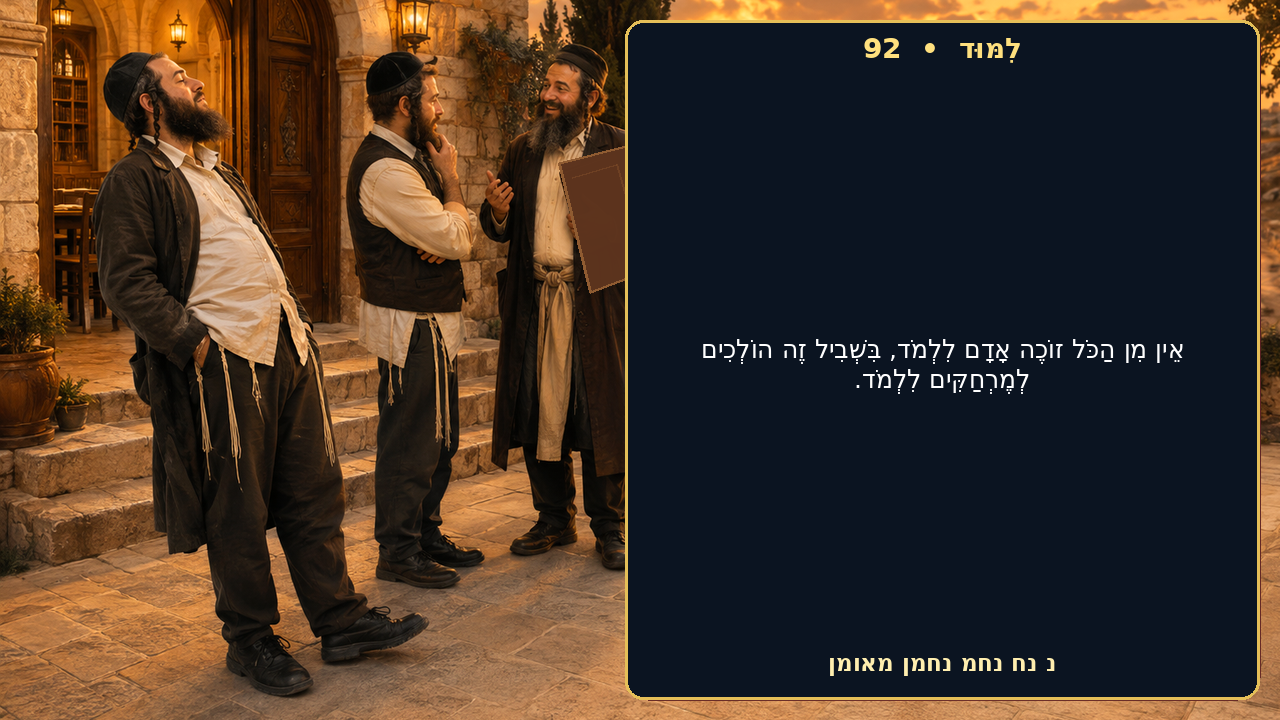
אֵין מִן הַכֹּל זוֹכֶה אָדָם לִלְמֹד, בִּשְׁבִיל זֶה הוֹלְכִים לְמֶרְחַקִּים לִלְמֹד.
92
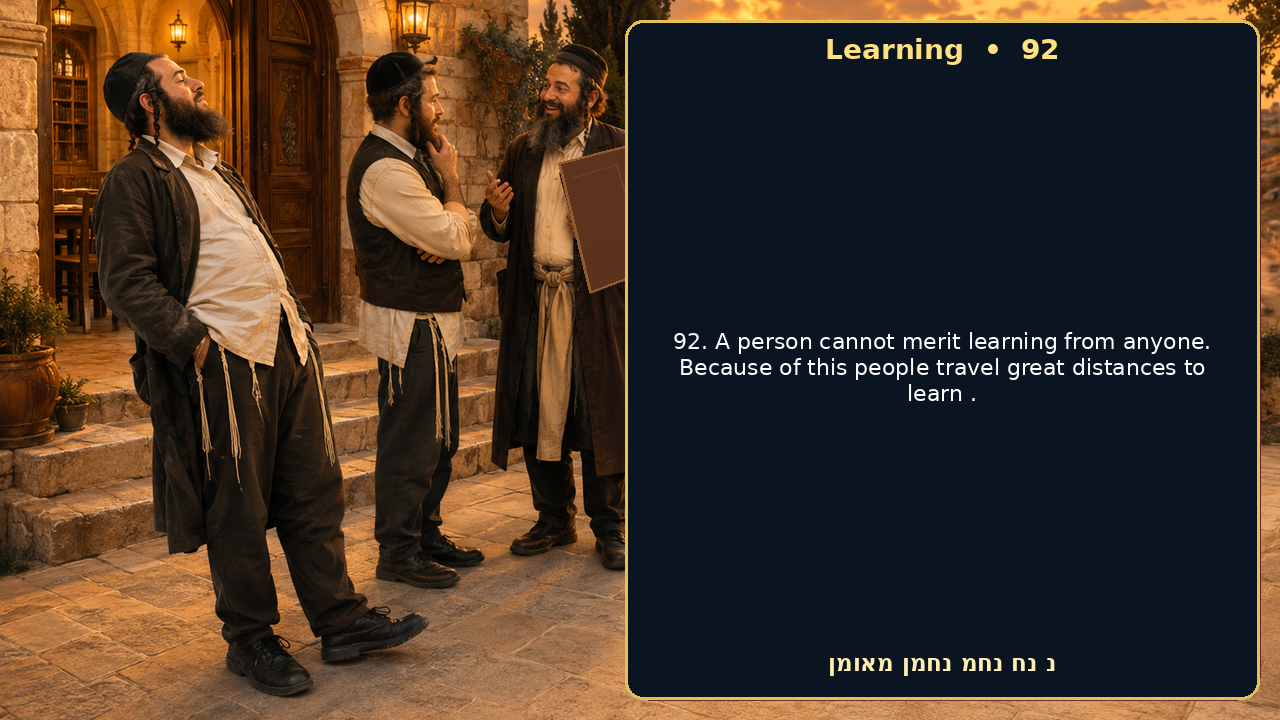
92. A person cannot merit learning from anyone. Because of this people travel great distances to learn .
📷 Pictures / videos for this teaching
חלק ב׳ · א׳
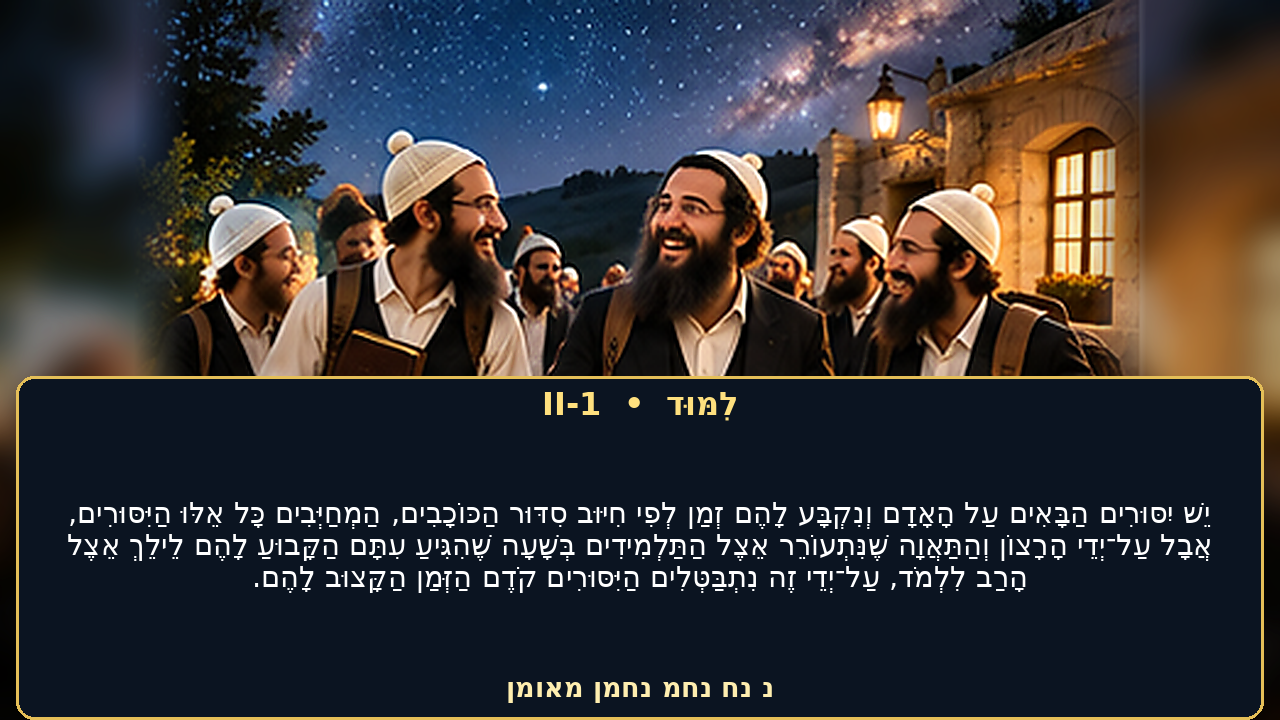
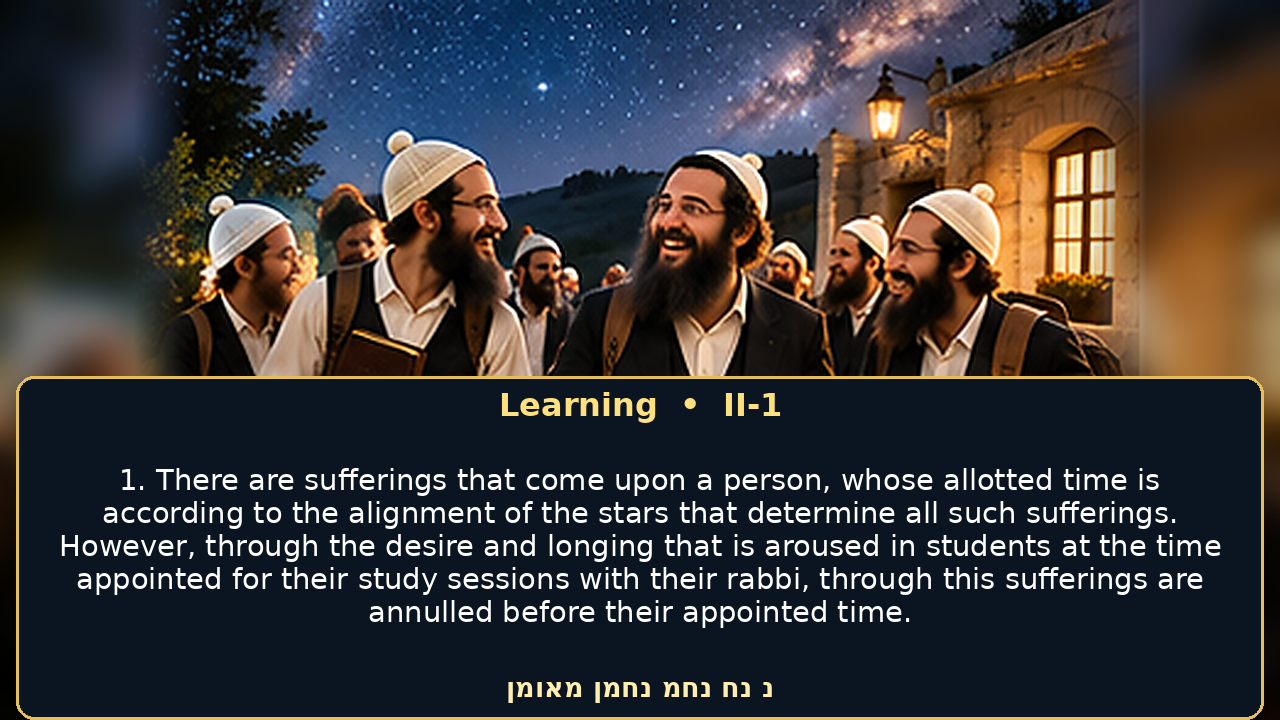
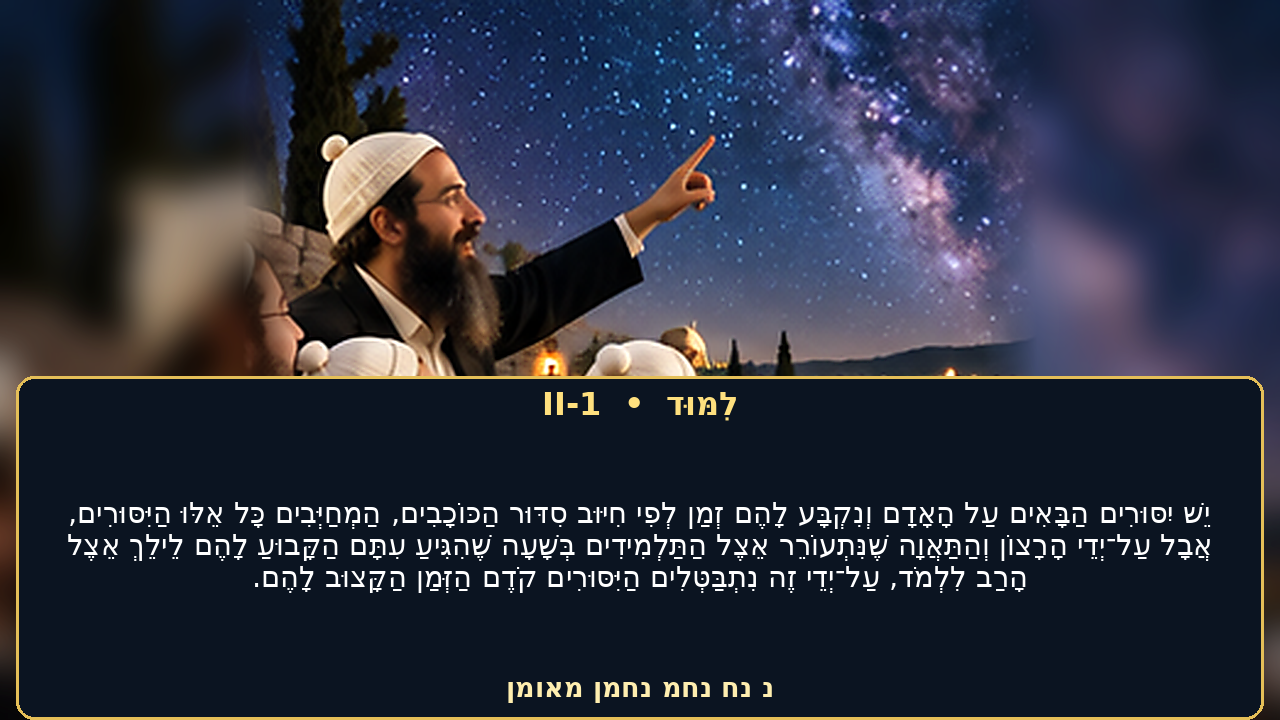
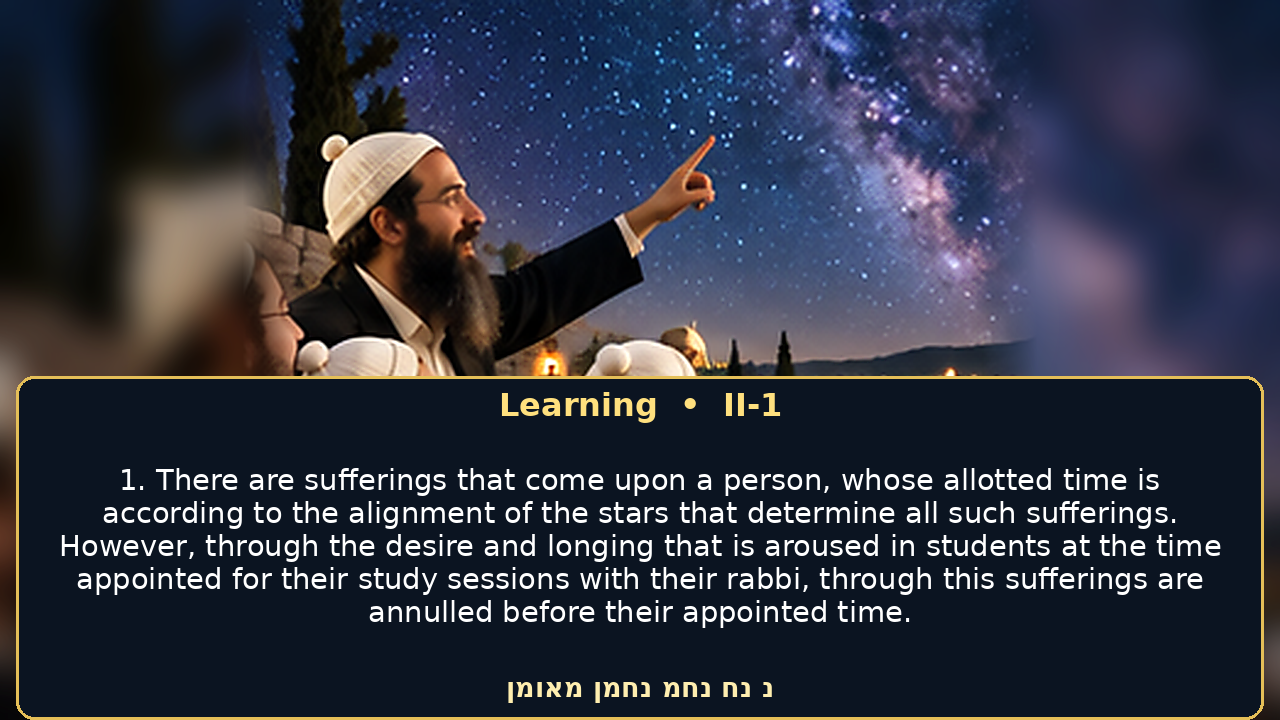
יֵשׁ יִסּוּרִים הַבָּאִים עַל הָאָדָם וְנִקְבָּע לָהֶם זְמַן לְפִי חִיּוּב סִדּוּר הַכּוֹכָבִים, הַמְחַיְּבִים כָּל אֵלּוּ הַיִּסּוּרִים, אֲבָל עַל־יְדֵי הָרָצוֹן וְהַתַּאֲוָה שֶׁנִּתְעוֹרֵר אֵצֶל הַתַּלְמִידִים בְּשָׁעָה שֶׁהִגִּיעַ עִתָּם הַקָּבוּעַ לָהֶם לֵילֵךְ אֵצֶל הָרַב לִלְמֹד, עַל־יְדֵי זֶה נִתְבַּטְּלִים הַיִּסּוּרִים קֹדֶם הַזְּמַן הַקָּצוּב לָהֶם.
II-1
1. There are sufferings that come upon a person, whose allotted time is according to the alignment of the stars that determine all such sufferings. However, through the desire and longing that is aroused in students at the time appointed for their study sessions with their rabbi, through this sufferings are annulled before their appointed time.
📷 Pictures / videos for this teaching
חלק ב׳ · ב׳
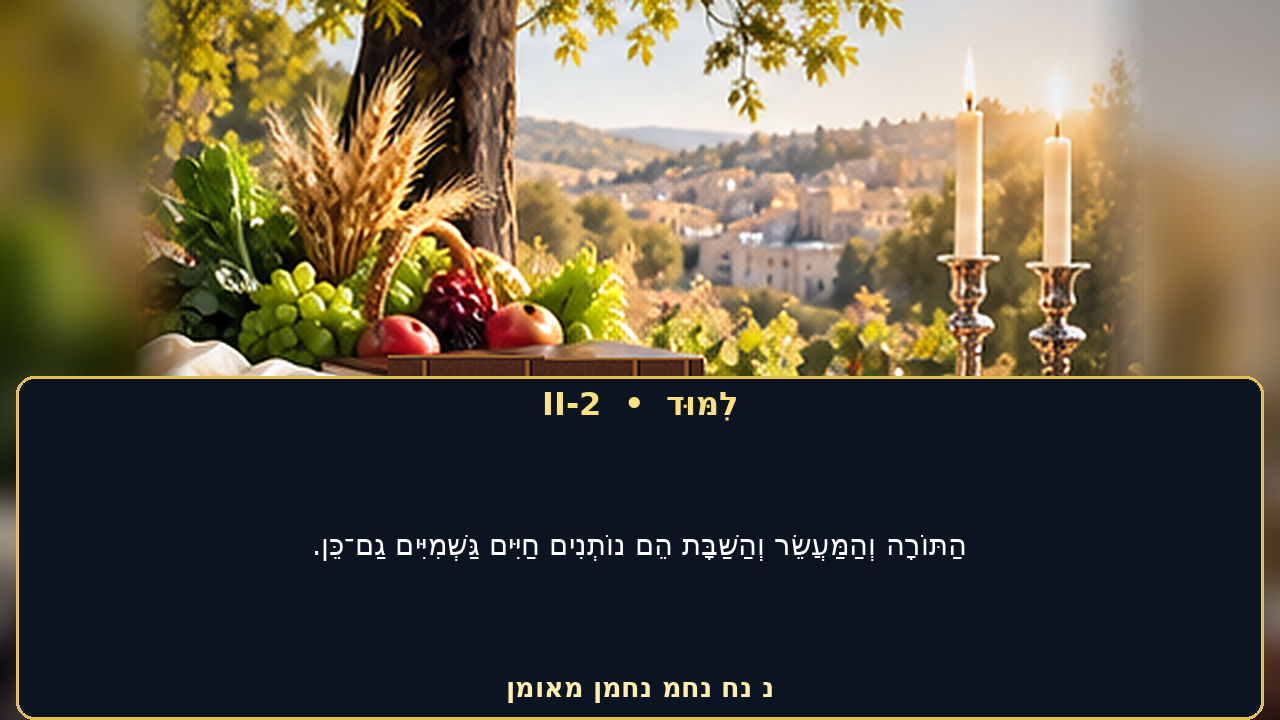
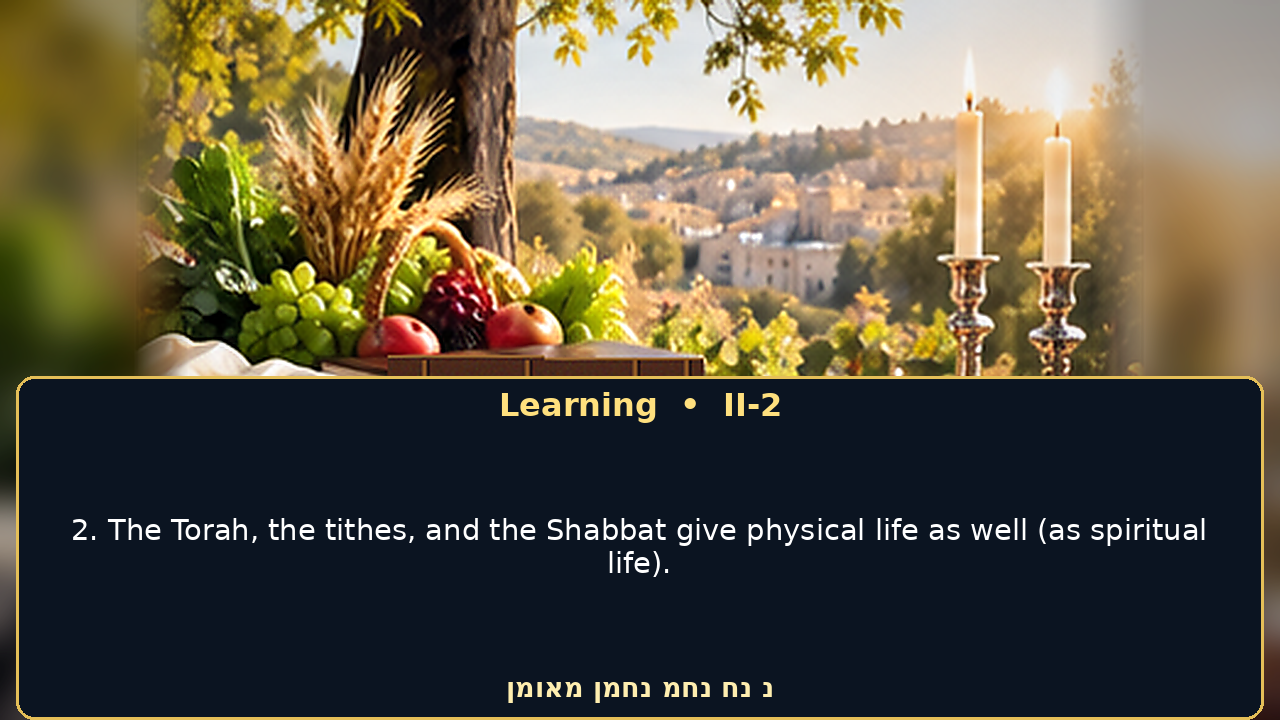
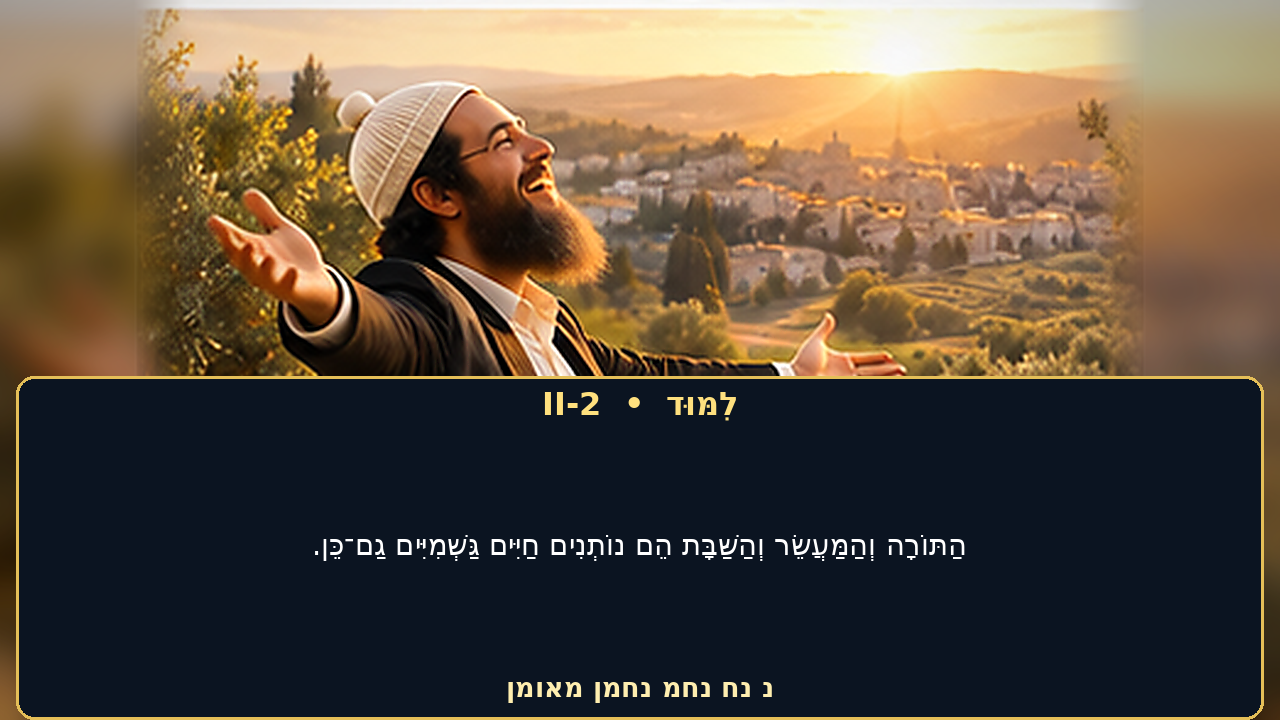
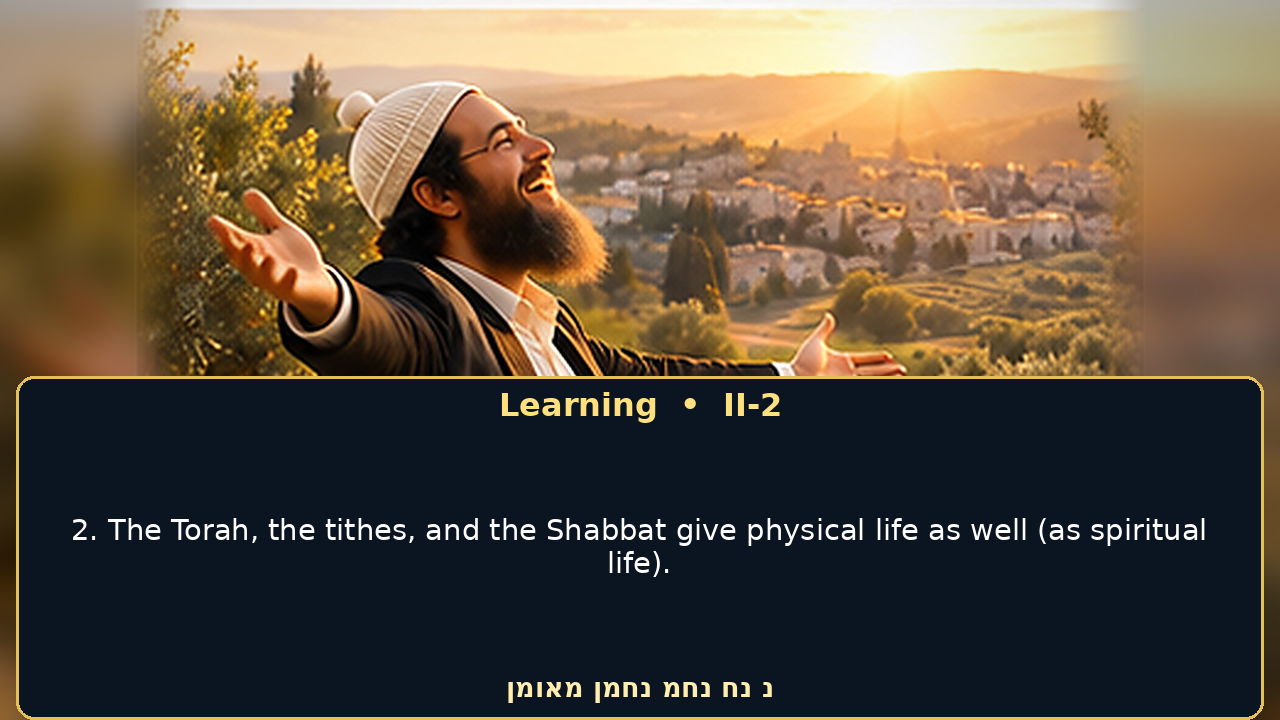
הַתּוֹרָה וְהַמַּעֲשֵׂר וְהַשַּׁבָּת הֵם נוֹתְנִים חַיִּים גַּשְׁמִיִּים גַם־כֵּן.
II-2
2. The Torah, the tithes, and the Shabbat give physical life as well (as spiritual life).
📷 Pictures / videos for this teaching
חלק ב׳ · ג׳
עַל־יְדֵי לִמּוּד "שֻׁלְחָן עָרוּךְ" בָּאִים לְיִרְאָה.
II-3
3. Through learning the Shulchan Aruch (Code of Jewish Law), one comes to Fear of G-d.
📷 Pictures / videos for this teaching
חלק ב׳ · ד׳
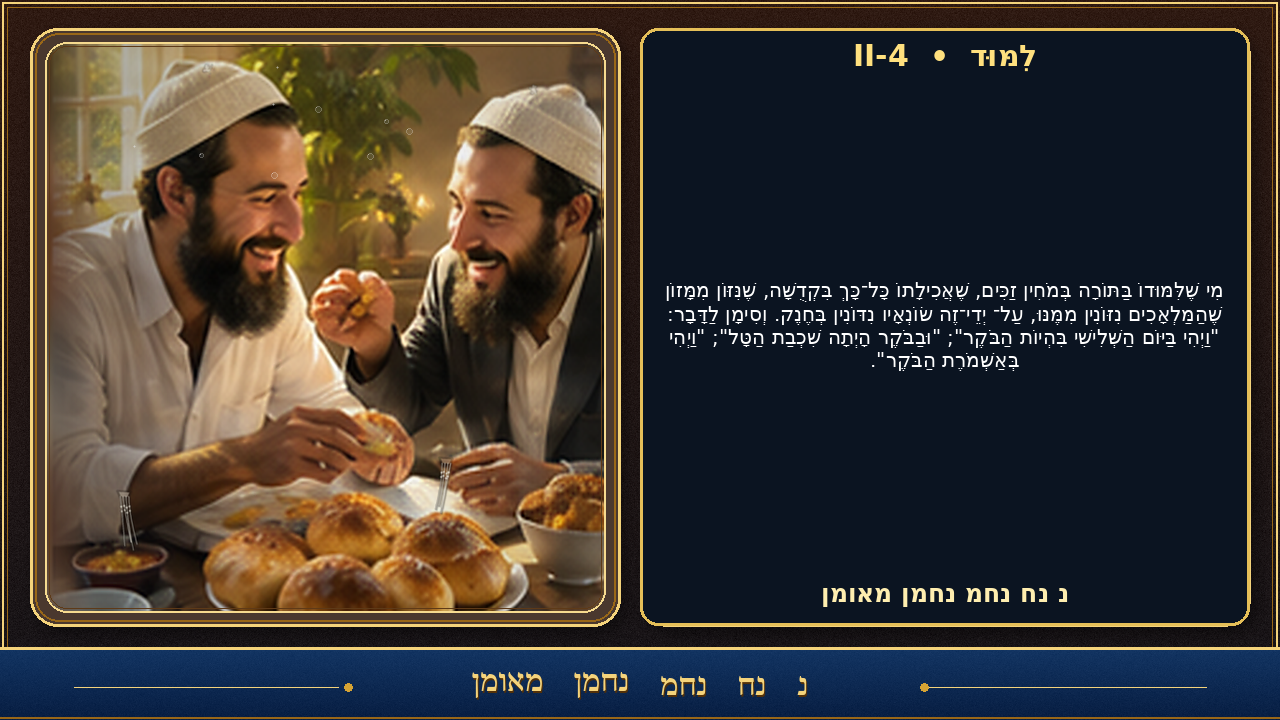
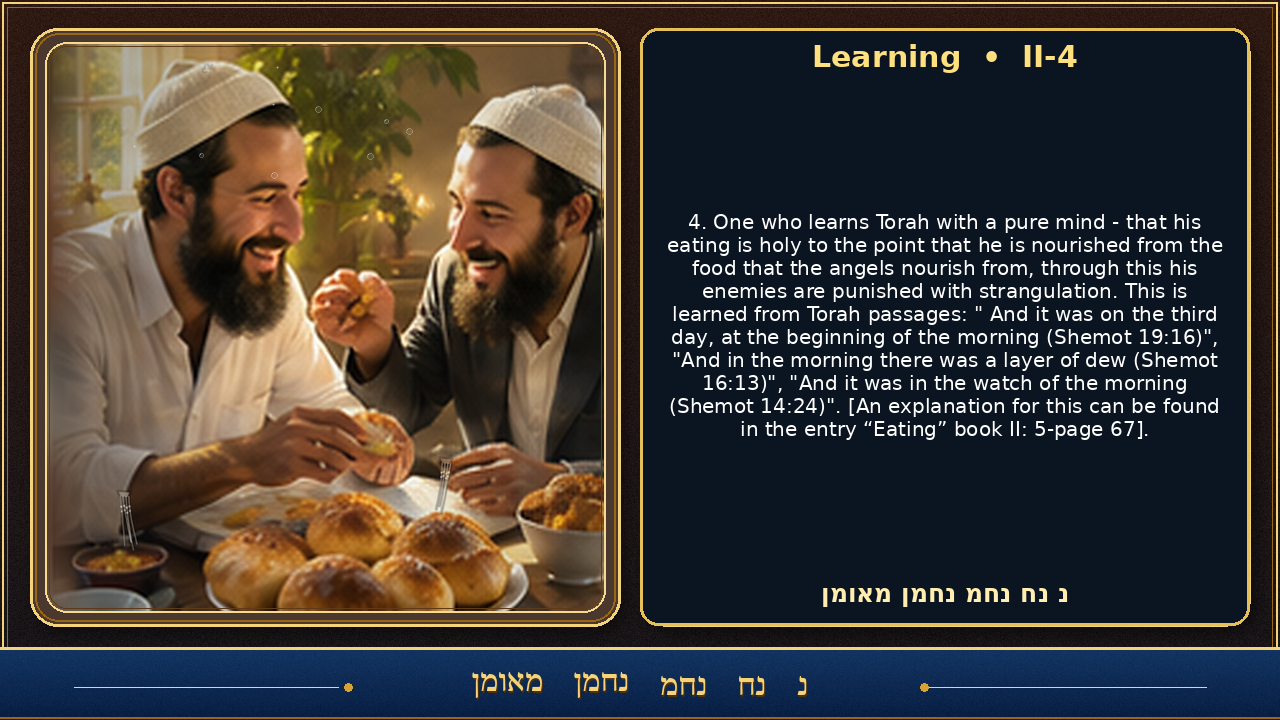
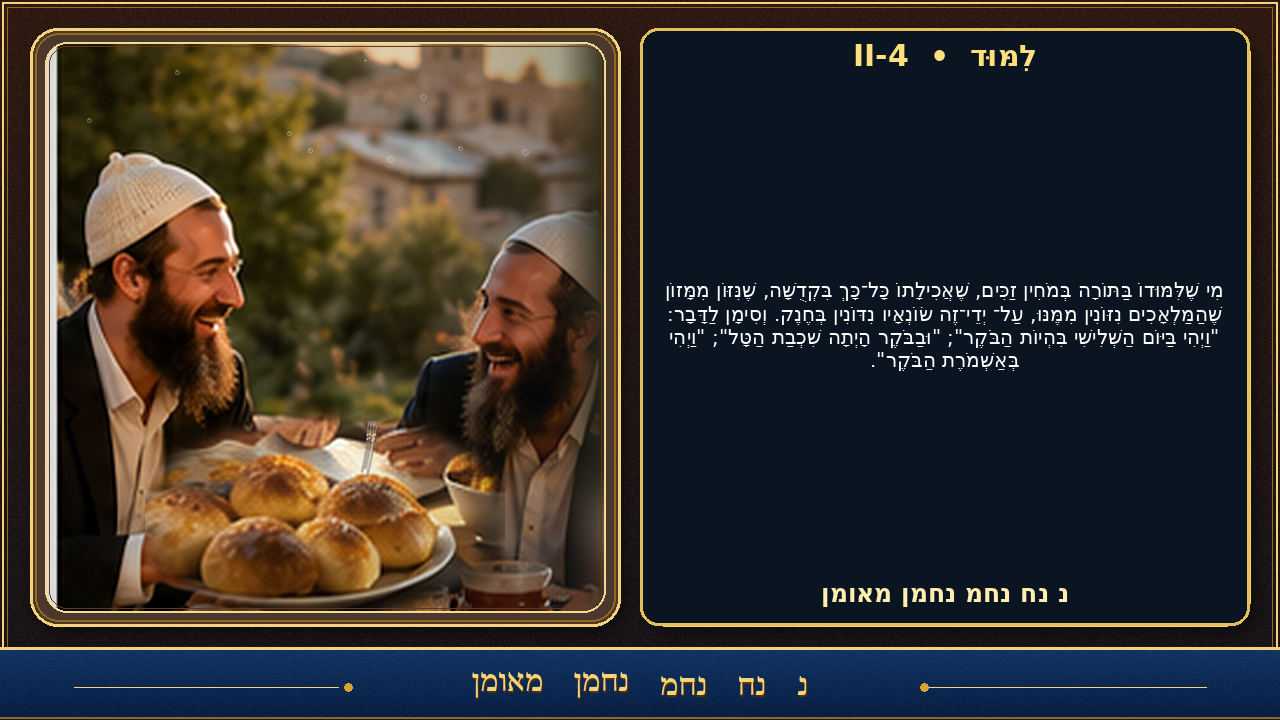
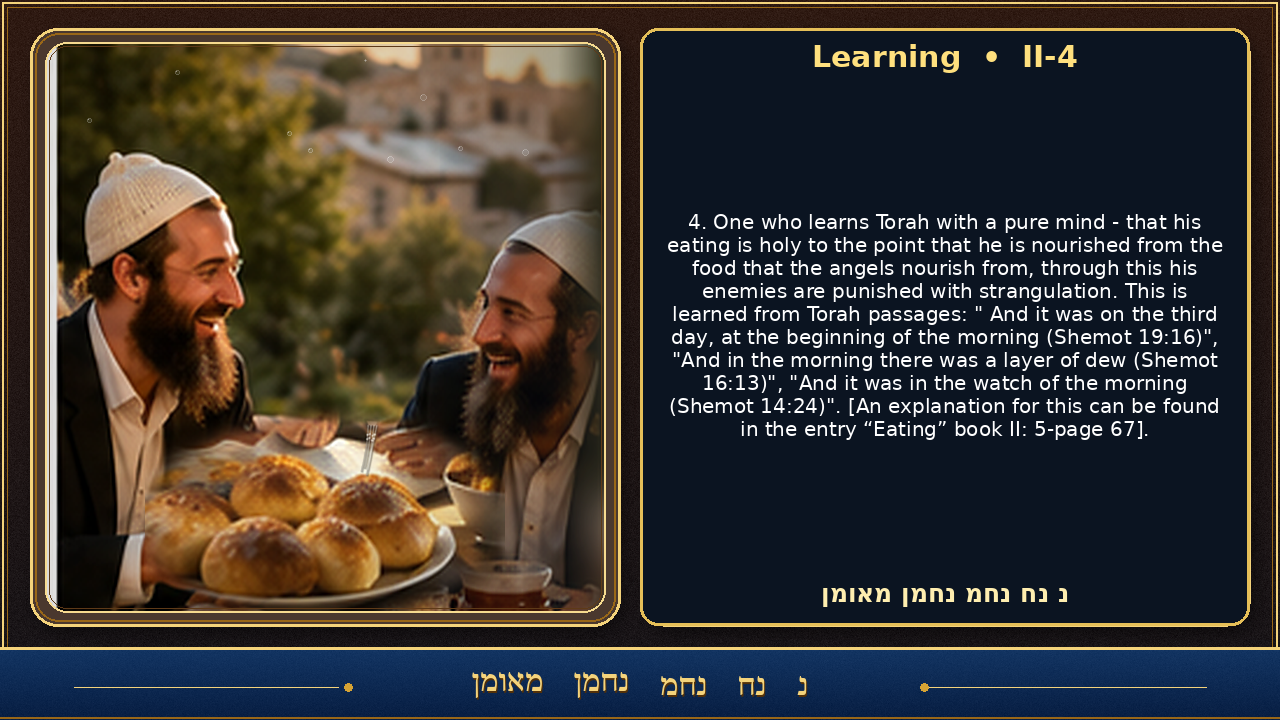
מִי שֶׁלִּמּוּדוֹ בַּתּוֹרָה בְּמֹחִין זַכִּים, שֶׁאֲכִילָתוֹ כָּל־כָּךְ בִּקְדֻשָּׁה, שֶׁנִּזּוֹן מִמָּזוֹן שֶׁהַמַּלְאָכִים נִזּוֹנִין מִמֶּנּוּ, עַל־ יְדֵי־זֶה שׂוֹנְאָיו נִדּוֹנִין בְּחֶנֶק. וְסִימָן לַדָּבָר: "וַיְהִי בַּיּוֹם הַשְּׁלִישִׁי בִּהְיוֹת הַבֹּקֶר"; "וּבַבֹּקֶר הָיְתָה שִׁכְבַת הַטָּל"; "וַיְהִי בְּאַשְׁמֹרֶת הַבֹּקֶר".
II-4
4. One who learns Torah with a pure mind - that his eating is holy to the point that he is nourished from the food that the angels nourish from, through this his enemies are punished with strangulation. This is learned from Torah passages: " And it was on the third day, at the beginning of the morning (Shemot 19:16)", "And in the morning there was a layer of dew (Shemot 16:13)", "And it was in the watch of the morning (Shemot 14:24)". [An explanation for this can be found in the entry “Eating” book II: 5-page 67].
📷 Pictures / videos for this teaching
חלק ב׳ · ה׳
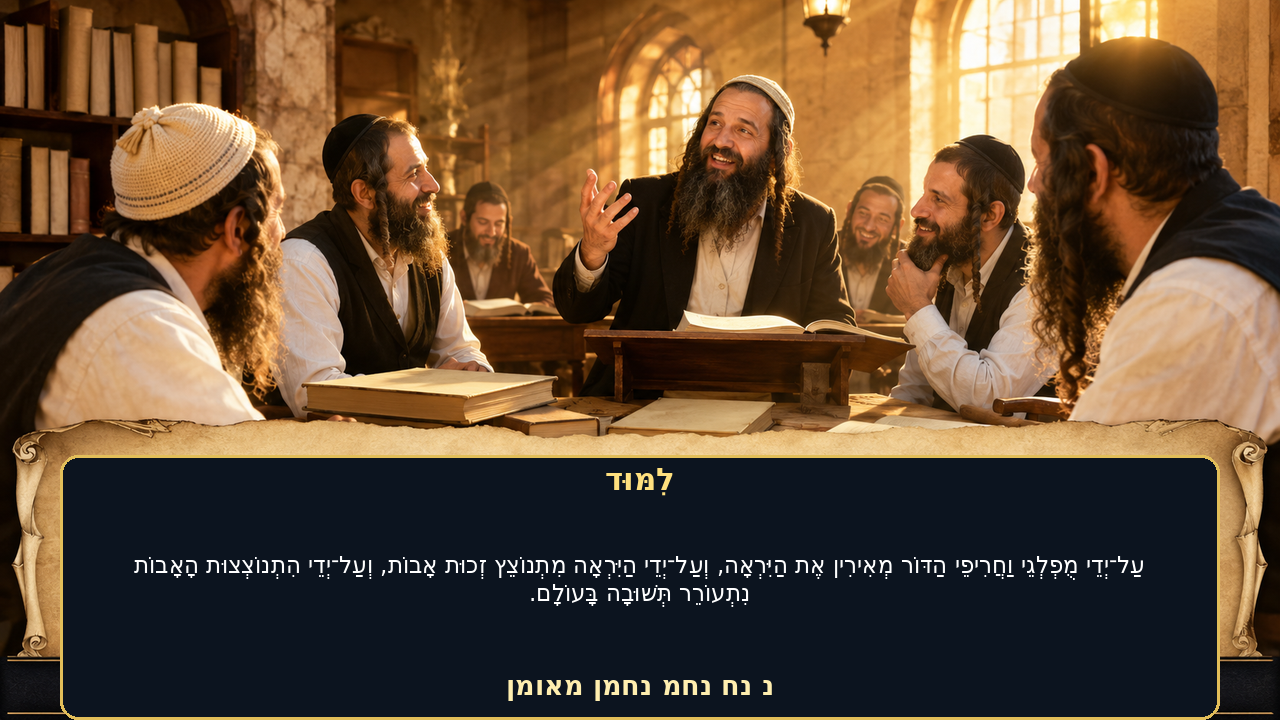
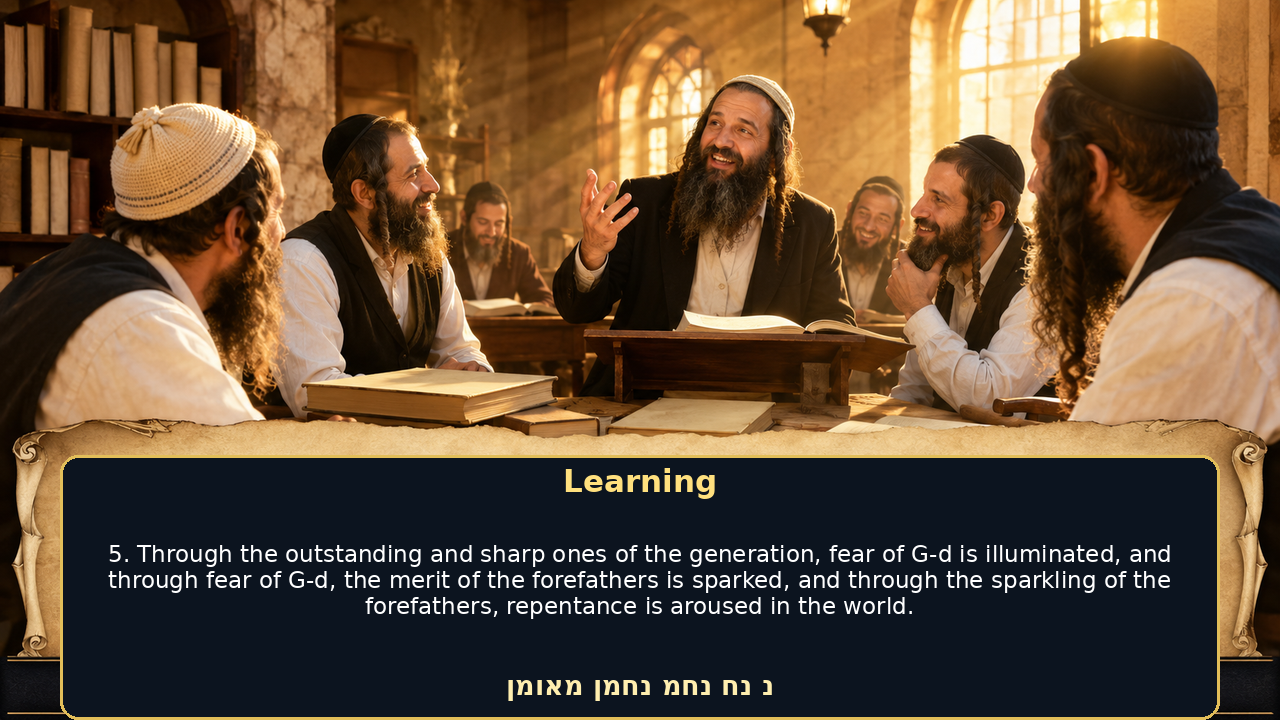
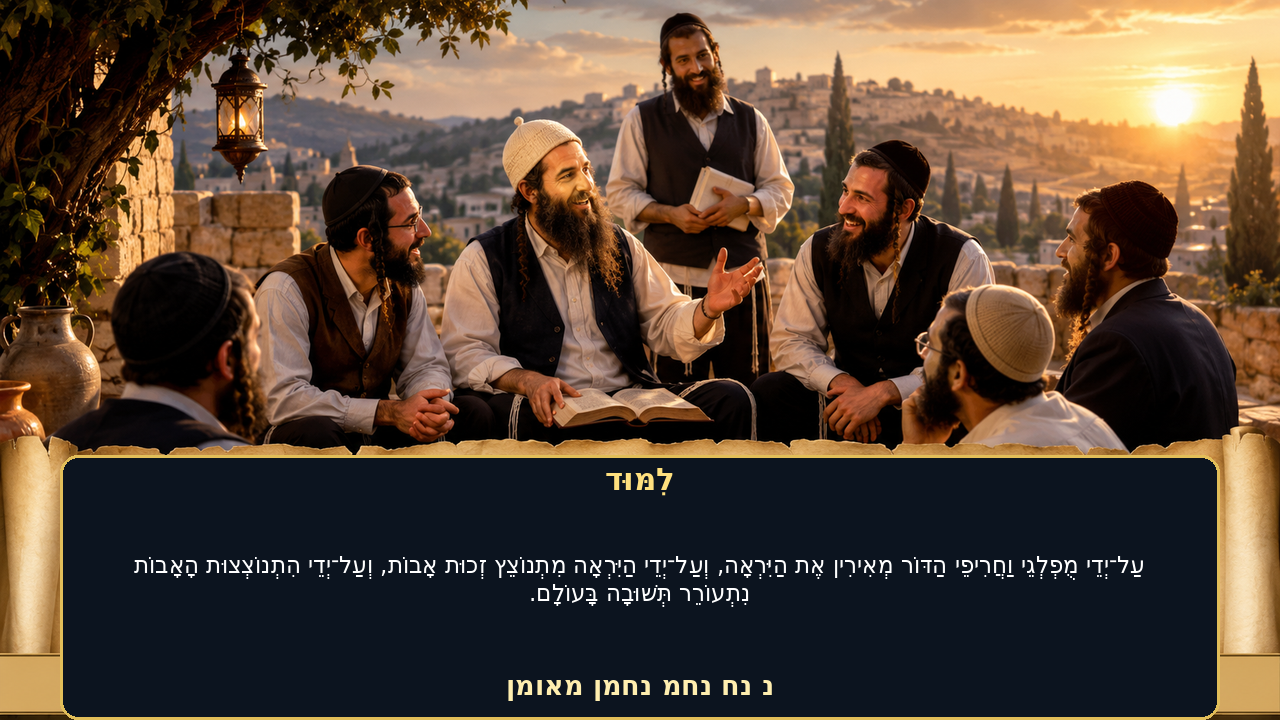
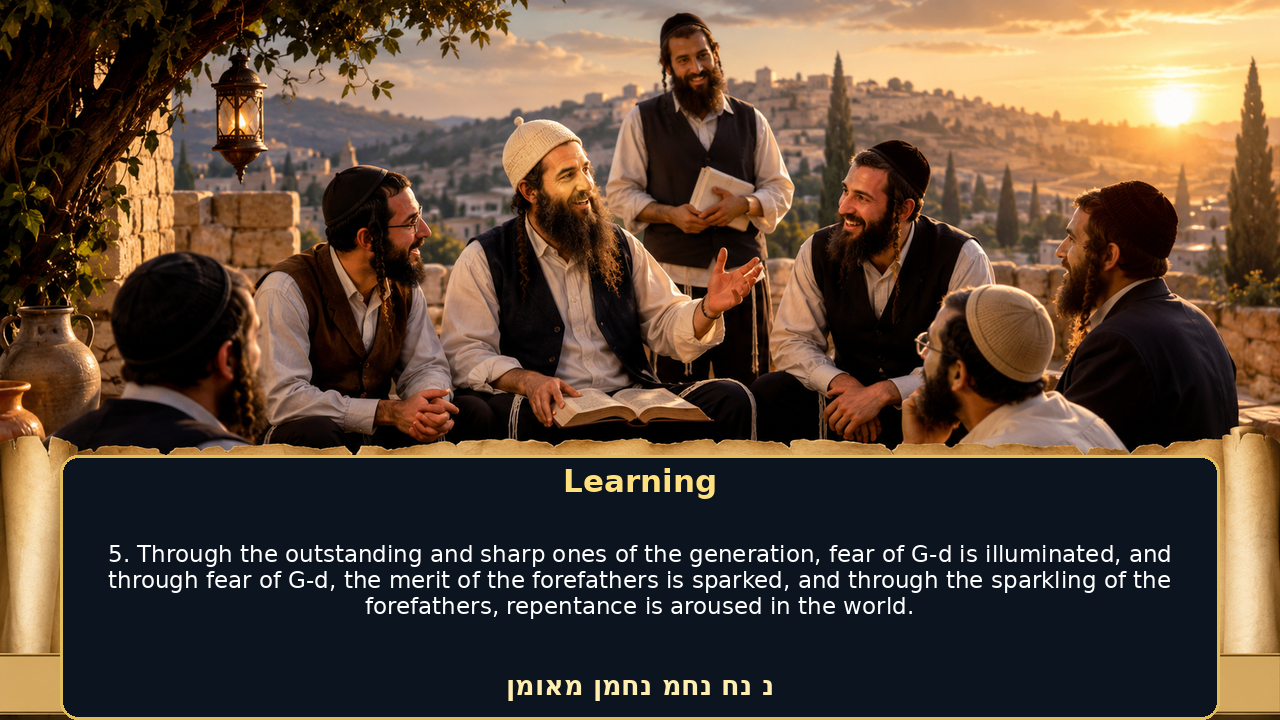
עַל־יְדֵי מֻפְלְגֵי וַחֲרִיפֵי הַדּוֹר מְאִירִין אֶת הַיִּרְאָה, וְעַל־יְדֵי הַיִּרְאָה מִתְנוֹצֵץ זְכוּת אָבוֹת, וְעַל־יְדֵי הִתְנוֹצְצוּת הָאָבוֹת נִתְעוֹרֵר תְּשׁוּבָה בָּעוֹלָם.
II-5
5. Through the outstanding and sharp ones of the generation, fear of G-d is illuminated, and through fear of G-d, the merit of the forefathers is sparked, and through the sparkling of the forefathers, repentance is aroused in the world.
📷 Pictures / videos for this teaching
חלק ב׳ · ו׳
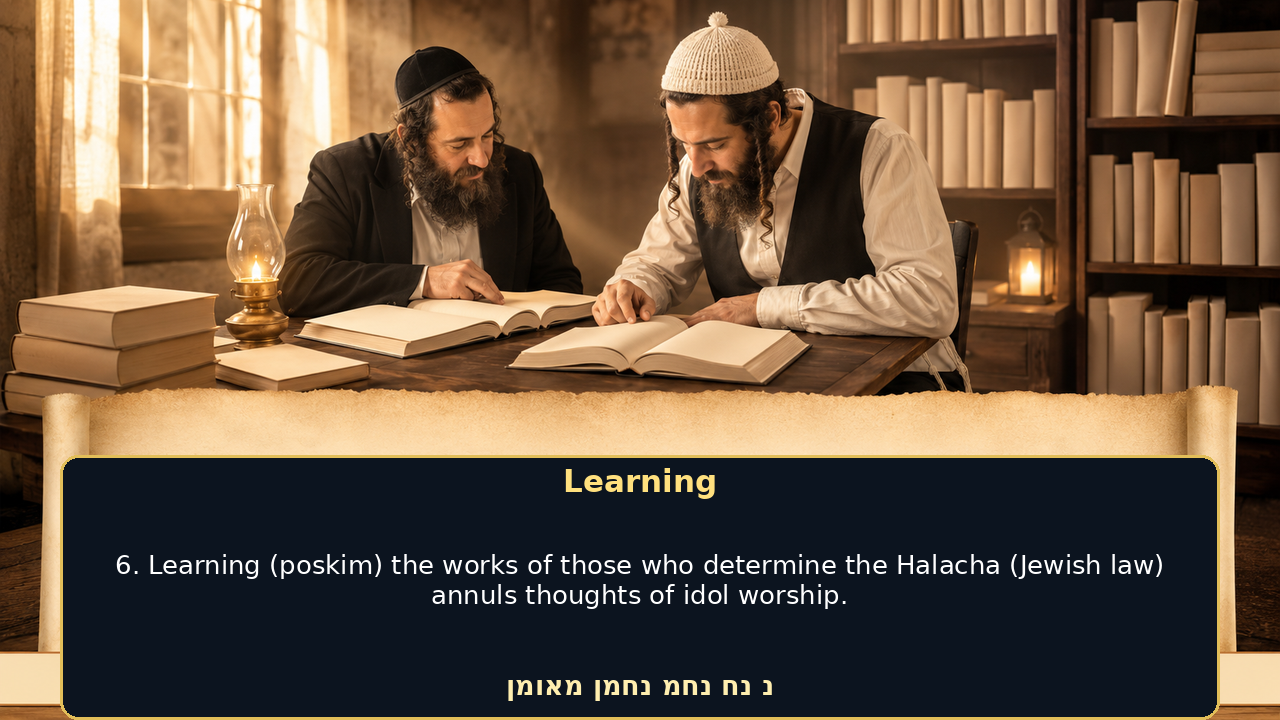
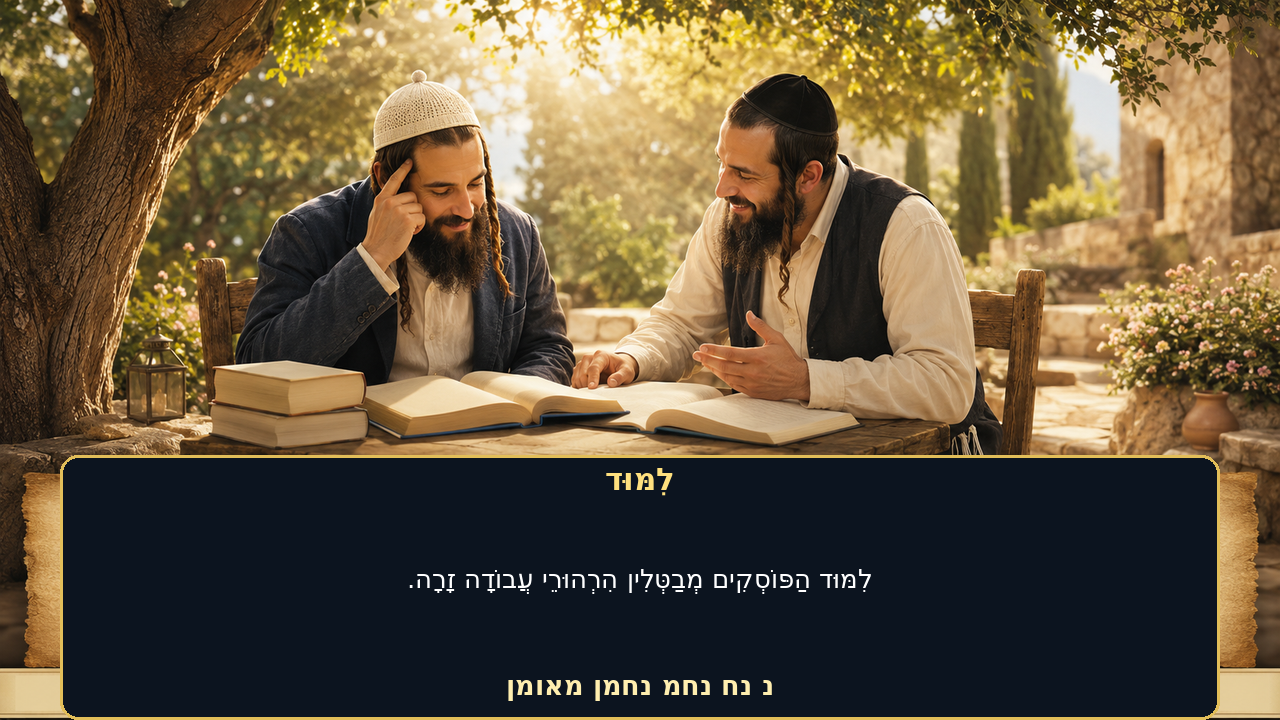
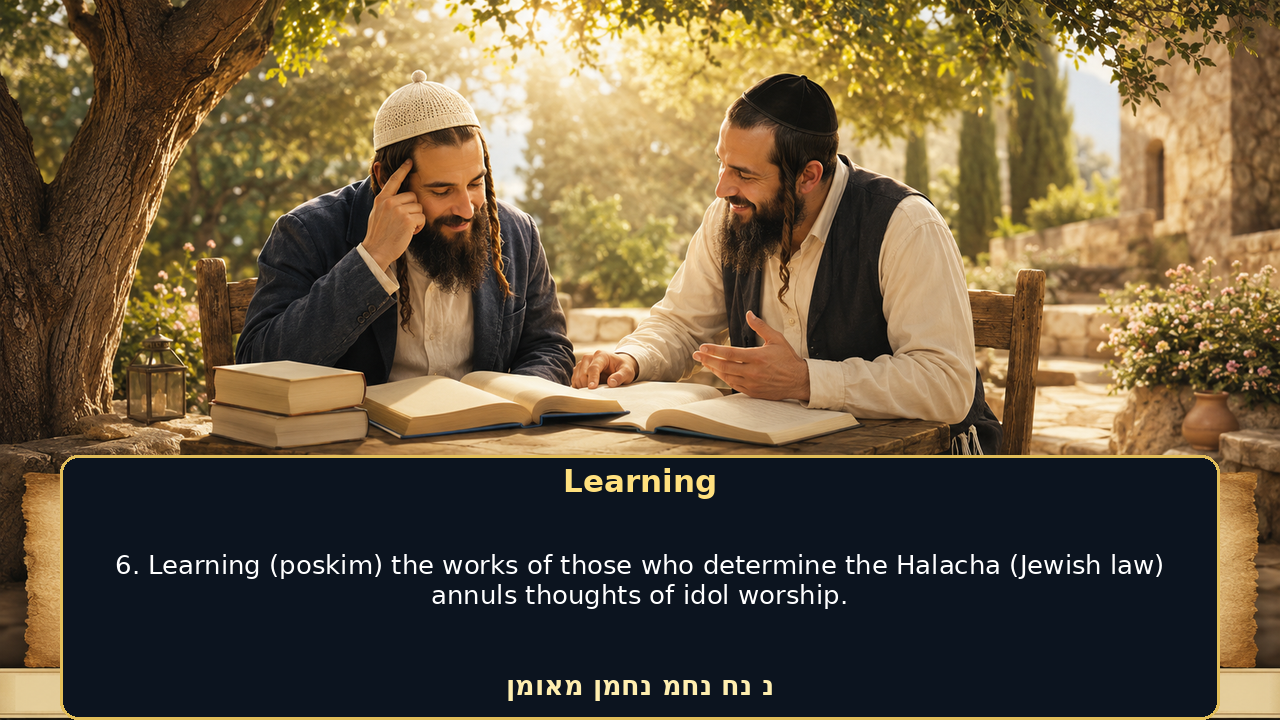
לִמּוּד הַפּוֹסְקִים מְבַטְּלִין הִרְהוּרֵי עֲבוֹדָה זָרָה.
II-6
6. Learning (poskim) the works of those who determine the Halacha (Jewish law) annuls thoughts of idol worship.
📷 Pictures / videos for this teaching

חלק ב׳ · ז׳
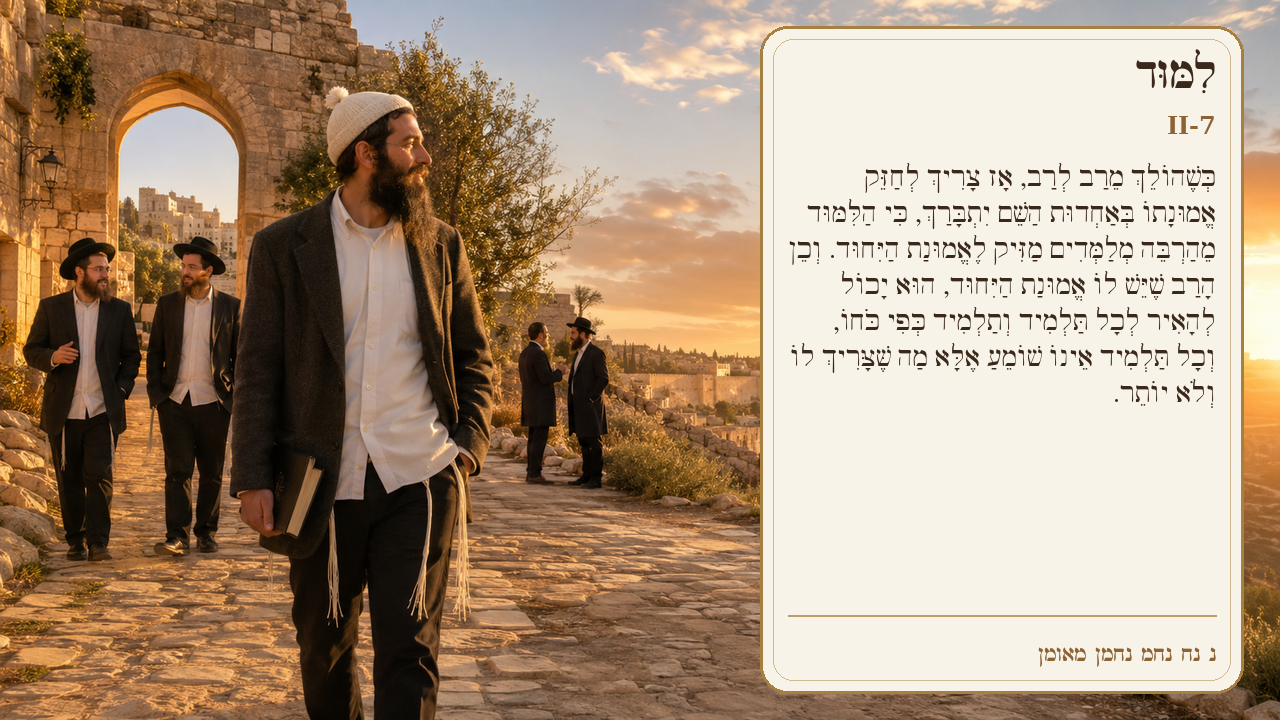
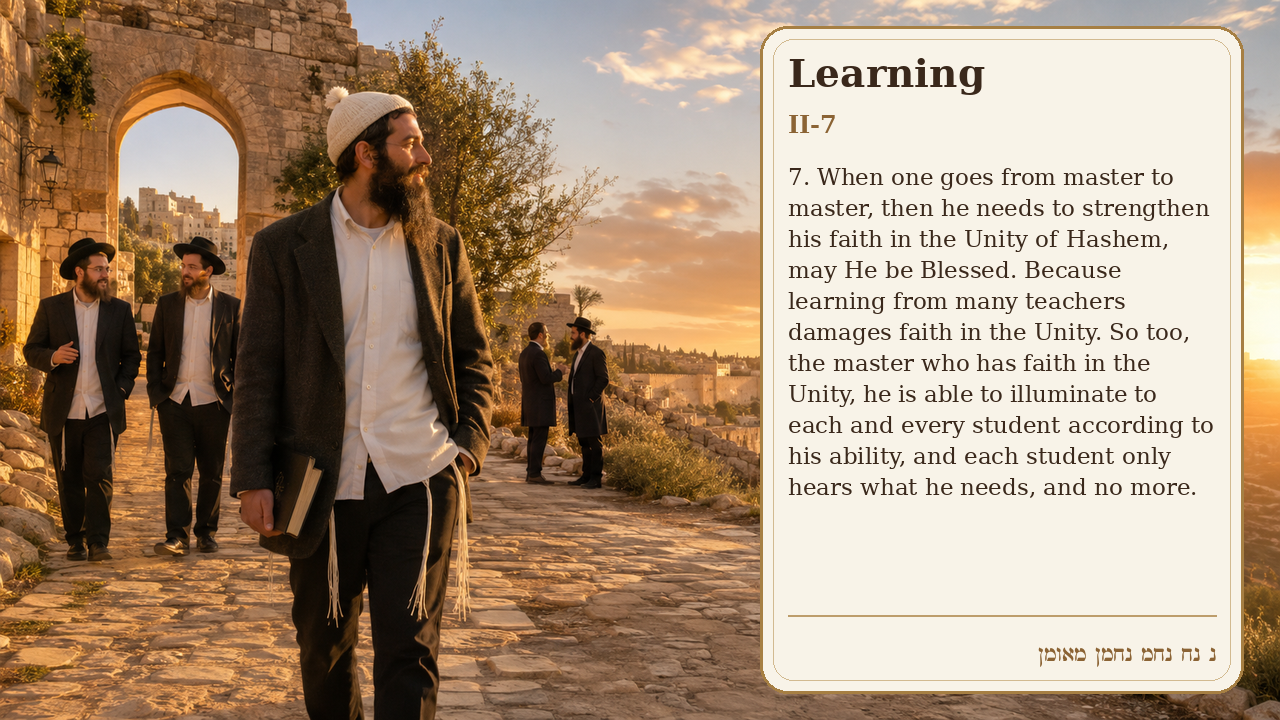
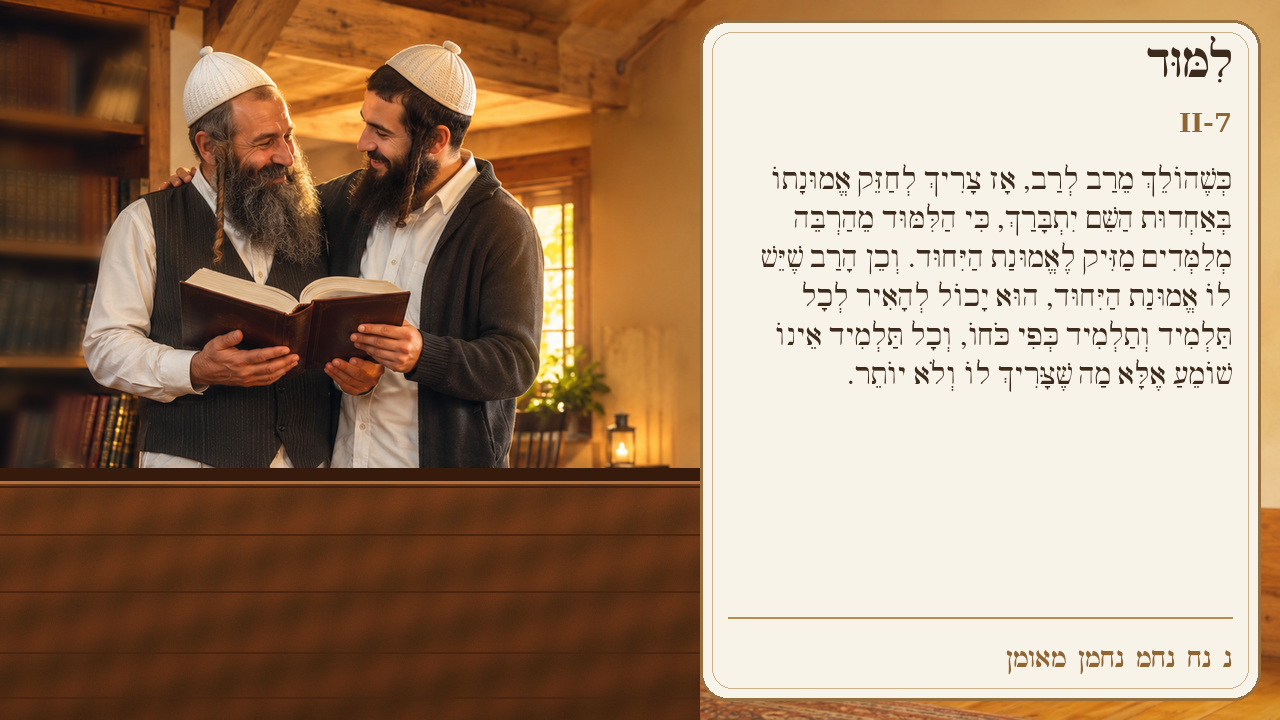
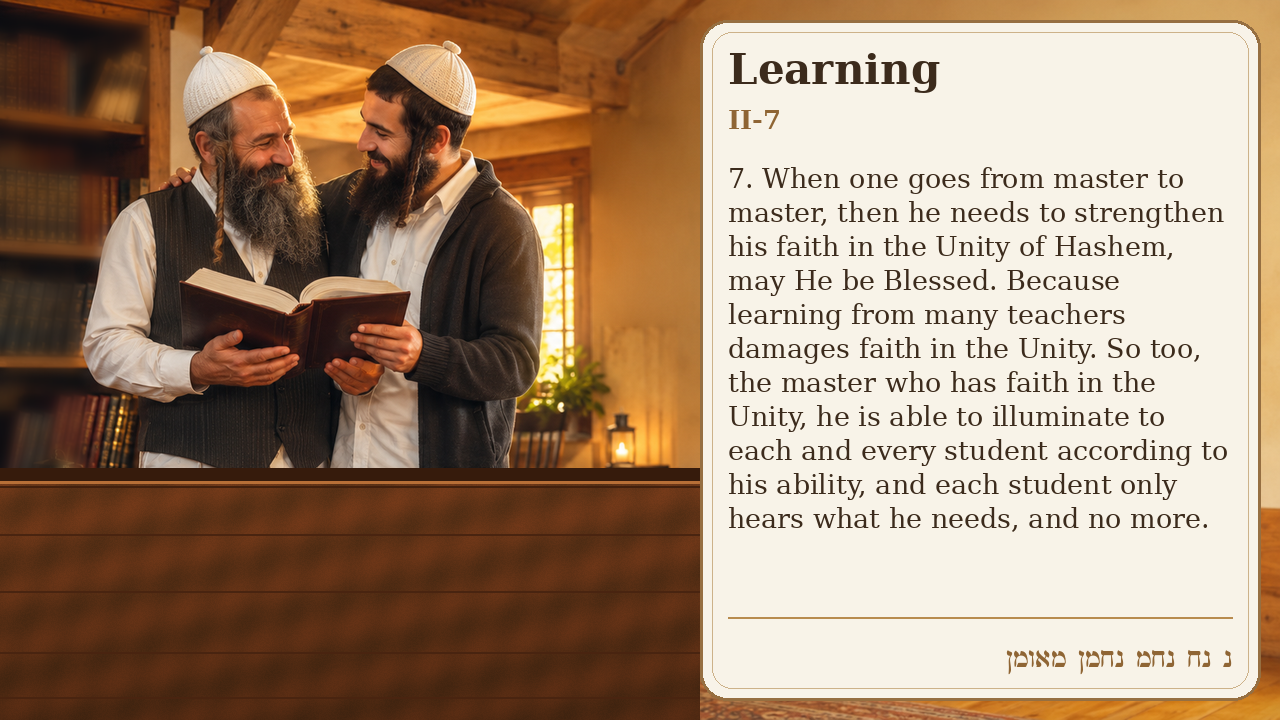
כְּשֶׁהוֹלֵךְ מֵרַב לְרַב, אָז צָרִיךְ לְחַזֵּק אֱמוּנָתוֹ בְּאַחְדוּת הַשֵּׁם יִתְבָּרַךְ, כִּי הַלִּמּוּד מֵהַרְבֵּה מְלַמְּדִים מַזִּיק לֶאֱמוּנַת הַיִּחוּד. וְכֵן הָרַב שֶׁיֵּשׁ לוֹ אֱמוּנַת הַיִּחוּד, הוּא יָכוֹל לְהָאִיר לְכָל תַּלְמִיד וְתַלְמִיד כְּפִי כֹּחוֹ, וְכָל תַּלְמִיד אֵינוֹ שׁוֹמֵעַ אֶלָּא מַה שֶּׁצָּרִיךְ לוֹ וְלֹא יוֹתֵר.
II-7
7. When one goes from master to master, then he needs to strengthen his faith in the Unity of Hashem, may He be Blessed. Because learning from many teachers damages faith in the Unity. So too, the master who has faith in the Unity, he is able to illuminate to each and every student according to his ability, and each student only hears what he needs, and no more.
📷 Pictures / videos for this teaching
חלק ב׳ · ח׳
הָרַב הַמְלַמֵּד אֶת תַּלְמִידָיו בְּזֶה הַדֶּרֶךְ, הַיְנוּ שֶׁלֹּא יַשְׁמִיעַ אוֹתָם אֶלָּא לְכָל אֶחָד יַשְׁמִיעַ מַה שֶּׁצָּרִיךְ לוֹ לֹא פָּחוֹת וְלֹא יוֹתֵר, עַל־יְדֵי זֶה זוֹכֶה, שֶׁמְּגַלִּין פָּנִים הַנָּאִים וְהַמְשֻׁבָּחִים שֶׁבַּתּוֹרָה.
II-8
8. A teacher who teaches his students in this manner -- that is, he only teaches to each student what he specifically needs to hear, not more and not less. Through this he merits that the most pleasant and praiseworthy aspects of the Torah are revealed to him.
חלק ב׳ · ט׳
כְּשֶׁהַתַּלְמִיד שׁוֹמֵעַ תּוֹרָה מֵהָרַב וְנִתְבַּטֵּל רְצוֹנוֹ כְּנֶגֶד רְצוֹן הָרַב, בָּזֶה יֵדַע שֶׁשָּׁמַע, כִּי כְּשֶׁלֹּא נִתְבַּטֵּל רְצוֹנוֹ אַף־עַל־פִּי שֶׁשּׁוֹמֵעַ אֵינוֹ שׁוֹמֵעַ. גַּם כְּשֶׁנִּתְבַּטֵּל הַרְגָּשׁוֹתָיו בִּשְׁעַת הַשְּׁמִיעָה, יֵדַע גַם־כֵּן שֶׁשּׁוֹמֵעַ.
II-9
9. When a student hears words of Torah from a rabbi, and annuls his will to the will of the rabbi, from this he can be sure that he listened. For when he does not annul his will, even though he hears, he really does not hear. Also, when his feelings (senses) are annulled at the time of hearing, this is a sign that he has truly heard.
חלק ב׳ · י׳
בְּשָׁעָה שֶׁהַתַּלְמִיד בָּא לִשְׁמֹעַ תּוֹרָה מִפִּי הָרַב, אֲזַי גַּם הָרָע שֶׁל הַתַּלְמִיד, הַיְנוּ הַקְּלִפּוֹת שֶׁנִּבְרְאוּ עַל־יְדֵי הָרָע שֶׁלּוֹ, בָּאִים גַם־כֵּן לִשְׁמֹעַ וְלִינֹק, אֲבָל עַל־יְדֵי שֶׁכָּל תַּלְמִיד אֵינוֹ שׁוֹמֵעַ אֶלָּא הַשַּׁיָּךְ לְנִשְׁמָתוֹ כַּנִּזְכָּר לְעֵיל, עַל־יְדֵי זֶה בּוֹרְחִים הַקְּלִפּוֹת וְאֵינָם יְכוֹלִים לִשְׁמֹעַ. אֲבָל יֵשׁ קְלִפָּה דַּקָּה שֶׁהִיא קְרוֹבָה לַקְדֻשָּׁה, וְהִיא אֵינָהּ בּוֹרַחַת אֶלָּא כְּשֶׁיֵּשׁ בַּתּוֹרָה יְשׁוּעַת יִשְׂרָאֵל, אֲזַי הִיא גַם־כֵּן בּוֹרַחַת. וְסִימָן לַדָּבָר: "וַיִּשְׁלַח מֹשֶׁה אֶת חוֹתְנוֹ", לְמָאן דְּאָמַר יִתְרוֹ קֹדֶם מַתַּן־תּוֹרָה בָּא וְהָלַךְ לּוֹ.
II-10
10. At the time when a student comes to hear Torah from a rabbi, the student's evil -- that is, the impure husks (klipos) created by the evil in him, also come to hear and suckle. However, when each student hears only what is relevant to his soul, as was described above, the evil spirits (klipos) flee, and are not able to hear. Yet there is a subtle evil (klipa) which is close to holiness, that will only flee when there is within the Torah teaching a message of salvation of Israel, then it also flees. A hint for this from Scripture: "And Moshe sent his father-in-law" -- if one learns this passage according to the opinion that Yitro (the father-in-law of Moses) came and went his way before the giving of the Torah.
חלק ב׳ · י״א
הַמּוֹצִיא דִּבְרֵי־תוֹרָה בְּפִיו, נִצּוֹל מִדִּין סְקִילָה.
II-11
11. One who utters words of Torah is saved from the sentence of stoning.
חלק ב׳ · י״ב
לָאו בְּכָל מָקוֹם אָדָם זוֹכֶה לְסַגֵּל תּוֹרָה וּמַעֲשִׂים טוֹבִים, בִּשְׁבִיל זֶה הַקָּדוֹשׁ־בָּרוּךְ־הוּא מְסַבֵּב סִבּוּבִים, שֶׁיֵּצֵא זֶה הָאָדָם מִמָּקוֹם הַזֶּה לְמָקוֹם אַחֵר.
II-12
12. A man cannot merit to Torah and good deeds in all places. Due to this, G-d brings about circumstances that cause the man to go from one place to another place.
חלק ב׳ · י״ג
כְּשֶׁאָדָם לוֹמֵד עַד שֶׁנִּתְיַגֵּעַ, בָּזֶה מַמְתִּיק דִּינִים וּמְעוֹרֵר רַחֲמִים, גַּם עַל־יְדֵי זֶה מְעוֹרֵר רַחֲמִים אֵצֶל אָבִיו בַּקֶּבֶר.
II-13
13. When a man learns until he is exhausted, he sweetens judgments and arouses mercy. Also through this he arouses mercy for his father in the grave.
חלק ב׳ · י״ד
עַל־יְדֵי תּוֹרָה בָּא לֶאֱמוּנָה, וְעַל־יְדֵי אֱמוּנָה בָּא לְקִדּוּשׁ־הַשֵּׁם.
II-14
14. Through Torah, one comes to Faith, and through Faith, one comes to sanctify the Name of G-d.
חלק ב׳ · ט״ו
זַכֵּי הָרְאוּת יְכוֹלִין לְהַכִּיר אֶת הָאָדָם, מִי רַבּוֹ שֶׁלִּמְּדוֹ תּוֹרָה. וְדַוְקָא כְּשֶׁמַּכִּירִין אֶת תֹּאַר פְּנֵי הָרַב, כִּי עַל־יְדֵי הַהֲלָכוֹת שֶׁלָּמַד מֵרַבּוֹ, נַעֲשָׂה פְּנֵי הַתַּלְמִיד כְּתֹאַר פְּנֵי הָרַב, כִּי הַהֲלָכָה הִיא חָכְמָתוֹ הַמֵּאִיר תֹּאַר פָּנָיו (חָכְמַת אָדָם תָּאִיר פָּנָיו), וּכְשֶׁמְּקַבֵּל הַהֲלָכָה מְקַבֵּל חֵלֶק מִתֹּאַר פָּנָיו, וּלְפִי רִבּוּי הַהֲלָכוֹת כֵּן נִתְרַבֶּה חֶלְקֵי תֹּאַר פָּנָיו.
II-15
15. Those with pure eyesight can recognize in a man, who the rabbi is who taught him Torah. This is specifically when the one looking is familiar with the face of the rabbi. For through the religious law that a man learns from his rabbi, his face becomes similar to the appearance of the face of the rabbi, for the law is his wisdom that enlightens the face of a man (as in the verse, "The wisdom of man enlightens his face."). When one receives the law, one receives an aspect of the appearance of the teacher's face. And according to the amount of laws he learns, the more aspects of the appearance of his face are acquired.
חלק ב׳ · ט״ז
עַל־יְדֵי קְדֻשַּׁת הַשֵּׁם יִתְבָּרַךְ הַהִתְנַשְּׂאוּת שֶׁל רָאשֵׁי הַדּוֹר בְּתֹקֶף וָעֹז, וְעַל־יְדֵי זֶה נֶחְשָׁב בְּעֵינֵי כֹל הַמִּצְוָה שֶׁל הַכְנָסַת־אוֹרְחִים, וְעַל־יְדֵי זֶה הַלּוֹמְדִים זוֹכִים שֶׁהֲלָכָה כְּמוֹתָם.
II-16
16. Through sanctifying the name of G-d, may He be blessed, the authority of the leaders of the generation is in full force and strength. Through this, everyone values the commandment of hospitality to guests, and through this, the Torah students merit that the law is set according to their opinion.
חלק ב׳ · י״ז
מִי שֶׁמַּחְמִיר לַאֲחֵרִים וּמֵקֵל לְעַצְמוֹ וְאוֹמֵר עַל מַה שֶּׁלֹּא שָׁמַע שֶׁשָּׁמַע, עַל־יְדֵי זֶה אֵינוֹ זוֹכֶה לִרְאוֹת בְּיוֹפִי הַמֶּלֶךְ, כִּי הַקְּלִפָּה שֶׁל אֶדוֹם שֶׁהִיא יִרְאָה רָעָה, מַחְשִׁיךְ מְאוֹר עֵינָיו מִלְּהִסְתַּכֵּל בְּיוֹפִי פְּנֵי הַמֶּלֶךְ.
II-17
17. One who is strict with others and lenient with himself, and says about what he did not hear, that he heard, due to this, he does not merit to see the beauty of the King. For the evil force (klipa) of Edom, which is bad fear, darkens the light of his eyes, so that he cannot see the beauty of the Face of the King.
💬 Comments
…Comments are currently read-only.
Loading comments…