
Teaching II-9 english · AI illustration
Teachings
- Teaching II-1 · חלק ב׳ · א׳
- Teaching II-2 · חלק ב׳ · ב׳
- Teaching II-3 · חלק ב׳ · ג׳
- Teaching II-4 · חלק ב׳ · ד׳
- Teaching II-5 · חלק ב׳ · ה׳
- Teaching II-6 · חלק ב׳ · ו׳
- Teaching II-7 · חלק ב׳ · ז׳
- Teaching II-8 · חלק ב׳ · ח׳
- Teaching II-9 · חלק ב׳ · ט׳
- Teaching II-10 · חלק ב׳ · י׳
- Teaching II-11 · חלק ב׳ · י״א
- Teaching II-12 · חלק ב׳ · י״ב
- Teaching II-13 · חלק ב׳ · י״ג
- Teaching II-14 · חלק ב׳ · י״ד
סְגֻלָּה (חלק ב׳)
Segulah (Part II)
Sefer Hamidos - The Book of Traits · 14 individual teachings
See the complete visual collection together, or open pictures teaching by teaching below.
Sefer HaMidos · Segulah (Part II)
All pictures
2 pictures from 1 teachings. Select any picture to view, share, or download it.
חלק ב׳ · א׳
נוֹצָה שֶׁל עוֹפוֹת הַבַּר הֵם סְגֻלָּה לְחֳלָאֵי הָרֵאָה, וּמְסֻגָּל לְחַזֵּק אֶת הָרוּחַ־חַיִּים.
II-1
1. Feathers from wild birds are a segulah for healing sicknesses of the lungs, and are conducive to strengthening the breath of life.
חלק ב׳ · ב׳
הַשָּׁמַיִם – יֵשׁ בָּהֶם שִׁנּוּי מַרְאוֹת לְפִי מַרְאוֹת עֲשָׂבִים הַנִּגְדָּלִים עַל־יְדֵיהֶם, וְהֵם מְסֻגָּלִים לְהִסְתַּכֵּל בָּהֶן.
II-2
2. The heavens have changes in their appearance according to the appearance of the grasses that grow by them, and it is effective to gaze on them.
חלק ב׳ · ג׳
מֵי גְּשָׁמִים מְסֻגָּלִין לְמִי שֶׁאֵין לוֹ גְּבוּרַת אֲנָשִׁים.
II-3
3. Rainwater is a segulah for an impotent male.
חלק ב׳ · ד׳
אֲמִירַת תְּהִלִּים סְגֻלָּה לְהוֹרִיד גְּשָׁמִים "תְּהִלִּם" – לִ'מְטַר הַ'שָּׁמַיִם תִּ'שְׁתֶּה מָ'יִם.
II-4
4. Recital of Tehillim (Psalms) is a segulah for rainfall. [The letters of the word] Tehillim [are the acronym for the Biblical phrase] - "According to the Rains of the Heavens, You will drink Water."
חלק ב׳ · ה׳
סְגֻלָּה לְהַחֲזִיר לְאִשָּׁה וֶסְתָּהּ עַל־יְדֵי הַכְנָסַת אוֹרְחִים.
II-5
5. A segulah for renewing a woman's monthly cycle is to host guests.
חלק ב׳ · ו׳
מִי שֶׁשַּׂעֲרוֹתָיו מְרֻבִּים שֶׁלֹּא עַל־פִּי הַטֶּבַע, זֶה עָלוּל לִנְזָקִים הַרְבֵּה וְלִפְגָעִים רָעִים מֵהַסִּטְרָא־אַחֲרָא, סְגֻלָּתוֹ שֶׁיִּקְרָא הַפָּרָשָׁה שֶׁקּוֹרִין בְּיוֹם־כִּפּוּרִים.
II-6
6. Someone whose hair is unnaturally abundant, is liable to much damage and bad calamities from the Other Side. A segulah against this is reciting the section (of the Torah reading) that is read on Yom Kippur.
חלק ב׳ · ז׳
מִי שֶׁנִּתְאַלֵּם בְּפֶתַע פִּתְאוֹם, יַעֲבִירוּ עַל פִּיו חַלָף כָּשֵׁר.
II-7
7. Someone who becomes mute suddenly and unexpectedly, should pass a kosher butcher's knife over his mouth.
חלק ב׳ · ח׳
סְגֻלָּה לְמַקְשָׁה לֵילֵד, תִּתְלֶה לָהּ עַל צַוָּארָהּ מַפְתֵּחַ שֶׁל הַבֵּית־עָלְמִין. גַּם הַמַּפְתֵּחַ הַזֶּה מְסֻגָּל לַעֲקָרָה.
II-8
8. A segulah for a woman having difficulty giving birth is to hang the key to the cemetery upon her neck. Also, this key is a segulah for a barren woman.
חלק ב׳ · ט׳
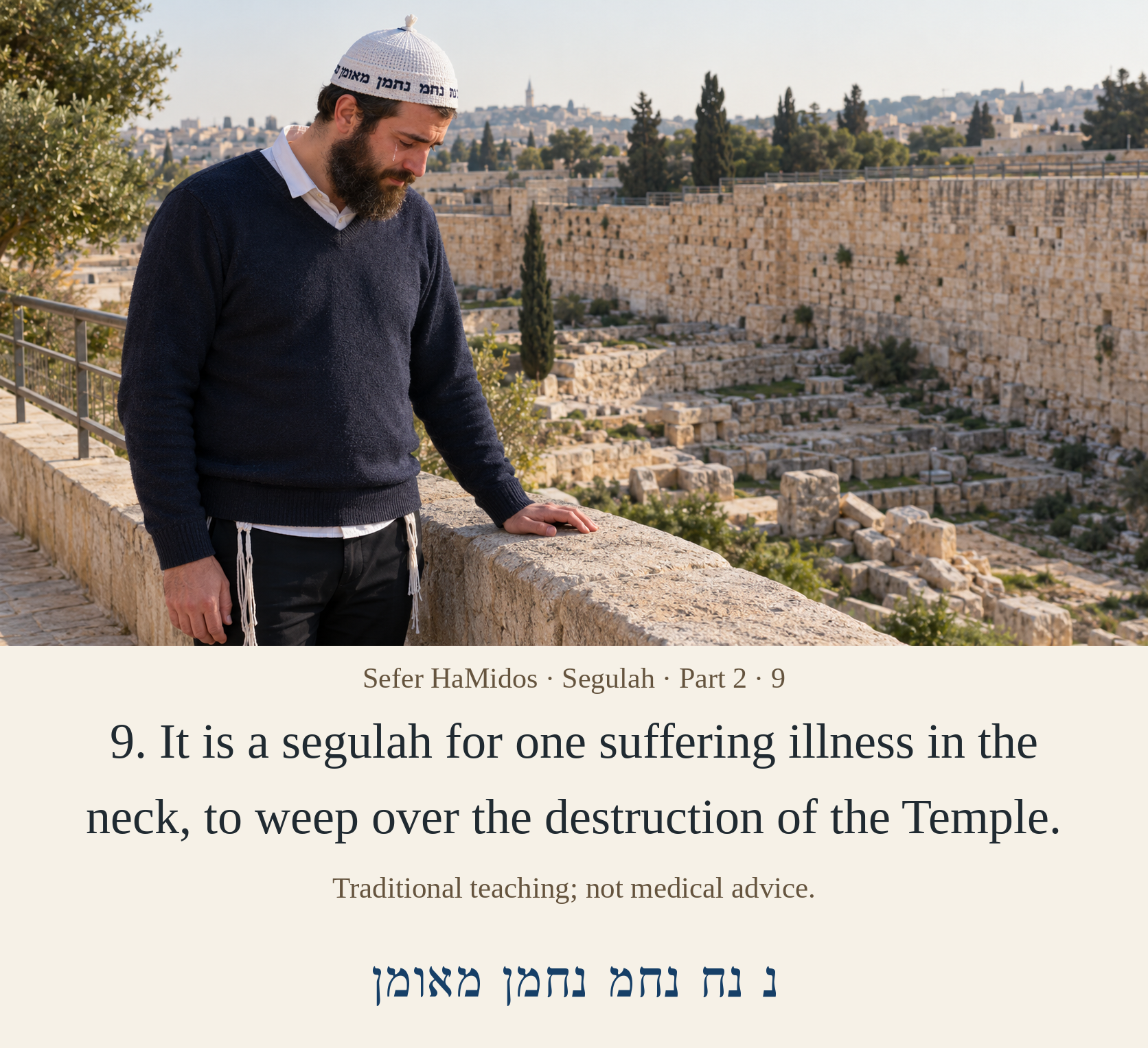
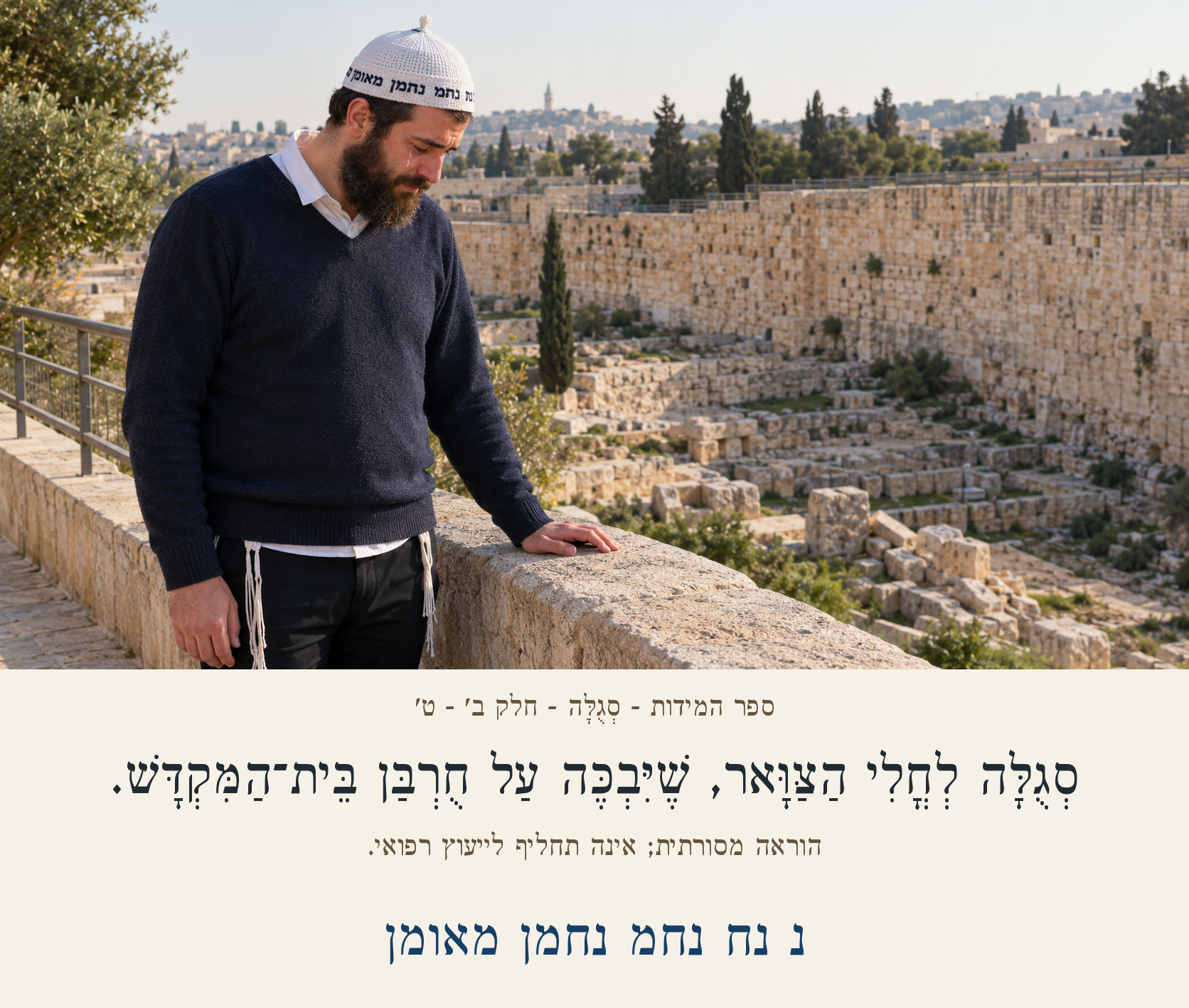
סְגֻלָּה לְחֳלִי הַצַּוָּאר, שֶׁיִּבְכֶּה עַל חֻרְבַּן בֵּית־הַמִּקְדָּשׁ.
II-9
9. It is a segulah for one suffering illness in the neck, to weep over the destruction of the Temple.
📷 Pictures / videos for this teaching
AI-generated editorial illustration (ChatGPT/OpenAI). The caption quotes a traditional teaching from Sefer HaMidos; it is not medical advice. איור שנוצר בבינה מלאכותית. הכיתוב מצטט הוראה מסורתית מספר המידות; אין לראות בה ייעוץ רפואי.
חלק ב׳ · י׳
סְגֻלָּה כְּשֶׁנִּכְנָס לְבַיִת חָדָשׁ לָגוּר, יַכְנִיס לְשָׁם חֶרֶב אוֹ סַכִּין אוֹ שְׁאָר כְּלֵי־זַיִן. וְסִימָן לַדָּבָר: בְּחָכְמָה יִבָּנֶה בָּיִת – כְּ'לֵי חָ'מָס מְ'כֵרוֹתֵיהֶם; חַרְבוֹתֵיהֶם מְגוּרוֹתֵיהֶם.
II-10
10. Upon entering a new house in which to live, it is a segulah to bring in a sword, knife or other weapon. An indication for this (from Scripture): "Through wisdom a house is built" (Proverbs 24:3), the letters of "wisdom" (ChuChMah) stand for "Weapons (Clee) of Violence (Chummus) they practice where they Reside (Michairoasayhem) (Bereshit 49:5)". Their swords, their residence (the Hebrew word in the verse which was translated as “their residence” can be alternately translated: "their swords" (in which case the “weapons of violence” would be translated as, stolen weapons, see Rashi there)). [t.n. Thus a connection between weapons and the maintaining of residence can be established].
חלק ב׳ · י״א
תַּפּוּחִים מְסֻגָּלִים לְמַקְשָׁה לֵילֵד.
II-11
11. Apples are a segulah for one who has difficulties in childbirth.
חלק ב׳ · י״ב
סְגֻלָּה לְחוֹלֶה – לְהִסְתַּכֵּל עַל הַצִּיצִית. (וְהַסּוֹד בַּפָּסוּק: "הִנֵּה בִּנְךָ יוֹסֵף בָּא אֵלֶיךָ", כִּי כָּל אֵלּוּ הַתֵּבוֹת מְרַמְּזִין עַל הַצִּיצִית, הַיְנוּ מִנְיַן הַחוּטִין וְהַחֻלְיוֹת וְהַקְּשָׁרִים כְּמוֹ שֶּׁמְּבֹאָר בִּפְרִי־עֵץ־חַיִּים, עַיֵּין שָׁם, וְעַל־יְדֵי זֶה: "וַיִתְחַזֵּק יִשְׂרָאֵל"). וְעַיֵּן בְּלִקּוּטֵי מוֹהֲרַ"ן חֵלֶק א' סִימָן ז.
II-12
12. It is beneficial (a segula) for a sick person to look upon the tzitzis (fringes). [This secret is (found) in the verse (Beraishis 48:2), “behold, your son Yosef has come to see you.” For all these words allude to the tzitzis; i.e. to the number of the strings, and the chulyos (stitches), and the knots, as is explained in Pri Eitz Chaim (Fruit of the Tree of Life – a Kabalistic work of the Arizal) see there, and through this (the end of the verse), “and Israel strengthened himself”}. See also LM I:7.
חלק ב׳ · י״ג
סְגֻלָּה לְחוֹלֶה נוֹפֵל – שֶׁיְּפַזֵּר צְדָקָה. פִּ'זַּר נָ'תַן לָ'אֶבְיוֹנִים (לִקּוּטֵי מוֹהֲרַ"ן כט).
II-13
13. It is beneficial for an epileptic, to distribute money to charity.
חלק ב׳ · י״ד
סְגֻלָּה לְמַקְשָׁה לֵילֵד, שֶׁתִּרְחַץ בְּיַיִן מִלְּפָנֶיהָ וּמֵאֲחוֹרֶיהָ; נִכְנָס יַיִן יָצָא סוֹד.
II-14
14. It is beneficial (a segula) for a woman having difficulty giving birth, for her to wash with wine, her front and her back; 'when wine enters, secrets come out.' (Eruvin 65a)
💬 Comments
…Comments are currently read-only.
Loading comments…