
Teaching II-4 english · ChatGPT Concept B
Teachings
- Teaching 1 · א׳
- Teaching 2 · ב׳
- Teaching 3 · ג׳
- Teaching 4 · ד׳
- Teaching 5 · ה׳
- Teaching 6 · ו׳
- Teaching 7 · ז׳
- Teaching 8 · ח׳
- Teaching 9 · ט׳
- Teaching 10 · י׳
- Teaching 11 · י״א
- Teaching 12 · י״ב
- Teaching 13 · י״ג
- Teaching 14 · י״ד
- Teaching 15 · ט״ו
- Teaching 16 · ט״ז
- Teaching 17 · י״ז
- Teaching 18 · י״ח
- Teaching 19 · י״ט
- Teaching 20 · כ׳
- Teaching 21 · כ״א
- Teaching 22 · כ״ב
- Teaching 23 · כ״ג
- Teaching 24 · כ״ד
- Teaching 25 · כ״ה
- Teaching 26 · כ״ו
- Teaching 27 · כ״ז
- Teaching 28 · כ״ח
- Teaching 29 · כ״ט
- Teaching 30 · ל׳
- Teaching 31 · ל״א
- Teaching 32 · ל״ב
- Teaching 33 · ל״ג
- Teaching 34 · ל״ד
- Teaching 35 · ל״ה
- Teaching 36 · ל״ו
- Teaching 37 · ל״ז
- Teaching 38 · ל״ח
- Teaching 39 · ל״ט
- Teaching 40 · מ׳
- Teaching 41 · מ״א
- Teaching 42 · מ״ב
- Teaching 43 · מ״ג
- Teaching 44 · מ״ד
- Teaching 45 · מ״ה
- Teaching 46 · מ״ו
- Teaching 47 · מ״ז
- Teaching 48 · מ״ח
- Teaching 49 · מ״ט
- Teaching 50 · נ׳
- Teaching 51 · נ״א
- Teaching 52 · נ״ב
- Teaching 53 · נ״ג
- Teaching 54 · נ״ד
- Teaching 55 · נ״ה
- Teaching 56 · נ״ו
- Teaching 57 · נ״ז
- Teaching 58 · נ״ח
- Teaching 59 · נ״ט
- Teaching 60 · ס׳
- Teaching 61 · ס״א
- Teaching 62 · ס״ב
- Teaching 63 · ס״ג
- Teaching 64 · ס״ד
- Teaching 65 · ס״ה
- Teaching 66 · ס״ו
- Teaching 67 · ס״ז
- Teaching 68 · ס״ח
- Teaching 69 · ס״ט
- Teaching 70 · ע׳
- Teaching II-1 · חלק ב׳ · א׳
- Teaching II-2 · חלק ב׳ · ב׳
- Teaching II-3 · חלק ב׳ · ג׳
- Teaching II-4 · חלק ב׳ · ד׳
- Teaching II-5 · חלק ב׳ · ה׳
- Teaching II-6 · חלק ב׳ · ו׳
- Teaching II-7 · חלק ב׳ · ז׳
- Teaching II-8 · חלק ב׳ · ח׳
- Teaching II-9 · חלק ב׳ · ט׳
- Teaching II-10 · חלק ב׳ · י׳
- Teaching II-11 · חלק ב׳ · י״א
- Teaching II-12 · חלק ב׳ · י״ב
- Teaching II-13 · חלק ב׳ · י״ג
- Teaching II-14 · חלק ב׳ · י״ד
- Teaching II-15 · חלק ב׳ · ט״ו
- Teaching II-16 · חלק ב׳ · ט״ז
- Teaching II-17 · חלק ב׳ · י״ז
- Teaching II-18 · חלק ב׳ · י״ח
- Teaching II-19 · חלק ב׳ · י״ט
צְדָקָה
Charity
Sefer Hamidos - The Book of Traits · 89 individual teachings
See the complete visual collection together, or open pictures teaching by teaching below.
Sefer HaMidos · Charity
All pictures
134 pictures from 49 teachings. Select any picture to view, share, or download it.
א׳
כָּל צְדָקָה וָחֶסֶד שֶׁיִּשְׂרָאֵל עוֹשִׂין בָּעוֹלָם הַזֶּה, שָׁלוֹם גָּדוֹל וּמְלִיצֵי יֹשֶׁר בֵּין יִשְׂרָאֵל לַאֲבִיהֶם שֶׁבַּשָּׁמַיִם.
1
1. All the charity and kindness that the Jewish People do in this world [engenders] great peace and [the formation of] angelic advocates between Israel and their Father in Heaven.
ב׳
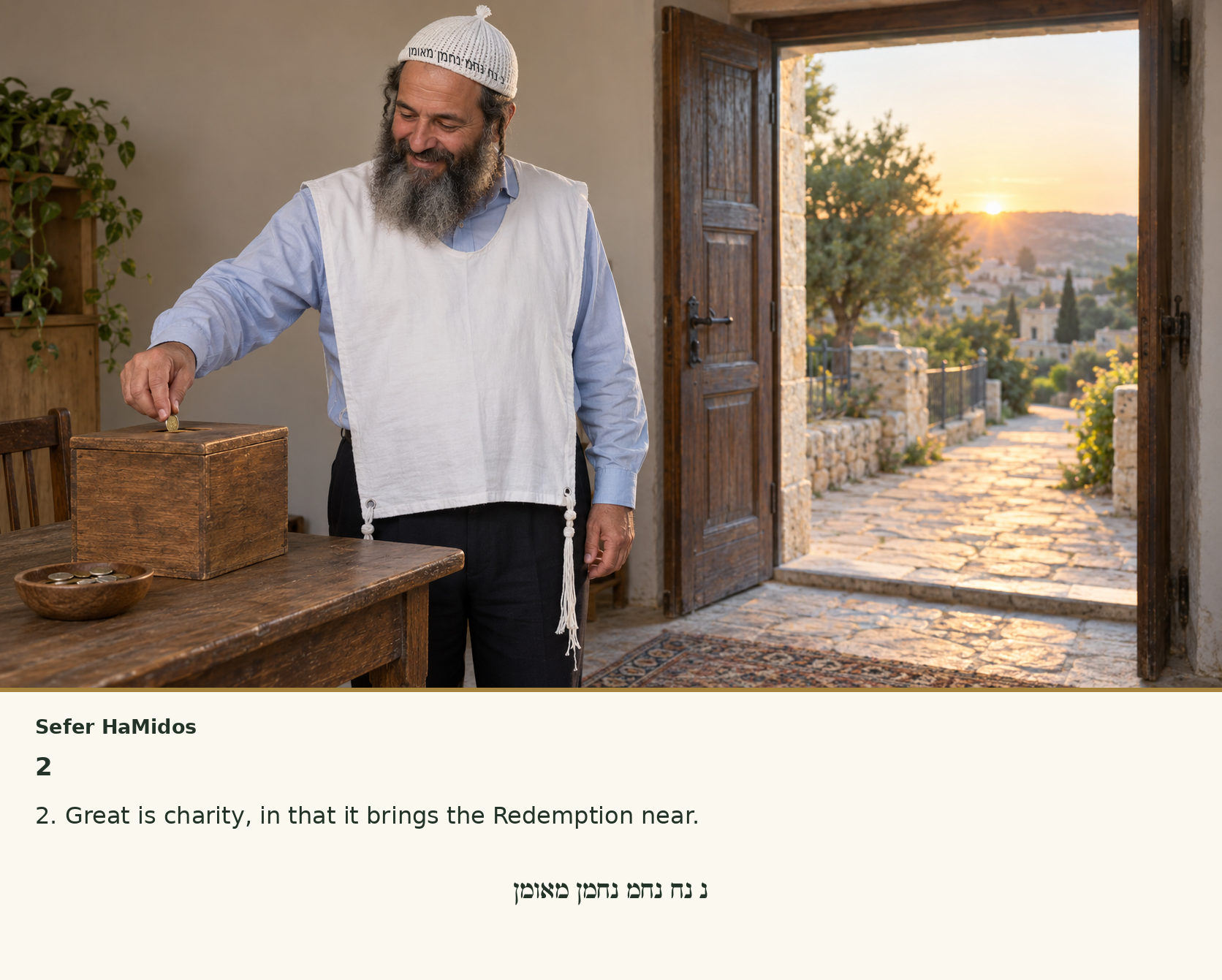
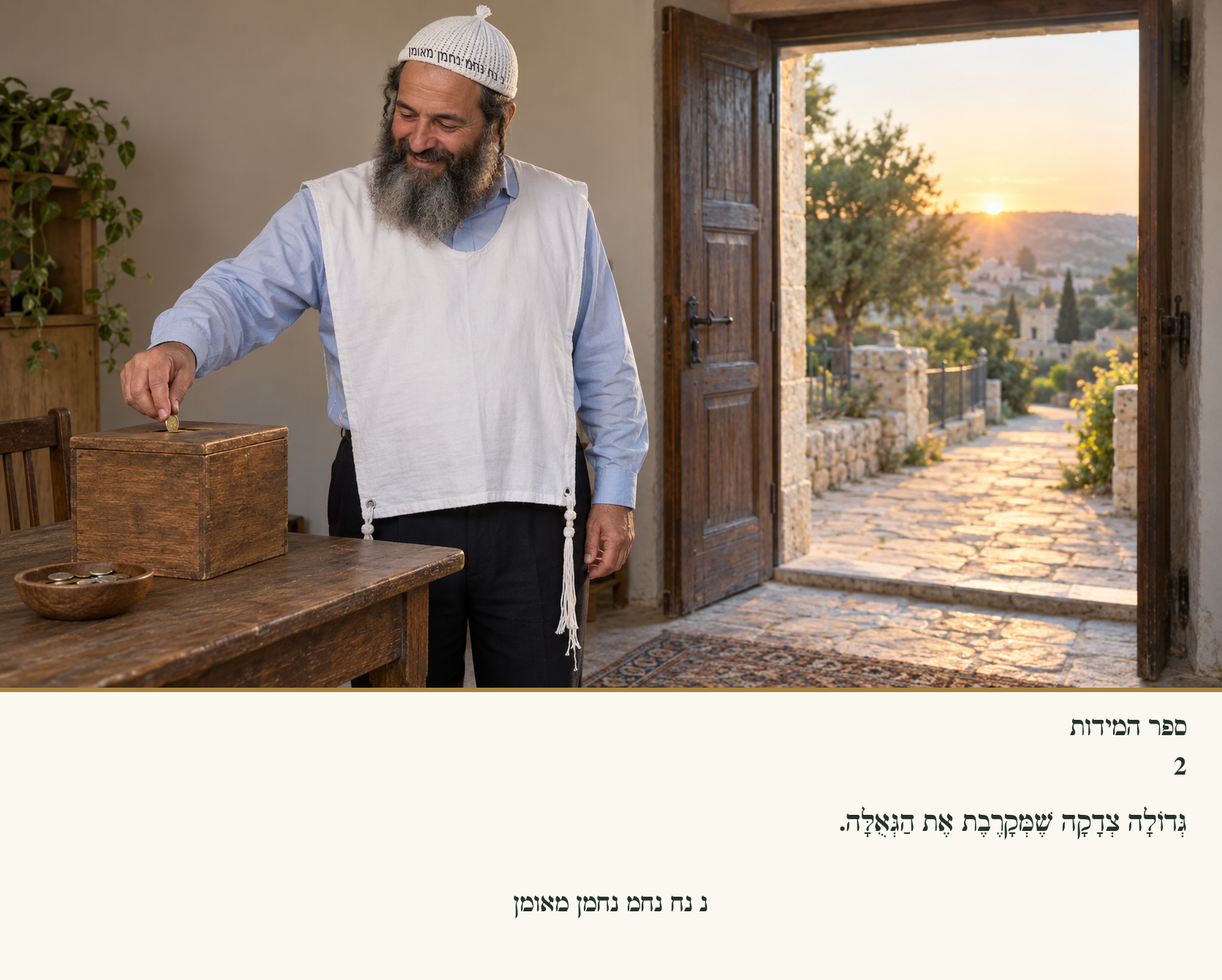
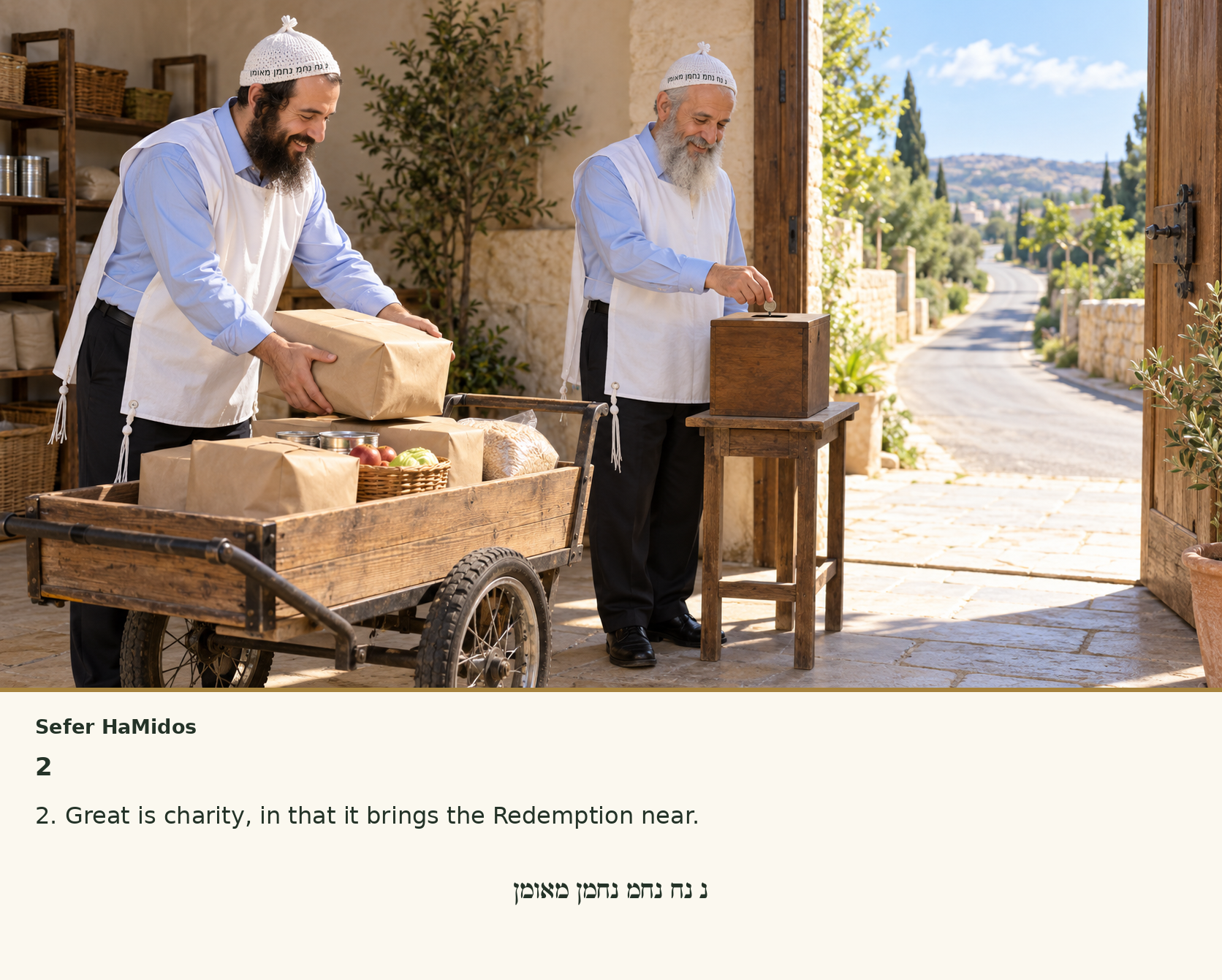
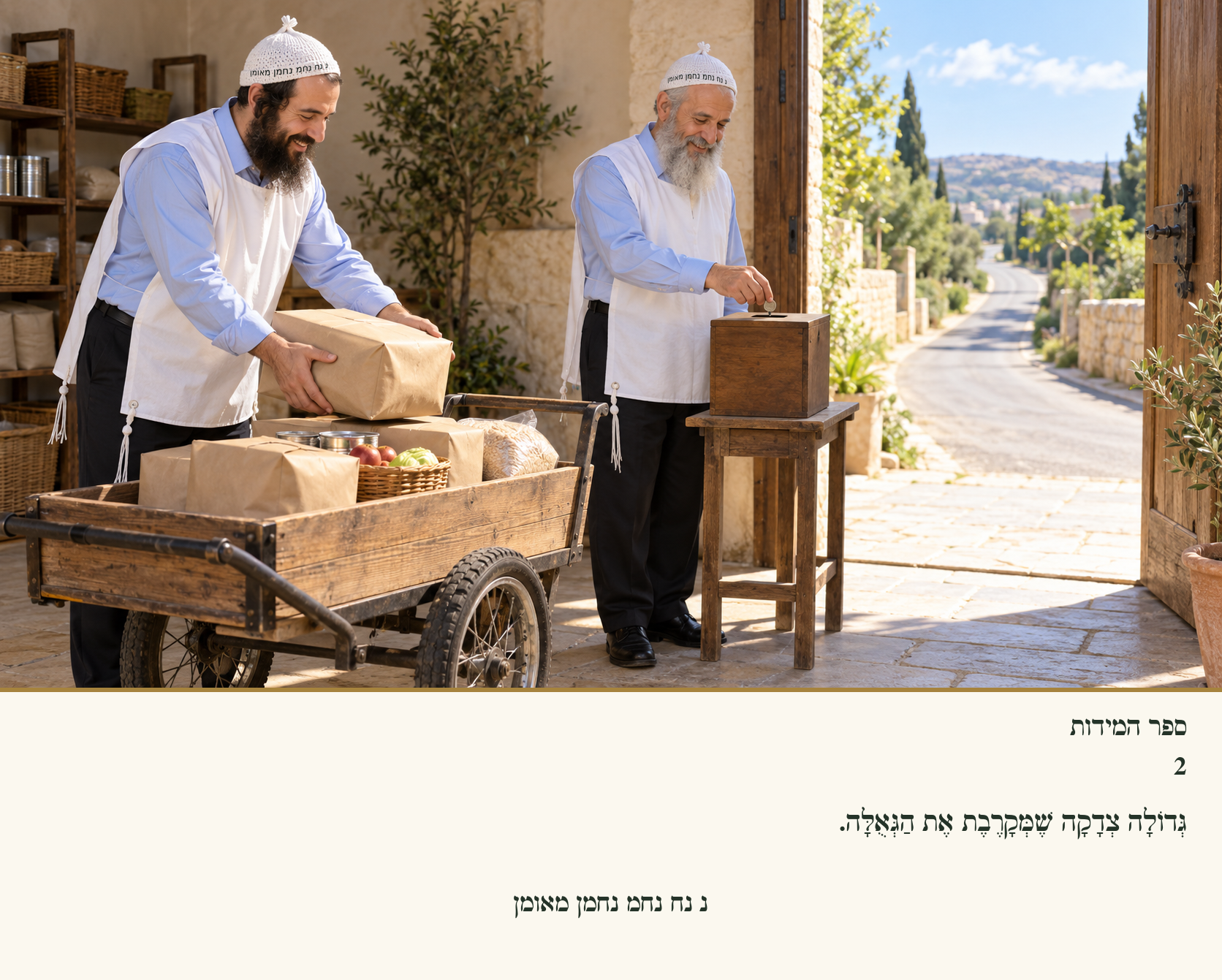
גְּדוֹלָה צְדָקָה שֶׁמְּקָרֶבֶת אֶת הַגְּאֻלָּה.
2
2. Great is charity, in that it brings the Redemption near.
📷 Pictures / videos for this teaching
ג׳
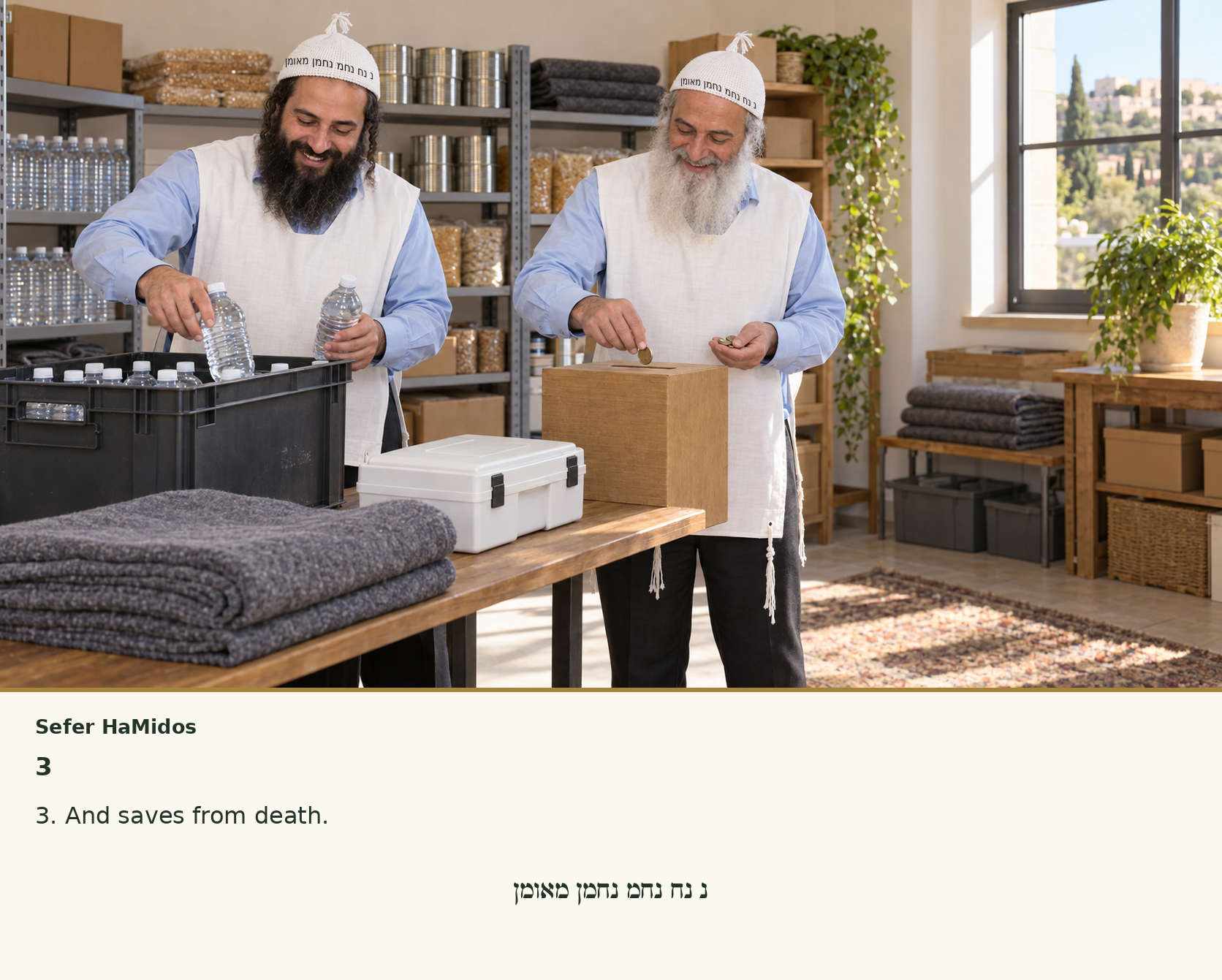
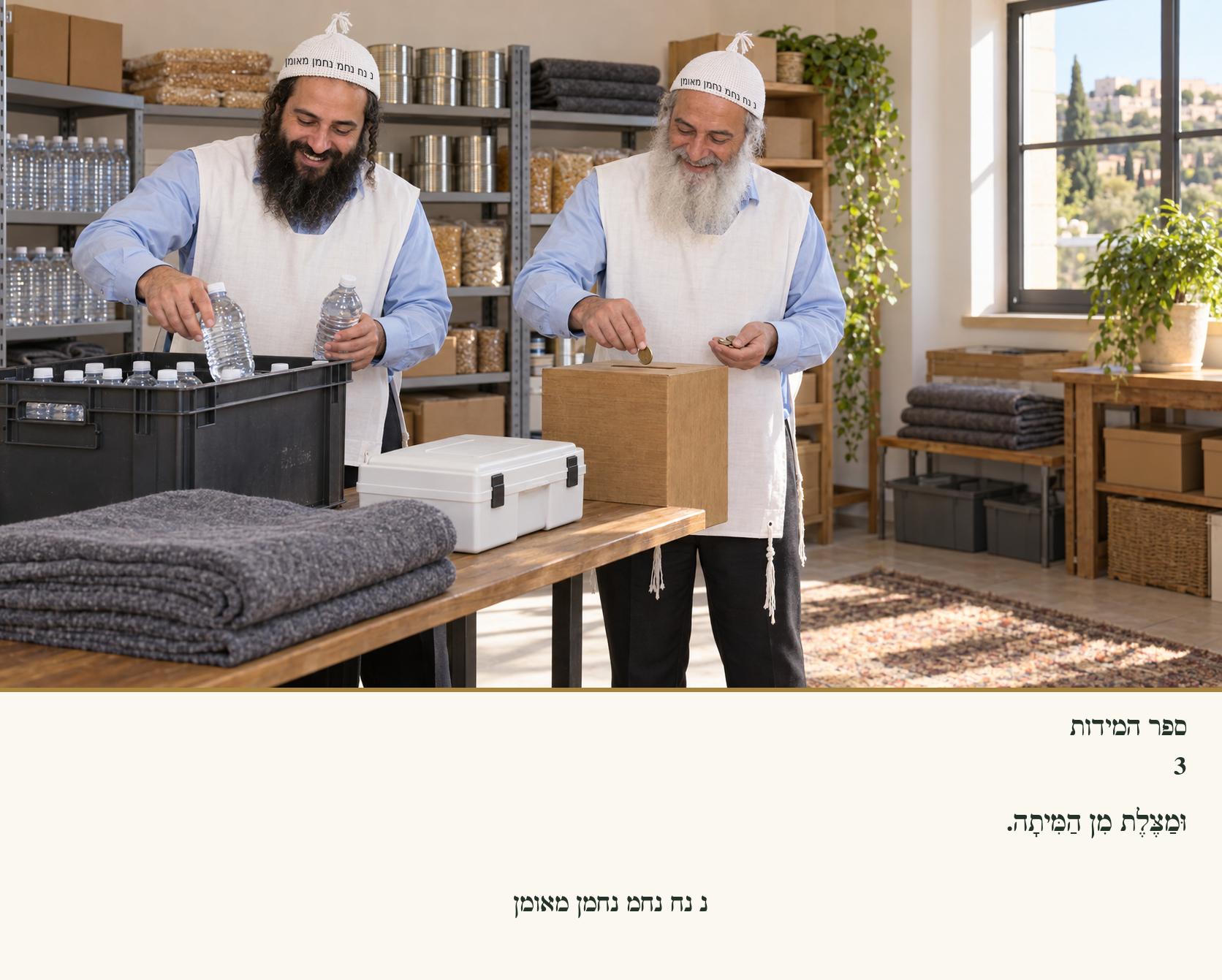
וּמַצֶּלֶת מִן הַמִּיתָה.
3
3. And saves from death.
📷 Pictures / videos for this teaching
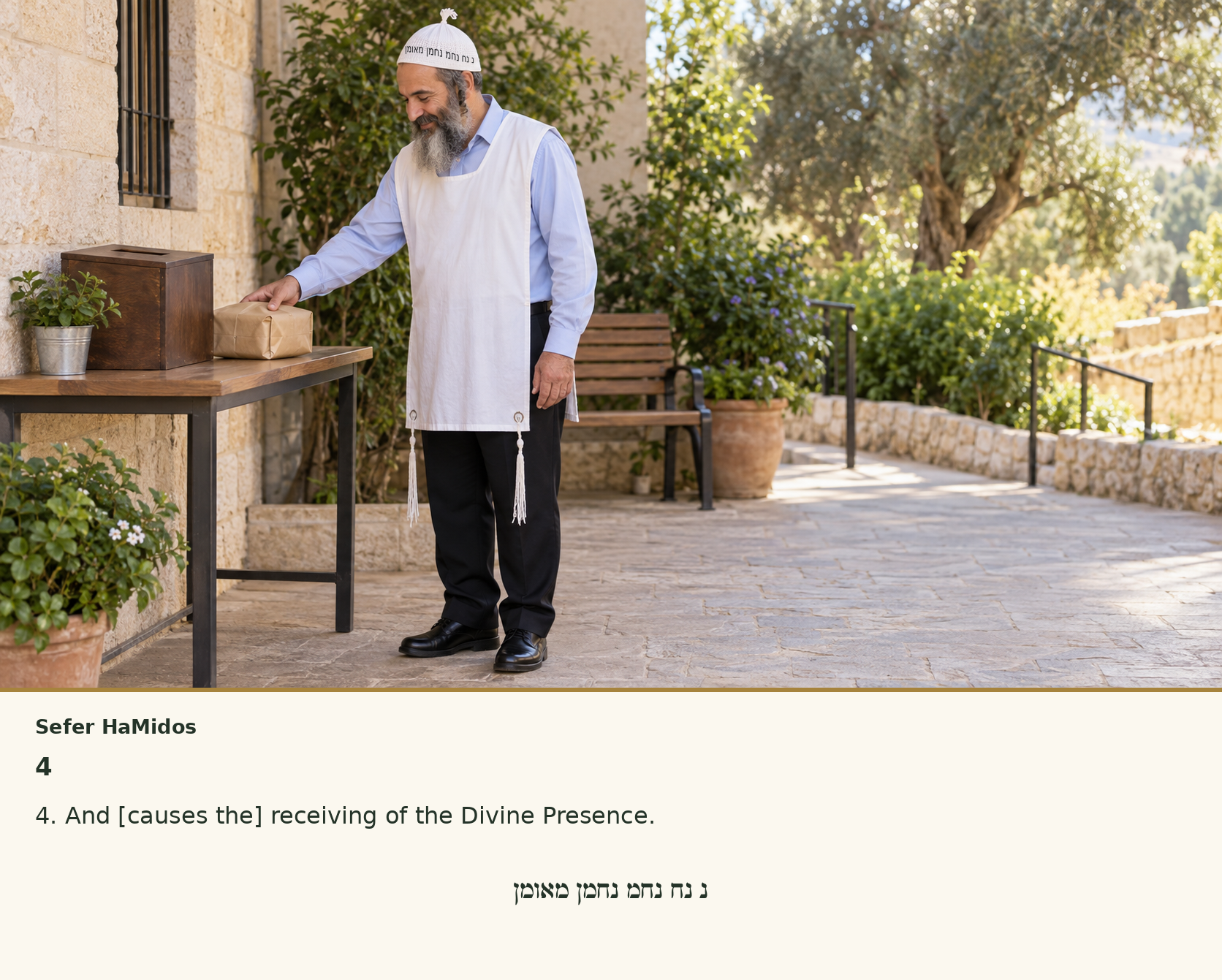
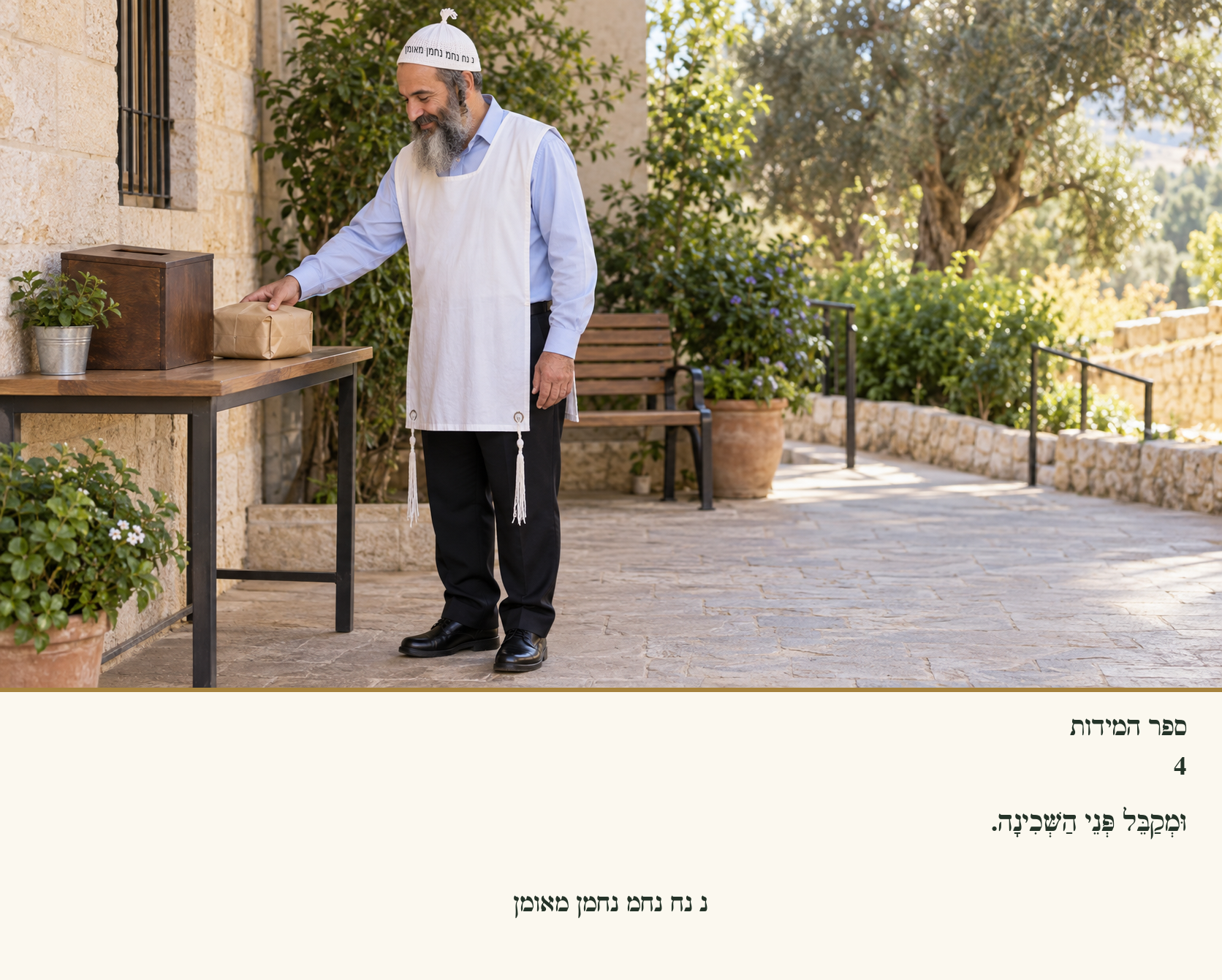
ד׳
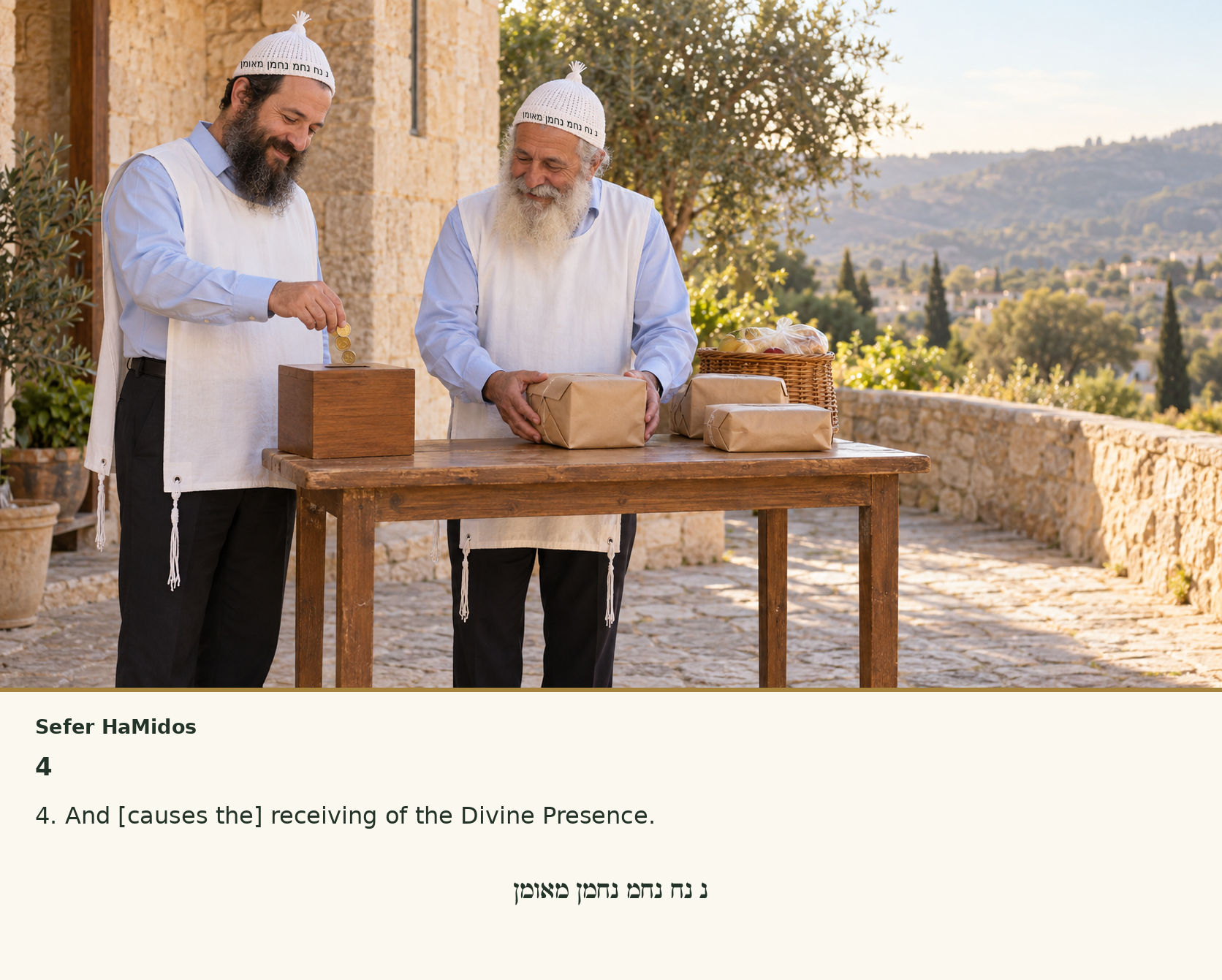
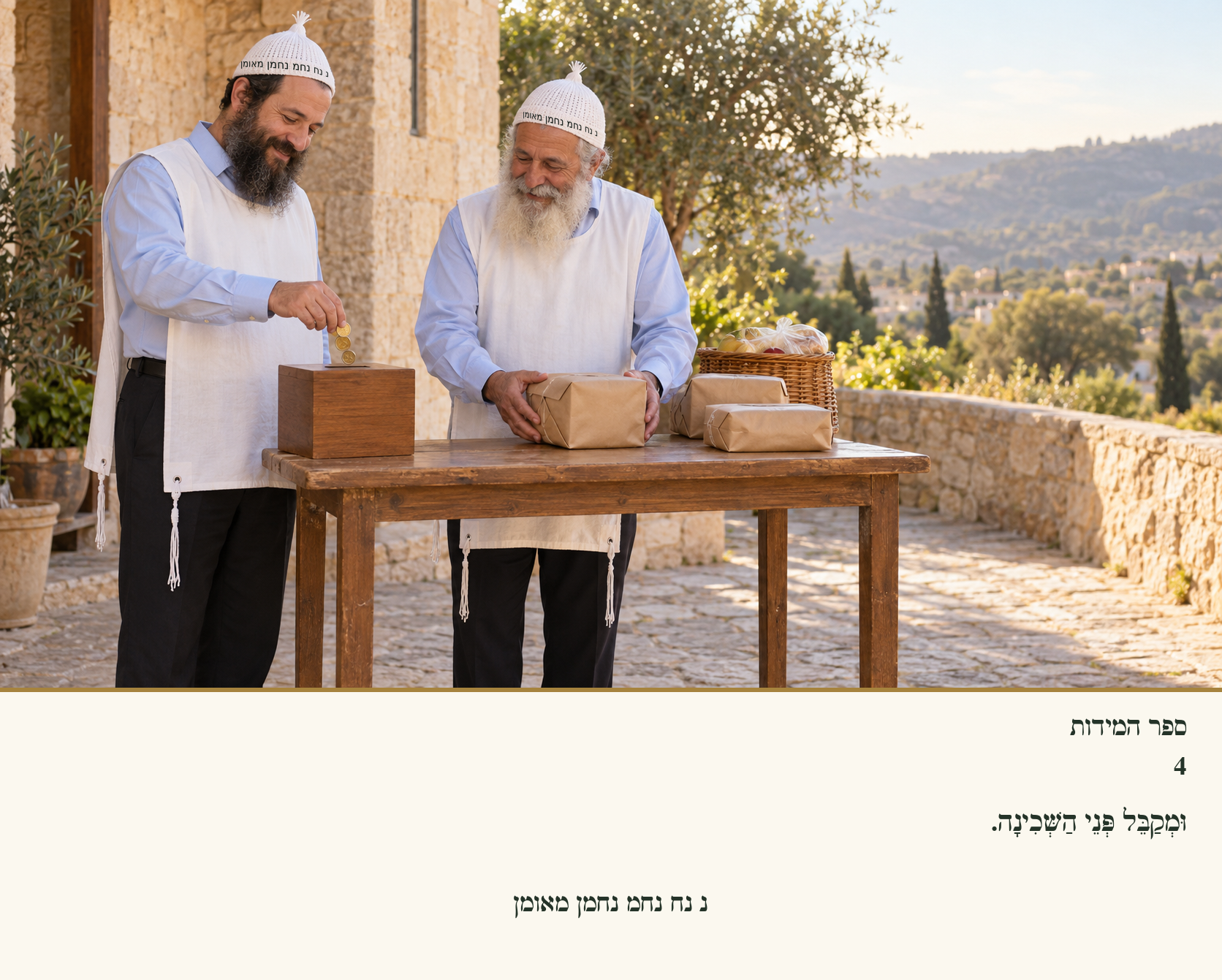
וּמְקַבֵּל פְּנֵי הַשְּׁכִינָה.
4
4. And [causes the] receiving of the Divine Presence.
📷 Pictures / videos for this teaching
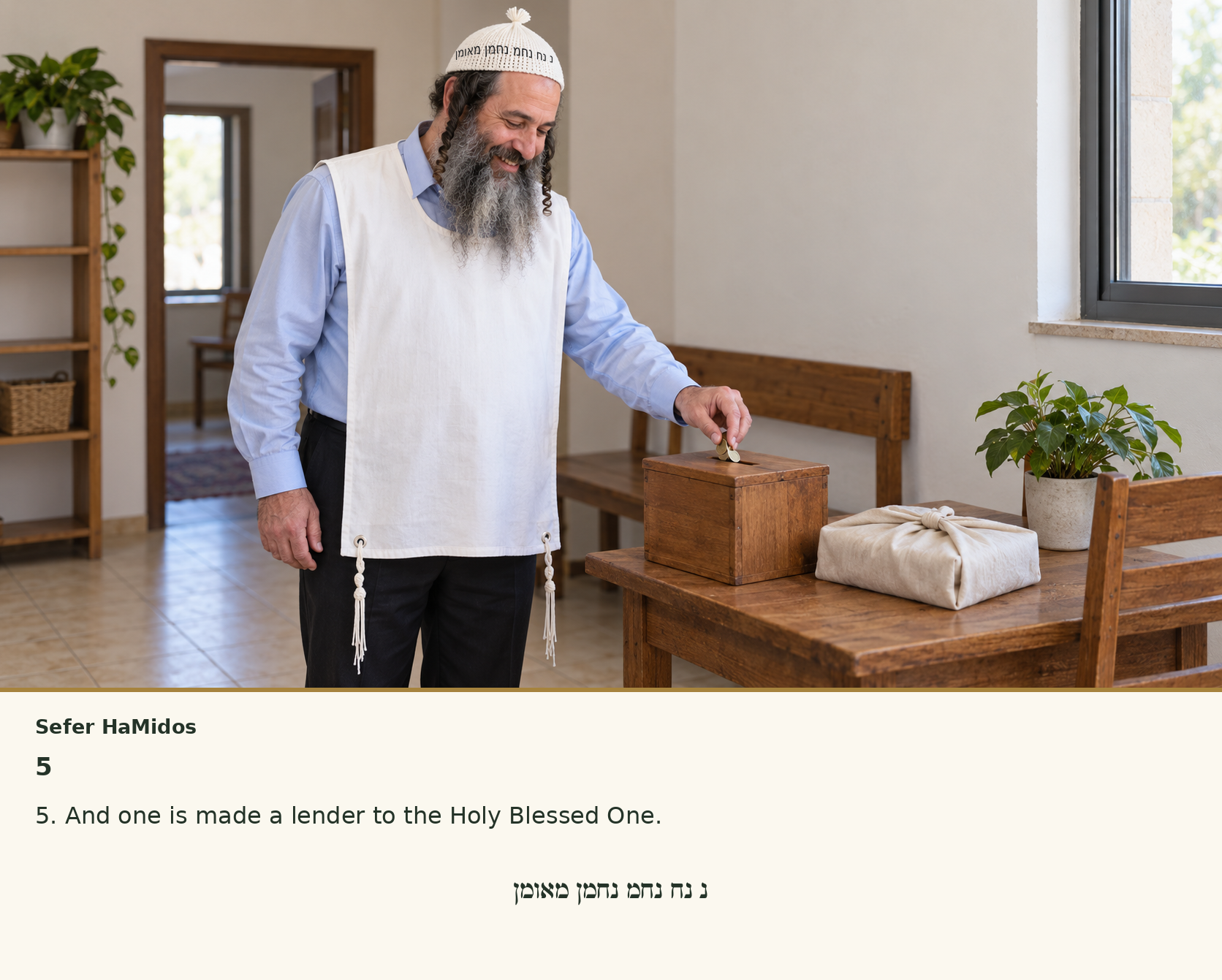
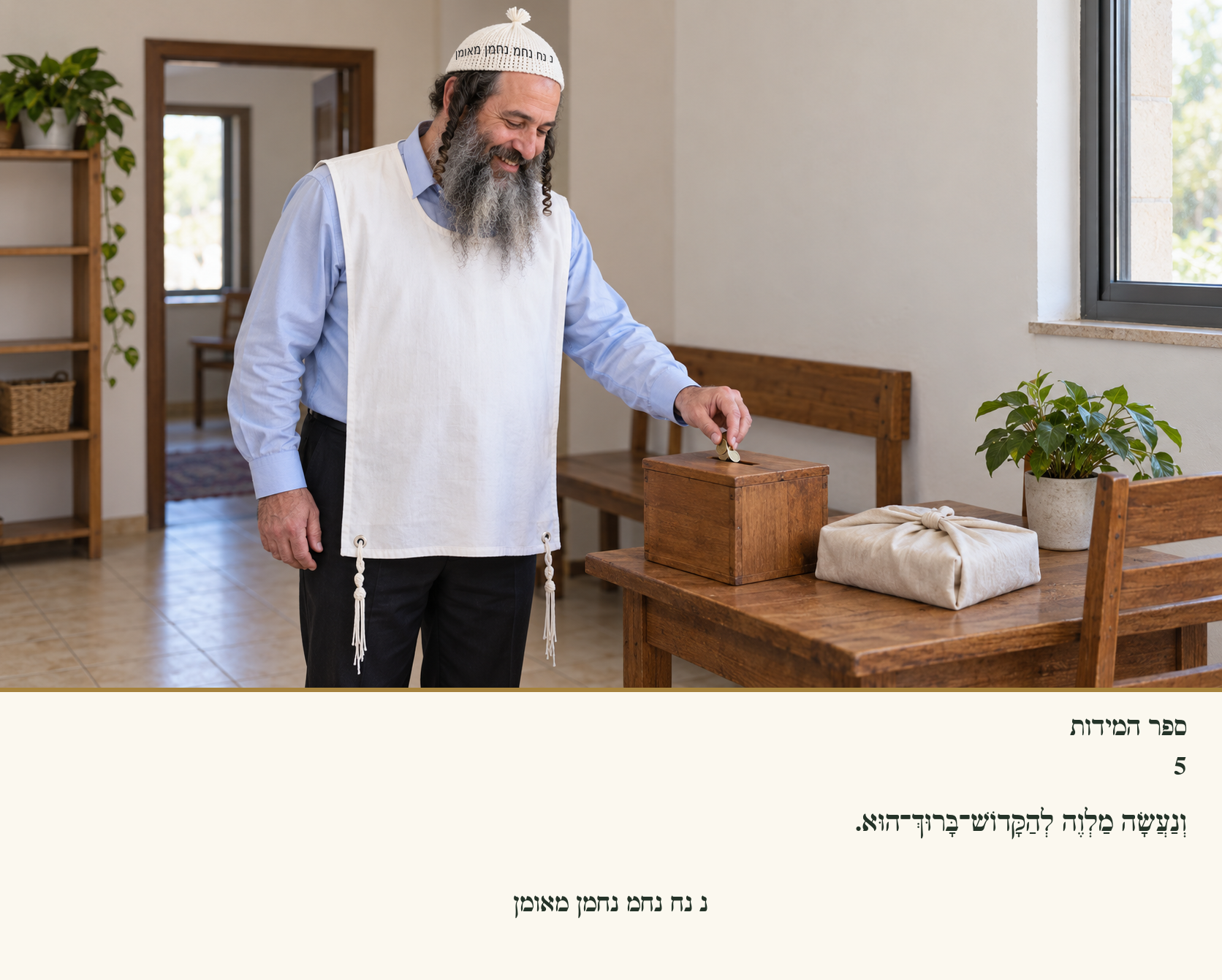
ה׳
וְנַעֲשָׂה מַלְוֶה לְהַקָּדוֹשׁ־בָּרוּךְ־הוּא.
5
5. And one is made a lender to the Holy Blessed One.
📷 Pictures / videos for this teaching
ו׳
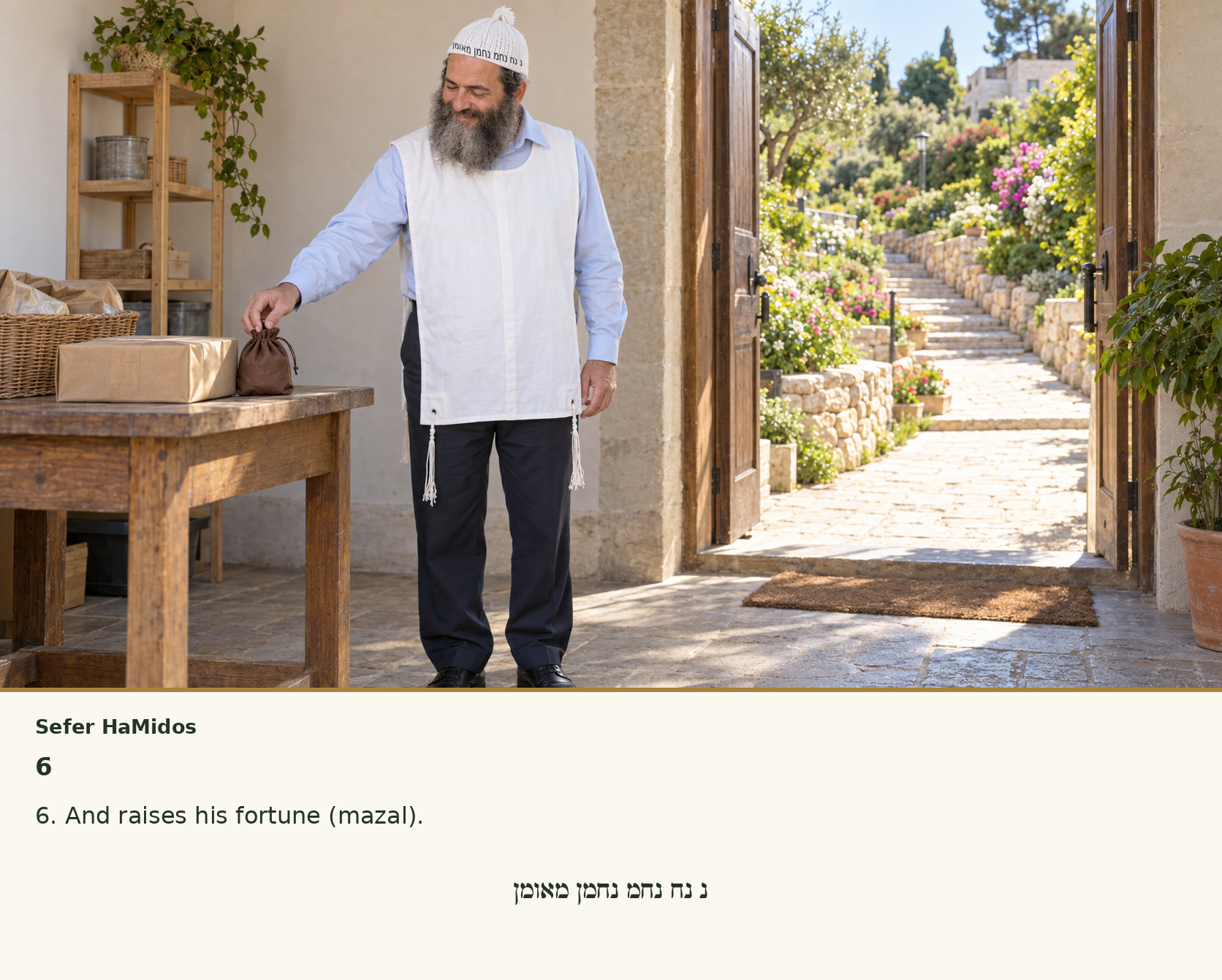
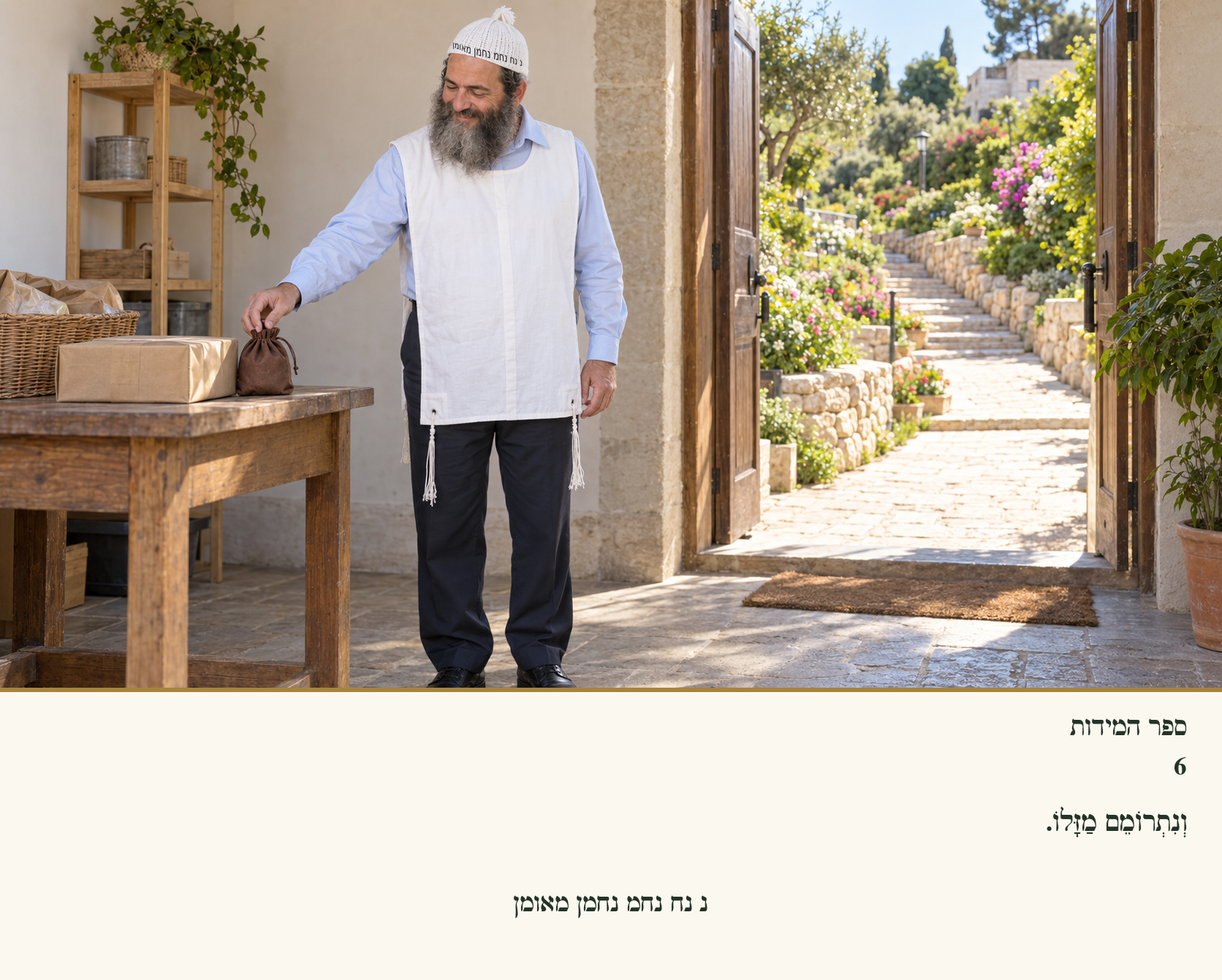
וְנִתְרוֹמֵם מַזָּלוֹ.
6
6. And raises his fortune (mazal).
📷 Pictures / videos for this teaching
ז׳
וְנִקְרָא צַדִּיק גָּמוּר.
7
7. And he is called an absolute Tzaddik (completely righteous person).
ח׳
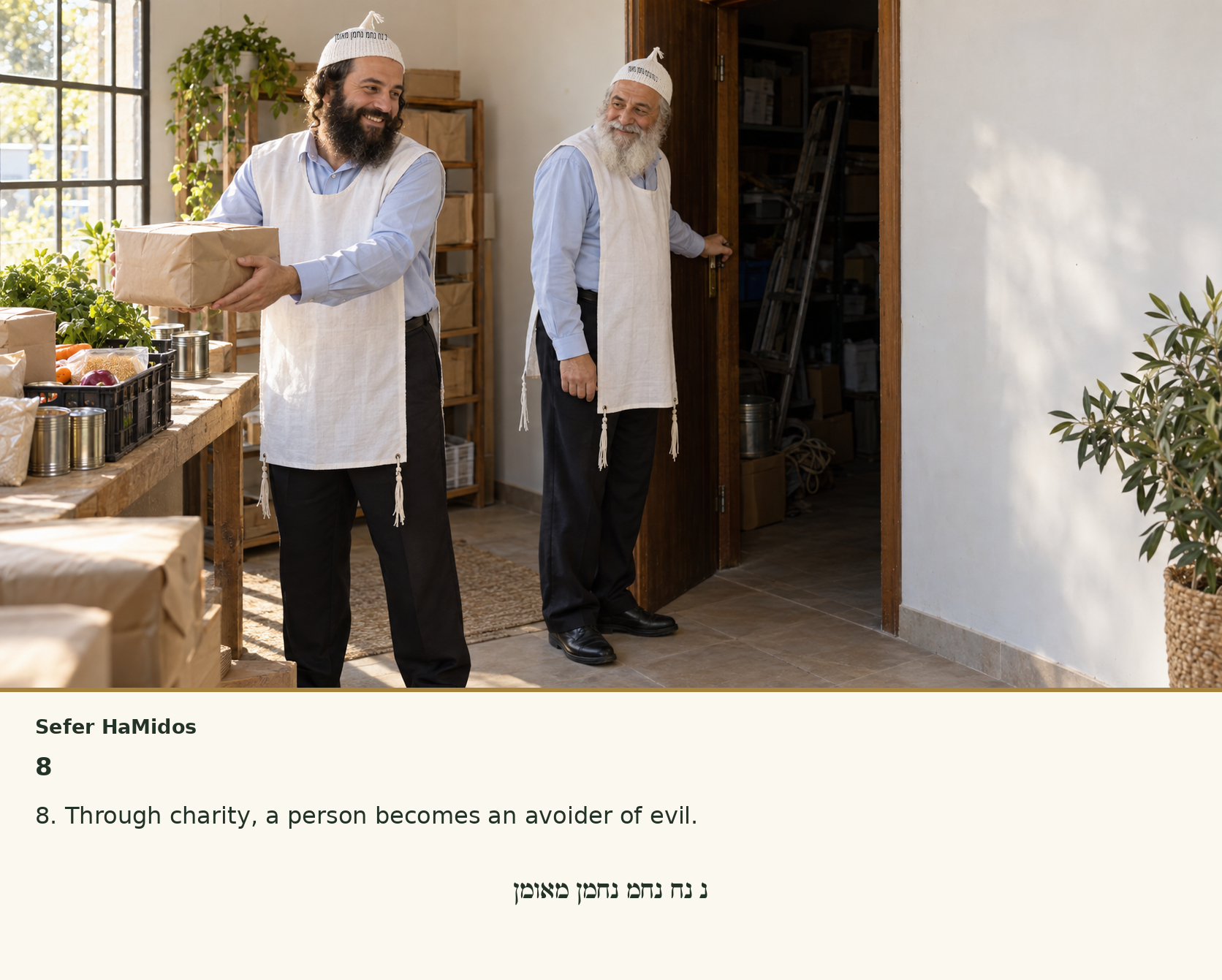
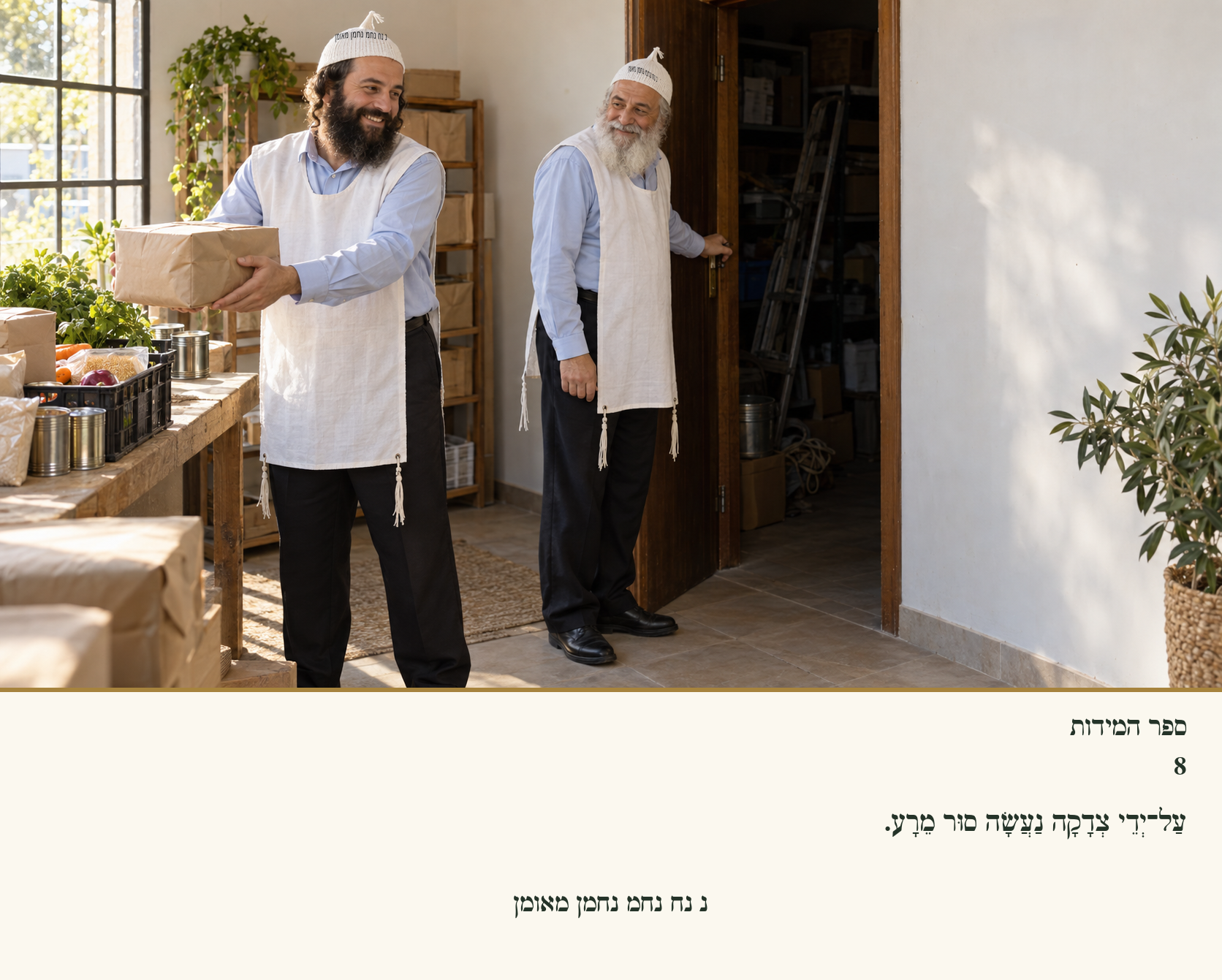
עַל־יְדֵי צְדָקָה נַעֲשָׂה סוּר מֵרָע.
8
8. Through charity, a person becomes an avoider of evil.
📷 Pictures / videos for this teaching
ט׳
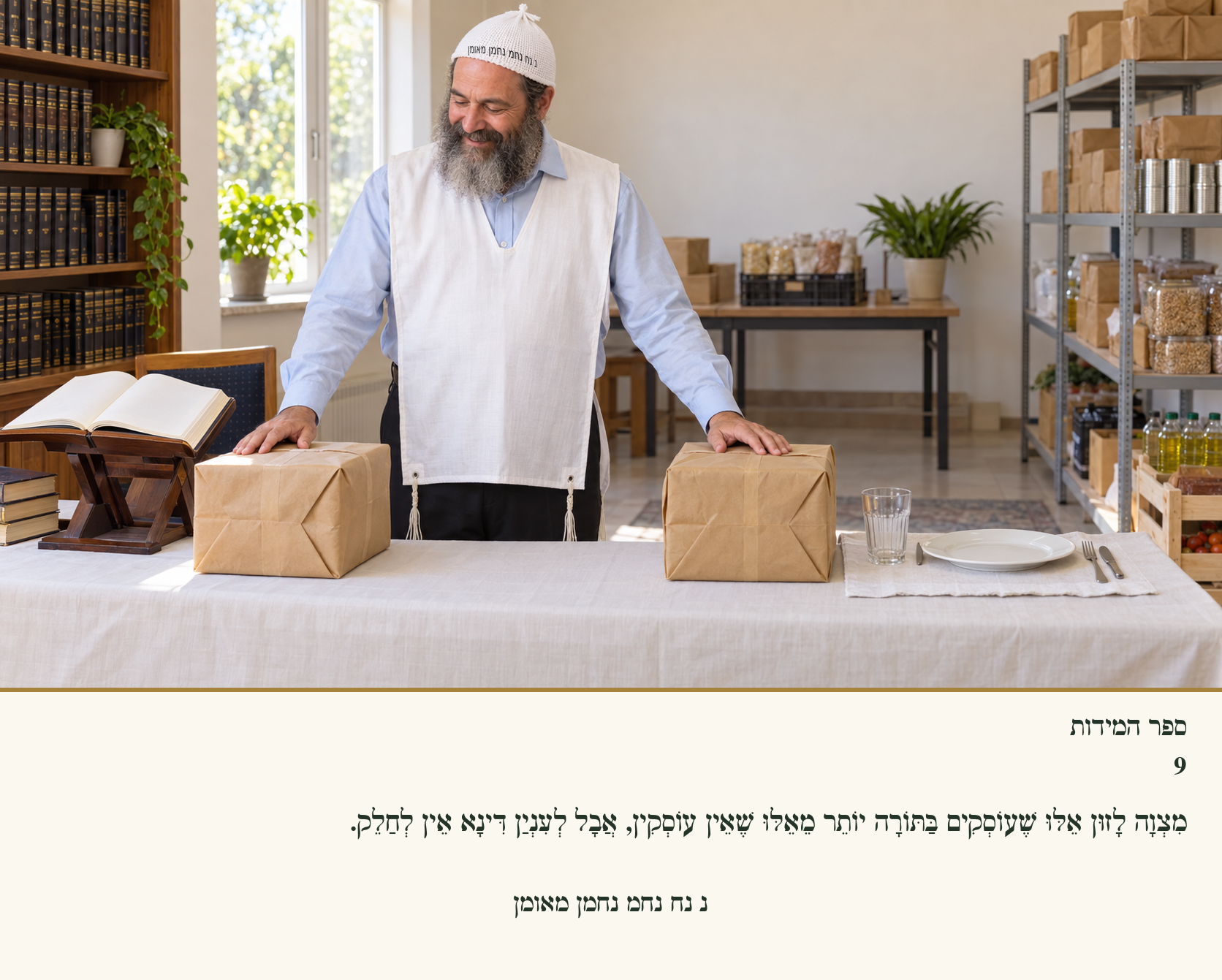
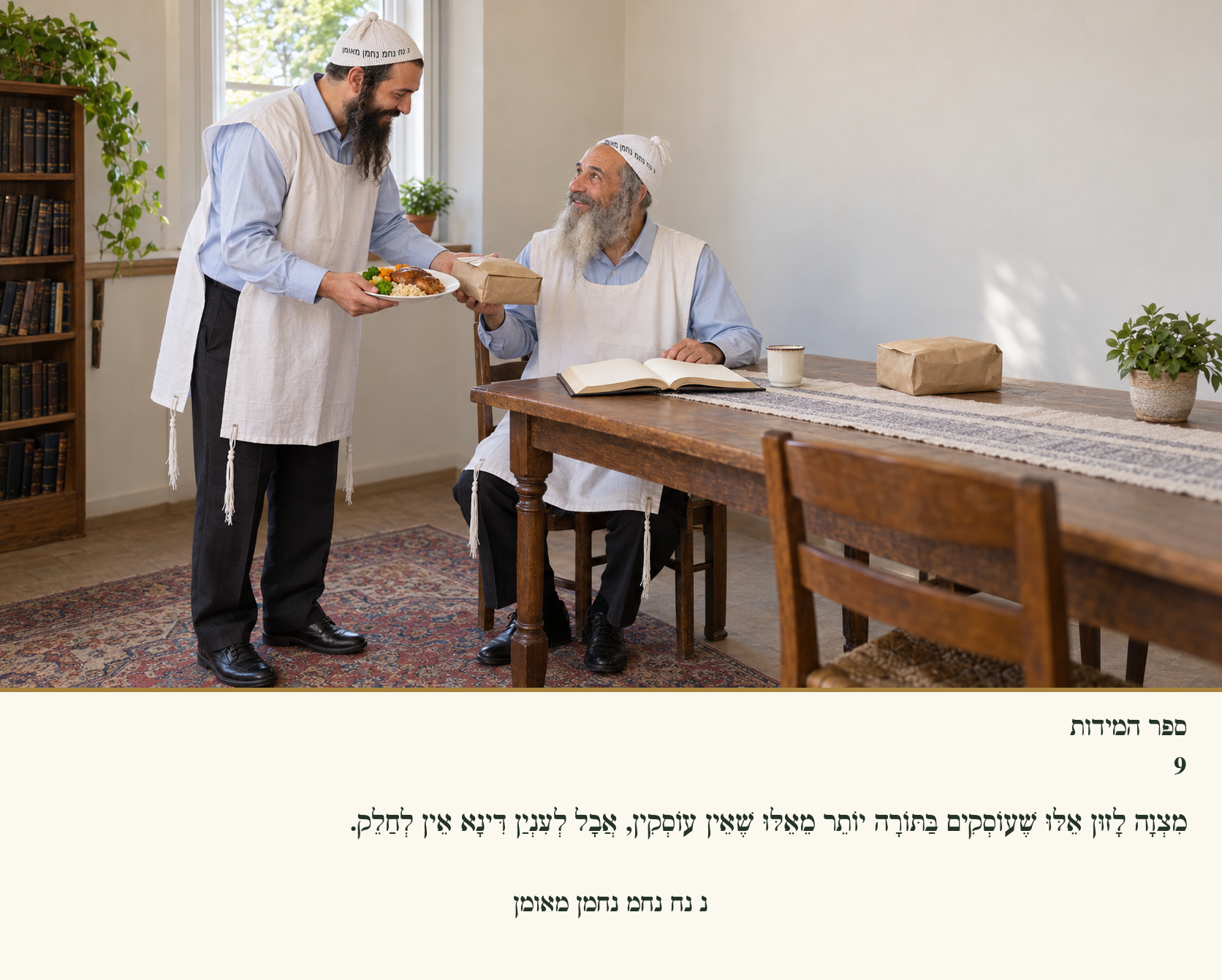
מִצְוָה לָזוּן אֵלּוּ שֶׁעוֹסְקִים בַּתּוֹרָה יוֹתֵר מֵאֵלּוּ שֶׁאֵין עוֹסְקִין, אֲבָל לְעִנְיַן דִּינָא אֵין לְחַלֵק.
9
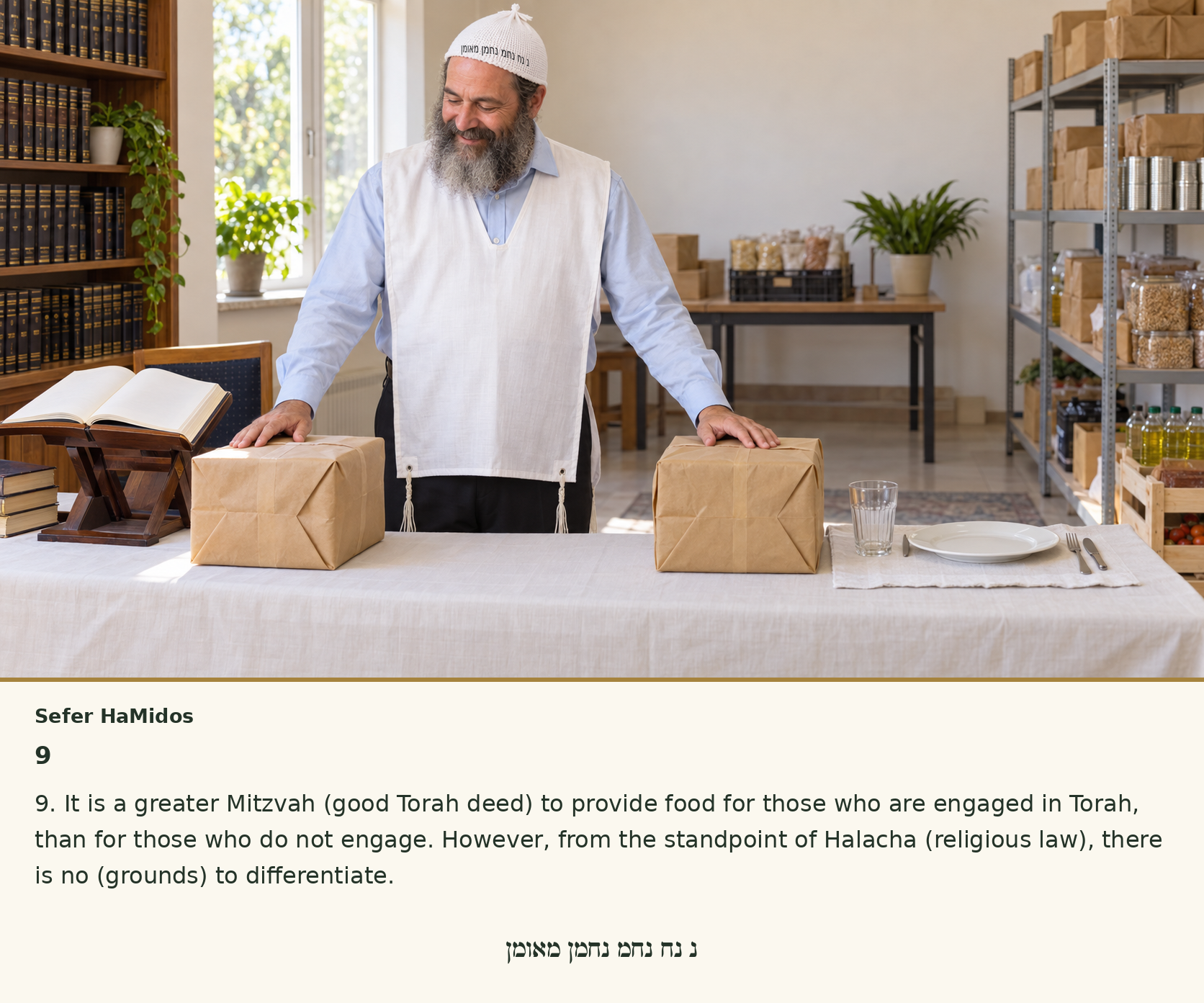
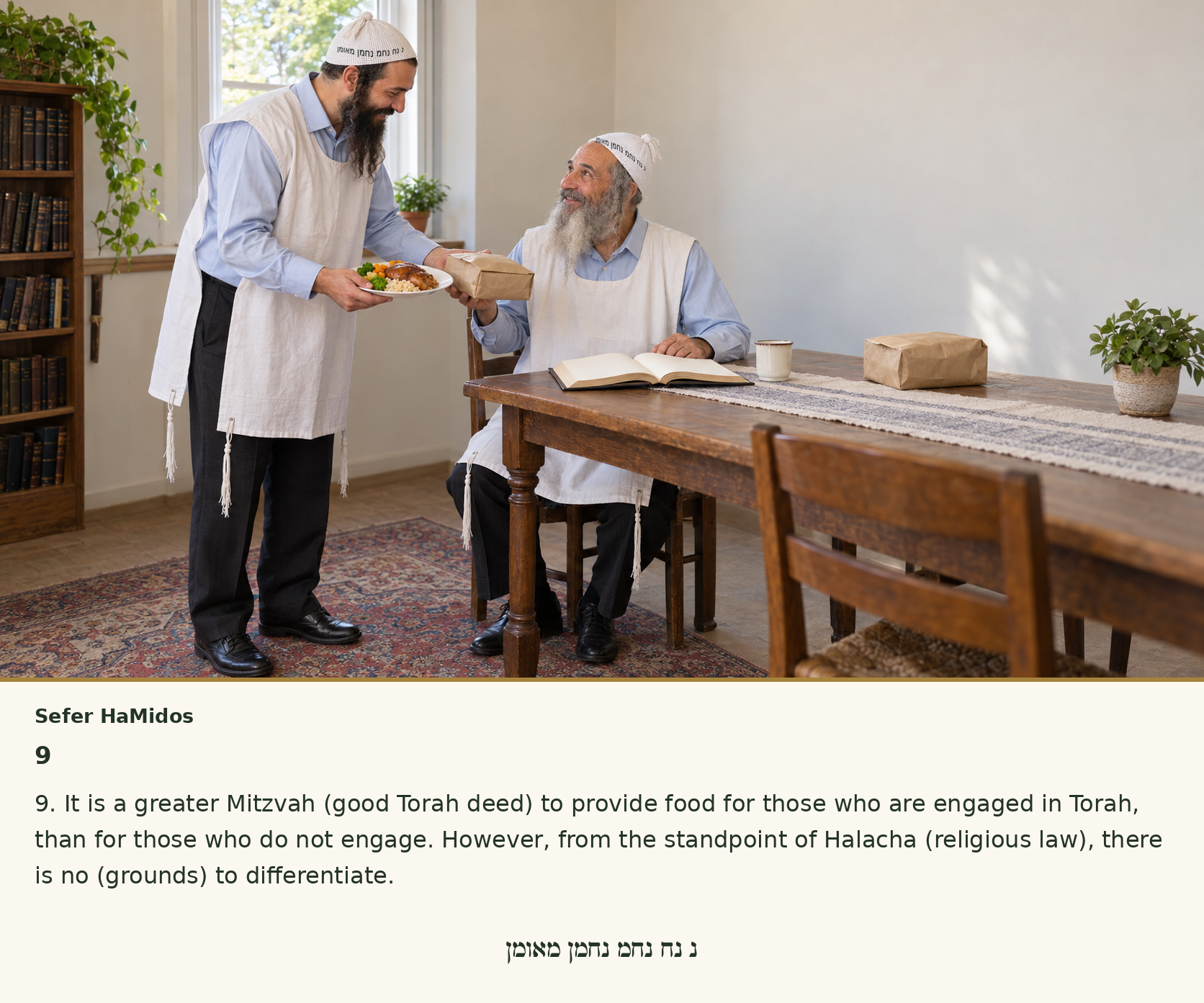
9. It is a greater Mitzvah (good Torah deed) to provide food for those who are engaged in Torah, than for those who do not engage. However, from the standpoint of Halacha (religious law), there is no (grounds) to differentiate.
📷 Pictures / videos for this teaching
י׳
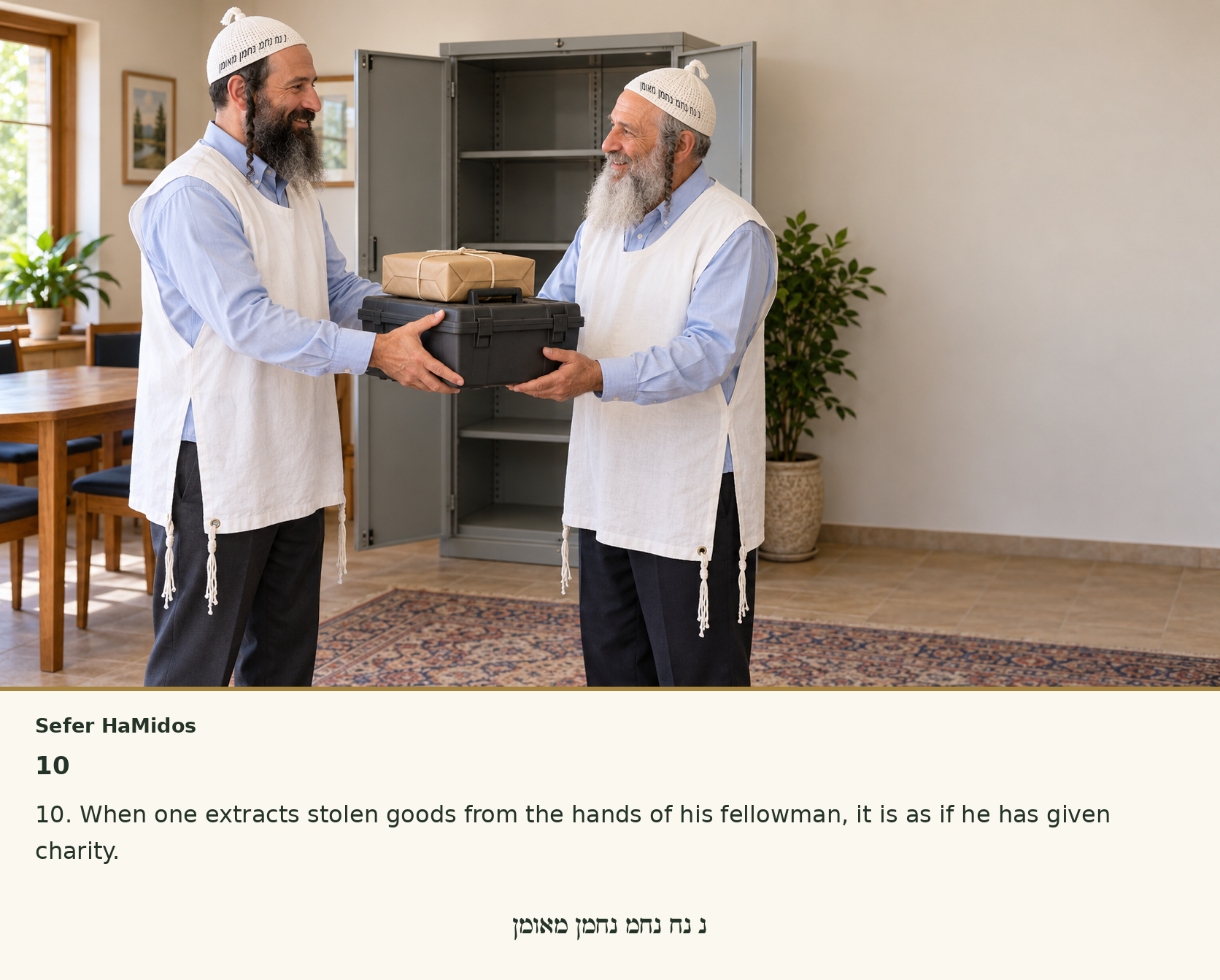
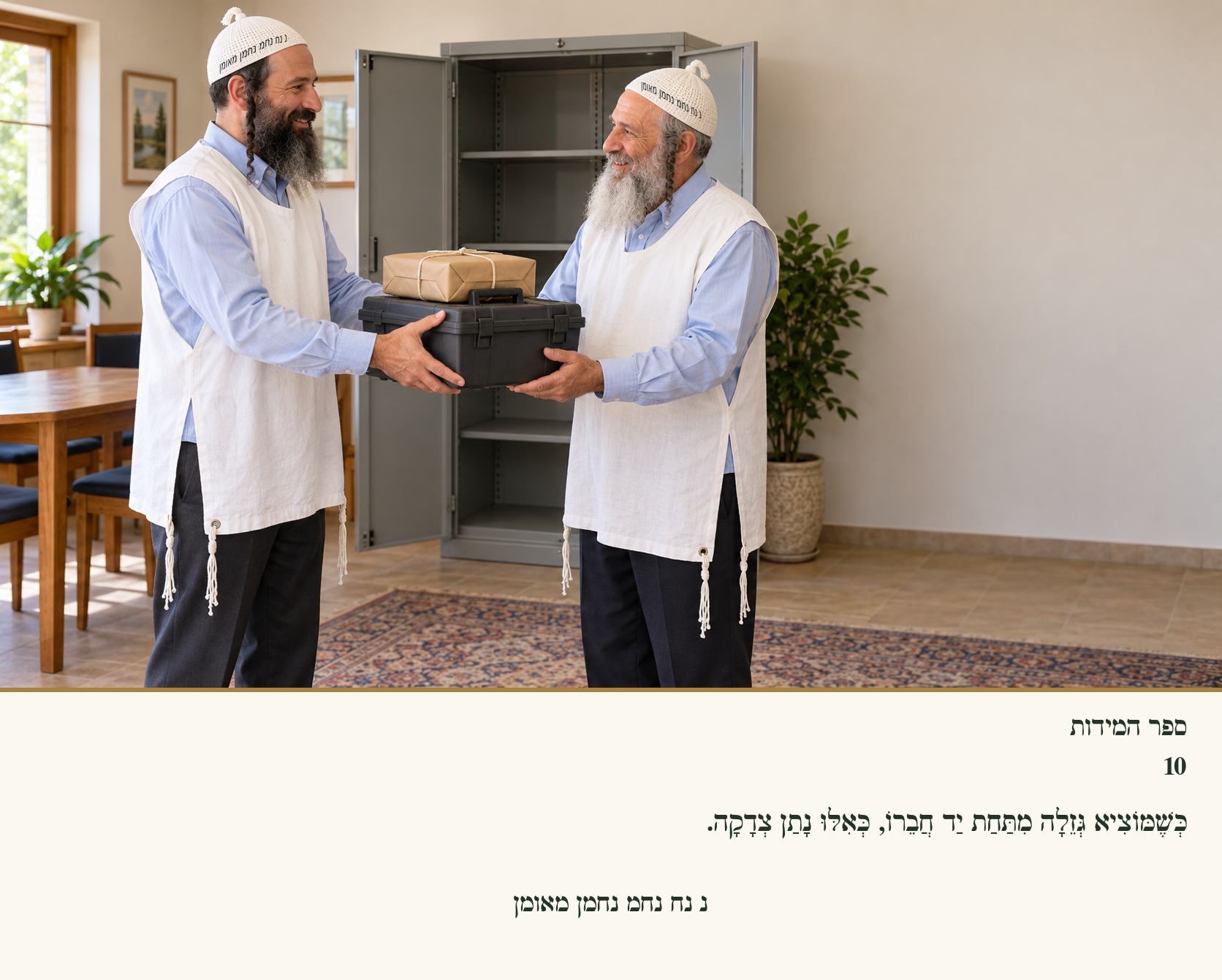
כְּשֶׁמּוֹצִיא גְּזֵלָה מִתַּחַת יַד חֲבֵרוֹ, כְּאִלּוּ נָתַן צְדָקָה.
10
10. When one extracts stolen goods from the hands of his fellowman, it is as if he has given charity.
📷 Pictures / videos for this teaching
י״א
הַפְּשָׁרָה הִיא מִשְׁפָּט, שֶׁיֵּשׁ בּוֹ צְדָקָה.
11
11. Compromise is a legal judgment wherein there is charity.
י״ב
הַנּוֹתֵן צְדָקָה לְעָנִי שֶׁאֵינוֹ הָגוּן, אֵין מְקַבֵּל עַל זֶה שָׂכָר.
12
12. One who gives charity to an improper poor person is not rewarded for it.
י״ג
צָרִיךְ לְהַחֲזִיק טוֹבָה לַנּוֹתֵן, וְאַל תֹּאמַר שֶׁלֹּא נָתַן לְךָ מִשֶּׁלּוֹ.
13
13. It is necessary to be appreciative to one who gives, and you should not say that he didn't give of his own .
י״ד
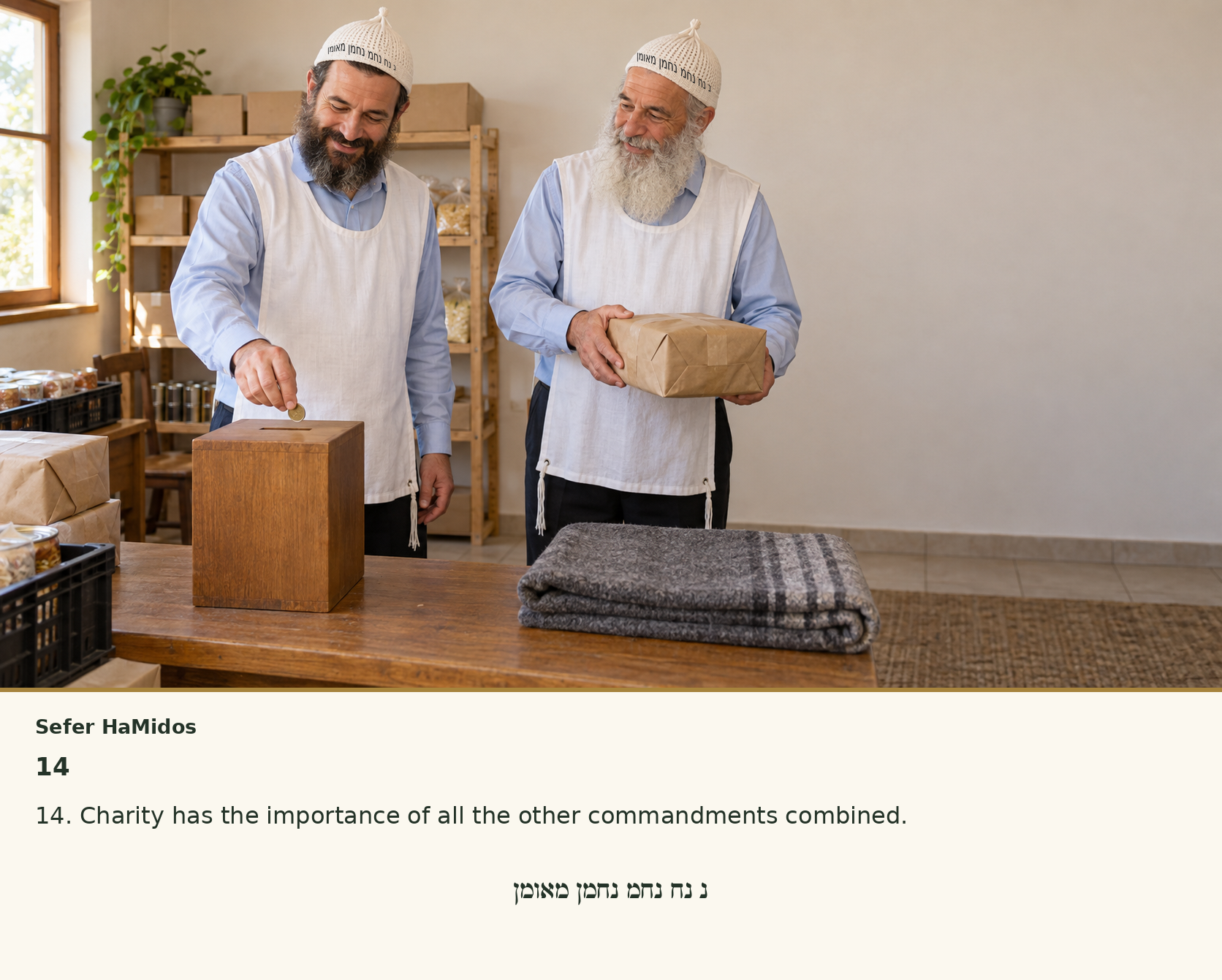
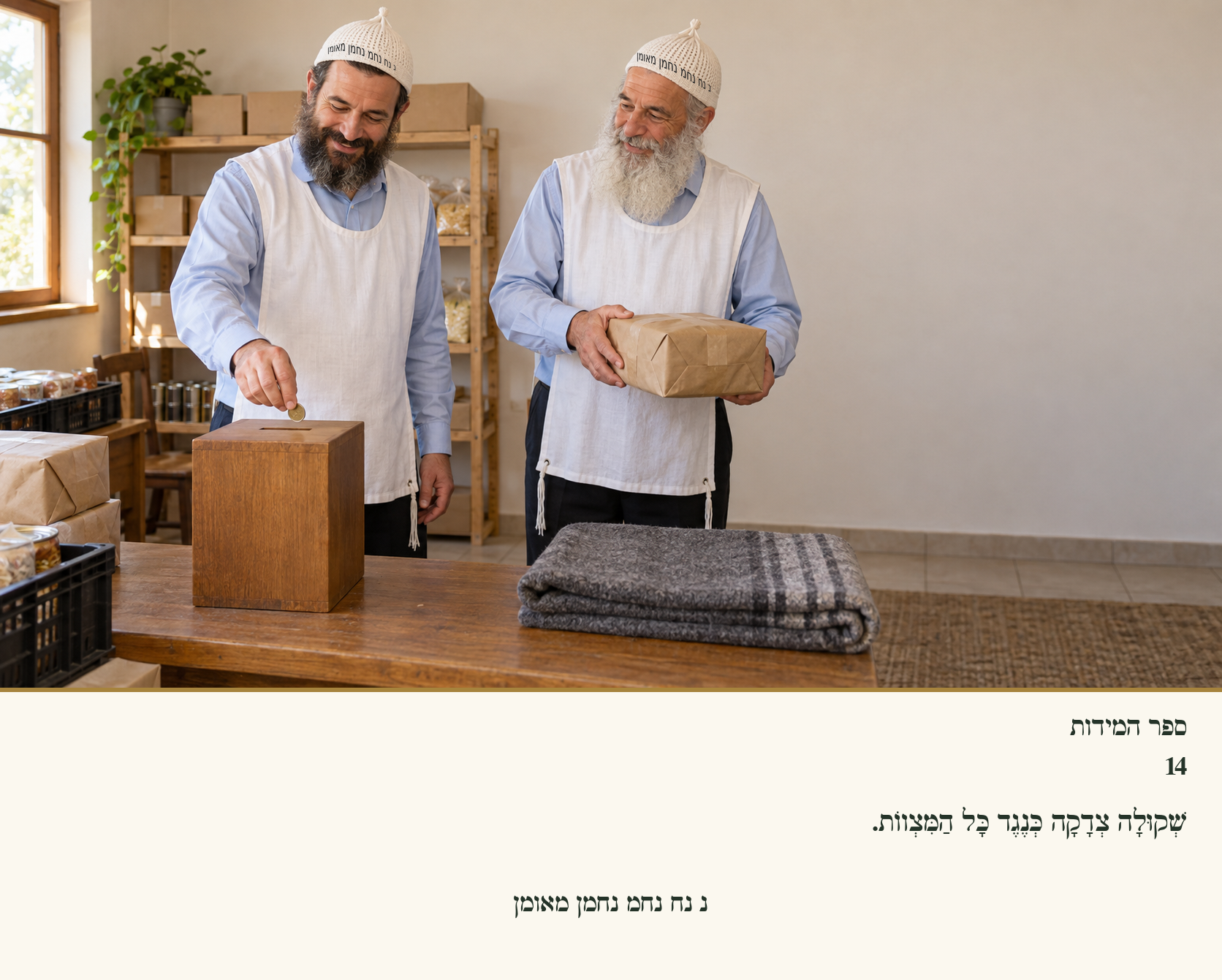
שְׁקוּלָה צְדָקָה כְּנֶגֶד כָּל הַמִּצְווֹת.
14
14. Charity has the importance of all the other commandments combined.
📷 Pictures / videos for this teaching
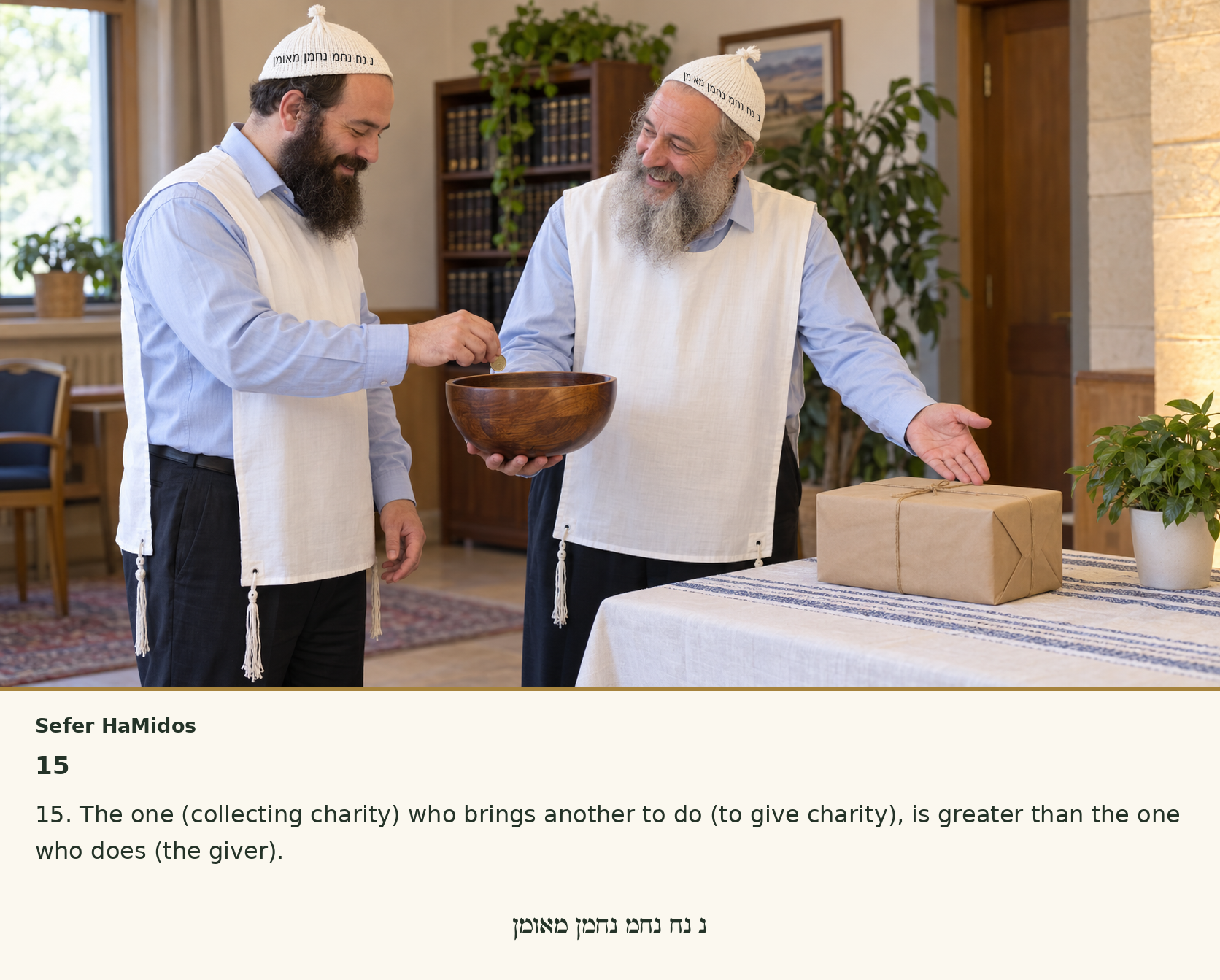
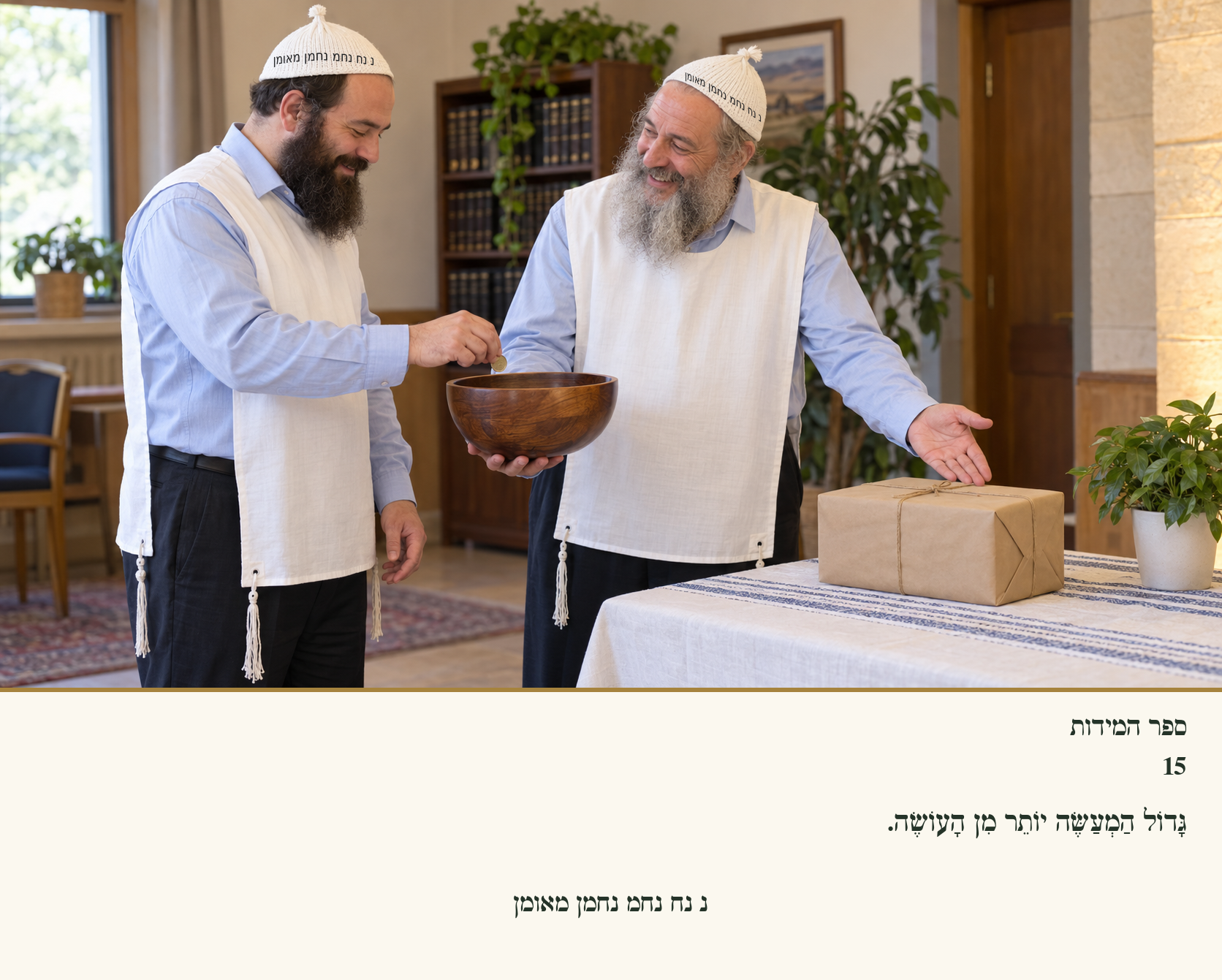
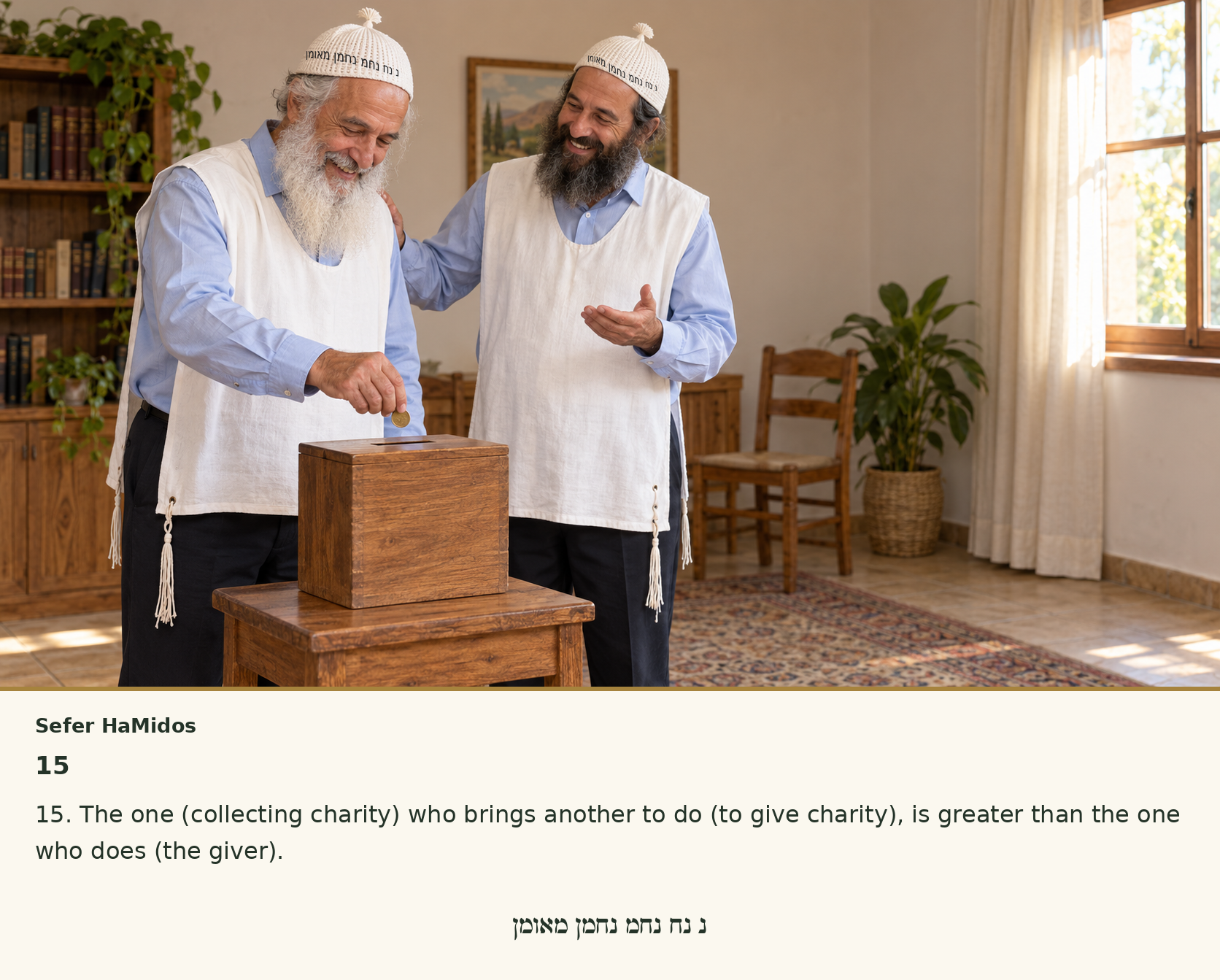
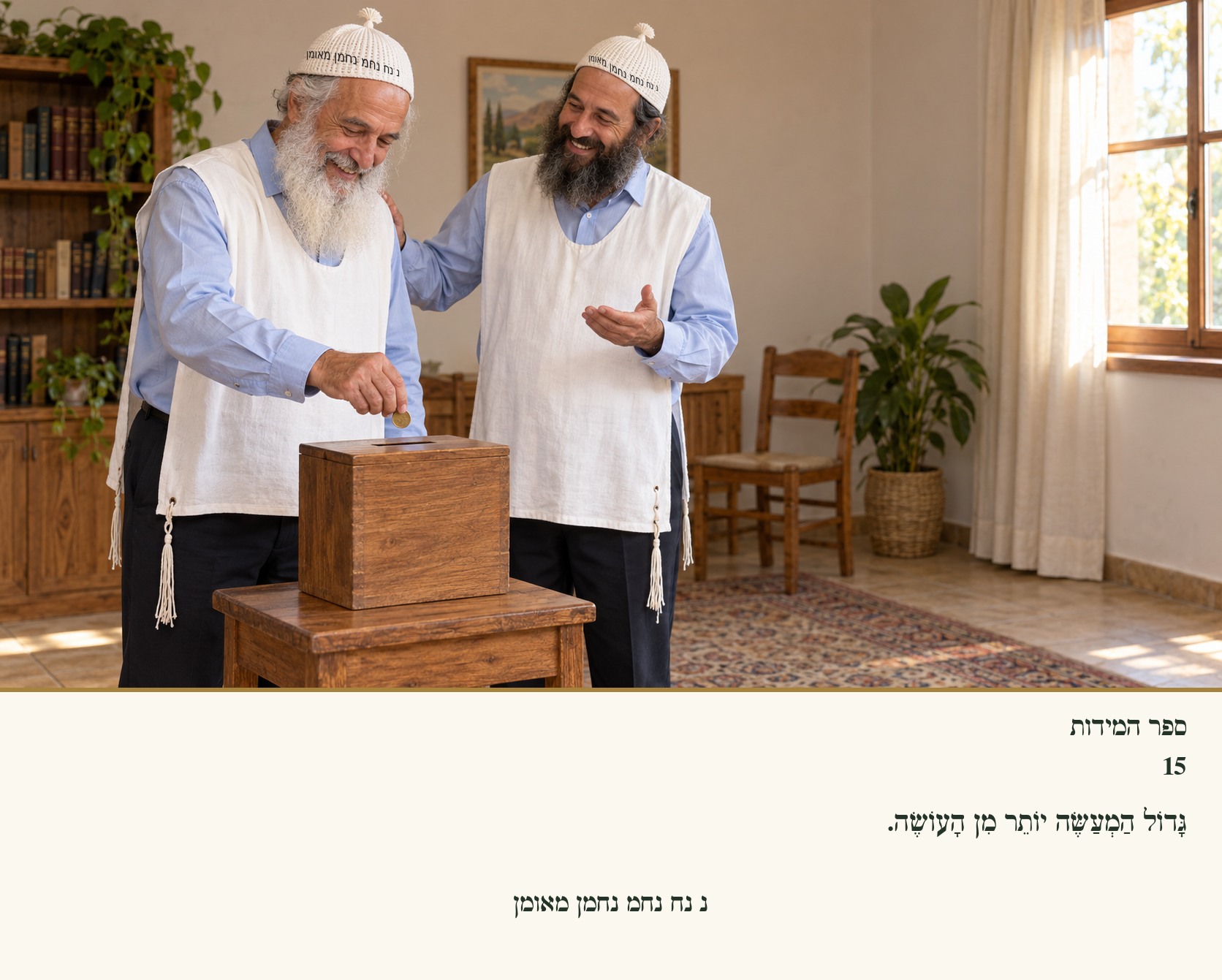
ט״ו
גָּדוֹל הַמְעַשֶּׂה יוֹתֵר מִן הָעוֹשֶׂה.
15
15. The one (collecting charity) who brings another to do (to give charity), is greater than the one who does (the giver).
📷 Pictures / videos for this teaching
ט״ז
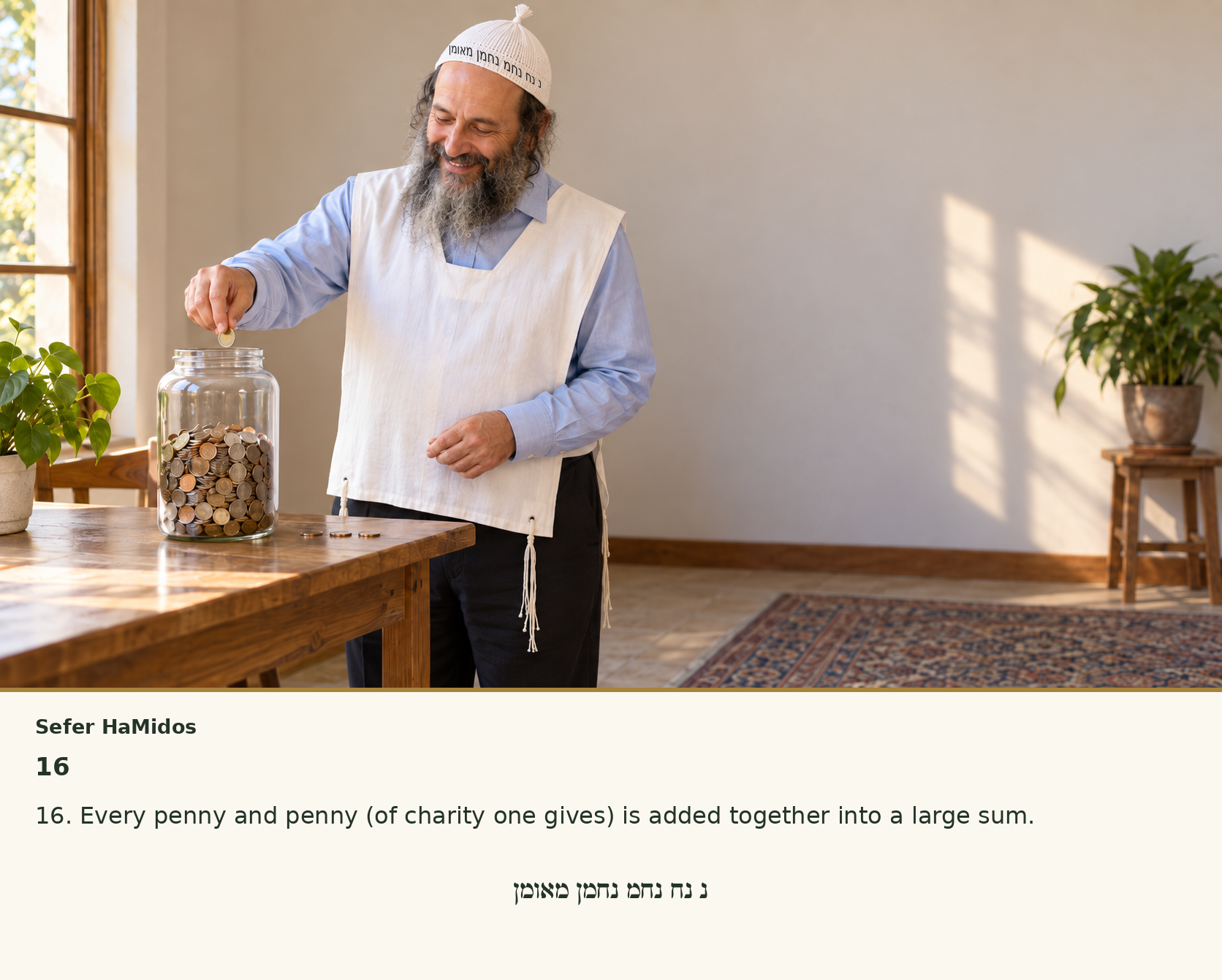
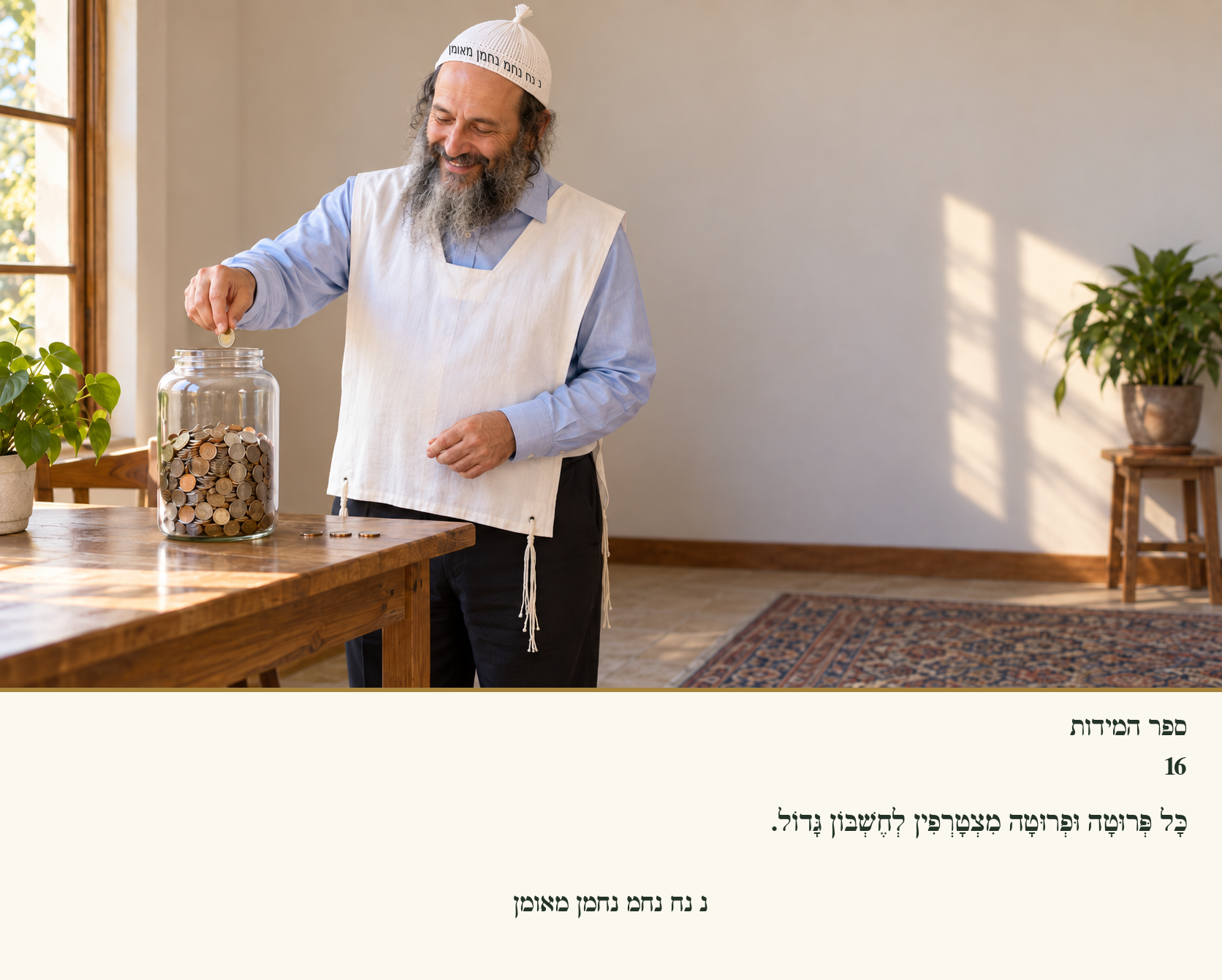
כָּל פְּרוּטָה וּפְרוּטָה מִצְטָרְפִין לְחֶשְׁבּוֹן גָּדוֹל.
16
16. Every penny and penny (of charity one gives) is added together into a large sum.
📷 Pictures / videos for this teaching
י״ז
גָּדוֹל הָעוֹשֶׂה צְדָקָה בַּסֵּתֶר יוֹתֵר מִמֹּשֶׁה.
17
17. One who gives charity in a hidden manner is greater than Moshe (Moses).
י״ח
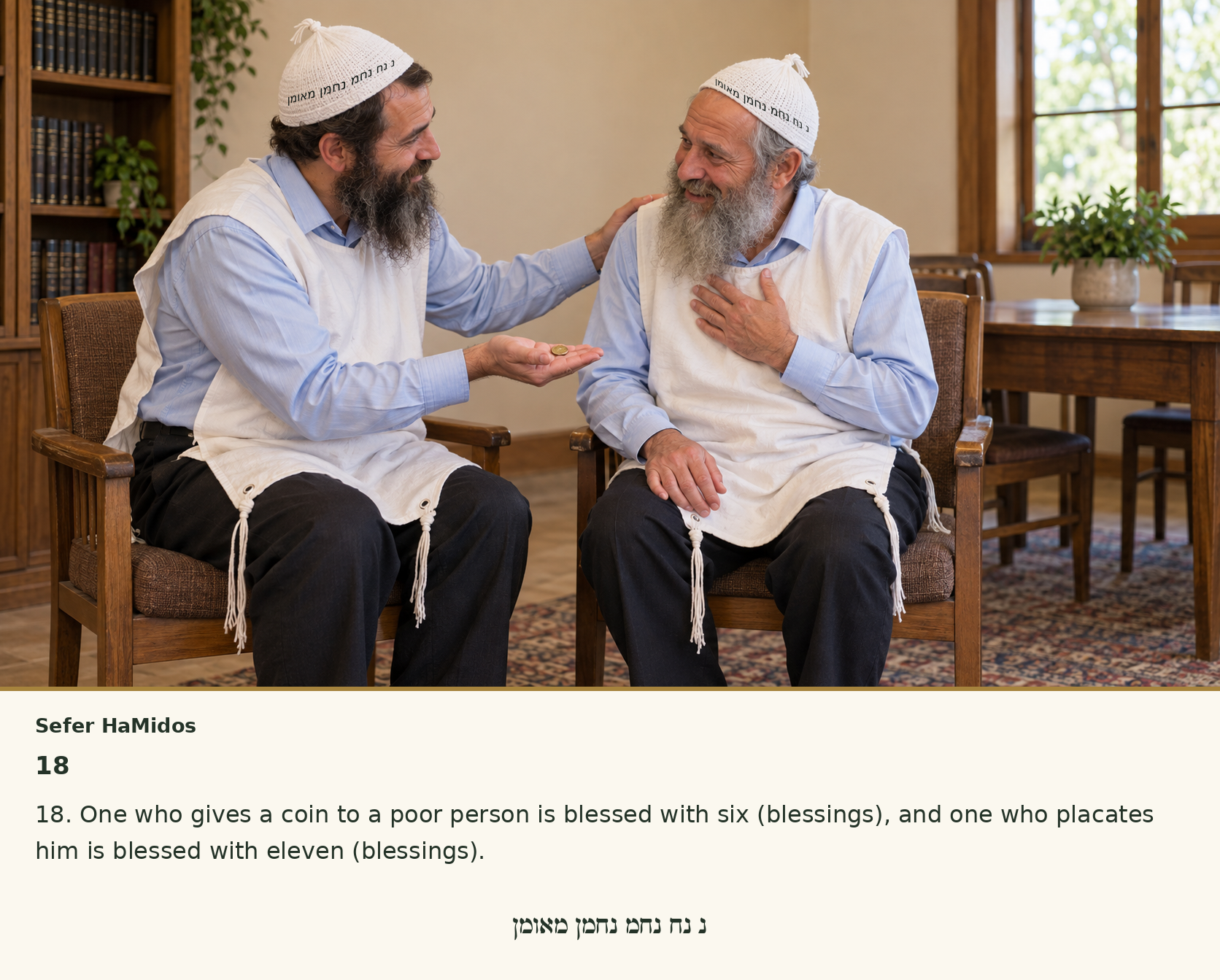
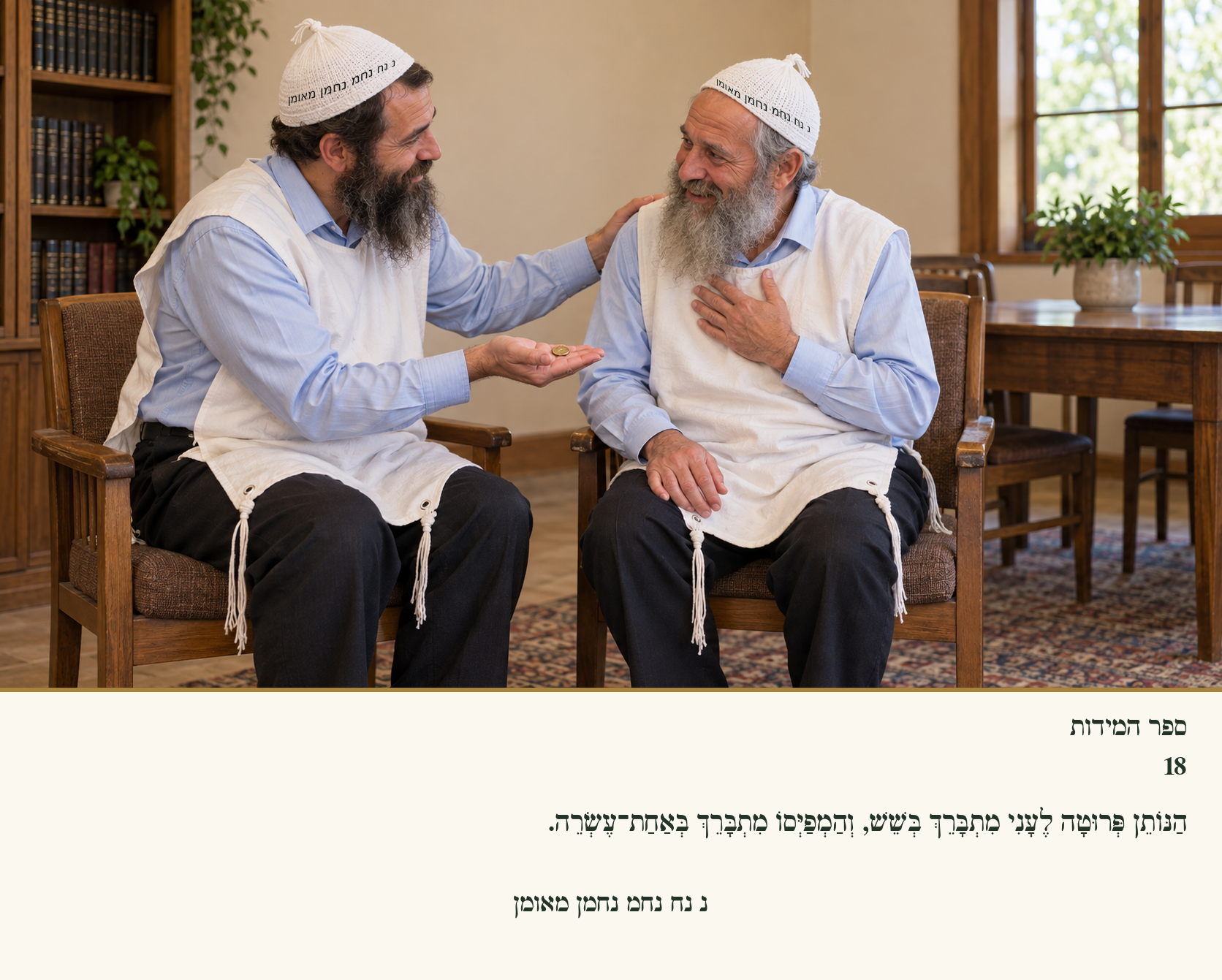
הַנּוֹתֵן פְּרוּטָה לֶעָנִי מִתְבָּרֵךְ בְּשֵׁשׁ, וְהַמְפַיְּסוֹ מִתְבָּרֵךְ בְּאַחַת־עֶשְׂרֵה.
18
18. One who gives a coin to a poor person is blessed with six (blessings), and one who placates him is blessed with eleven (blessings).
📷 Pictures / videos for this teaching
י״ט
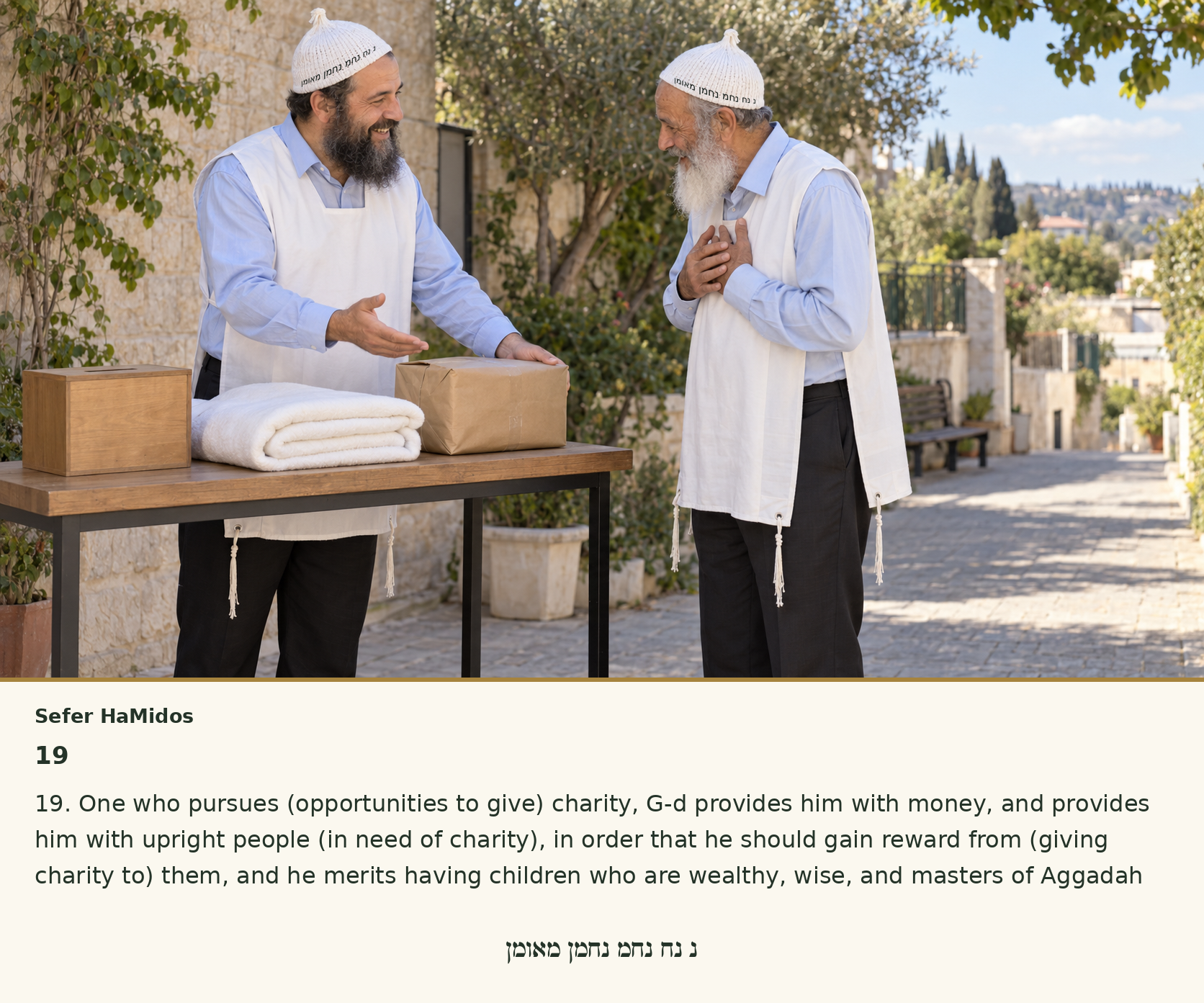
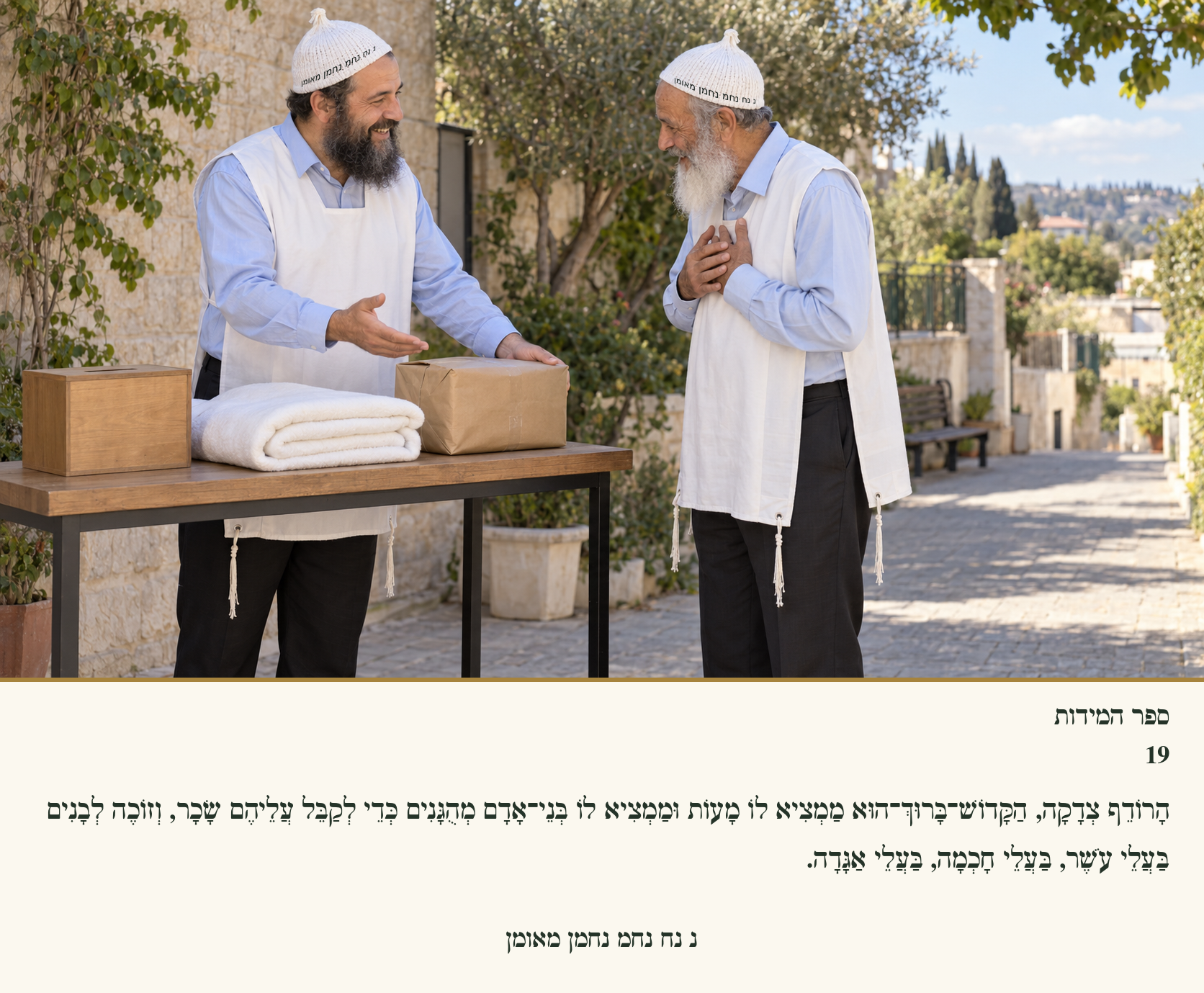
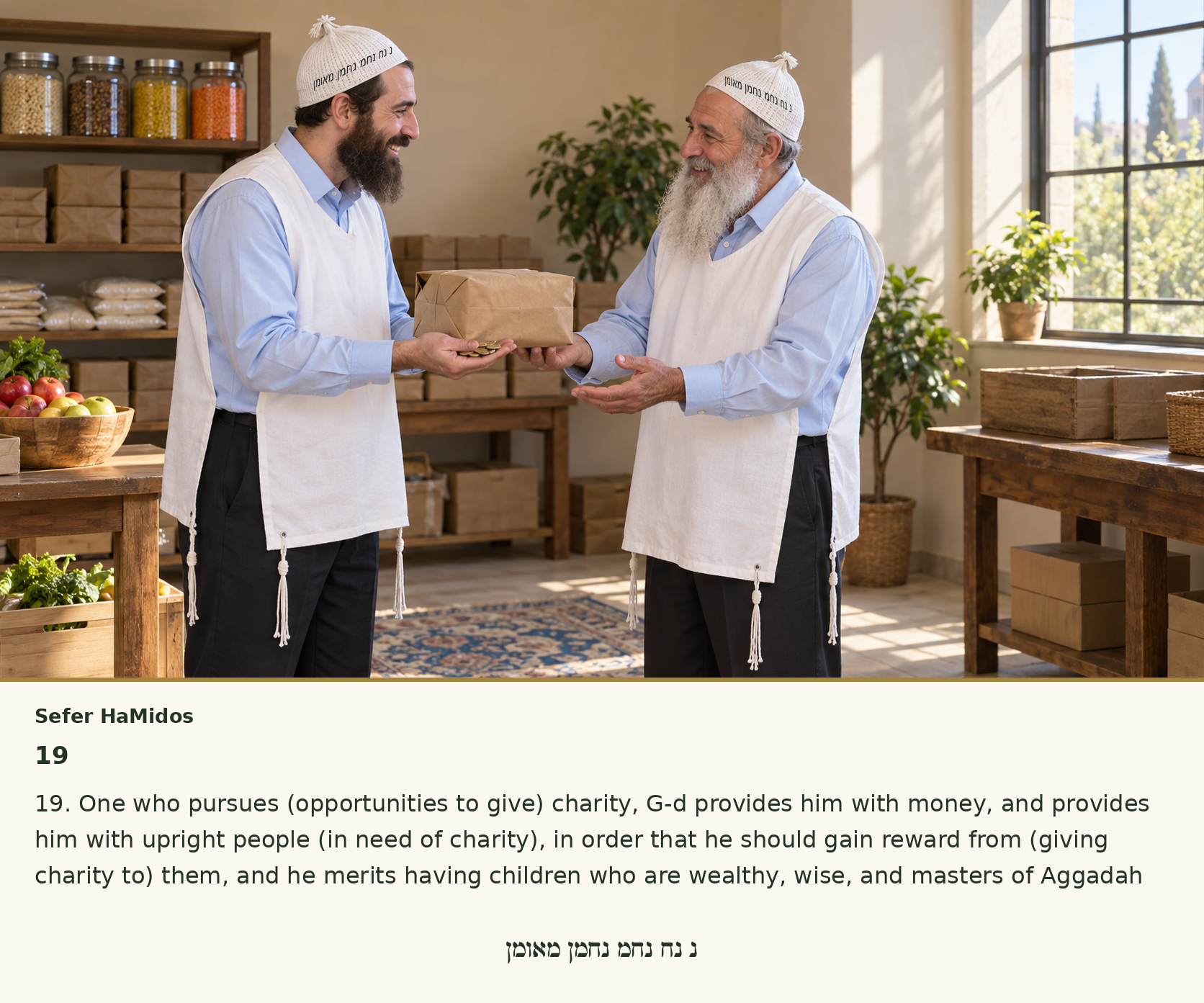
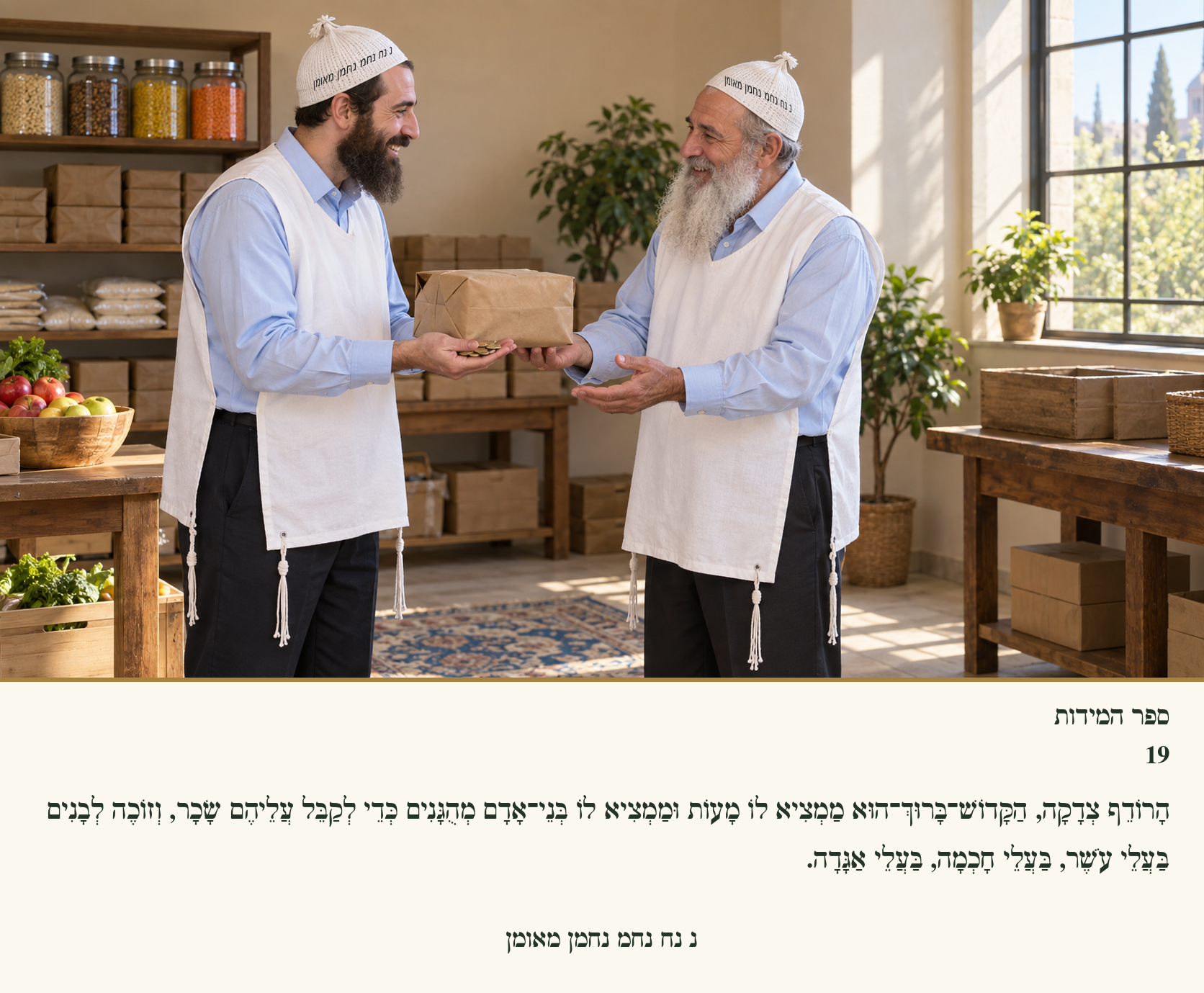
הָרוֹדֵף צְדָקָה, הַקָּדוֹשׁ־בָּרוּךְ־הוּא מַמְצִיא לוֹ מָעוֹת וּמַמְצִיא לוֹ בְּנֵי־אָדָם מְהֻגָּנִים כְּדֵי לְקַבֵּל עֲלֵיהֶם שָׂכָר, וְזוֹכֶה לְבָנִים בַּעֲלֵי עֹשֶׁר, בַּעֲלֵי חָכְמָה, בַּעֲלֵי אַגָּדָה.
19
19. One who pursues (opportunities to give) charity, G-d provides him with money, and provides him with upright people (in need of charity), in order that he should gain reward from (giving charity to) them, and he merits having children who are wealthy, wise, and masters of Aggadah
📷 Pictures / videos for this teaching
כ׳
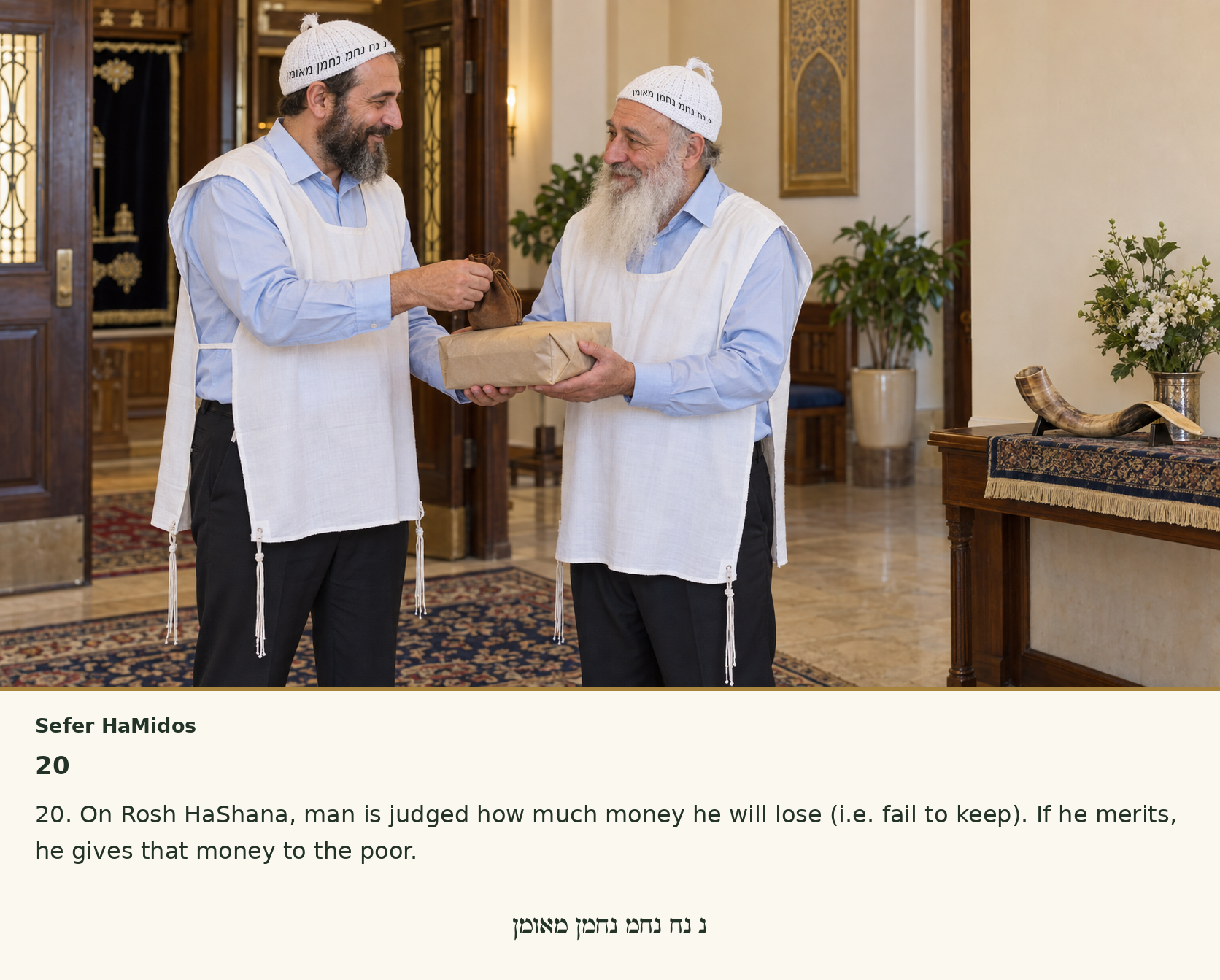
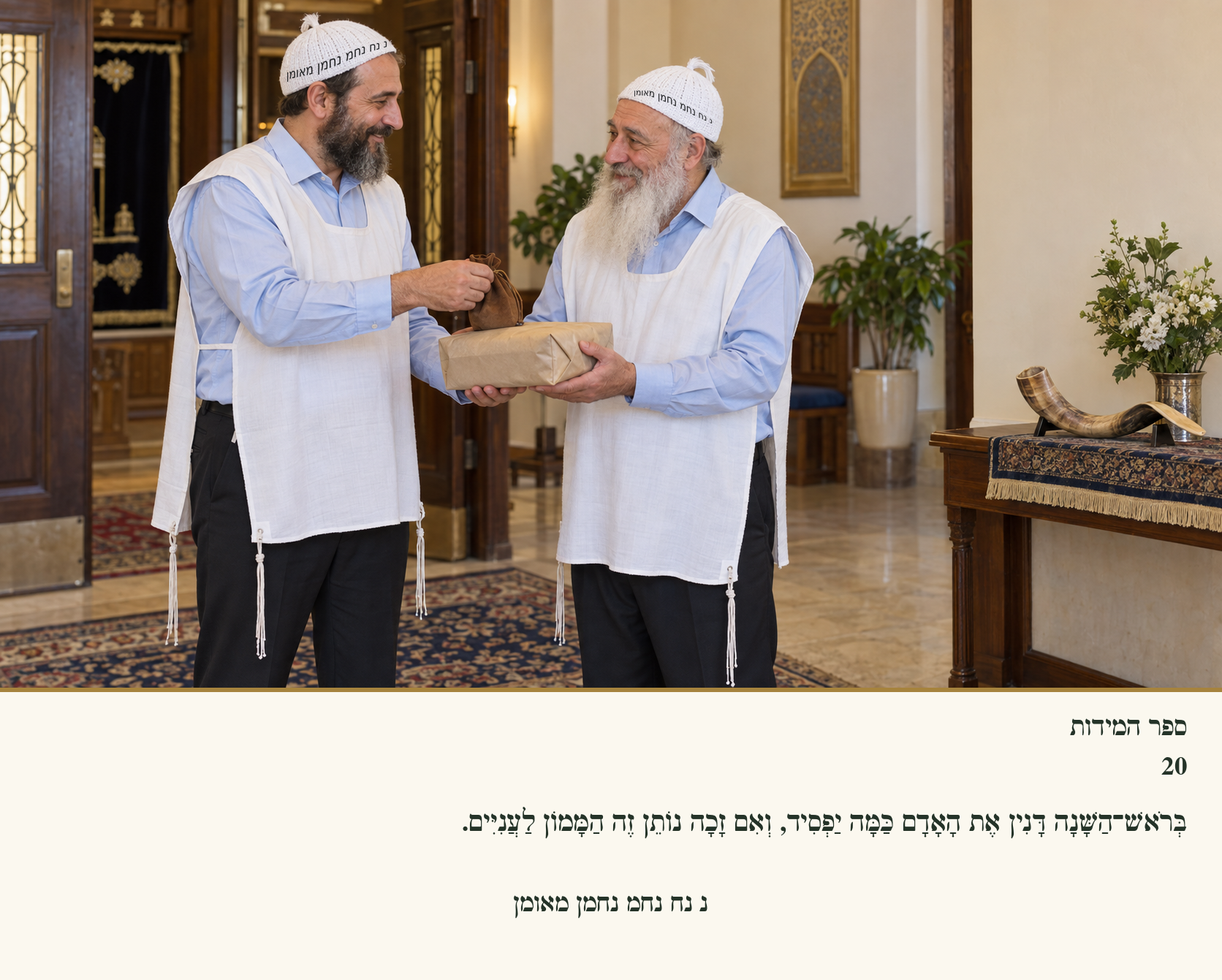
בְּרֹאשׁ־הַשָּׁנָה דָּנִין אֶת הָאָדָם כַּמָּה יַפְסִיד, וְאִם זָכָה נוֹתֵן זֶה הַמָּמוֹן לַעֲנִיִּים.
20
20. On Rosh HaShana, man is judged how much money he will lose (i.e. fail to keep). If he merits, he gives that money to the poor.
📷 Pictures / videos for this teaching
כ״א
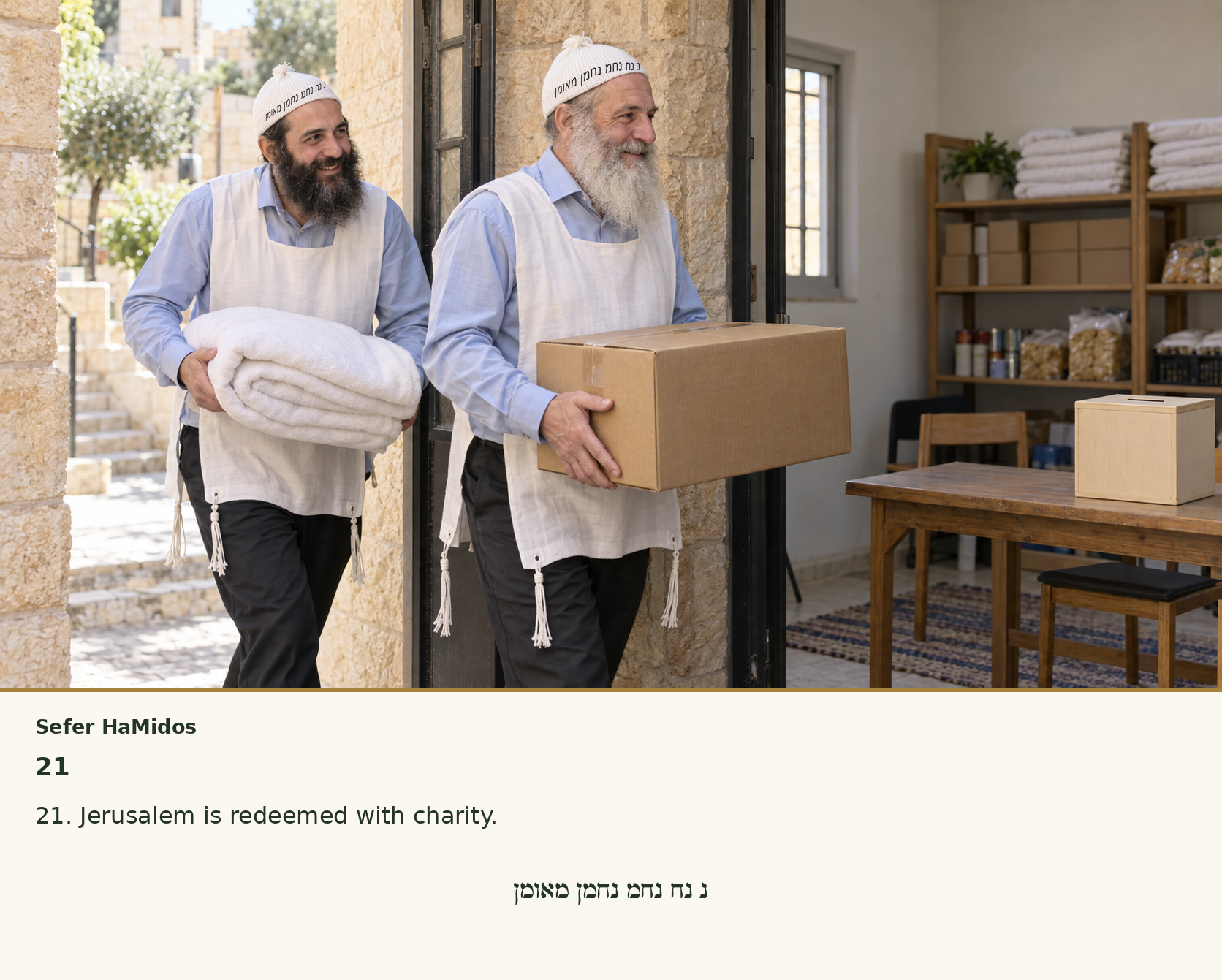
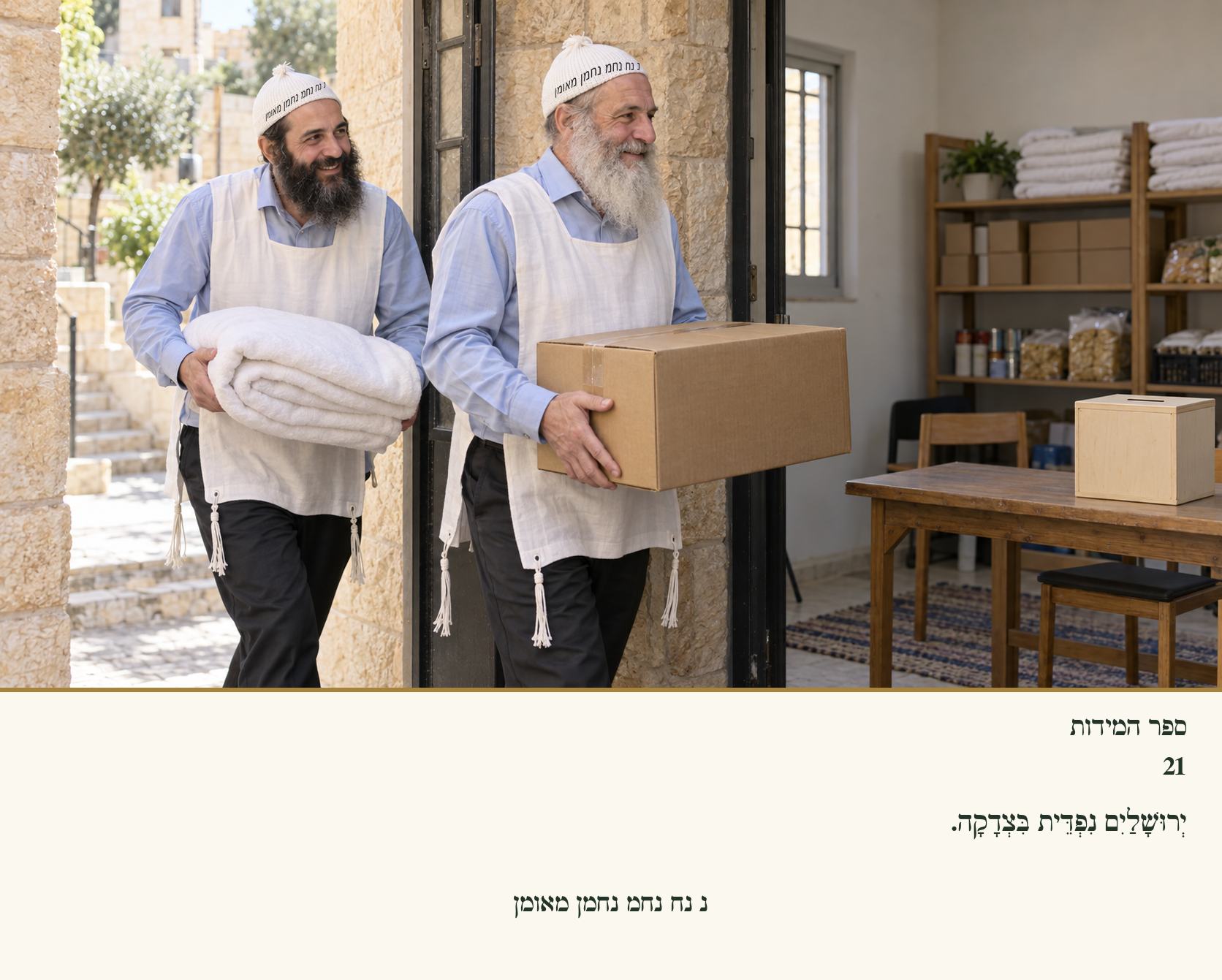
יְרוּשָׁלַיִם נִפְדֵּית בִּצְדָקָה.
21
21. Jerusalem is redeemed with charity.
📷 Pictures / videos for this teaching
כ״ב
עַל־יְדֵי צְדָקָה נִתְכַּפֵּר לְאַחְאָב מֶחֱצָה.
22
22. Through charity, Achav (one of the Kings of Israel) was forgiven half (of his sins).
כ״ג
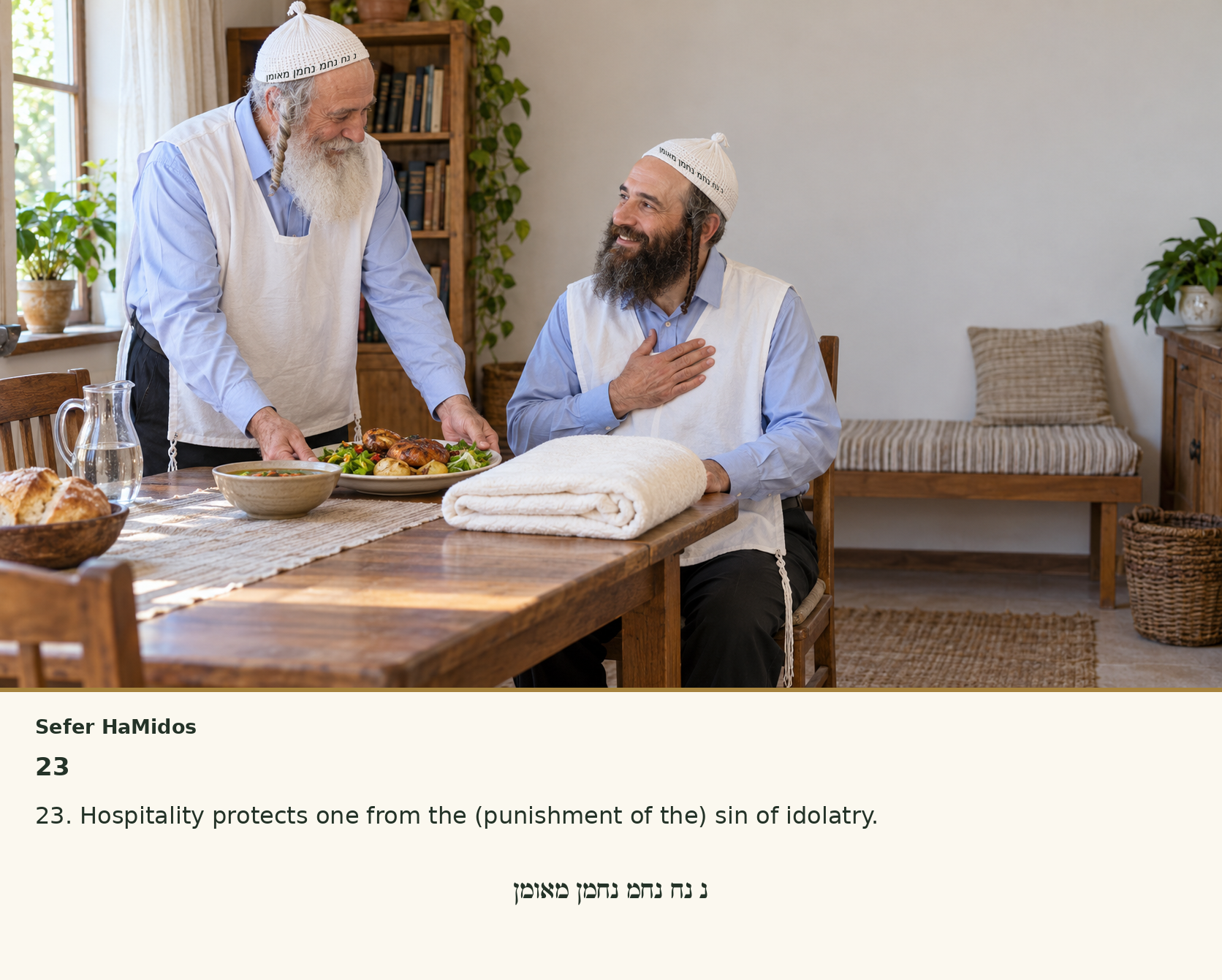
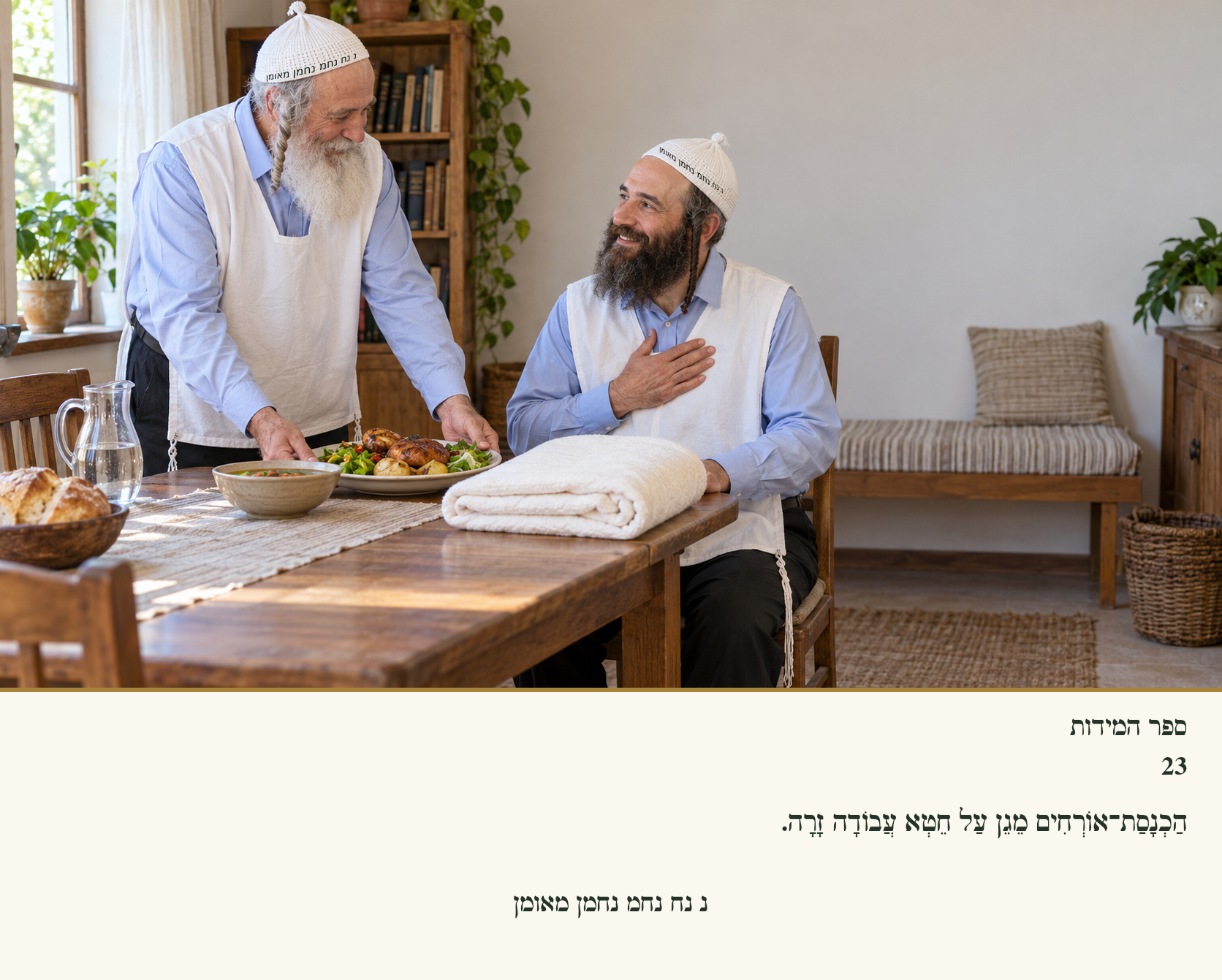
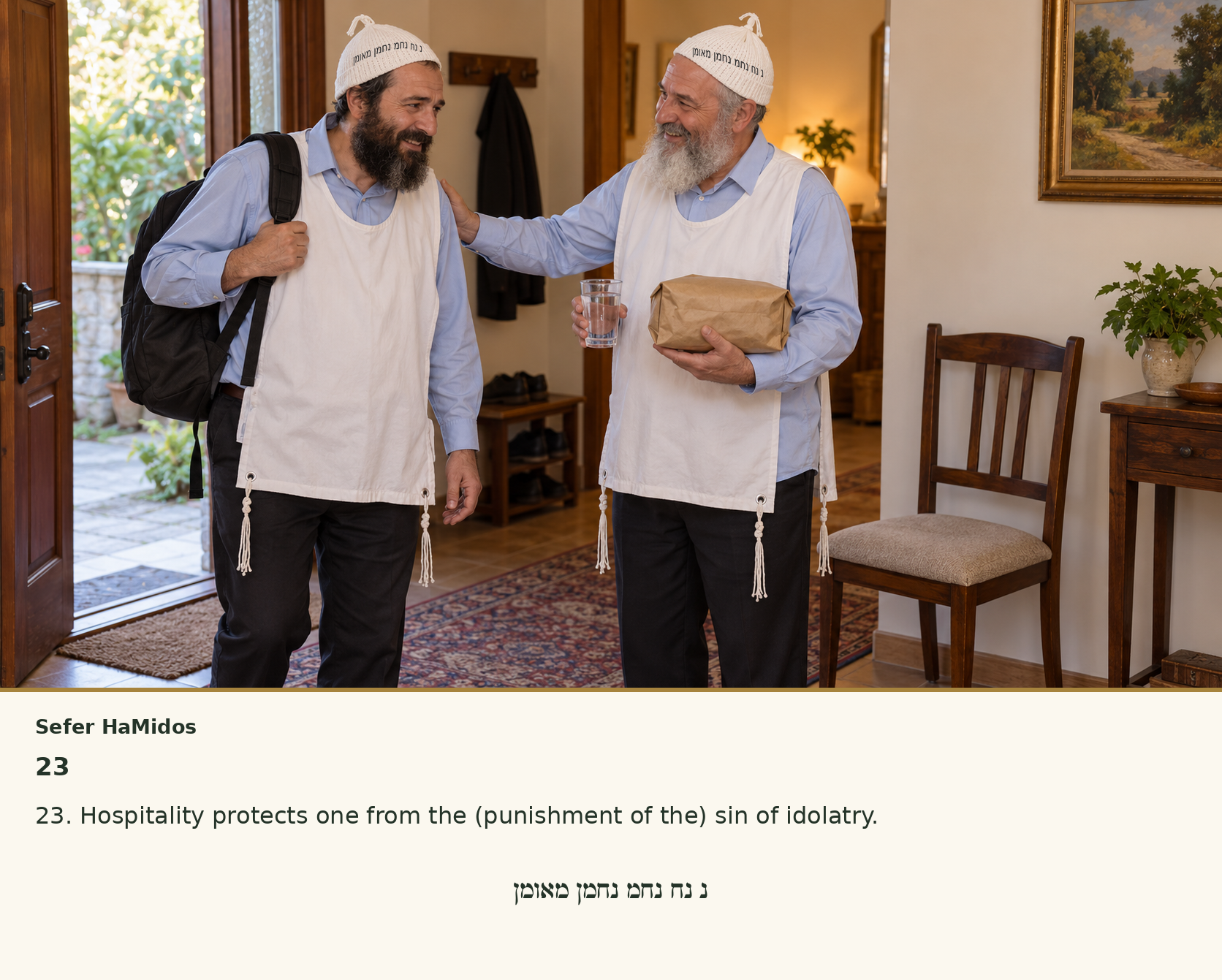
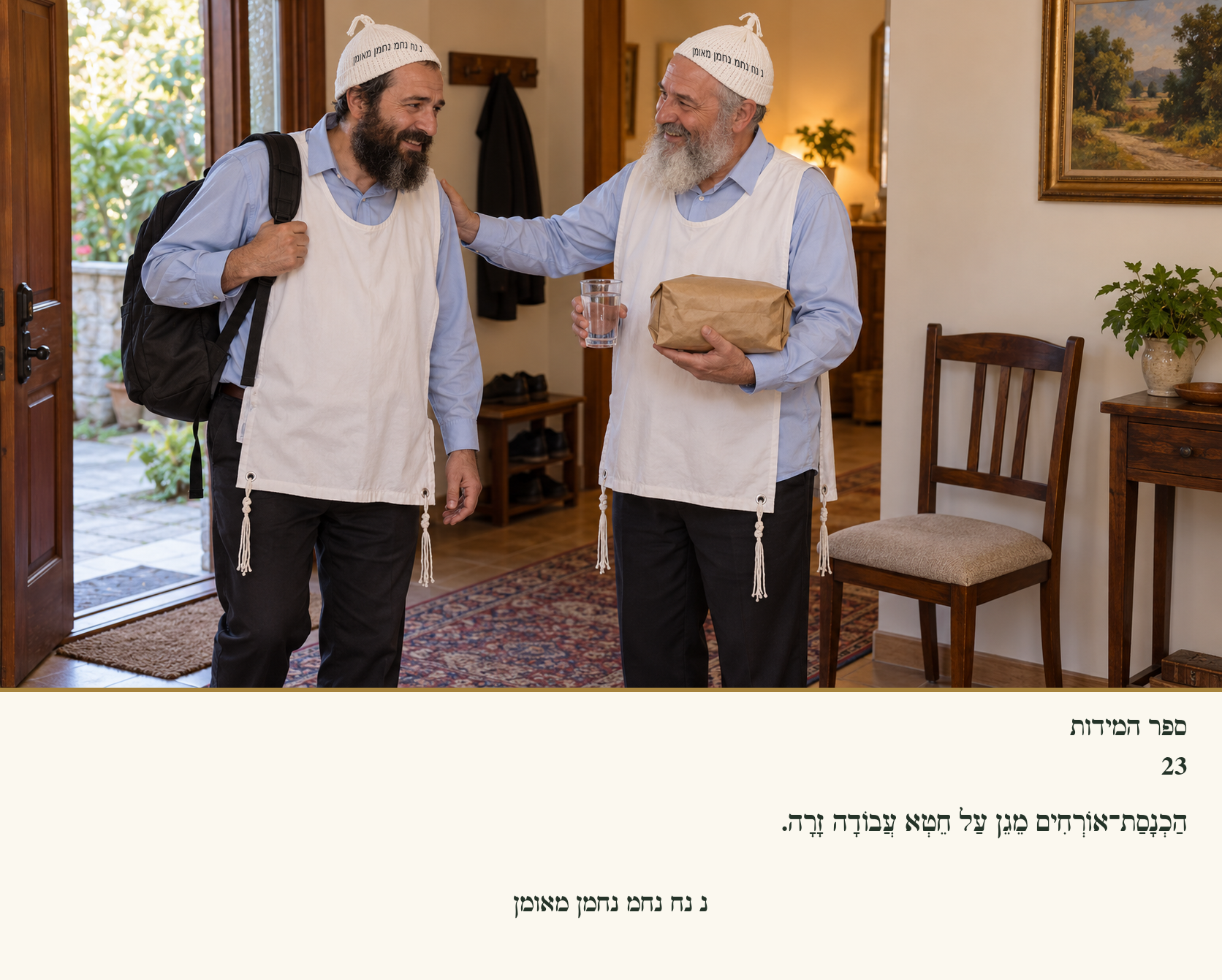
הַכְנָסַת־אוֹרְחִים מֵגֵן עַל חֵטְא עֲבוֹדָה זָרָה.
23
23. Hospitality protects one from the (punishment of the) sin of idolatry.
📷 Pictures / videos for this teaching
כ״ד
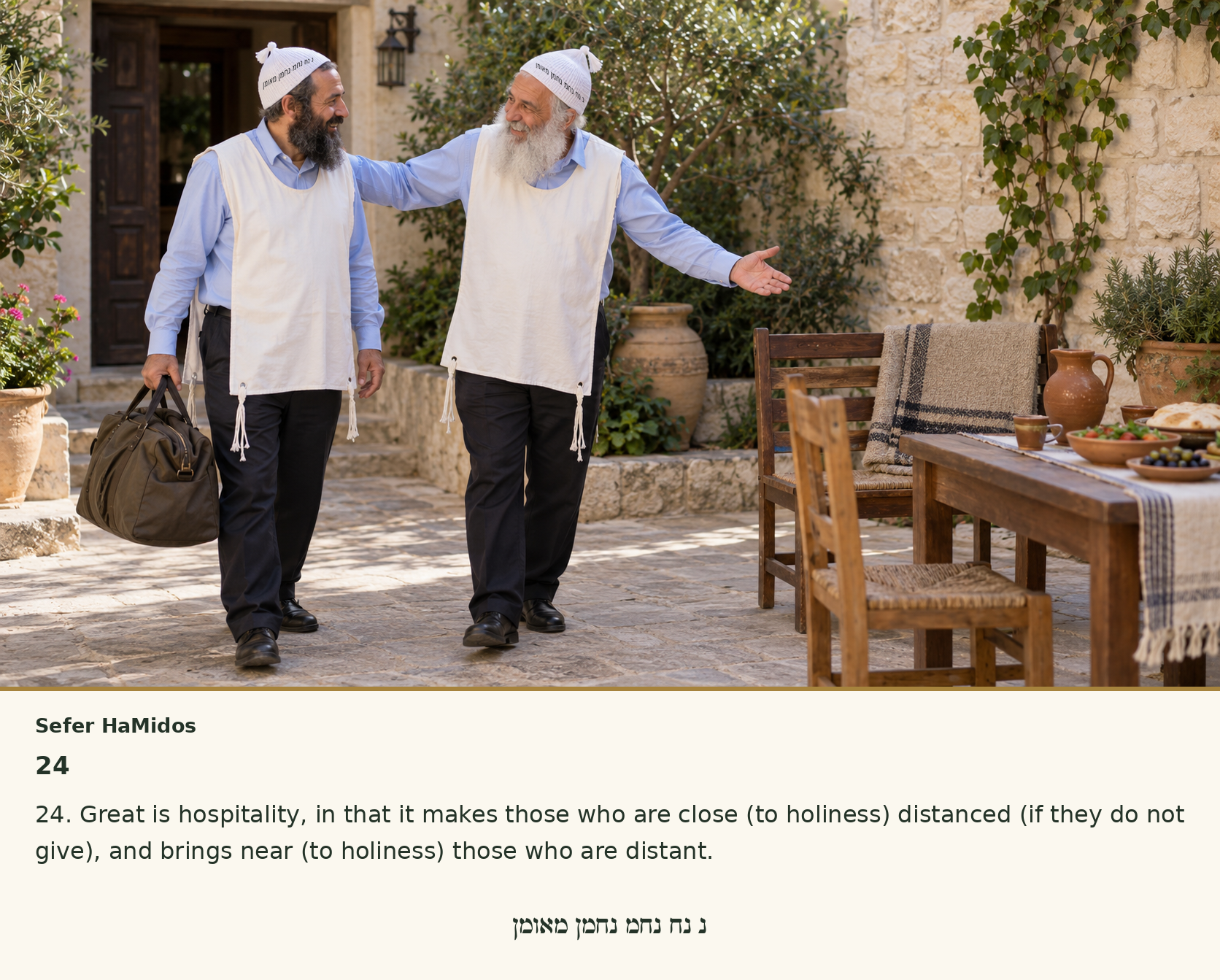
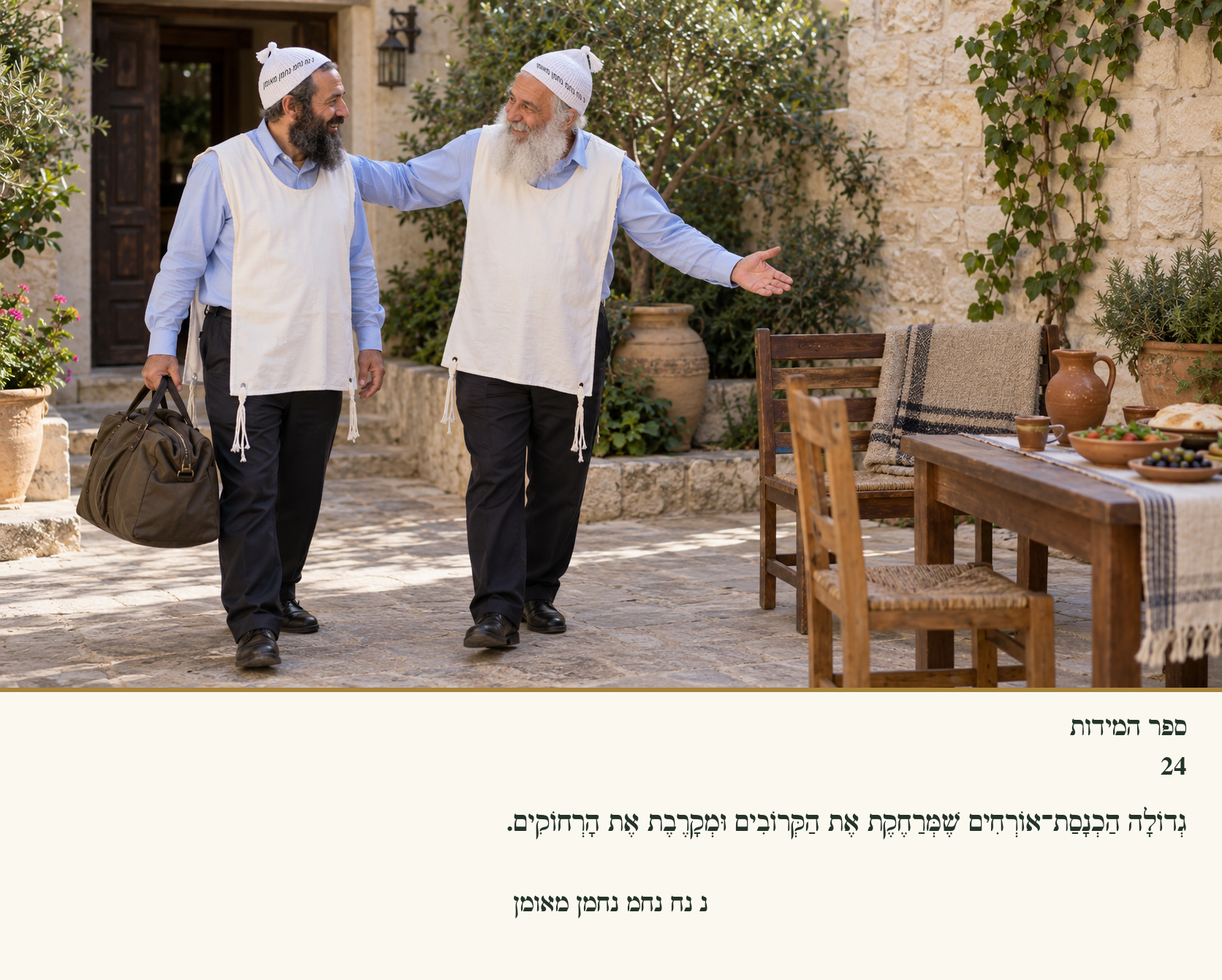
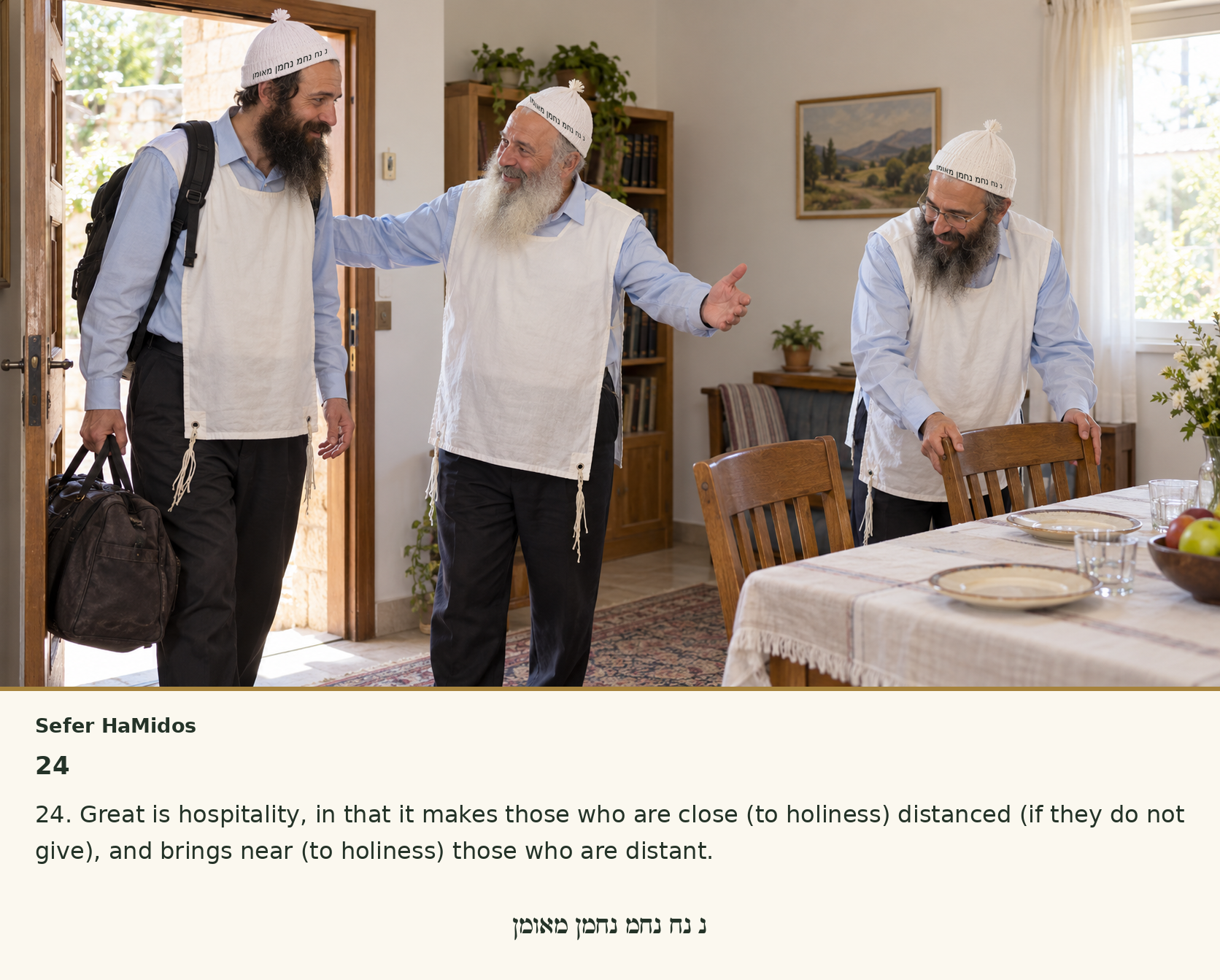
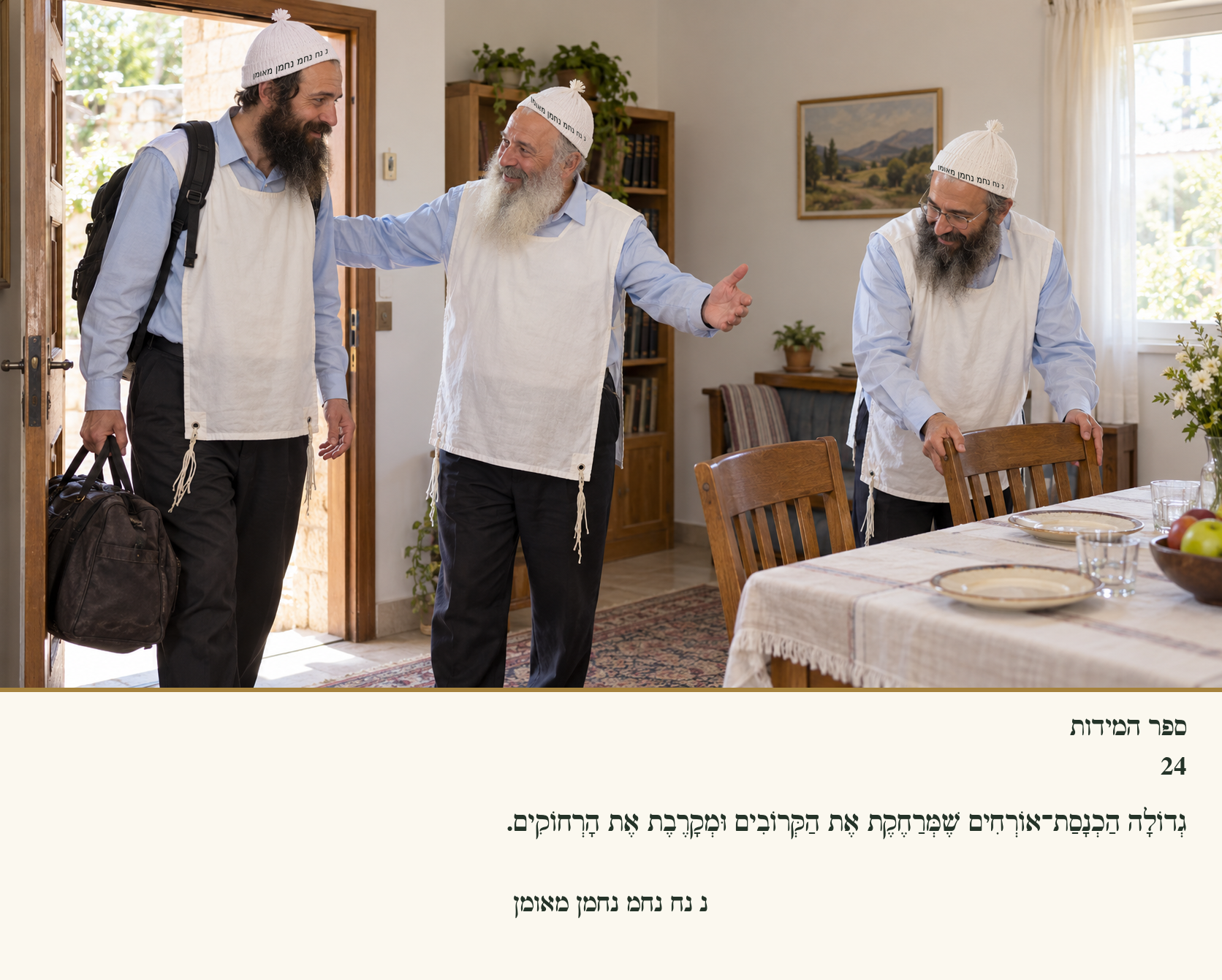
גְדוֹלָה הַכְנָסַת־אוֹרְחִים שֶׁמְּרַחֶקֶת אֶת הַקְּרוֹבִים וּמְקָרֶבֶת אֶת הָרְחוֹקִים.
24
24. Great is hospitality, in that it makes those who are close (to holiness) distanced (if they do not give), and brings near (to holiness) those who are distant.
📷 Pictures / videos for this teaching
כ״ה
הַמַּזְמִין עַכּוּ"ם בְּתוֹךְ בֵּיתוֹ וּמְשַׁמֵּשׁ עָלָיו, גּוֹרֵם גָּלוּת לְבָנָיו.
25
25. One who invites a non-Jew into his house and serves him, causes his children to be exiled.
כ״ו
כְּשֶׁהָעוֹלָם אֵין נוֹתְנִים צְדָקָה, הַמַּלְכוּת גּוֹזֵר גְּזֵרוֹת רָעוֹת וְלוֹקֵחַ מָמוֹנָם.
26
26. When the people do not give charity, the government passes harsh decrees and takes their money.
כ״ז
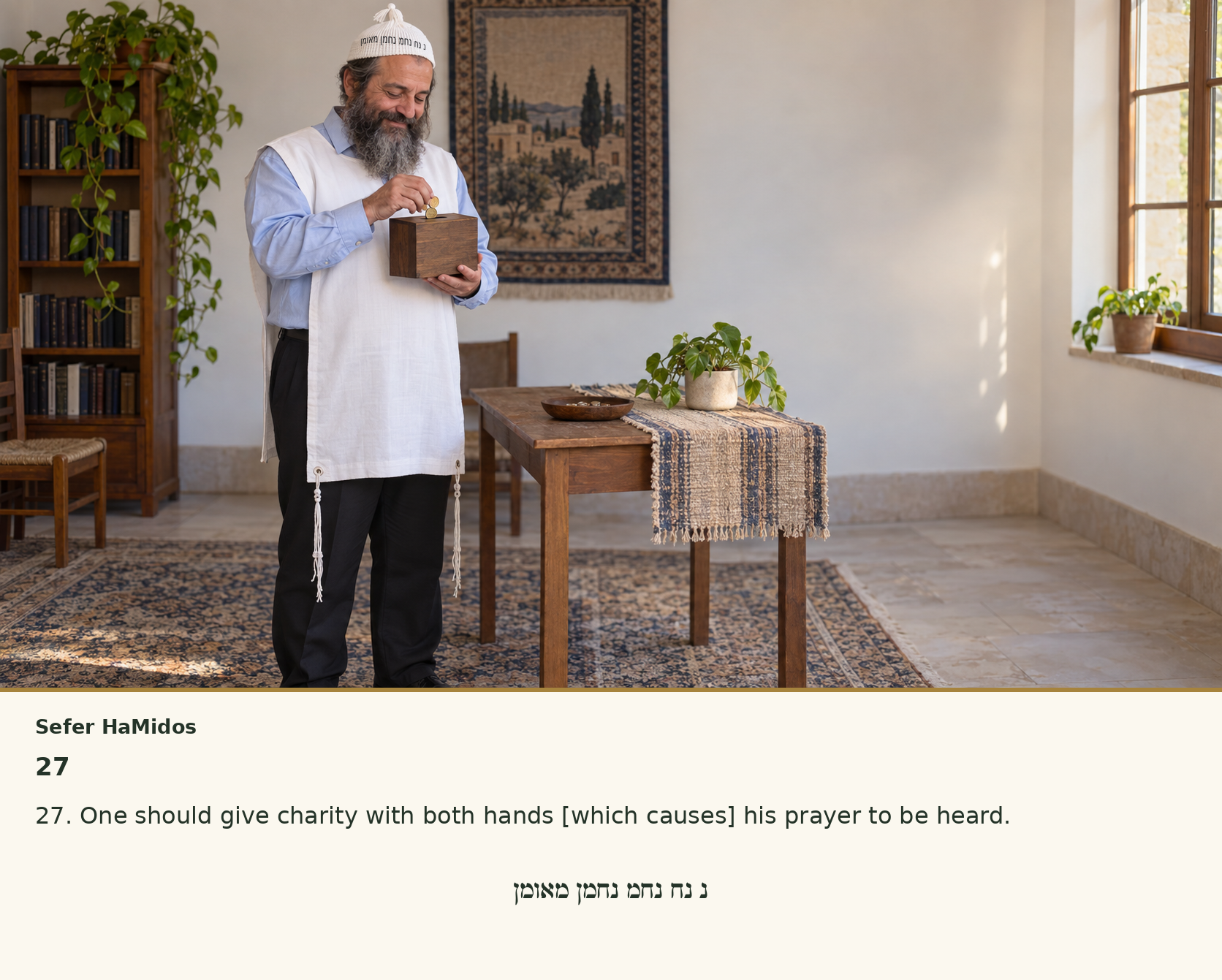
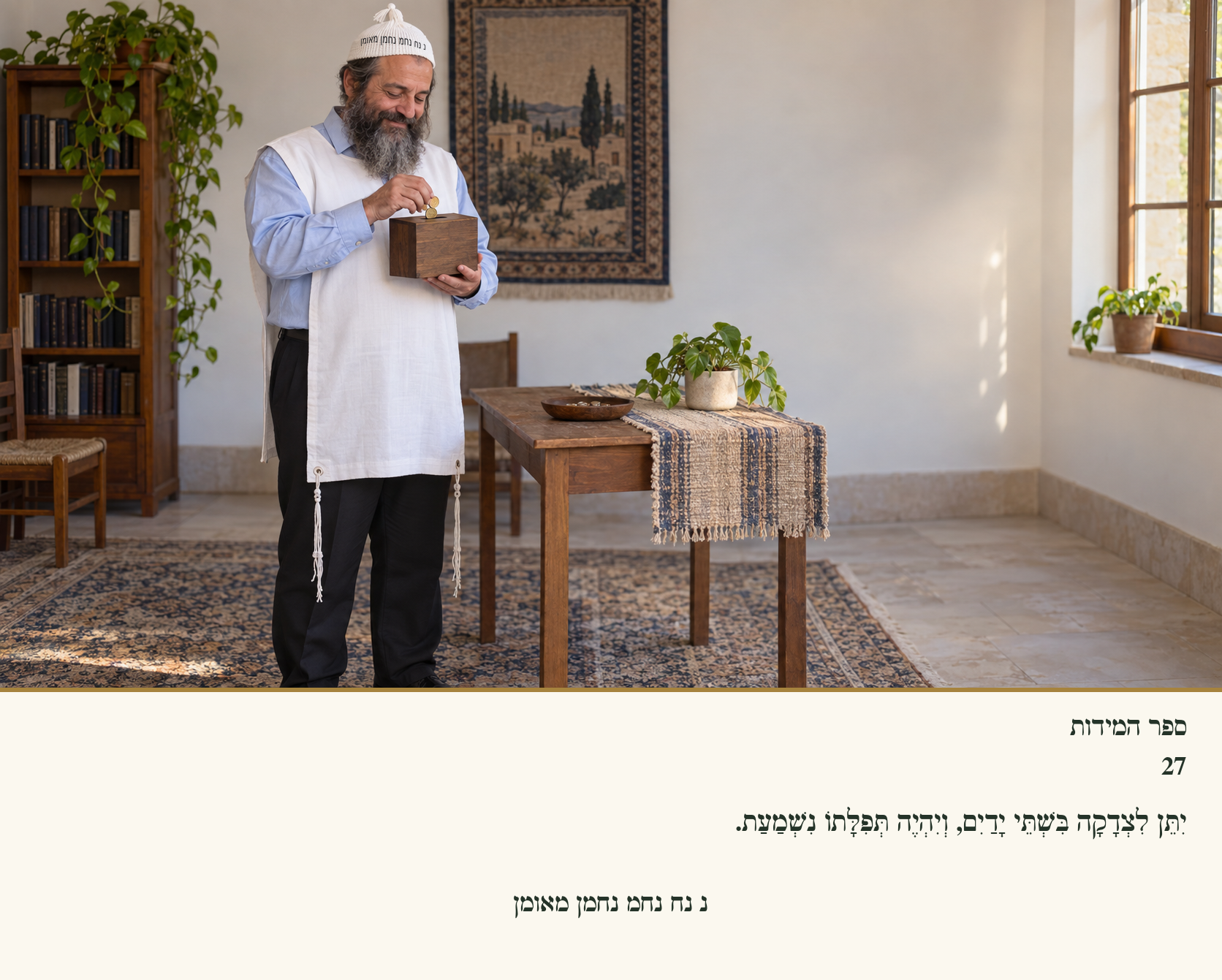
יִתֵּן לִצְדָקָה בִּשְׁתֵּי יָדַיִם, וְיִהְיֶה תְּפִלָּתוֹ נִשְׁמַעַת.
27
27. One should give charity with both hands [which causes] his prayer to be heard.
📷 Pictures / videos for this teaching
כ״ח
עַל־יְדֵי הַנְּדִיבוּת תִּהְיֶה לְךָ תְּקוּמָה.
28
28. Through generosity you will have a standing.
כ״ט
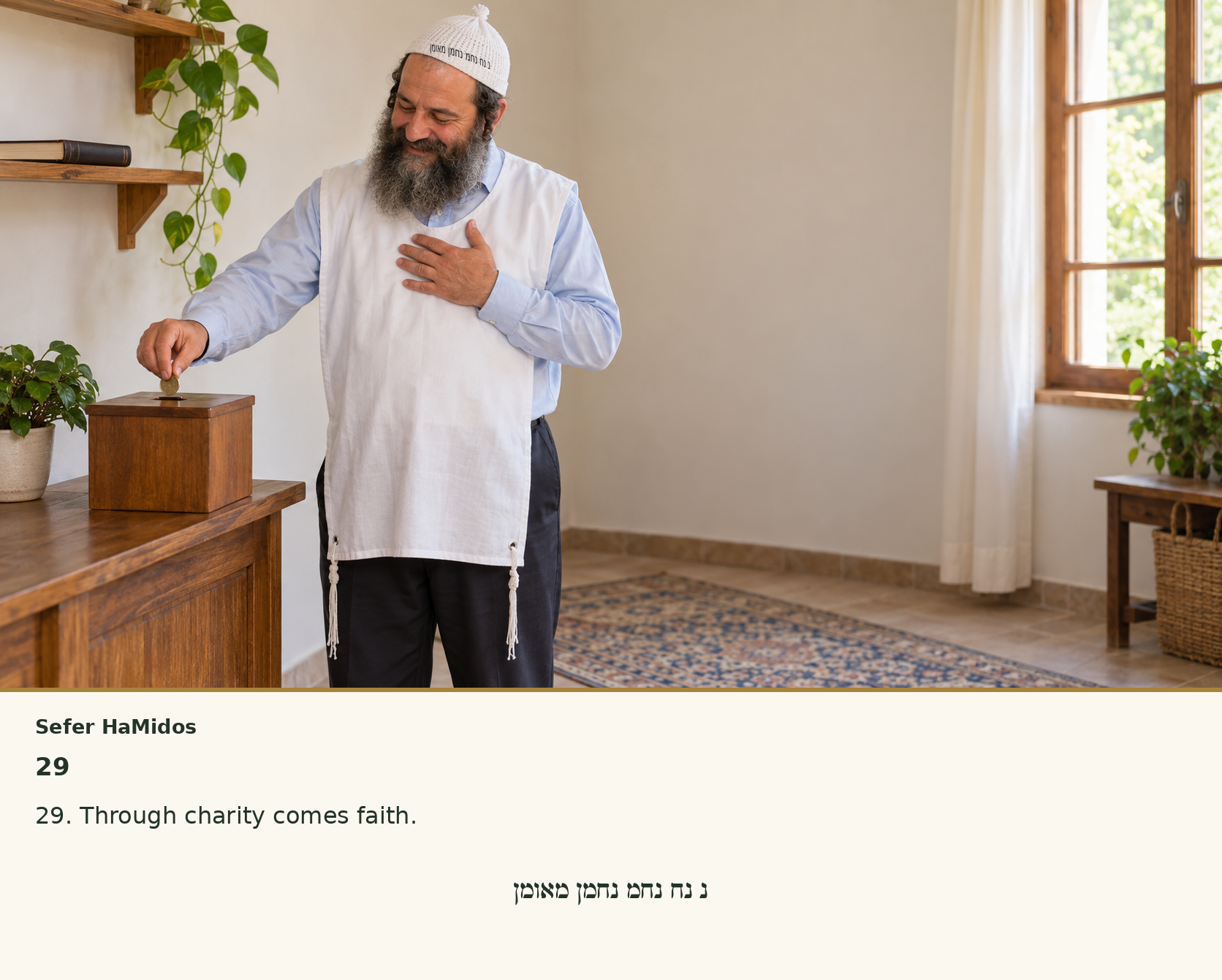
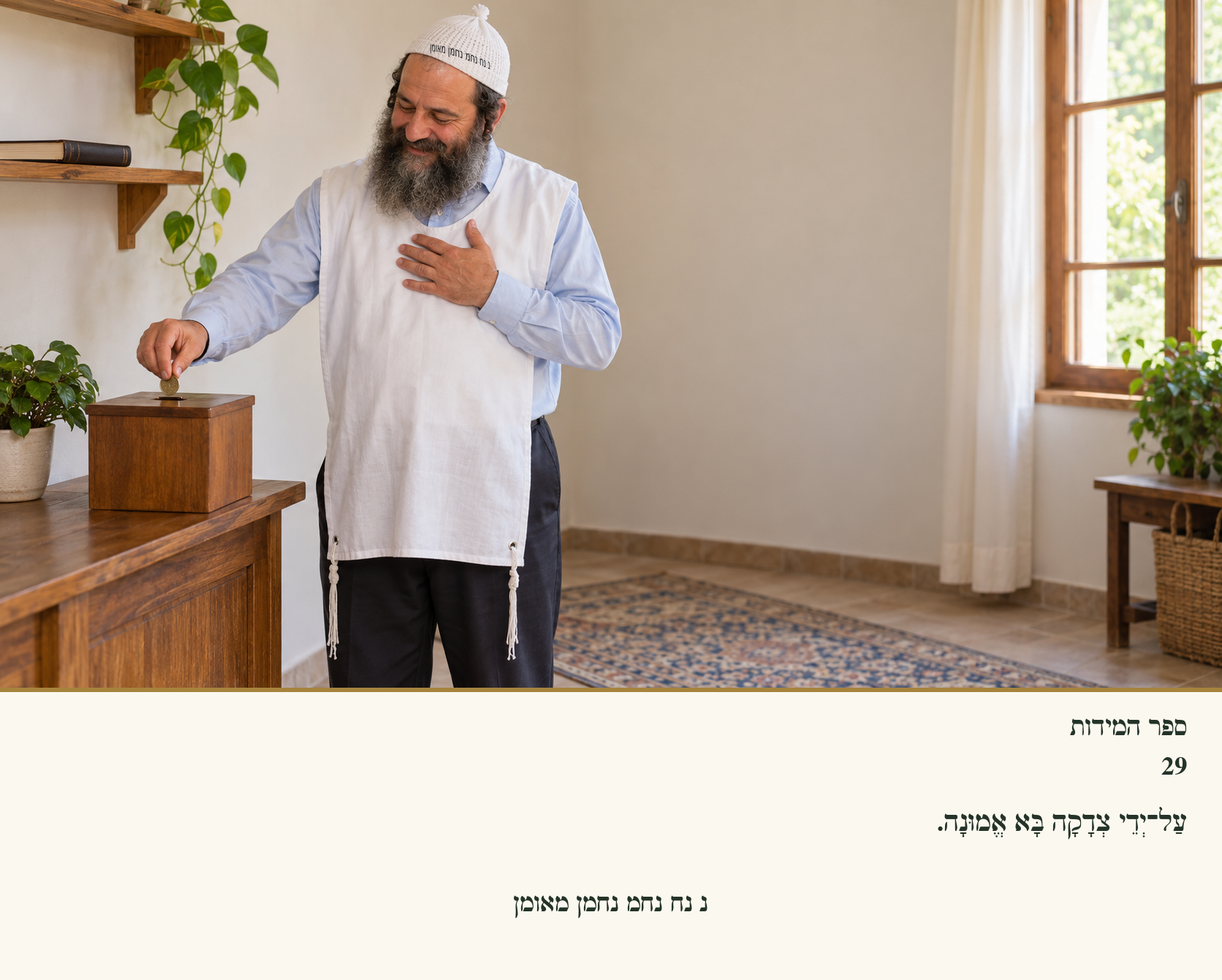
עַל־יְדֵי צְדָקָה בָּא אֱמוּנָה.
29
29. Through charity comes faith.
📷 Pictures / videos for this teaching
ל׳
מִי שֶׁהוֹלֵךְ בִּשְׁבִיל צְדָקוֹת, הוּא מְשַׁכֵּךְ חֵמָה מִן הָעוֹלָם.
30
30. One who goes out for the benefit of charities, sedates rage from the world.
ל״א
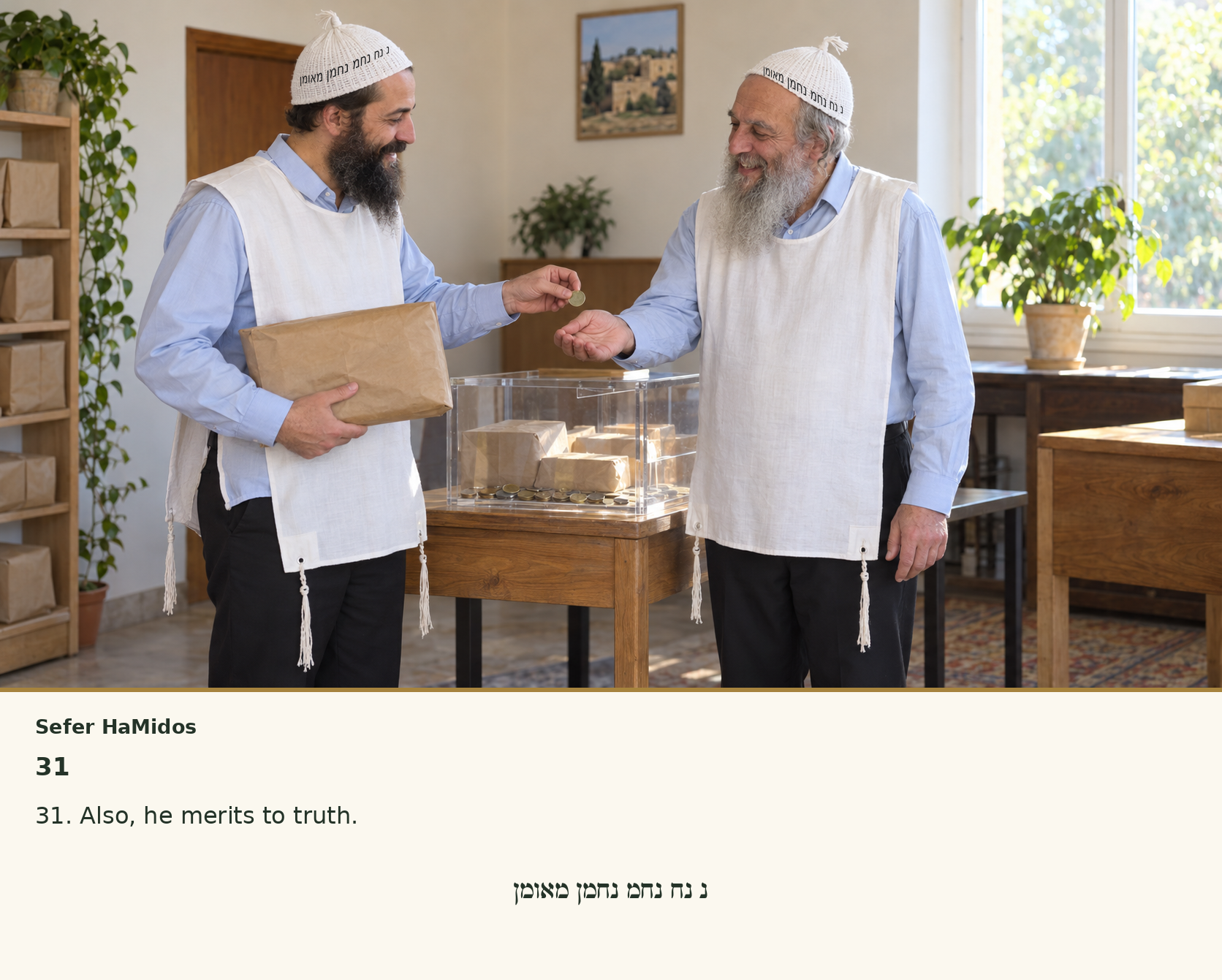
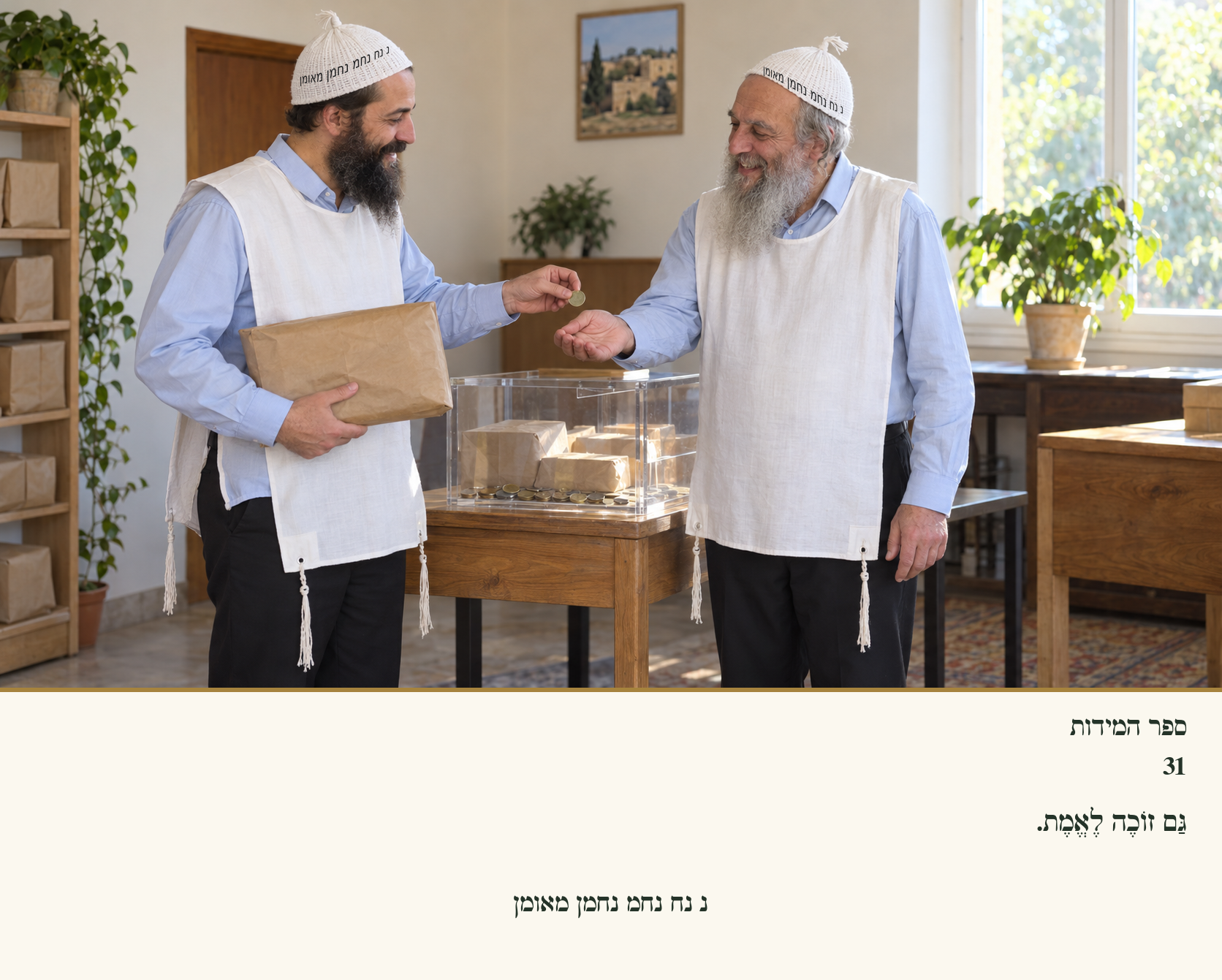
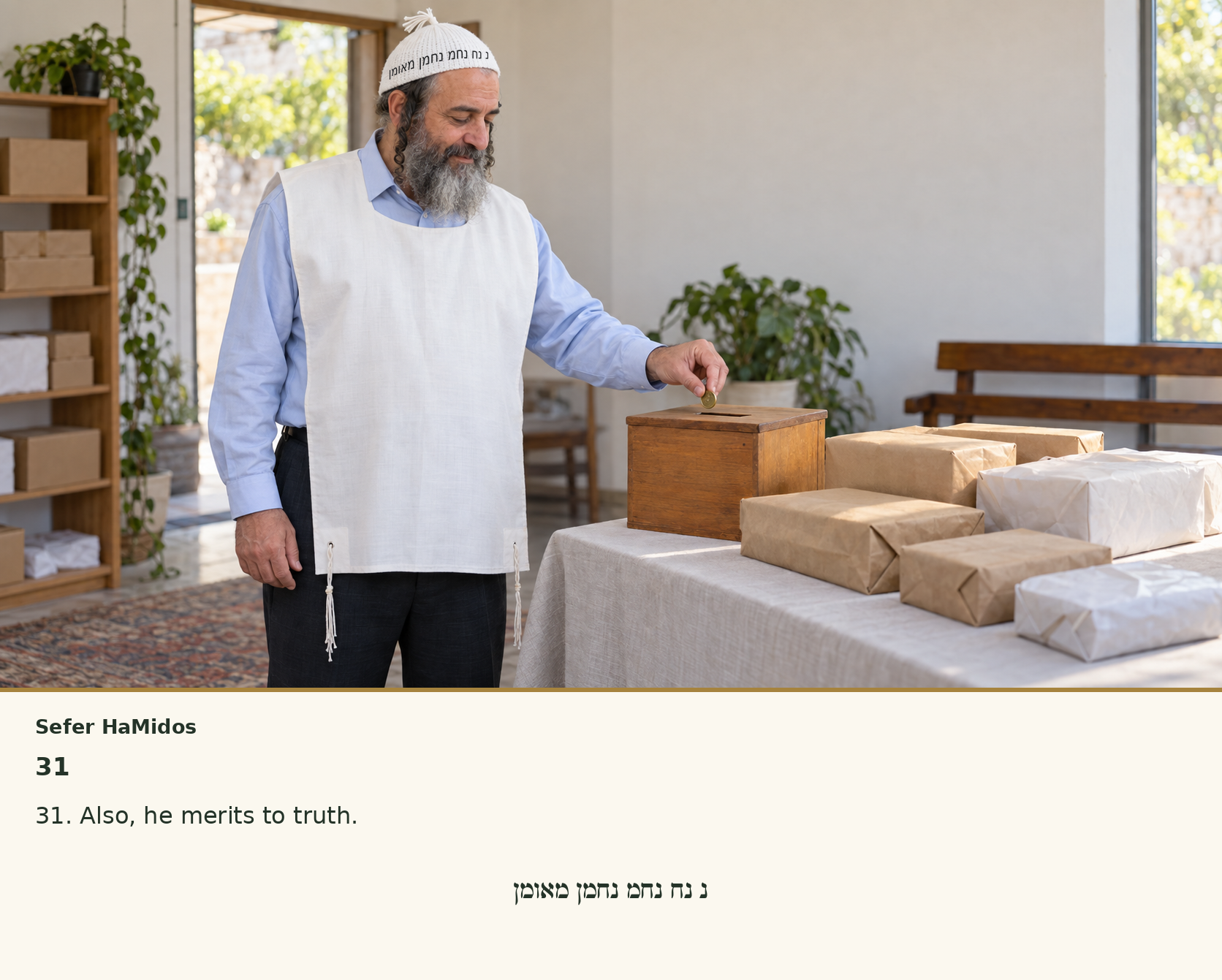
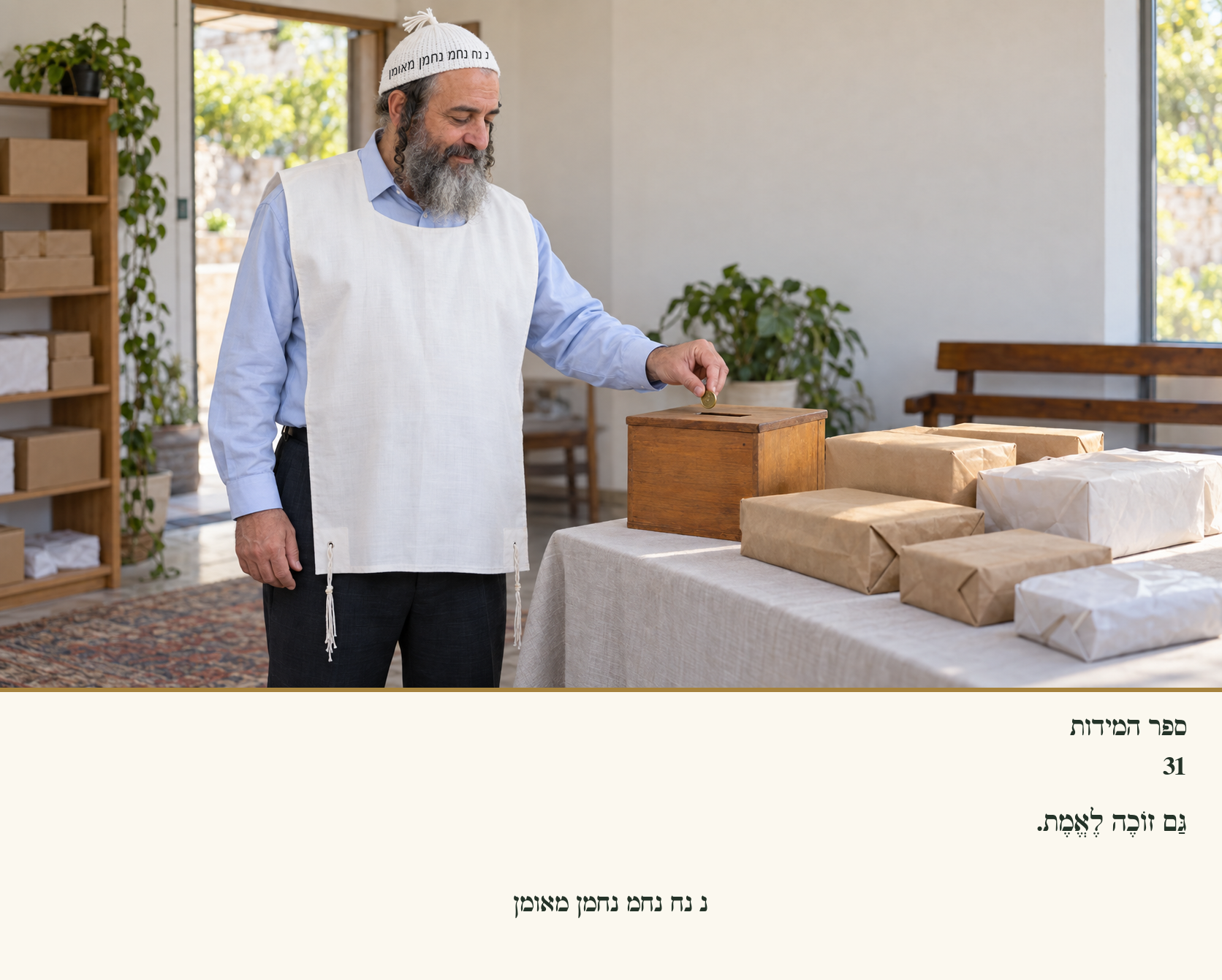
גַּם זוֹכֶה לֶאֱמֶת.
31
31. Also, he merits to truth.
📷 Pictures / videos for this teaching
ל״ב
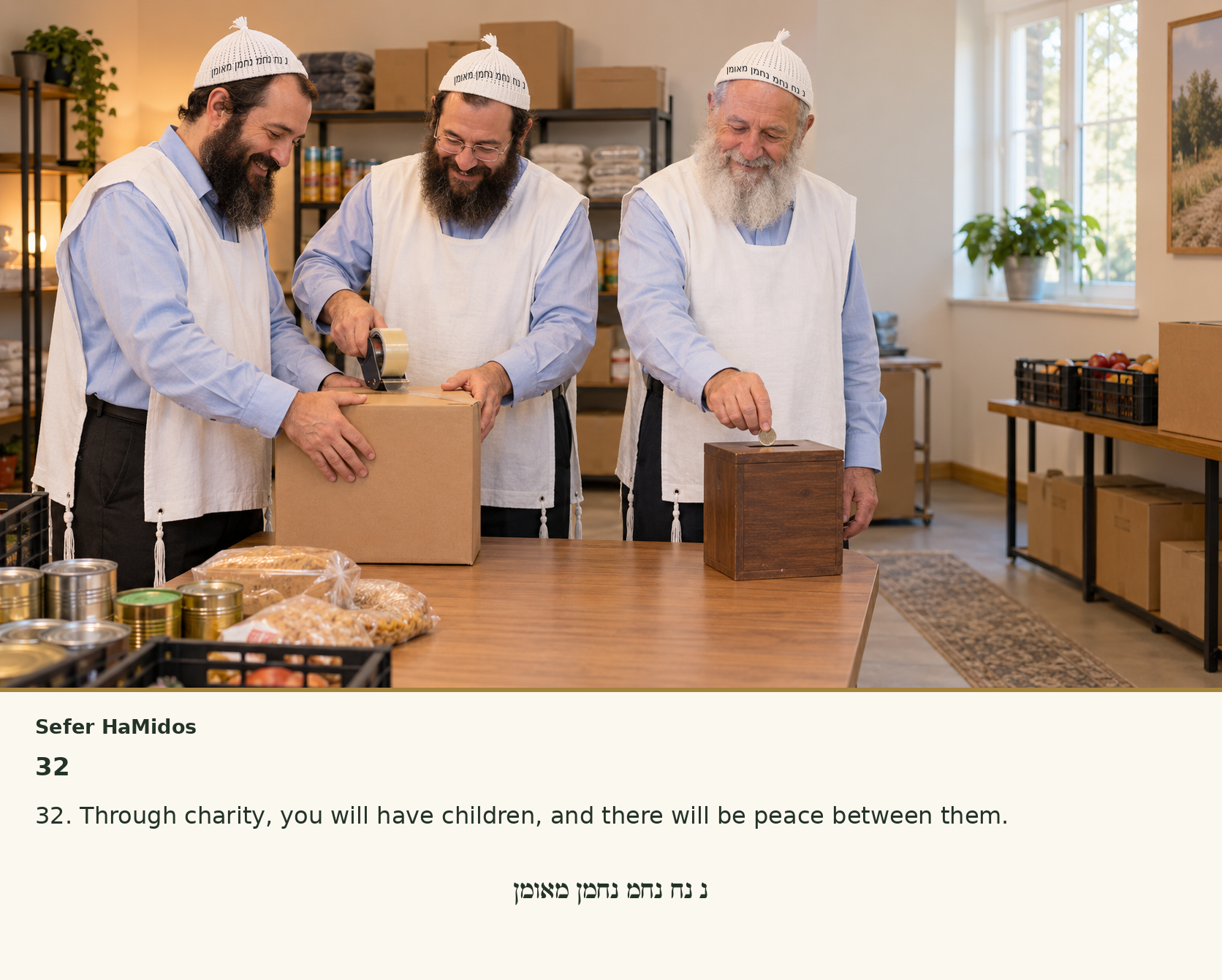
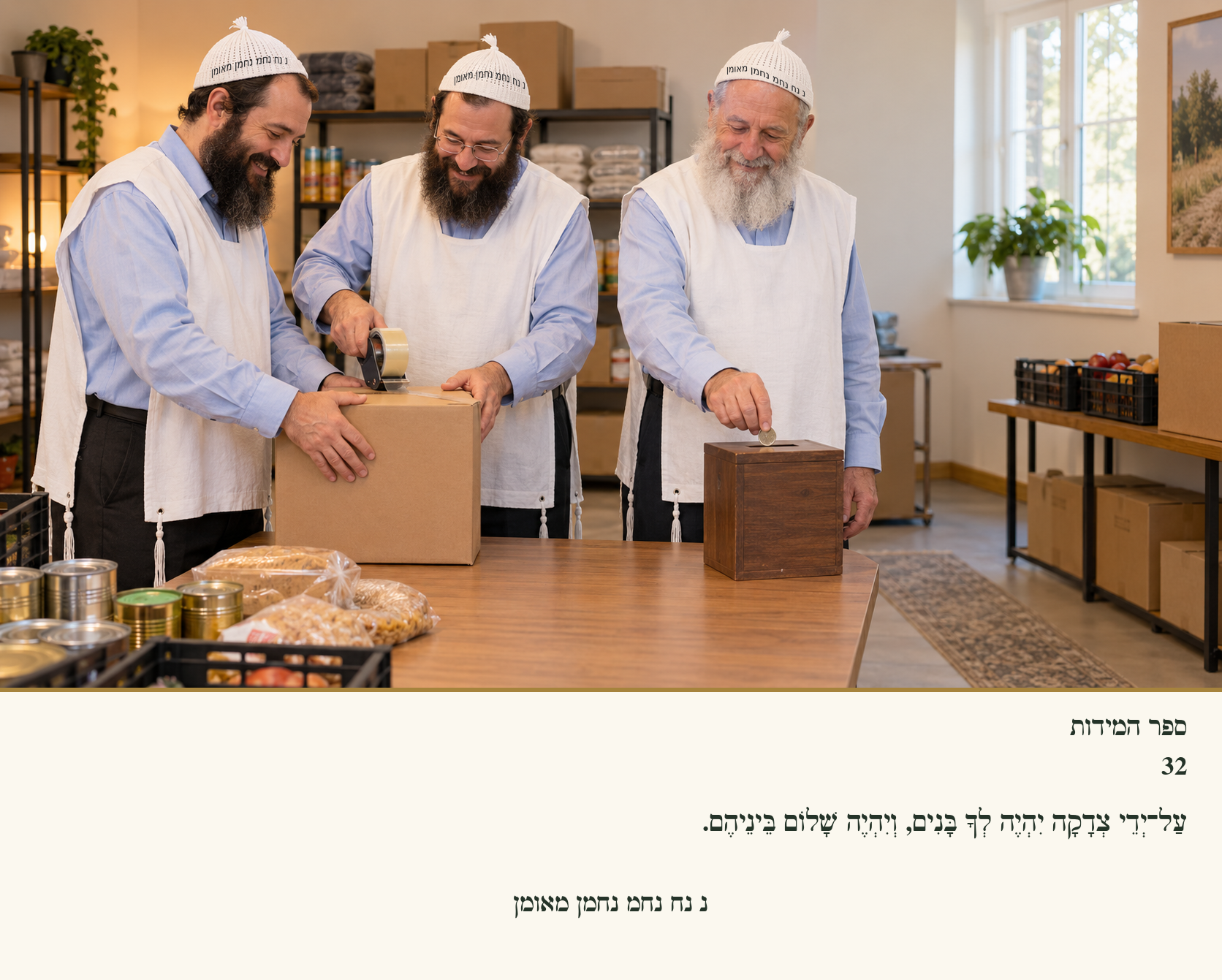
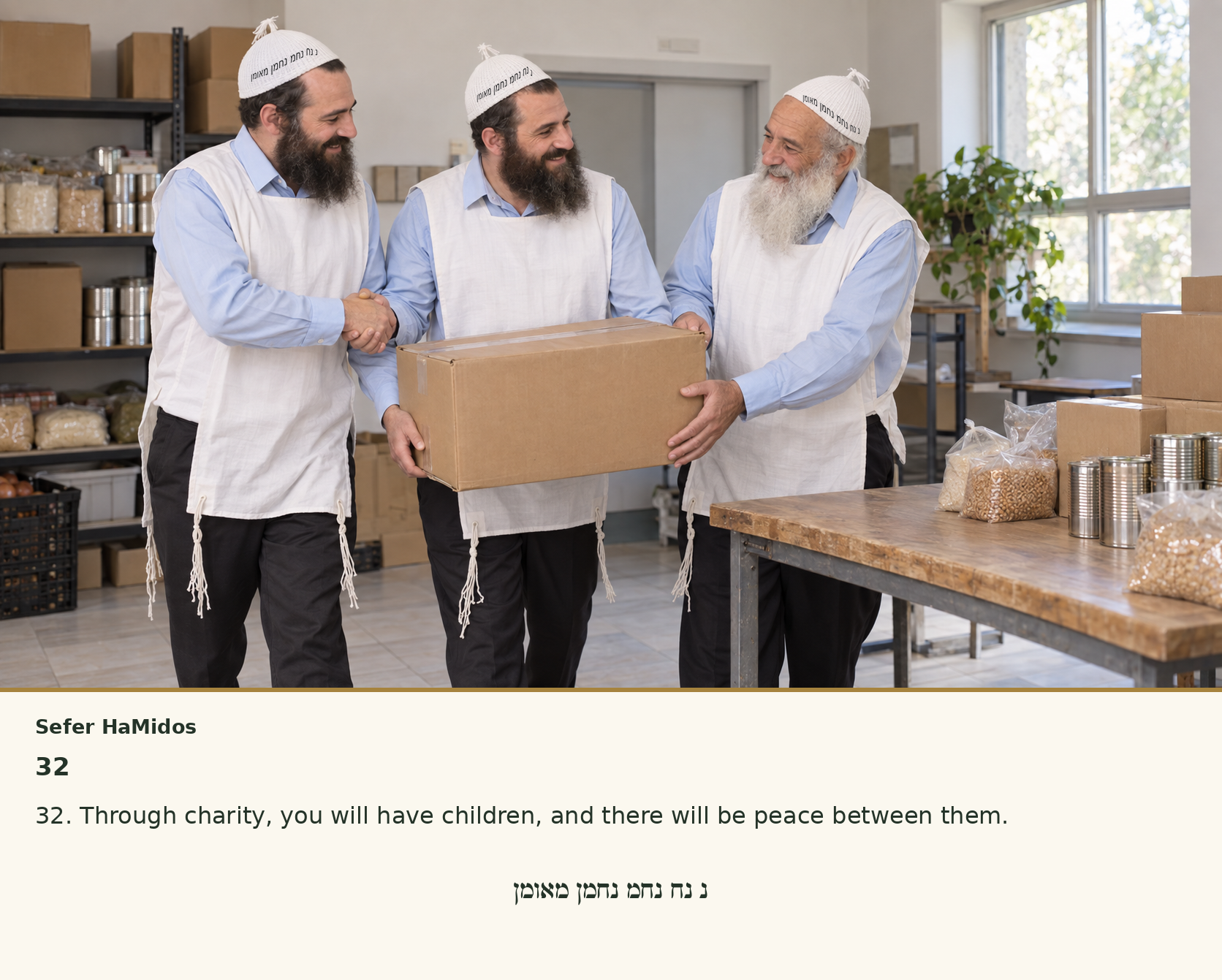
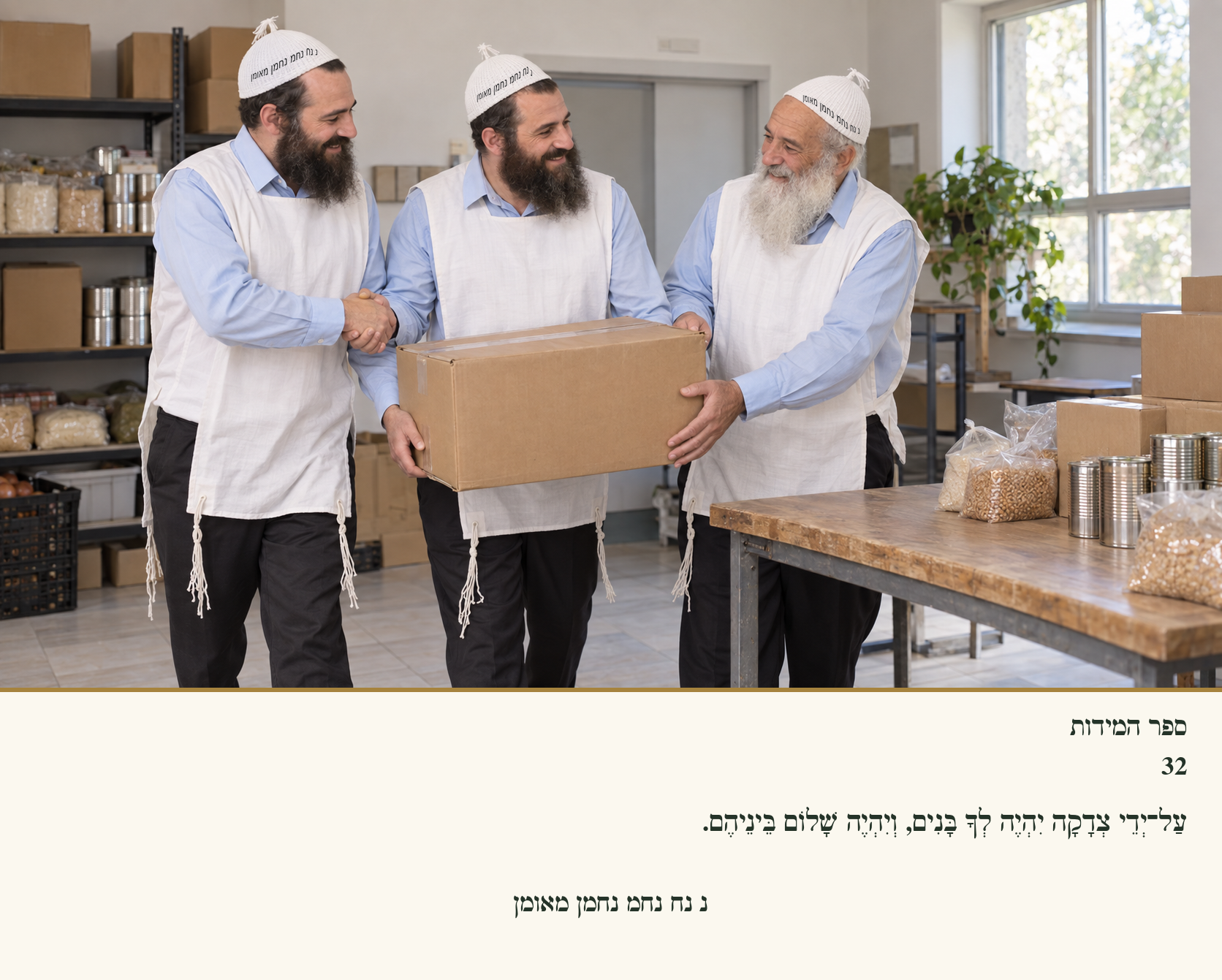
עַל־יְדֵי צְדָקָה יִהְיֶה לְךָ בָּנִים, וְיִהְיֶה שָׁלוֹם בֵּינֵיהֶם.
32
32. Through charity, you will have children, and there will be peace between them.
📷 Pictures / videos for this teaching
ל״ג
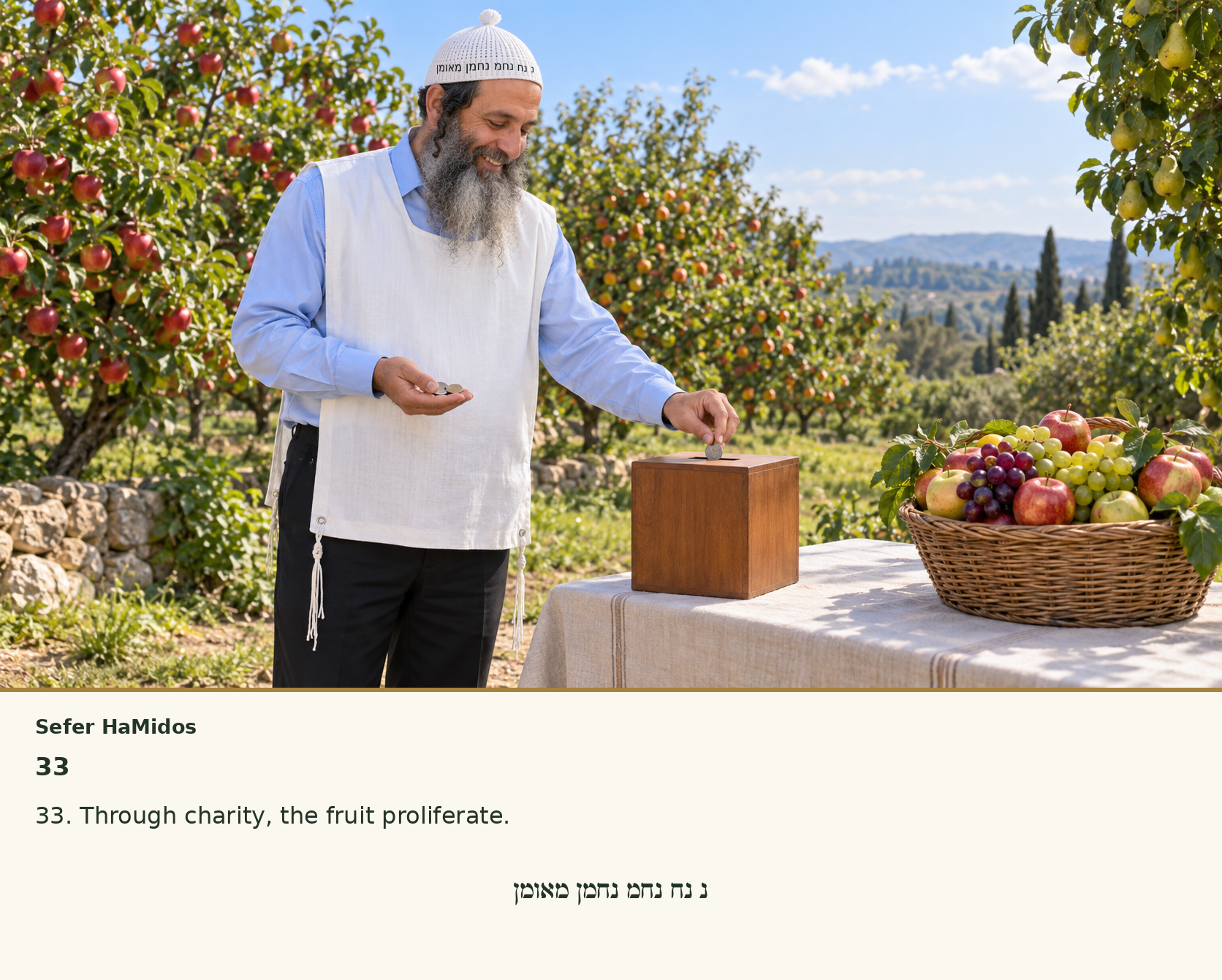
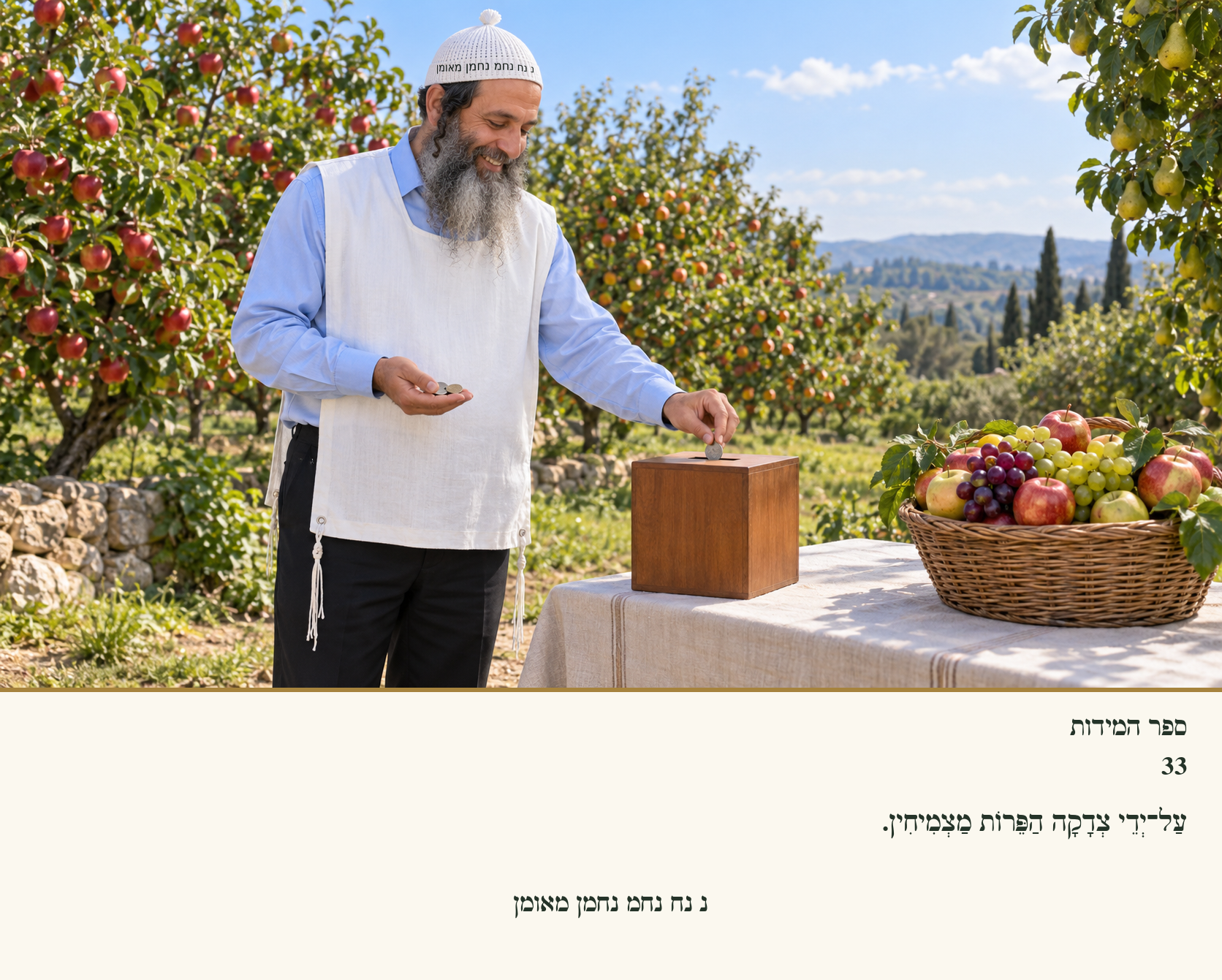
עַל־יְדֵי צְדָקָה הַפֵּרוֹת מַצְמִיחִין.
33
33. Through charity, the fruit proliferate.
📷 Pictures / videos for this teaching
ל״ד
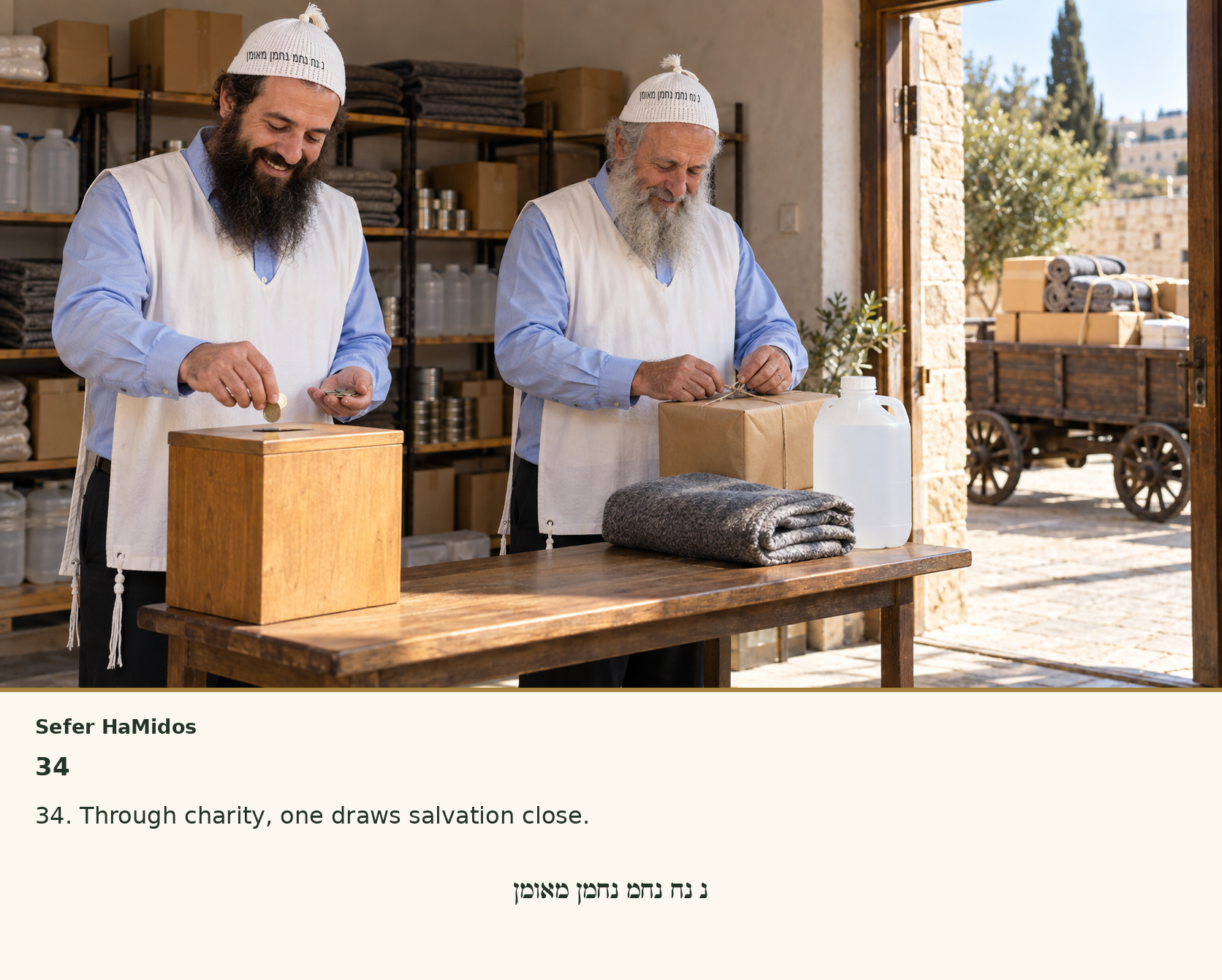
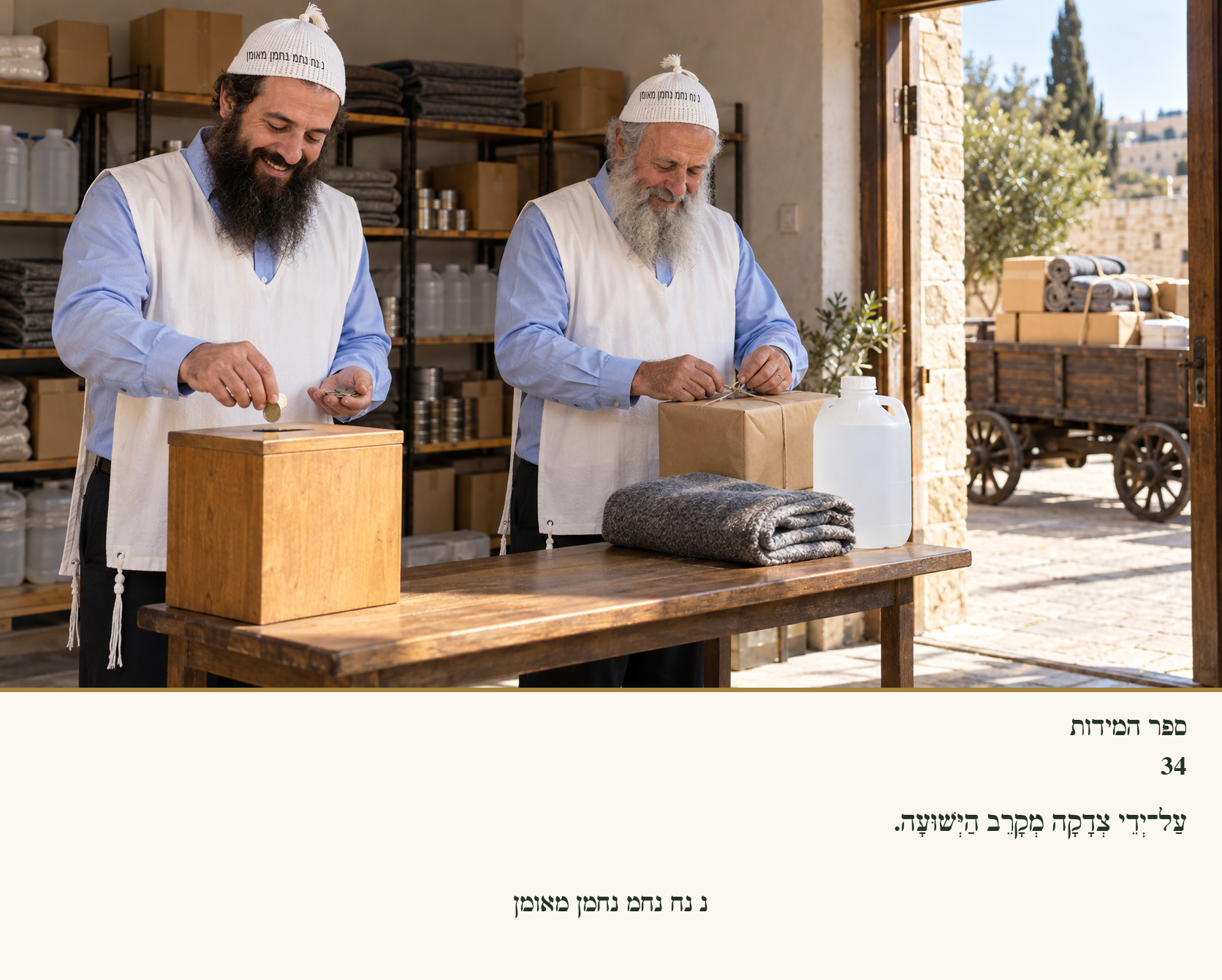
עַל־יְדֵי צְדָקָה מְקָרֵב הַיְּשׁוּעָה.
34
34. Through charity, one draws salvation close.
📷 Pictures / videos for this teaching
ל״ה
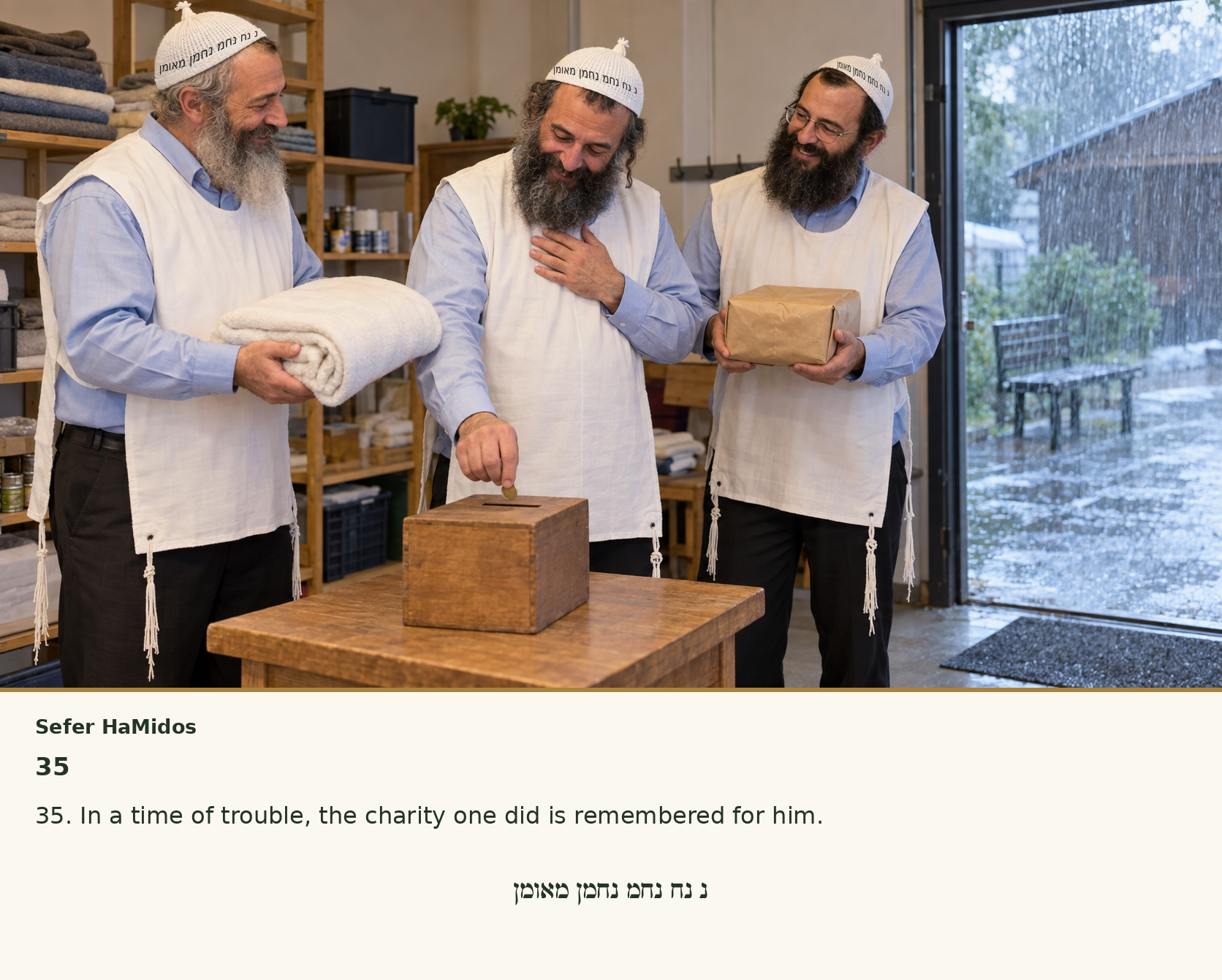
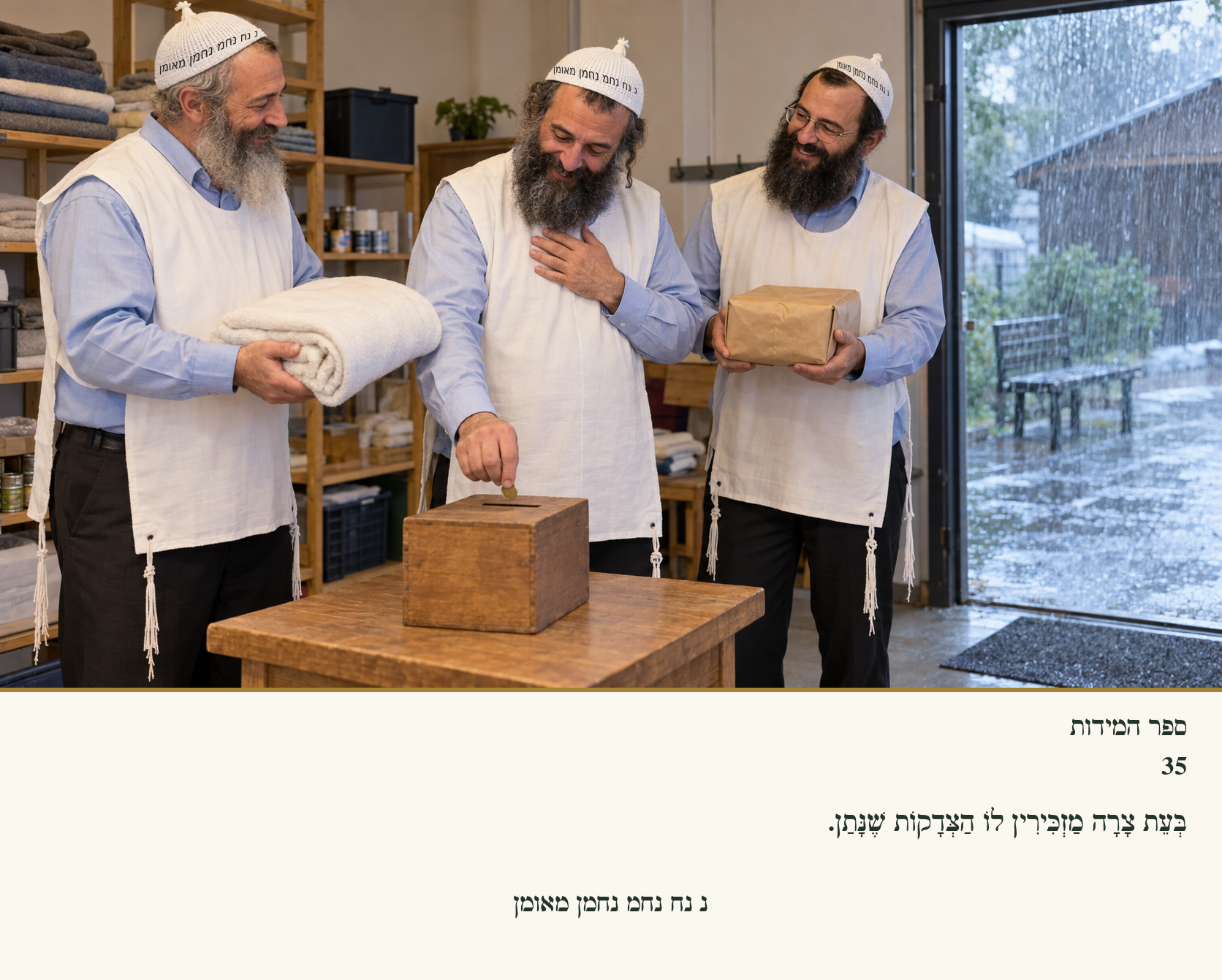
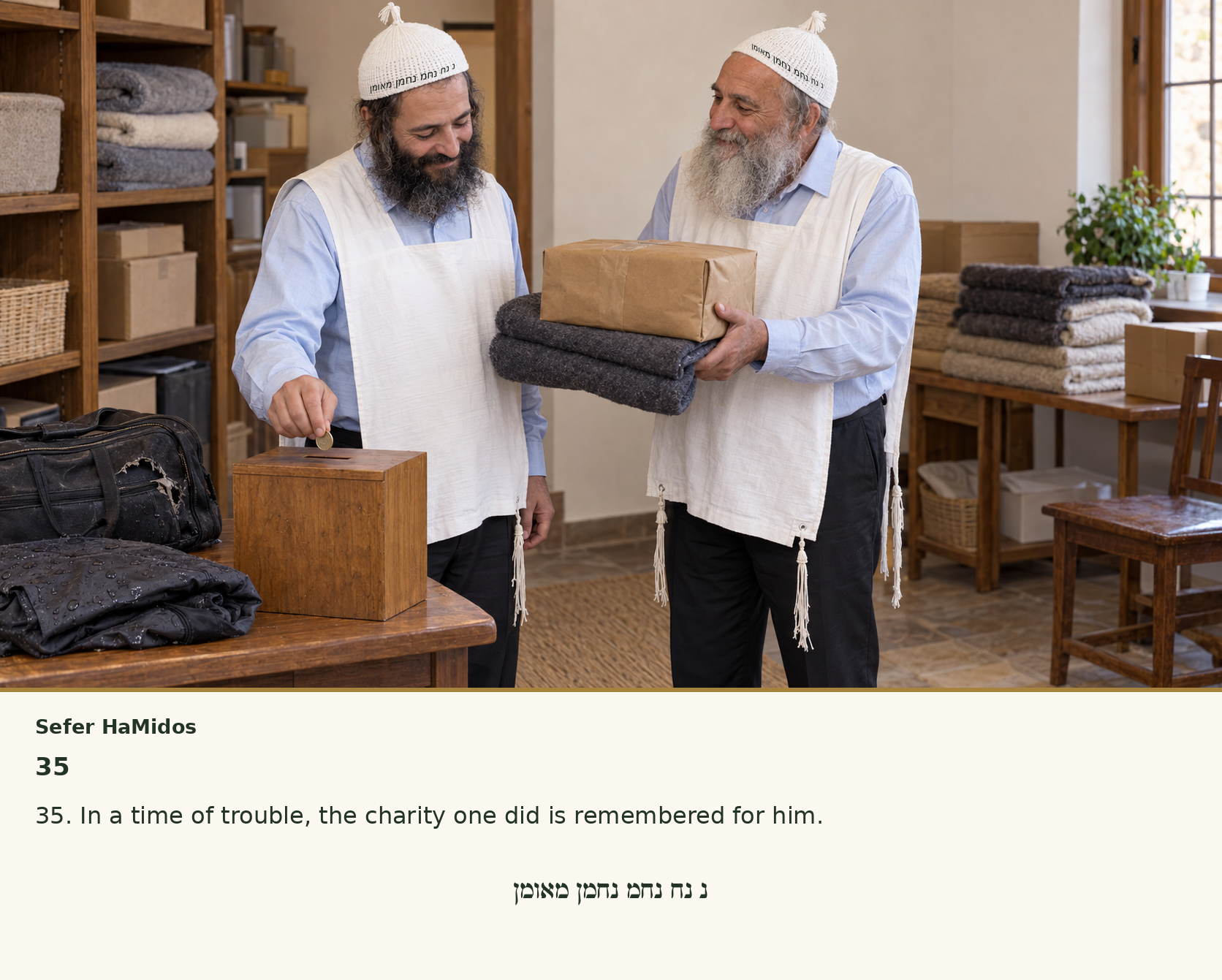
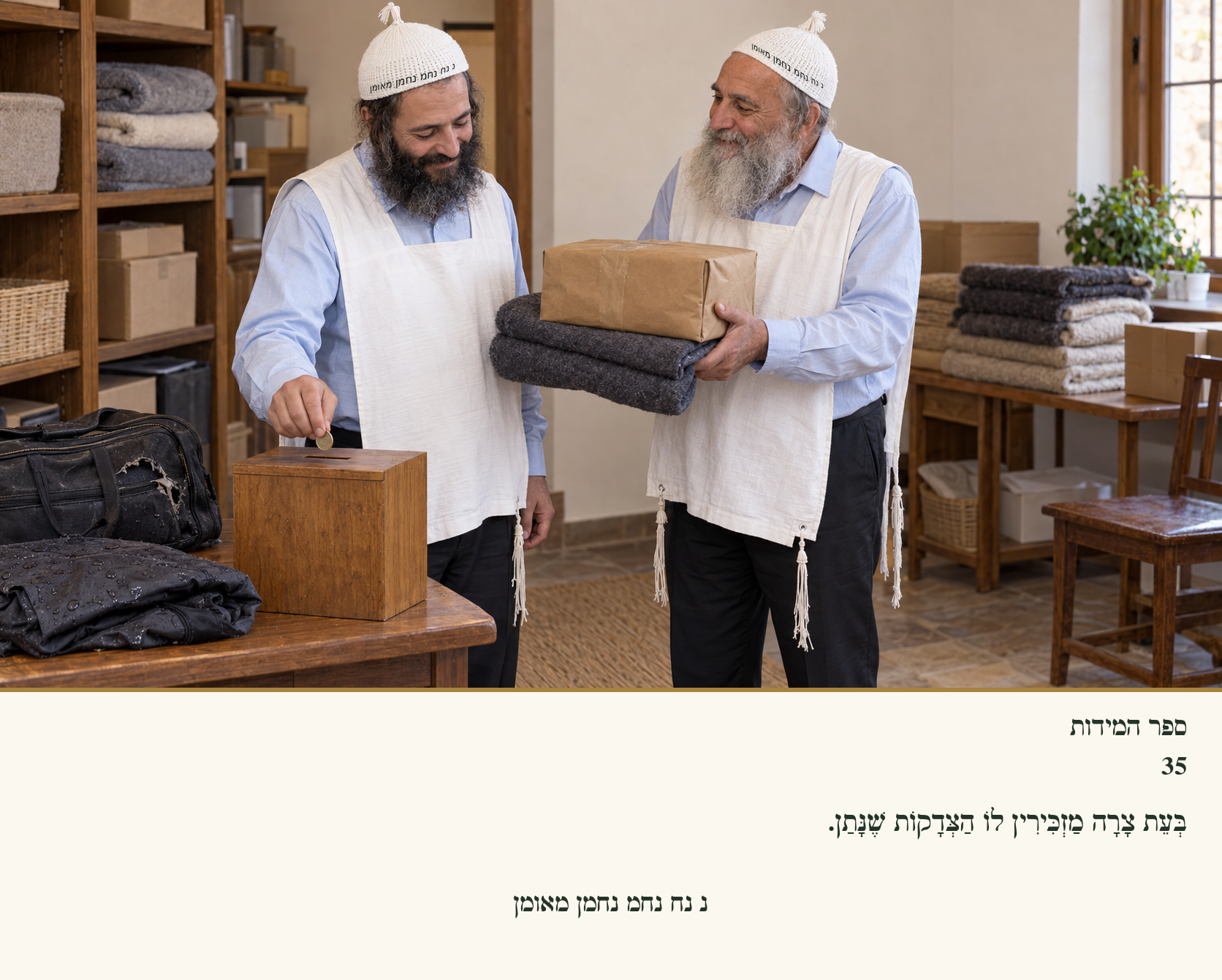
בְּעֵת צָרָה מַזְכִּירִין לוֹ הַצְּדָקוֹת שֶׁנָּתַן.
35
35. In a time of trouble, the charity one did is remembered for him.
📷 Pictures / videos for this teaching
ל״ו
עַל־יְדֵי צְדָקָה שֶׁתִּתֵּן, גַּם הַשָּׂרִים וְהַמְּלָכִים יִהְיוּ עִמְּךָ בְּשָׁלוֹם.
36
36. Through the charity you give, officials and kings will also have peaceful relations with you.
ל״ז
עַל־יְדֵי צְדָקָה לֹא יִשְׁמַע אָדָם חָמָס וְשׁוֹד וָשֶׁבֶר.
37
37. Through charity a person will not hear (know) from theft, armed pillage, or hunger.
ל״ח
עַל־יְדֵי צְדָקָה זוֹכֶה אָדָם לְחֵן.
38
38. Through charity a person merits grace.
ל״ט
מִי שֶׁמְּדַבֵּר לִבְנֵי־אָדָם שֶׁיִּתְּנוּ צְדָקָה, הוּא מַרְבֶּה יְשׁוּעָה.
39
39. One who urges people to give charity increases salvation.
מ׳
כְּשֶׁאֵין בָּעִיר מִי לִסְמֹךְ אֶת הָעֲנִיִּים, בָּא שְׂרֵפָה.
40
40. When there is not someone in a city to support the needy, fire comes upon it.
מ״א
בִּזְכוּת הַצְּדָקָה נִצּוֹל מִגַּאֲוָה.
41
41. In the merit of charity, one is saved from arrogance.
מ״ב
אֱמוּנָה חָשׁוּב כִּצְדָקָה.
42
42. Faith is reckoned as charity (repeated from Faith 12, see there).
מ״ג
עַל־יְדֵי צְדָקָה לְשֵׁם שָׁמַיִם בָּא לְמִדַּת בּוּשָׁה.
43
43. Through charity given for the sake of Heaven, one comes to the quality of [holy] shame.
מ״ד
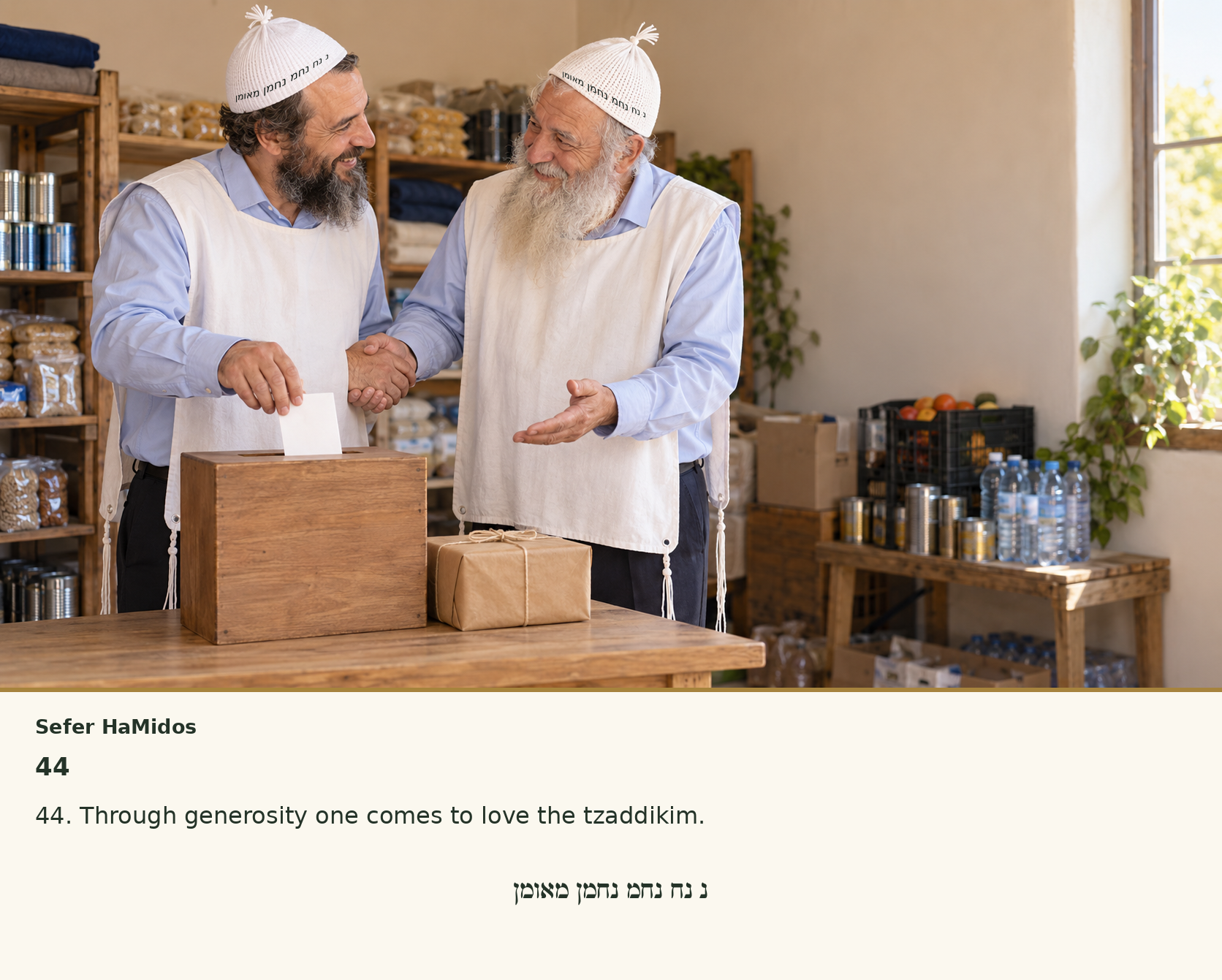
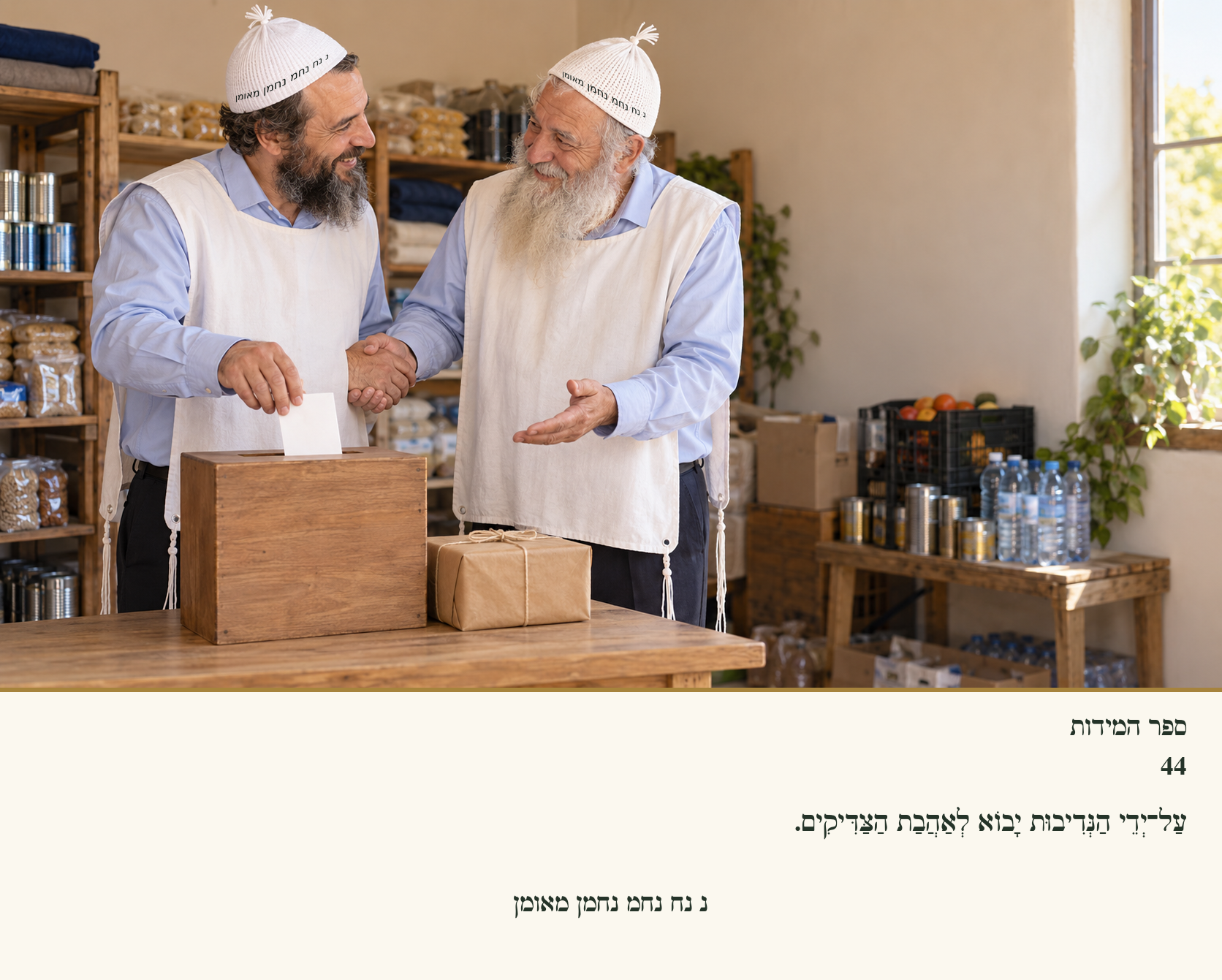
עַל־יְדֵי הַנְּדִיבוּת יָבוֹא לְאַהֲבַת הַצַּדִּיקִים.
44
44. Through generosity one comes to love the tzaddikim.
📷 Pictures / videos for this teaching
מ״ה
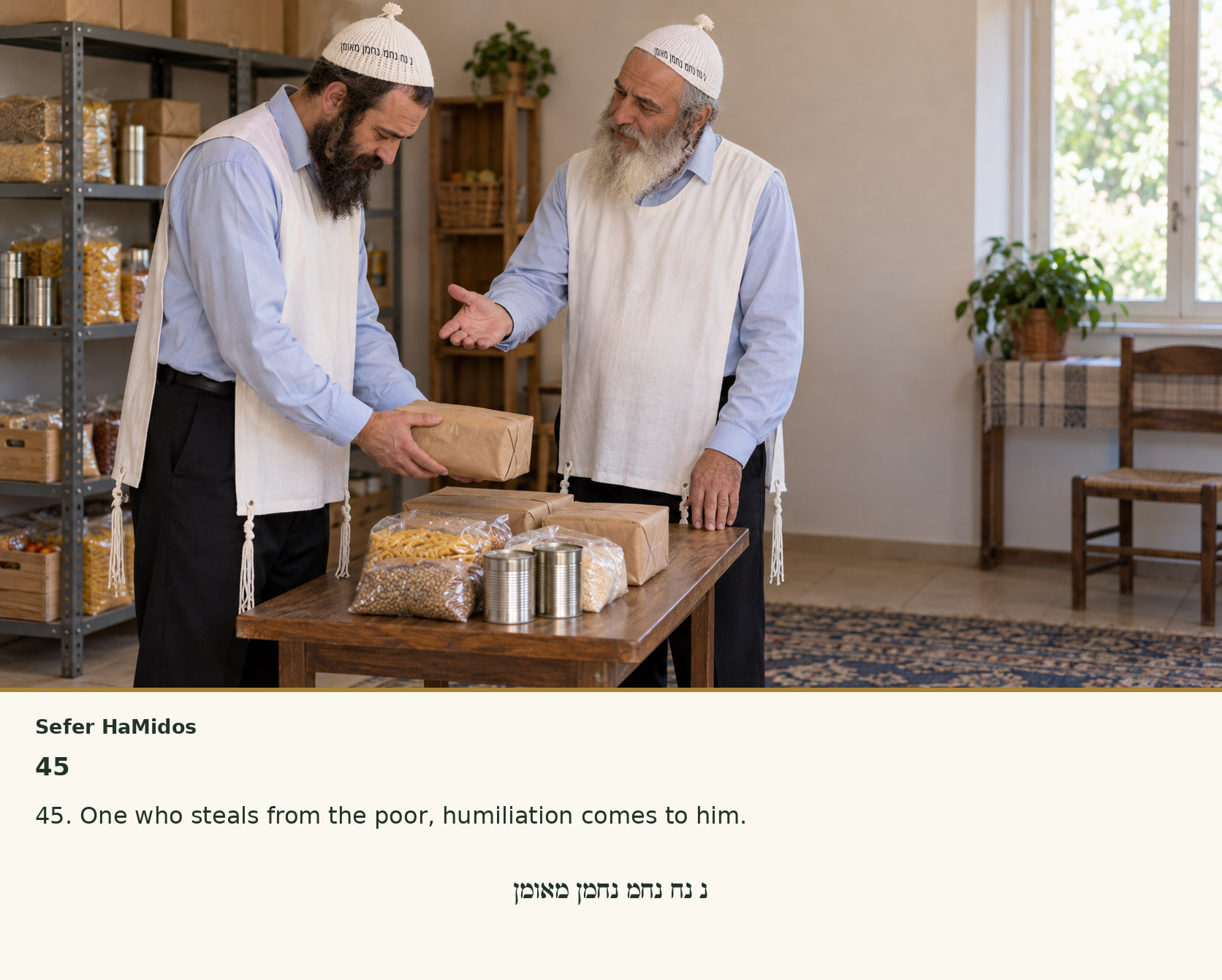
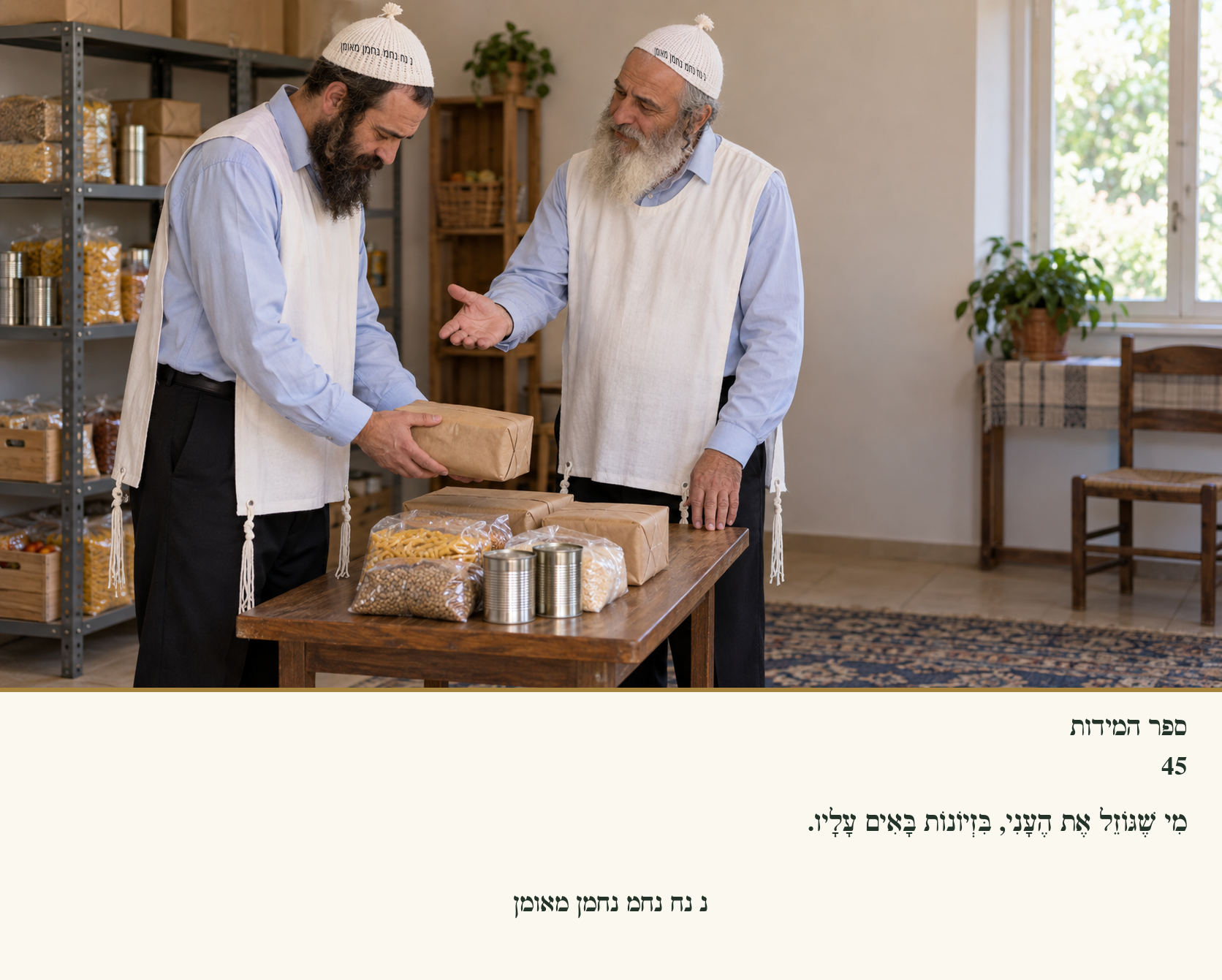
מִי שֶׁגּוֹזֵל אֶת הֶעָנִי, בִּזְיוֹנוֹת בָּאִים עָלָיו.
45
45. One who steals from the poor, humiliation comes to him.
📷 Pictures / videos for this teaching
מ״ו
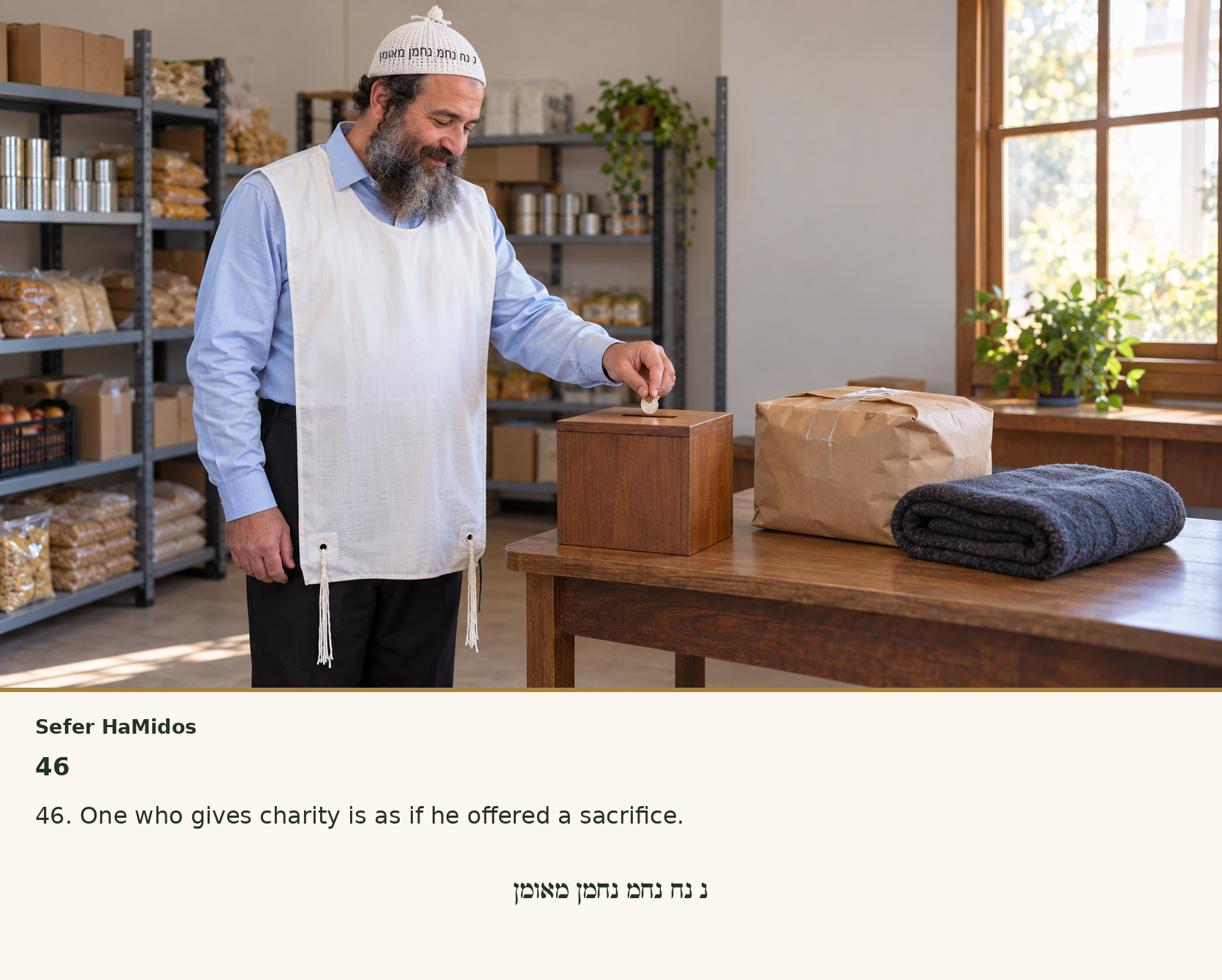
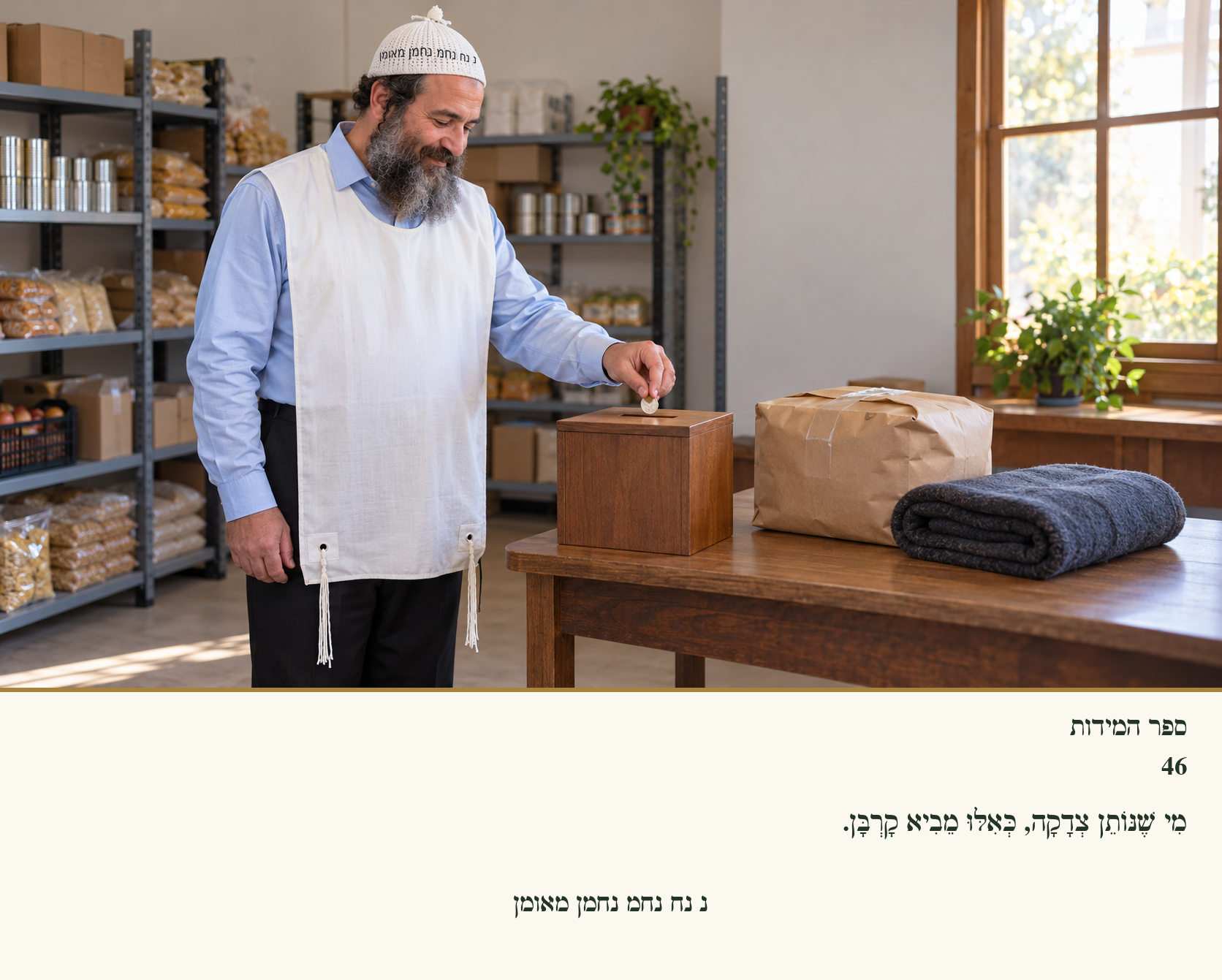
מִי שֶׁנּוֹתֵן צְדָקָה, כְּאִלּוּ מֵבִיא קָרְבָּן.
46
46. One who gives charity is as if he offered a sacrifice.
📷 Pictures / videos for this teaching
מ״ז
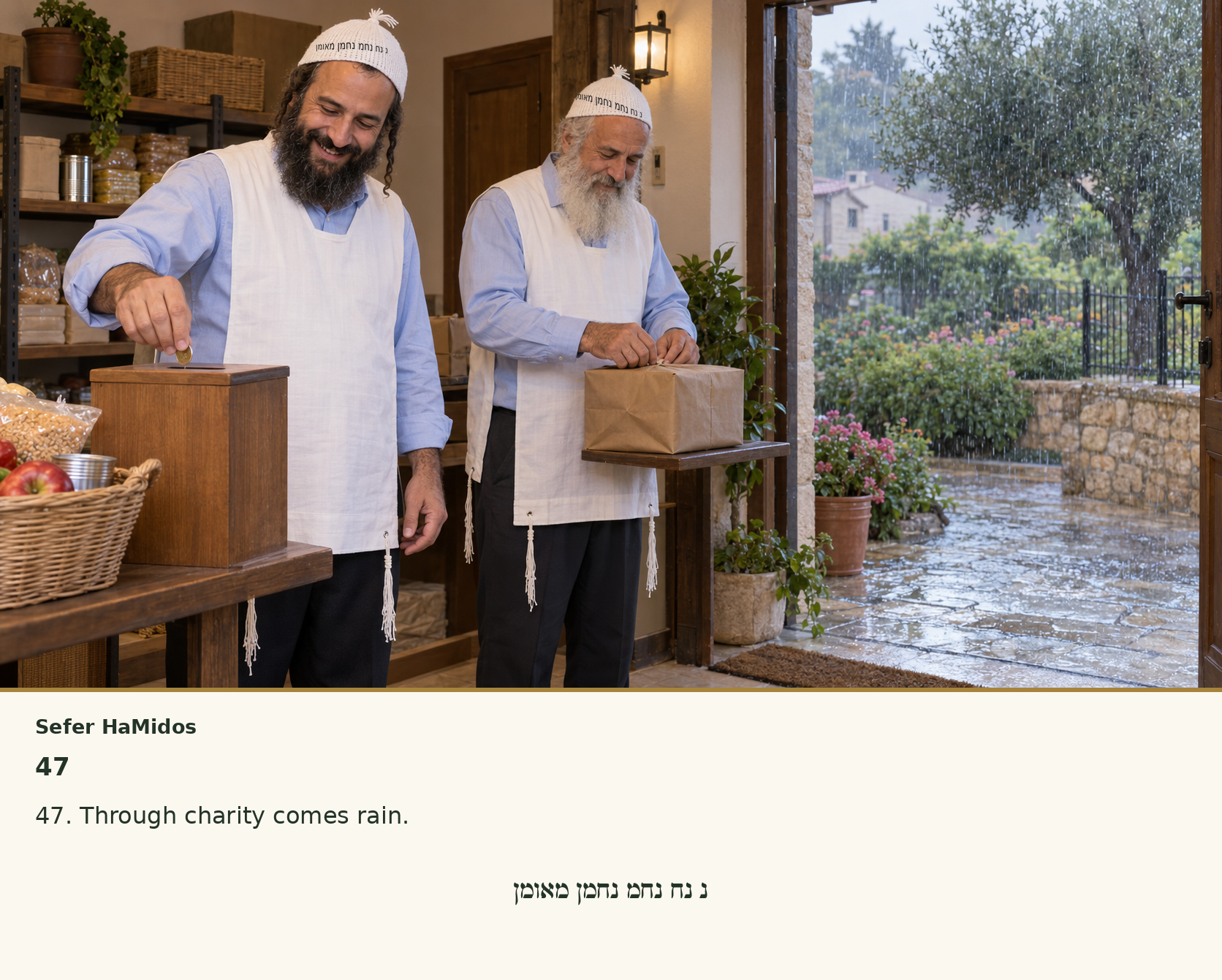
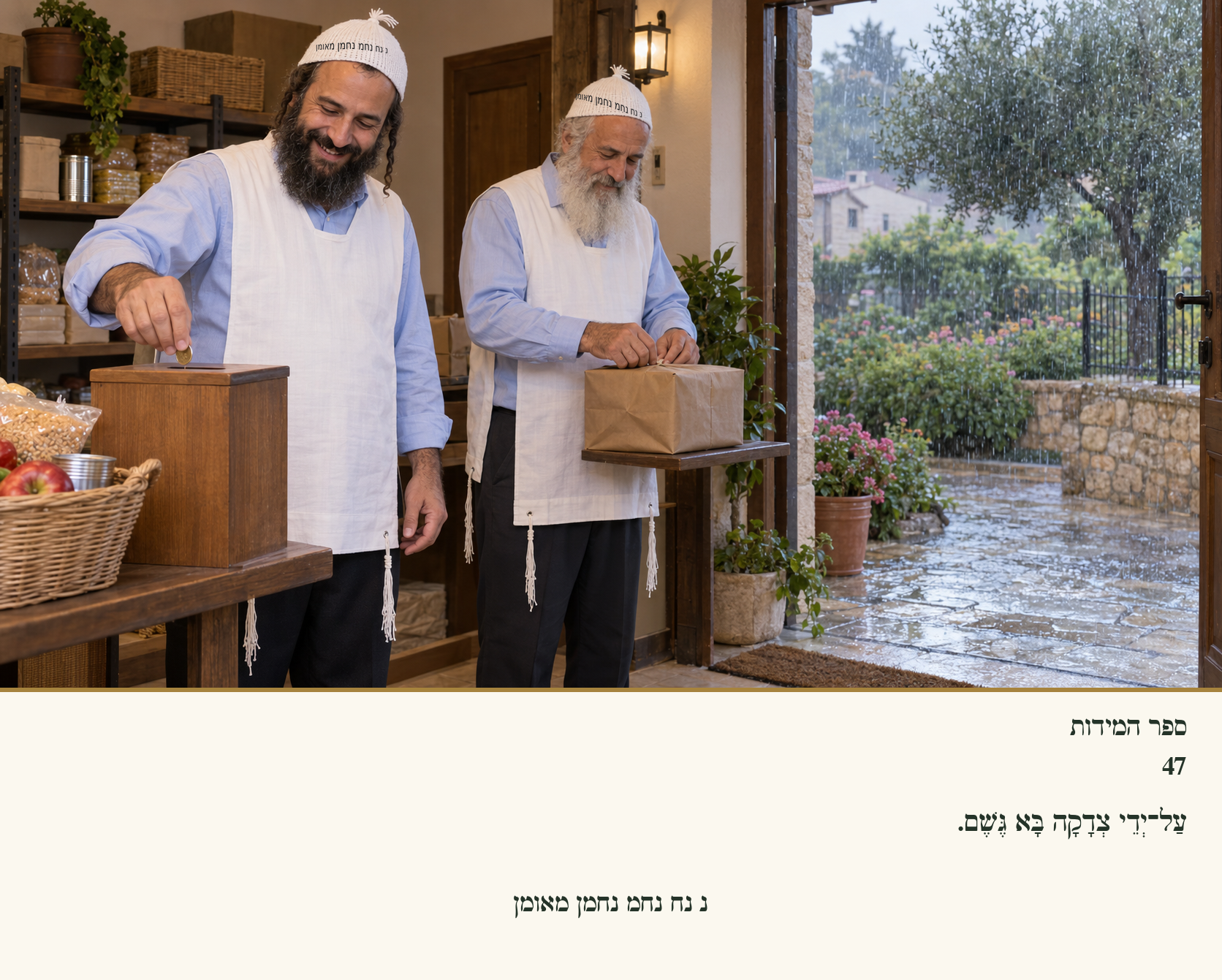
עַל־יְדֵי צְדָקָה בָּא גֶּשֶׁם.
47
47. Through charity comes rain.
📷 Pictures / videos for this teaching
מ״ח
עַל־יְדֵי צְדָקָה אֵין מְגָרְשִׁין אֶת בְּנֵי־יִשְׂרָאֵל מִמְּקוֹמָם.
48
48. Through charity the Jews are not banished from their place.
מ״ט
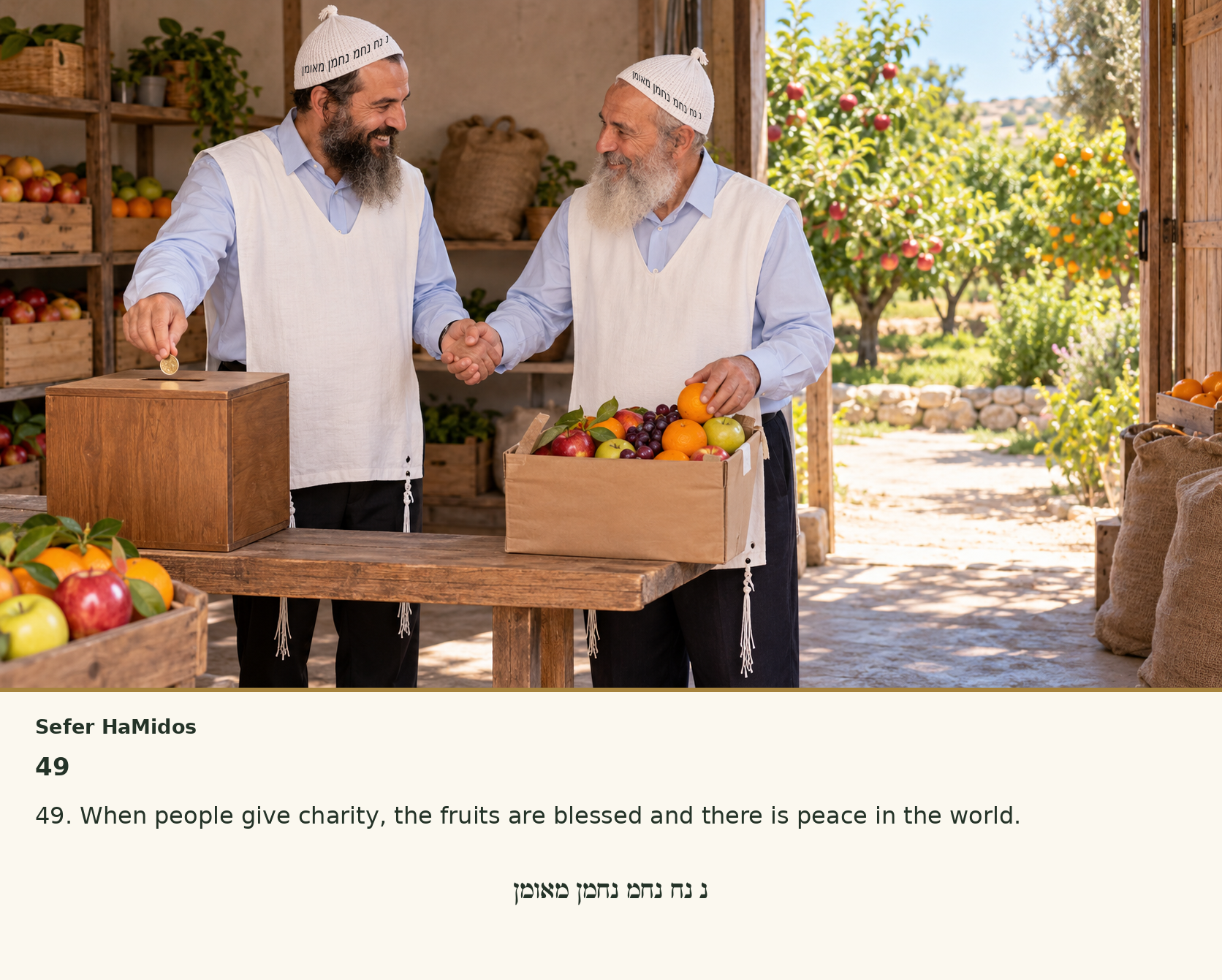
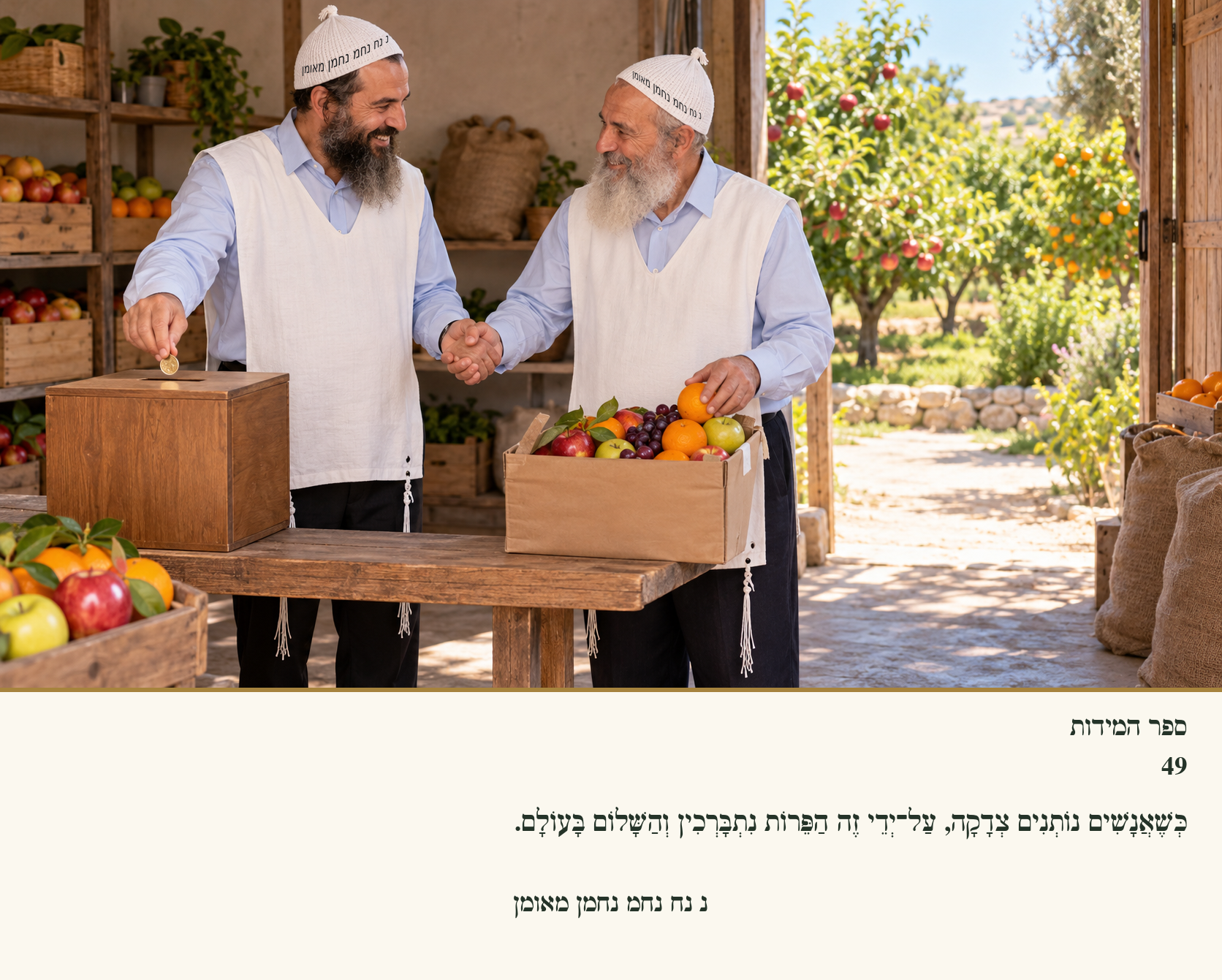
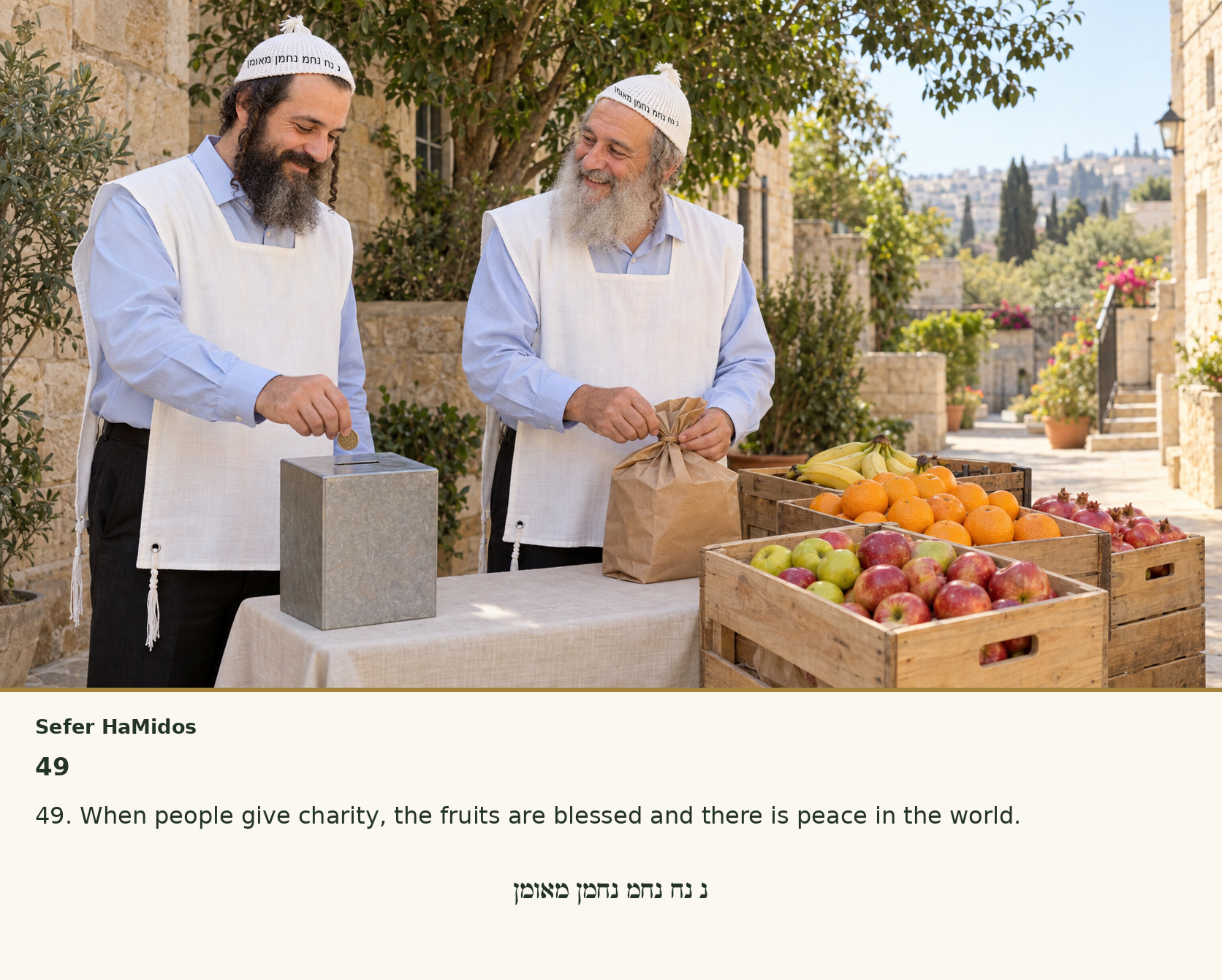
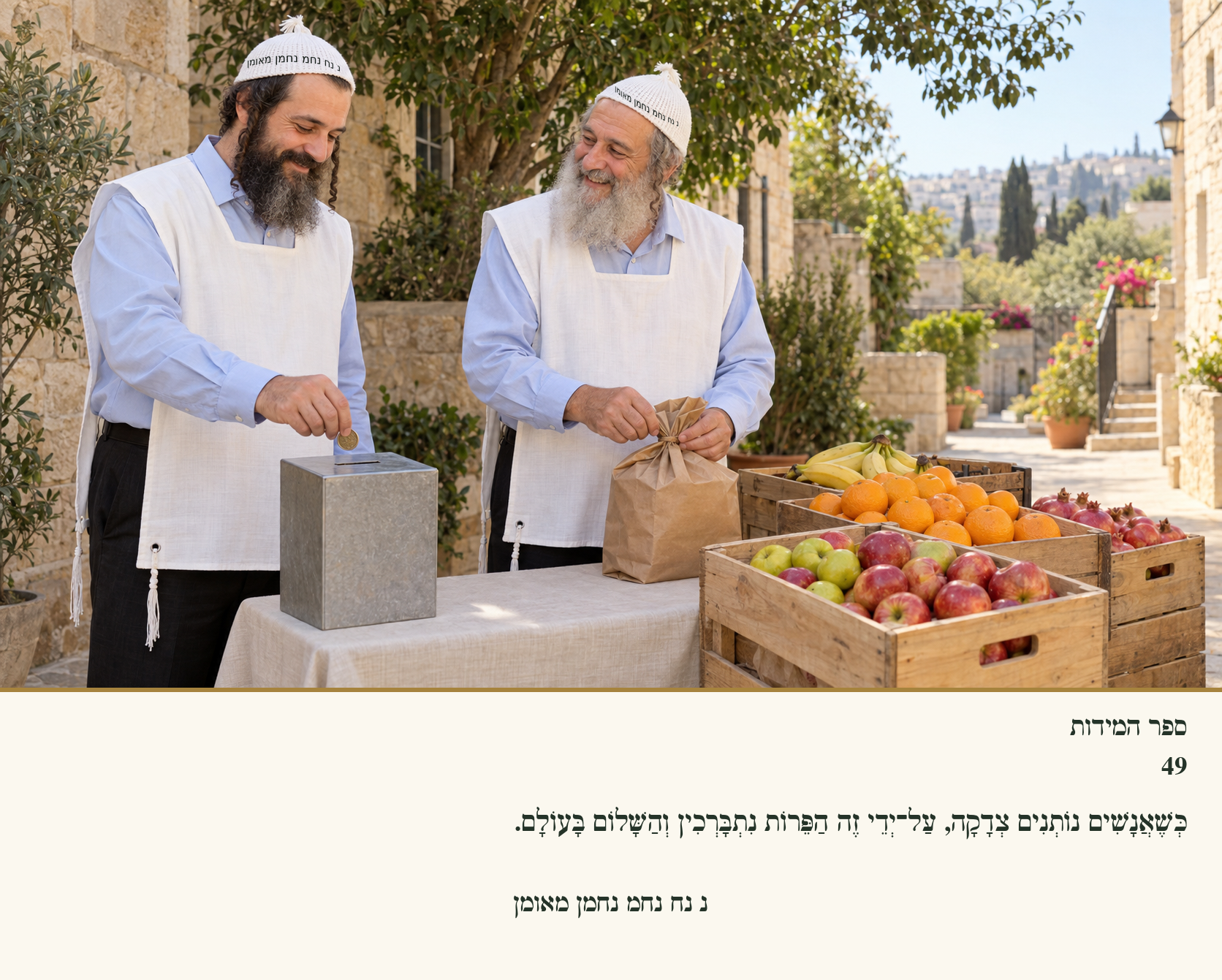
כְּשֶׁאֲנָשִׁים נוֹתְנִים צְדָקָה, עַל־יְדֵי זֶה הַפֵּרוֹת נִתְבָּרְכִין וְהַשָּׁלוֹם בָּעוֹלָם.
49
49. When people give charity, the fruits are blessed and there is peace in the world.
📷 Pictures / videos for this teaching
נ׳
עַל־יְדֵי אֱמֶת רוֹאִים אֶת הַצְּדָקָה שֶׁאַתָּה עוֹשֶׂה.
50
50. Through truth, the charity you do is noted (lit. seen).
נ״א
צְדָקָה מֵגֵן עַל זַרְעוֹ שֶׁל אָדָם.
51
51. Charity protects a person’s descendants.
נ״ב
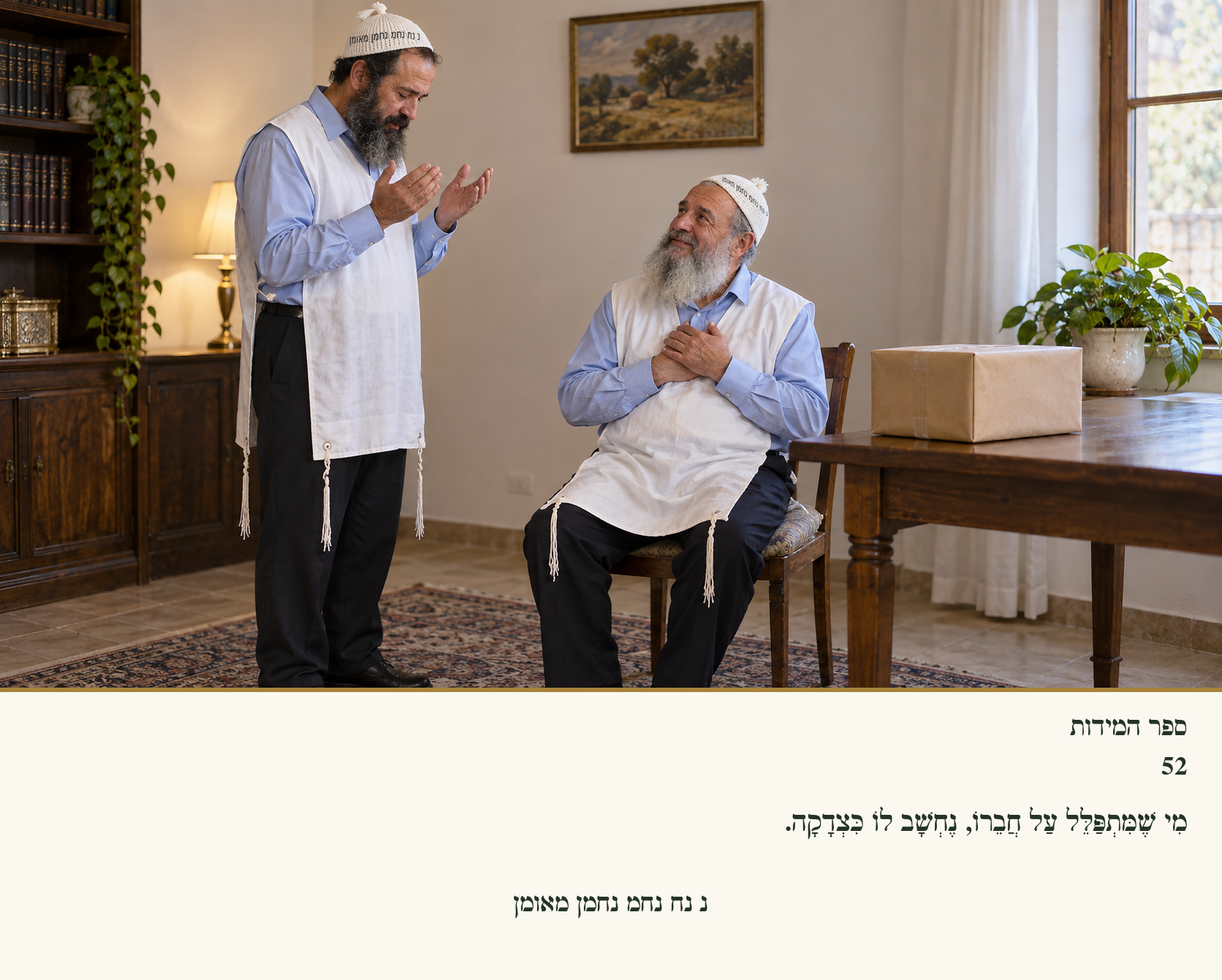
מִי שֶׁמִּתְפַּלֵּל עַל חֲבֵרוֹ, נֶחְשָׁב לוֹ כִּצְדָקָה.
52
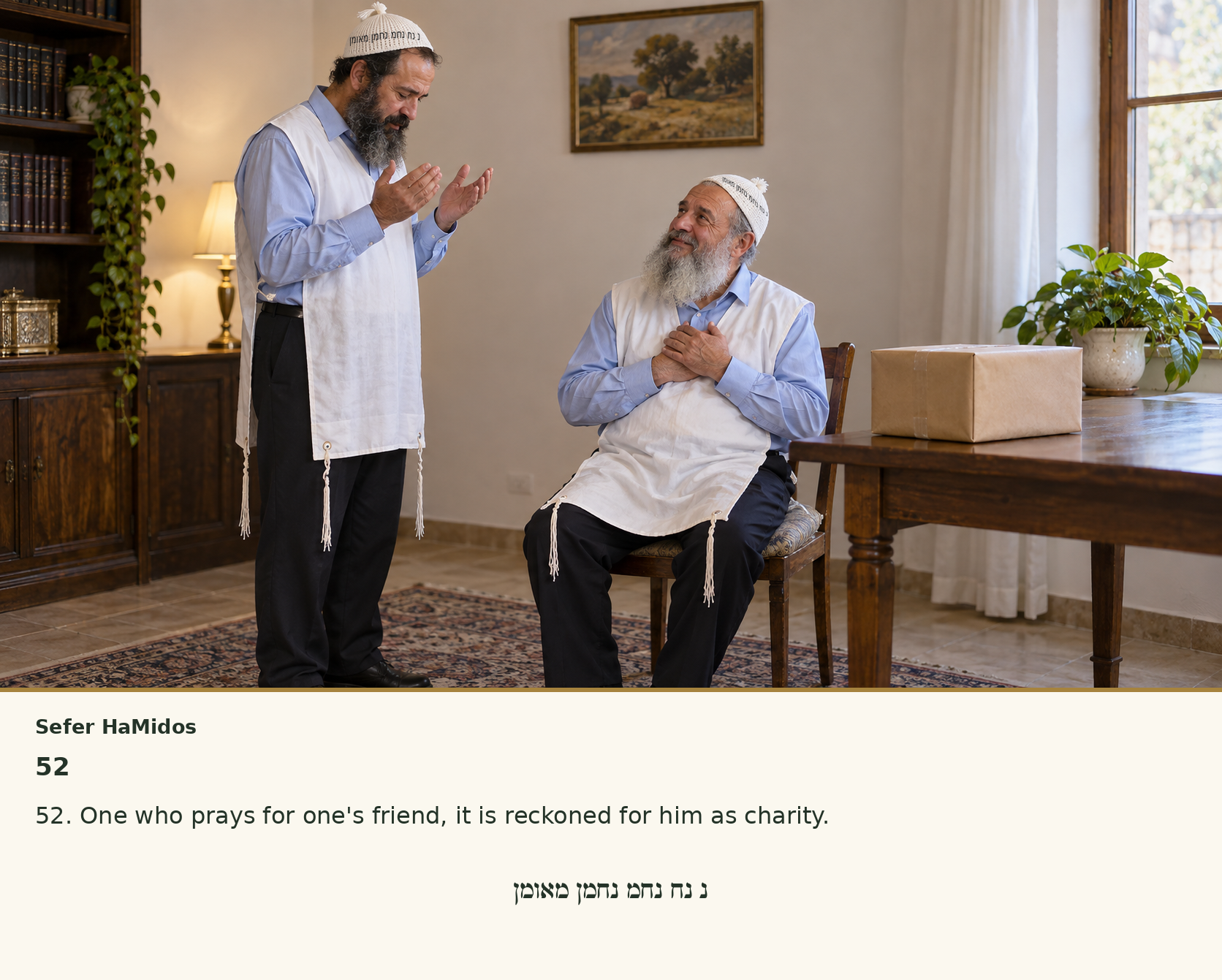
52. One who prays for one's friend, it is reckoned for him as charity.
📷 Pictures / videos for this teaching
נ״ג
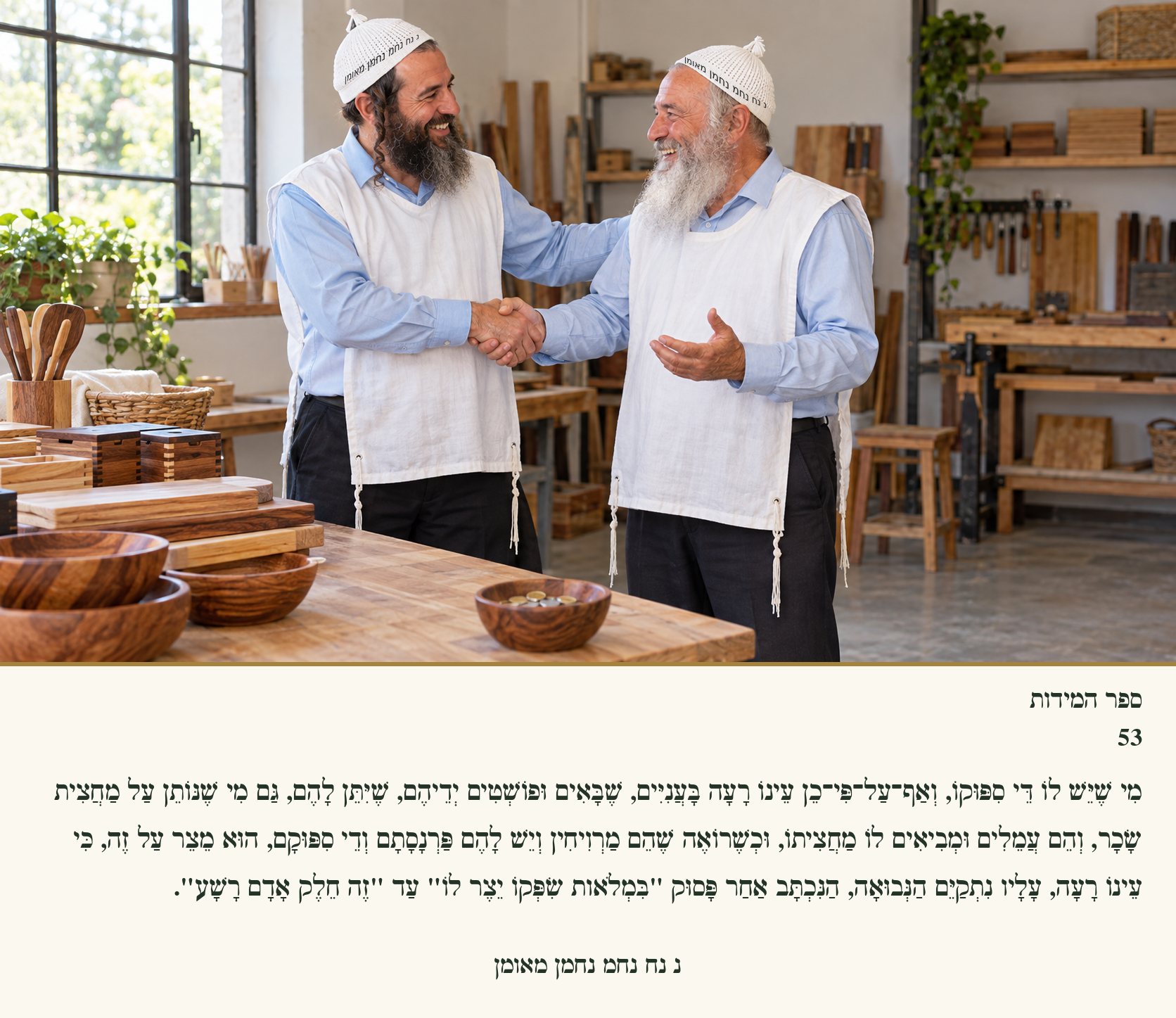
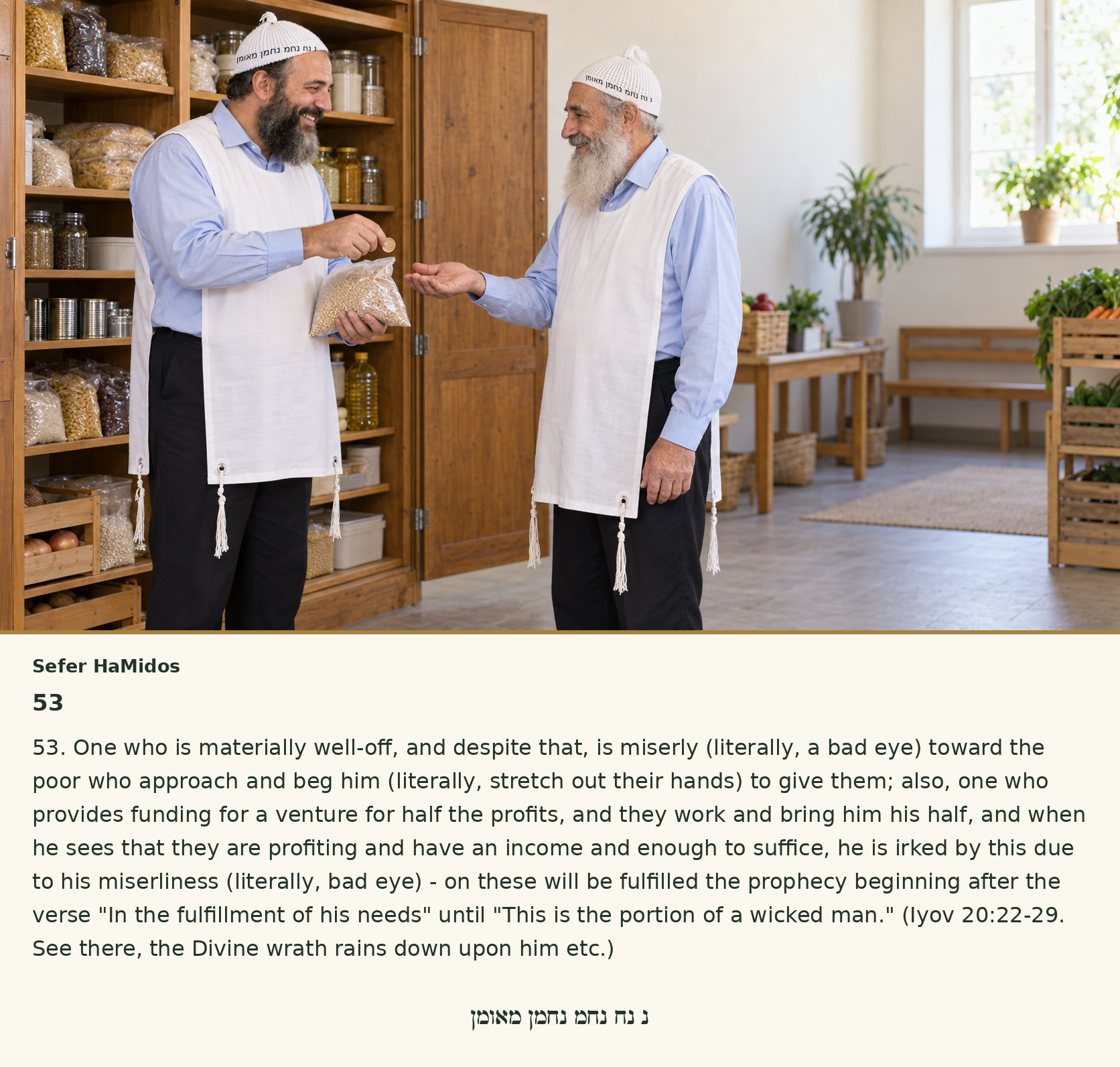
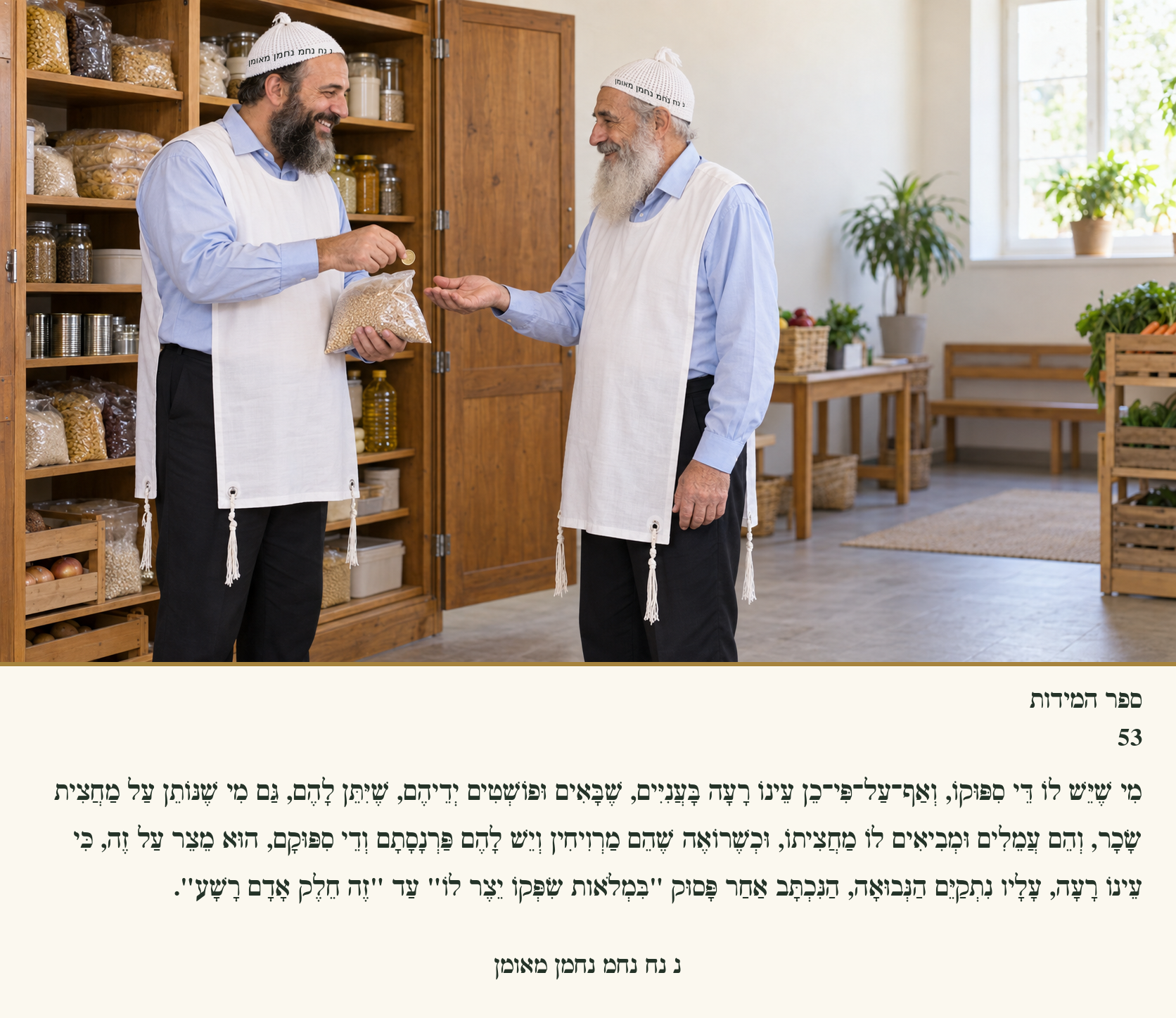
מִי שֶׁיֵּשׁ לוֹ דֵּי סִפּוּקוֹ, וְאַף־עַל־פִּי־כֵן עֵינוֹ רָעָה בָּעֲנִיִּים, שֶׁבָּאִים וּפוֹשְׁטִים יְדֵיהֶם, שֶׁיִּתֵּן לָהֶם, גַּם מִי שֶׁנּוֹתֵן עַל מַחֲצִית שָׂכָר, וְהֵם עֲמֵלִים וּמְבִיאִים לוֹ מַחֲצִיתוֹ, וּכְשֶׁרוֹאֶה שֶׁהֵם מַרְוִיחִין וְיֵשׁ לָהֶם פַּרְנָסָתָם וְדֵי סִפּוּקָם, הוּא מֵצֵר עַל זֶה, כִּי עֵינוֹ רָעָה, עָלָיו נִתְקַיֵּם הַנְּבוּאָה, הַנִּכְתָּב אַחַר פָּסוּק "בִּמְלֹאות שִׂפְּקוֹ יֵצֶר לוֹ" עַד "זֶה חֵלֶק אָדָם רָשָׁע".
53
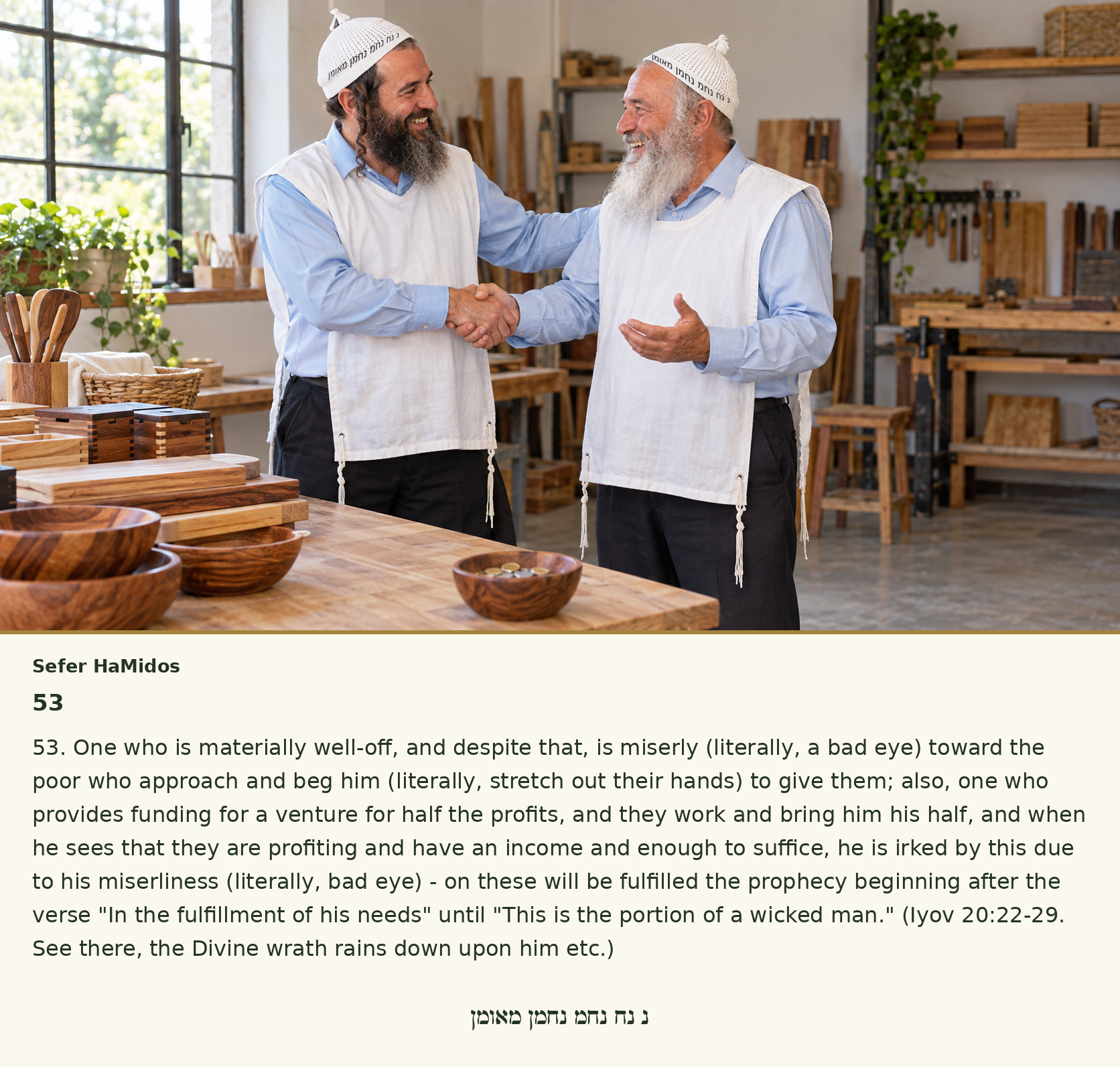
53. One who is materially well-off, and despite that, is miserly (literally, a bad eye) toward the poor who approach and beg him (literally, stretch out their hands) to give them; also, one who provides funding for a venture for half the profits, and they work and bring him his half, and when he sees that they are profiting and have an income and enough to suffice, he is irked by this due to his miserliness (literally, bad eye) - on these will be fulfilled the prophecy beginning after the verse "In the fulfillment of his needs" until "This is the portion of a wicked man." (Iyov 20:22-29. See there, the Divine wrath rains down upon him etc.)
📷 Pictures / videos for this teaching
נ״ד
מִי שֶׁעוֹשֶׂה חֶסֶד עִם אוֹהֲבֵי הַשֵּׁם יִתְבָּרַךְ, עַל־יְדֵי זֶה מְתַקֵּן פְּגַם הַבְּרִית.
54
54. One who does kindness to those who love the Blessed G-d, through this he repairs the spoiling of the covenant (circumcision, i.e. any improper thoughts, speech, or actions thereof).
נ״ה
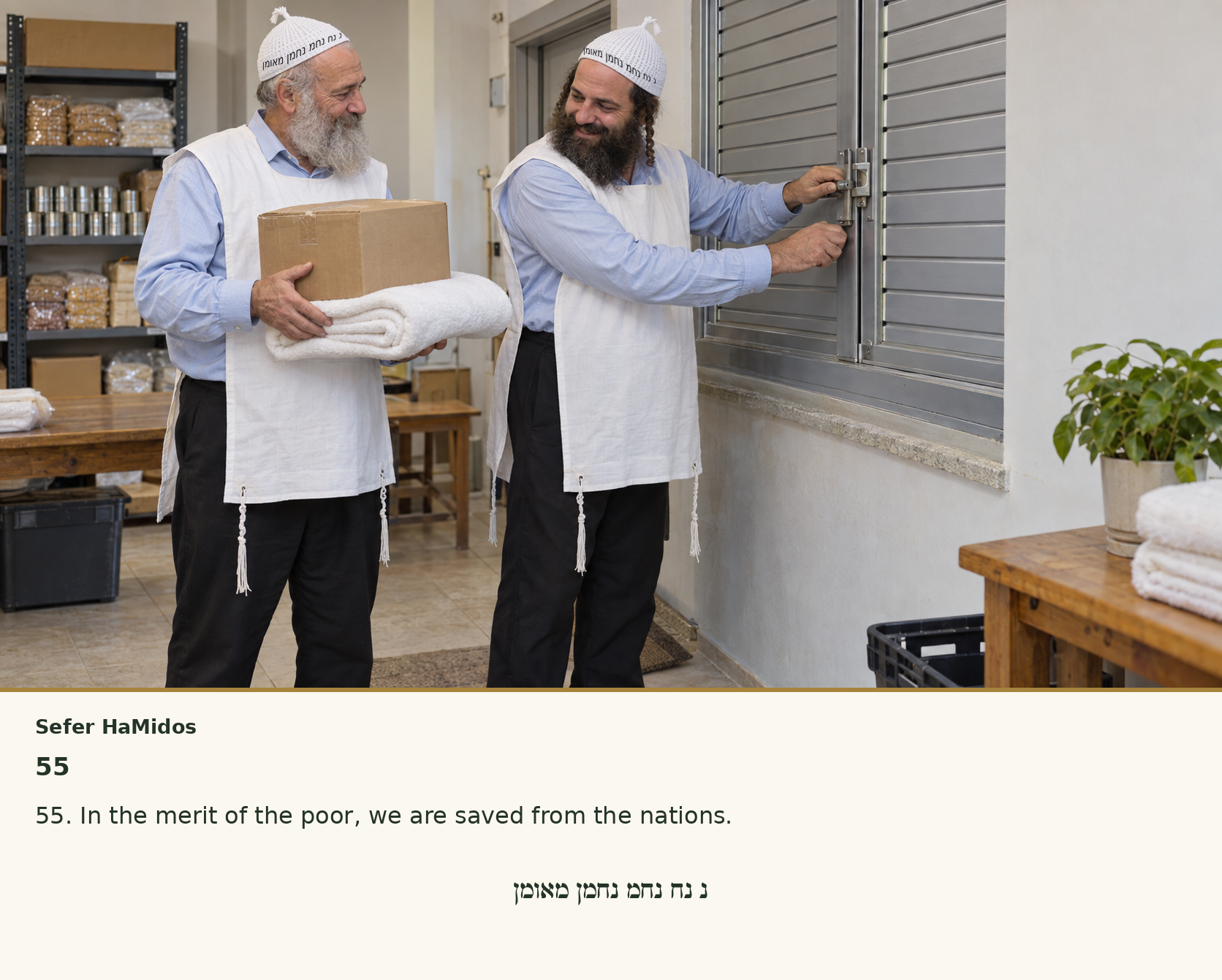
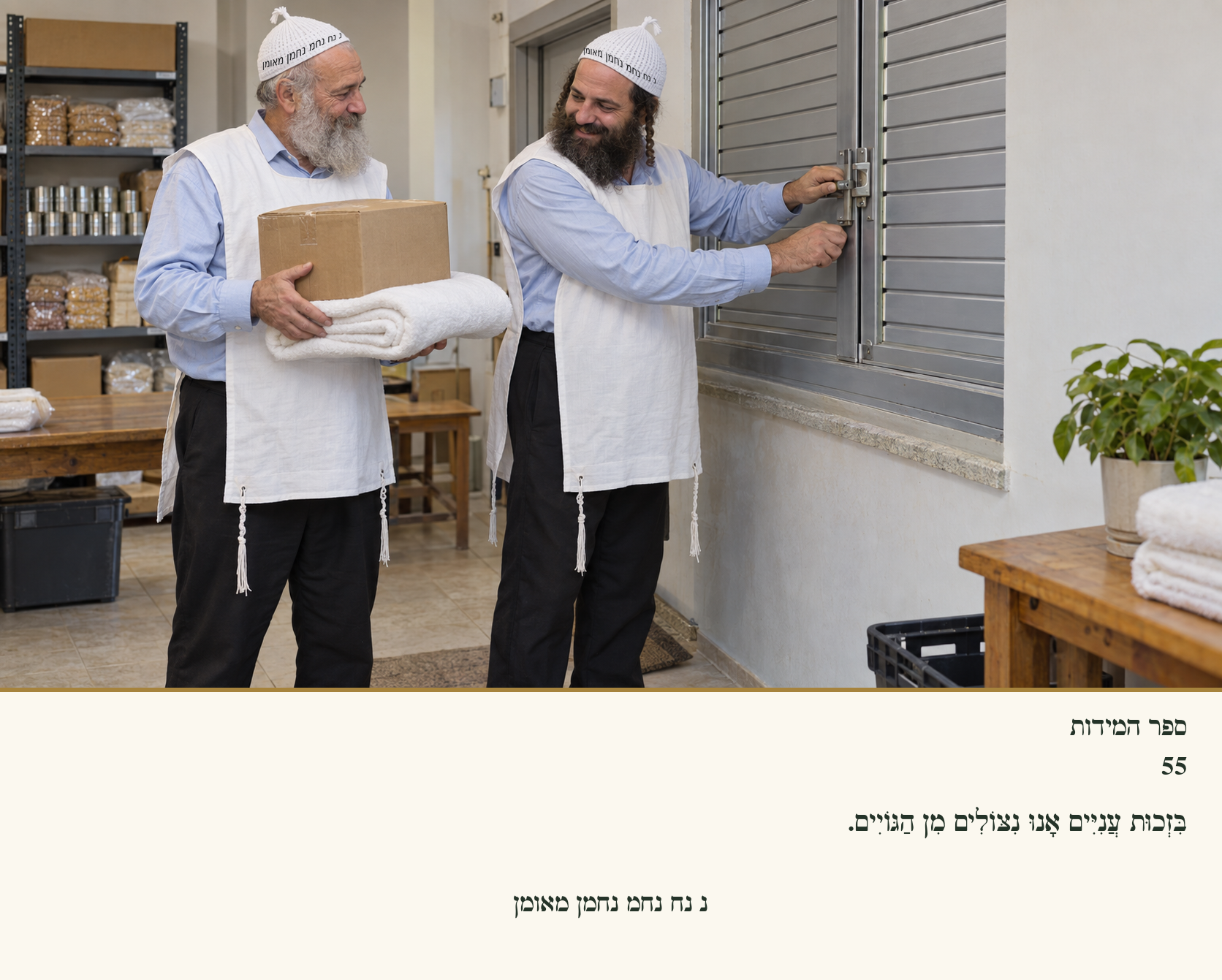
בִּזְכוּת עֲנִיִּים אָנוּ נִצּוֹלִים מִן הַגּוֹיִים.
55
55. In the merit of the poor, we are saved from the nations.
📷 Pictures / videos for this teaching
נ״ו
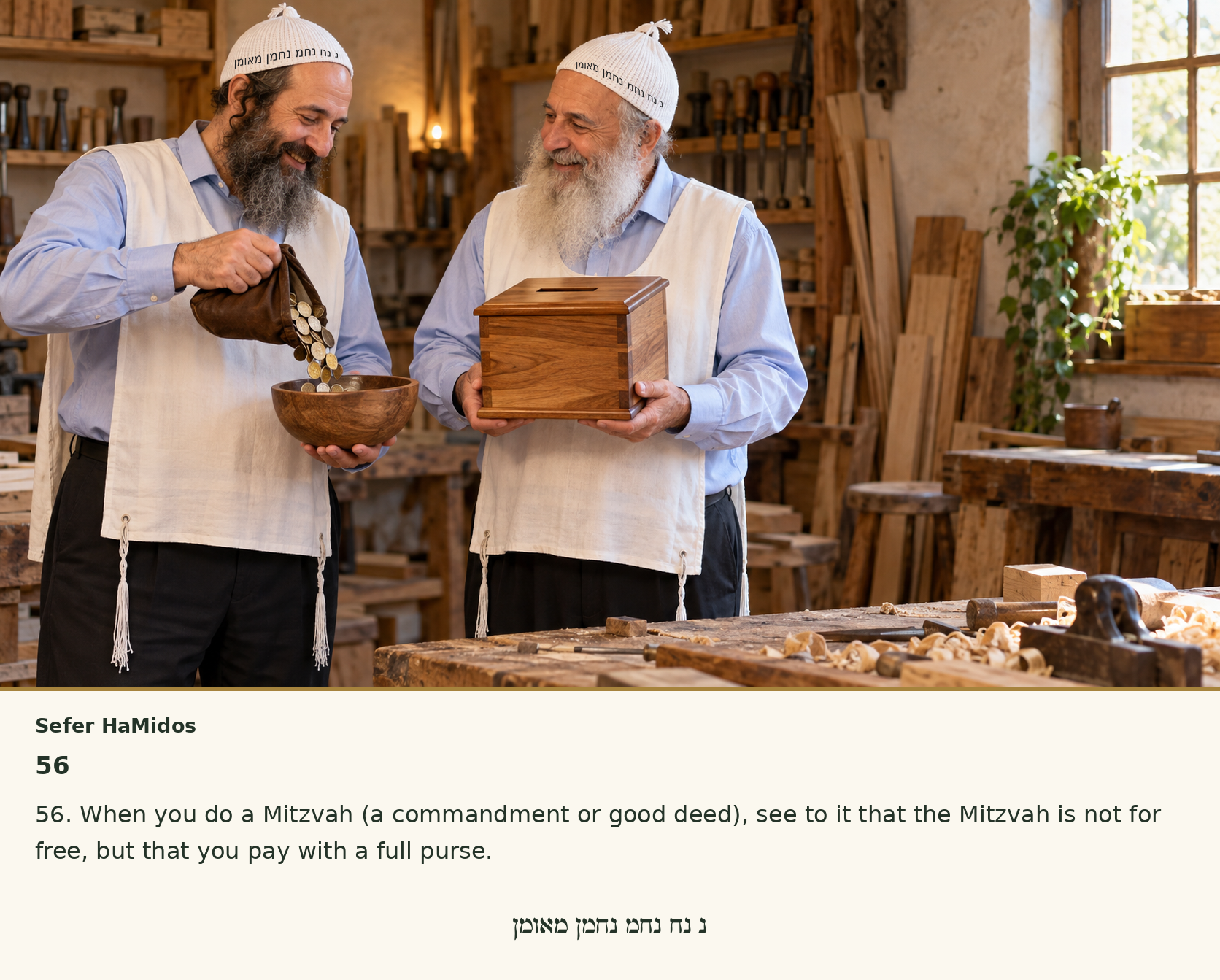
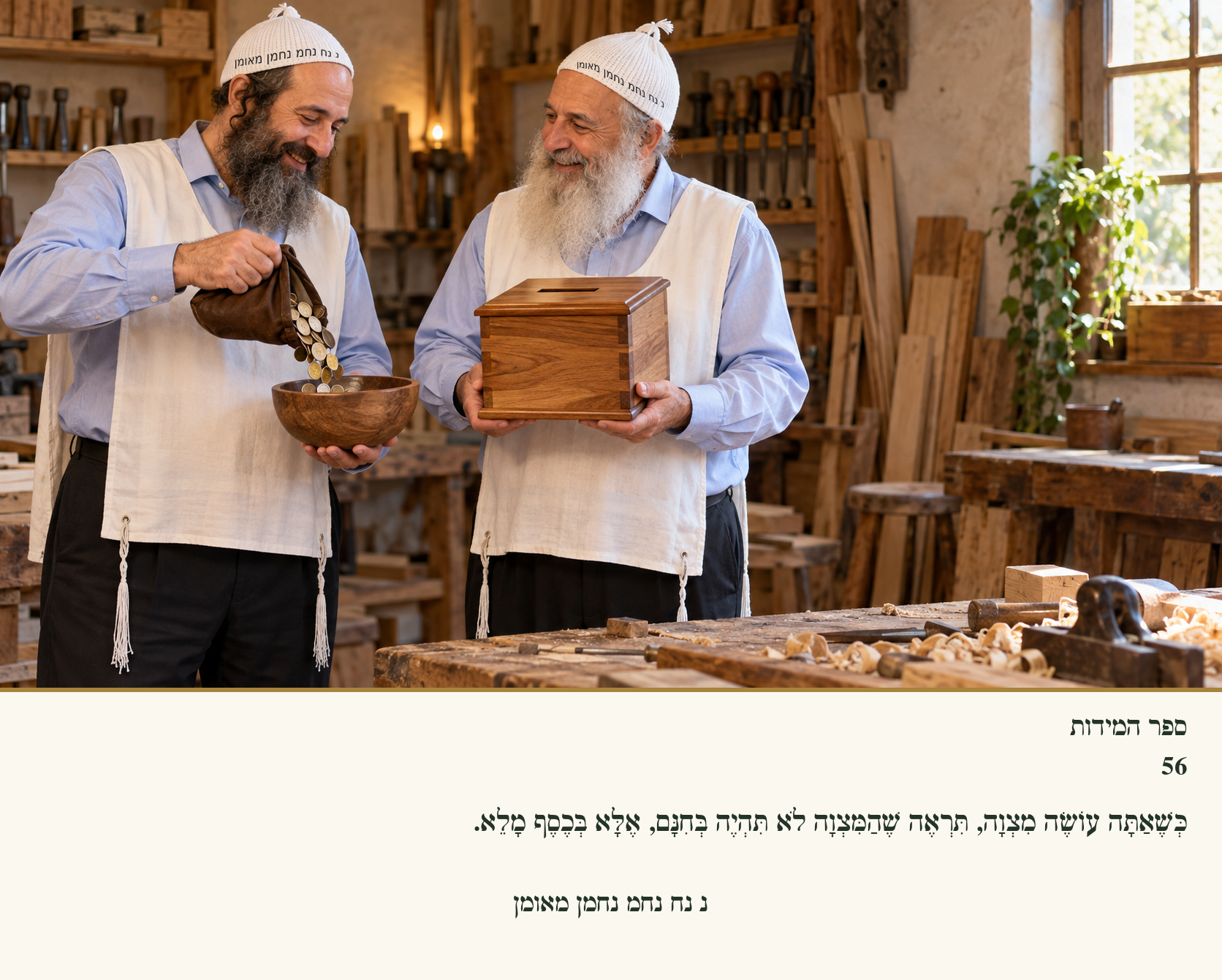
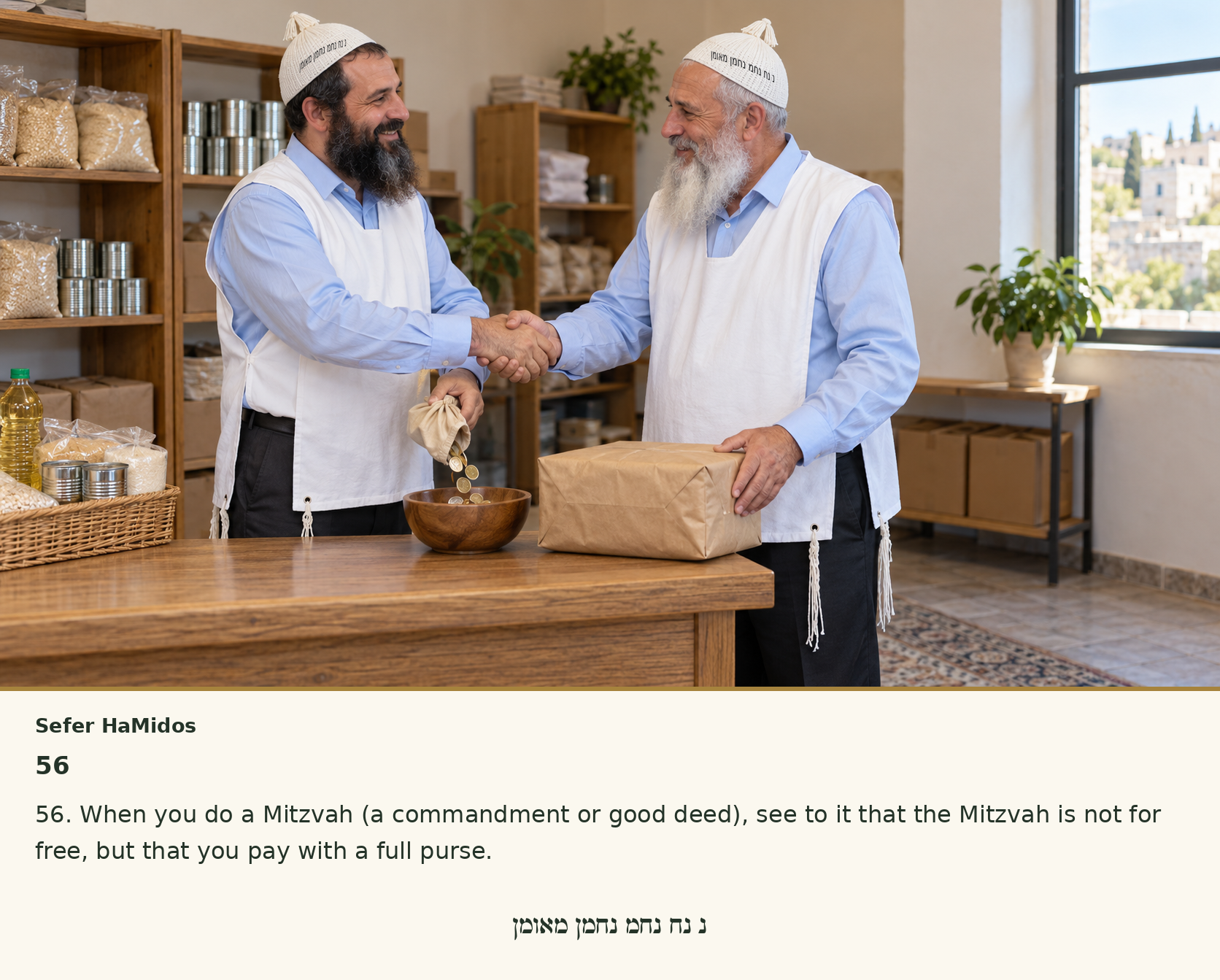
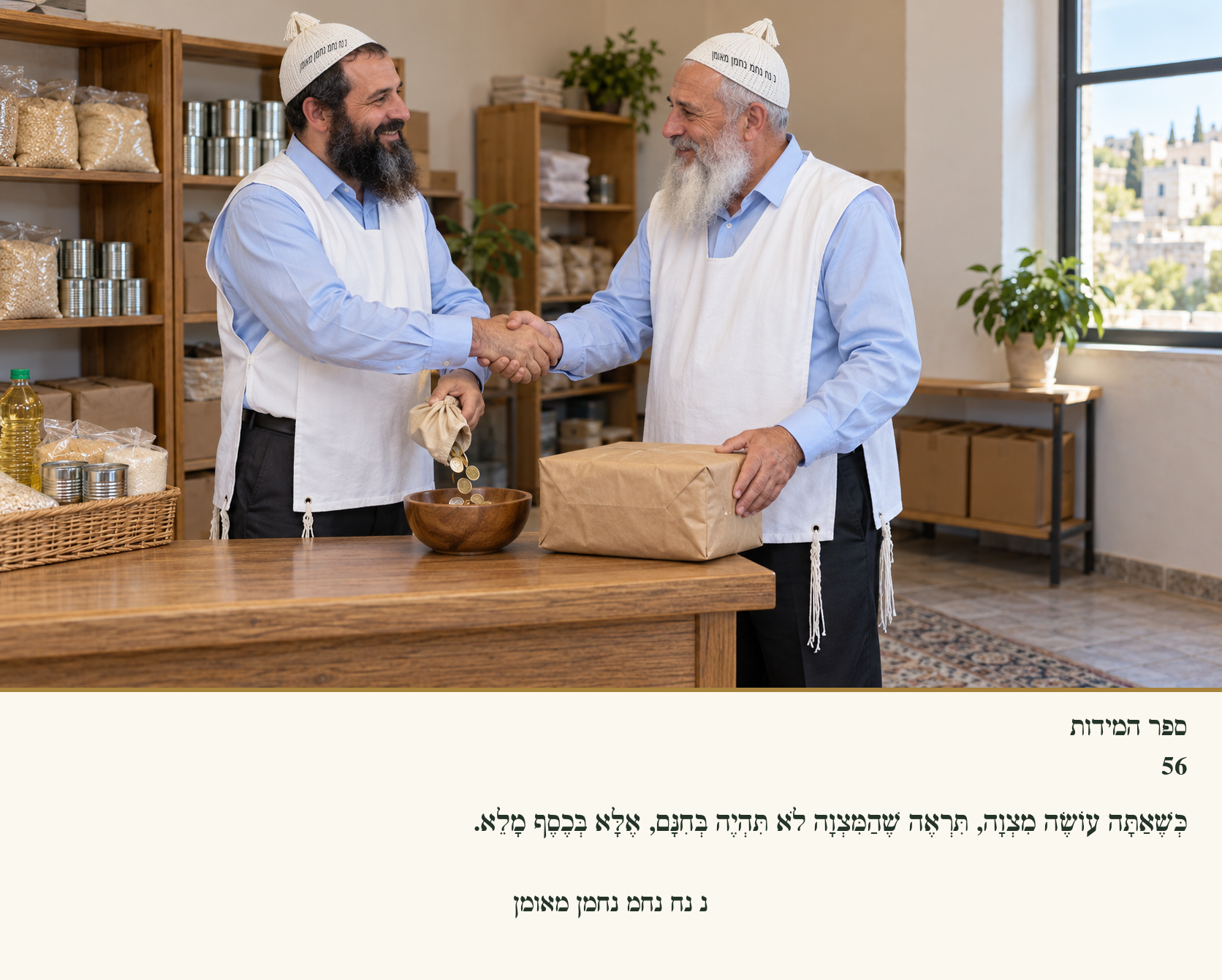
כְּשֶׁאַתָּה עוֹשֶׂה מִצְוָה, תִּרְאֶה שֶׁהַמִּצְוָה לֹא תִּהְיֶה בְּחִנָּם, אֶלָּא בְּכֶסֶף מָלֵא.
56
56. When you do a Mitzvah (a commandment or good deed), see to it that the Mitzvah is not for free, but that you pay with a full purse.
📷 Pictures / videos for this teaching
נ״ז
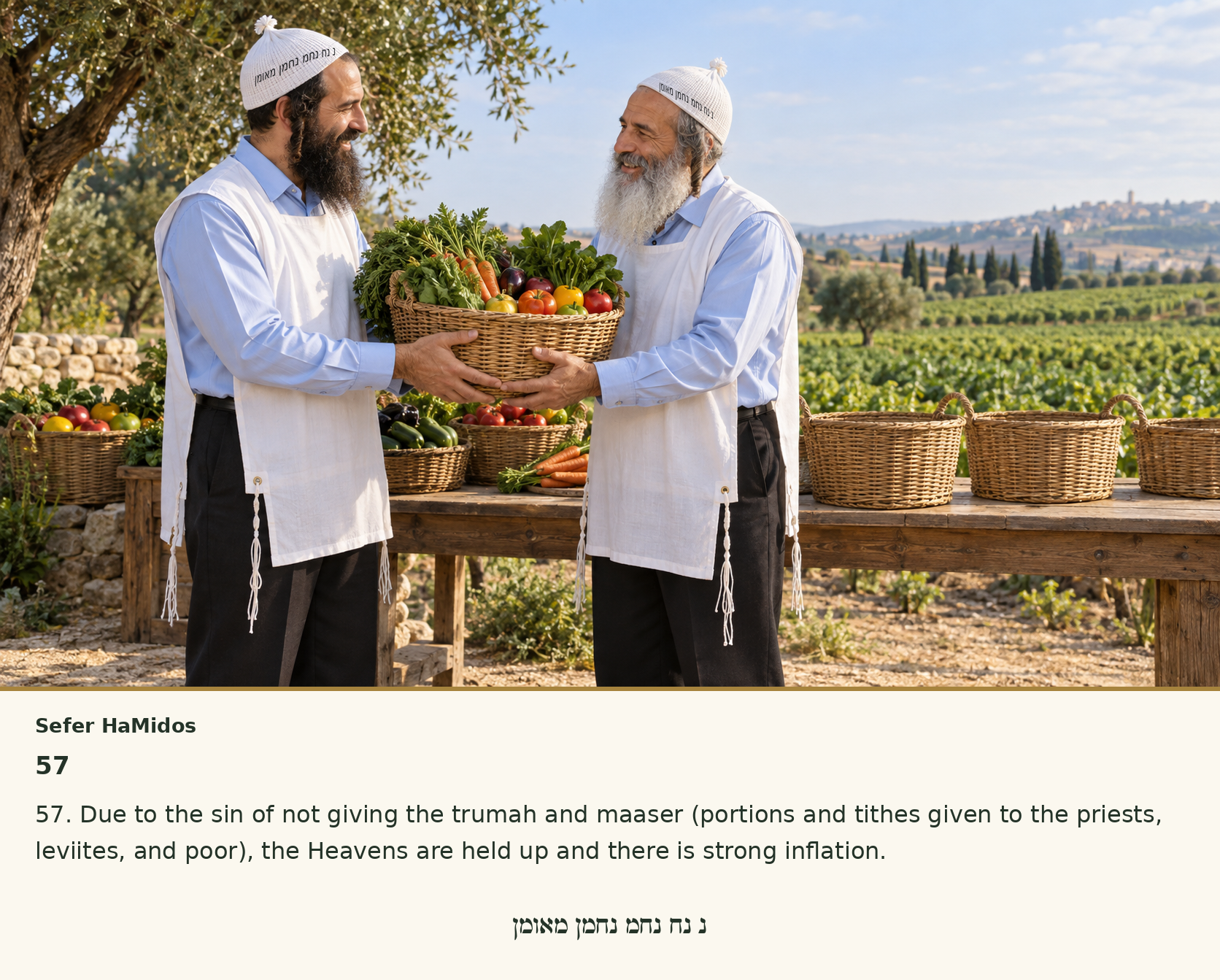
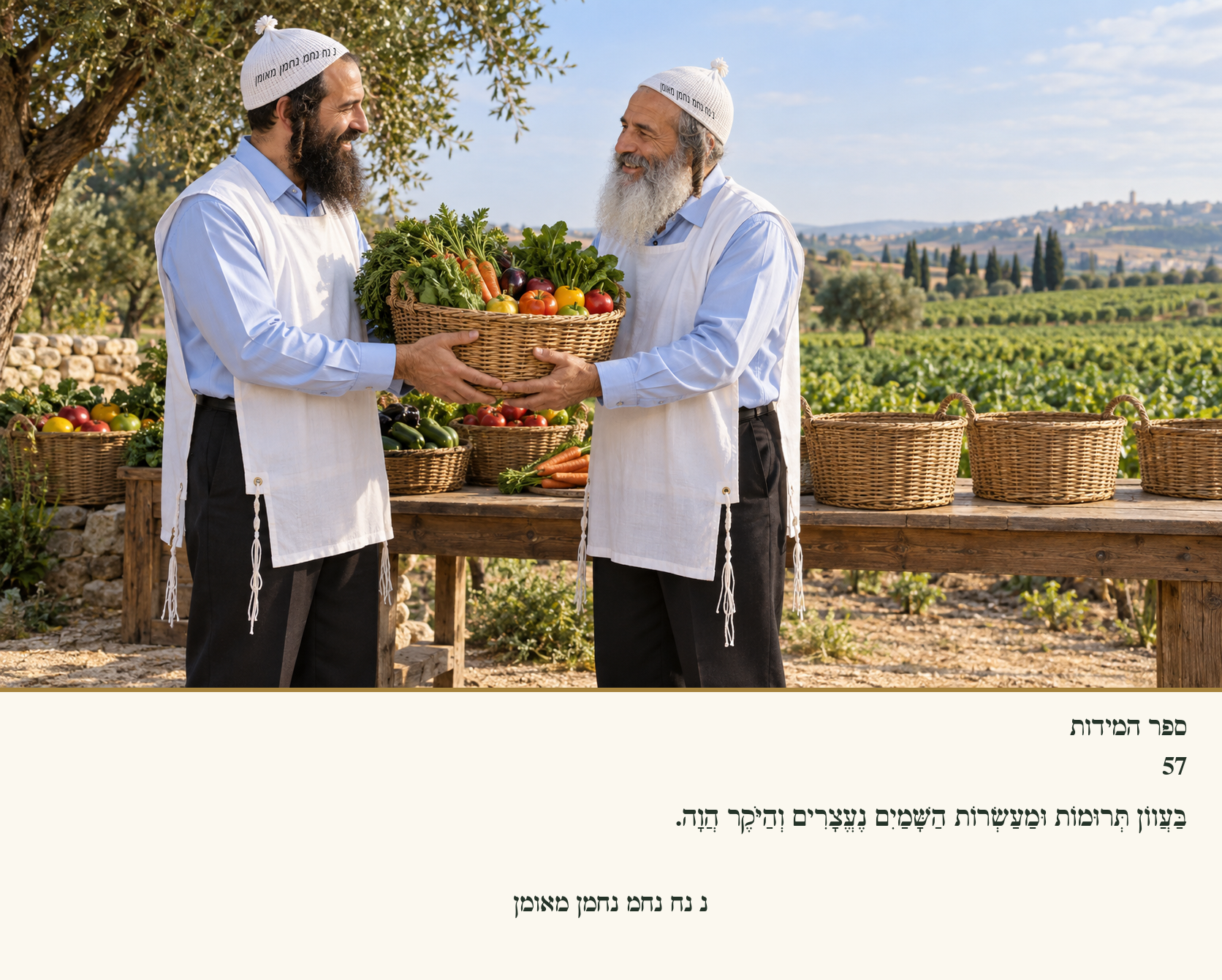
בַּעֲווֹן תְּרוּמוֹת וּמַעַשְׂרוֹת הַשָּׁמַיִם נֶעֱצָרִים וְהַיֹּקֶר הֲוָה.
57
57. Due to the sin of not giving the trumah and maaser (portions and tithes given to the priests, leviites, and poor), the Heavens are held up and there is strong inflation.
📷 Pictures / videos for this teaching
נ״ח
הַשִּׂמְחָה בִּצְדָקָה הִיא סִימָן עַל לֵב שָׁלֵם.
58
58. The joy one feels in giving charity is a sign of a whole heart.
נ״ט
עֲשֵׂה עַד שֶׁאַתָּה מוֹצֵא וּמָצוּי לְךָ וְעוֹדְךָ בְּיָדְךָ.
59
59. Give charity (literally do), while you still have (the opportunity; that you) found [a befitting recipient], and you have [the money to give], and you are still in your own hands.
ס׳
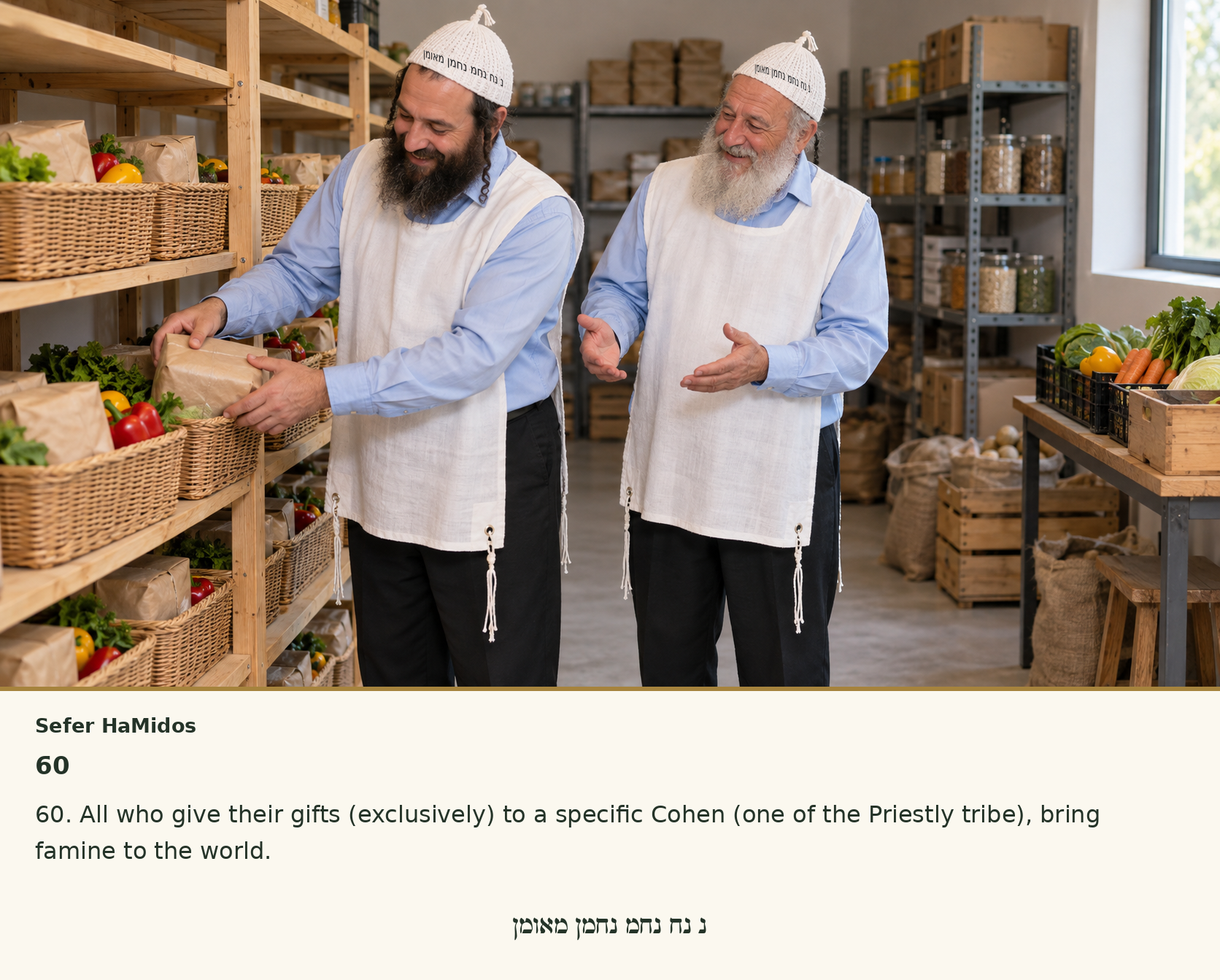
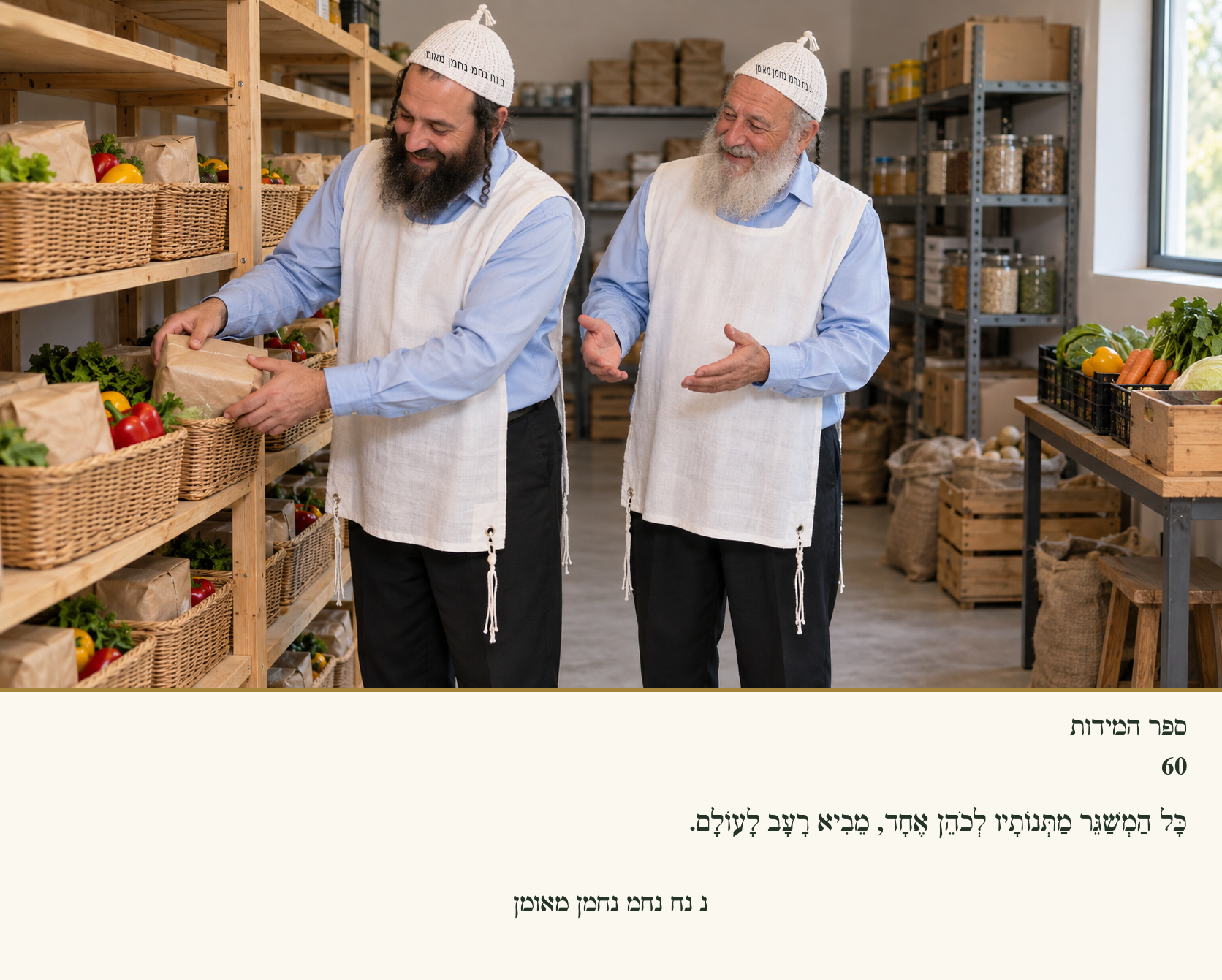
כָּל הַמְשַׁגֵּר מַתְּנוֹתָיו לְכֹהֵן אֶחָד, מֵבִיא רָעָב לָעוֹלָם.
60
60. All who give their gifts (exclusively) to a specific Cohen (one of the Priestly tribe), bring famine to the world.
📷 Pictures / videos for this teaching
ס״א
הַמַּטִּיל מְלַאי לְכִיס שֶׁל תַּלְמִיד־חָכָם, זוֹכֶה לֵישֵׁב בִּישִׁיבָה שֶׁל מַעְלָה.
61
61. One who provides merchandise for Torah scholars to profit from, merits to sit in the Yeshiva of Heaven.
ס״ב
גְּדוֹלָה צְדָקָה יוֹתֵר מִכָּל הַקָּרְבָּנוֹת.
62
62. Charity is greater than all the sacrificial offerings.
ס״ג
גְּדוֹלָה גְּמִילוּת־חֲסָדִים מִן הַצְּדָקָה.
63
63. Doing acts of kindness is greater than giving charity.
ס״ד
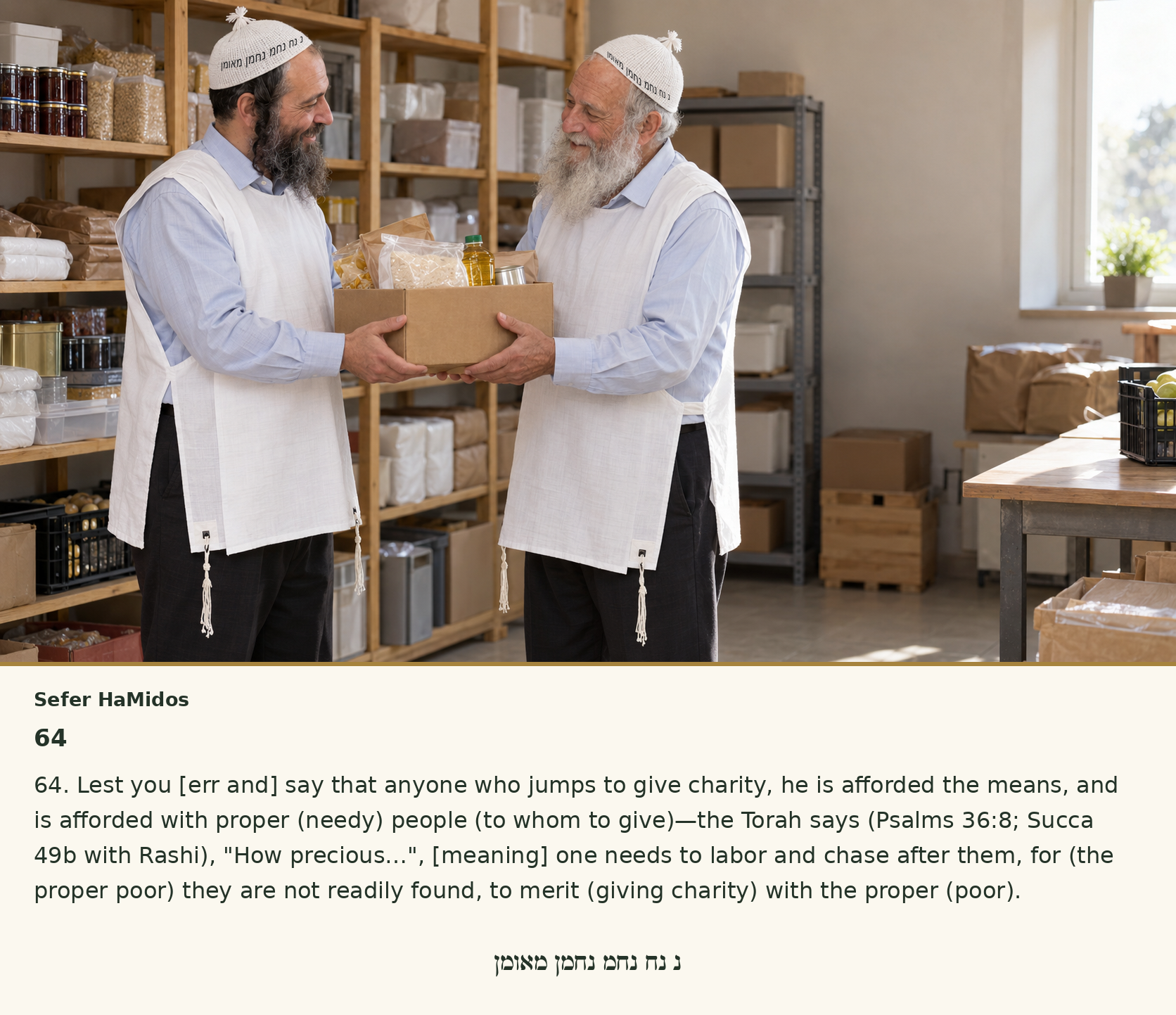
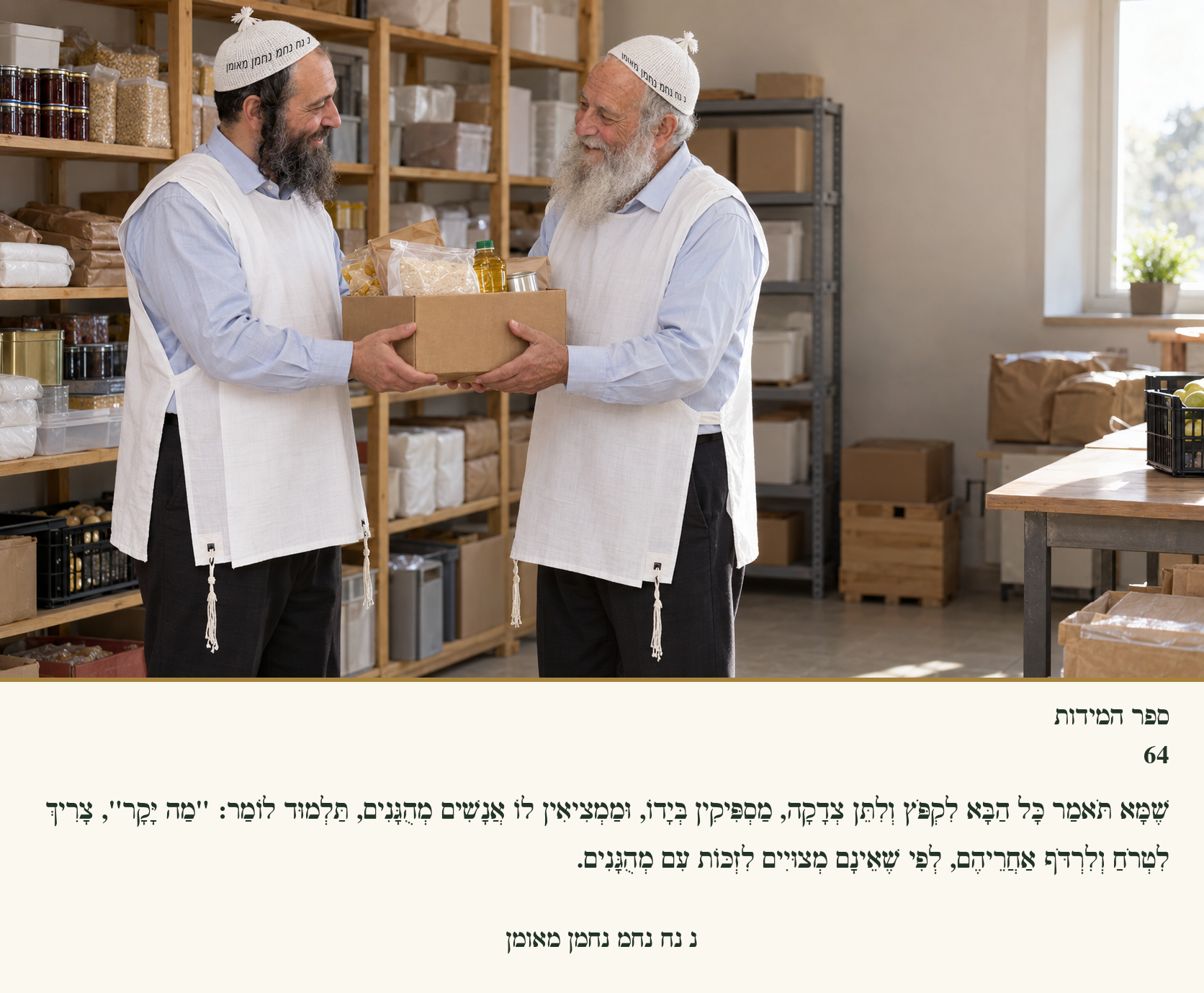
שֶׁמָּא תֹּאמַר כָּל הַבָּא לִקְפֹּץ וְלִתֵּן צְדָקָה, מַסְפִּיקִין בְּיָדוֹ, וּמַמְצִיאִין לוֹ אֲנָשִׁים מְהֻגָּנִים, תַּלְמוּד לוֹמַר: "מַה יָּקָר", צָרִיךְ לִטְרֹחַ וְלִרְדֹּף אַחֲרֵיהֶם, לְפִי שֶׁאֵינָם מְצוּיִים לִזְכּוֹת עִם מְהֻגָּנִים.
64
64. Lest you [err and] say that anyone who jumps to give charity, he is afforded the means, and is afforded with proper (needy) people (to whom to give)—the Torah says (Psalms 36:8; Succa 49b with Rashi), "How precious…", [meaning] one needs to labor and chase after them, for (the proper poor) they are not readily found, to merit (giving charity) with the proper (poor).
📷 Pictures / videos for this teaching
ס״ה
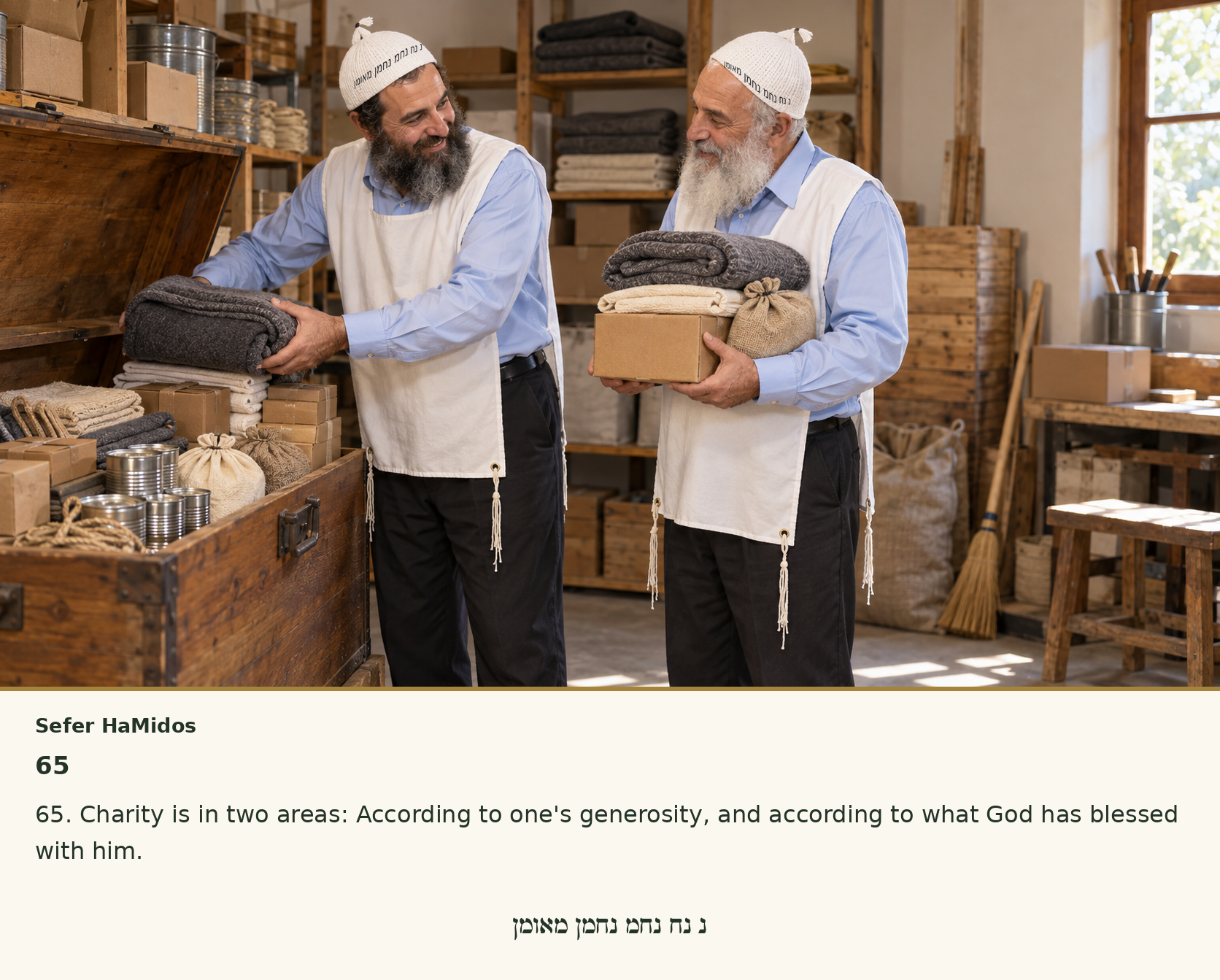
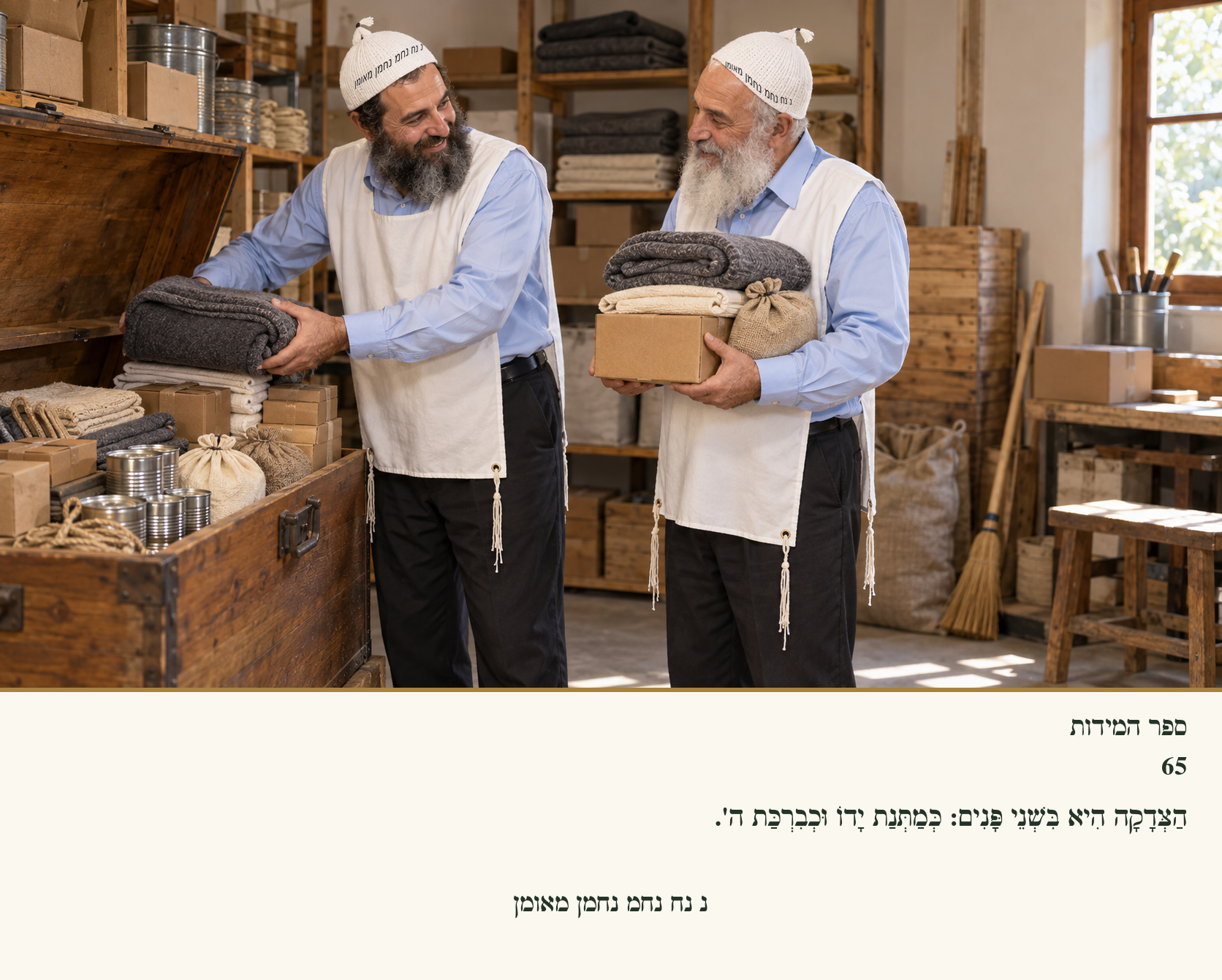
הַצְּדָקָה הִיא בִּשְׁנֵי פָּנִים: כְּמַתְּנַת יָדוֹ וּכְבִרְכַּת ה'.
65
65. Charity is in two areas: According to one's generosity, and according to what God has blessed with him.
📷 Pictures / videos for this teaching
ס״ו
מִי שֶׁיֵּשׁ לוֹ וְאֵינוֹ רוֹצֶה לְהִתְפַּרְנֵס מִשֶּׁלּוֹ וּמְקַבֵּל מֵאֲחֵרִים, תֵּדַע שֶׁנִּפְרָעִין מִמֶּנּוּ לְאַחַר מוֹתוֹ, שֶׁנַעֲשָׂה עֶבֶד לָזֶה שֶׁלָּקַח מִמֶּנּוּ.
66
66. One who has (money), but does not want to use his own money for his expenditures, so he receives from others, know that they will collect from him after his death; that he will become a slave to one from whom he took.
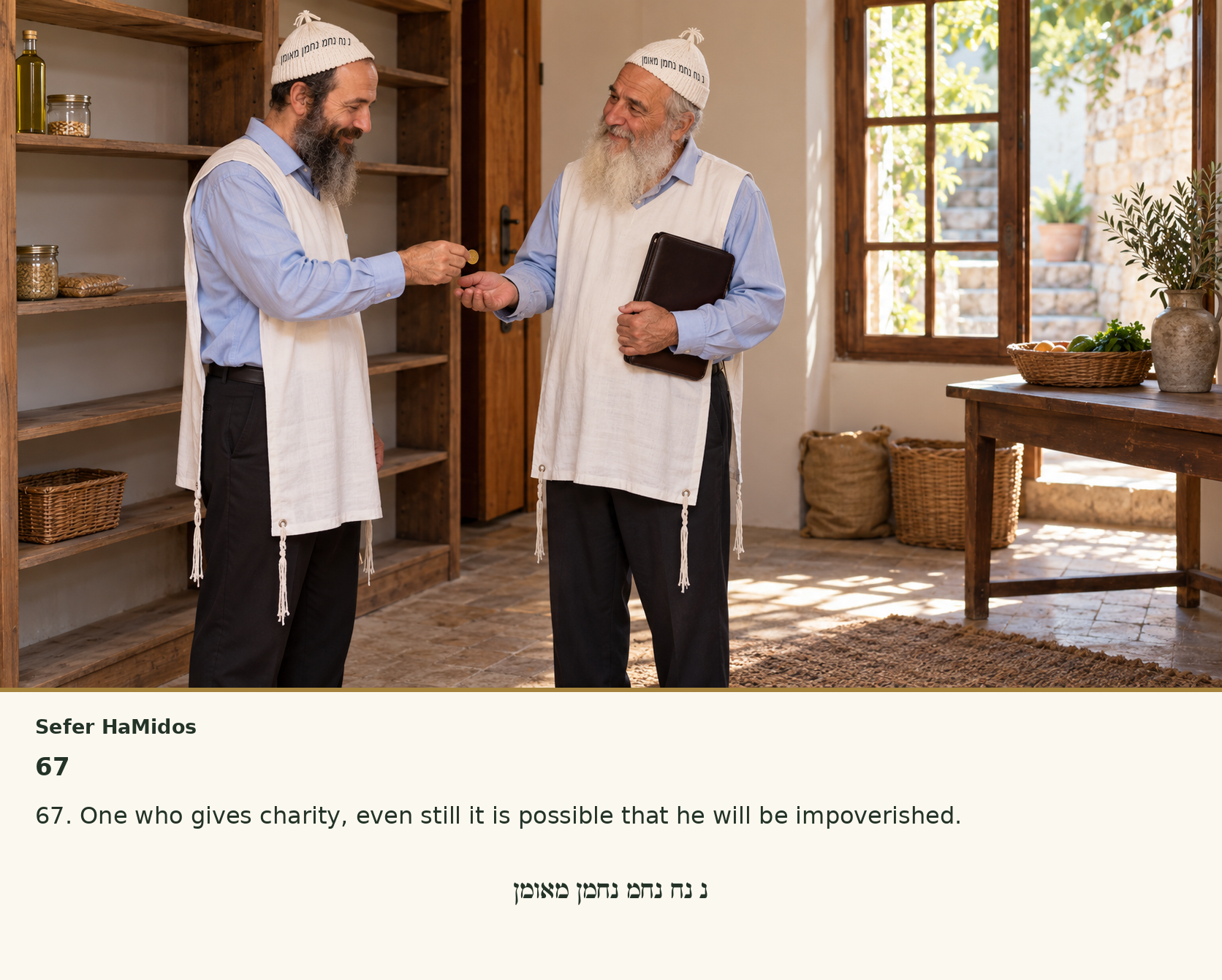
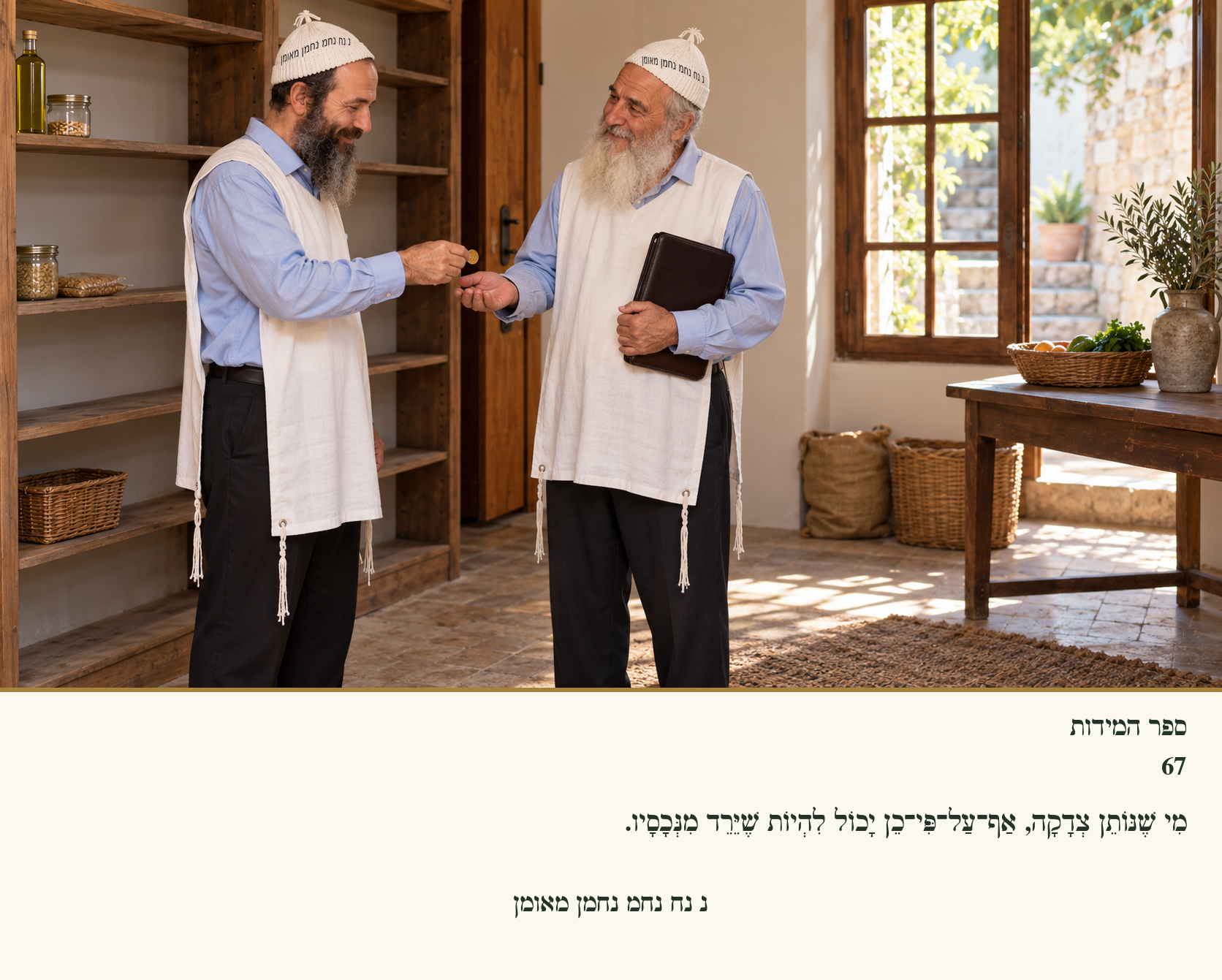
ס״ז
מִי שֶׁנּוֹתֵן צְדָקָה, אַף־עַל־פִּי־כֵן יָכוֹל לִהְיוֹת שֶׁיֵּרֵד מִנְּכָסָיו.
67
67. One who gives charity, even still it is possible that he will be impoverished.
📷 Pictures / videos for this teaching
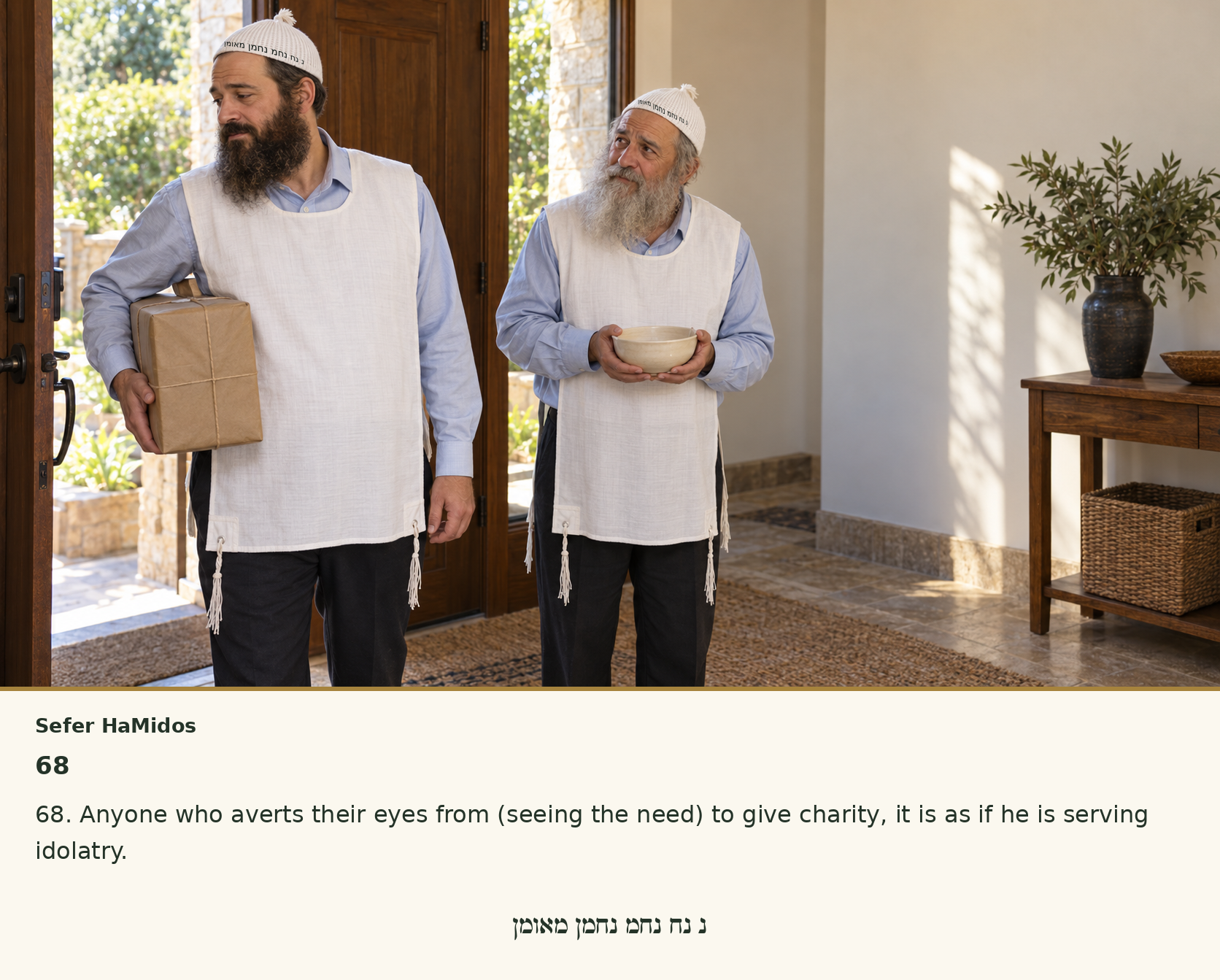
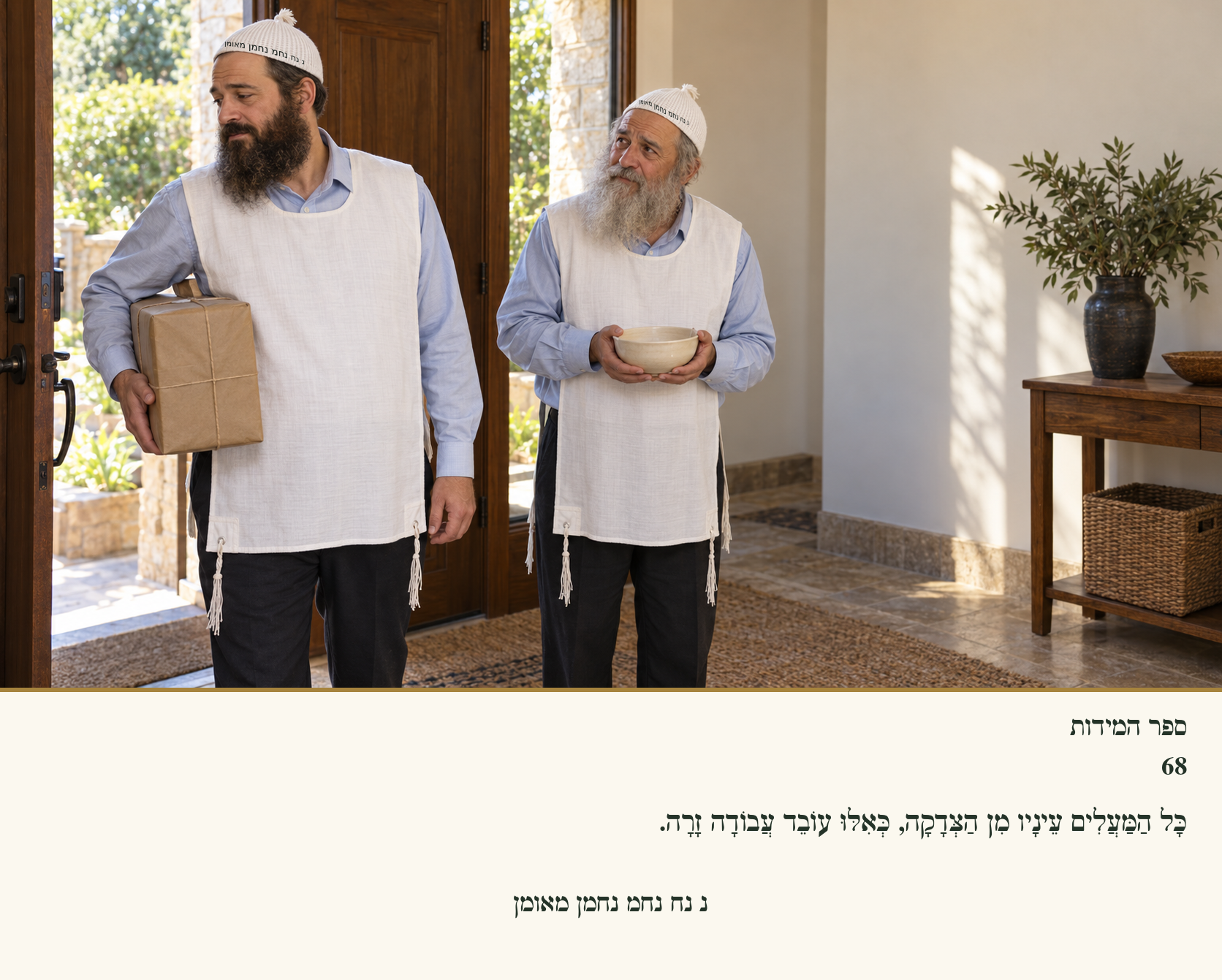
ס״ח
כָּל הַמַּעֲלִים עֵינָיו מִן הַצְּדָקָה, כְּאִלּוּ עוֹבֵד עֲבוֹדָה זָרָה.
68
68. Anyone who averts their eyes from (seeing the need) to give charity, it is as if he is serving idolatry.
📷 Pictures / videos for this teaching
ס״ט
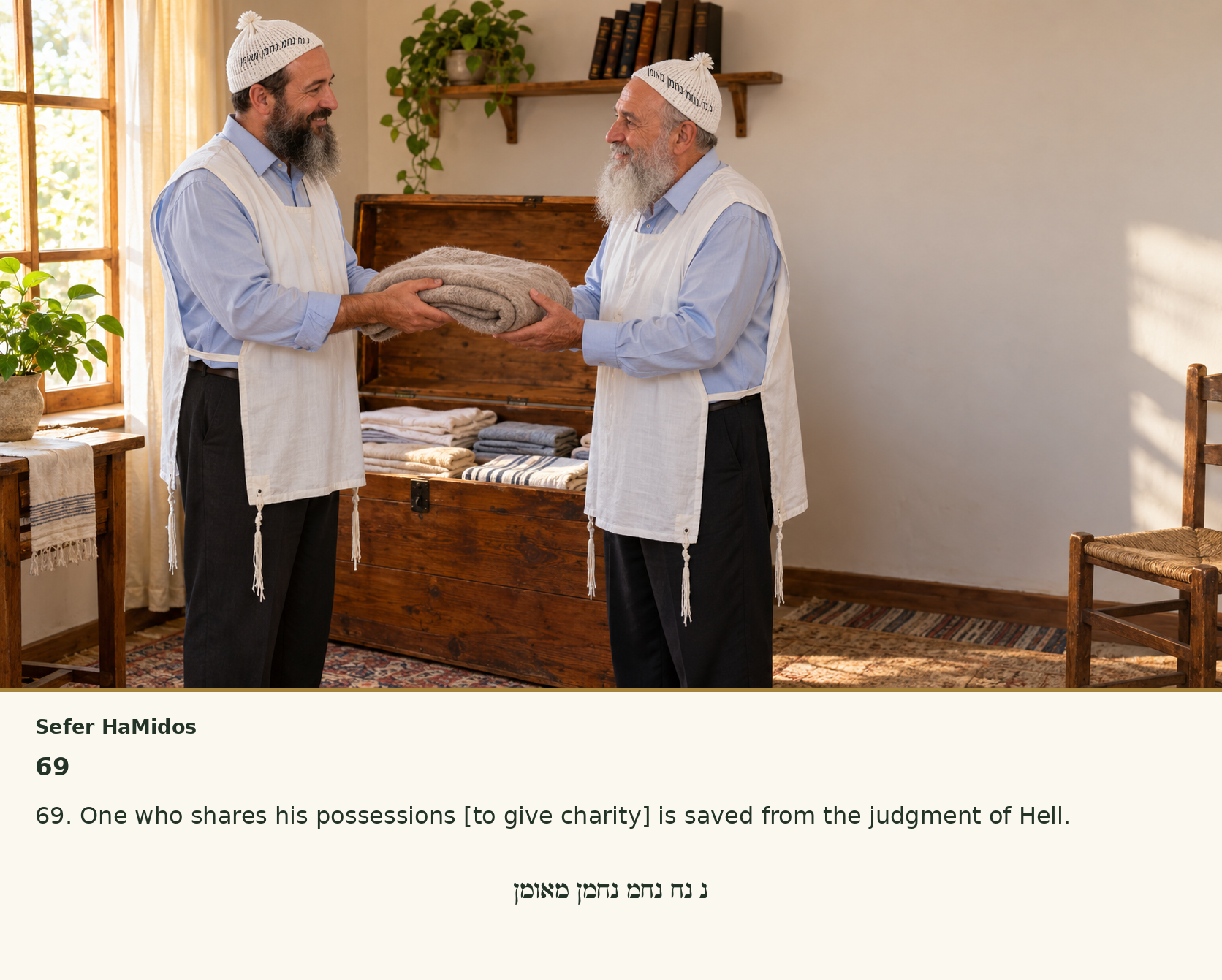
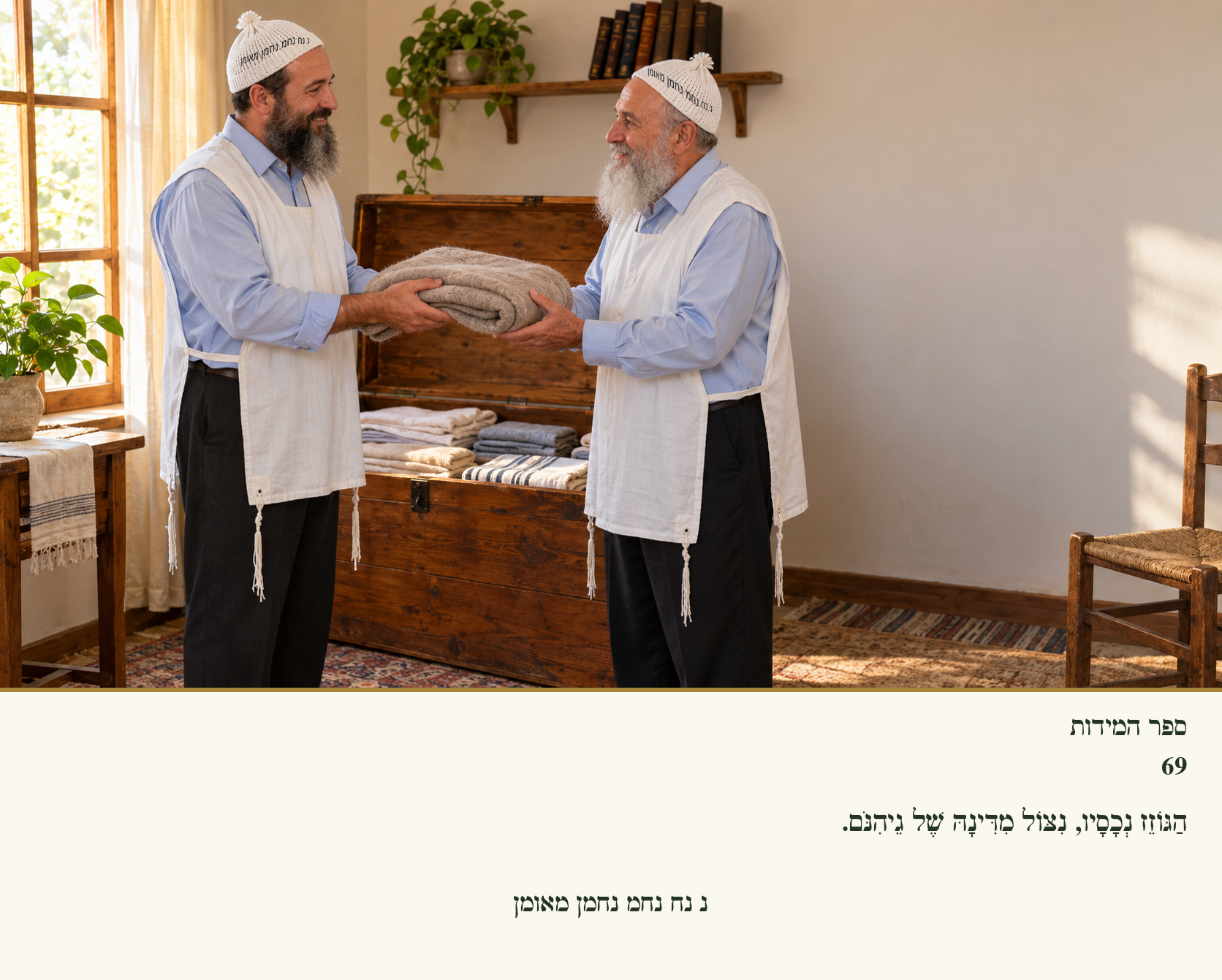
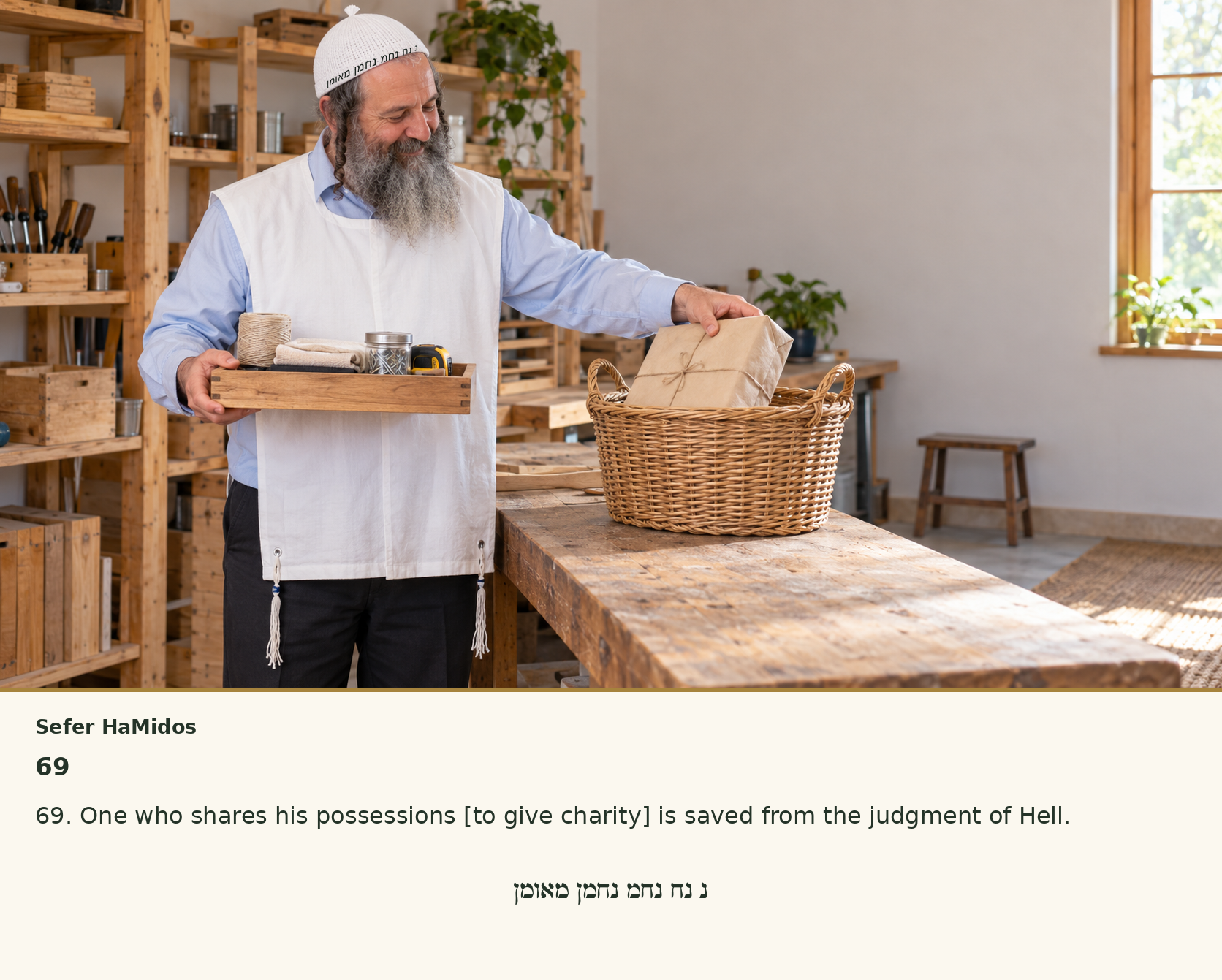
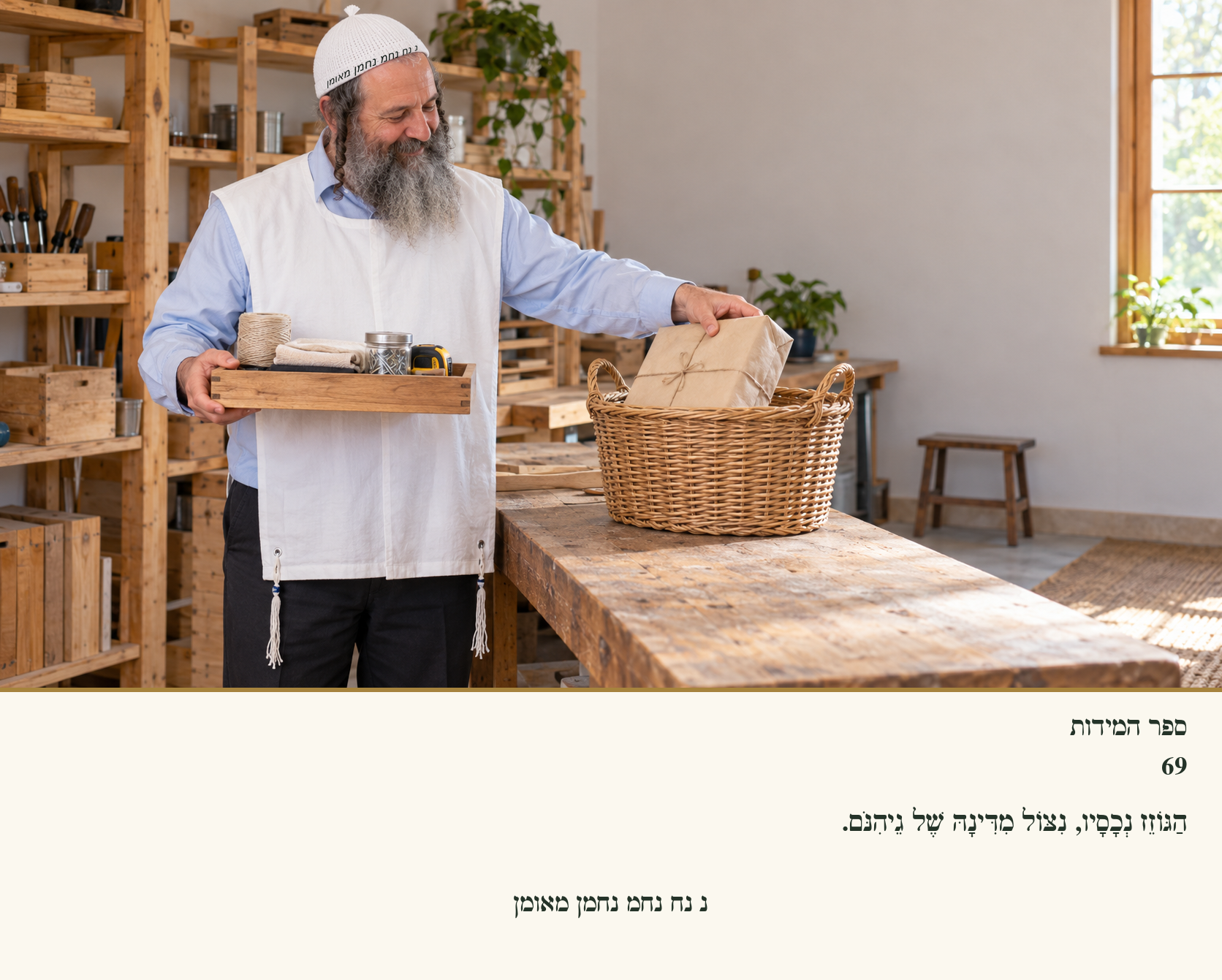
הַגּוֹזֵז נְכָסָיו, נִצּוֹל מִדִּינָהּ שֶׁל גֵיהִנֹּם.
69
69. One who shares his possessions [to give charity] is saved from the judgment of Hell.
📷 Pictures / videos for this teaching
ע׳
אֲפִלּוּ עָנִי יִתֵּן צְדָקָה, וְאֵין מַרְאִין לוֹ סִימָנֵי עֲנִיּוּת.
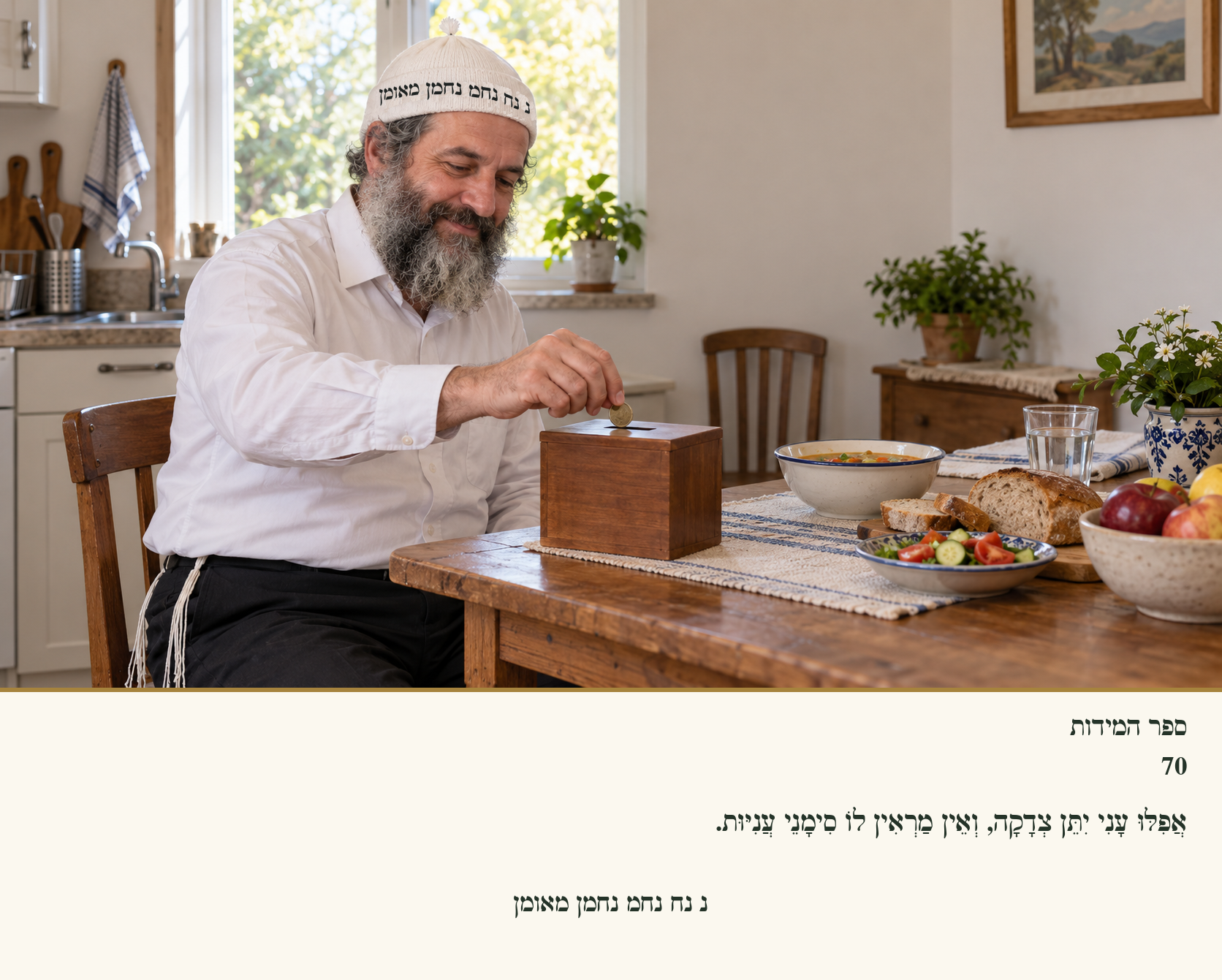
70
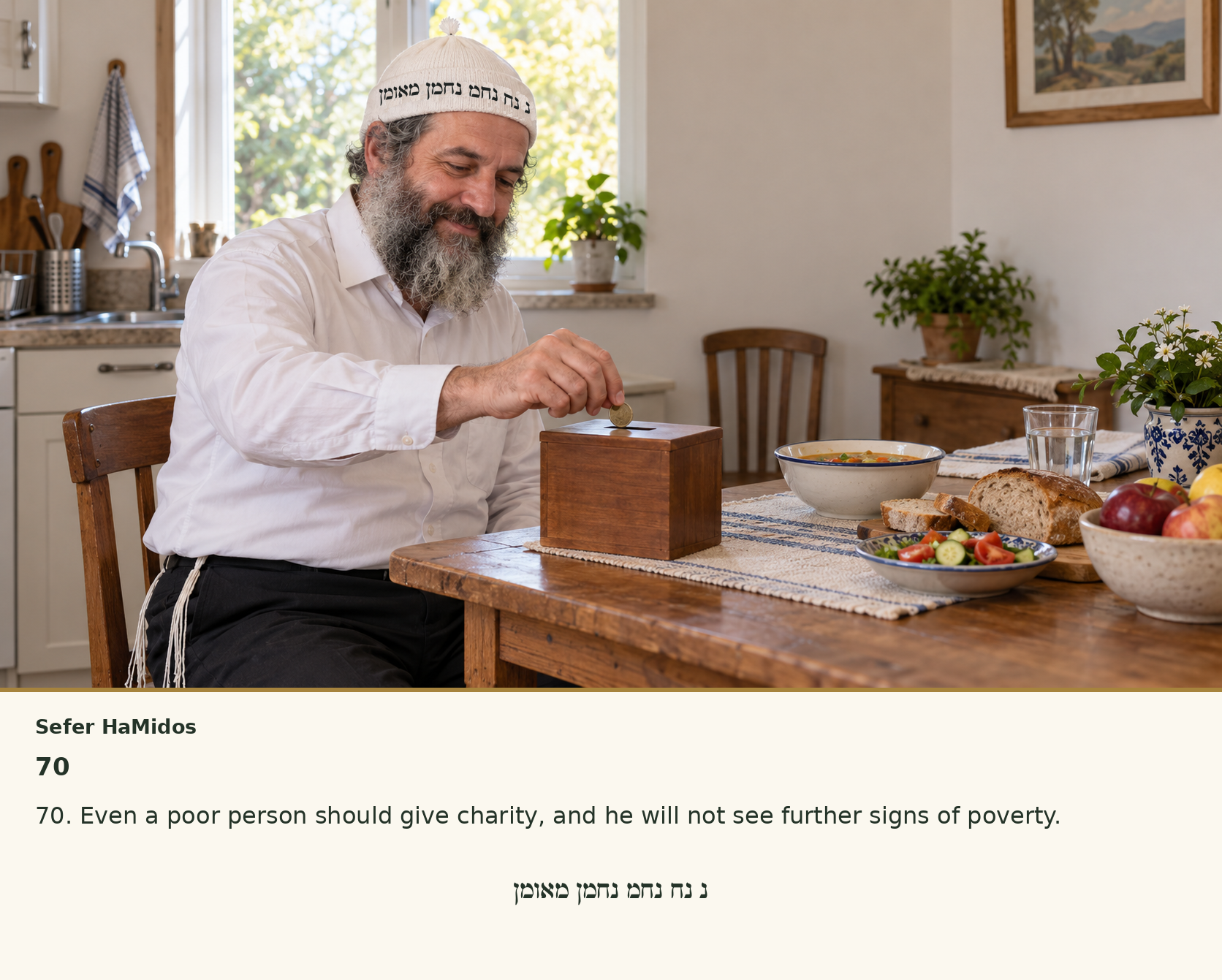
70. Even a poor person should give charity, and he will not see further signs of poverty.
📷 Pictures / videos for this teaching
חלק ב׳ · א׳
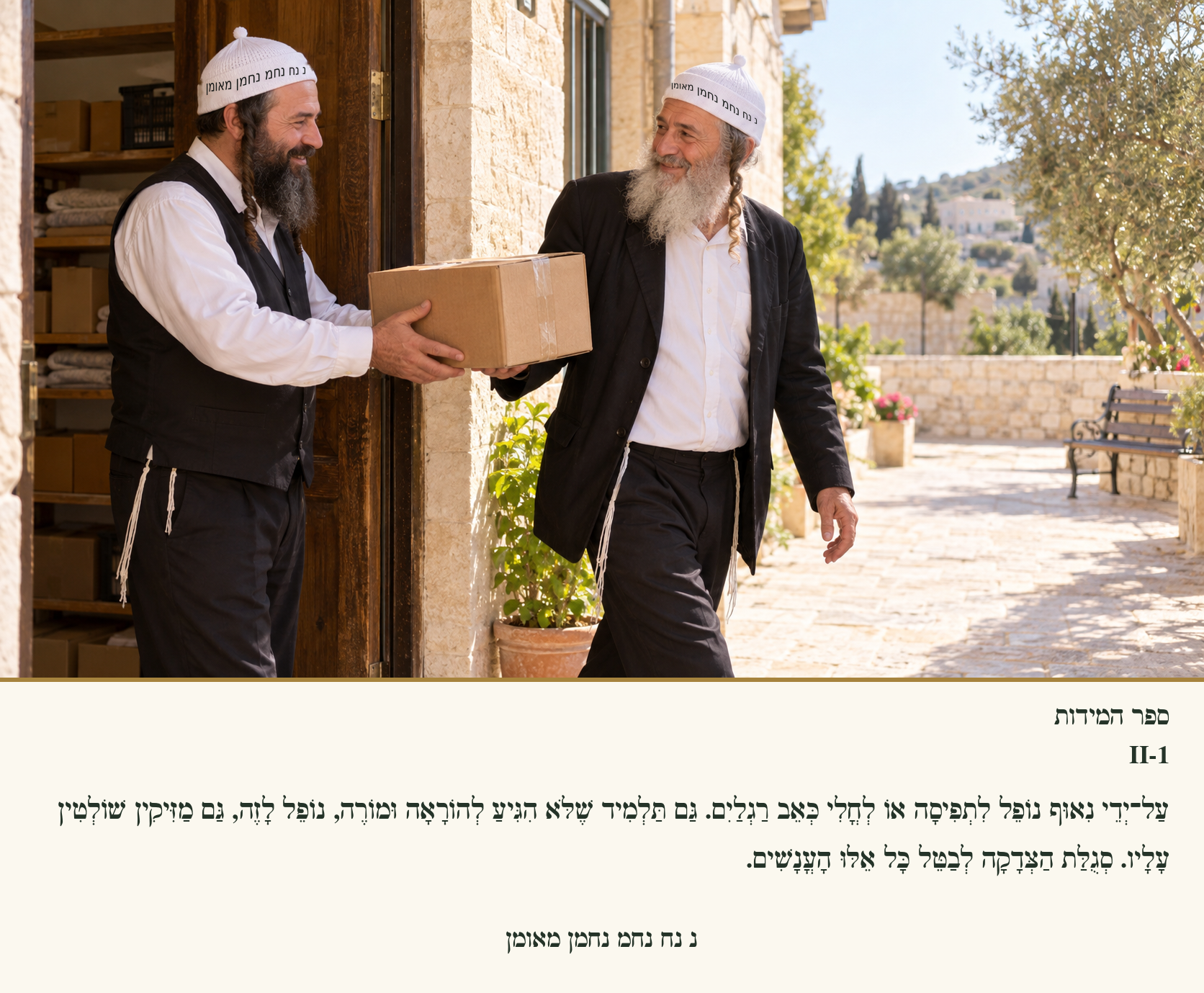
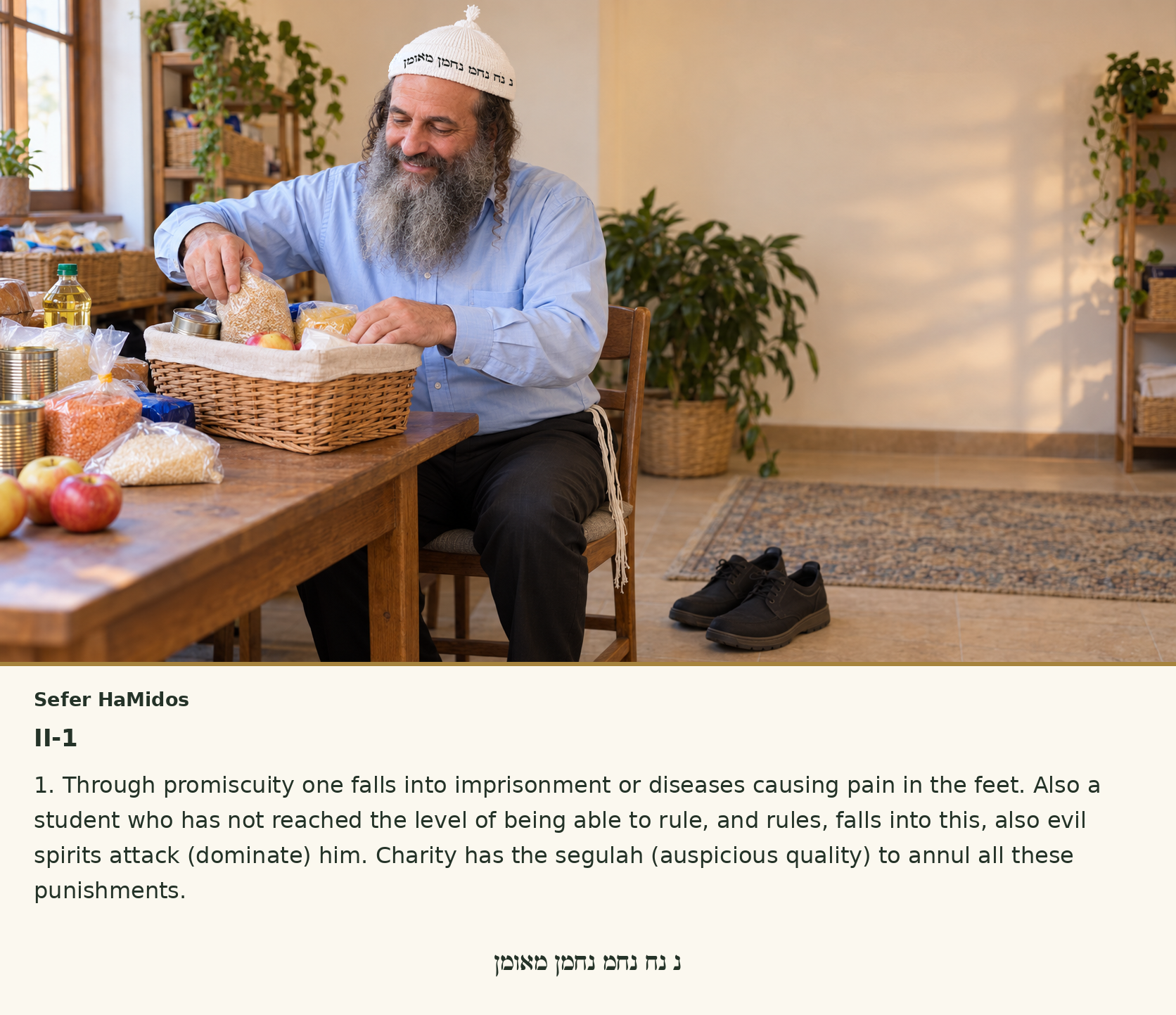
עַל־יְדֵי נִאוּף נוֹפֵל לִתְפִיסָה אוֹ לְחֳלִי כְּאֵב רַגְלַיִם. גַּם תַּלְמִיד שֶׁלֹּא הִגִּיעַ לְהוֹרָאָה וּמוֹרֶה, נוֹפֵל לָזֶה, גַּם מַזִּיקִין שׁוֹלְטִין עָלָיו. סְגֻלַּת הַצְּדָקָה לְבַטֵּל כָּל אֵלּוּ הָעֳנָשִׁים.
II-1
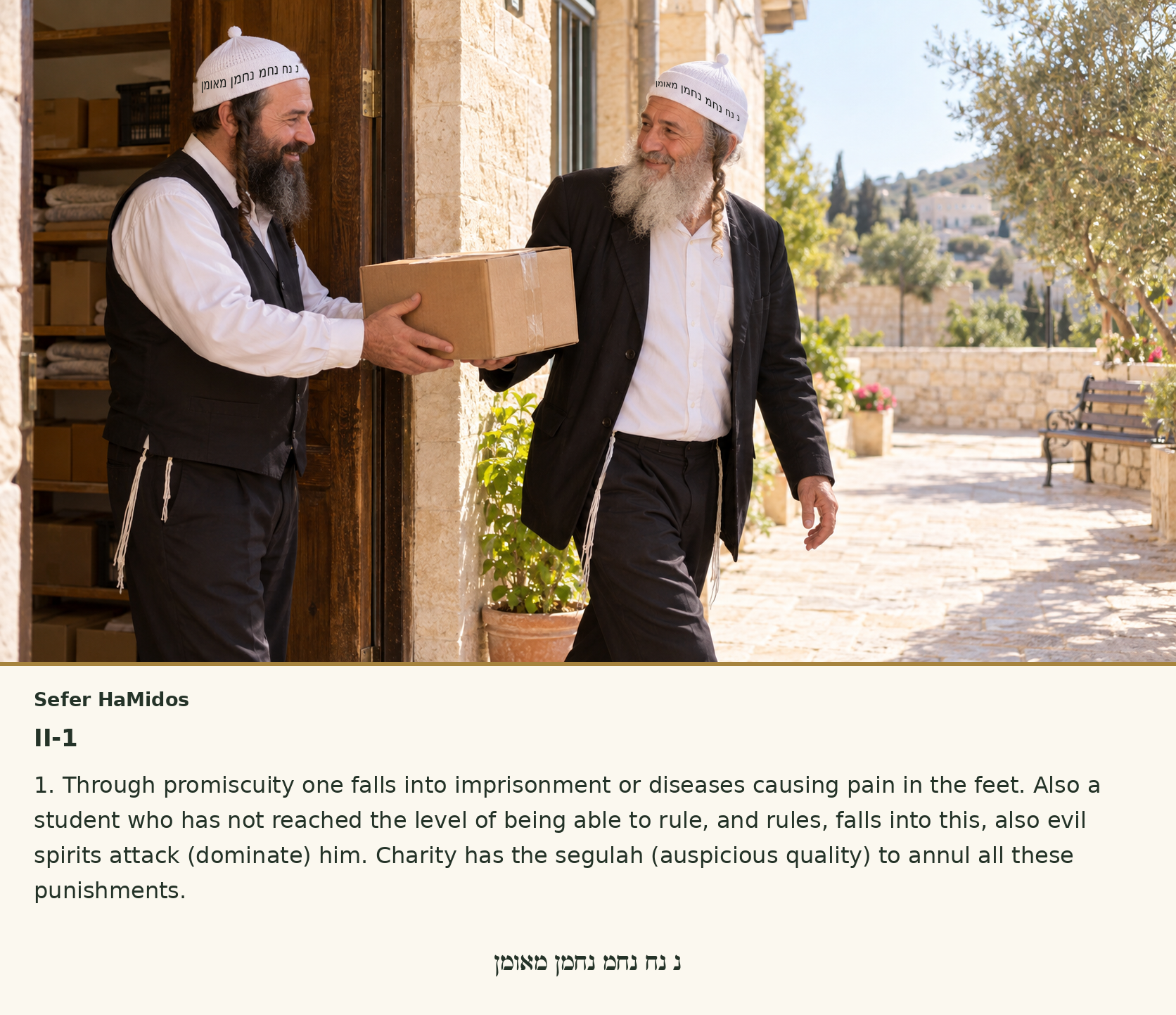
1. Through promiscuity one falls into imprisonment or diseases causing pain in the feet. Also a student who has not reached the level of being able to rule, and rules, falls into this, also evil spirits attack (dominate) him. Charity has the segulah (auspicious quality) to annul all these punishments.
📷 Pictures / videos for this teaching
חלק ב׳ · ב׳
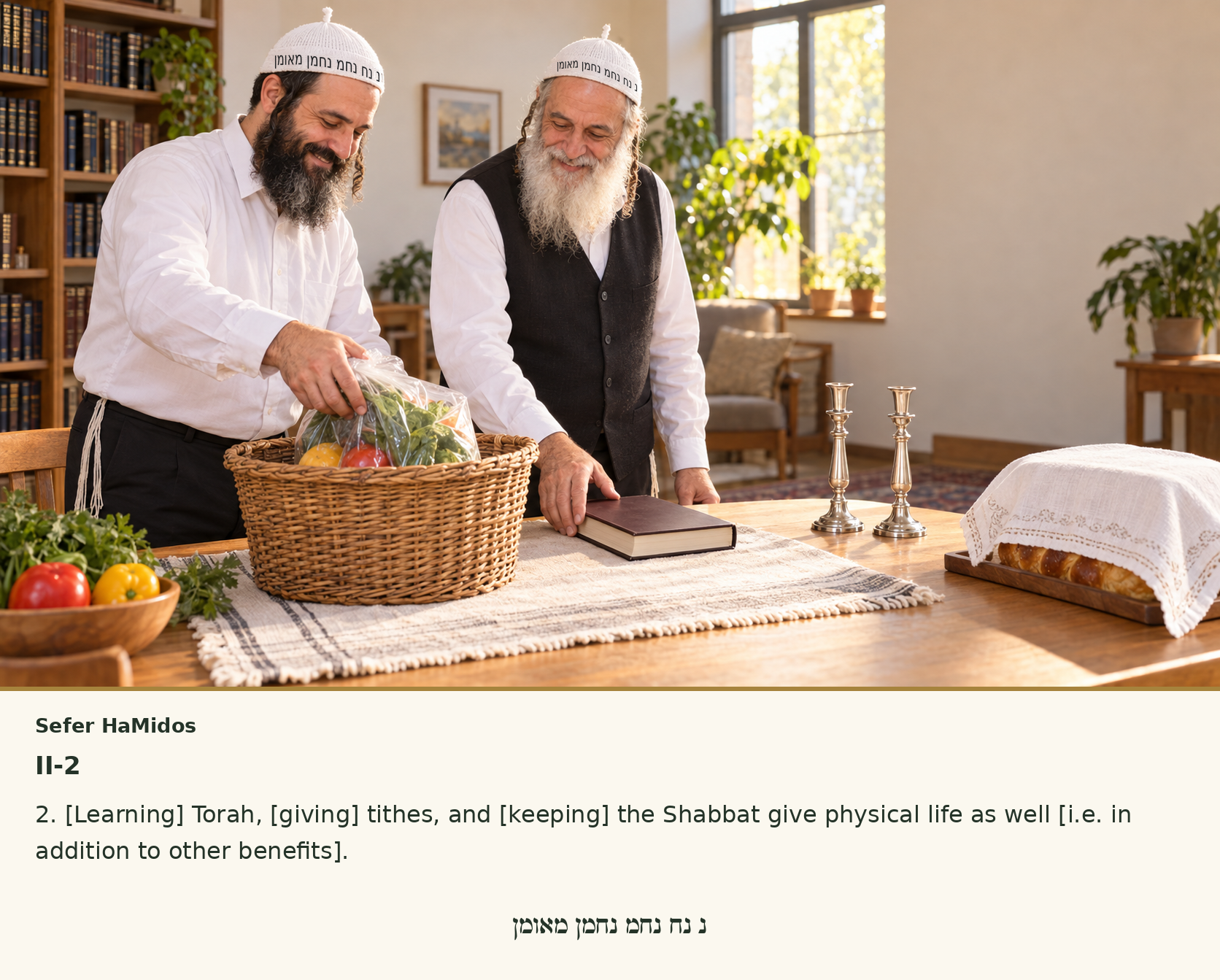
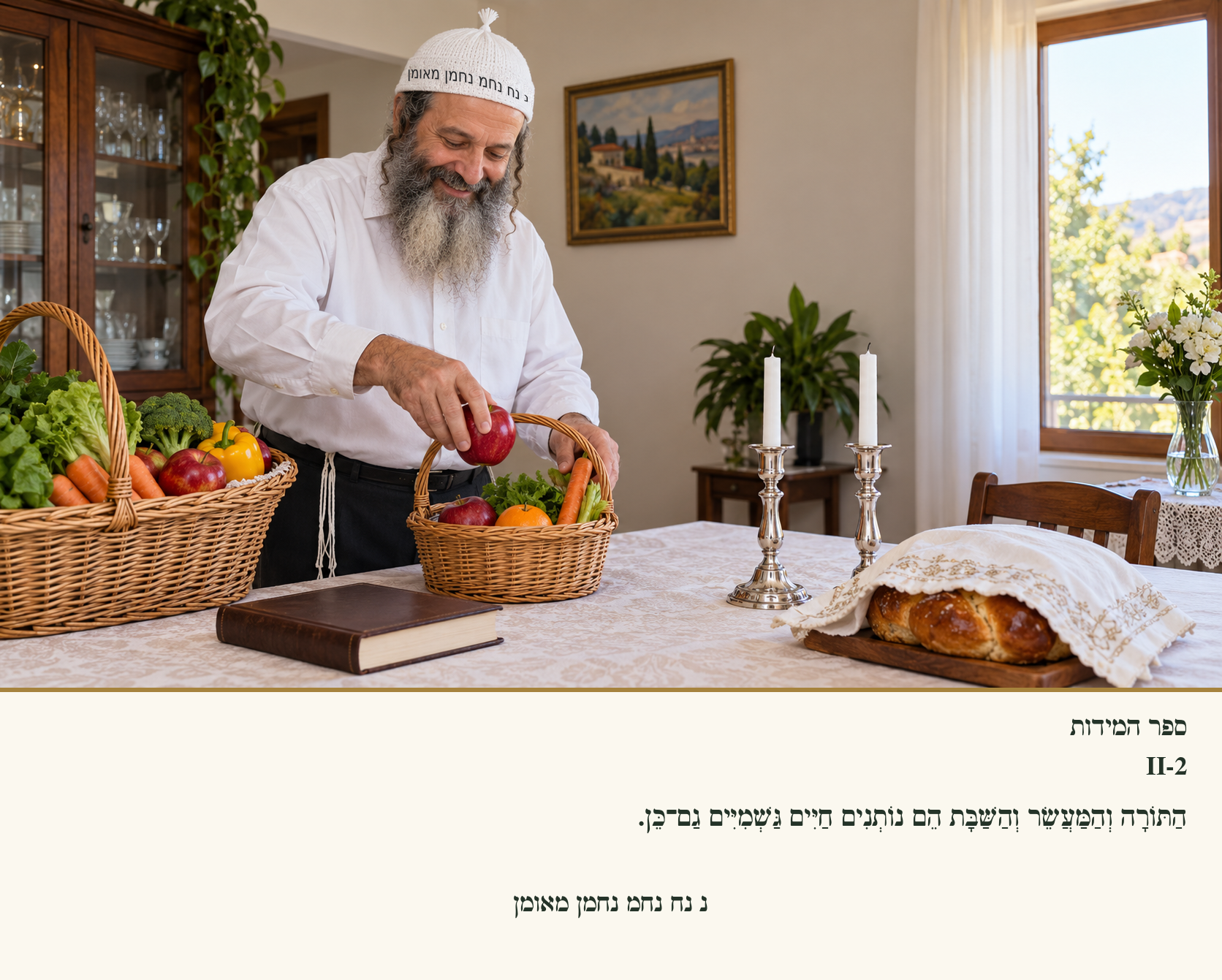
הַתּוֹרָה וְהַמַּעֲשֵׂר וְהַשַּׁבָּת הֵם נוֹתְנִים חַיִּים גַּשְׁמִיִּים גַם־כֵּן.
II-2
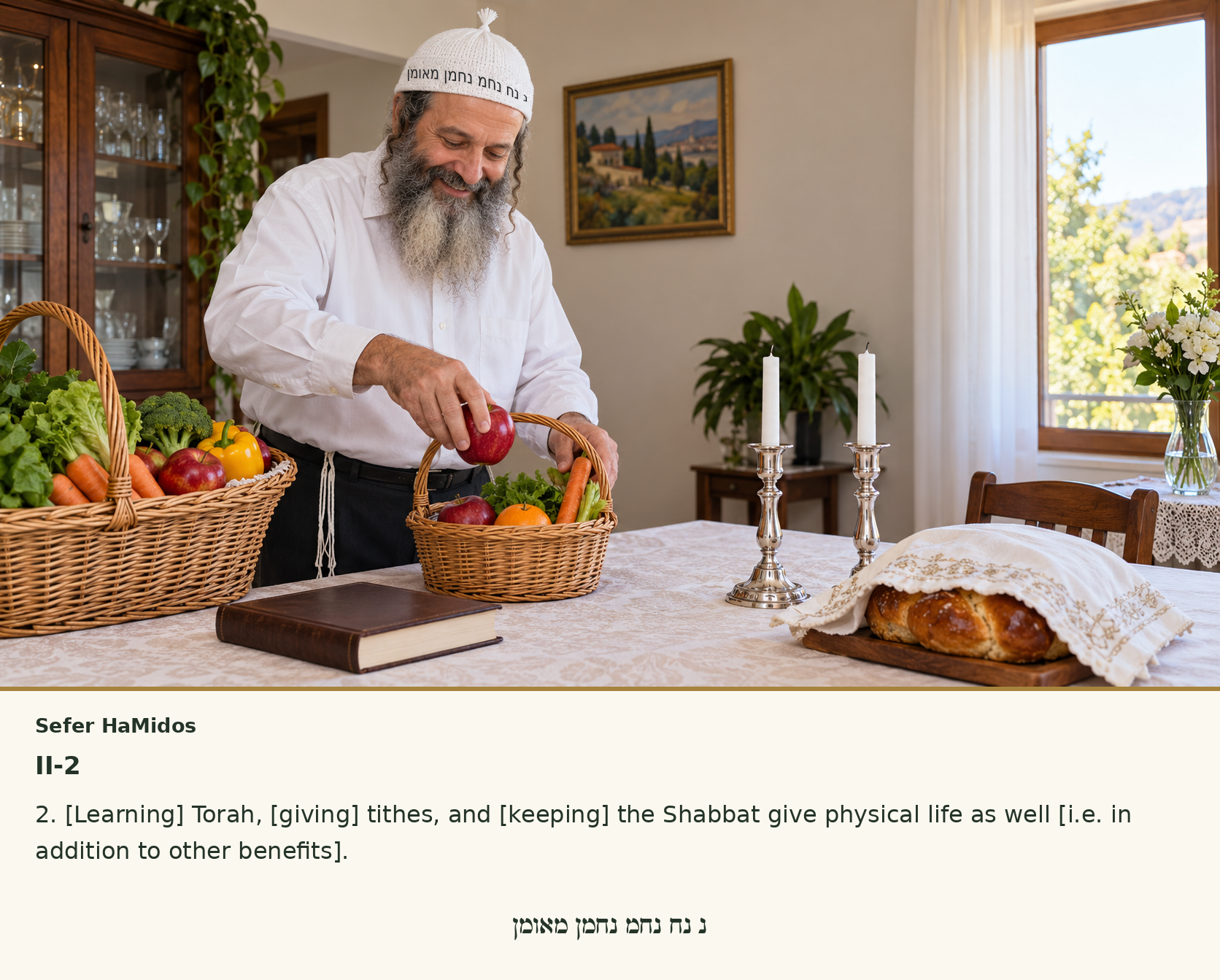
2. [Learning] Torah, [giving] tithes, and [keeping] the Shabbat give physical life as well [i.e. in addition to other benefits].
📷 Pictures / videos for this teaching
חלק ב׳ · ג׳
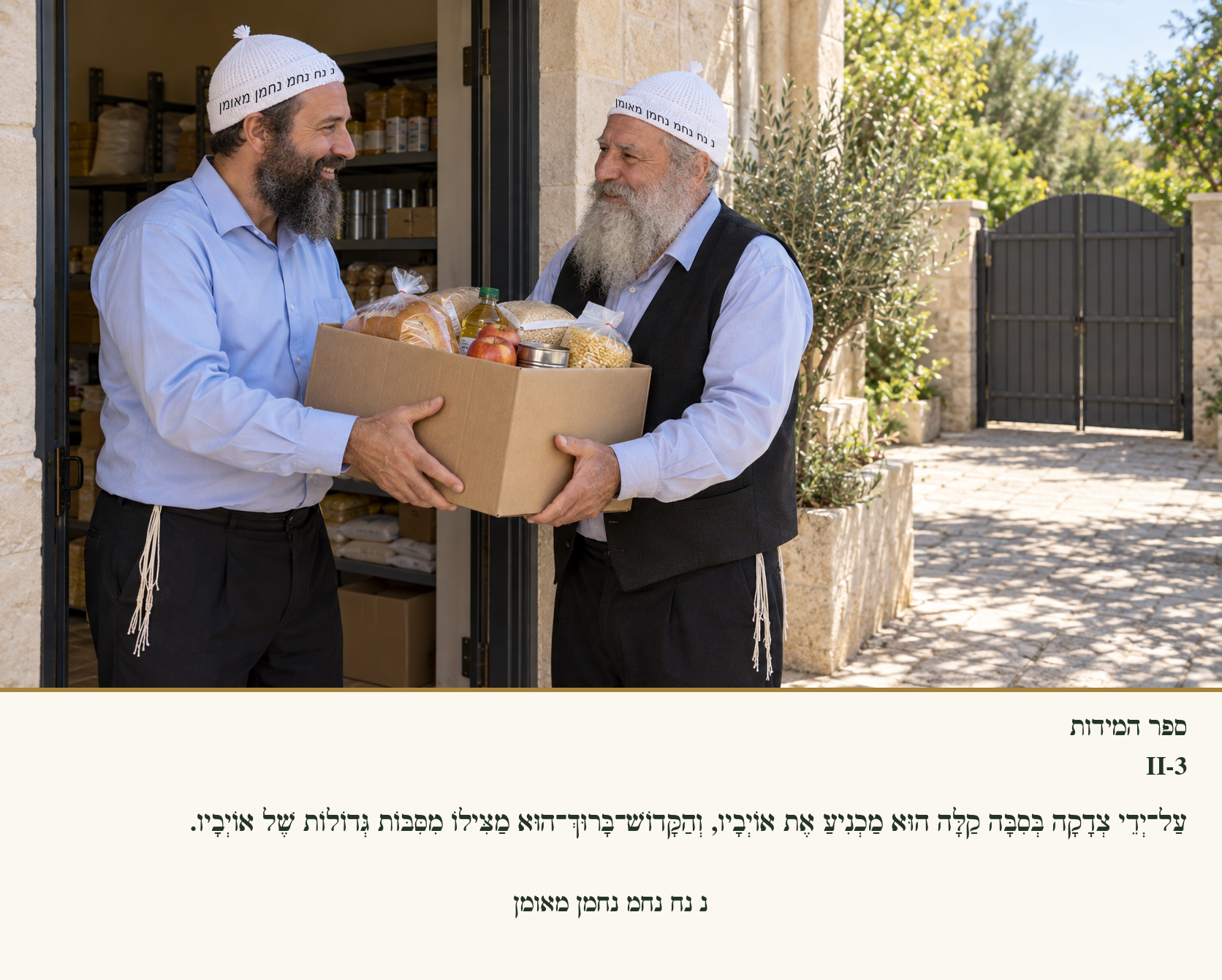
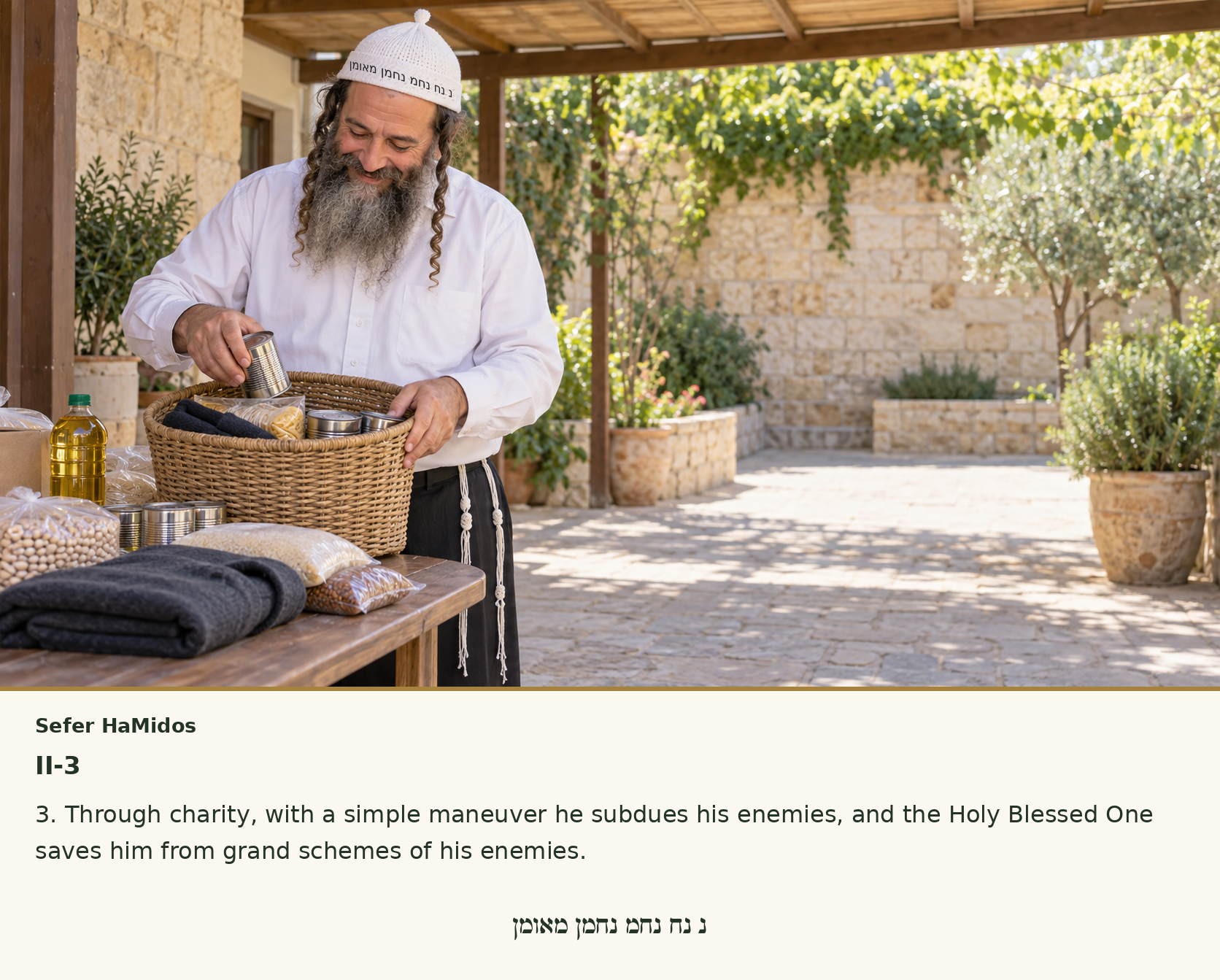
עַל־יְדֵי צְדָקָה בְּסִבָּה קַלָּה הוּא מַכְנִיעַ אֶת אוֹיְבָיו, וְהַקָּדוֹשׁ־בָּרוּךְ־הוּא מַצִּילוֹ מִסִּבּוֹת גְּדוֹלוֹת שֶׁל אוֹיְבָיו.
II-3
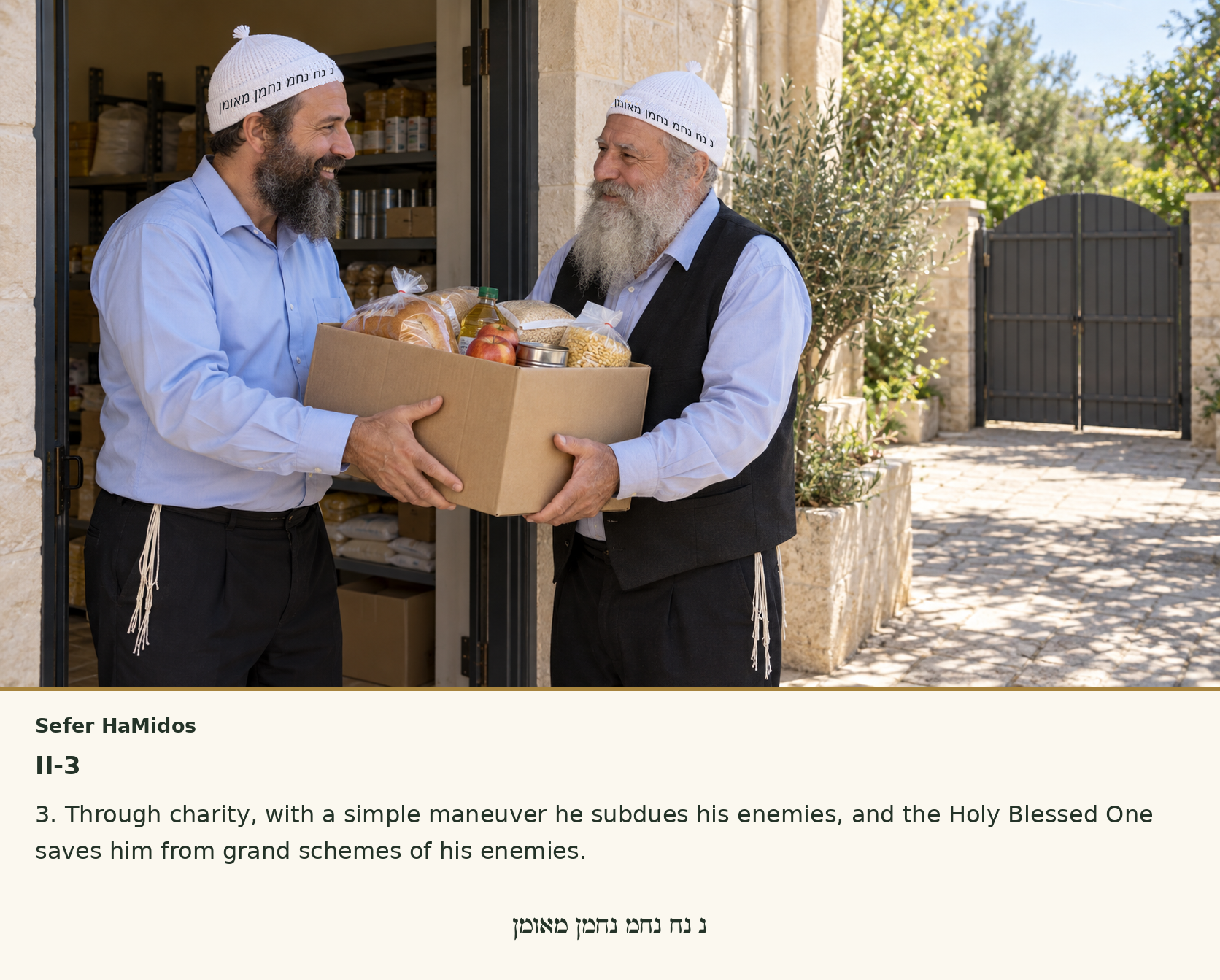
3. Through charity, with a simple maneuver he subdues his enemies, and the Holy Blessed One saves him from grand schemes of his enemies.
📷 Pictures / videos for this teaching
חלק ב׳ · ד׳
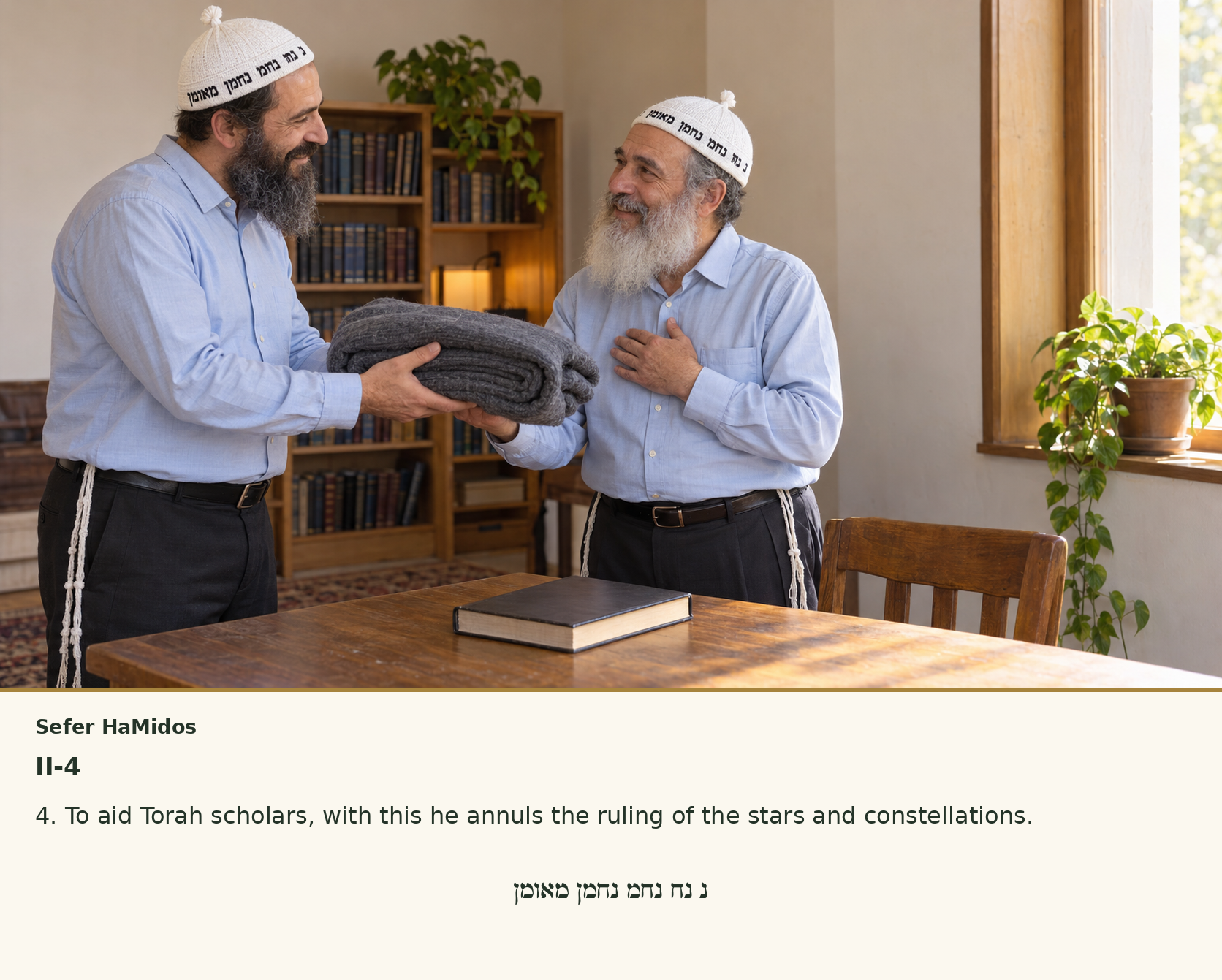
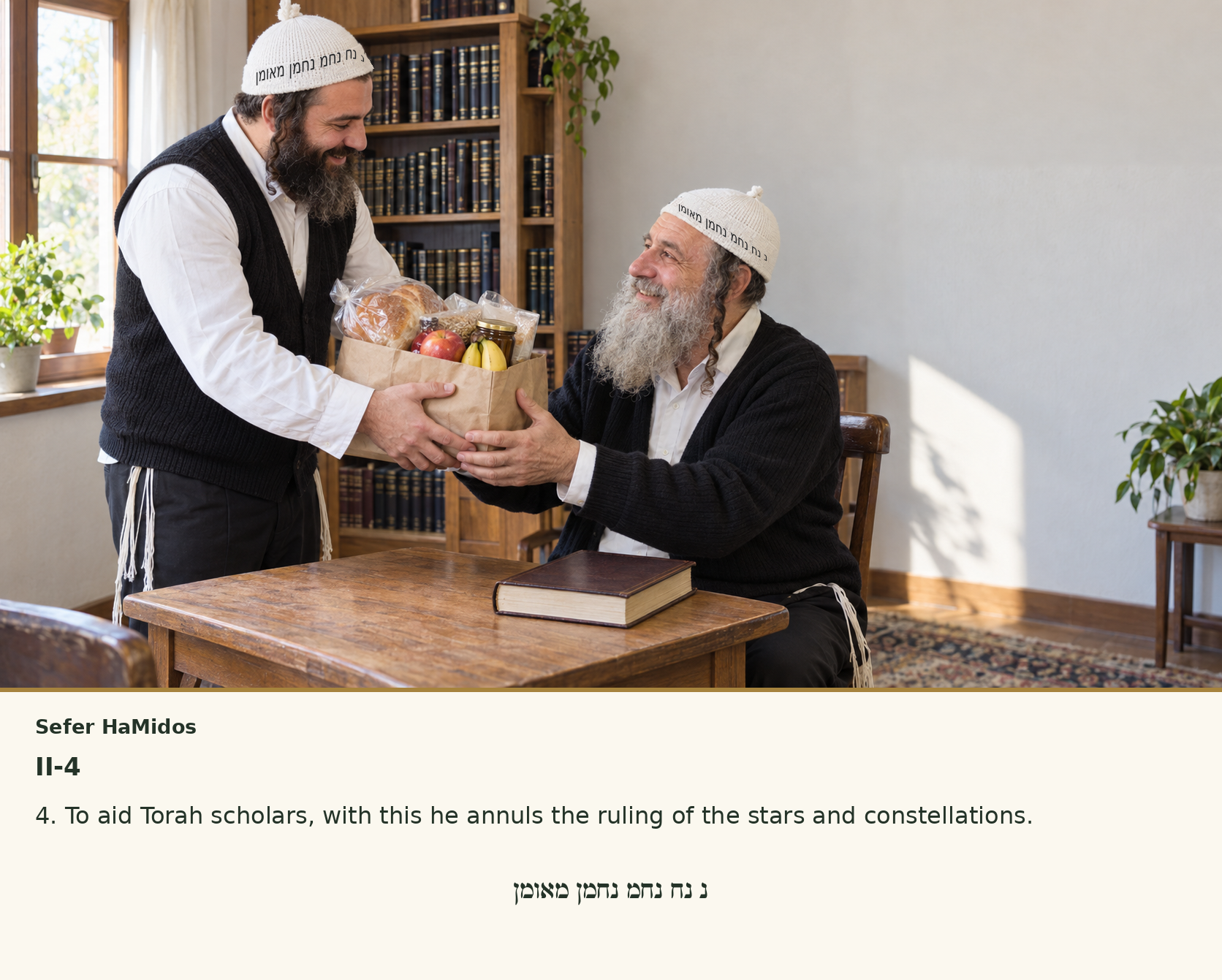
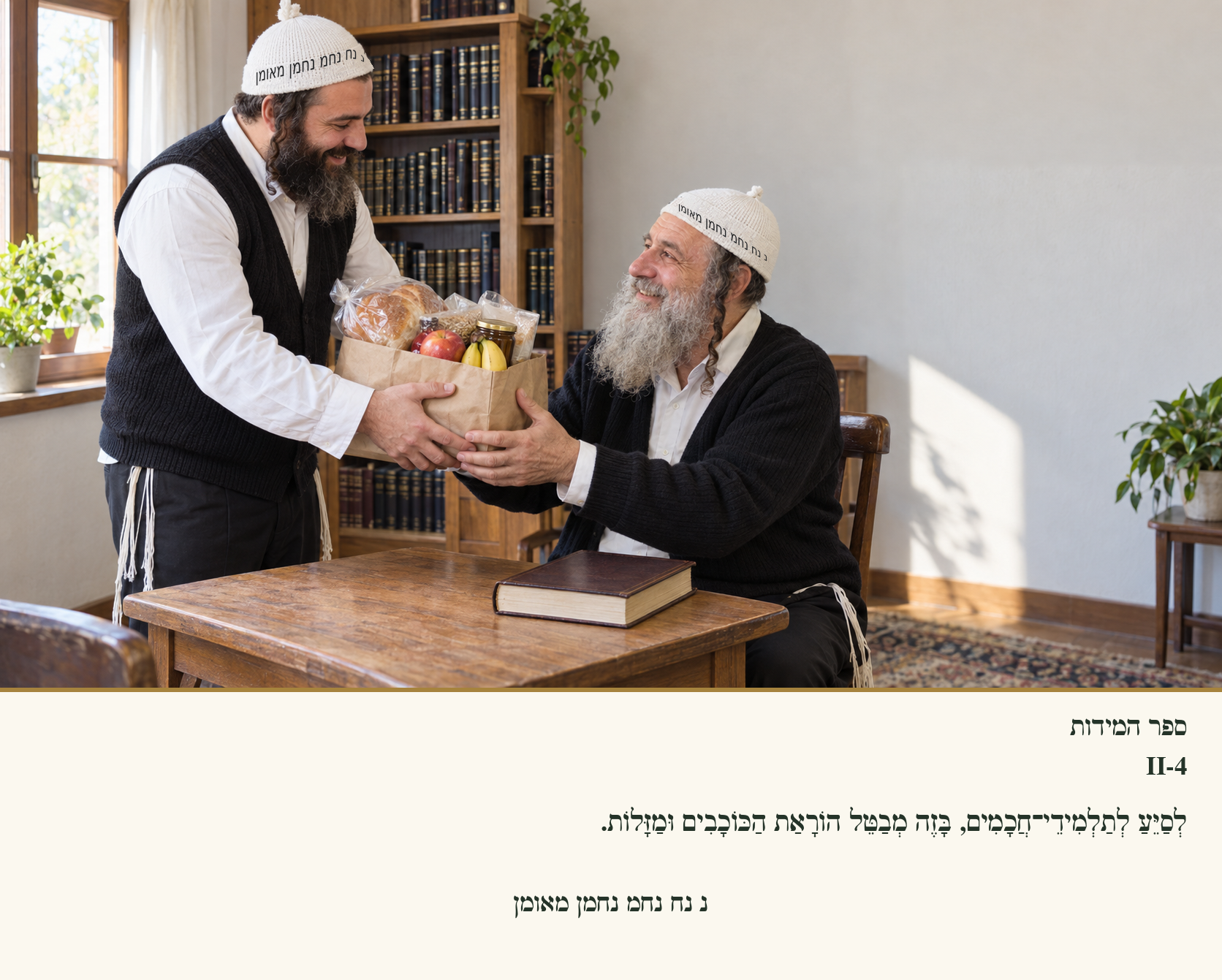
לְסַיֵּעַ לְתַלְמִידֵי־חֲכָמִים, בָּזֶה מְבַטֵּל הוֹרָאַת הַכּוֹכָבִים וּמַזָּלוֹת.
II-4
4. To aid Torah scholars, with this he annuls the ruling of the stars and constellations.
📷 Pictures / videos for this teaching

חלק ב׳ · ה׳
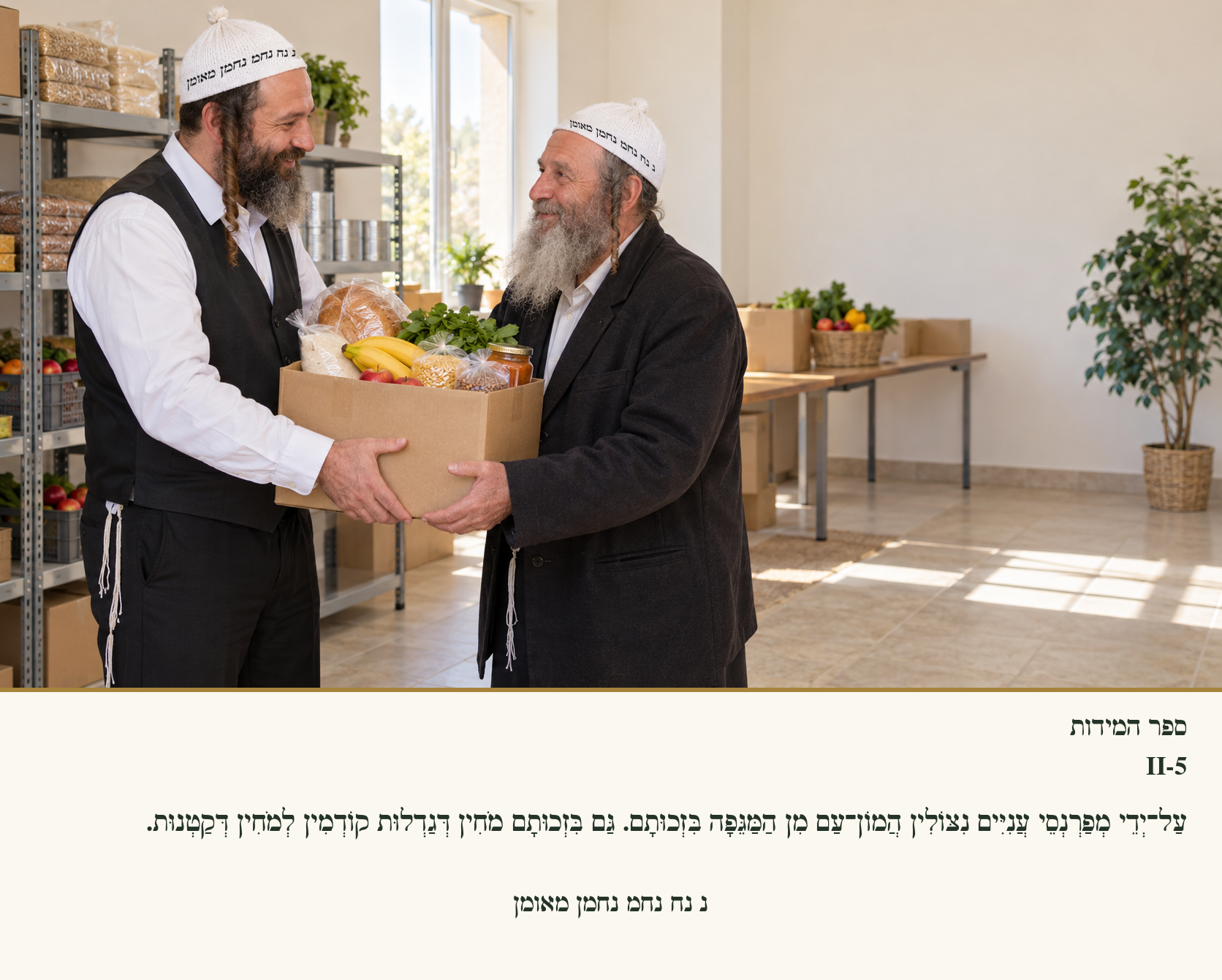
עַל־יְדֵי מְפַרְנְסֵי עֲנִיִּים נִצּוֹלִין הֲמוֹן־עַם מִן הַמַּגֵּפָה בִּזְכוּתָם. גַּם בִּזְכוּתָם מֹחִין דְּגַדְלוּת קוֹדְמִין לְמֹחִין דְּקַטְנוּת.
II-5
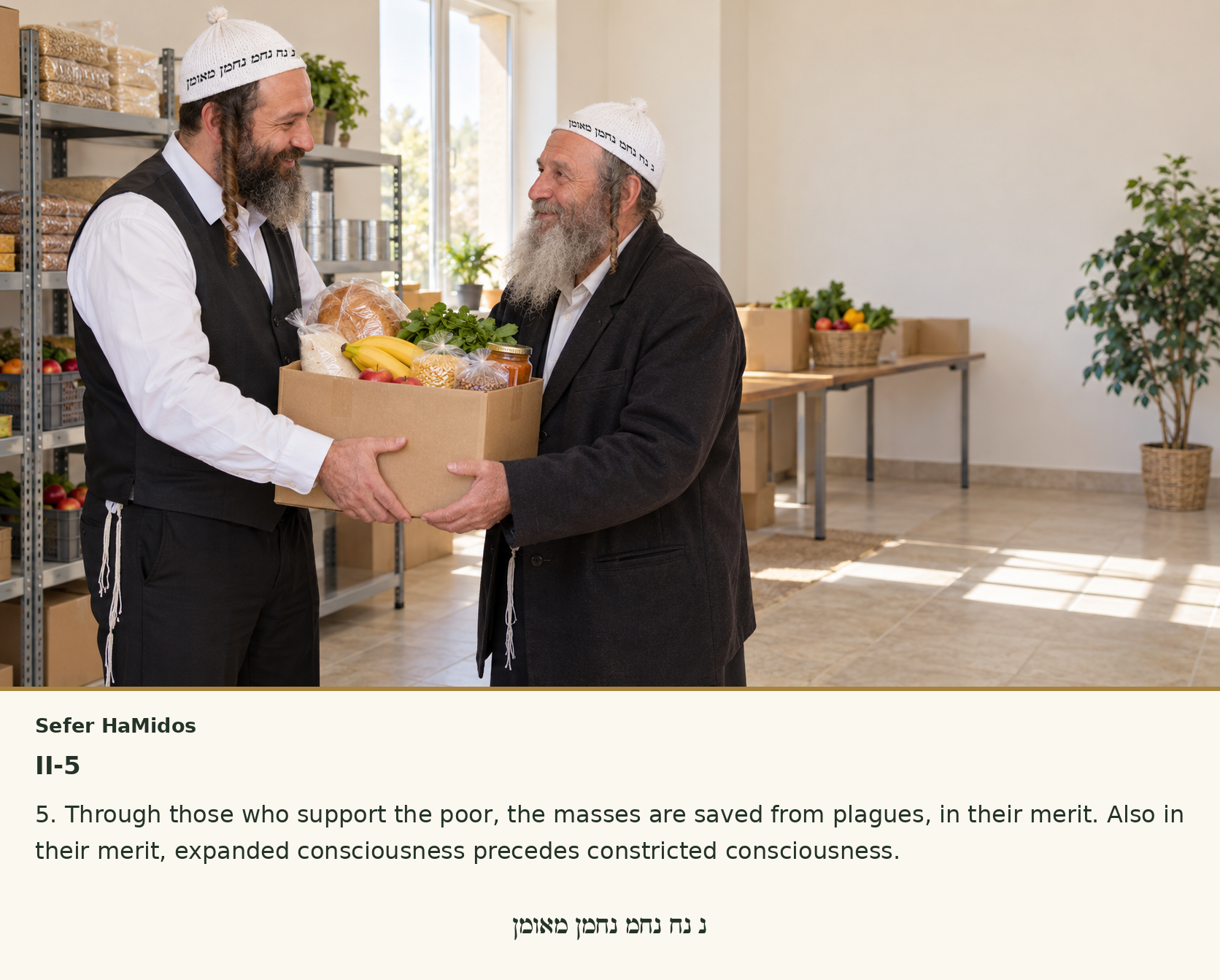
5. Through those who support the poor, the masses are saved from plagues, in their merit. Also in their merit, expanded consciousness precedes constricted consciousness.
📷 Pictures / videos for this teaching
חלק ב׳ · ו׳
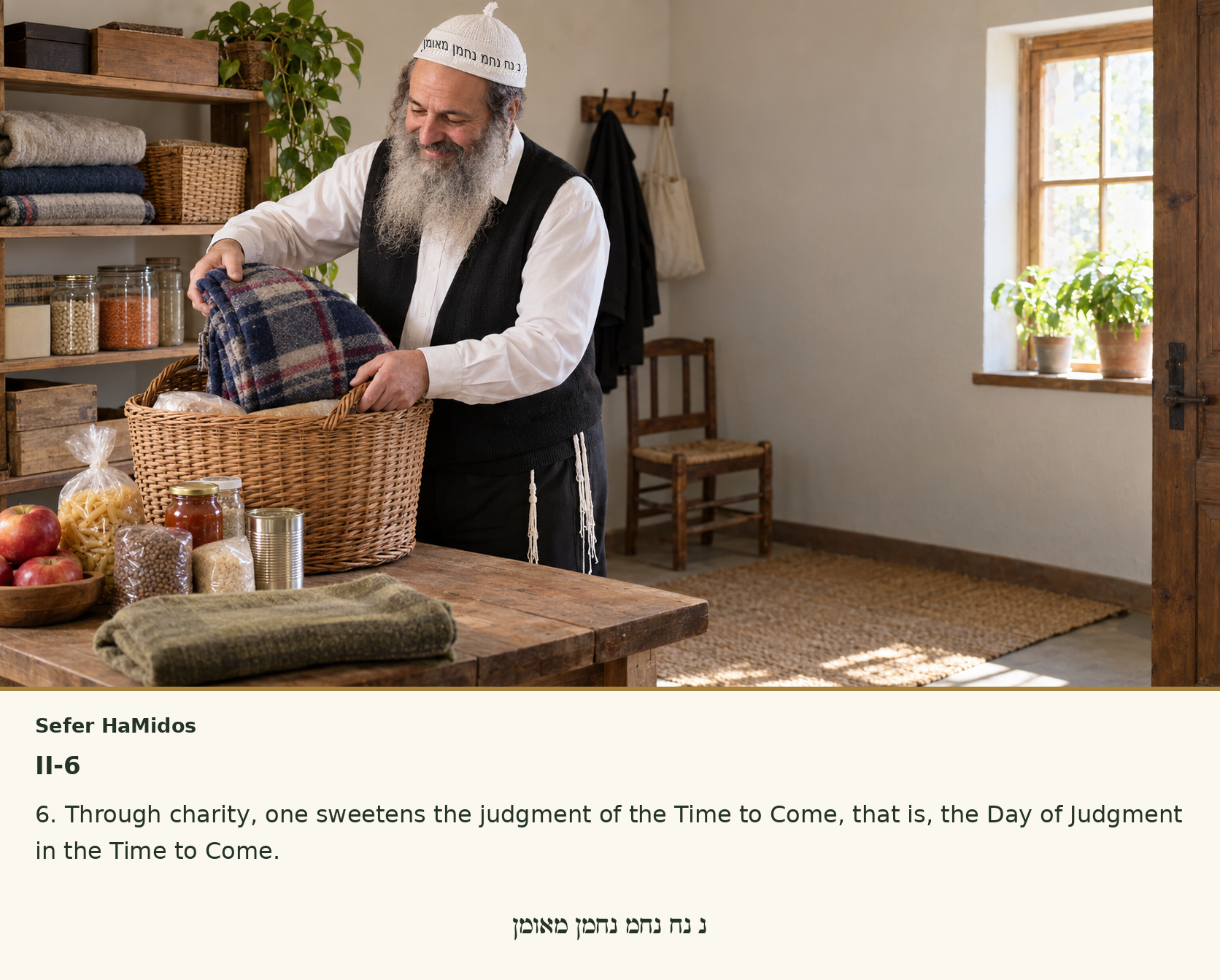
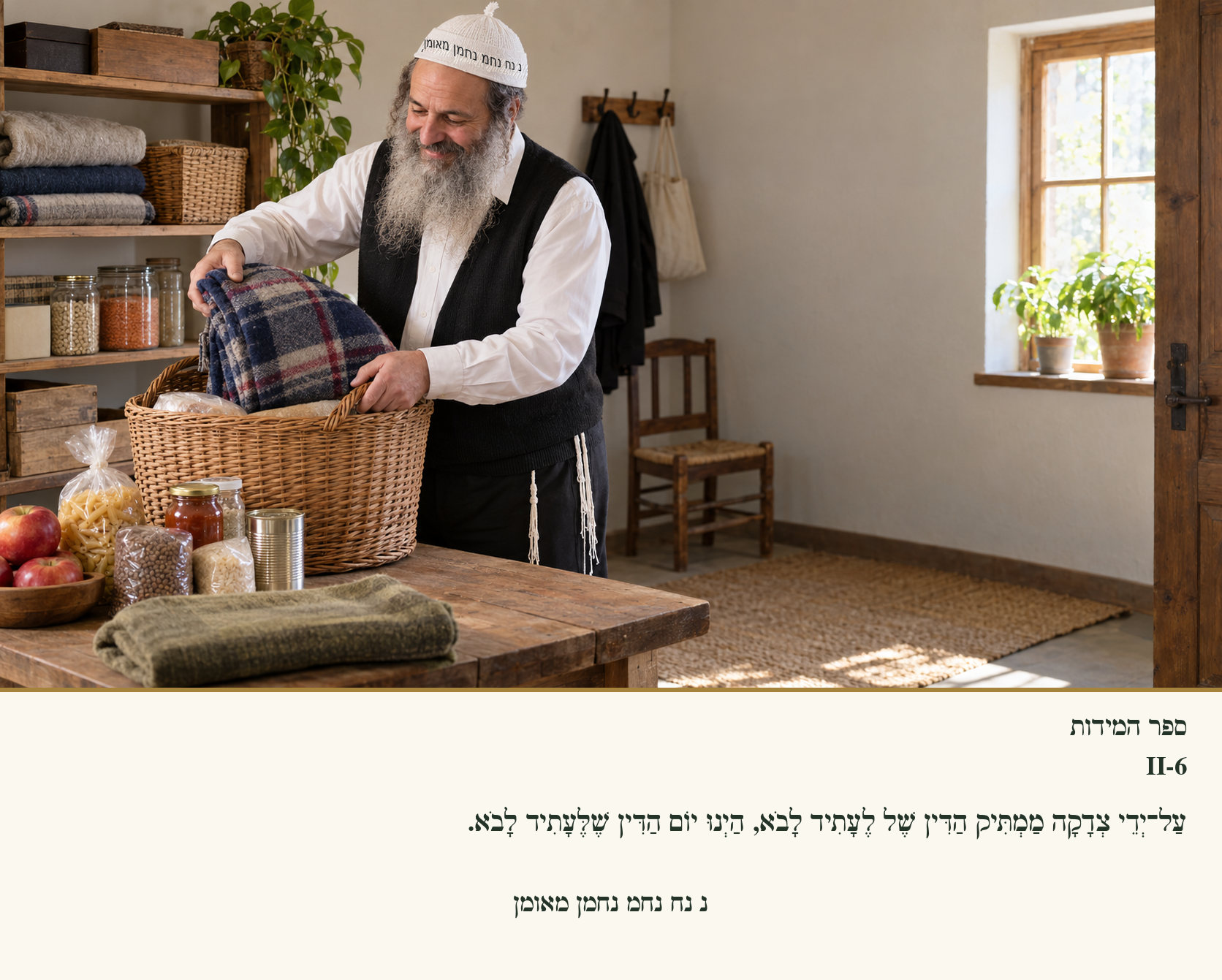
עַל־יְדֵי צְדָקָה מַמְתִּיק הַדִּין שֶׁל לֶעָתִיד לָבֹא, הַיְנוּ יוֹם הַדִּין שֶׁלֶּעָתִיד לָבֹא.
II-6
6. Through charity, one sweetens the judgment of the Time to Come, that is, the Day of Judgment in the Time to Come.
📷 Pictures / videos for this teaching
חלק ב׳ · ז׳
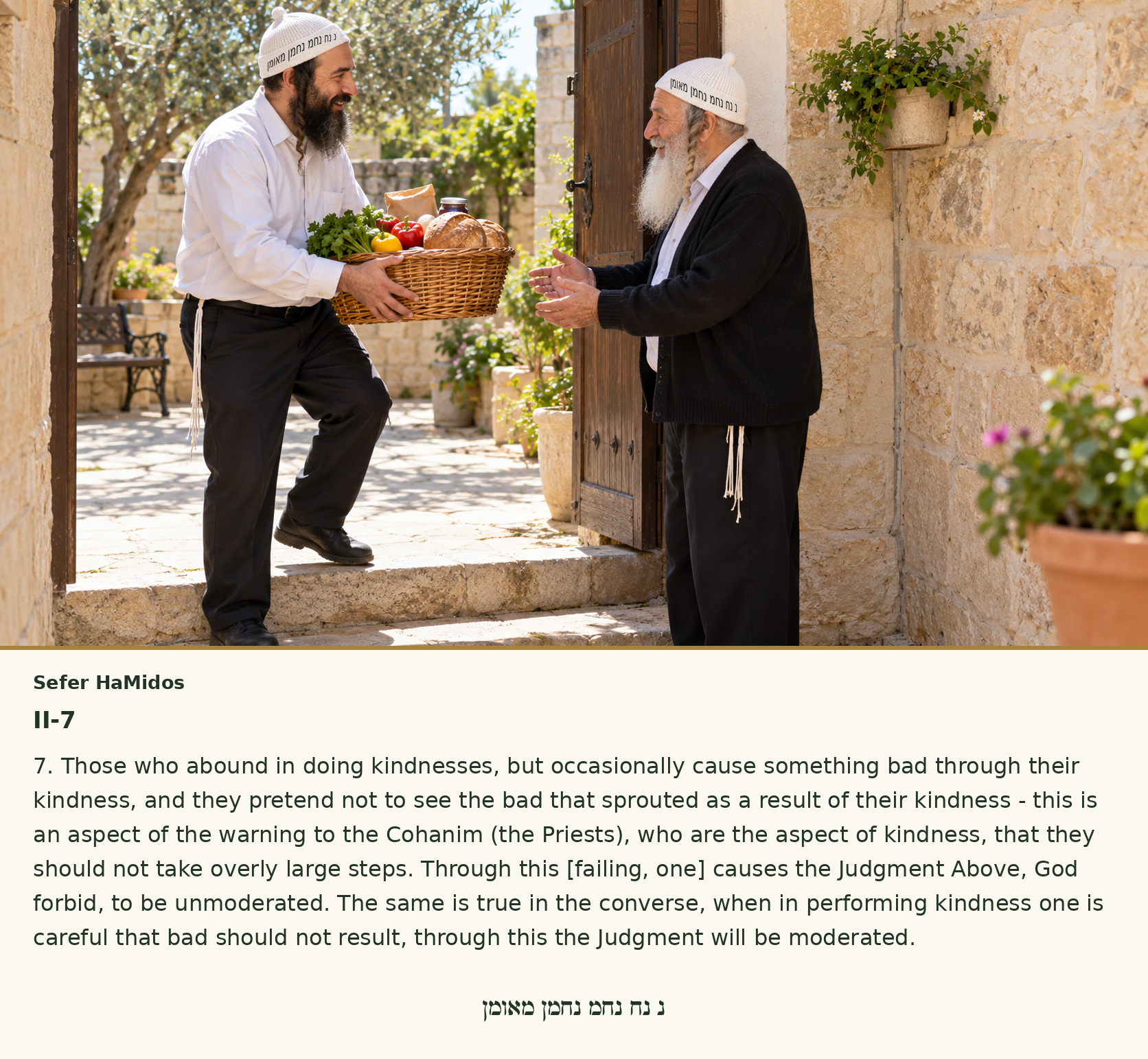
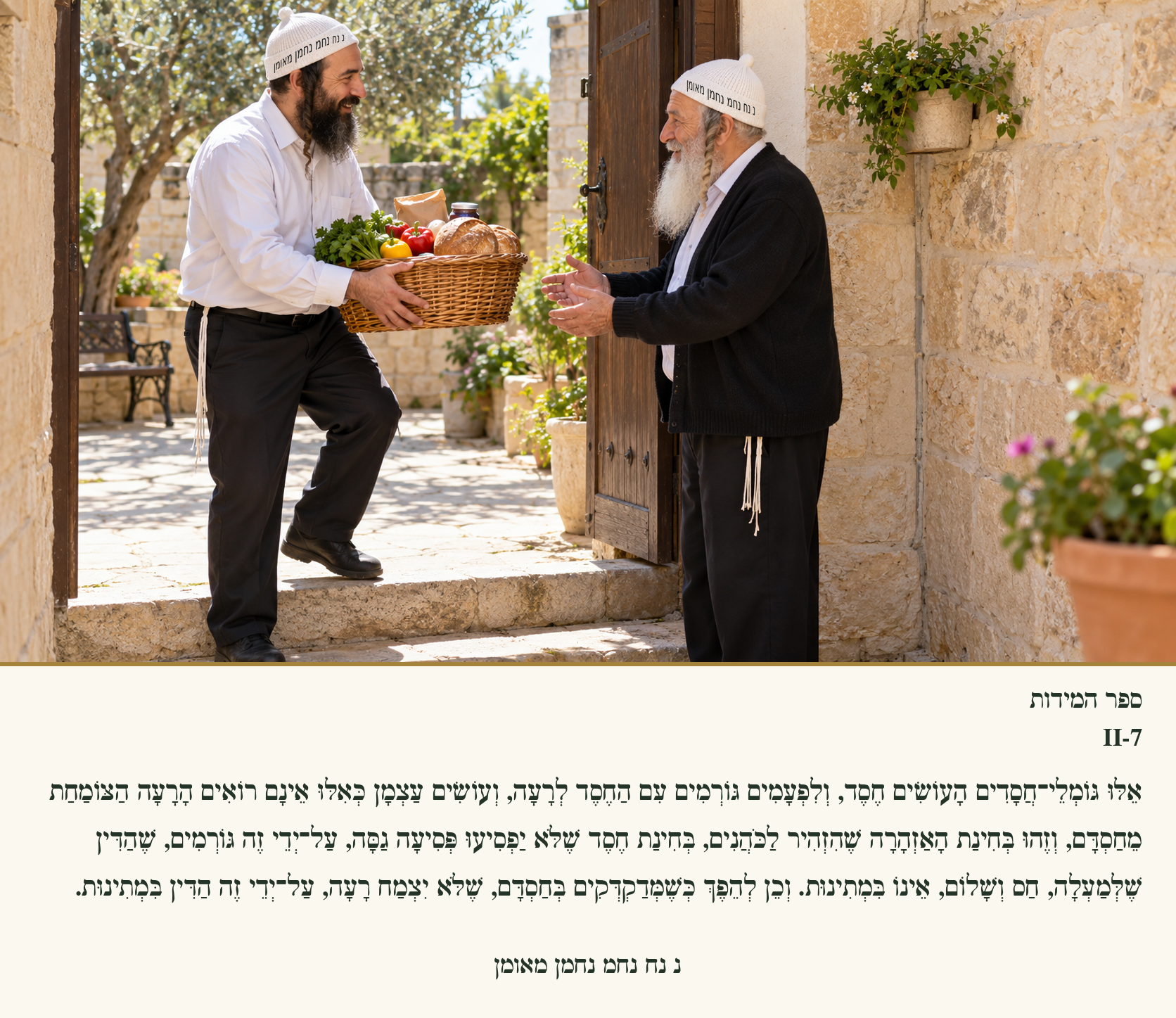
אֵלּוּ גּוֹמְלֵי־חֲסָדִים הָעוֹשִׂים חֶסֶד, וְלִפְעָמִים גּוֹרְמִים עִם הַחֶסֶד לְרָעָה, וְעוֹשִׂים עַצְמָן כְּאִלּוּ אֵינָם רוֹאִים הָרָעָה הַצּוֹמַחַת מֵחַסְדָּם, וְזֶהוּ בְּחִינַת הָאַזְהָרָה שֶׁהִזְהִיר לַכֹּהֲנִים, בְּחִינַת חֶסֶד שֶׁלֹּא יַפְסִיעוּ פְּסִיעָה גַסָּה, עַל־יְדֵי זֶה גּוֹרְמִים, שֶׁהַדִּין שֶׁלְּמַעְלָה, חַס וְשָׁלוֹם, אֵינוֹ בִּמְתִינוּת. וְכֵן לְהֵפֶךְ כְּשֶׁמְּדַקְדְּקִים בְּחַסְדָּם, שֶׁלֹּא יִצְמַח רָעָה, עַל־יְדֵי זֶה הַדִּין בִּמְתִינוּת.
II-7
7. Those who abound in doing kindnesses, but occasionally cause something bad through their kindness, and they pretend not to see the bad that sprouted as a result of their kindness - this is an aspect of the warning to the Cohanim (the Priests), who are the aspect of kindness, that they should not take overly large steps. Through this [failing, one] causes the Judgment Above, God forbid, to be unmoderated. The same is true in the converse, when in performing kindness one is careful that bad should not result, through this the Judgment will be moderated.
📷 Pictures / videos for this teaching
חלק ב׳ · ח׳
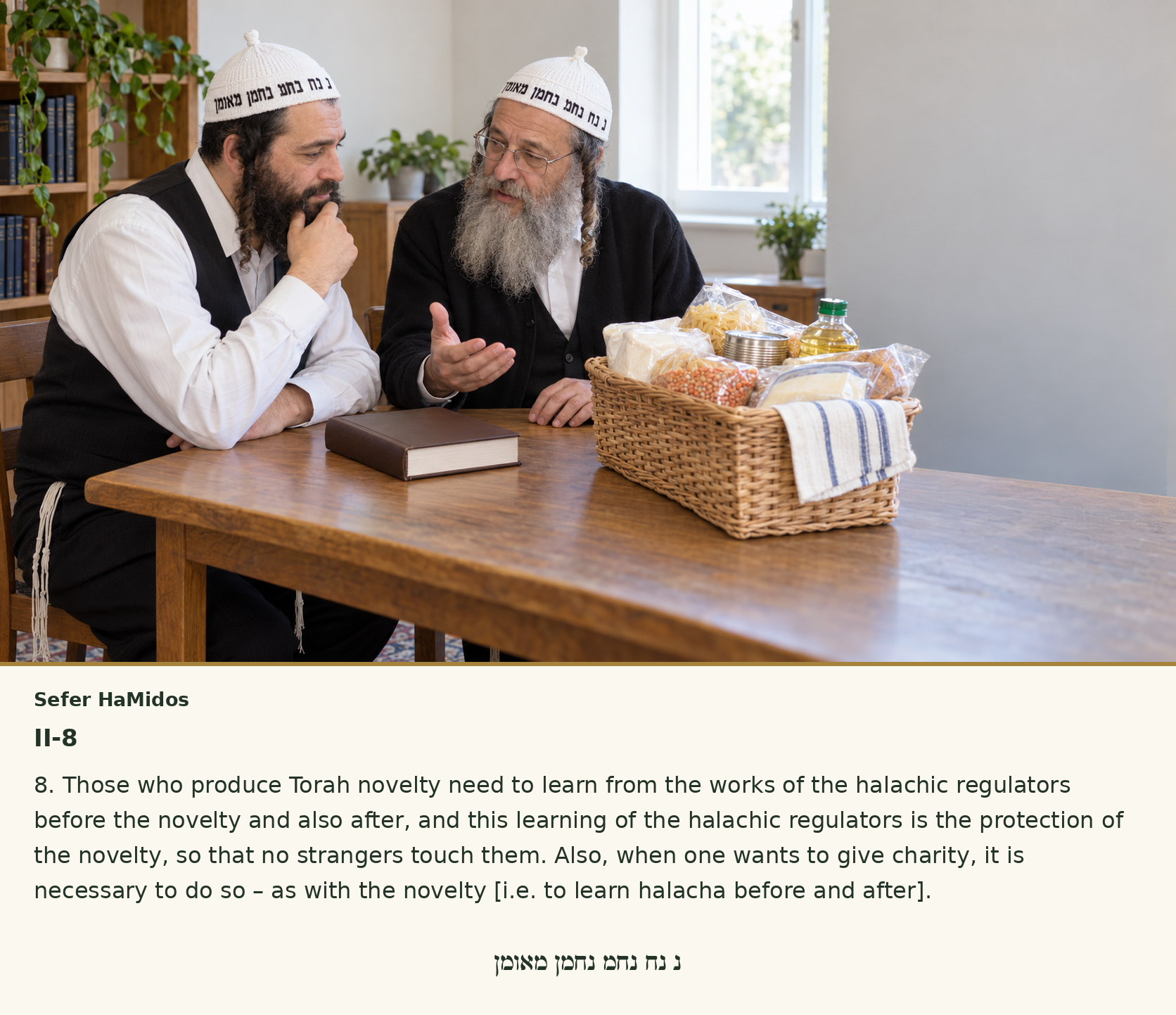
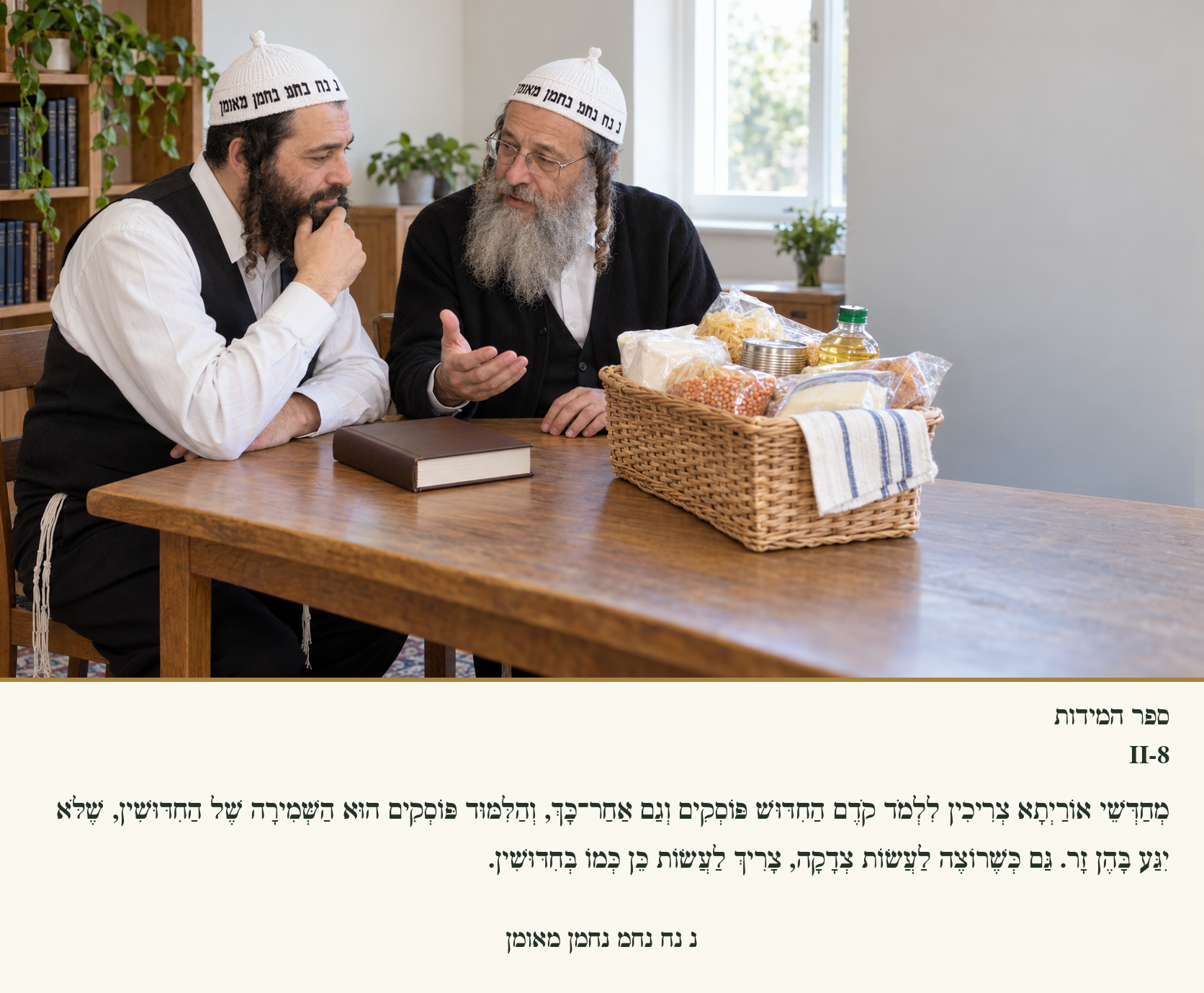
מְחַדְּשֵׁי אוֹרַיְתָא צְרִיכִין לִלְמֹד קֹדֶם הַחִדּוּשׁ פּוֹסְקִים וְגַם אַחַר־כָּךְ, וְהַלִּמּוּד פּוֹסְקִים הוּא הַשְּׁמִירָה שֶׁל הַחִדּוּשִׁין, שֶׁלֹּא יִגַּע בָּהֶן זָר. גַּם כְּשֶׁרוֹצֶה לַעֲשׂוֹת צְדָקָה, צָרִיךְ לַעֲשׂוֹת כֵּן כְּמוֹ בְּחִדּוּשִׁין.
II-8
8. Those who produce Torah novelty need to learn from the works of the halachic regulators before the novelty and also after, and this learning of the halachic regulators is the protection of the novelty, so that no strangers touch them. Also, when one wants to give charity, it is necessary to do so – as with the novelty [i.e. to learn halacha before and after].
📷 Pictures / videos for this teaching
חלק ב׳ · ט׳
הַחִדּוּשִׁין דְּאוֹרַיְתָא וְהַצְּדָקָה, כָּל אֶחָד מְעוֹרֵר אֶת חֲבֵרוֹ.
II-9
9. Torah novelty and charity–one arouses the other.
חלק ב׳ · י׳
גָּדוֹל כֹּחַ הַמַּעֲשֵׂר, שֶׁמְּהַפֵּךְ הַקְּלָלָה לִבְרָכָה.
II-10
10. Great is the power of tithing that it transforms curses to blessings.
חלק ב׳ · י״א
עַל־יְדֵי מַעֲשֵׂר נִתְבַּטְּלִים הִרְהוּרֵי זְנוּת.
II-11
11. Through tithes, promiscuous thoughts are annulled.
חלק ב׳ · י״ב
הַגּוֹמֵל חֶסֶד, אֵין צָרִיךְ לִזְכוּת אָבוֹת.
II-12
12. One who does kindness does not need ancestral merit.
חלק ב׳ · י״ג
עַל־יְדֵי גְּמִילוּת־חֶסֶד בָּא לַאֲרִיכוּת־יָמִים.
II-13
13. Through doing kindness, one gains longevity.
חלק ב׳ · י״ד
יֵשׁ תְּפִלּוֹת שֶׁאֵינָם נִתְקַבְּלִים לְמַעְלָה אֶלָּא עַד שֶׁנּוֹתְנִים כָּל־כָּךְ מָעוֹת לִצְדָקָה כְּפִי מִסְפַּר הָאוֹתִיּוֹת שֶׁל הַתְּפִלָּה הַשַּׁיָּךְ לְזֶה הַדָּבָר. לְמָשָׁל, כְּשֶׁמִּתְפַּלֵּל אֵלּוּ הַתֵּבוֹת: "תֵּן לִי בָּנִים", צָרִיךְ לִתֵּן צְדָקָה כְּמִסְפַּר אוֹתִיּוֹת "תֵּן לִי בָּנִים".
II-14
14. There are prayers that are not accepted Above until one gives sufficient charity, according to the number (numerical value) of the letters in the prayer related to the problem about which one is praying. For example, when one prays the words, "Give me children" (=592), one needs to give charity according to the number of letters of “Give me children”.
חלק ב׳ · ט״ו
עַל־יְדֵי צְדָקָה זוֹכֶה לְבָנִים.
II-15
15. Through charity one merits to have children.
חלק ב׳ · ט״ז
מִי שֶׁהוּא מְפַרְנֵס אֶת הָרַבִּים, עַל־יְדֵי זֶה מַמְשִׁיךְ הַבְּרָכָה מֵאֶרֶץ־יִשְׂרָאֵל לְחוּץ לָאָרֶץ.
II-16
16. One who sustains the many, draws blessing from the land of Israel to the rest of the world.
חלק ב׳ · י״ז
עַל־יְדֵי הַמָּמוֹן שֶׁנּוֹתֵן לַעֲנִיֵּי אֶרֶץ־יִשְׂרָאֵל, עַל־יְדֵי זֶה מָמוֹנוֹ נִתְקַיֵּם בְּיָדוֹ.
II-17
17. Through money one gives to the poor of the Land of Israel, through this one merits to retain his wealth.
חלק ב׳ · י״ח
כְּשֶׁאָדָם בָּא לְעִיר לָדוּר, יִשְׁלַח בָּשָׂר לַעֲנִיֵּי הָעִיר, וְעַל־יְדֵי זֶה יִשָּׂא חֵן בְּעֵינֵי שַׂרֵי הָעִיר.
II-18
18. When a man moves to a city, he should send meat to the poor of that city, and through this he will find favor in the eyes of the city officials.
חלק ב׳ · י״ט
עַל־יְדֵי נְתִינַת שְׁקָלִים נִצּוֹל מִיֵּצֶר הָרָע.
II-19
19. Through the giving of “shekulim” (the currency used in Biblical times) one is saved from the evil inclination.
💬 Comments
…Comments are currently read-only.
Loading comments…